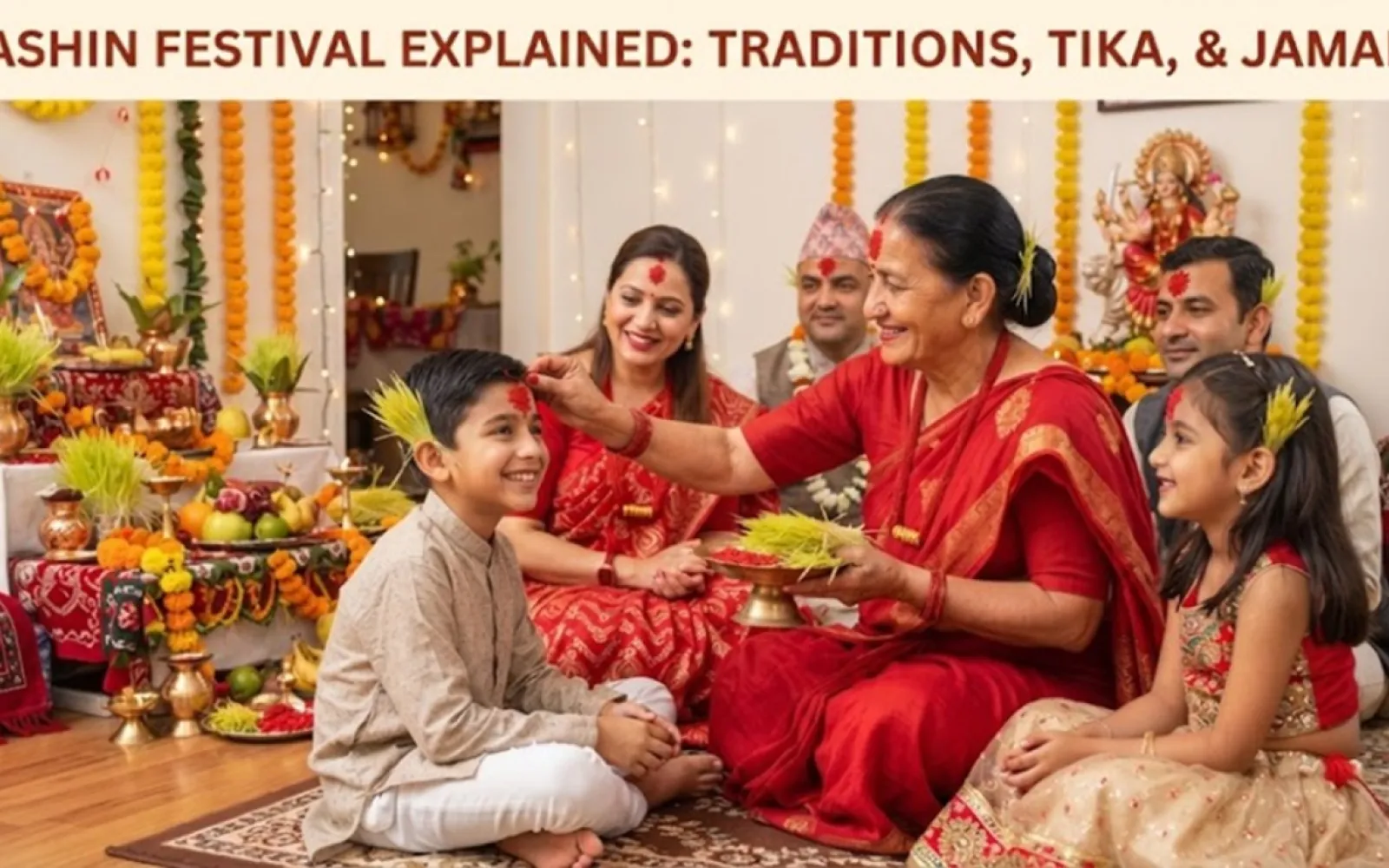
Dashain is being observed across Nepal with various traditions, rituals and celebrations. Actually, Dashain Festival 2026 began on 11th October and ending on 25th October.
Meanwhile, Nepali Hindu observe Dashain as the greatest festival. Different ethnic communities celebrate it in their own way with various unique ritual celebrations and observations.
Now, let’s see all details of Dashain festivals one by one.
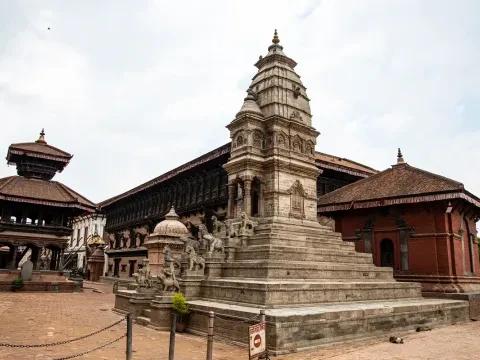
Dashain is one of the most important Hindu festivals in Nepal that is celebrated with family and friends through religious ceremonies and cultural traditions.
This year, Dashain is being observed nationwide as Nepalese people gather with their respective families according to the local traditions.
Furthermore, it is a festival of victory of good over evil which has a significant religious and cultural importance for the Nepalese people. It is a popular festival to mark the goddess Durga’s victory over Mahishasura and the Vijaya Dashami is also regarded as the day of good over evil in the Hindu community.
Major Features of Dashain Celebrations Across Nepal :
| Places Type | Common celebrations |
|---|---|
| Kathmandu Valley | Temple worship, family tika and gatherings |
| Hill communities | Family gatherings, jamara, tika and religious functions |
| Terai communities | Family worship, feasting and local traditions |
| Village rural families | Ancestral gatherings, community feasts and fairs |
Nevertheless, the family, religion and community practices vary from household to household and therefore not everyone celebrates Dashain in the same way.
For the current year, journalists may want to consult trusted news outlets and government resources for the latest news about Dashain celebrations and public events.
The Dashain festival in 2026 starts from Ghatasthapana on October 11 to Kojagrat Purnima on October 25 as per the Nepal festival calendar.
Furthermore, each day holds religious importance but the timing and traditions might vary across different communities.
| Festival observance | Date in 2026 Religious significance |
|---|---|
| Ghatasthapana | October 11 Families begin the festival by planting barley and other cereals for jamara. |
| Fulpati | October 17 Offerings and rituals are performed at home and temples during this observance. |
| Maha Ashtami | October 18 and 19 Worshipping the goddess Durga and performing rituals. |
| Maha Navami | October 20 Prayer and rituals to the goddess are performed. |
| Vijaya Dashami | October 21 Family members receive tika, jamara and blessings from the elders. |
| Kojagrat Purnima | October 25 The full moon is observed as the final day of the festival. |
Important Dashain Observances and Their Meanings ;
Dashain Travel and Holiday Planning in Nepal :
In the meantime, Dashain festival has also resulted in increased traffic as people travel to their hometowns for the family celebrations.
Moreover, the transport department has announced special arrangements for the transportation of the people from October 11 to 25, 2026.
Therefore, it is advised to book tickets in advance and also keep a check on the local transport authority for the daily schedule.
The religious significance of Dashain is rooted in the triumph of good over evil and the worship of Goddess Durga. Across Nepal, numerous Hindu families observe this holiday as an important time for prayers, devotion, family togetherness and blessings for prosperity.
Moreover, the holiday is intrinsically linked to Navaratri, a nine-day festival dedicated to the worship of the Goddess in her various manifestations. Hindu mythology invests Durga with the attributes of supreme power and divine wisdom, and the legend of her defeating the buffalo demon Mahishasura grants her the status of a protector.
Major Religious Beliefs and Practices During Dashain :
| Symbol or observance | Common religious meaning |
|---|---|
| Goddess Durga | Divine power and goodness |
| Jamara | Blessings and prosperity |
| Tika | Good wishes and blessings |
| Navaratri | Worship and devotion to the Goddess |
| Vijaya Dashami | Victory and the triumph of good |
Nevertheless, Dashain rituals are not entirely uniform across Nepal, as families and communities have different customs and practices. Some people observe the holiday with large-scale religious rituals, while others focus on family and friends, jamara, tika and blessings.
Fulpati, Maha Ashtami and Maha Navami are major observances during Dashain with their own unique rituals and significance. In 2026, Fulpati falls on October 17, Maha Ashtami – on October 18, and Maha Navami – on October 20. This information was obtained from Nepal’s official holiday resource.
Major Rituals During Fulpati, Maha Ashtami and Maha Navami :
| Observance | Main ritual Cultural significance |
|---|---|
| Fulpati | October 17 Welcoming offerings Auspiciousness and the renewal of traditions |
| Maha Ashtami | October 18 and 19 Worship of the Goddess Devotion and the power of good |
| Maha Navami | October 20 Prayer to tools and vehicles Respect for labor and prosperity |
Furthermore, Dashain and Fulpati Day in Kathmandu are of particular interest to both locals and visitors, as the royal family participates in some of the rituals. Hanuman Dhoka and other temples are crowded with people, but the extent of the events depends on the year.
However, these customs are not entirely standardized, as Nepal is home to many ethnicities with their own practices, and both travelers and reporters should take this into account when covering Dashain 2026.
Vijaya Dashami is one of the most important days of Dashain which marks victory and blessings for the year ahead. In 2026, Vijaya Dashami will be celebrated on October 21 when many Nepalis will receive tika, jamara and blessings from their elders.
Additionally, it is during this festival day of Vijaya Dashami that many Nepalis apply tika, give jamara and receive blessings from elders in order to maintain family bonds and pass down traditions from one generation to the next. It is quite common for parents, grandparents and other elder family members to present tika to the younger ones, give jamara and offer blessings for a prosperous new year.
| Tradition | Description |
|---|---|
| Applying tika | Elders apply tika to the forehead of younger family members as a blessing, using traditional methods and family-specific rules. |
| Offering Jamara | Elders present jamara – sacred barley shoots – as a symbol of fortune and prosperity. |
| Receiving blessings | Younger family members show respect and receive good wishes from elders. |
| Giving Dakshina (money and gifts) | Many families give money to children and younger relatives as a part of Dashain traditions. |
Likewise, visiting relatives Families and friends visit each other, often continuing the tika tradition for several days after Vijaya Dashami.
| Detail | Information |
|---|---|
| Festival day | Vijaya Dashami |
| Date | October 21, 2026 |
| Announced auspicious tika time | 10:26 a.m. Nepal time |
| Main traditions | Tika, jamara, blessings and visiting family |
In addition, Dashain is a great opportunity for relatives to connect with each other after a long time spent working or studying elsewhere. However, there are many reasons why families might choose not to participate in tika, including differences in family traditions, regional beliefs and personal preferences.
Dashain is a popular holiday in Nepal which is celebrated in different ways throughout the country. The religious beliefs, cultural traditions, family values and even geographical location of a person shape the ways in which they observe Dashain.
In addition, Dashain celebrations in Kathmandu Valley often involve visiting temples, worshipping and receiving tika from family elders.
While families living in the hills often spend the holiday with relatives, visiting their hometowns and celebrating the occasion with them, those living in rural areas may enjoy traditional swings, seasonal fairs and other folk customs.
Meanwhile, city dwellers tend to visit their family homes or relatives in order to spend quality time together with them during this festival.
In addition, Nepal is a land of diverse cultures and religions; thus, while many Hindus observe Dashain with great enthusiasm, not all ethnic groups are familiar with the holiday and some may not participate in its traditions.
| Practice | Description |
|---|---|
| Respect local traditions | When writing about traditions in a specific region or community, make sure to follow their rules and guidelines. |
| Ensure accuracy | If you are not sure about a tradition, consult with experts, locals and conduct thorough research. |
| Relevant photographs | When publishing photos of Dashain 2026, make sure to caption them correctly and follow the rules regarding the use of images and videos. |
| Avoid stereotypes | Highlight the uniqueness of cultures and avoid making generalized statements about the cultures and traditions of Nepal. |
Furthermore, Dashain is a wonderful opportunity to learn about Nepal’s rich cultural heritage and the variety of its traditions. By understanding and respecting this diversity, it becomes possible to avoid stereotypes and promote Nepali culture in a responsible and respectful manner.
Dashain is a family reunion time in Nepal, as many people travel from cities to their ancestral homes for the festival. Families visit each other, and people come back from work, schools and colleges to celebrate the festival, get tika and jamara, and meet with relatives.
Moreover, higher than usual traffic congestion might be observed on highways, at bus stations and with domestic transport services. Travellers should plan ahead and book tickets, and observe road conditions before departure. Extra travelling time should also be allocated.
Major Travel Trends and Festive Activities During Dashain :
| Travel challenge | Practical advice |
|---|---|
| High demand for bus tickets | Book tickets with transport operators in advance |
| Congestion on the highways | Allow extra time for travel and follow road conditions |
| Weather delays | Observe weather forecasts and follow transport advisories |
| Limited holiday services | Clarify operating hours and transport schedules |
| Long-distance family visits | Plan routes and departure times in advance |
Furthermore, road conditions and transport operations should be checked before departure, as changes to road restrictions and transport operations might be implemented. Current disruptions should be researched through online reports rather than estimated.
Festival food traditions, shopping and family dinners play an important role in Dashain festivities across Nepal. During the holiday, many families prepare traditional foods, and purchase new clothes and gifts for relatives and friends.
Moreover, food culture varies depending on location, household preferences and religious observances. Common dishes might include rice with chicken or mutton, pickles, vegetables, sweets or other favorite dishes that can be shared with visiting family members during Dashain.
Traditional Foods Commonly Enjoyed During Dashain :
Shopping also becomes more intense during Dashain, as families prepare food and purchase presents for relatives.
| Category | Common purchases or activities | Economic impact |
|---|---|---|
| Food and groceries | Rice, meat, vegetables, spices, sweets, soft drinks, alcoholic beverages and other food items | Households and restaurants spend on food |
| Clothing | Traditional and everyday wear | Seasonal sales in clothing retail outlets |
| Gifts and Dakshina | Presents and money for children and relatives | Increased retail trade and production |
| Transport | Tickets and transport services | Increased volume of passenger transport |
| Local markets | Festival food and other household goods | Seasonal sales of goods |
Responsible Budgeting During Dashain
However, it should be noted that food culture and shopping preferences vary widely depending on income, household size, dietary requirements and personal preferences. Families can create a shopping list and stick to it while also watching out for any price changes in food stores, which should be based on current market reports rather than past observations.
Both residents and tourists in Kathmandu enjoy Dashain festivals that centre around religious rituals, family gatherings and traditional customs. Many locals visit their families during the holidays, which means that some streets and commercial centres are empty while public transport is busy.
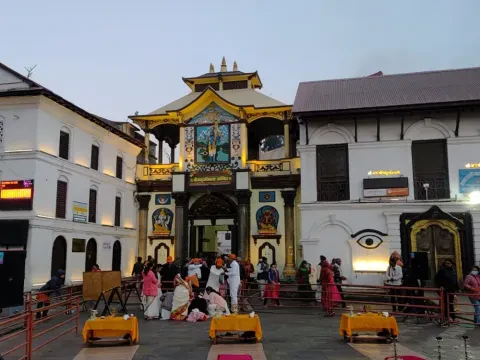
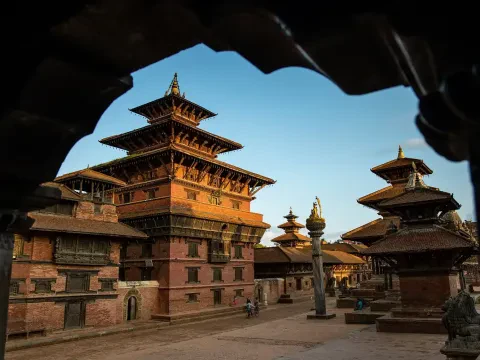
In addition, tourists have an opportunity to experience Nepal’s unique spiritual culture by participating in temple ceremonies and following local traditions. Kathmandu, Patan and Bhaktapur Durbar Squares, as well as Pashupatinath and Swayambhunath temples are famous landmarks, which may have altered visitor policies during Dashain.
Destinations and Cultural Attractions in Kathmandu during Dashain :
| Travel Consideration | Recommended Actions |
|---|---|
| Temple rituals and restrictions | Seek advice from your hired guide and follow the rules of religious sites |
| Public transport holiday schedules | Make sure to plan your sightseeing tours according to the transport schedule |
| Restaurant and shop opening hours | Arrange your dining and shopping plans in advance |
| Photographing people and rituals | Ask for permission before taking photos of people and special events |
| Dress-code and behavioural norms | Follow the local traditions and consult your guide on specific restrictions |
| Hiring a guide for Kathmandu | Familiarize yourself with local norms and arrange a tour with a licensed guide |
Furthermore, it is worth noting that Dashain is not primarily a tourist event, so it is best to avoid disturbing locals who participate in religious rites.
Here, paying respect to elders and following their guidelines will allow you to understand the cultural significance of Dashain for Nepalese people of different social groups.
The fact that Dashain is celebrated in Nepal demonstrates the importance of the Festival of Durga for local traditions and customs.
Here, families and friends unite during the holidays to participate in rituals, including worshipping the goddess, flying kites and having picnics. The most prominent symbols of the festival are tika and jamara, which are applied by elders as a part of a blessing ceremony.
In addition, Dashain is a family holiday, when people from different parts of the country gather together. Despite the variations in the ceremonial practices, the spirit of the holiday remains the same, making Dashain an important tradition for Nepalese people of all backgrounds.
Key Traditions and Unique Customs of Dashain :
As Dashain in Nepal continues until the final full-moon day of October 25, many families and communities celebrate the holiday in their own way. While some people follow specific rituals and observe religious practices, others enjoy the warm weather and spend time with their loved ones.
Overall, learning about the unique traditions of Dashain will enable you to appreciate the cultural heritage of Nepal.
Dashain Festival in Nepal starts from Ghatasthapana on October 11, 2026, and ends on Kojagrat Purnima on October 25, 2026. The main day of the festival is Vijaya Dashami which falls on Wednesday, October 21, 2026. The dates of the festival are based on the Nepali Panchang, and they change every year.
Dashain is one of Nepal’s most important Hindu festivals, which celebrates the victory of good over evil. It is dedicated to the goddess Durga Mahisasura, who killed the demon Mahishasura. During the holiday, people gather together, pray to each other, and eat festive food.
The celebration of Dashain includes observing religious rituals, visiting friends and family, and having meals with them. The holiday’s main attractions are Phulpati, Maha Ashtami, Maha Navami, and Vijaya Dashami. People also buy new clothes, play kites, and visit each other’s houses. In villages and cities, special swings are organized.
The main dates of Dashain Festival 2026 are Ghatasthapana on October 11, Phulpati on October 17, Maha Ashtami on October 19, Maha Navami on October 20, and Vijaya Dashami on October 21. The most important day of the holiday is Kojagrat Purnima which falls on October 25. Different families and communities observe different rituals on different days, so it is better to consult the local almanac.
Tika is a paste that people apply on their foreheads with a blessing, usually made of rice, yogurt, and vermilion. Jamara is a sacred yellow-green shoot that people grow from barley or other cereals for the duration of the holiday. On the day of Vijaya Dashami, elders put tika and jamara on the foreheads of children and younger family members and give them blessings of health, happiness, and prosperity.
It is possible for tourists to witness the festival in Kathmandu during the holidays. The streets are decorated, people wear new clothes and visit each other, and markets sell festive foods and drinks. However, some rituals are held in private houses and closed temples, and the festival is more family-oriented than public. It is a good idea to ask in advance if any cultural heritage sites will be open to the public during the holiday.
The opening of shops, restaurants, and other institutions depends on the owners and the type of business. Government offices are closed during the Dashain holiday. Other shops and museums may be closed on the most important days of the holiday, so it is safer to inquire in advance and plan the arrival in Kathmandu around the open hours of the most interesting sights.
It can be difficult to travel by bus or other long-distance vehicles during the Dashain holiday because many people take the opportunity to return to their home villages and hometowns. It is recommended to book seats in advance and know that the roads can be busy on the main days of the holiday. It is also worth contacting the ticket office of the plane or trekking route to make sure there will be no issues on the day of departure.
During Dashain, people eat traditional food, such as dal bhat, meat dishes, beaten rice, pickles, vegetables, and sweets. Most people prepare special meals for the holiday when relatives and friends visit. The cuisine varies depending on the family and the region; however, it is possible to find local specialties at restaurants during the holiday.
Before visiting Nepal during Dashain, it is important to arrange travel and accommodation in advance and know which cultural heritage sites may be closed during the holiday. A lot of people return home for the holidays, so it is a good idea to book tickets in advance. It is also essential to behave respectfully towards cultural and religious sites and ask for permission before photographing people or rituals.
Our travel experts are ready to assist you with any questions.
Send us a message.Have a question before you book? Send your enquiry below and our travel experts will get back with the required information.