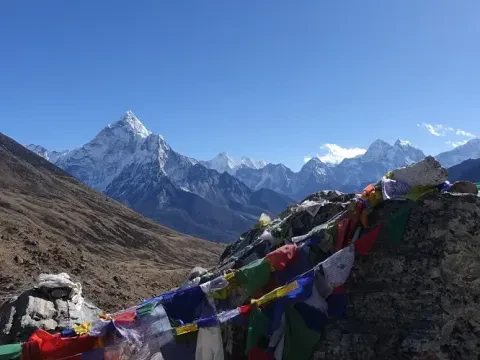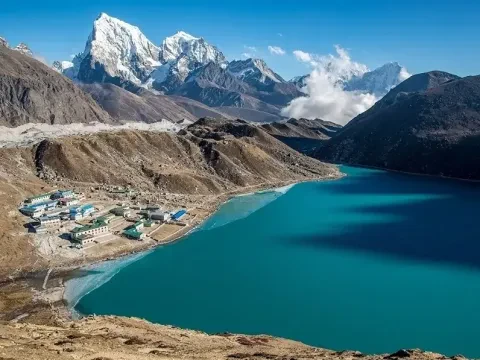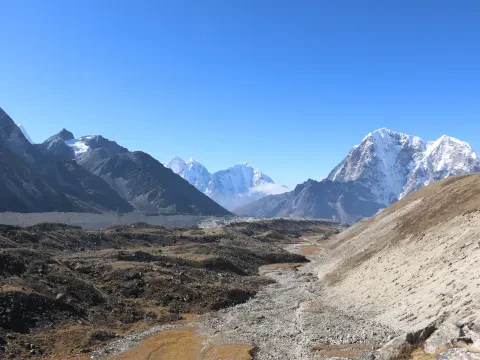
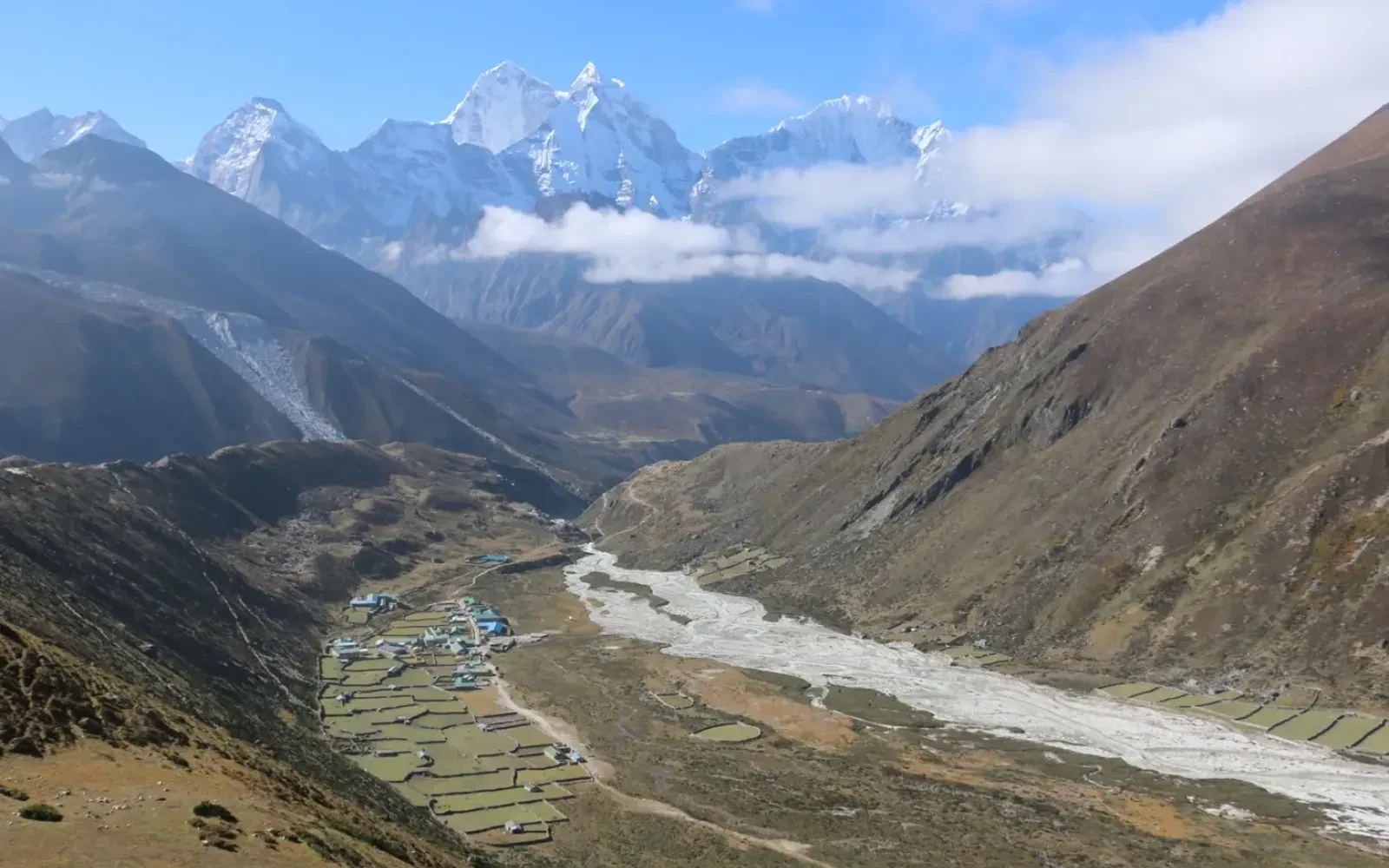
The month of September for Trekking in Nepal for EBC? That mystical month straddling summer and fall, but for the Everest Base Camp trek, it’s essentially navigating two distinct mini-seasons simultaneously. Hence, the crucial need for a hybrid packing approach to conquer over Everest Base Camp (5364m) and Kalapatthar(5545m).
While the lower valley trails will still offer warm-ish temps with a hint of humidity and the occasional sprinkle, the higher Khumbu region will morph into a stark, frigid landscape with crisp air and dangerously cold nights.
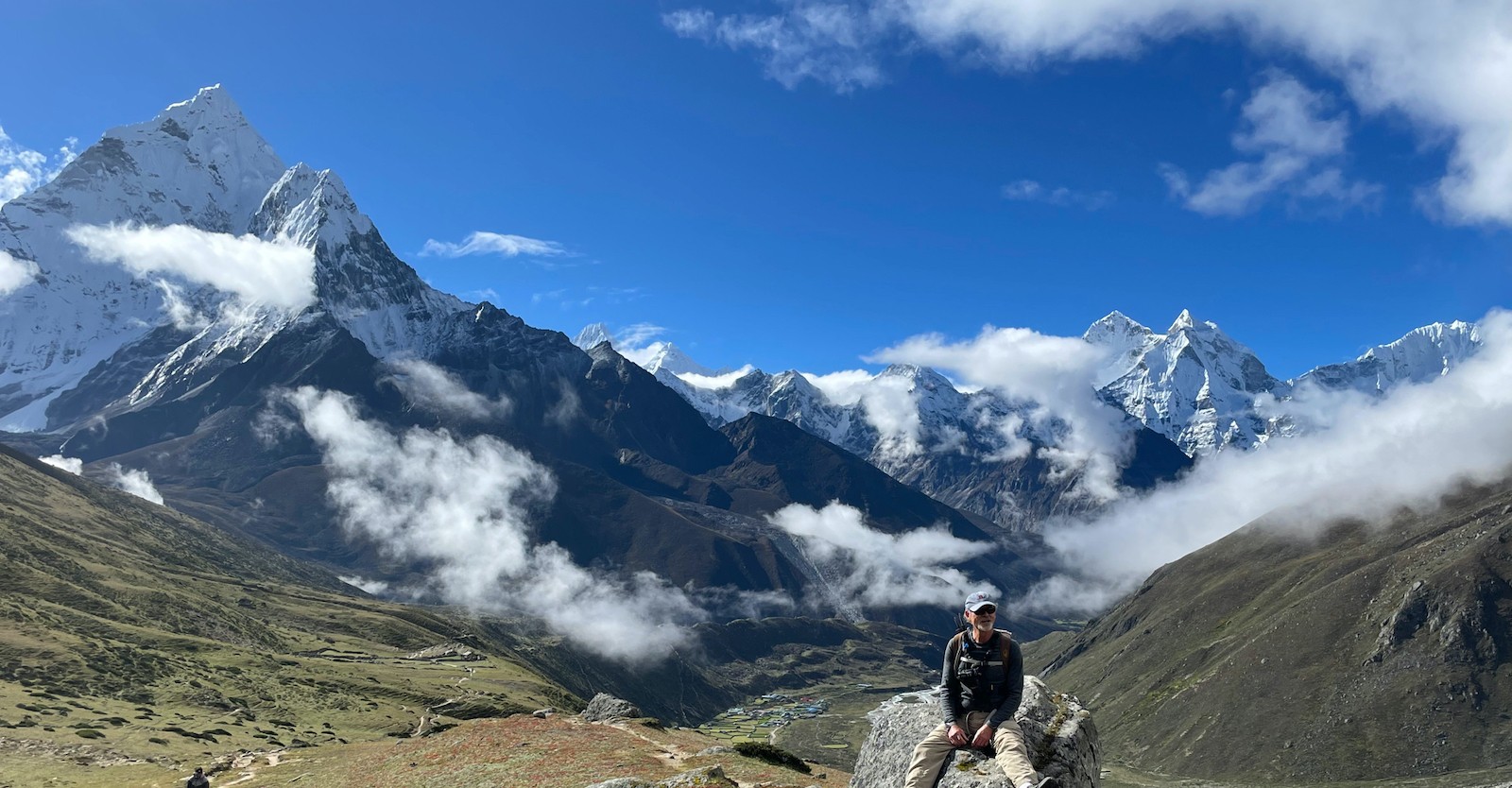
You need gear that plays nice in both scenarios,
In fact, this is shoulder season, and it’s glorious. Think emerald slopes, a welcome reprieve from October’s hordes, and a pretty decent shot at cloudless vistas of the world’s highest peak. However, the magic of the Khumbu means the weather’s an ever-changing chameleon as you ascend.
Here, you’ll kick off the journey in near-summer like conditions around Lukla and by the time you’re shuffling across the glacial moraine to Gorak Shep and the Base Camp itself, you’ll be teetering in sub-zero temperatures.
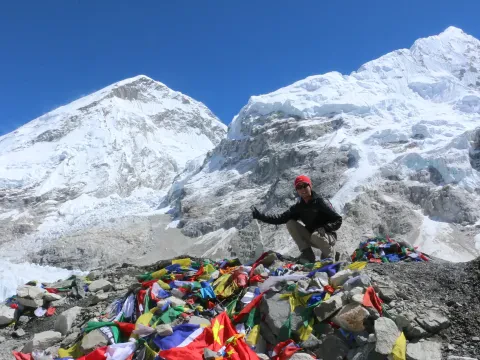
Adaptable layers are your new best friends,
| Packing Essential | Lower Valleys (Lukla – Namche Altitude) | High Alpine Zone (Tengboche – Gorak Shep Altitude). |
|---|---|---|
| Elevation | 2,860 m - ~3,440 m | 3,860 m - ~5,550 m |
| Primary Weather Worries | Damp heat, unpredictable drizzles, muddy paths | Blistering wind, deep overnight freezes, thin air |
| Key Upper Layer | Breathable synthetic or merino wool t-shirt, light fleece | Premium high-loft down jacket, layered over thermals |
| Footwear Game-Changer | Waterproofed, breathable socks and mid-ankle hiking boots | Super warm Merino wool socks (3-4 pairs), sturdy boots with great traction. |
| Hydration Strategy | 3-4 liters per day – often more at lower altitudes | Insulated water bottle holders and a vacuum flask for hot drinks |
Flight Logistical “Pro” Tip: Don’t be alarmed by the occasional early morning fog at Lukla airport, or the fading monsoon clouds, that can cause slight flight delays in the first half of the month. Your best bet is to build in an extra 2 days of buffer to your Everest Base Camp Trek itinerary – it’s nearly as vital as packing a top-notch down jacket!
Importantly, local guidance is a godsend in September. Experienced Sherpa guides have an uncanny knack for reading cloud formations, arranging alternate transport should the weather turn foul mid- trek, and, crucial at this time of year, securing the warmest beds available in the teahouses before the cold truly grips the higher passes.
Ultimately, September presents an unparalleled opportunity for trekkers seeking a balanced blend of warm valleys and crisp alpine air on their trip to Everest Base Camp. A hybrid clothing that accounts for this unique duality is the secret to a comfortable and unforgettable EBC Adventure.
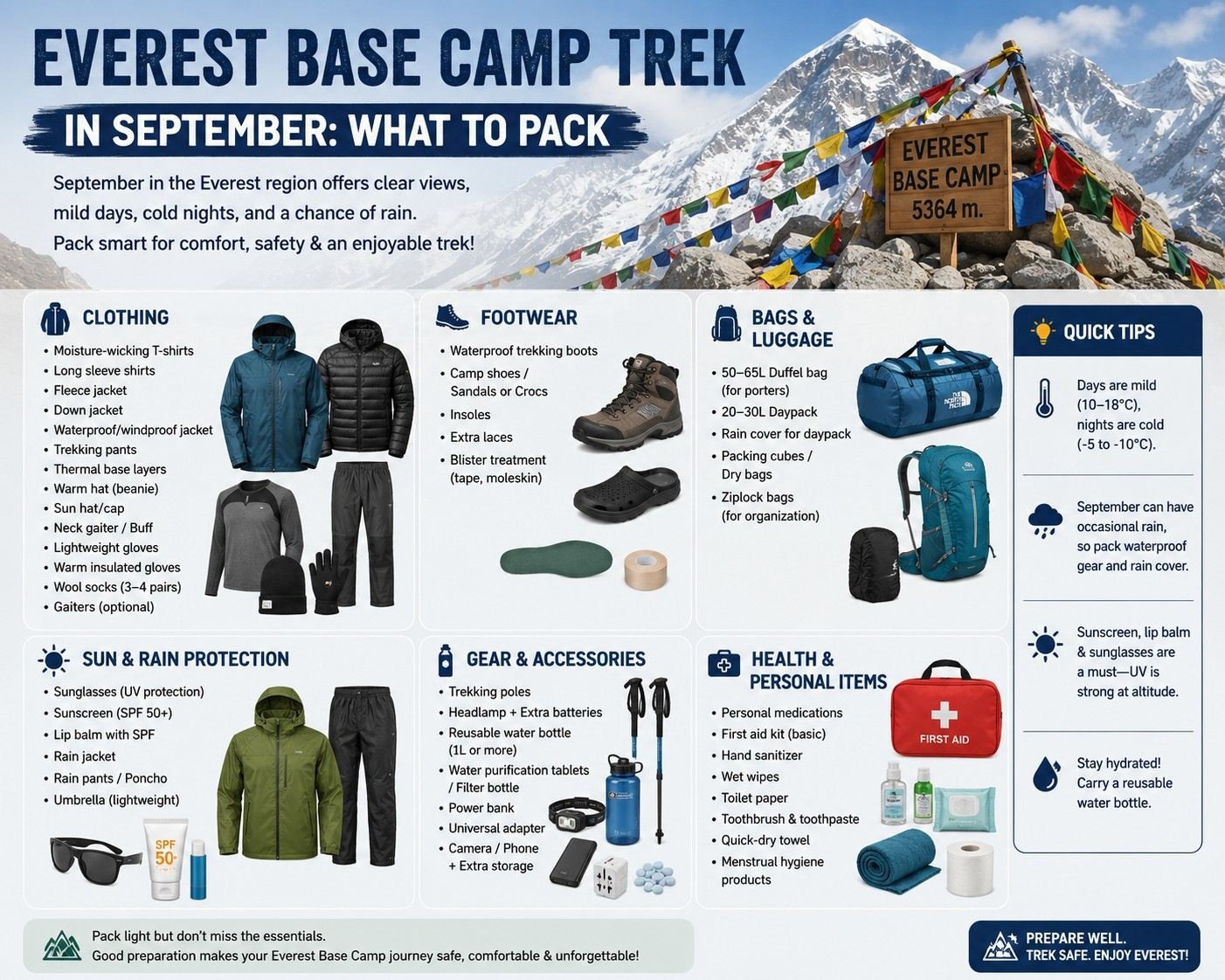
Actually, the temperature swings between Lukla and Everest Base Camp in September are, well, significant. Understanding these subtle, yet crucial, drops across altitudes will guide you in making those vital clothing choices. Lukla, at just 2,860m, might feel like a breezy spring day, but as you ascend into the realm of the Himalayas, so too does the cold… and considerably. Proper layering is key.
Lower Valleys (Lukla to Namche),
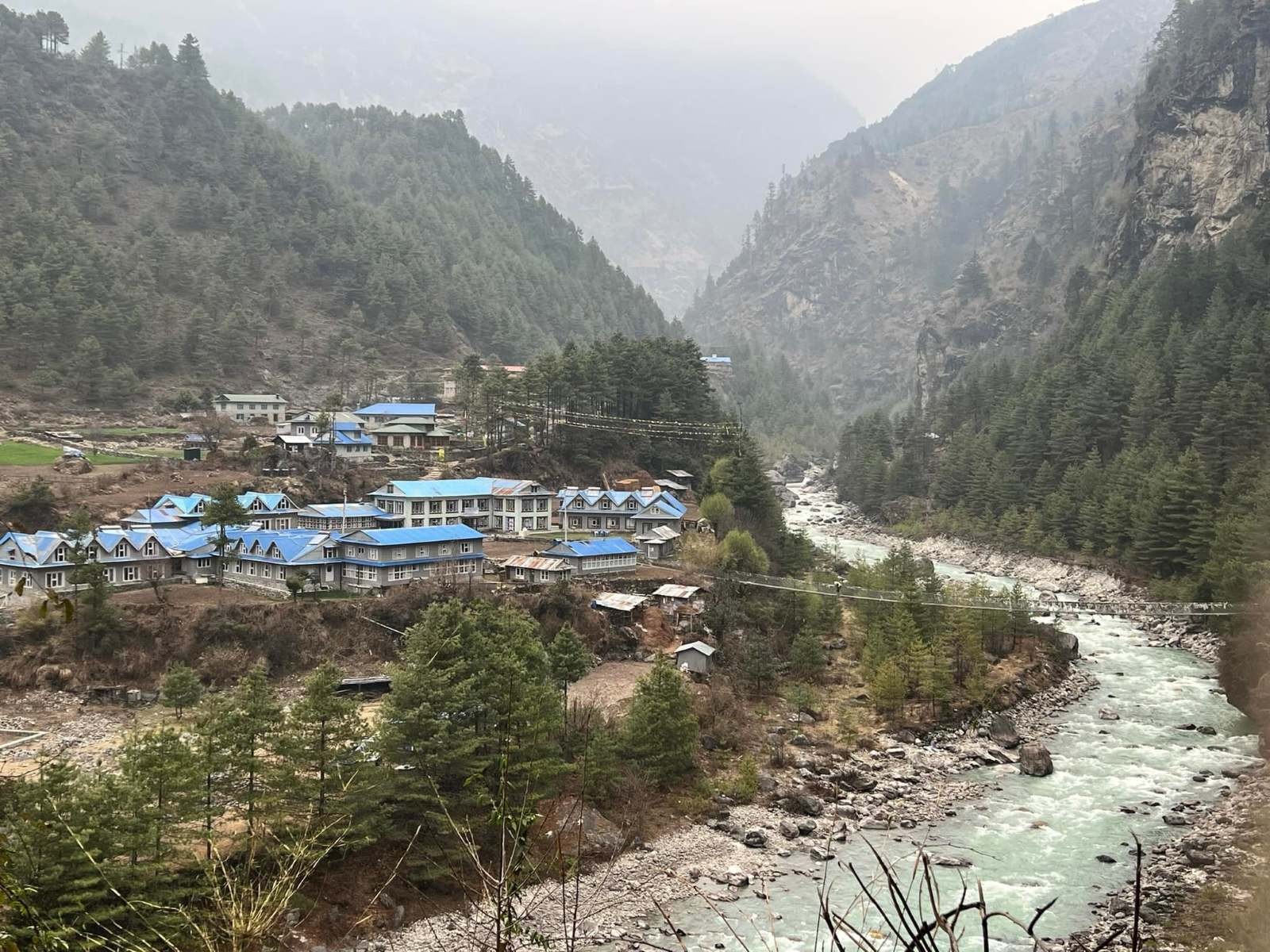
Evenings are cool, but not frigid, and the days can be quite pleasant – think pleasant hiking temperatures suitable for a light t-shirt.
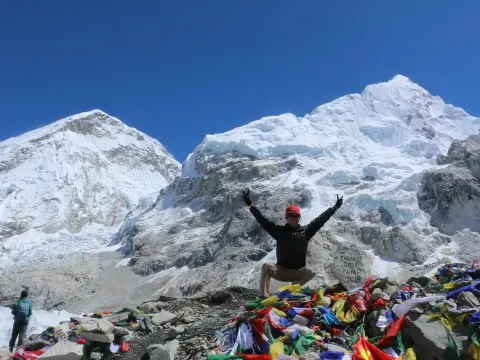
Mid and Higher Sections (Tengboche and beyond),
As you climb past 3,800m, the nights will become a noticeable shock to the system, dropping below freezing. At Gorak Shep (5,164m) and closer to Base Camp (5,364m), expect deep overnight chills and potential sub-zero conditions, especially in the very early morning pre-sunrise hours.
| Stop / Section | Elevation (m | Average Day Temp (C) | Average Night Temp (C) | Pack to Survive This |
|---|---|---|
| Lukla to Namche | 2,860 – 3,440 | 12 - 20 | 5 - 10 | Light synthetic or merino t-shirt, light fleece, windbreaker. |
| Tengboche to Dingboche | 3,860 – 4,410 | 8 - 15 | 0 - 5 | Mid-weight fleece, down jacket, warm base layers. |
| Gorak Shep & BC | 5,164 – 5,550 | 0 - 8 | -5 to -10 (and often colder!) | heavy, expedition-weight down jacket, full thermal base layers (top and bottom). |
Here, the Khumbu's vast temperature differentials mean one thing: layers, layers, and more layers. Your wardrobe strategy will be centered on managing that thermal regulation – starting with a moisture-wicking base, followed by an insulating mid-layer (fleece, preferably), and culminating in a robust down jacket for the upper reaches. Remember those flights into Lukla? Build a small cushion – just in case.
Importantly, a local guide is, without a doubt, the most invaluable resource you can enlist during your Everest Base Camp Trek in September. They will be intimately aware of the changing weather patterns, adjust your pace accordingly, and ensure you are safe and comfortable as you transition between vastly different climatic zones.
In essence, pack smartly by embracing the temperature gradients from Lukla to the very threshold of Everest Base Camp and you’ll be prepared for everything September the Khumbu throws your way, ensuring an unforgettable and consistently comfortable adventure.
Actually, the Everest Base Camp Trek throws serious temperature tantrums – searing hot in lower valleys, freezing and whipping winds up on the ridges. The best defense? The rock-solid 3-layer clothing system. This little secret is your ticket to comfort, keeping you balanced no matter how the weather spins.
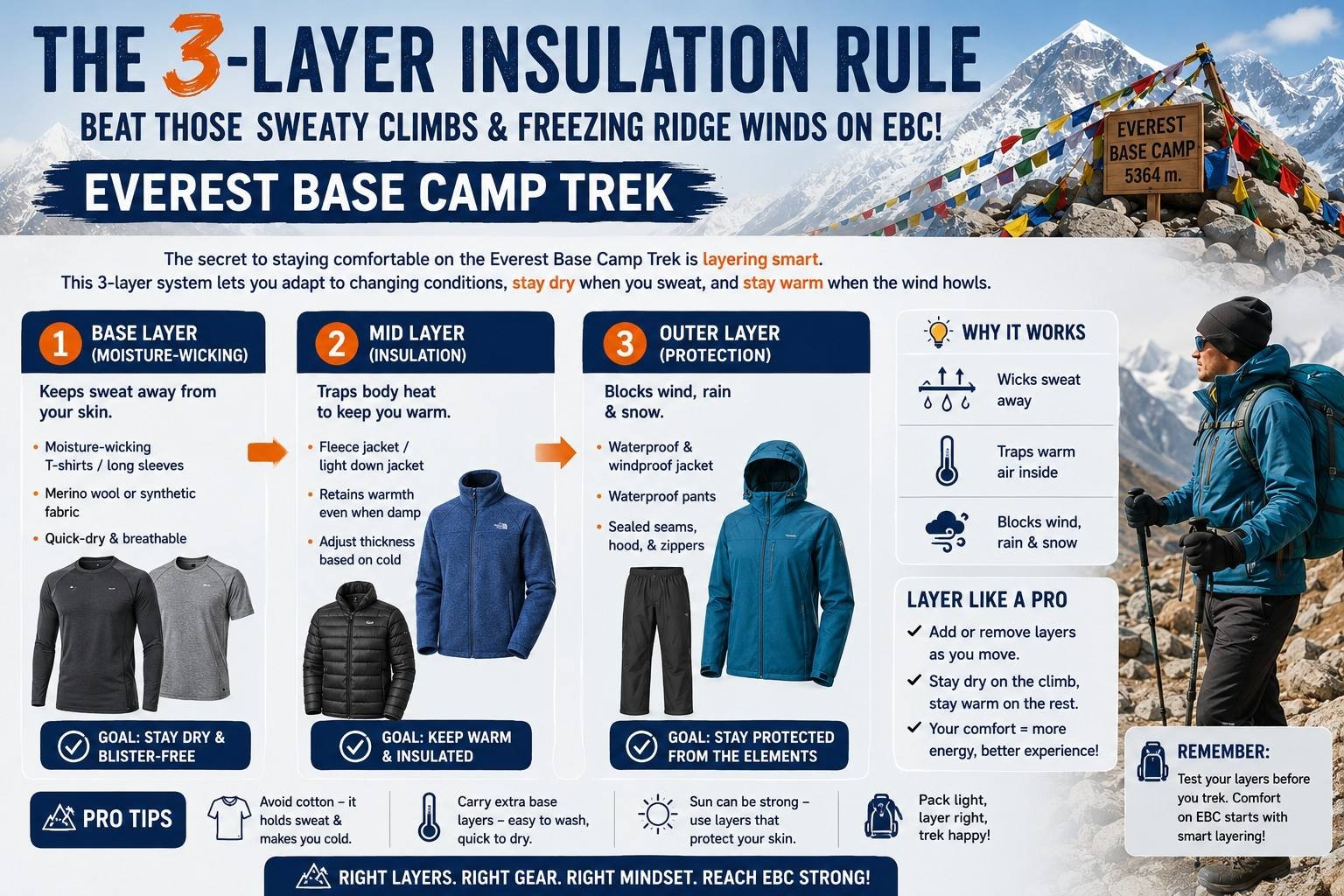
Why this layering is your EBC BFF:
| Layer | Your Secret Weapon | September Perks |
|---|---|---|
| Base Layer | Synthetic or Merino Wool shirt | Wicks away sweat like a boss; super quick dry! |
| Mid Layer | Breathable Fleece Jacket | Toasty warm but light as air; packs small! |
| Outer Layer | Heavy Down Jacket | Ultimate shield against the wind and biting cold. |
The Base Layer Low-Down:
Seriously, DITCH the cotton. In September’s humidity, cotton just loves to absorb your sweat and hang onto it like a wet, cold towel when the wind picks up. Trade it in for moisture-wicking synthetic or merino wool shirts. They’re like tiny sweat superheroes, pulling moisture away from your skin so you stay dry and feel fresh on those lung-buster inclines.
Your Versatile Mid Layer:
Slipping on a breathable fleece jacket is like giving yourself a warm hug. It adds an essential layer of warmth without weighing you down. You can whip it on during breezier sections or when you stop for a breather.
Best part?
Your Mighty Outer Shell:
In fact, this is your shield, your fort of warmth! A heavy-duty down jacket is non-negotiable on EBC in September. It’s your ultimate defense against the relentless wind and the brutal cold that can hit you faster than you can say “altitude.” You need this layer for the high passes and exposed ridges where the elements are at their fiercest.
The beauty of this system? You can dynamically adjust your clothing throughout the day, ensuring you’re never too hot or too cold. Many trekkers overlook this simple strategy, but by embracing the 3-layer rule, you'll significantly up your comfort game and truly enjoy your Everest Base Camp adventure!
In summary: Master the 3-layer insulation rule to conquer the sweaty ascents and chilling winds of your September EBC trek. A moisture-wicking base, a toasty fleece mid-layer, and a robust down jacket will keep you snug, dry, and feeling fantastic all the way to Everest Base Camp!
Actually, the early September sun might peek through, but those lower valleys, particularly south of Namche Bazaar, are still prone to a sprinkle or two (or a downpour if you’re unlucky!). Cloudbursts can materialize out of nowhere in the afternoons, so you’ve gotta be ready to shed that sunshine and embrace your inner water-fighter.
Pro Tips for Maximum Rain Defense
Why you CAN’T skip your rain protection here:
| Item | Why you desperately need it | Pro Tips for Maximum Rain Defense |
|---|---|---|
| Waterproof Hardshell Jacket | Keeps you from getting drenched and beat down by the wind | Slip it on the moment you see those clouds roll in! |
| Backpack Rain Cover | Protects your precious gear (and snacks) inside | Always stash it in a super-accessible outside pocket. |
Bonus Rainy Day Tactics:
By gearing up properly with rain protection, you’ll saunter through those beautiful green valleys without a care, able to soak in the views rather than being soaked yourself.
Conclusion: Arm yourself with smart outer shells for those lower EBC valley segments in September! A breathable, waterproof jacket and a reliable rain cover for your backpack are crucial investments that ensure you stay dry, happy, and focused on the incredible scenery, rather than wrestling with a wet trip.
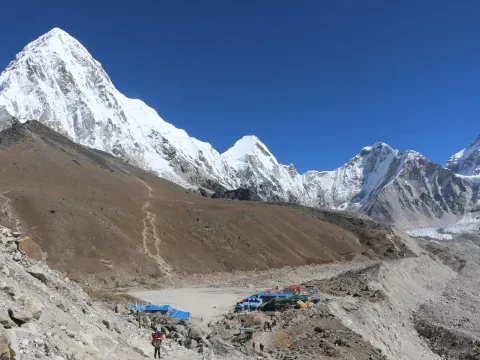
From the moist paths near the starting point to the rocky and morainal slopes high up, the Everest Base Camp trek demands robust footwear. The early days between Phakding (2,652m) and Namche Bazaar (3,440m) often involve slick, muddy trails with stone steps, especially in September. Your boots need to be waterproof to ward off dampness. As you ascend beyond Lobuche (4,910m), the terrain transitions to scree and loose rock; hence, strong grip is paramount to avoid slips.
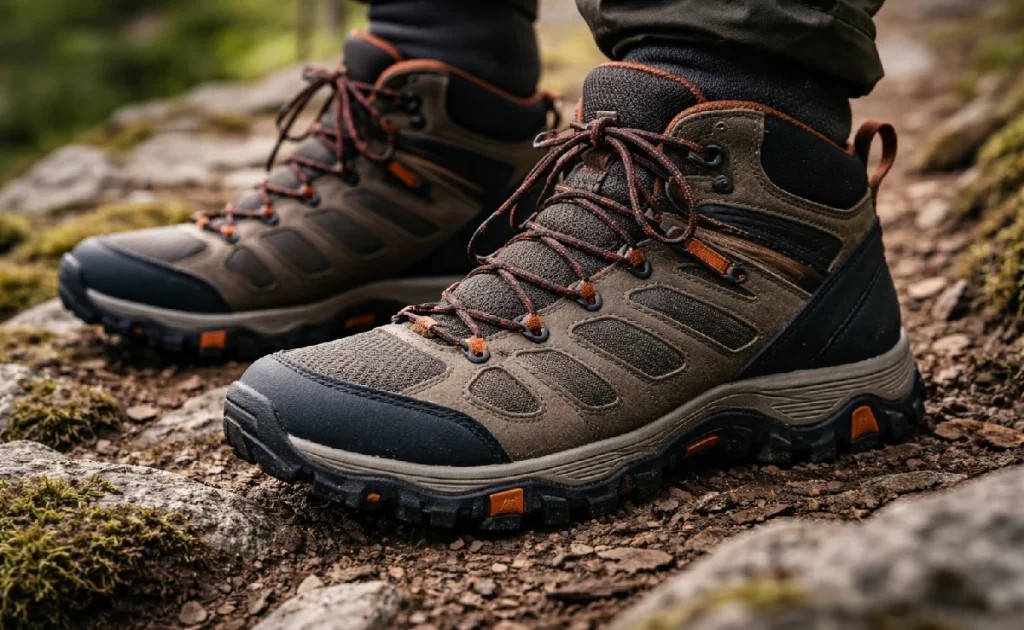
Why Proper Boots are Indispensable :
| Product | Key Characteristic | EBC Trek Advantage |
|---|---|---|
| Waterproof Hiking Boots | High-top design, waterproof membrane (e.g., Gore-Tex) | Shields feet from moisture, keeps them dry in mud |
| Deep Lugs on Outsole | Durable rubber with deep grooves (Vibram style) | Ensures excellent traction on slick and rocky ground |
| Merino Wool Socks | Breathable, temperature-regulating, moisture-wicking | Prevents blisters and keeps feet insulated and dry |
Footwear Strategy for EBC :
Here, the walk between Phakding and Namche Bazaar features tough stone steps prone to water accumulation in early autumn. Thus, waterproof boots with profound lugs provide indispensable security and confidence. As the altitude rises and the terrain becomes predominantly dry scree near Gorak Shep (5,164m) and Base Camp (5,364m), grip remains a top priority. Your footwear choices will ensure comfort for your feet from Lukla (2,860m) all the way to your ultimate goal.
In Summary: Equipping yourself with suitable footwear – a well-fitting pair of waterproof hiking boots featuring ample ankle support and aggressive lugs, complemented by high-quality merino wool socks – is perhaps the single most critical aspect for a successful September trek to Everest Base Camp. This gear combo is your foundation for tackling diverse trail conditions between Lukla and Base Camp.
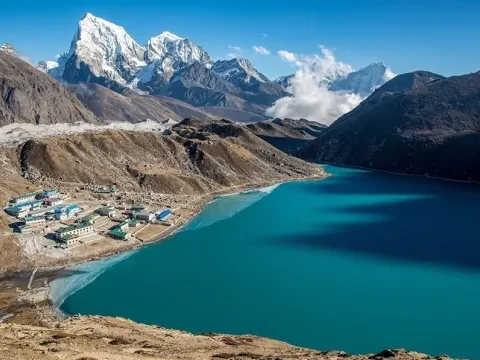
Actually, the humble teahouses along the Everest Base Camp trek are blissfully authentic, but they lack heating in the bedrooms. Consequently, the temperature can drop dramatically overnight. There are few lodges with electric blankets at Lukla, Phakding, Namche and Dingboche and they cost a lot. With nights at altitudes like Gorak Shep (5,164m) dropping to -5°C and below by mid-September, a dependable sleeping system isn’t optional; it’s essential for warmth and recovery.
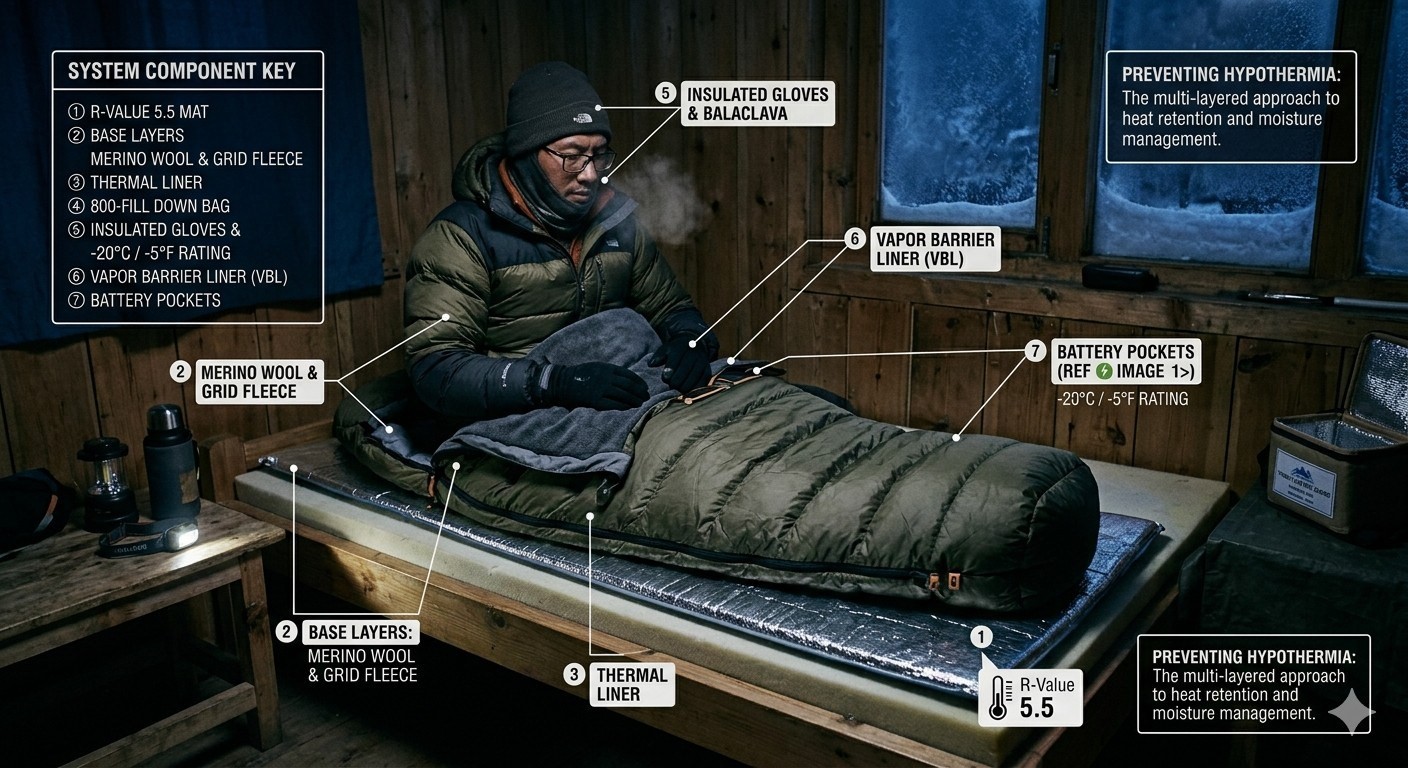
Must-Have Sleeping Gear :
| Component | Specification | Why It's Crucial on the EBC Trek |
|---|---|---|
| Sleeping Bag | -15°C (5°F) four-season rated | Guarantees warmth in intensely cold teahouse rooms. |
| Sleeping Bag Liner | Silk or cotton, smooth and breathable | Boosts thermal performance and ensures cleanliness |
| Lodge Blankets | Typically thin, provided by the accommodations | Serve as a valuable complementary layer for comfort |
Top Sleep Tips for EBC :
As your ascent continues through places like Namche Bazaar (3,440m), Dingboche (4,410m), and onwards to Gorak Shep (5,164m), the evenings grow progressively colder. A -15°C sleeping bag is your fortress against the frigid air, allowing your body to truly rest and rejuvenate after demanding trekking days. Here, you’ll wake up feeling more prepared for the challenges ahead from Lukla (2,860m) to Base Camp (5,364m).
The Key Takeaway: A well-chosen sleeping system, headlined by a -15°C down sleeping bag paired with a silk liner, is paramount for a comfortable and restorative Everest Base Camp trek in September. This simple yet vital investment ensures you’ll be warm and well-rested in the cold, unheated teahouses, allowing you to fully enjoy your epic Himalayan journey.
From Lukla (2,860 m) to the final frontier of Base Camp (5,364 m), this little buddy has to carry all your essentials if you hire a porter, and weigh about as much as a feather. Well, not exactly. It needs to be light, but a packed complete unit is the goal for maximum comfort.
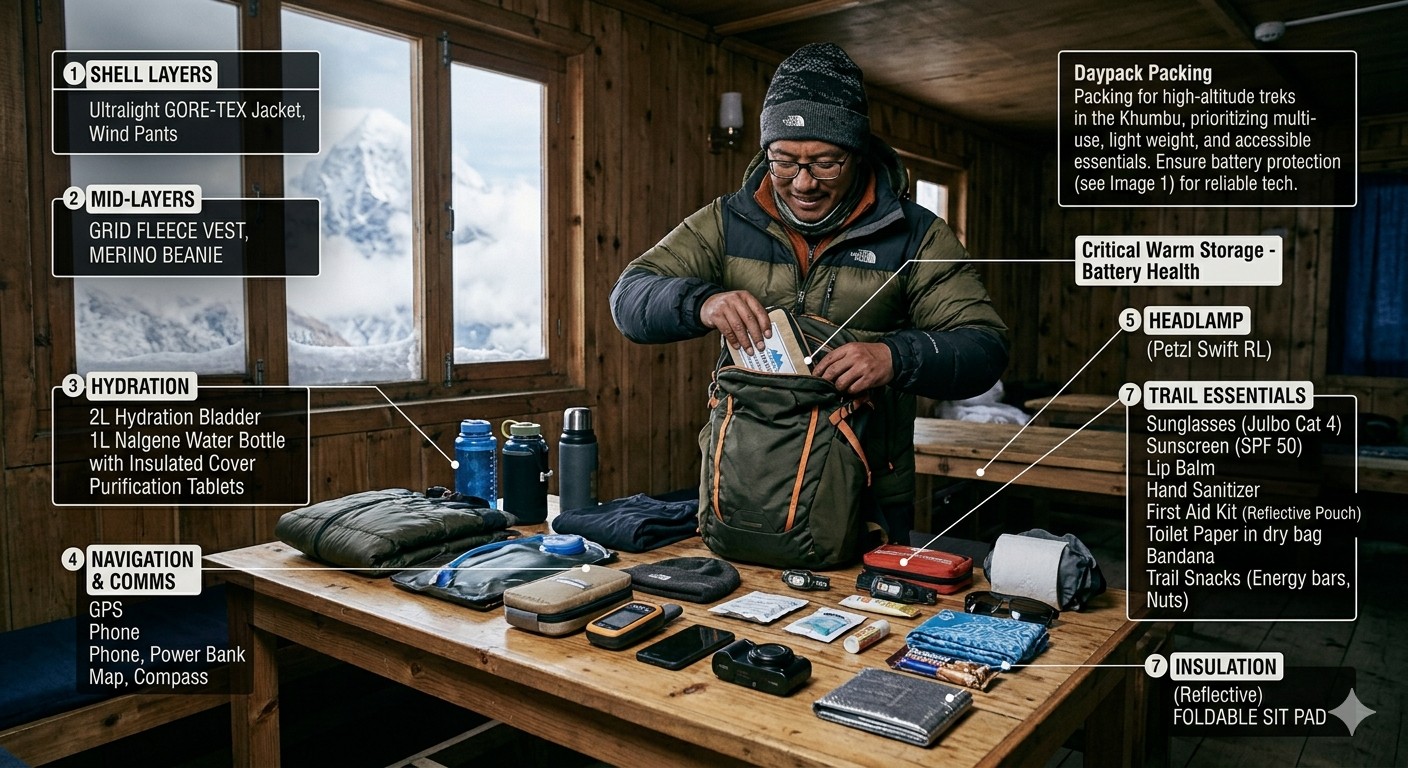
Daypack must-haves:
| Item | Why you need it | Pro-tip |
|---|---|---|
| Lightweight Rain Shell | Because weather forecasts are merely suggestions! | Top of your pack! |
| Water Bottles/Flasks | Stay hydrated, folks! That’s rule number one | Sipp regularly. Seriously. |
| Snacks | Instant energy when your legs feel like lead | Load up! |
| Passport, Cash, Permits | Necessary for all official (and unofficial!) checks | Ziploc is your bestie. |
| Camera/Phone | Capture those breathtaking Himalayan panoramas! | Protect it in a dry bag. |
| Sunscreen, Hat, Sunglasses | Sun’s fierce, especially above treeline. | Reapply often! |
In conclusion, you’ll want to organize your daypack strategically each morning, so grabbing what you need is as easy as a breeze. Because the temperature and scenery change drastically, it's the perfect place to layer and delayer your clothes as needed. So, for an unforgettable Everest Base Camp Trek in September from Lukla to Base Camp via Namche Bazaar (3,440 m), keep it light, keep it organized, and trek happy!
Here, the last leg of the Everest Base Camp Trek is a whole different ball game. Think sub-zero temps, sharp winds, and very, very early starts. When you make the iconic pilgrimage to EBC (5,364 meters) and then to Kala Patthar (5,550 meters) for that killer sunrise view over Mount Everest, you need specialized gear. We’re talking gear that can battle the biting cold and the darkness of the alpine dawn.
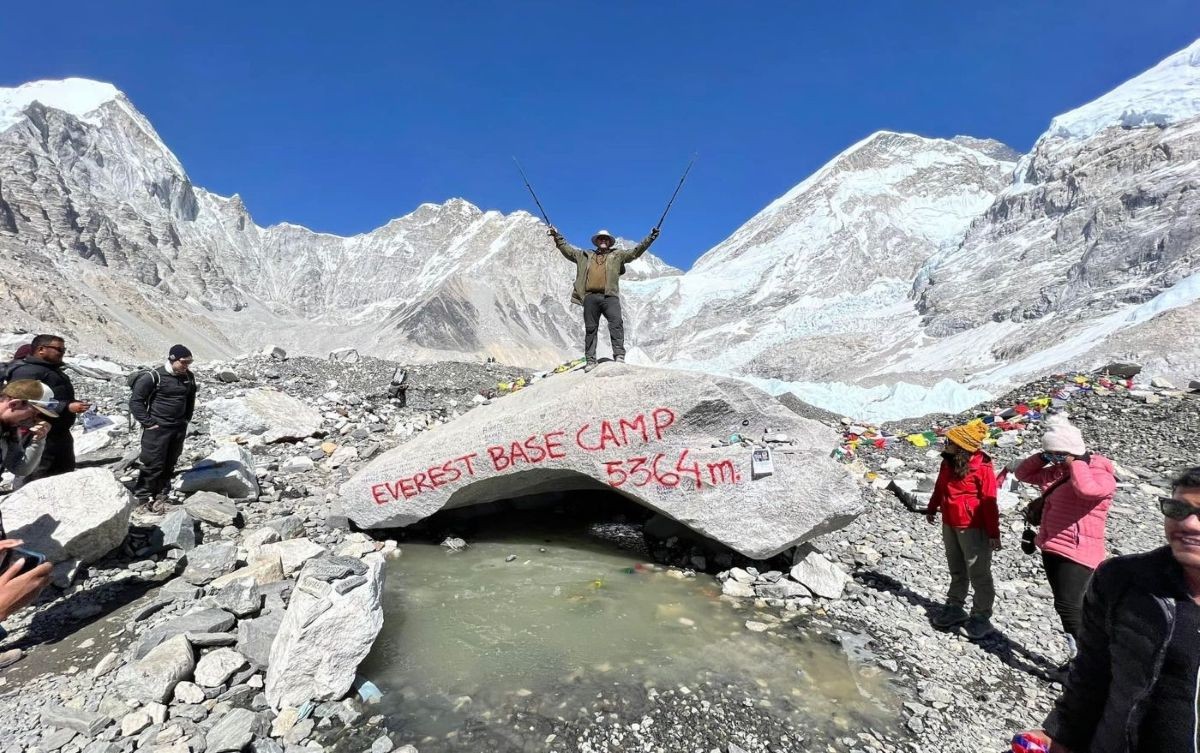
The Must-Haves for the Big Push:
| Item | Why it's vital | Quick tip |
|---|---|---|
| Headlamp + Spare Batteries | Your personal guide on the dark trail | Test it the night before. |
| Windproof Gloves | Keeps those extremities from freezing | Wear them from the word "go." |
| Warm Beanie | Your personal polar cap shield | Tuck it in tight. |
| Trekking Poles | Navigation aid on unstable alpine terrain | Adjust on the fly. |
Here, the alarm will likely blare before the sun, when you’re setting off from Gorak Shep (5,164 m), and the air bites like a husky. That headlamp cuts through the black, while poles stabilize your ascent on the tricky slopes towards Kala Patthar (5,550 m). As the sun peeks over the horizon, painting the Himalayas in gold, your warm attire makes the magic moment bearable.
Top Tips for These High-Altitude days:
In conclusion, conquering EBC (5,364 m) and Kala Patthar (5,550 m) in September is a significant feat, requiring smart packing for those cold pre-dawn hours. With a reliable headlamp, windproof gloves, a toasty beanie, and robust trekking poles, you’ll be ready for anything. These key items ensure you savor the stunning, frigid beauty of the Everest region and return with unforgettable memories.
Here, the chilly mountain air encountered on the Everest Base Camp Trek during September will rapidly drain lithium-ion batteries. At higher camps like Gorak Shep (5,164 m) and nearer Base Camp (5,364 m), your devices can become frustratingly useless. Thankfully, we have a solution. Plus, teahouses often levy hefty charges for electricity, so having your own power bank will save you significant time and money.
Recommended Electronics Gear :
Electronics Management Tips :
| Item | Why You Need It | Simple Tip |
|---|---|---|
| Power Bank | Powers your devices multiple times | Opt for a 20,000mAh for security |
| Headlamp + Spare Bats | Ensures safety during dark starts | Test functionality before bed |
| Dry Bag for Devices | Protects from cold & moisture | Pack inside sleeping bag at night |
As the nights turn seriously freezing at higher elevations during September, these small adjustments will make a noticeable difference in how long your batteries last. You'll be able to capture breathtaking photos of the imposing Mount Everest, use your headlamp to navigate your pre-dawn ascent to Kala Patthar (5,550 m), and stay connected.
In conclusion, meticulous mountain electronics care is fundamental for a successful Everest Base Camp Trek in September. Armed with a good power bank and strategic internal sleeping bag storage, you can avoid rapid battery depletion, save money on charging fees, and guarantee that your essential devices remain functional throughout your journey, allowing you to fully immerse yourself in the unparalleled beauty of the Himalayas.
Meanwhile, access to safe drinking water is critically important when trekking the Everest Base Camp, especially since the use of disposable plastic bottles has been restricted or banned in large areas of the Khumbu to help preserve its environment. That's why, at nearly every lodge and teahouse along the route, treating local water sources will be crucial for preventing any nasty stomach upsets.
Safe Water Management Strategy
| Item | Why You Need It | How to Use It |
|---|---|---|
| Reusable Bottle | Your daily water companion | Refill at teahouses as you go |
| Purification Tabs | Renders water safe for drinking | Follow the instructions on the packet |
| UV SteriPen (Opt) | Chemical-free water purification solution | Excellent for purifying larger amounts |
Practical Hydration Tips :
Starting your ascent in Lukla (2,860 m) and climbing steadily towards Base Camp (5,364 m), good hydration is your secret weapon for maintaining energy levels and staving off altitude sickness. With your reusable water bottle and trusted purification device, you'll have safe water at your fingertips, contributing to a healthy, happy trek while respecting the sacred environment of the Khumbu.
In summary, Hydration and high-altitude hygiene are non-negotiables on the Everest Base Camp Trek in September. By equipping yourself with a reusable bottle and reliable water purification methods, you'll ensure a constant supply of safe drinking water, protect yourself from gastrointestinal illnesses, and help keep the Khumbu's pristine beauty intact, making your unforgettable adventure even more rewarding.
As a result of the very cold and dry air in the Khumbu region, a common affliction for trekkers is the "Khumbu Cough" - a dry, ticklish cough that is quite bothersome. Therefore, a well-assembled but compact medical kit is vital in helping you maintain good health from the low-altitude town of Namche Bazaar (3,440m) all the way to Base Camp (5,364m). Because you’ll be exposed to cold, dry air for much of your trek, many people experience irritated throats and symptoms similar to Mild AMS. Prevent this by preparing for it.
Must-have Medical and Health items for the Khumbu :
| Item | Why you need it | How to Use It |
|---|---|---|
| Throat Lozenges | Help to soothe yourdry”Khumbu Cough” | Suck as needed while you’re on the trail |
| Buff / bandana | Shields you throat from cold, dry wind | Wear over your face/mouth on blustery trail sections |
| Blister Moleskin Tape | Prevents painful foot blisters from developing | Apply to areas that show sign of blistering early |
| Rehydration salts | Restores vital salts that have been expended due to heat loss and breathing | Drink a glass in water, particularly after long hiking day(s) |
| Diamox (optional) | Aids your body in acclimatizingto the high altitudes | Refer to the directions from your doctor or physician |
Here, your medical kit should be easily accessible in your carry on, as you won’t be able to remove your gear from your duffel bag until the end of each day, and that’s not ideal to have to do with the numerous stops you may need to make. You'll need to make adjustments to temperature and elevation as you travel from the relatively warm valleys around Phakding(2,652m)to the icy high camps around Gorak Shep(5,164m), and your medical gear is essential for making those adjustments. Drink as much water as you possibly can throughout the day, as it will be evaporated quickly due to dry mountain air.
Hiring a guide will make this part so much easier for you,
In conclusion, experienced guides will know when an AMS threat might be setting in and when you ought to get off the trail and to a lower elevation to recover. Simply put, preparing for potential illness with a good Khumbu medical kit is crucial for any trekking trips to the Everest Base Camp in September, and will keep you prepared and prevent any unforeseen health complications from interfering with your trek to Base Camp and beyond.
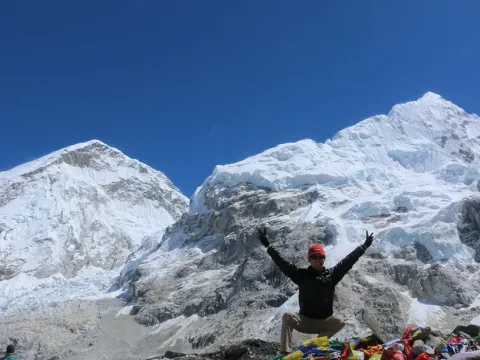
As the September Everest Base Camp trek begins, you are already well prepared with appropriate footwear, warm layers, and trekking gear. However, since Lukla’s Domestic airport imposes strict carry-on weight limits of 10 kg (22lbs) for checked duffel bags and 5kg (11lbs) for hand carry on backpacks at both the Kathmanduand and Manthali (Ramechhap)airports, packing lightly is extremely important.
| Category | Max Recommended Weight | Key Items to Double Check |
|---|---|---|
| Clothing and Layers | 4 to 5kg | Light, quick-drybase layer, a warm fleece, and your down jacket. |
| Footwear and Sun/Weather protection | 2 to 2.5 kg | Sturdy boots, 3-4 pairs of quality trekking socks, sun protection, waterproof coat & pant, and a trekking pole(s). |
| Sleeping bag and associated | 1.5 to 2kg | Sleeping bag with a warmth rating to -20°C (-4°F) or lower, sleep liner, camp shoes or sandals. |
| Electronics and Health | 1 to 1.5kg | Power bank with good charging capacity, head lamp, medication and a mini first-aid kit. |
| Total pack weight on flight(s) | No more than 15 kg | This can be comprised of a 10kg bag and a 5kg pack, or one larger pack. |
With morning clouds frequently obscuring Lukla's runway in September, packing a day or two’s’ contingency in both directions is always recommended when travelling from other countries. In addition, consider packing flexibility as your most essential component for weather disruption. Your seasoned local Sherpaguide, who will anticipate and react to changing conditions like cloud cover and will rebook travel arrangements on your behalf, as well as securing the warmest tea house rooms before night fall.
By packing light and strategically, according to the list provided above, you'll ensure that you have a safer and more enjoyable trek from Lukla(2,860m)all the way up to Base Camp(5,364m)and Everest View Point on your amazing September adventure.
In conclusion, planning the Everest Base Camp trek in September needs a smart packing list. September signifies the shift from the rain-soaked monsoon to the crystal-clear autumn. That means layers for showers, winds, and the extreme cold found at high elevations.
1. What kind of backpack do I need to pack for an EBC trek in September?
You’ll want to pack a daypack of around 30L to 40L size. This is for carrying personal items like a water bottle, rain gear, and your camera, handy during your daily hike. Your 50L to 80L Duffel bag that contains most of your gear, clothes and toiletries should be carried by a porter from tea-house to tea-house. This ensures you hike lightly and comfortable from low altitudes and then onwards to higher ones.
2. Is having waterproof clothing necessary for an Everest Base Camp trek in September?
Yes. September still offers opportunities for afternoon showers especially at the lower altitudes while hiking up from Lukla at 2,860 meters to Namche Bazaar at 3,440 meters. You MUST pack a good-quality waterproof and breathable jacket and rain pants to protect you from the downpours.
3. Which type of footwear should I wear for the Everest Base Camp trek in September?
Pack a comfortable and waterproof pair of trekking shoes that fit snugly and provide support to your ankles. While September might have dry conditions higher up, the paths can become muddy or slippery below the altitude of Tengboche (3,860m) and rockier at higher altitudes such as near the terrain to Gorak Shep at 5,140m. Do bring along spare pairs of merino wool socks, they tend to absorb moisture well.
4. How many layers of clothing do I need to pack for an EBC trek in September?
Plan for a three-layer system. This include: - BASE LAYER: Wear an item of synthetic clothing or one made from merino wool close to your skin to wick sweat away from your body; - MIDDLE LAYER: Wear a fleece top to keep warm; - OUTER LAYER: Wear a water and windproof shell jacket to ward off the cold, the wind, and any precipitation. This triple layering will enable you to regulate your temperature from warm valleys to extremely frigid altitudes like Everest Base Camp at 5,364m.
5. Should I be packing a heavy down jacket for my September EBC trek?
Yes, and make sure it is a warm down jacket, because while the day may be sunny and comfortable in trekking trails, the temperature can fall sharply as the sun sets, especially once you’re at above 4,000 meters, such as in places like Dingboche (4,410m) and Lobuche (4,910m) where temperature tends to dip to below minus 15C during night.
6. What sort of sleeping bag do I need for trekking in September?
Take along a four-season sleeping bag, a bag that can handle temperatures down to at least -15C (5F). Even though all tea-houses provide blankets for comfort during trekking days in EBC, most rooms don’t have heating during chilly nights even at highest sleeping points of the trail like that of Gorak Shep (5,140m), thus having your personal bag to yourself is the wisest choice.
7. Do I need to pack any trekking poles for the Everest Base Camp trek in September?
Yes! trekking poles are helpful in saving your knees and ensuring that your balance isn’t lost particularly in rough and rocky trails or steep climbs. They’re really good for tackling the 700-meter descent into Namche Bazaar (3,440m) and can prevent you from falling on your face when descending from Kala Patthar at 5,550m.
8. Which types of headgear should I carry for the EBC trek in September?
Pack two hats, a wide-rimmed one to protect you from the sun, especially around Phakding village at 2,610m; and a warmer, fleeced version to keep you warm at higher altitude like Pheriche (4,240m) and beyond. The wind can be vicious and bite at you from all sides once you leave the tree line behind you.
9. What kind of handwear is important to have during the EBC trek in September?
You may want to carry a light pair of liner gloves for colder early mornings, and some thick ones which would bewind and water proof, for extreme cold. Your hands tend to get very cold when stopping at the high places to take photographs of the Everest Base Camp itself (5,364m) and also when watching the Everest summit (8,848.86m) appear right before you during the sunrise from Kala Patthar (5,550m).
10. How do I take care of drinking water supply for the trek?
Don’t pack disposable plastic bottles because they are not permitted in the Khumbu region. Make sure to carry two wide mouth water bottles (of around 1 litre or two) which you will be able to fill at different tea houses along the way (though there is a fee in each one of them), along with either water purification tablets, or a reliable UV filter or a water purifier you like. This should suffice to make all the water safe to drink and complete the 130km route.
11. Which personal toiletries do I really need for the EBC trek?
Biodegradable soap, an odor resistant towel, and wet wipes come highly recommended. Be aware, you’ll likely have to pay for a shower at the lodges, and there might not even be a working one to provide hot water at higher altitudes such as those at Lobuche (4,910m) – plus using a towel will take it so much longer to dry out. It’s a much better idea to use one of the quick-dry towels. Protect yourself with plenty of high-SPF sunscreen and lip balm for a smooth skin.
12. Should I be packing my own personal medical kit for the trek?
Absolutely. Apart from common medications, carry Diamox for the prevention of altitude sickness if your doctor has advised, pain relievers, cold medicines, bandages, and blister treatments with some antiseptic and disinfectant cream to clean any wounds. There are basic clinics located in some of the high-altitude villages like Pheriche (4,240m), but it’s sensible to carry a basic stash.
13. What kind of electronics and charging kit should I be taking with me for EBC?
Pack an up-market power bank to keep your mobile phone, camera and your GPS device going during the treks; there are no ATMs anywhere beyond Namche Bazaar, so make sure you carry sufficient Cash along with an spare battery pack for all your equipment as cold conditions have a negative impact on their battery life. Most tea shops charge you around US $1-3 for the privilege of plugging your batteries into there available sockets, which will usually be powered by solar electricity at such places like Gorak Shep at 5,140 meters.
14. Do I really need a headlamp to carry for my trek to Everest Base Camp?
Yes. You will require a good, powerful LED headlamp, as you’ll often wake up at 4 am to climb to Kala Patthar for an epic sunrise view and to see the 360° view of Mount Everest (8,848.86m) at 5,545m. Also to walk at night through dark alleys in tea house hotels; otherwise a flashlight is an alternative, just in case of any light outage issues or if it gets too chilly inside a tea house hotel while visiting the toilet or having dinner.
15. What are the important documents I must keep with me for my Everest Base Camp trek in September?
Your passport should be up to date for at least another 6 months, along with extra photocopies. Be sure to have at least four extra, recently taken passport-sized photos with you; these will be used to get necessary entry permits in region like for Sagarmatha National Park, Everest Region, local permits, and an internal Lukla permit. Also, pack a document proving your travel insurance; ensure it coverings high-risk evacuation and helicopter rescues up to an altitude of at least 6,000m. Don’t forget cash, because ATMS and card payment facilities are non-existent above Namche Bazaar at 3,440m.
16. Shall I pack microspikes for the EBC trek in September?
Early in September, ice is unlikely, but as the month progresses, snow can accumulate. While you're unlikely to encounter extensive snow except perhaps very close to Base Camp itself (5,364m), it's not impossible. Slippery ice or mud is something to prepare for, so a pair of light microspikes is a good addition to your gear list, particularly when exploring the area around Everest Base Camp itself at 5,364m or walking downhill.
17. What sort of high-energy snacks should I bring for the trail?
You can carry a bunch of your favorite protein bars, some chocolate, dried fruits, nuts, and electrolyte powder, to stay energized throughout the day. It’s worthwhile to carry some food since prices get doubled up as soon as yaks ascend high, for instance near Dingboche at 4,410m or near high passes, this ensures that you do not have to spend too much extra on snacking.
18. Is a quick-drying microfiber towel superior to a normal cotton towel?
Yes. Pack a small, quick-drying microfiber towel instead of a regular bath towel. Since teahouses above 3,860m don’t provide hot water for showers and rooms are cold at 4,910m like Lobuche, a cotton towel won't dry out, which leads to a frozen towel.
19. How can I best pack my clothing to keep it protected from rain during the trek?
Use plastic garbage bags, large ziplock bag, and waterproof stuff sacks or dry bags to keep all your clothes, sleeping bag, and electronics isolated from any water exposure. A bit of careful planning means your essential items are protected from the intermittent afternoon showers, and also keep them handy.
20. What is the number one packing mistake people often make when going on an EBC trek for the first time?
The biggest rookie error is over-packing unnecessarily, especially bulky cotton clothing that takes up too much space and dries too slowly, making you freeze on cool nights. Opt for a mix of breathable, synthetic, or merino wool clothing that can be layered for diverse temperatures and is easy to pack.
Our travel experts are ready to assist you with any questions.
Send us a message.Have a question before you book? Send your enquiry below and our travel experts will get back with the required information.