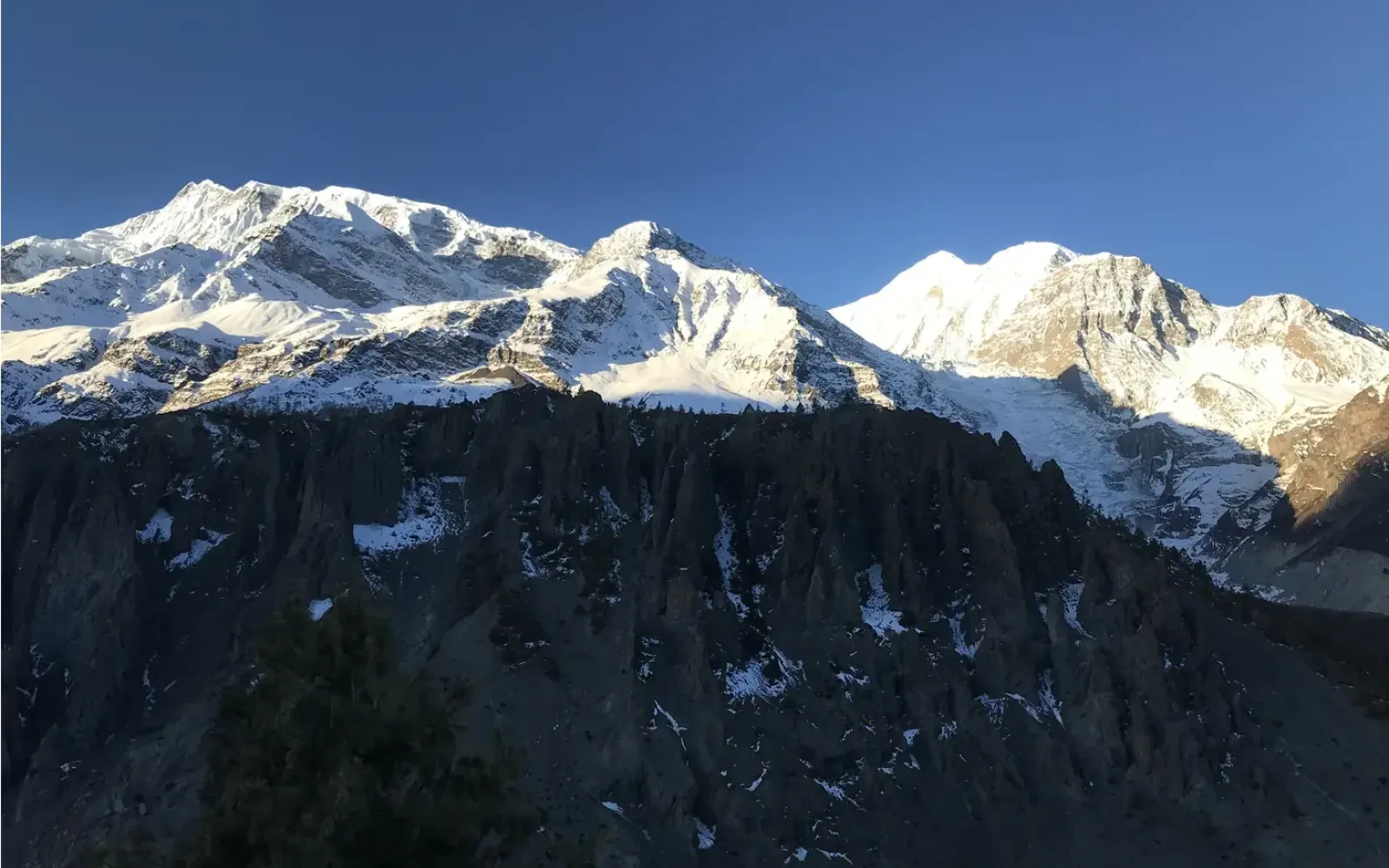
Actually, October is the gold standard when it comes to the Annapurna Circuit Trek because it truly offers the perfect mix of consistent weather, dry trails and stunning views. As the monsoon retreats, the mountains become crisp, clear, and stand out against deep blue skies-making it the most popular and rewarding time to complete the full circuit trek.
Likewise, you can enjoy comfortable daytime hikes in cool mountain air and soak up the beauty of post-monsoon scenery. The trails are firm underfoot, and even the rhododendron forests display some of their last autumn colors. You can also expect high passes to be free of deep snow, making for a secure and unforgettable journey through the Himalayas.
Why October is best Time for Annapurna Circuit Trek :
| Factor | October | Spring (March-May) | Winter (December-February) |
|---|---|---|
| Visibility | Excellent | Good (potential for afternoon haze) | Very clear, but very cold |
| Trail Conditions | Dry and stable | May contain some snow and slush | Potentially snowy and icy |
| Crowds | Very High (peak season) | Moderate | Very Low |
| Temperature | Ideal for trekking days, cold nights | Warmer days | Freezing temperatures |
Our Strategy to Avoid Crowds,
Here, start your trekking day very early (think 6:00 AM!) to reach your village for the night before the afternoon boom. This will ensure you have the best selection of rooms and a quieter experience. Experienced local guides utilize the NMT (New Natural Trails) network to steer clear of jeep tracks, keeping your trek authentic and wild.
Ultimately, October remains the most reliable and visually spectacular month to trek the Annapurna Circuit. It provides the optimal blend of safety, beauty, and accessibility.
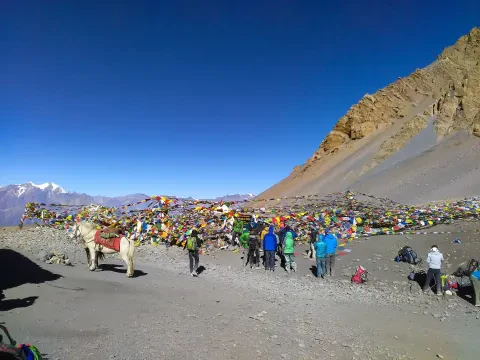
Meanwhile, October in the Annapurna Circuit presents one of the most favorable climates of any Himalayan trek. The lower regions offer pleasant temperatures, while at high altitudes, you'll find the crisp air you'd expect when surrounded by magnificent mountains.
Lower Regions,
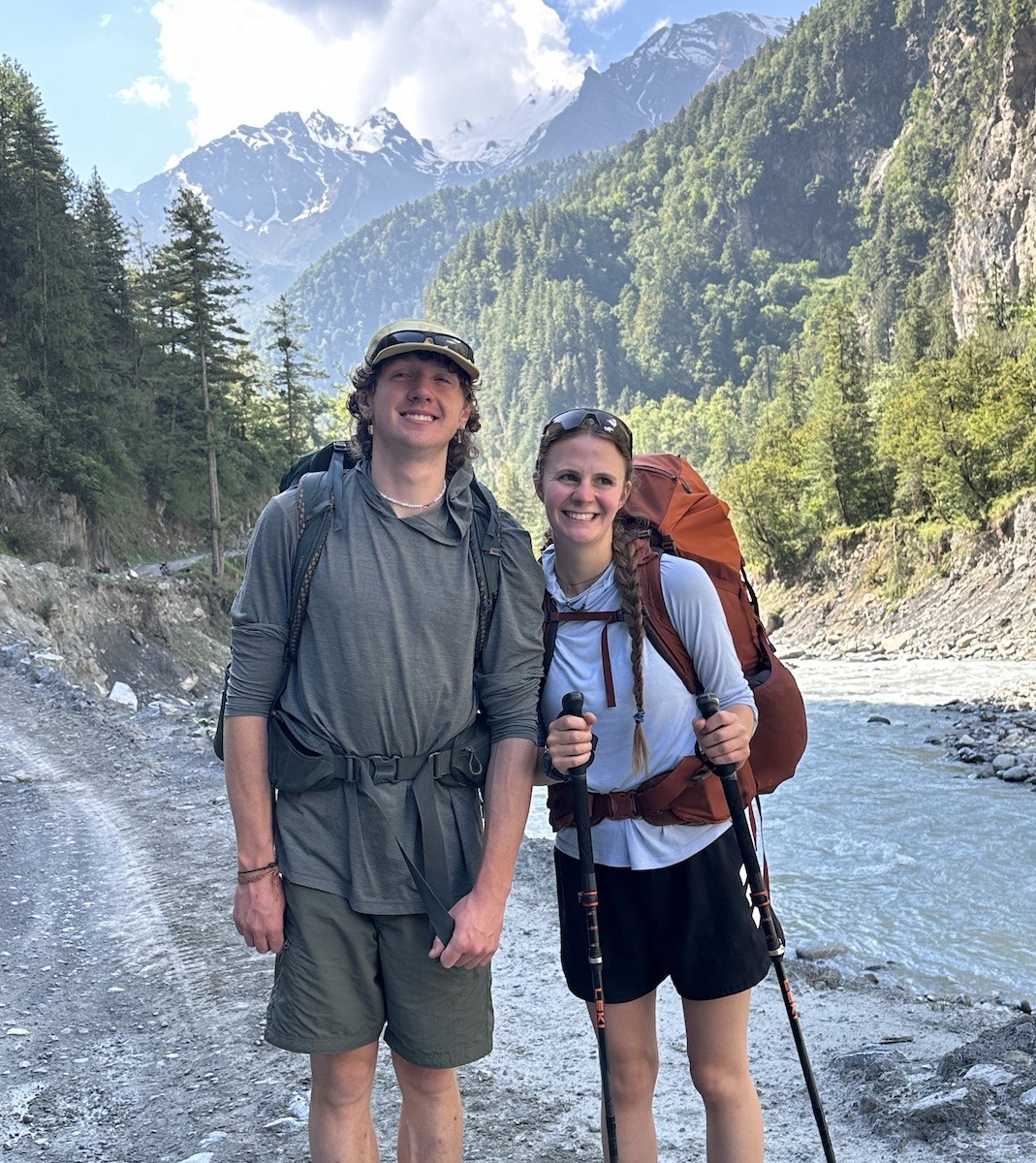
In places like Dharapani (1,860 m), you’ll typically find comfortable afternoon temperatures ranging between 18C and 22C. These mild conditions make for a pleasant initial phase of your trek as you pass through pine forests and river valleys.
High Altitude Camps,
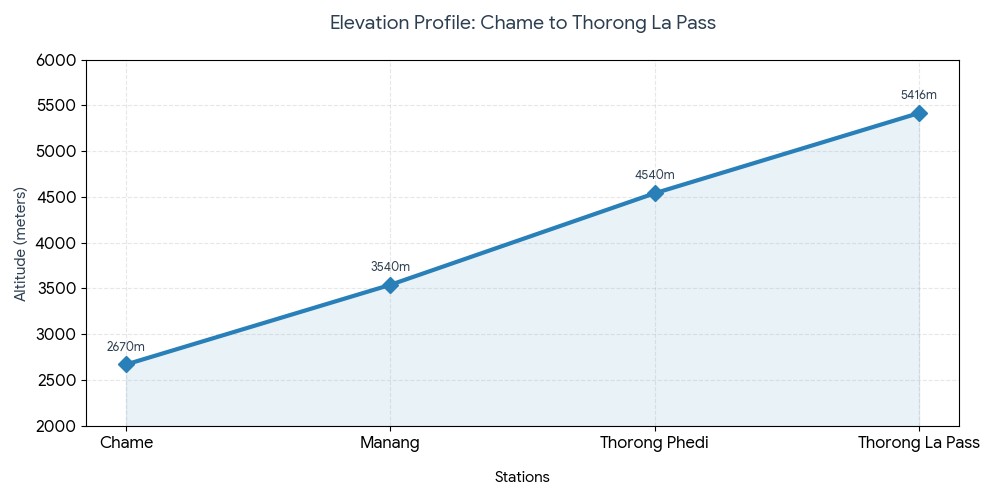
As you ascend above 4,000 meters, the temperature drops considerably after sunset during October. You can expect temperatures at Thorong Phedi and on Thorong La to sink to around -5C to -8C once it gets dark in October, even though days can remain quite sunny and enjoyable with the right layering.
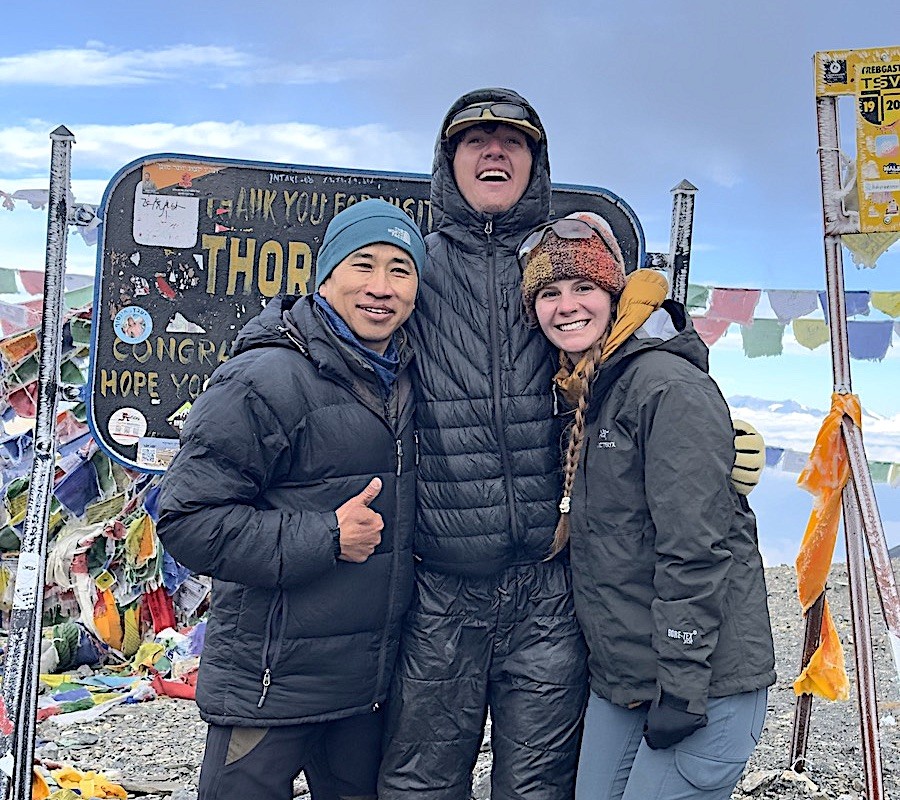
| Elevation Station | Altitude (Meters / Feet) | Average Day (October) | Average Night (October) | Trail Conditions |
|---|---|---|
| Chame | 2,670 m / 8,759 ft | 15-20C | 5-8C | Deep pine forests, stone paths |
| Manang | 3,540 m / 11,614 ft | 10-15C | -2C to 5C | Wide glacial valleys |
| Thorong Phedi | 4,540 m / 14,895 ft | 3-8C | -8C to -3C | Steep, rocky scree slopes |
| Thorong La Pass | 5,416 m / 17,769 ft | -5C to 5C (Crossing hours) | N/A (Crossing hours) | High-alpine exposed snow/ice |
What to Keep in Mind: October Weather Tips :
Overall, October provides a wonderful balance of comfortable trekking days and cool, crisp mountain air, making it one of the top choices for a successful Annapurna Circuit trek.
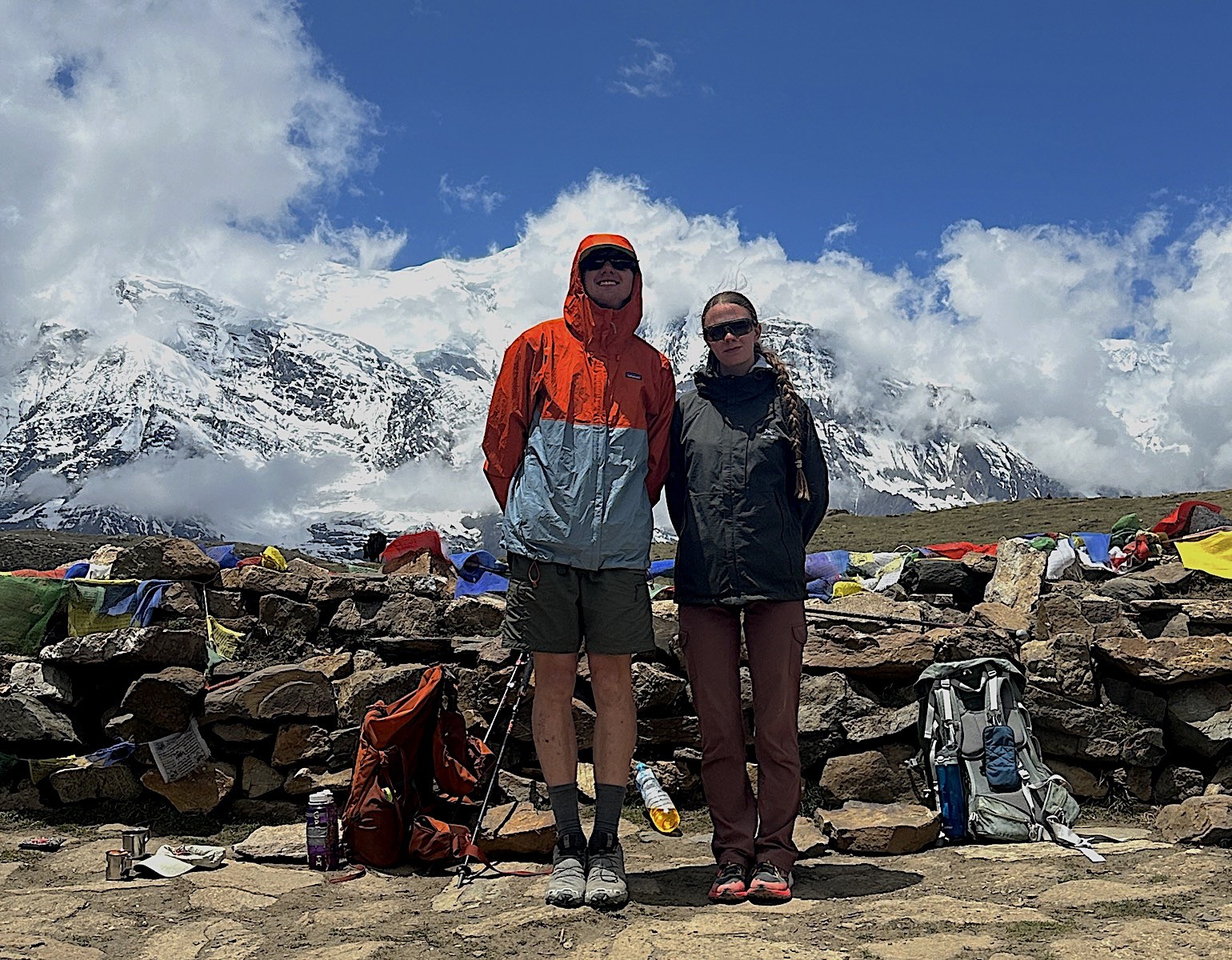
Actually, this is arguably the best month in terms of terrain on the Annapurna Circuit. The harsh summer rains have entirely subsided by October and, as such, the trails are solid, dependable, and provide you with rock-solid footing.
Why Trails are so Good in October :
| Condition | October (Post-Monsoon) | Pre-Monsoon / Monsoon Season | Advantage for Trekkers |
|---|---|---|
| Surface | Firm and stable, dry, and compact | Slippery and often muddy | Reduces falls, allows faster movement |
| Landslide Risk | Minimal to none | Significant | Increases safety and peace of mind |
| River Crossing | Low to moderate effort and safe | High risk and difficult | Facilitates smoother and faster daily progress |
| Overall Stability | Excellent | Poor to good | Enhances predictable and safe trekking |
Trail Tips for October :
Even though the trails are in the best possible condition, you'll still need your good, grip-friendly trekking boots (though you won't need to worry about purchasing traction attachments). Trekking poles can also be extremely useful, especially for managing steep downhill sections and traversing any rocky pathways that may exist. Start your treks as early as you possibly can to take advantage of the stable trails before the potential afternoon dust builds up.
To sum it up, the certainty of firm, reliable ground in October is one of the strongest reasons to travel then. It helps minimize fatigue, provides safety, and allows you to truly soak in the magnificent scenery instead of constantly worrying about slipping and sliding. In October, the Annapurna Circuit guarantees you safe footing and the most reliable trek.
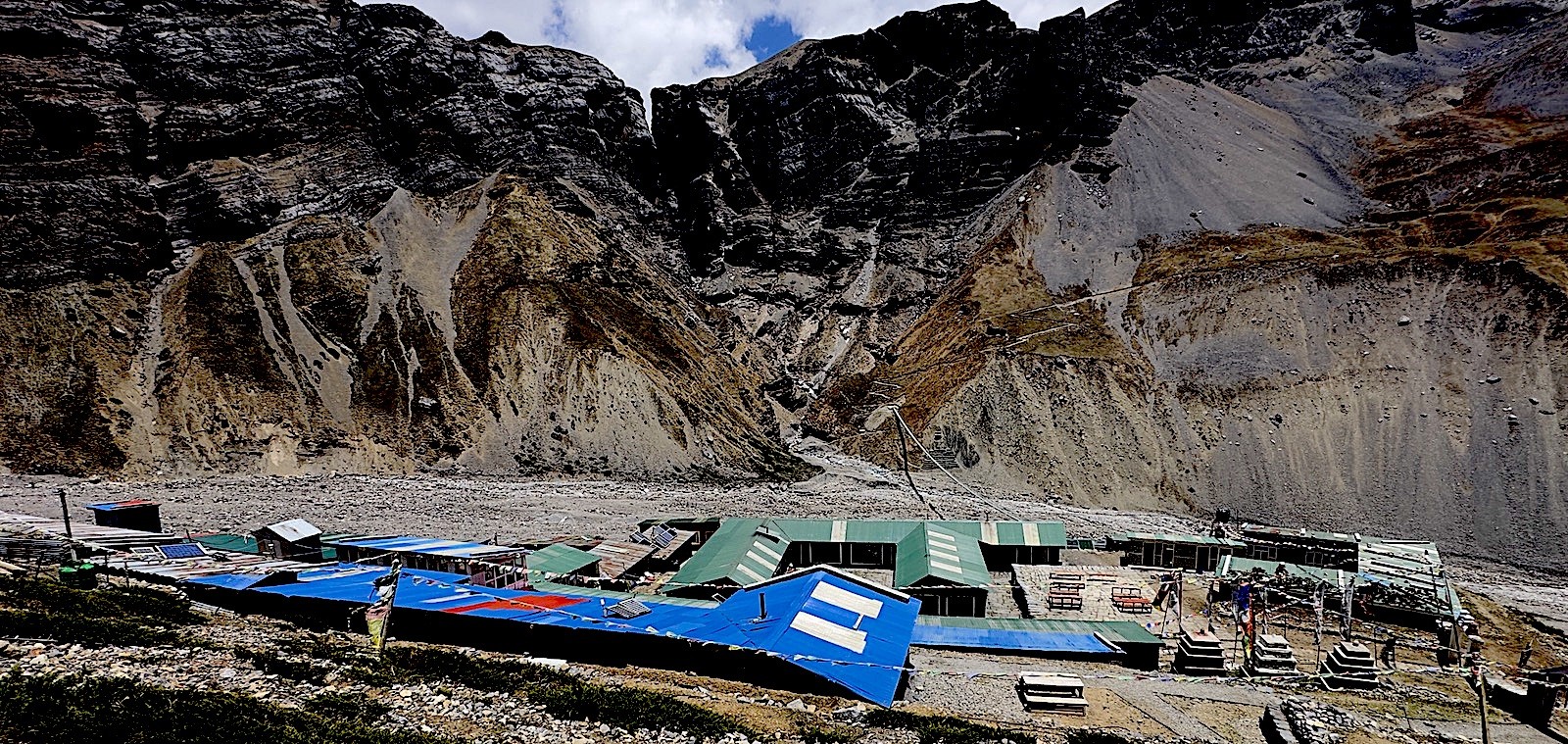
In fact, October marks the beginning of peak season on the Annapurna Circuit, and you’ll see it everywhere. Some teahouses will become quite busy and will fill up in the afternoon, but the overall atmosphere is electrifying.
Life at the Teahouses in October :
| Strategy | Recommendation | Benefits |
|---|---|---|
| Advance Booking | Work with a good trekking agency | Ensures rooms at busy hubs like Manang. |
| Early Starts Each Day | Head out between 6 and 7 AM | Prevents arrival after lunch when things get busy. |
| Be Flexible | Have backup villages in mind | Can help if your first choice is full. |
| Embrace Peak Season | Enjoy the social atmosphere | Meets fellow travelers, a truly dynamic environment |
Benefits of a Busy Circuit,
In addition to a greater likelihood of having friendly chats at the communal dinner tables and getting tips from fellow travelers, the locals are seasoned veterans when it comes to accommodating groups. Given this level of experience, your logistical needs, even at peak times, can be adequately addressed.
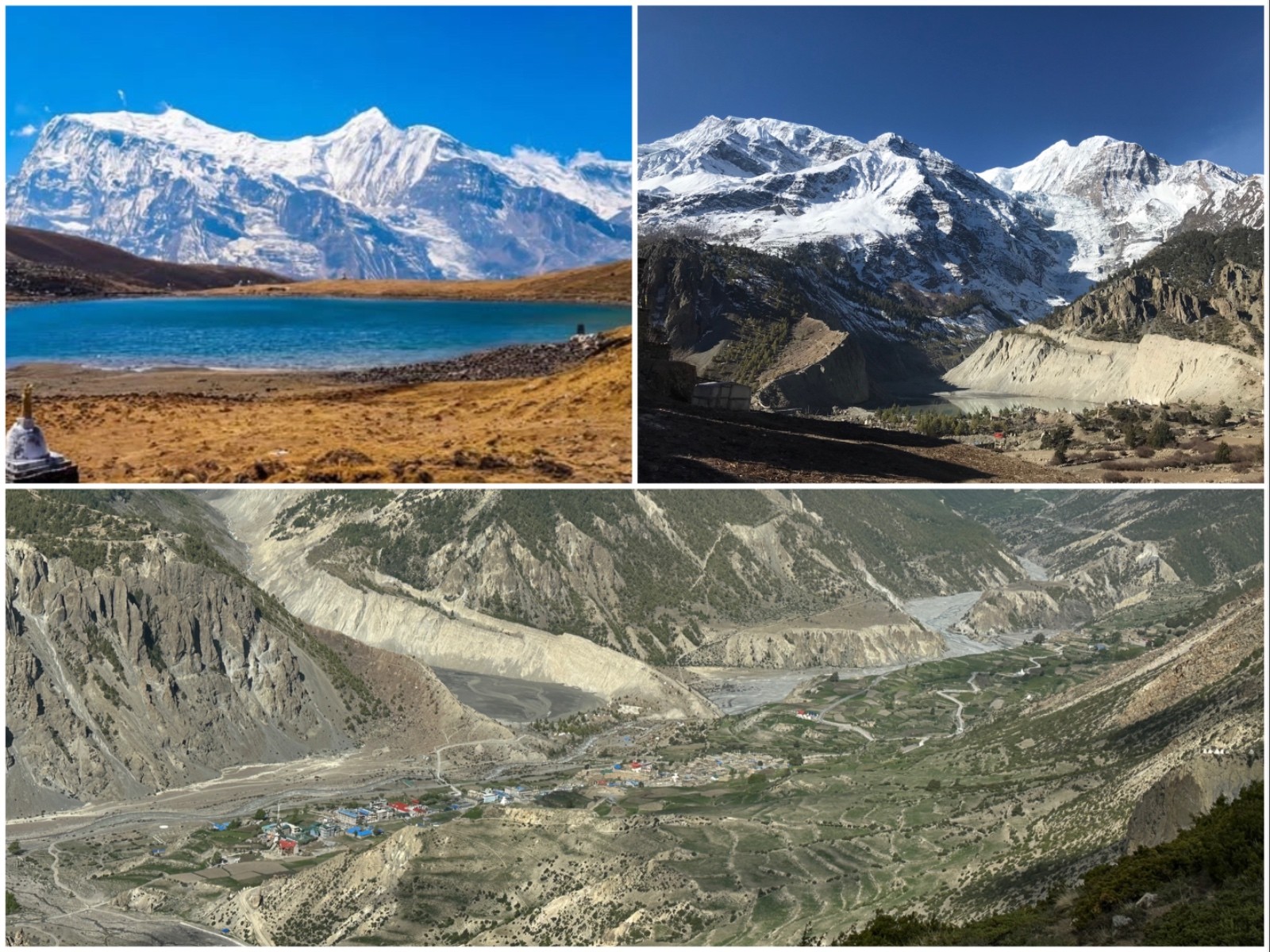
The most crucial altitude stop is Manang Village, sitting at 3,540 meters (11,614 feet). Planning at least an extra night in Manang Village is an absolute MUST if you’re to stand any reasonable chance of crossing Thorong La Pass successfully.
Why Manang Village is Ideal For Acclimatization :
| Side Hike | Elevation Gain | Time needed | Highlights |
|---|---|---|
| Gangapurna Lake | 200-300 m | 3-4 hours | Panoramic view of a gorgeous turquoise glacial lake & icefall. |
| Chongkor Viewpoint | 400-500 m | 4-5 hours | Fantastic vistas over the Annapurna massif. |
| Ice Lake (Optional) | 1000+ m | 6-8 hours | A stunningly dramatic glacial lake at high altitude. |
Additional Acclimatization Advice :
In essence, Manang is the ideal altitude break on the Annapurna circuit, this excellent break coupled with a host of amazing day hike opportunities will give you time for your body to adjust before tackling a section of trek which involves traversing at much higher elevations.
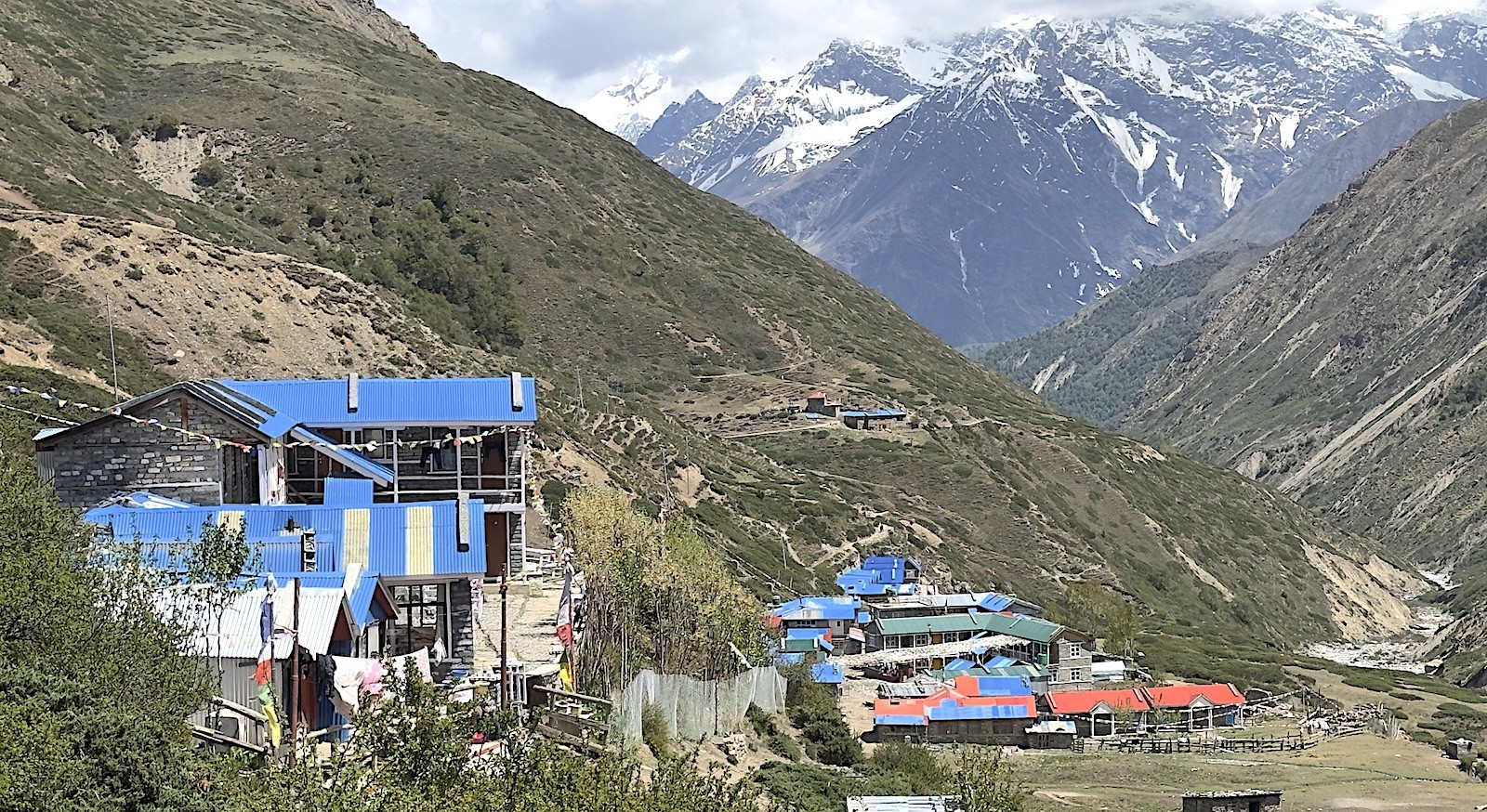
As you leave the dense forests behind you and begin to ascend towards Yak Kharka, you cross the “treeline” – a pivotal environmental shift into the barren high-alpine environment. This is the point of no return – you’re fully in the high altitude zone.
Environmental change,
The pine and juniper forests thin gradually as the barren landscape of rocky, dry slopes and pastureland opens up. Blue sheep and yak herders are commonplace and the air feels significantly thinner, demanding slower, more rhythmic breathing.
Yak Kharka :
| Zone | Vegetation and Landscape | Oxygen level | Hiking experience |
|---|---|---|
| Pre Treeline | Thick forests (pine and rhododendron) | Mountain vegetation and glacial moraine, wide slopes. | High | shaded, greenery and cool. |
| Above treeline | Wide pastures and barren rocky areas | Reduced oxygen | Open, exposed and spectacular vista. |
Recommendations :
As you pass the treeline you have made a transition into the vast, stark beauty of the high alpine, this transition occurs just below Yak Kharka the first real village of altitude, this has the result in a distinct reduction in the amount of available oxygen.
Meanwhile, Thorong Phedi (4,540 meters / 14,895 feet), otherwise known as High Camp (4,890 meters / 16,043 feet), represents the penultimate staging post before tackling Thorong La Pass, and arguably, the last truly 'comfortable' settlement on the Annapurna Circuit.
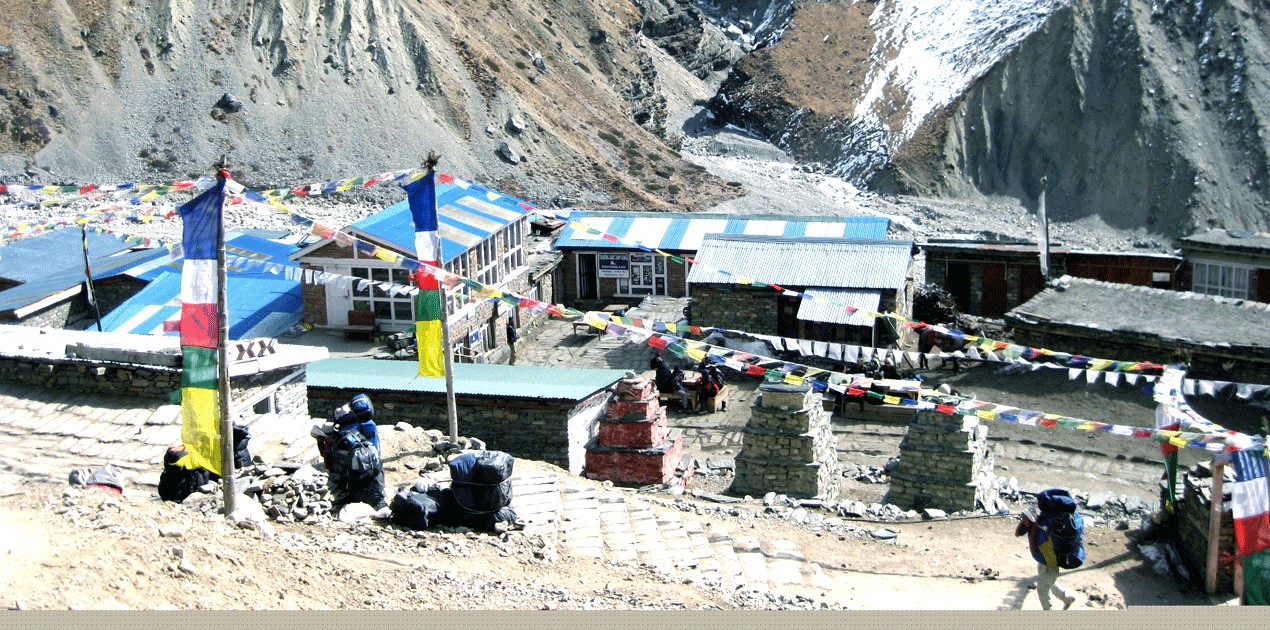
Here, the bitter cold and relative lack of facilities create a palpable and exhilarating sense of anticipation. It is a stark reminder that the highest point on your journey is drawing near, but it’s also an opportunity to mentally and physically prepare yourself for the ultimate challenge. The strong winds and sub-zero temperatures, while harsh, also forge the inner strength and resolve necessary for the summit day.
Life at Thorong Phedi / High Camp during October:
| Aspect | Details | Preparation Tip |
|---|---|---|
| Night Temperature | -8°C to -15°C | A -15°C or better sleeping bag is essential. |
| Accommodation | Basic, often shared rooms | It’s best to book accommodation via your trekking agency beforehand to secure a spot. |
| Atmosphere | Focused and anticipatory | Rest well and maintain a positive mindset to prepare for the mental test ahead. |
| Mental Preparation | High psychological stakes | Spend some time visualizing yourself successfully crossing the pass before drifting off to sleep. |
Mental Preparation Tips for Thorong Phedi:
In summary, surviving the high-stakes chill of Thorong Phedi is a quintessential component of the Annapurna Circuit experience. This final, harsh but memorable night before Thorong La Pass builds the mental fortitude required to successfully achieve the pinnacle of this extraordinary trek.
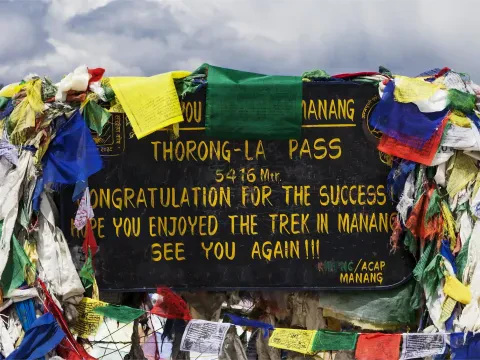
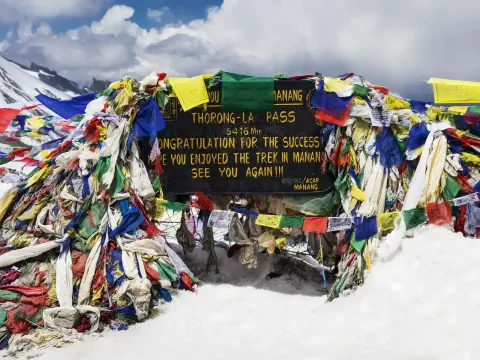
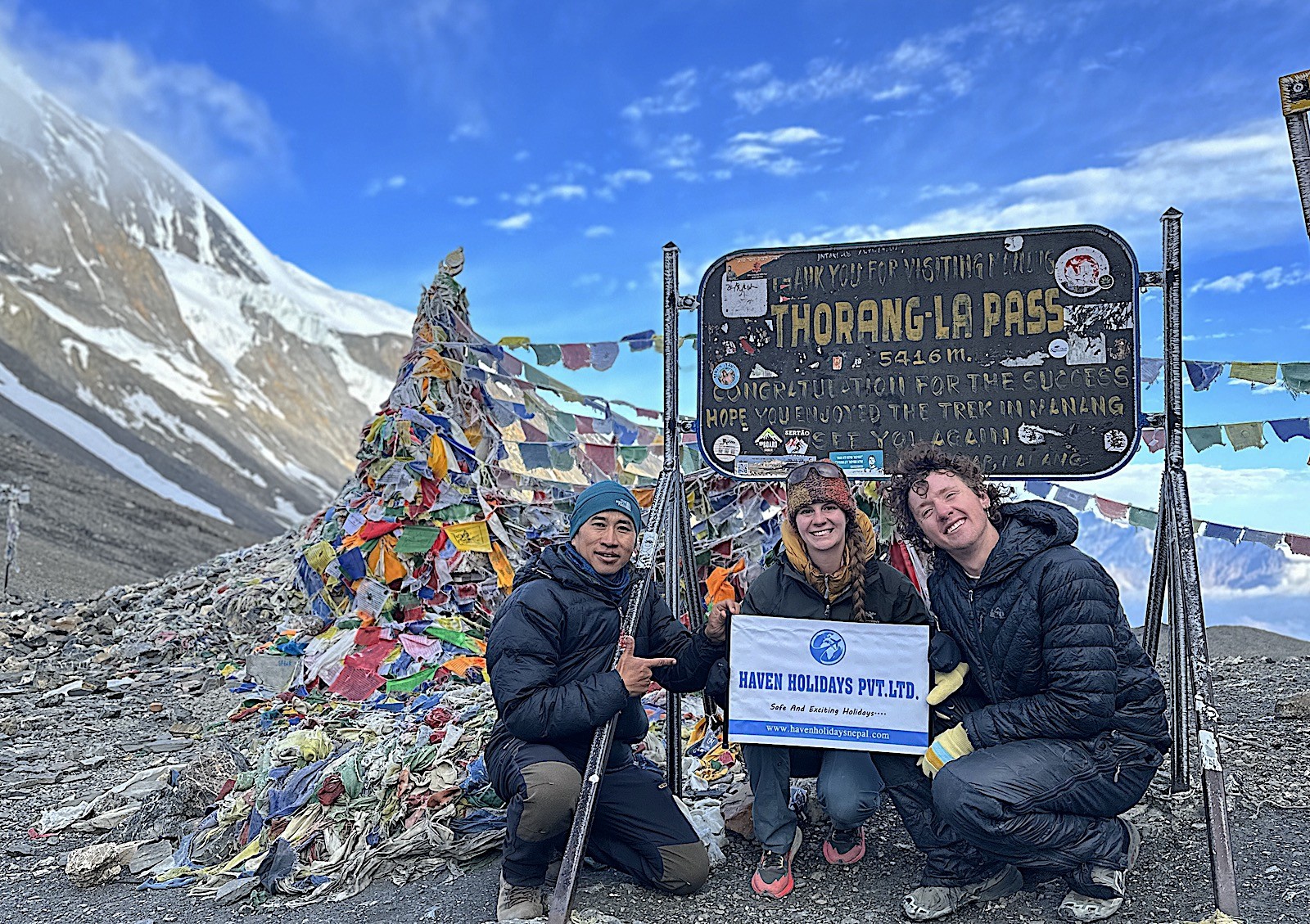
Meanwhile, the Crossing of Thorong La Pass, perched at an impressive 5,416 meters (17,769 feet) above sea level, is undoubtedly the ultimate achievement and physical peak of the Annapurna Circuit. October generally provides some of the most stable and favorable conditions for conquering this high-altitude challenge.
The Big Pass Day – Step by Step:
October Pass Advantages:
| Stage | Time Estimate | Key Advice |
|---|---|---|
| Pre-dawn Start | 4:00 AM – 5:00 AM | Headlamp and warm clothing layers are non-negotiable. |
| Ascent to Summit | 4-6 hours | Move at a slow pace and breathe deeply and consistently. |
| At the Pass (5,416m) | Brief celebration | Take a few photos, soak in the views, and begin the descent. |
| Descent to Muktinath | 4-5 hours | Be mindful of loose scree and take your time on the way down. |
Safety Essentials:
In conclusion, crossing Thorong La Pass in October is a peak experience that embodies the triumph and grandeur of Himalayan trekking. With the advantage of stable weather and clear skies, this momentous ascent becomes a truly unforgettable highlight of your Annapurna Circuit adventure
Actually, the descent into Muktinath after Thorong La pass provides one of the biggest landscape changes on the whole Annapurna Circuit. The rich, green slopes become desert-like when the trail drops into the Kali Gandaki valley’s rain shadow, resulting in arid, brown hillsides and considerable wind.
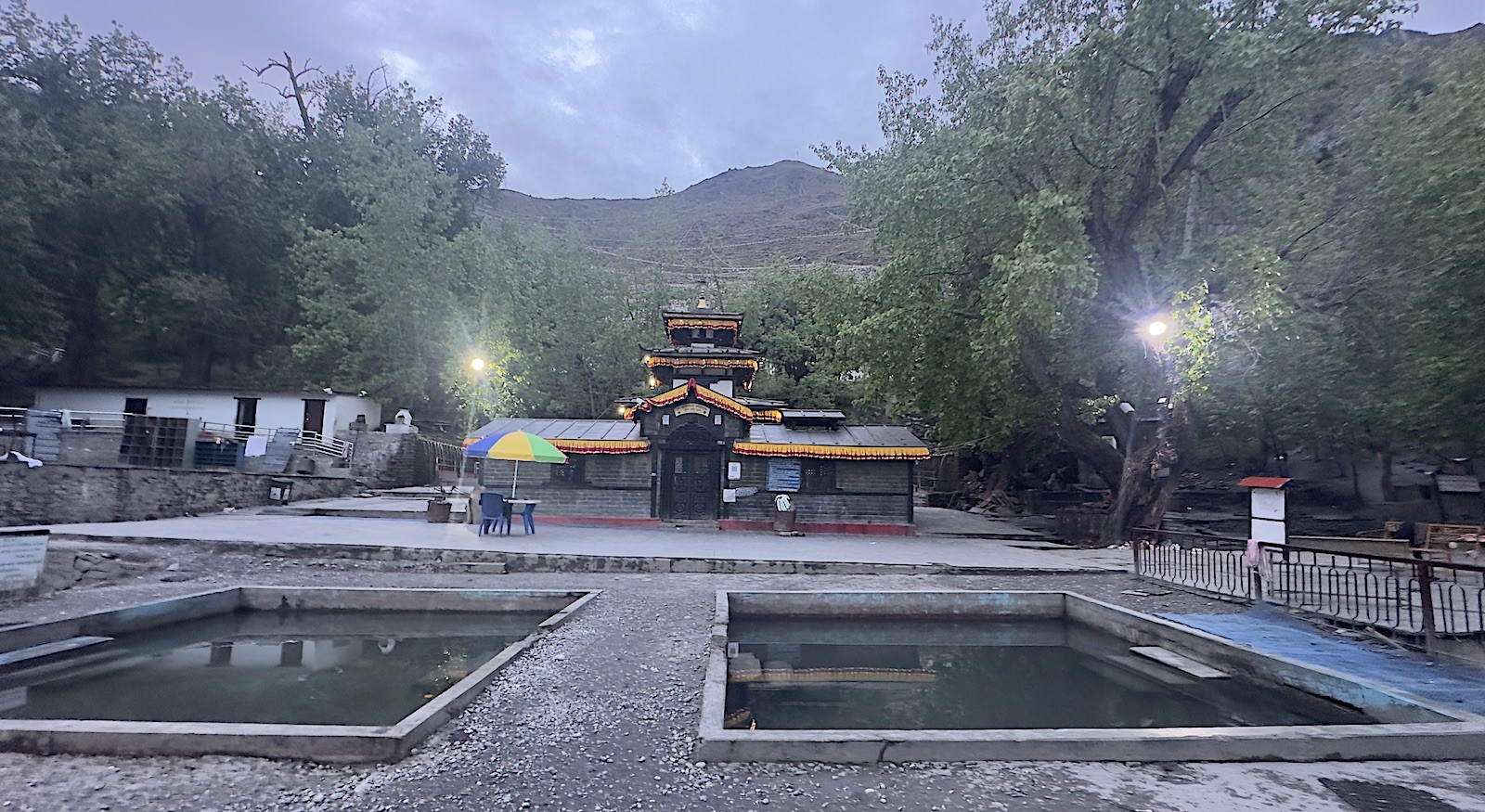
Reaching Muktinath,
Located at an altitude of 3,800 meters (12,467 feet), Muktinath is a blessed sacred place that is home to both Hindus and Buddhists. It houses 108 sacred water spouts, an eternal flame and historic Buddhist monasteries.
Key Features of the Descent :
| Attribute | Particulars |
|---|---|
| Height | 3,800 meters (12,467 feet) |
| Faith | Hindu/Buddhist |
| Monuments | 108 sacred waterspouts, eternal flame, etc |
| Environment | Calm and very spiritual |
What to consider,
Protect your knees and go slow on the descent.Most trekkers choose to stay a night at Muktinath to rest up and take in the sacred sites before continuing down the valley.
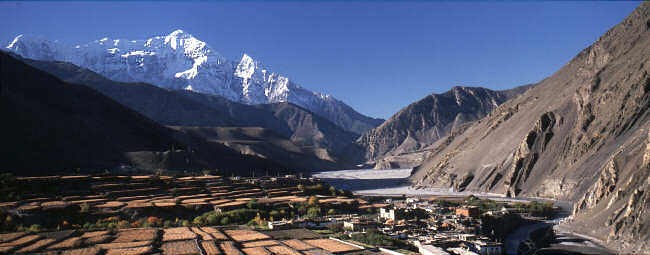
From Muktinath onward the trail turns towards the windy corridor of the Kali Gandaki Valley – one of the deepest canyons in the world. The character of the trekking here changes completely.
The Kali Gandaki wind,
Every afternoon, a strong wind blows up the Kali Gandaki gorge. The winds can be powerful in this open valley section of the Annapurna Circuit, and most trekkers try to reach their destinations before midday so they do not need to hike into the strongest winds.
Jomsom and Marpha charm,
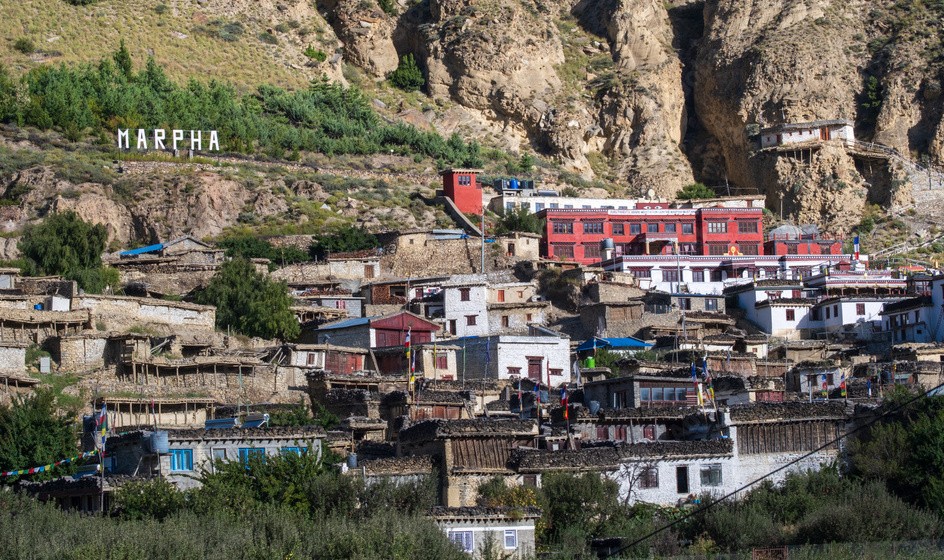
Actually, the regional headquarters for this district is Jomsom – where you can find an airport and more shops than most places on the route. Jomsom has a neighbouring village, Marpha, famous for its apple brandy and lovely stone-lined pathways.
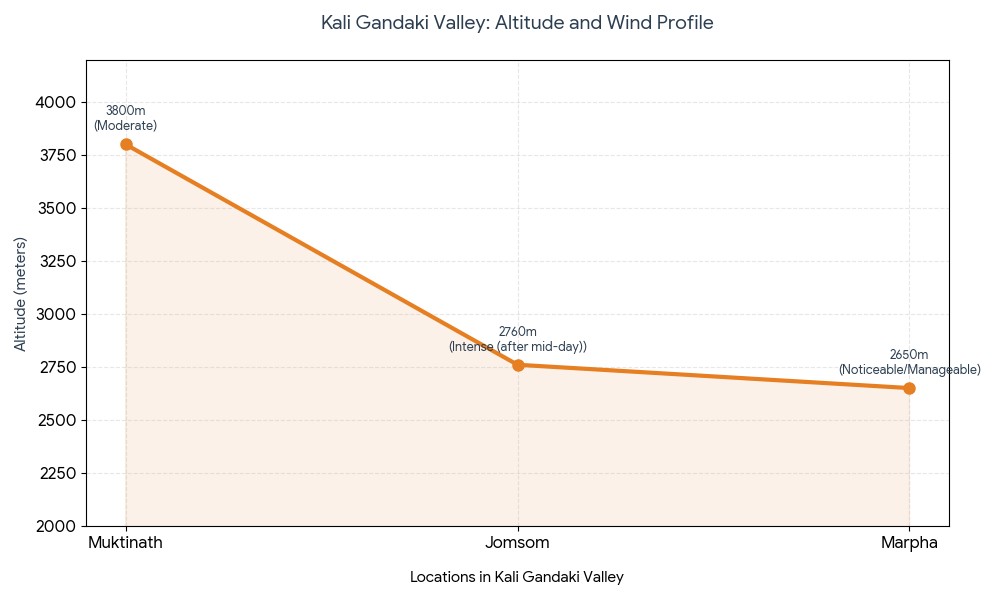
| Location | Altitude | Attractions | Effect of Wind |
|---|---|---|
| Muktinath | 3,800m | Sacred temples | Moderate |
| Jomsom | 2,760m | District capital, airport, more shops | Intense after mid day |
| Marpha | 2,650m | Apple brandy, orchards, historic houses | Noticeable but manageable |
Important points for this section :
Meanwhile, October on the Annapurna Circuit isn’t just about breathtaking views; it’s also when you might find yourself immersed in two of Nepal’s most joyous and important festivals: Dashain and Tihar. This often coincidental timing offers a unique opportunity for cultural immersion alongside your physical journey.
The Dashain Festivities Unfold :
Tihar – The Festival of Lights Brightens the Trail ;
| Festival | Typical Timing in October | Key Observations on Trek | Overall Atmosphere |
|---|---|---|
| Dashain | Early to mid-October | Giant swings, feasts, rituals | Joyful and social |
| Tihar | Mid to late October | Oil lamps, lights, animal celebrations | Warm and festive |
Navigating the Festivals with Respect :
To summarize, a trek on the Annapurna Circuit during October allows you to witness the stunning Himalayan scenery while also experiencing the vibrant spirit of Nepali culture through the celebrations of Dashain and Tihar. It’s an unforgettable way to connect with the heart of the mountain communities.
In fact, October remains the premier choice for an Annapurna Circuit trek due to its optimal blend of stable weather, dry conditions, exceptional visibility, and the rich tapestry of cultural events. While it is the most popular month, strategic planning can easily mitigate the impact of the crowds and ensure an unforgettable experience.
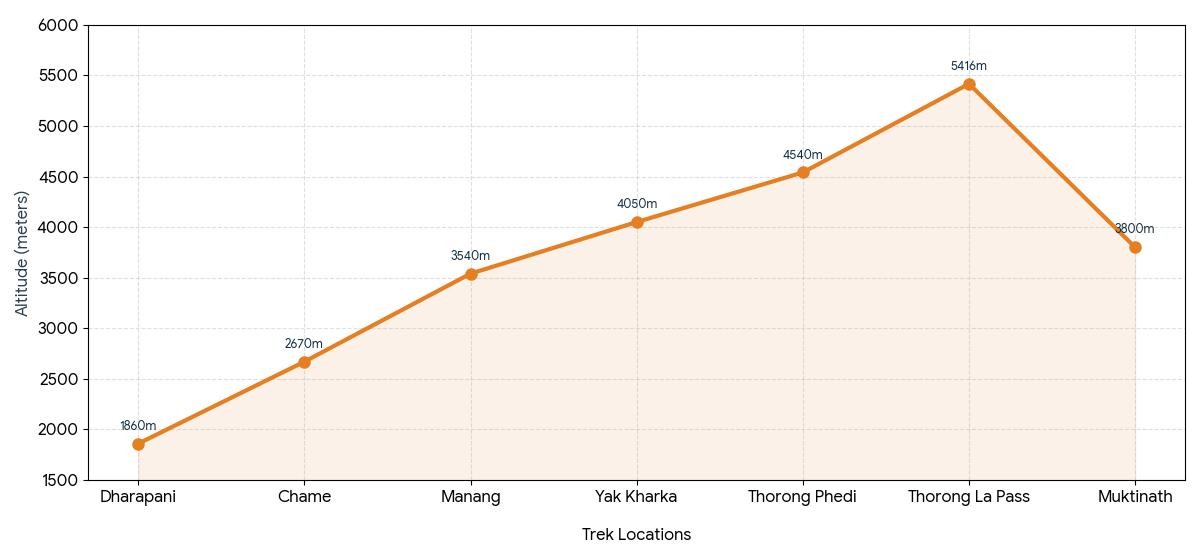
| Location | Elevation (m / ft) | Average Daytime Temperature | Average Nighttime Temperature | Recommended Duration |
|---|---|---|
| Dharapani | 1,860 / 6,102 | 18-22°C | 8-12°C | 1 night |
| Chame | 2,670 / 8,759 | 15-20°C | 5-8°C | 1 night |
| Manang | 3,540 / 11,614 | 10-15°C | -2°C to 5°C | 2 nights (acclimatization) |
| Yak Kharka | 4,050 / 13,287 | 5-10°C | -5°C to 0°C | 1 night |
| Thorong Phedi | 4,540 / 14,895 | 3-8°C | -8°C to -3°C | 1 night |
| Thorong La Pass | 5,416 / 17,769 | -5°C to 5°C | N/A (Crossing Day) |
| Muktinath | 3,800 / 12,467 | 12-18°C | 2-6°C | 1 night |
Your Final October Itinerary Planning Checklist :
In summary, October offers the ultimate Annapurna Circuit experience with its stable weather, dry trails, excellent visibility, and vibrant cultural celebrations. With thoughtful planning, you can easily manage the crowds and create a trekking adventure that will stay with you for a lifetime.
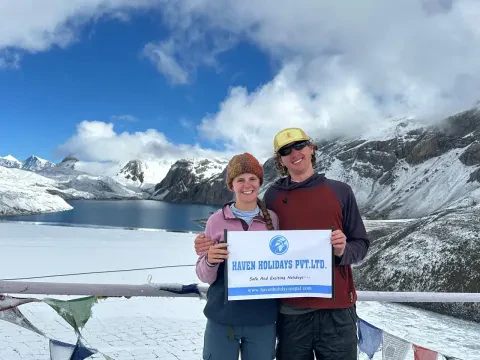
Ready to plan your dream Annapurna Circuit trek for October? Haven Holidays can help. We’ll assist you in creating a customized itinerary, booking the most comfortable teahouses, and arranging professional guides to ensure a safe and memorable journey.
When Is the Annapurna Circuit trek Best?
October is hands down the king of months for conquering the legendary Annapurna Circuit trek. As the sweet heart of autumn, this is when you get the ultimate mix of sharp mountain views, ideal walking temperatures and vibrant local festivals.
1. Why is October considered the best time for the Annapurna Circuit trek?
As the pinnacle of the autumn trekking season, October provides exceptionally stable weather and impeccably clear blue skies after the recent monsoon passes through. Fresh, unpolluted air gives you breathtaking panoramic views of the Annapurna Massif, while dry, hard-packed trails provide the safest and most predictable trekking conditions of the year.
2. What is the average Annapurna Circuit temperature in October?
Daytime Annapurna Circuit temperatures in October are very comfortable and range from 15C to 20C (59F to 68F) at lower altitudes. Atmospheric changes with elevation can be substantial however, with midday temperatures of 10C to 15C in the mid-levels, and well below freezing (-5C or less) in high altitude nights over 4000 meters near the pass.
3. How difficult is the Annapurna Circuit trek in October?
The Annapurna Circuit trek difficulty is rated as a moderately challenging high altitude trek. No technical climbing is required, but you must be fit enough to walk 5 to 8 hours daily over steep and rugged terrain with large altitude gains right up to the pass itself.
4. What is the total Annapurna Circuit trek distance?
The entire Annapurna Circuit trek distance is between 160 to 230 kilometers (100 to 143 miles). The walking length can vary depending on your particular itinerary, starting point and how many sections you cover using local jeep transportation.
5. What is the maximum elevation reached on the Annapurna Circuit trek?
The absolute high point of the Annapurna Circuit trek elevation profile is reaching the top of the iconic 5,416 meters (17,769 feet) Thorong La Pass. This is the climax and toughest hurdle of your entire journey.
6. How does October weather affect crossing the Thorong La Pass?
With October weather, crossing the 5,416m Thorong La Pass becomes the most predictable and safe point of the Annapurna Circuit. Winter blizzards and unexpected snowstorms are extremely rare during the first half of October, compared to the risks posed in the months either side of autumn.
7. What is the standard Annapurna Circuit trek itinerary length?
The traditional Annapurna Circuit trek itinerary usually takes between 14 and 21 days if you depart and return to Kathmandu. If you aim for a longer 18 to 21 day itinerary you can walk much of the entire route, or choose a shorter 10 to 14 day plan utilizing domestic flights or jeep transfers from Jomsom.
8. Is altitude sickness common during an October trek?
Regardless of the month, altitude sickness can be an issue anywhere above 3,000 meters. Because October weather is usually so stable and predictable there are rarely significant delays, allowing you to smoothly follow the required acclimatization days in rest villages such as Manang (3,540 meters).
9. How crowded are the trails and teahouses in October?
Thanks to the incredibly reliable Annapurna Circuit trek weather, October marks the peak trekking season. You’ll be walking with lots of fellow hikers, and it’s a very good idea to book ahead (especially for teahouses in the key Manang and Thorong Phedi villages) or go with a trekking guide to ensure you get accommodation.
10. What is the accommodation like along the circuit in October?
Basic teahouse lodging is available in all the villages and hamlets on the route. Rooms are normally simple twin bedded with shared facilities, although lower altitude villages have attached western style toilets. All the villages have communal dining rooms which are heated.
11. Are there any cultural festivals on the circuit in October?
Yes! If you plan your Annapurna Circuit trek for October then you may get the chance to witness two of the biggest Hindu festivals, Dashain and Tihar, during your trip. It’s very exciting to travel through traditional Gurung villages during their most colourful festival times.
12. What specific clothing layers should I pack for October?
Pack for extremes with thin base layers for daytime trekking and thick insulation for cold nights. You should aim for comfortable trekking trousers, 3 to 4 warm long sleeve tops and short sleeve tops, a heavy down jacket, a fleece jacket, a windproof outer shell, a warm beanie, and warm gloves.
13. How much cash should I carry per day on the Annapurna Circuit?
You should aim to have NPR 3,000 to NPR 4,000 (approx. $25-35 USD) on your person each day for your room, food, and snacks. Do not rely on your credit card as ATMs are unavailable. Remember that the higher altitudes have increased costs too.
14. Are there ATMs available along the Annapurna Circuit route?
While there are ATMs at the start and finish towns (Besisahar or Pokhara/Kathmandu respectively) and in larger villages along the way, do not rely on them as they often don’t work, or they have run out of money, so ensure you have adequate cash before you set out!
15. What permits are required for the Annapurna Circuit trek?
To legally walk on the Annapurna Circuit, you will require two official permits; the Annapurna Conservation Area Project (ACAP) permit ($20 USD) and a TIMS card ($20 USD), both of which can be obtained from the Nepal Tourism Board offices in Kathmandu or Pokhara before starting your trek.
16. What training is required to handle the Annapurna Circuit trek difficulty?
It is advised to start training at least 6 to 8 weeks before you fly out to Nepal. Focus on building your cardiovascular fitness through running or cycling, and strengthening your legs and back. Regular hikes carrying a backpack are an essential part of the preparation.
17. Is travel insurance mandatory for this high-altitude trek?
Yes, specialized high-altitude travel insurance which includes helicopter rescue up to 6,000 meters is absolutely mandatory for all trekkers undertaking the Annapurna Circuit. Please ensure your policy covers you fully.
18. How does the scenery alter throughout the month of October?
During the first half of October, you will experience green terraced fields, cascading waterfalls and lush green forests. By the latter half of the month, as autumn colors develop, the scenery shifts to drier desert-like landscapes contrasted with sharp snow-capped mountain peaks and blue skies.
19. Is it safe to trek the Annapurna Circuit independently in October?
Although well marked, you are required by government law to trek with a licensed local guide in many parts of the restricted and high-altitude areas. A guide not only helps navigate, book accommodation and spot altitude problems but is also essential for safety on the pass.
20. What is the overall success rate for the circuit in October?
Thanks to the ideal 2023 Annapurna Circuit weather, dry trails, and a much reduced chance of a blizzard on the pass, the success rate is well over 95%. As long as you are relatively fit and stay hydrated you are almost guaranteed to summit the pass safely.
Our travel experts are ready to assist you with any questions.
Send us a message.Have a question before you book? Send your enquiry below and our travel experts will get back with the required information.