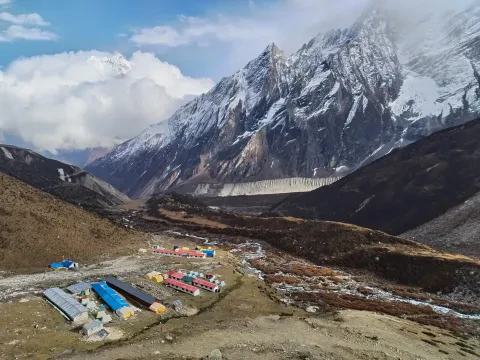
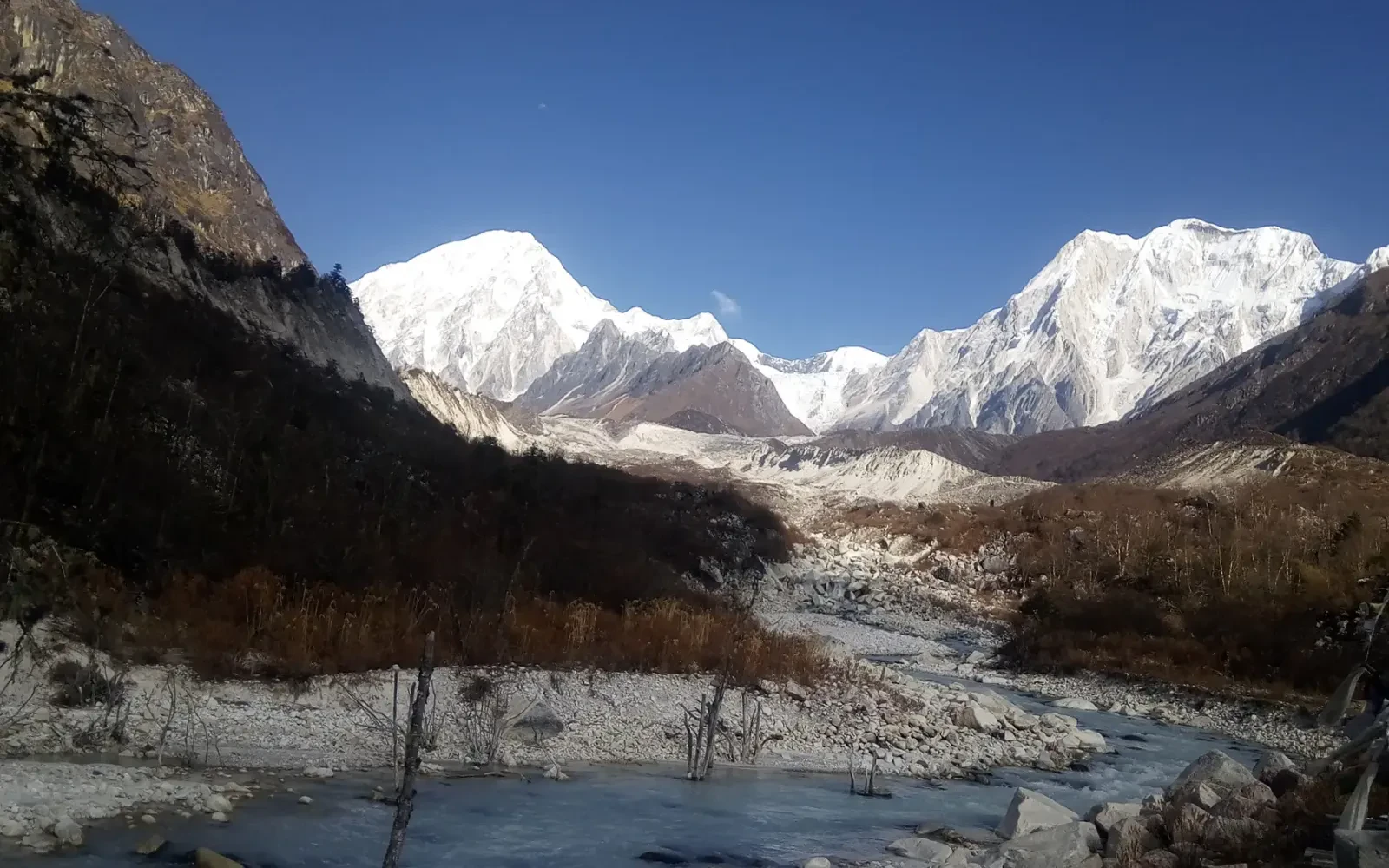
Are you thinking about trekking in Nepal? The Manaslu Circuit in March is one of those adventures that calls to people who want something a bit different. It's way quieter than Annapurna, but just as spectacular. You start off from Machhakhola, down at 870 meters (2,854 feet), and then the trail takes you through a wild mix of landscapes, all the way up to Dharapani at 1,860 meters (6,102 feet). The big draw? You actually circle Mount Manaslu itself. It's massive—8,163 meters (26,781 feet)—and the views are just unreal, especially with spring waking up all around you.
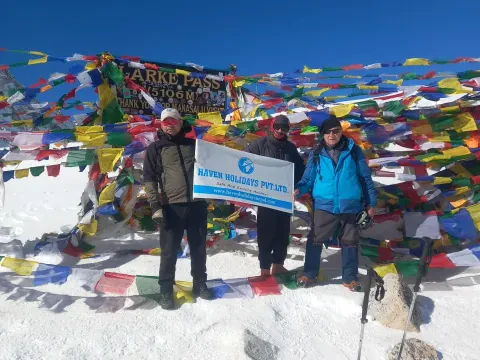
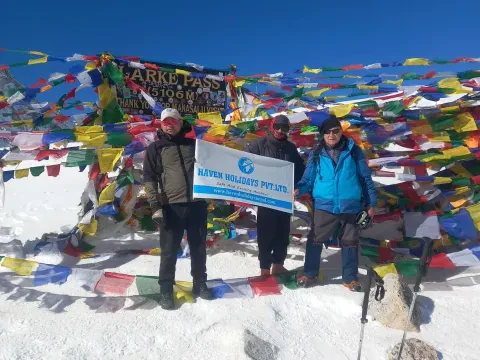
Actually, March is a sweet spot for weather for Manaslu Circuit Trek. The skies usually stay clear, and daytime temperatures feel pretty comfortable—between 10°C and 20°C at the lower elevations. Once you get up near Larkya La Pass (5,106 meters/16,752 feet), things get chilly. Daytime highs only reach a couple degrees above freezing, and nights dip as low as -5°C. So yeah, you’ll want to layer up at night, and expect to see some snow hanging around up high. The days are longer, which means more time for hiking, and the trails stay mostly dry, so you don’t have to worry about slipping around in the mud.
Here, the Manaslu trek itself usually takes anywhere from 10 to 14 days, and you’ll feel every bit of those elevation gains by the end. The journey kicks off with a drive to Machhakhola (870 meters), then day one is a solid push to Jagat (1,410 meters/4,626 feet). After that, you climb to Deng, Namrung, and Lho, gradually getting higher with each stop. Samagaon is a big milestone at 3,520 meters—trekkers usually spend a day there to acclimatize before heading up to Samdo and Dharamsala, and then it’s over the high Larkya La Pass. From there, it’s all downhill: Bimthang, Tilje, and finally Dharapani.
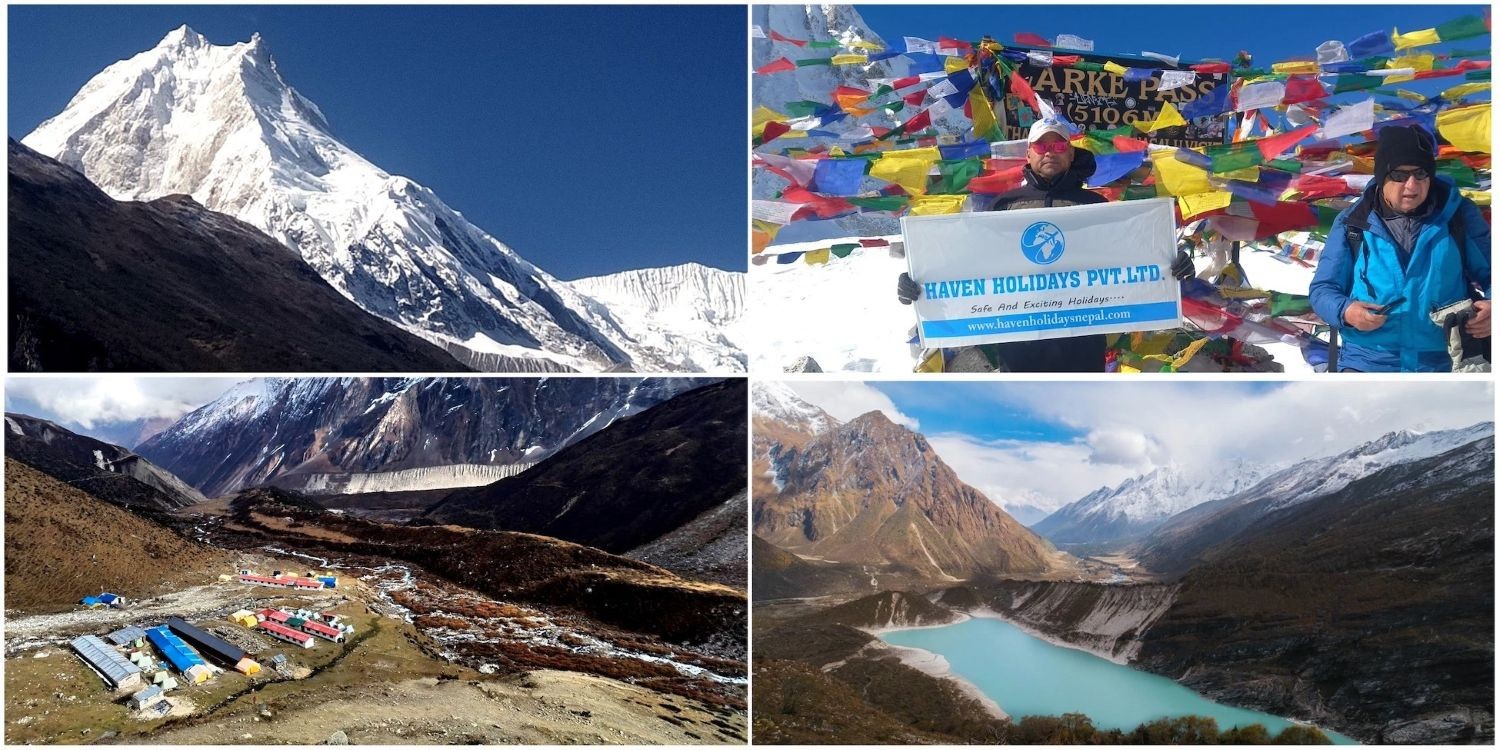
Daily Itinerary :
Day 1: Machhakhola to Jagat — 15 km, 6-7 hours (870m to 1,410m)
Day 2: Jagat to Deng — 19 km, 7-8 hours (1,410m to 1,860m)
Day 3: Deng to Namrung — 18 km, 6-7 hours (1,860m to 2,630m)
Day 4: Namrung to Lho — 10 km, 4-5 hours (2,630m to 3,180m)
Day 5: Lho to Samagaon — 8 km, 3-4 hours (3,180m to 3,520m)
Day 6: Acclimatization in Samagaon — rest
Day 7: Samagaon to Samdo — 9 km, 3-4 hours (3,520m to 3,875m)
Day 8: Samdo to Dharamsala — 7 km, 3-4 hours (3,875m to 4,480m)
Day 9: Dharamsala to Bimthang via Larkya La — 16 km, 8-9 hours (4,480m to 3,590m, pass at 5,106m)
Day 10: Bimthang to Tilje — 15 km, 5-6 hours (3,590m to 2,300m)
Day 11: Tilje to Dharapani — 10 km, 4-5 hours (2,300m to 1,860m)
But it’s not just about the altitude or the views—though those are wild. One of the best things about the Manaslu trek is the chance to actually connect with local culture. You’ll pass through Gurung and Tibetan villages, spot old monasteries in places like Lho, and see prayer flags flapping in the wind while rhododendrons bloom all around. The trail gives you close-ups of peaks like Ngadi Chuli and Larkye Peak, but since this is a restricted area, it still feels raw and untouched. You get to see the Himalayas without the crowds, and there’s something special about that.
In fact, getting ready for this trek takes some planning. You need permits (MCAP and the Restricted Area one), and you have to hire a guide—those are the rules. Gear matters, too. Weather changes fast, so pack layers. Good boots, trekking poles, high-SPF sunscreen, hydration packs, energy snacks, a first-aid kit, and a sleeping bag rated for -10°C are all must-haves. Plus, don’t show up out of shape—training beforehand makes the whole thing way more enjoyable, and taking it slow helps you avoid altitude sickness.
In summary, March is perfect if you want the trails mostly to yourself, plus you get those bright, blooming slopes and fresh mountain air. The views of Manaslu will stick with you long after the hike, and if you’re up for a challenge, this trek pays off—body and soul.
Actually, March pulls trekkers to the Manaslu Circuit for good reason. Early spring brings the Himalayas to life—rhododendrons start waking up along the lower trails, from Jagat to Deng, splashing the hillsides with bursts of red, pink, and white. Most days, the sky stays perfectly clear, giving you wide-open views of Mount Manaslu and the snowy peaks around it. It’s not just about the views, either. The temperatures feel just right for hiking, and with fewer people on the trail, you really get to soak up the quiet and the wildness of this restricted route.
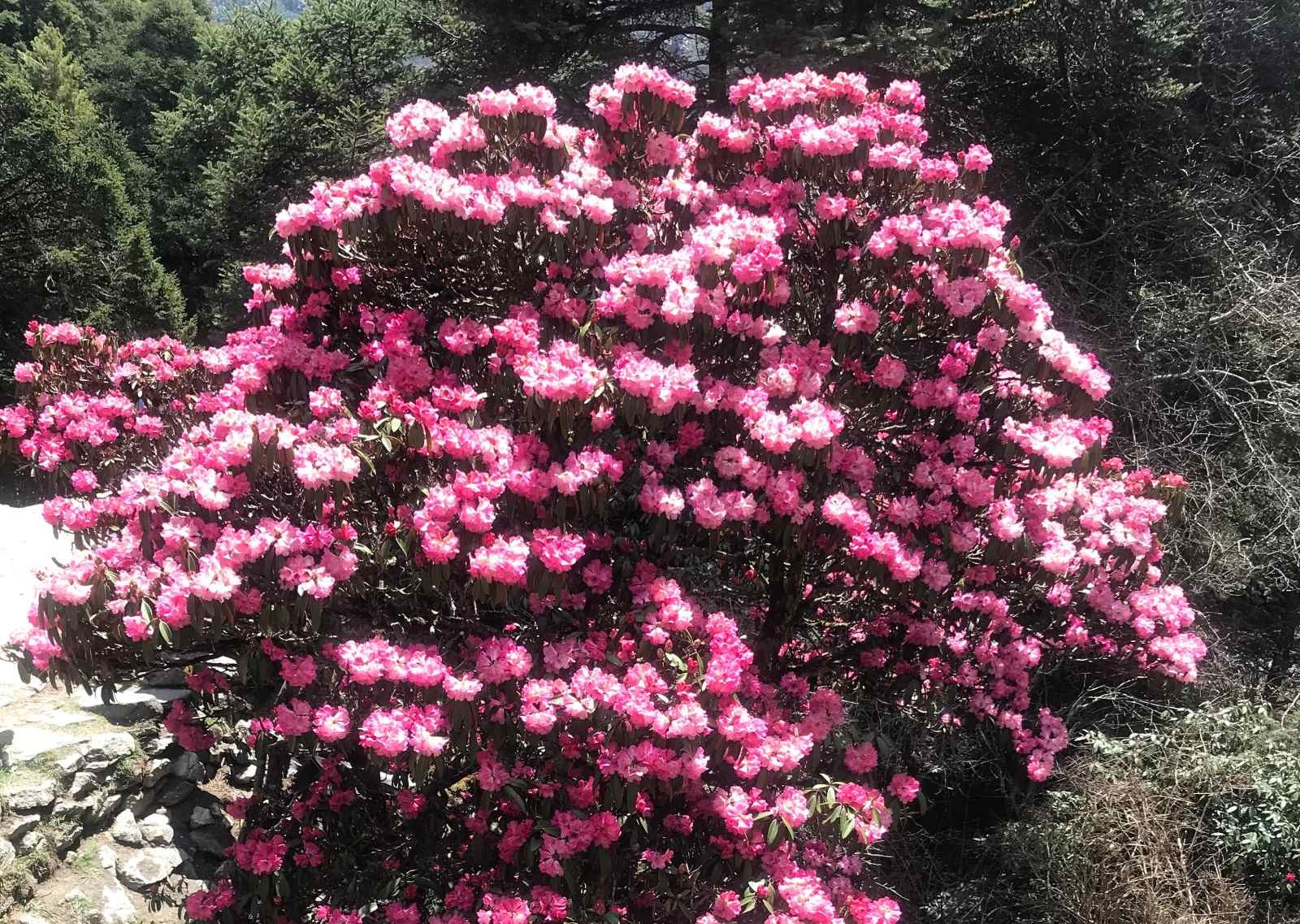
Moreover, Spring doesn’t arrive all at once in March—it slowly transforms the landscape. The last bits of winter fade away, and the greenery comes back strong. Rhododendron forests—especially between Philim, Ghap, and Namrung—turn into living gardens. There’s a fresh scent in the air, and wildflowers pop up everywhere. The weather helps too. Rain doesn’t really get in the way, so the trails stay dry and steady as you climb higher.
Honestly, the clear skies alone make March special. The views stretch out forever—sharp ridges, endless blue, and peaks like Ngadi Chuli and Himlung Himal standing out against the sky. Mornings feel calm, almost like the mountains are holding their breath. Nights get cold up near Larkya La Pass, but the sunshine during the day keeps your energy up. Photographers chase that golden light, and everyone gets to enjoy the scenery without the haze of the monsoon or the fog of winter.
Key Advantages of Manaslu Circuit Trekking in March :
In fact, temperature swings in March, but nothing too wild if you’re ready for it. Down in places like Machhakhola, days warm up to 10°C–18°C (50°F–64°F), while higher up, you drop to 0°C–5°C (32°F–41°F) or even below freezing at night. Layer up, and you’re set. Sometimes you’ll see a dusting of snow near the pass—just enough to make things interesting, never enough to block your way. Plus, with the trails staying dry, you don’t have to worry much about slipping.
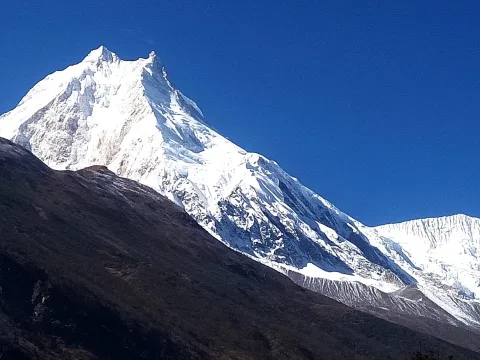
Meanwhile, March really brings Manaslu to life—fresh blooms, clear air, and some of the best mountain views you’ll ever find. You get color, quiet, and challenge all in one trek. If you want to see the Himalayas at their best, this is the time to go. Pack your bag for March and let the mountains show you something unforgettable.
Likewise, weather on the Manaslu Circuit in March keeps you on your toes, but it’s totally doable if you come prepared. Early spring kicks in, so you get a mix of everything—mild at the start, cold up high, and just enough sun to keep things interesting. The temperature swings are no joke. Down in places like Machhakhola (870 meters), you might hike in a light shirt by day, then pile on layers as you climb toward Larkya La Pass (5,106 meters). Days usually stay pleasant, but once the sun goes down, especially near those higher camps, you’ll want every bit of insulation you packed.
One of the big perks? March stays pretty dry. You won’t have to slog through mud or deal with endless rain. Most days are clear, so you get those epic, razor-sharp mountain views that make the whole trek worth it.
Now, about those temperatures—there’s a lot of variety along the way. In the lower stretches like Machhakhola and Jagat, daytime highs hit 10°C to 18°C (50°F to 64°F). It’s almost comfortable. As you climb past villages like Namrung (2,630 meters) and Samagaon (3,520 meters), the mercury drops—think 0°C to 10°C (32°F to 50°F). Up near Larkya La Pass, you’re looking at -5°C to 5°C (23°F to 41°F) during the day, but if the sun’s out, spirits stay high and hiking feels pretty good. You get longer daylight hours too, so there’s more time to walk and gawk at peaks like Manaslu (8,163 meters).
In fact, nights are a different story. Even at lower altitudes, it can dip to 0°C to 5°C (32°F to 41°F) after sunset. Go higher, and it’s another level—Dharamsala (4,480 meters) and the pass itself can drop to -5°C to -12°C (23°F to 10°F) or colder. Expect frosty mornings. A warm sleeping bag (rated to at least -10°C) isn’t just nice to have—it’s essential. Warm lodges and teahouses become the best places on earth at the end of a long, cold day. The good news is that early spring weather stays pretty steady, and by late March, things get a bit milder.
Here’s a quick temperature breakdown for March :
Actually, rain doesn’t cause much trouble in March. Down low, you might get a light shower at the very start of the month, but nothing major. Higher up, there’s a chance of flurries or leftover snow patches, especially around Samdo and the pass. Icy spots pop up now and then, so tossing trekking poles or microspikes into your pack pays off. The air is dry, humidity stays low, and trails dry out fast after any rain or snow.
Bottom line? Manaslu Circuit in March is a balancing act—warm enough down low, crisp and invigorating up high, and mostly dry all around. You’ll deal with some cold nights and maybe a bit of snow, but in exchange, you get clear skies, blooming landscapes, and the kind of Himalayan atmosphere that sticks with you. Pack smart, check the latest trail reports, and soak it all in.
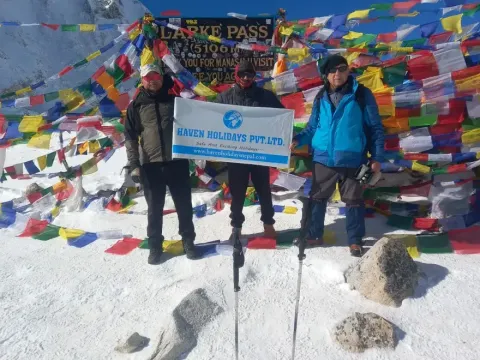
Meanwhile, getting the right permits is a big part of planning the Manaslu Circuit trek. The region sits close to the Tibet border, so the government keeps things tightly regulated—to protect both the environment and the local culture, and to keep trekkers safe. You can’t just show up and start walking. Every foreign trekker needs three main permits, and you have to get them through a registered trekking agency in Kathmandu. Independent trekking isn’t allowed. At key spots like Jagat (1,410 meters) and other villages, officials check your paperwork, so if you’re missing something, your journey from Machhakhola (870 meters) to Dharapani (1,860 meters) can get held up fast.Here, the most important document is the Manaslu Restricted Area Permit (RAP). This one covers the heart of the trek, from Jagat on up past Samagaon. The price changes depending on the season and how long you’re staying. Autumn’s busy, so it’s more expensive; March is off-peak, so you pay less. Your agency takes care of the application and needs your passport and photos., you’ll need to join a group—agencies often have open departures you can join if you’re traveling alone.
In fact, there are a couple more permits you’ll need for conservation zones. The Manaslu Conservation Area Permit (MCAP) covers the northern section, and the Annapurna Conservation Area Permit (ACAP) kicks in as you head down toward Dharapani. You buy both—fees are fixed, no matter when you go. Some routes also add a small Chumnubri Rural Municipality fee (usually $5–10), which goes toward local community projects and trail upkeep. All these permits support sustainable tourism and help fund everything from trail repairs to local initiatives.
Here’s a quick breakdown of what you’ll need :
Here, travel rules are strict here. You need at least two foreign trekkers to form a group (no solo hiking), and a licensed Nepali guide goes with every group. Your guide handles logistics, navigation, and any emergencies that come up. This isn’t just about rules—it really does keep people safe, especially at high passes like Larkya La (5,106 meters). Plus, hiring guides helps keep jobs in rural communities.
Permit costs (March/off-peak season, for foreigners) :
Bottom line? These permits and rules don’t just keep the region protected—they make your trip smoother and safer. Book with a reliable agency, carry a few copies of your permits for the checkpoints Permits
and guide requirements. Then you’re free to focus on the real highlights: the wild rhododendron blooms, clear March skies, and some of the best mountain views in the Himalayas.
Meanwhile, packing for the Manaslu Circuit in March is all about balance. The trail throws everything at you—warm valley hikes, icy mountain passes, dry sunny days, and freezing nights. So, trekkers get pretty strategic. They focus on gear that can handle quick weather swings, from the lush start at Machhakhola (870 meters) all the way up to the windswept Larkya La Pass (5,106 meters). Layers really matter here. You’ll want light, sweat-wicking shirts for the climbs, warm jackets for the cold, and tough outer shells to block the wind and surprise showers. The trick is to stay ready for anything without weighing yourself down.
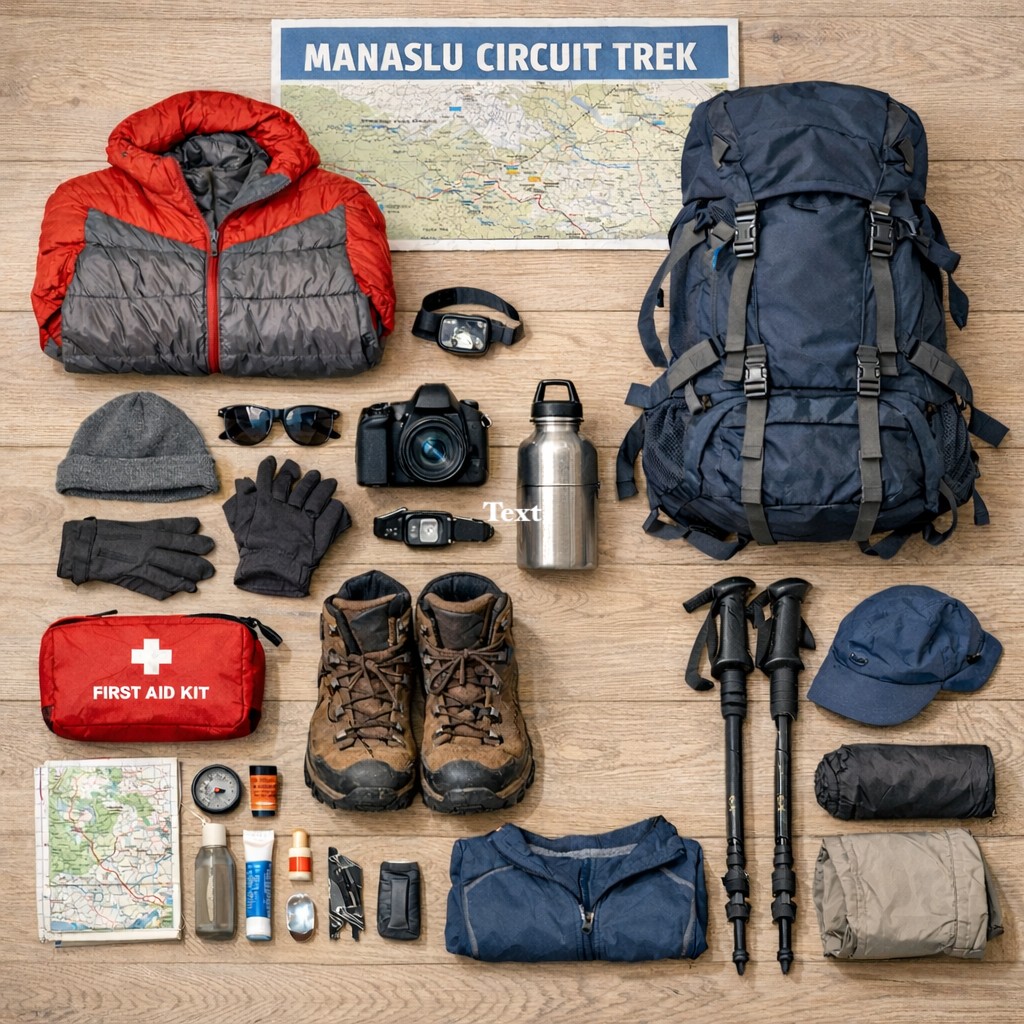
Likewise, March is actually a beautiful time to be out there. Dry trails, blooming rhododendrons, and clear views—if you’re prepared, you get to enjoy it all in comfort. Good packing isn’t just about comfort, though; it’s about staying safe and having the energy to actually enjoy the trek, not just survive it.
Moreover, clothing takes center stage on any Manaslu packing list. Think in layers. Start with 2–3 base layers (synthetic or merino) that pull sweat away from your skin. Add a fleece or wool mid-layer for those chilly forest sections. Top it off with waterproof and windproof shells—especially important as you get higher up near Samagaon (3,520 meters). Above Namrung (2,630 meters), a down jacket is a lifesaver. Don’t forget a warm hat, neck gaiter, sunglasses, high-SPF sunscreen, and both light and insulated gloves. For your legs, bring trekking pants (convertibles are handy), plus thermal leggings for those frigid nights up high. Expect daytime temps between 10°C and 18°C (50°F to 64°F) in the lower stretches, but nights up high easily drop below zero.
Similarly, gear for the high stuff gets serious above 4,000 meters. A sleeping bag rated to at least -10°C is a must for frosty teahouses. Trekking poles help on steep or snowy bits, and microspikes can be a real confidence boost if the pass is icy. Water’s not always safe, so pack purification tablets. Energy bars keep you moving. A headlamp is key for early starts or late arrivals. Toss in a basic first-aid kit—blisters and minor cuts happen.
Here’s what your clothing layers should look like :
Indeed, supporting gear keeps things running smoothly. A 30–40L daypack is perfect for your daily stuff—water, snacks, rain jacket. If you’ve hired a porter, they’ll handle the big duffel. Wear well-broken-in, sturdy trekking boots with good ankle support; extra socks are a must for blister prevention. Bring a reusable water bottle, a power bank for your electronics, and a few basic toiletries (don’t expect much in the way of facilities). Microspikes or trekking poles make a big difference on icy or steep sections.
Key gear for high altitudes :
In the end, packing for Manaslu Circuit Trek in March means being ready for anything the mountain throws at you. Invest in good layers, don’t overload your pack, and test your gear before you go. If you do it right, you’ll be able to soak in the flowers and valleys down low, then power through the crisp, wild passes up high. Step onto the Manaslu trail prepared, and you’ll come home with stories worth telling.
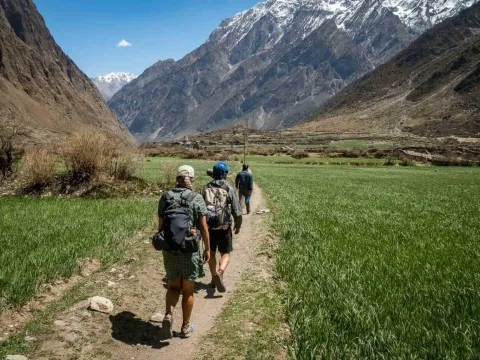
Here’s a day-by-day look at the Manaslu Circuit trek, tailored for March. You’ll start out in Machhakhola, way down at 870 meters, and end up in Dharapani, over twice as high, after crossing the wild Larkya La Pass. Most people finish in 14 to 18 days, depending on side trips and how fast they want to go. March is a sweet spot: flowers are popping, the air’s clear, and if you take your time, you’ll dodge the worst of the altitude headaches.
Here, the adventure kicks off with a long drive from Kathmandu to Machhakhola. You’ll then follow the Budhi Gandaki River on foot, crossing wobbly suspension bridges and winding through forested hills. Early on, you’ll hit spots like Jagat (1,410 meters), where you’ll check in at a permit post before moving into the restricted zone. The path can get rocky and narrow, but your guide handles the paperwork and keeps you on track.
As you climb, villages like Namrung (2,630 meters) and Lho (3,180 meters) show off Tibetan-style monasteries and big mountain views. When you reach Samagaon (3,520 meters), it’s time to slow down and adjust to the altitude. Take a side hike to Birendra Lake or Pungyen Gompa—totally worth it for the scenery.
Likewise, the real test comes near the end: the Larkya La Pass. Climbing out of Dharamsala (about 4,470 meters), you’ll push up to 5,106 meters. It’s tough, but the views are unreal. After the pass, the trail drops fast into Bimthang, and suddenly you’re back among trees, waterfalls, and green valleys on the Annapurna side. From there, you’ll wind down through pine forests to Dharapani. If you want more time to rest or explore, you can easily stretch the trek to 18 days.
Moreover, you’ll cover about 15 to 25 kilometers on the bigger days, but really, it’s the elevation that’ll test you. The guides pace things based on weather and how everyone’s feeling, and teahouses along the way offer a warm meal and a bed. Besides the hiking, you’ll get chances to check out local culture and snap photos of rhododendrons and snowy peaks.
Here’s a quick breakdown of the standard trek :
Days1-2: Drive then hike out to Machhakhola or Jagat—ease into the trek through the lower valleys.
Days 3-7: Head up to Samagaon—into the restricted area, see blooming rhododendrons, visit monasteries.
Days 8-9: Acclimatize and move to high camps—get ready for the big pass.
Day10: Cross Larkya La Pass—this is the highlight, with insane panoramic views.
Days 11-13 (or up to 15): Drop down to Dharapani—walk through forests and into the Annapurna region.
Final days: Jeep back to Kathmandu—time to rest and look back on what you’ve done.
In fact, each day’s got its own rhythm, with distances, hours, and some cool highlights. It’s less about the kilometers and more about climbing steadily and soaking up the landscape. Expect a mix of tough climbs, relaxed cultural stops, and some of the best mountain views you’ll ever see.
Day-by-Day Flexible Itinerary (14-18 Days) :
That’s the Manaslu Circuit in a nutshell—challenging, beautiful, and full of surprises, especially in March.
Now, let’s talk about the Manaslu Circuit. You start out at Machhakhola, just 870 meters up—so you’re down in the humid green lowlands, right by the Budhi Gandaki River. The trail pulls you through thick forests, sometimes so close to the cliffs you feel like you’re walking on the edge of the world. You’ll cross some pretty wild suspension bridges, hear waterfalls crashing nearby, and see bamboo, ferns, and sal trees all tangled together. Langur monkeys sometimes show up, and there are plenty of colorful birds flitting around if you keep your eyes open. The path itself can get rocky, with lots of stone steps, but the climbs are mostly gentle at first. Those early days? It’s all about soaking up the greenery and wandering through villages before everything changes.
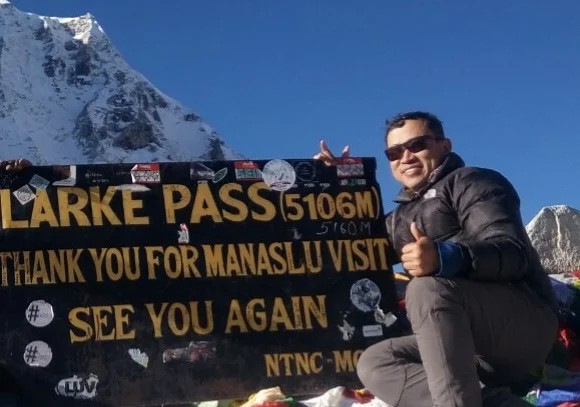
Here, once you hit the middle stretch—from Jagat at 1,410 meters up to Samagaon at 3,520—you start to climb into cooler, higher forests. If you’re there in March, the rhododendrons go wild, bursting with pink and red flowers everywhere you look. The trail winds through pine and oak near Namrung and Lho, and suddenly you’re spotting mani walls and old chortens, with monasteries perched in quiet corners. As you gain height, the views open up—Manaslu and Ngadi Chuli both loom huge on the horizon, and it’s impossible not to stop for photos. The trail gets a bit narrower and looser underfoot, so you definitely want your trekking poles handy. There’s shade here, and if you’re lucky, you might spot a red panda or a flash of Himalayan monal feathers.
And then the landscape really shifts. From Samdo on up past 3,800 meters to Dharamsala at nearly 4,500, the trees vanish and you’re in the high alpine—nothing but rock, wind, and the occasional yak chewing on whatever’s managed to grow up here. The air gets thin, your breath shortens, and the wind can really bite. You’ll see glacial valleys, big swathes of ice and moraine, but the path is still marked, often with colorful prayer flags snapping in the breeze. March brings cold, maybe a dusting of snow here and there, but the skies clear up and you get insane views of Himlung Himal and the other peaks. Up here, you’ve got to pay attention—acclimatize, drink water, and keep your energy up. This is where the real challenge starts.
Here’s how the trail breaks down :
And then there’s Larkya La Pass itself at 5,106 meters. This is the big one. Most trekkers leave before dawn from Dharamsala to get over the pass safely. The climb is steady but relentless—loose scree, patches of snow, and yes, you’ll want microspikes and poles for traction. At the top, you’re rewarded with a panorama: Annapurna II, Cheo Himal, Kang Guru—mountains as far as you can see. It’s freezing, so you won’t linger long, and then comes the brutal descent—over 1,500 meters down to Bimthang. Your knees are going to feel it as you pick your way down rocky, uneven paths. In March, the snow’s usually manageable and the weather stays stable, but after 8 to 10 hours out there, everyone’s tired.
So that’s the Manaslu trail. You start in lush jungles, climb up through blooming rhododendrons, then hit the raw, open heights of the Himalaya before tackling Larkya La. Every section’s got its own vibe and challenge. Just pace yourself, respect the altitude, and take in every shift in the landscape—it’s one of those journeys you’ll remember long after you’re back home.
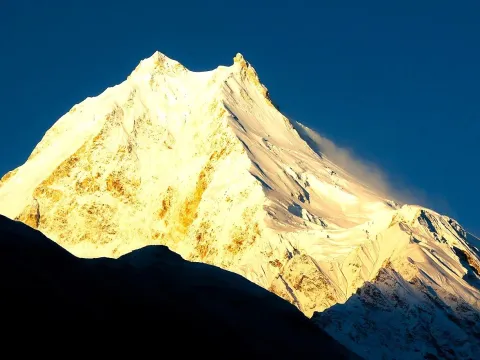
If there’s one thing you can’t forget on the Manaslu Circuit, it’s the sight of Mount Manaslu towering above everything else at 8,163 meters (26,781 feet). You get these up-close, jaw-dropping views of the mountain’s north face — it’s just right there, dominating the sky. As you move along the trail, Manaslu keeps showing off from different angles. Sunrise hits the snowy ridges and the whole mountain glows;
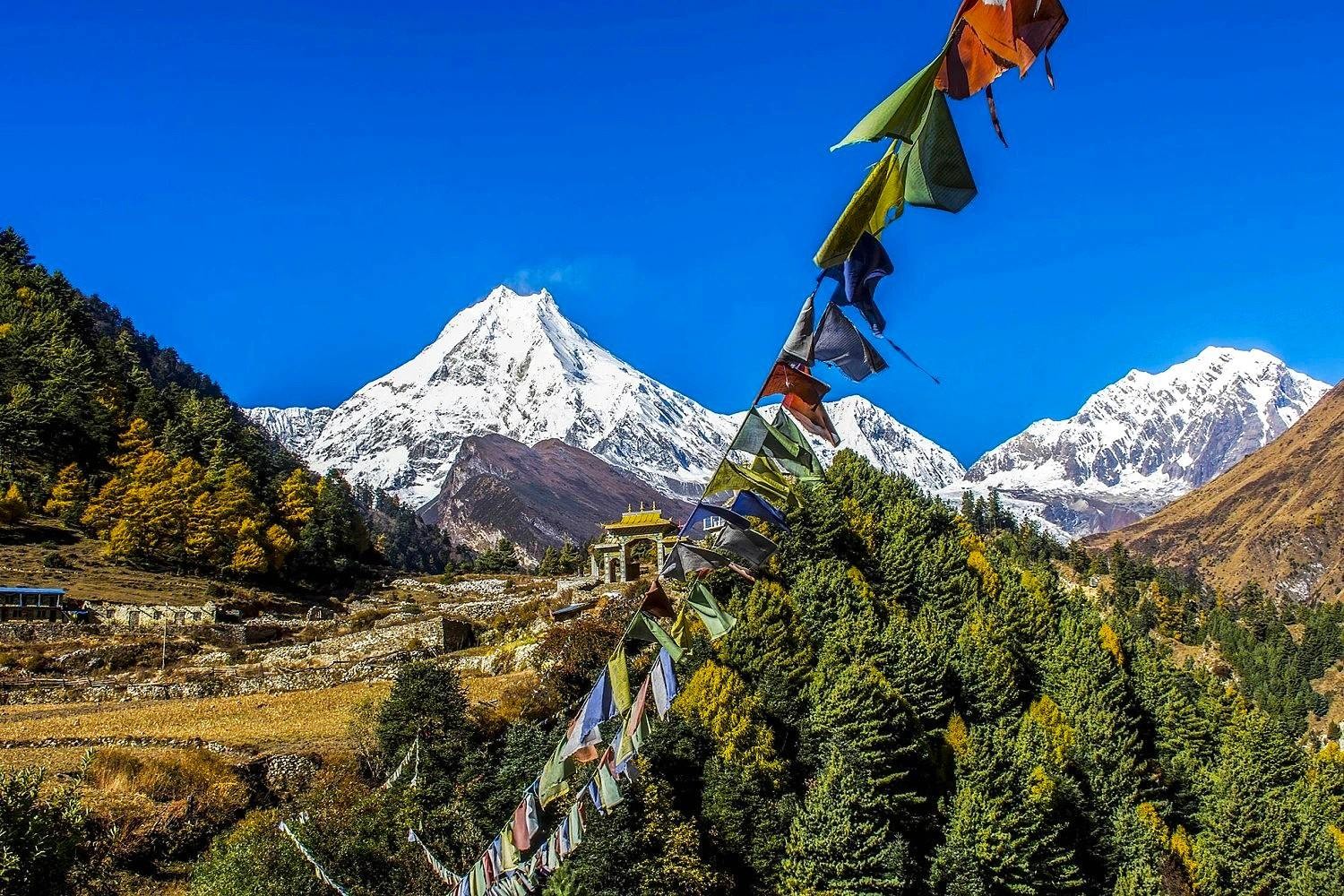
wait for sunset and you get that magical alpenglow. March brings clear skies, so everything feels sharper, and in the lower sections, rhododendrons bloom and frame the mountain perfectly. Don’t forget the other peaks around — Ngadi Chuli at 7,871 meters (25,823 feet) and Himalchuli add drama to every panorama. You’ll end up with a camera full of photos and memories that stick with you long after the trek ends.
Along the Manaslu Circuit Trek route, the best viewpoints keep popping up as you climb higher. Early on, you get great peeks near Lho (3,180 meters/10,433 feet) and Shyala, but Samagaon at 3,520 meters (11,549 feet) really opens up the landscape, with wide views and monasteries in the foreground. If you take a side trip to Birendra Lake (about 4,500 meters/14,764 feet), you’ll catch Manaslu’s reflection in the glacial water — it’s unreal. Pungyen Gompa gives you a peaceful, elevated spot with spiritual vibes and a killer backdrop. But the big payoff is at Larkya La Pass (5,106 meters/16,752 feet): here, you stand surrounded by a 360-degree sweep of mountains — Manaslu, Cheo Himal (6,820 meters/22,375 feet), Kang Guru (6,981 meters/22,903 feet), and more. Stick around for sunrise or sunset and the views turn golden, with nothing blocking your sightlines. It just doesn’t get better.
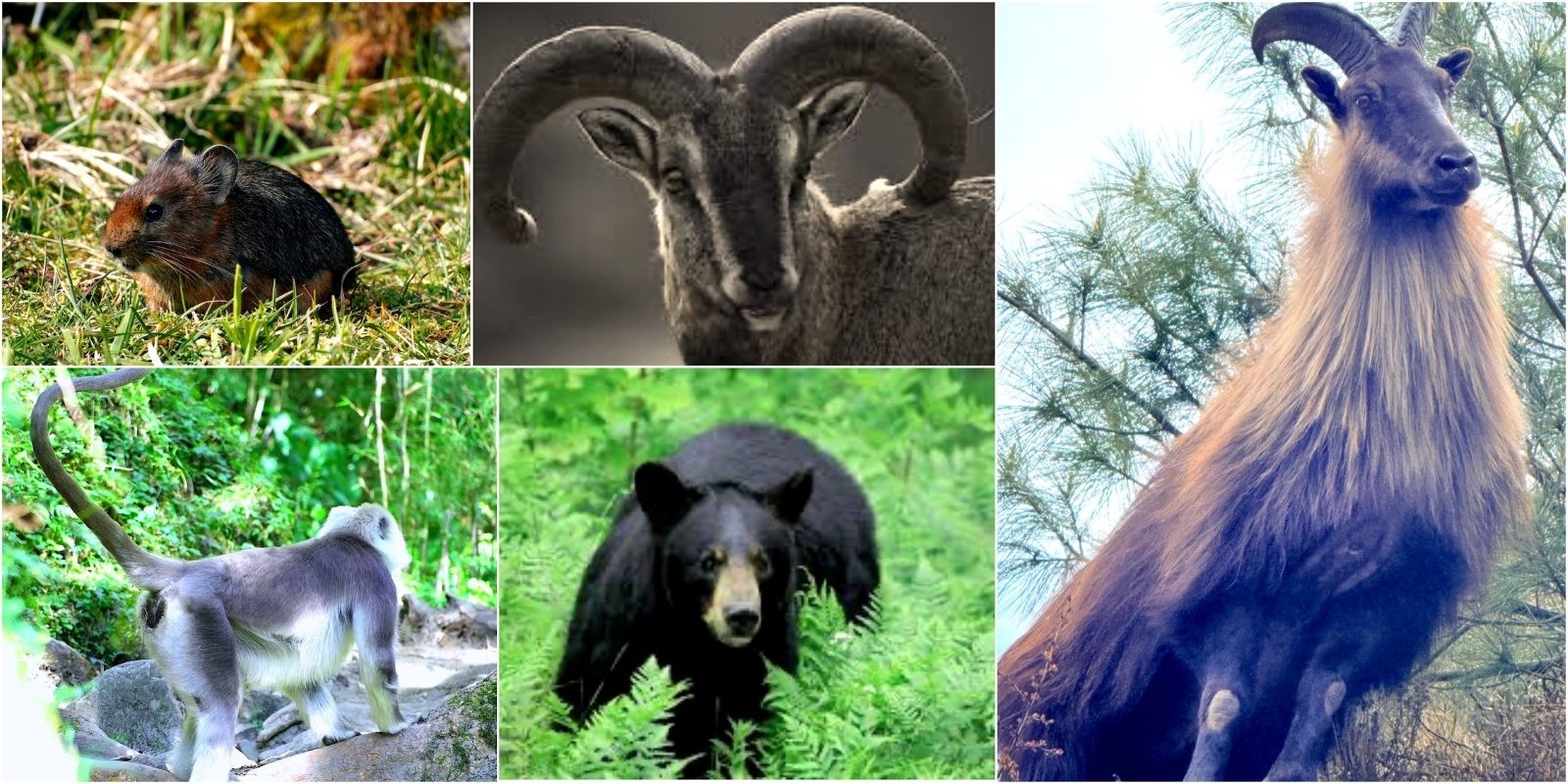
Then, there’s the rare wildlife on the Manaslu Circuit Trek . The Manaslu Conservation Area protects a wild mix of creatures in untouched environments. You might spot Himalayan tahr grazing on steep slopes, blue sheep picking their way across rocky ledges, and sometimes a musk deer darting through the trees. Red pandas hide out in mid-elevation bamboo forests — you’ve got to be lucky and quiet to see them. High up, snow leopards are out there somewhere (don’t count on seeing one, but just knowing they’re around gives you a thrill). Birds are everywhere: over 110 kinds fill the forests and skies. Watch for Himalayan monals flashing their colors in spring. If you move quietly, especially in the early mornings, your chances of spotting something special go way up — all while walking through landscapes bursting with flowers.
Top Spots to See Mount Manaslu :
Actually, wildlife sightings make every day on the trail more interesting, especially in March when the weather’s milder and animals are more active. You’ll probably see Himalayan tahr and blue sheep on open hillsides. Look up and you might catch blood pheasants or golden eagles soaring overhead. In the rhododendron forests near Namrung (2,630 meters/8,629 feet) and Deng, keep your ears open — you’ll hear birds calling, maybe even spot a Himalayan monal showing off near the path. If you’re sharp-eyed (and lucky), you might glimpse a red panda or even spot fresh snow leopard tracks. Always respect their space. These natural encounters, along with the culture you soak up in the villages, make the trek feel truly alive.
Common Himalayan Wildlife on the Manaslu Circuit :
On the Manaslu Circuit, trekkers stay in simple, family-run teahouses and lodges tucked away in mountain villages. From Machhakhola at just 870 meters up to Dharapani at 1,860 meters, these places aren’t fancy, but they’re welcoming. You get a twin bed, a hearty meal, and a warm spot to relax—especially nice after a long day’s walk. Closer to the trailhead, you’ll find extra comforts like hot showers and Wi-Fi. As you climb higher, things get a bit rougher; warmth and shelter become top priorities, especially on chilly March nights. That said, the stoves are always going, and evenings often turn into friendly gatherings around the fire. Forget luxury—what you get here is real Himalayan hospitality with a focus on adventure and the wild landscape outside your window.
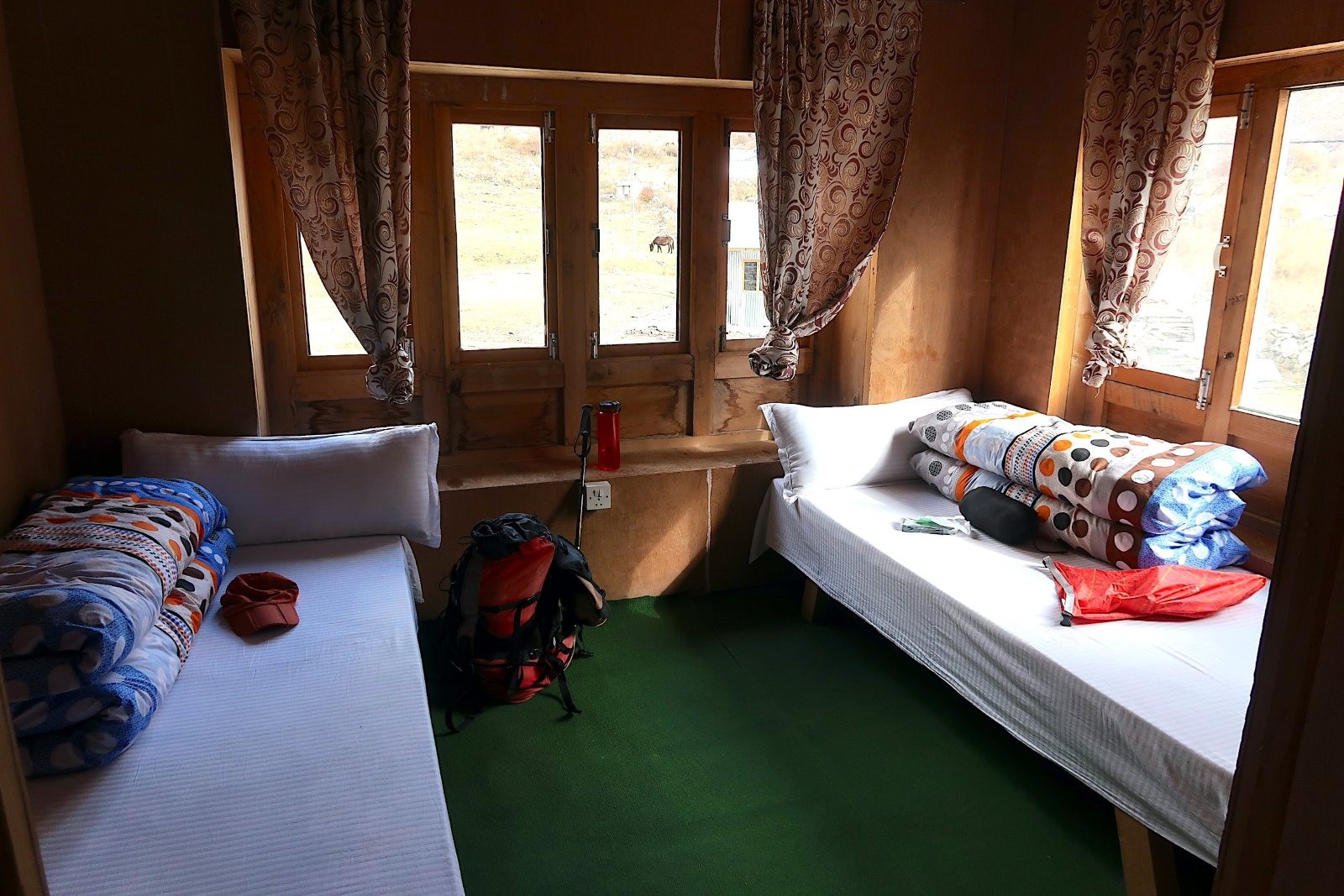
Likewise, most stops along the route are dominated by teahouses. These are basic guesthouses run by Gurung and Tibetan families. A typical room has a wooden bed with a thin mattress, a blanket, and sometimes a pillow. At higher altitudes—above 3,000 meters—nights get cold, so trekkers bring sleeping bags rated for -10°C. Bathrooms are shared and pretty straightforward: expect squat or Western toilets, and in bigger villages, maybe a hot shower (solar or bucket-style). Dining rooms are communal and lively, with menus offering dal bhat, noodles, pasta, and snacks. You can usually charge your phone and sometimes catch a bit of Wi-Fi in places like Namrung. Some lodges in bigger villages offer thicker bedding, better insulation, and now and then, private bathrooms.
Moreover, comfort steps up in mid-elevation spots like Namrung, Lho, and Samagaon. Lodges here are built from sturdy stone, dining rooms are heated, and menus are surprisingly varied—pizza or apple pie, anyone? Some places even have ensuite rooms. After a long trek, slipping off your boots and sinking into a warm space feels like pure bliss. Plus, you get to chat with the locals and get a real sense of the culture. Higher up, at places like Dharamsala (4,480 meters), things get basic again. There aren’t many beds, and sometimes you’ll find tents set up when it’s busy. If you want a good room, arrive early—guides are great at finding the coziest options.
Here’s a quick look at the main types of accommodation you’ll find :
Further, prices stay pretty reasonable. Basic rooms go for $5 to $15 a night. If you want extras—hot showers, thicker bedding—expect to pay $20 to $40. Meals usually add $10 to $20 per day, and most trekkers eat where they sleep to support their hosts. Samagaon is a favorite for its warmth and variety, so lots of people stick around a little longer to acclimatize. March is a good month to trek: the weather’s stable, all the teahouses are open, and you won’t be fighting crowds for a bed.
Here’s a snapshot of comfort by village :
In short, staying along the Manaslu Circuit feels both cozy and a bit rugged, with key villages offering more comfort each year. March brings cool, clear weather, which fits the vibe perfectly. After long days hiking past blooming rhododendrons and those wild Himalayan views, trekkers settle into teahouses, soaking up local hospitality and the little joys that come with simple living. Bring a solid sleeping bag, try to get to each stop early, and really take in the whole mountain lodge experience—it’s what makes this trek stick in your memory.
On the Manaslu Circuit, food along the trail isn’t just fuel—it’s part of the adventure. Trekkers count on the teahouse kitchens along the trail, where family-run lodges serve up a mix of classic Nepali meals and familiar comfort foods. Every day, you walk into a dining room that smells like something fresh off the stove, and after a long day in the cold mountain air, that warmth feels like a reward.
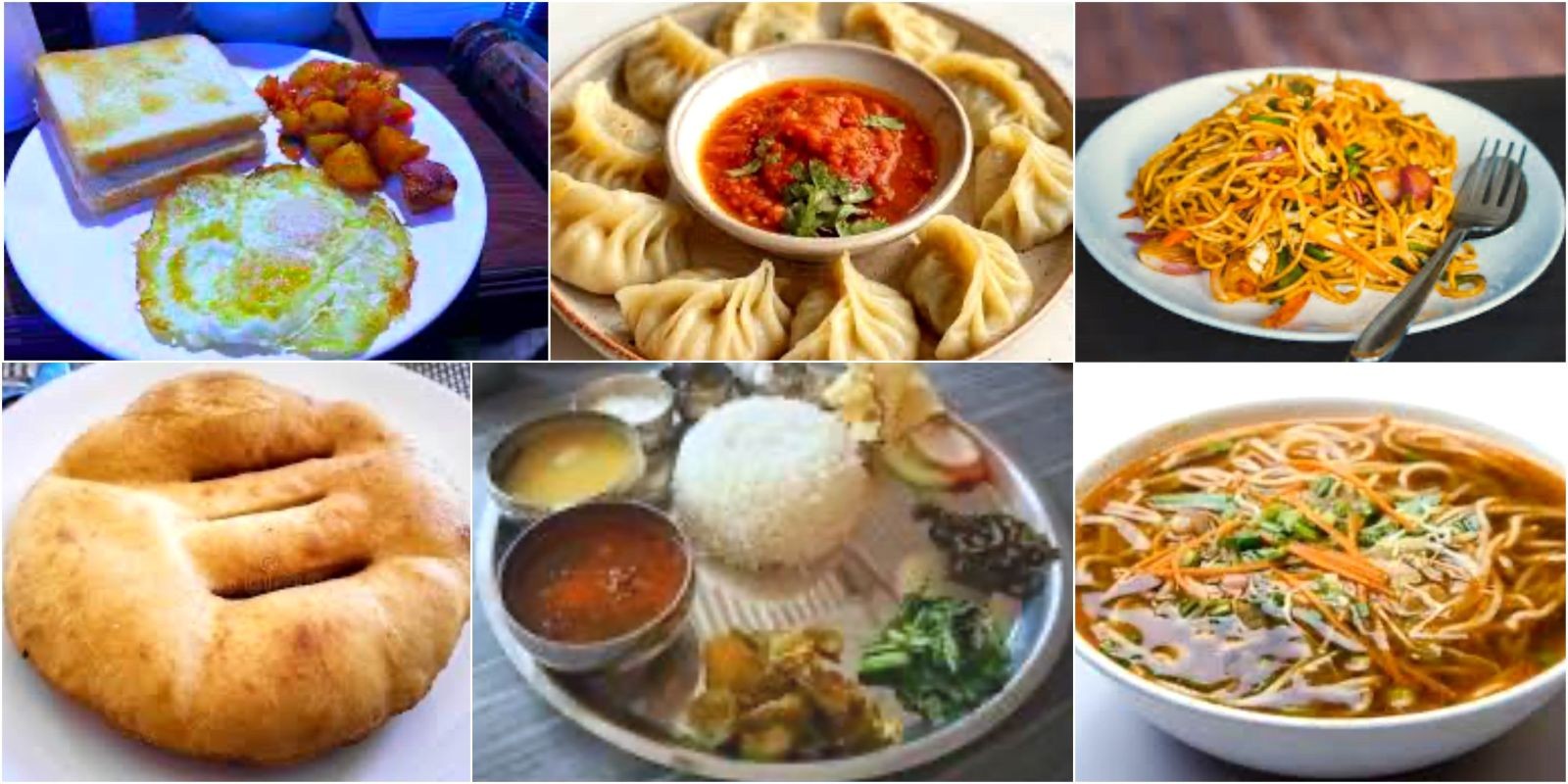
At the heart of it all is Dal Bhat. This isn’t just a meal—it’s the backbone of trekking life. From Machhakhola down in the valley to the high camps near Larkya La Pass, Dal Bhat keeps everyone moving. It’s simple—steamed rice, lentil soup, veggie curry, spicy pickles, maybe some greens or a crisp papad on the side. And the best part? You can always ask for more rice and dal. No one leaves hungry. Sometimes you’ll get a bonus, like eggs or meat in lower villages—Jagat and Namrung come to mind. Up high, the menu gets a bit simpler, but the flavors stick around. Eating Dal Bhat day after day isn’t boring; it’s comforting. It warms you up and brings a sense of routine in wild, unfamiliar places.
Likewise, breakfast is a different story. There’s more variety, and everyone finds their favorite. Some mornings, you’ll want a steaming bowl of porridge or oatmeal, thickened with milk or water. Other days, Tibetan bread or pancakes hit the spot, especially when you smear them with honey, jam, or peanut butter. Eggs show up every which way—boiled, scrambled, fried, or as veggie-packed omelets. And there’s always something hot to drink: black tea, lemon-ginger-honey, or whatever herbal blend the kitchen is brewing. As you climb higher, breakfast gets simpler—toast, porridge, maybe just a cup of tea—but it still does the job, giving you a jolt of energy for those crisp March mornings.
Lunch and dinner mostly circle back to Dal Bhat, but you’ll find a few other favorites :
Meanwhile, snacks and drinks fill in the gaps. In bigger villages like Samagaon, you might spot apple pie, cake, or biscuits. Sipping hot chocolate or a cup of masala tea can make a chilly afternoon feel a little less harsh. Most trekkers also stash energy bars or trail mix for those long hauls between teahouses, especially as the menu slims down higher up. Hydration’s key, too—bottled water or boiled tea is everywhere, and when you hit the really remote stretches, purification tablets become your best friend.
Here’s how meals usually break down by elevation :
Here, lower elevations (870–2,500 m): Breakfasts come with porridge, eggs, pancakes, Tibetan bread, and tea. Lunch and dinner bring Dal Bhat, noodles, fried rice, momos, and soups. Drinks? Hot tea, lemon-ginger, coffee, plus biscuits for a treat. You’ll find more variety and fresher veggies down here.
Further, mid elevations (2,500–3,500 m): Oatmeal, chapati, omelets, or pancakes start the day. Lunch is mostly Dal Bhat (with unlimited refills), veggie curry, or pasta. Masala tea, hot chocolate, and apple pie show up on menus, especially in comfort-food hotspots like Samagaon.
In fact, high elevations (above 3,500 m): Breakfast pares down to porridge, toast, simple eggs, and tea. Lunch and dinner: Dal Bhat, noodles, and soups, with fewer veggies. Tea and boiled water keep you going, and menus get basic—focus shifts to keeping you warm and full.
On this trek, food is more than just what you eat. It’s warmth, energy, and a real taste of Nepali culture, shared in teahouses with mountain views and the scent of rhododendrons on the breeze. So don’t hold back: pile your plate with Dal Bhat, go for seconds, try the momos, and savor Tibetan bread at sunrise. These simple, satisfying meals don’t just fill you up—they become part of your Manaslu story.
Actually, trekking the Manaslu Circuit in March comes with its own set of altitude challenges, but the steady weather actually works in your favor. The trick is to climb slowly and pay attention to your body. Once you hit about 2,500 meters (8,200 feet), you have to keep an eye out for the signs of Acute Mountain Sickness (AMS)—things like headaches, nausea, or just feeling wiped out. March usually brings clear skies and milder temps, which takes some of the edge off, but when you’re up at Larkya La Pass (5,106 meters/16,752 feet), you still feel how thin the air gets. Most trekkers stick to a well-paced itinerary with built-in rest days, so their bodies get time to adjust. That’s why most people finish the trek safely—by following the basics and listening to their guides.
Likewise, AMS symptoms usually show up between 6 and 24 hours after a quick climb. Headaches are common, but you might also feel nauseous, tired, dizzy, lose your appetite, or have trouble sleeping. Usually, if you rest, mild symptoms fade. But if you ignore them, things can take a turn for the worse—severe AMS can turn into High Altitude Cerebral Edema (HACE) or Pulmonary Edema (HAPE), which are both serious. If you get a headache that won’t go away, or you’re short of breath even when you’re not moving, it’s time to pay attention. March’s dry air means you don’t sweat as much, but you still need to drink plenty of water, especially as the days get longer and trails bloom. Guides usually carry oxygen and basic meds, and they’ll make the call to head down if someone’s not doing well.
Moreover, the heart of prevention is acclimatization, and the Manaslu Circuit is designed for it. You’ll get rest stops in high villages, and the standard advice is “climb high, sleep low”—so you might take side hikes up, but always come back down to sleep. Once you’re above 3,000 meters (9,843 feet), don’t gain more than 300-500 meters (984–1,640 feet) of sleeping elevation in a day. At Samagaon (3,520 meters/11,549 feet), you get a full day to acclimatize, maybe with a hike to Birendra Lake; Samdo (3,875 meters/12,713 feet) gives you another buffer before tackling the pass. March’s moderate weather actually helps your body adjust, since you’re not fighting biting cold. Stick to the plan, and your odds of AMS drop a lot.
Here’s what AMS looks like :
So, what really helps? Drink 4-5 liters of water every day, load up on carbs (dal bhat is a classic), and skip alcohol, smoking, and too much caffeine. Take it slow, rest often, and use trekking poles to save your knees. Some people use acetazolamide (Diamox) to prevent AMS—if you want to try it, talk to your doctor before the trip—but most folks do fine with just the basics. If symptoms hang around, the fastest way to feel better is to descend. Teahouses offer warm places to rest, and guides keep a close eye on everyone, so solo trekkers aren’t left on their own.
Some key prevention strategies for the Manaslu Circuit in March :
In fact, March brings just the right weather for the Manaslu Circuit. Trekkers adjust easily, rhododendrons start blooming, and the Himalayan views really open up. With less risk of altitude sickness, people focus on taking it slow, drinking enough water, and listening to their bodies. They rest when they need to and take on Larkya La Pass with confidence. Get yourself ready before you go, trust your guide, and dive into the adventure. You’ll remember this wild corner of Nepal long after you leave.
Meanwhile, risks on the Manaslu Circuit in March are real, but with the right prep, they’re totally manageable. From Machhakhola (870 meters) up to Dharapani (1,860 meters), trekkers pay close attention to their safety. You’ll hit patches of snow higher up, especially near the Larkya La Pass at 5,106 meters, and weather can flip fast—one minute it’s clear, the next, you’re walking into wind, fog, or a light snow shower. March usually brings decent weather, but don’t let that lull you into complacency—mountain conditions change in a heartbeat. Because you’re out in the wild, rescue isn’t always quick, so you need to be ready, and your group needs to look out for each other. When you understand the risks and stick to proven safety habits, the challenges become just part of the adventure.
Above 4,000 meters, snow and ice show up more often, making some slopes tricky and slick. March doesn’t have as much snow as winter, but you can still run into stubborn patches or a fresh dusting—especially earlier in the month. Near Dharamsala at 4,480 meters, icy trails demand care. Microspikes or crampons help you stay upright. The winds at the pass get serious—sometimes blasting 40-60 km/h—which means it feels way colder than the thermometer says, even in the sun. Luckily, avalanches aren’t a big problem here because the slopes are gentle, but guides still pay attention just in case. The right boots and plenty of layers go a long way in keeping you safe and warm.
Still, the real wildcard is the weather. It can turn on you fast, and if you’re caught off guard, it’s not fun—think low visibility or a temperature drop when you least expect it. Clouds often roll in during the afternoon, making it easy to lose your bearings near the pass. Below 3,000 meters, rain isn’t much of an issue in March, but up high, you can get sudden gusts or flurries, so you’ve got to be ready to adapt. Altitude sickness only adds to the challenge—if you feel a headache or get tired quickly, don’t ignore it. Guides bring satellite phones in case something goes wrong, and they’ll call it and turn the group around if things get sketchy. Starting early in the day helps you avoid the worst of the afternoon weather.
Here’s what matters most in March :
Meanwhile, incidents are pretty rare because safety is taken seriously. Guides make sure everyone sticks together and follows the plan. Trekkers look out for one another, bring any meds they need, and respect the guide’s call if it’s time to turn back. You’ll want insurance that covers high-altitude rescue just in case, and daily check-ins help everyone feel confident. March actually offers more daylight and calmer weather than the monsoon or deep winter, so it’s a good time to go.
Bottom line: Snow, wind, and unpredictable weather are part of the Manaslu Circuit, but March brings milder conditions, and a careful approach keeps risks low. Bring the right gear, trust your guide, and stay aware—you’ll get to enjoy blooming rhododendrons, epic Himalayan views, and the thrill of crossing Larkya La Pass safely. Put safety first, stay flexible, and let smart planning turn this trek into something unforgettable.
Actually, on the Manaslu Circuit, the whole trek turns into a deep dive into culture, not just scenery. From Namrung (2,630 meters/8,629 feet) onward, Tibetan influences shape almost everything—how people talk, what they wear, even how they pray. Walk through the Nubri Valley, and you’ll see daily life wrapped around prayer flags, mani walls, and chortens. People here speak Tibetan dialects, wear chuba robes, and keep old rituals alive, all just a stone’s throw from the Tibet border. In March, the sky’s clear, the prayer flags pop against fresh snow, and the villagers? They greet you with real warmth. These moments aren’t just postcard pretty—they let you step right into traditions that haven’t changed much for centuries.
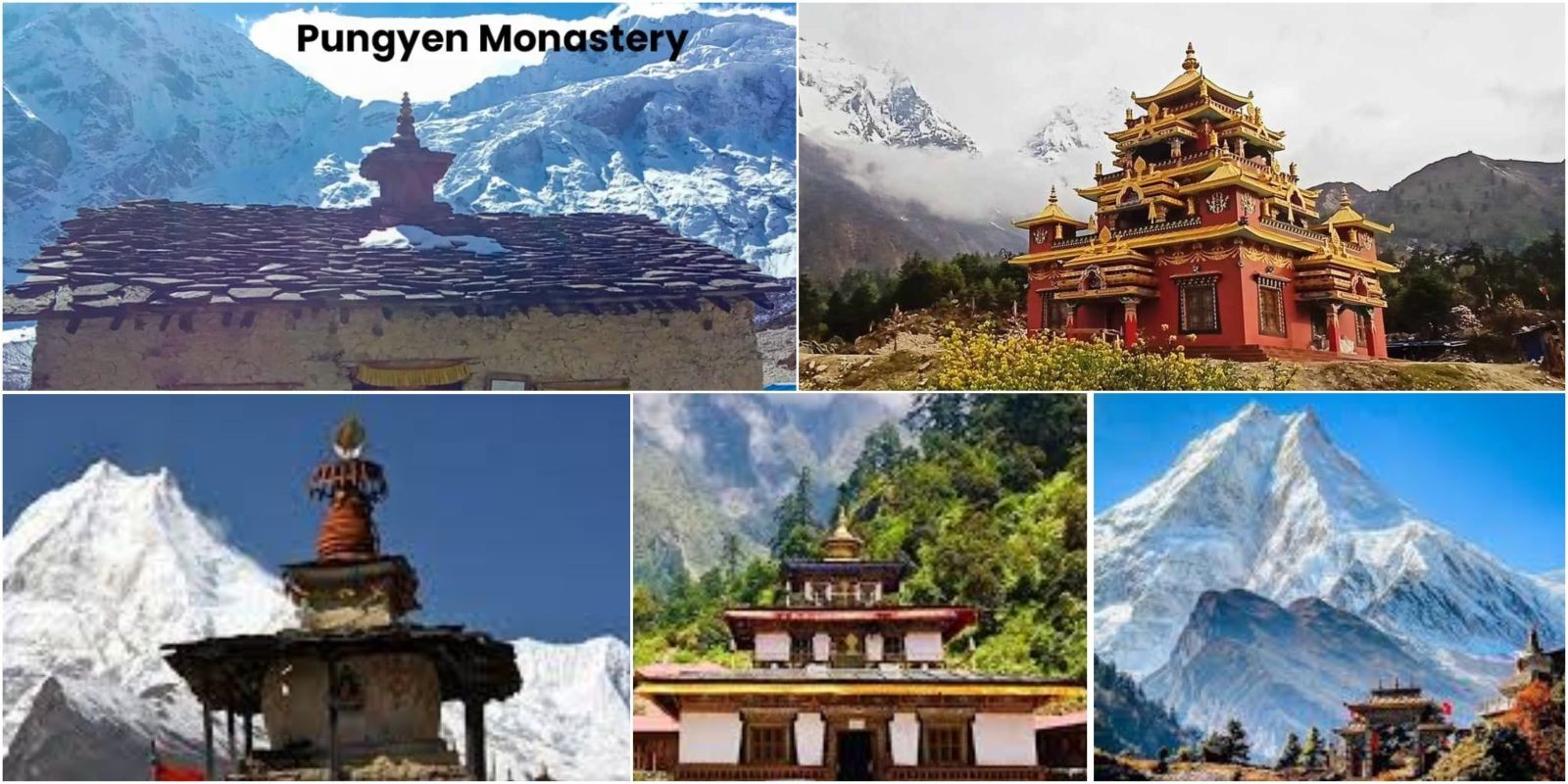
As you hike higher, the villages start to feel even more Tibetan. Namrung marks the gateway with its Kyimolung Monastery and rows of mani walls. Lho sits higher up, with Ribung Gompa perched above the village and young monks chanting through the day. Samagaon, nestled beneath the massive Manaslu peak, is the heart of it all—crammed with ancient gompas, prayer wheels, and tight clusters of stone houses. Then there’s Samdo, the last major outpost before Tibet, where life runs on old rhythms and highland customs. Along the way, you can spin prayer wheels, join in rituals, or just listen as locals talk about festivals like Losar. The hosts make it easy to feel at home, even when you’re far from yours.
In fact, spiritual life runs through everything. Monasteries along Manaslu Trail aren’t just for prayer—they’re where the community gathers, learns, and remembers its roots. Near Samagaon, Pungyen Gompa offers a quiet place to meditate with glacier views in the distance. Smaller gompas in Lho and Namrung show off brightly painted murals and old relics. Trekkers join in, circling chortens and mani walls the right way—clockwise—just like the locals. Everyday life has its own rituals too: herding yaks, making tsampa porridge, or sipping yak butter tea in a smoky teahouse. All these details pull you in and give you a real sense of what it means to live with these traditions.
A quick guide to the main Tibetan-influenced villages on the Manaslu Circuit:
Here, traditions here blend the spiritual with the everyday. Villagers dance and celebrate Buddhist festivals set by the lunar calendar, and in lower villages, older shamanic customs still linger. Trekkers usually get pulled right in—welcomed with tea, invited to prayers, or asked to share a meal. If you want to show respect, just ask before snapping photos and remember to walk clockwise around sacred spots. Little gestures like these keep the culture alive, even in these far-off places.
Some of the main symbols and traditions you’ll run into :
In the end, trekking the Manaslu Circuit is much more than chasing mountain views. It’s about meeting people, joining in their routines, and seeing how tradition weaves through everything, even in the wildest corners of the Himalayas.
If you're heading out on the Manaslu Circuit in March, you need to be smart about your budget, get your body ready, and think about how to leave the smallest mark on the place as you can. Most people spend anywhere from $900 to $1,500 for a typical 14-18 day trek, but daily costs can pile up fast if you go solo. Training matters—a lot. You’ll need stamina for the steep climbs and for crossing Larkya La Pass at 5,106 meters (16,752 feet). At the same time, making eco-friendly choices helps keep the Manaslu Conservation Area the beautiful, wild place it is. Luckily, March usually brings decent weather for steady hiking, but you still need to make good calls to stay comfortable and safe. If you cover these basics, you can enjoy the trek from Machhakhola (870 meters/2,854 feet) to Dharapani (1,860 meters/6,102 feet) without breaking the bank or your body—or the environment.
Here, your budget should cover permits, guides, places to sleep, food, and the little extras. Prices change depending on group size and how much comfort you want. Permits run about $140-200 (including the Restricted Area, MCAP, and ACAP), and March is cheaper for the RAP. A teahouse bed costs $5-15 a night, and meals run about $30-40 a day—think lots of dal bhat and hot soup. Guides (which you have to hire) charge $30-40 a day, and porters cost $20-30 if you want help with your bag. Bring enough Nepali rupees, because there are no ATMs once you’re on the trail. Plan for $200-400 extra for snacks, showers, and tips so nothing catches you off guard.
In fact, start training 8-12 weeks before you go. Focus on cardio, strength, and endurance. If you’re new to this, start walking or hiking a few times a week. If you’ve done treks before, add a loaded backpack to your routine to get used to carrying weight. Climb stairs, find hills, and get your lungs used to working harder—thin air is no joke. Squats, lunges, and other leg work help you handle the long descents. Try a few 5-7 hour hikes with a 5-10 kg pack before you leave so you know what you’re in for. Put the effort in now, and you’ll have way more energy when you hit tough spots like Dharamsala (4,480 meters/14,698 feet).
Here’s a quick look at what you’ll spend for March :
Moreover, going green on the Manaslu Circuit isn’t just a nice idea—it’s necessary. Use a reusable water bottle and purification tablets instead of buying plastic bottles. Stick to the main trail. That prevents erosion and keeps the route safe for everyone. Choose local teahouses—they rely on trekkers like you. Pack out all your trash, use as few single-use items as you can, and keep your distance from wildlife. Solar chargers are handy and cut down on generator use. Dress modestly and respect the Tibetan-influenced culture you’ll find in the villages. These little habits don’t take much effort, but they protect the rhododendrons, keep the mountain views clear, and make sure future trekkers get the same experience you do.
Some quick training and eco-tips to keep in mind :
Here’s the thing: if you want to really enjoy the Manaslu Circuit in March, you need to get smart about your budget, prep your body, and take care of the environment while you’re out there. Set your spending limits, start your training early, and try not to leave a trace. That way, you actually get to soak in those wild Himalayan views without any guilt. Plan ahead, stick with your prep, and pay attention to how you move through the landscape. The result? An experience that feels just right—clear skies, spring in full swing, and memories you actually want to keep.
Meanwhile, finishing the Manaslu Circuit in March does something to you. Yeah, you bring back photos of snowy peaks and rhododendron blooms, but honestly, the real souvenirs are harder to pin down. The journey from Machhakhola up to Dharapani puts your legs through the wringer, yet it’s the quiet moments—the raw landscape, the honest encounters with mountain life—that end up shifting your view of the world. Unlike the packed trails of Annapurna or Everest, Manaslu gives you space. You walk through villages shaped by Tibetan tradition, pass ancient monasteries, and sometimes walk for hours where it’s just you and the wind. March is magic here: clear skies, wildflowers everywhere, and a feeling that you’ve got the mountains mostly to yourself. That kind of solitude has a way of sticking with you, long after you’re back in Kathmandu.
Actually, crossing Larkya La Pass at 5,106 meters? That’s something you don’t forget. Everything builds to that windswept saddle, and when you finally stand there, the sense of accomplishment hits hard. It’s almost overwhelming—the whole panorama opens up, with Manaslu, Cheo Himal, and Kang Guru rising all around. The climb up is tough, but the steep drop down to Bimthang feels like pure relief. Along the way, there’s laughter and stories in the teahouses, mugs of lemon-ginger tea warming cold hands, and moments when you realize strangers have become friends. The scenery shifts from lush, green forests to rocky, high-altitude moonscapes. It’s hard not to notice how your own mindset changes with the landscape—there’s a new appreciation for the basics, a deeper kind of resilience, and a reminder that simplicity can feel pretty rich.
Likewise, the real change sneaks up on you. Days after the trek, you catch yourself moving slower, savoring small comforts like a hot meal or a clear night sky. Places like Namrung, Lho, and Samagaon open your mind to Buddhist traditions and the pace of mountain life. You start to care more about your impact—picking up trash, supporting local families, thinking about how you travel. The Manaslu Circuit doesn’t just give you adventure; it quietly rewires how you see things, nudging you toward a kind of humility and care you didn’t expect.
Some moments just stick with you :
Looking back, the trek’s real gift is how it weaves challenge and beauty together to spark real growth. You come home tougher, more patient, and maybe a little more in love with the world. March’s calm weather and quieter trails give you space to soak it all in and carry the lessons back home.
In the end, the Manaslu Circuit in March isn’t just a trek. It changes your body, fills your mind with wonder, and leaves your heart full from all the small, honest connections along the way. You leave footprints on old trails but return with a wider sense of gratitude and possibility. If you’re looking for something that’ll challenge you, inspire you, and quietly change how you see things, this is the path. Manaslu is waiting—and trust me, it’s worth every step.
Q: Is March a good time for the Manaslu Circuit Trek?
A: March is a great time for the Manaslu Circuit Trek. This is when spring starts and the weather is pretty stable. You get to see the mountains and the rhododendrons are started to bloom. The trails are not too crowded like they are in April. So, you can have a peaceful time trekking with great views and comfortable temperatures on the Manaslu Circuit Trek.
Q: What is the weather like on the Manaslu Circuit in March?
A:The weather on the Manaslu Circuit in March is usually mild in the areas. It can be around 10 to 20 degrees Celsius. It can get really cold at higher elevations especially at night. The skies are usually clear. Sometimes it can snow above 3,500 meters. March is a time when the weather is changing so you need to be ready for conditions on the Manaslu Circuit.
Q: Are permits required for the Manaslu Circuit Trek?
A: You need to get permits for the Manaslu Circuit Trek. These include the Manaslu Restricted Area Permit, the Manaslu Conservation Area Permit and the Annapurna Conservation Area Permit. You also need to trek with a guide because the Manaslu Circuit Trek is in a restricted area.
Q: Do I need a guide for the Manaslu Circuit Trek?
A: You have to hire a guide for the Manaslu Circuit Trek. You cannot trek alone. The guide will help keep you safe manage the logistics get the permits and make your trip more interesting. The Manaslu Circuit Trek is in an area so a guide is really necessary.
Q: How difficult is the Manaslu Circuit Trek in March?
A: The Manaslu Circuit Trek is moderately to challenging. You have to walk for hours and climb steep paths. You also have to cross the Larke Pass which's 5,106 meters high. In March there can be snow at elevations, which makes the Manaslu Circuit Trek even more difficult. So, you need to be in shape and get used to the high altitude to do the Manaslu Circuit Trek.
Q: What should I pack for the Manaslu Circuit Trek in March?
A: You should pack clothes that can be layered like wear and a warm down jacket. You will also need a jacket, warm gloves and a hat. Good boots are a must for the Manaslu Circuit Trek. You should also bring sunglasses, sunscreen and a warm sleeping bag. The weather can change quickly especially when you are high up.
Q: How long does the Manaslu Circuit Trek take?
A: The Manaslu Circuit Trek usually takes 14 to 18 days to complete. This depends on how you plan your trip and how your body gets used to the altitude. The trek goes up slowly with rest days in between. You will cross the Larke La Pass. Most people start the Manaslu Circuit Trek at Machhakhola. End at Dharapani.
Q: Is altitude sickness a concern in March?
A: Yes, altitude sickness is something to worry about on the Manaslu Circuit Trek in March. The trek goes above 5,000 meters, which's very high. Even though the weather is mild in March you still need to get used to the altitude slowly drink plenty of water and listen to your guide. If you feel sick you need to tell your guide away.
Q: What is the highlight of the Manaslu Circuit Trek?
A: The best part of the Manaslu Circuit Trek is crossing the Larke Pass. Seeing the beautiful Mount Manaslu. The Manaslu Circuit Trek also takes you through types of landscapes like forests and mountains and you can see the rich culture of the people who live there which is influenced by Tibetan culture.
Q: Are teahouses available in March?
A: Yes, you can find teahouses and lodges along the Manaslu Circuit Trek in March. They are basic. They have food and a place to sleep. There are usually teahouses but in the higher areas there are not many options so it is a good idea to plan ahead with a guide, for the Manaslu Circuit Trek.
Q: What kind of food is available during the trek?
A: The teahouses have a lot of food options like Dal Bhat which's rice and lentils and vegetables. They also have noodles and soups and pasta and pancakes. The food is not so fancy when you are really high up. It is good for you. It fills you up so you have energy to walk all day.
Q: Is the Manaslu Circuit crowded in March?
A: The Manaslu Circuit is not crowded in March. This is because it is not as busy as April which's the peak month for trekking. So, people who trek in March can have the trail to themselves and they can really enjoy the beautiful mountains. It is great for people who want to be alone and enjoy nature.
Q: Can beginners do the Manaslu Circuit Trek?
A: Beginners can do the Manaslu Circuit Trek if they are really fit. They prepare properly. They need to train and get ready in their mind. They should go with a guide who knows the way. The Manaslu Circuit Trek is hard because it is really high up and it is far from cities so people need to be ready for that.
Q: What wildlife can be seen during the trek?
A: When you are on the Manaslu Circuit Trek you might see some animals like sheep and Himalayan tahr and lots of birds. The Manaslu Conservation Area has a lot of kinds of animals and March is a good time to see them because they are more active after the winter.
Q: How cold is Larke La Pass in March?
A: Larke La Pass can be really cold in March. Sometimes it can be as cold as -10, °C which's really freezing. The wind can make it feel even colder. So, people need to have clothes, and they should start walking early in the morning to get across the pass safely. The Manaslu Circuit Trek and Larke Pass are beautiful. They can be dangerous if you are not prepared.
Q: What are the risks of trekking in March?
A: When trekking in March you should be aware of some risks. Weather changes can happen suddenly. It can snow at elevations. You might get altitude sickness. Trails near the pass can be slippery. But if you prepare well have experienced guides and plan flexibly you can manage these risks.
Q: Is travel insurance necessary for this trek?
A: Travel insurance is a must. It should cover trekking at altitudes above 5,000 meters. You might need emergency evacuation. The Manaslu region is very remote. If you have health issues you might need a helicopter rescue.
Q: How much does the Manaslu Circuit Trek cost?
A: The cost of the Manaslu Circuit Trek varies. It depends on the services you choose. Usually, it costs between $1,200 and $2,000 per person. This includes permits, a guide, accommodation, meals and transportation. If you are in a group the price might be different. It also depends on your itinerary and how comfortable you want to be.
Q: What cultural experiences can I expect?
A: On the Manaslu Circuit Trek you pass through villages, like Samagaon and Samdo. These villages are influenced by culture. You experience culture. You visit monasteries. You spin prayer wheels. You meet locals. March is a time to see these traditions. There are not tourists.
Q: How should I prepare for the Manaslu Circuit Trek?
A: To prepare for the Manaslu Circuit Trek start training six to eight weeks. Do cardio exercises. Build your strength. Improve your endurance. Practice hiking with a backpack. Get used to carrying weight. Prepare yourself mentally for the conditions. This preparation makes the trek safer and more enjoyable.
Our travel experts are ready to assist you with any questions.
Send us a message.Have a question before you book? Send your enquiry below and our travel experts will get back with the required information.