
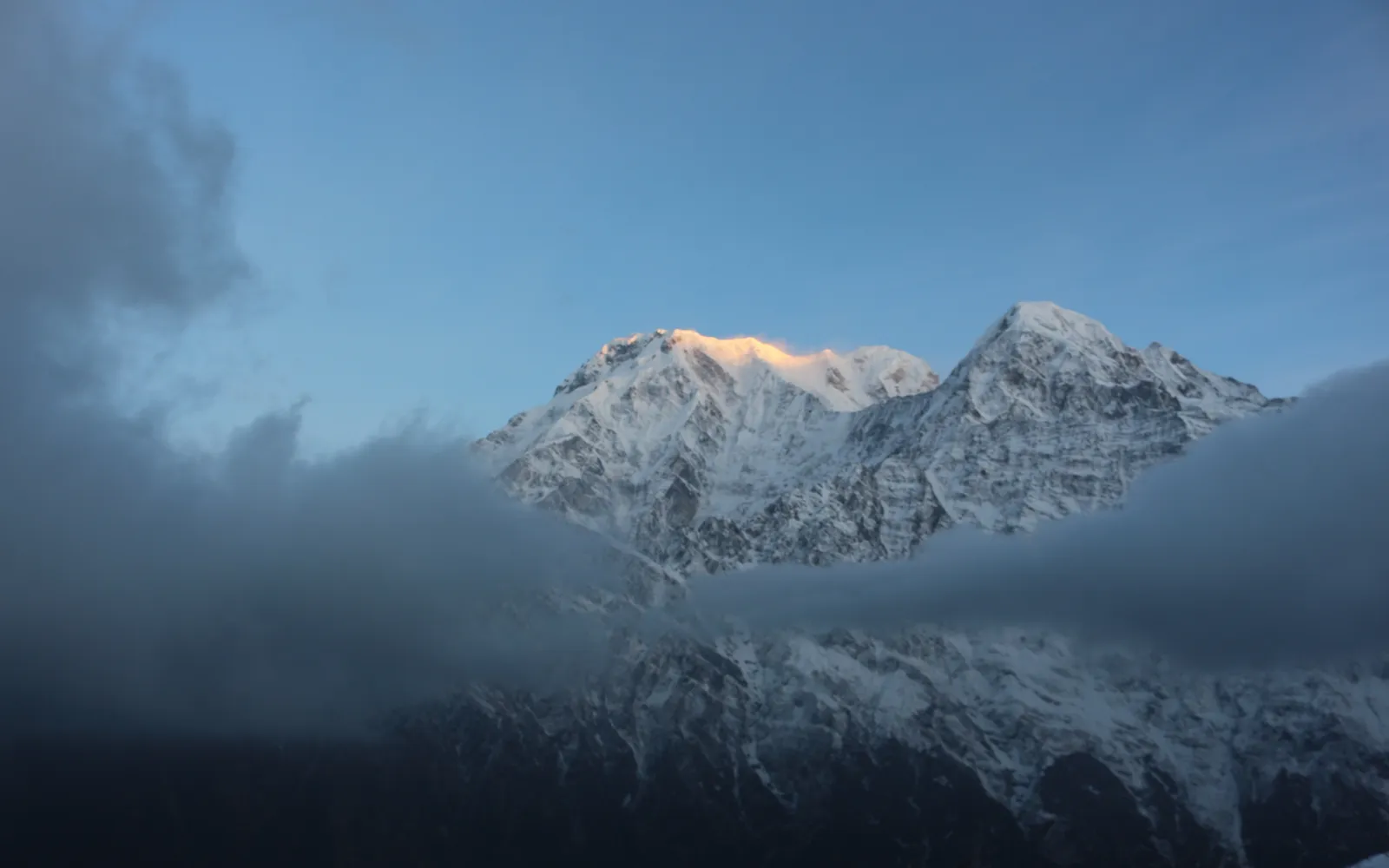
The Mardi Himal Trek 2027 is a short trek from Pokhara featuring close views of Mardi Himal (5,587 m), Machhapuchhre and the Annapurna range, with significant trail improvements, accommodation upgrades and transportation advantages over earlier years.
What to Expect in 2027 Mardi Himal Trek
Feature | 2027 Trek Experience
Pokhara | 822 m
Kande | 1,770 m
Forest Camp | 2,600 m
Low Camp | 2,970 m
High Camp | 3,580 m
Mardi Viewpoint | about 4,250 m
Mardi Himal Base Camp | about 4,500 m
Trek duration | 4 days possible
Starting point | Pokhara → Kande
Ending point | Siding → Pokhara
Better Trail Conditions
The main route up Mardi Himal has been greatly improved with marked paths, stone steps and ordered trekking trails.
However, it is subject to change after heavy rain, snow or landslides, and trekkers should follow local guide advice for specific conditions.
Improved Facilities
Accommodation options have grown throughout the main route, including Forest Camp (2,600 m), Low Camp (2,970 m) and High Camp (3,580 m).
As a result, trekkers will find teahouse stays with room availability, food, drinks, battery charging and, in many lodges, hot shower and wi-fi facilities.
Easier Transportation
Access to the trailhead is much simpler with road transportation from Pokhara (822 m).
Most 4-day itineraries begin with a drive from Pokhara to Kande (1,770 m) and end with a return road journey from Siding (1,750 m) to Pokhara.
Permit and Trek Planning
Permit access is also simpler than previous years, as a trekking company can advise on the current permit situation, transport, accommodation and licensed guide, and confirm trail conditions before departure.
Therefore, the 2027 Mardi Himal Trek can be planned as a short 4-day mountain trek from Pokhara, although weather and trail conditions should be confirmed closer to departure.
The 4-day Mardi Himal Trek from Pokhara is an accelerated but accessible option through forests, mountain villages and high altitude alpine terrain.
Here, the Mardi Himal Trek route begins at Kande (1,770 m) and ends at Siding (1,750 m), with the highest point near Mardi Himal Base Camp at about 4,500 m.
4-Day Mardi Himal Itinerary
Day Route| Elevation| Distance| Walking
1 Pokhara → Kande → Forest Camp| 822 m → 1,770 m → 2,600 m| 7 km| 5–6 hrs
2 Forest Camp → High Camp| 2,600 m → 3,580 m| 6 km| 5–6 hrs
3 High Camp → Viewpoint → Base Camp → Low Camp| 3,580 m → 4,250–4,500 m → 2,970 m| 11 km| 6–7 hrs
4 Low Camp → Siding → Pokhara| 2,970 m → 1,750 m → 822 m| 7 km| 4–5 hrs
Day 1: Pokhara → Kande → Forest Camp
The trek begins in Pokhara (822 m) with a drive to Kande (1,770 m). The walking route from Kande travels through forest and ridges to reach Forest Camp (2,600 m), a distance of 7 km in 5–6 hours.
Day 2: Forest Camp → High Camp
The route from Forest Camp travels through rhododendron and mountain forest on the way to Low Camp (2,970 m) and then High Camp (3,580 m). This 6 km stretch takes 5–6 hours to walk.
Day 3: High Camp → Viewpoint → Base Camp → Low Camp
It is the longest stage of the trek as it passes the viewpoint at about 4,250 m and potentially continues towards Mardi Himal Base Camp at about 4,500 m, although the route will depend on conditions and the guide’s advice.
Then, the trail drops to Low Camp (2,970 m), a distance of 11 km and lasting 6–7 hours.
Day 4: Low Camp → Siding → Pokhara
On the final day, the trail drops from Low Camp (2,970 m) through forest and villages to Siding (1,750 m), where a road journey returns trekkers to Pokhara (822 m).
Note: The distance, access to Base Camp and time spent walking can change depending on the weather and trail conditions, route and should be confirmed by a licensed guide on the day.
The Mardi Himal Trek cost in 2027 normally ranges between USD 195–360 per person, depending on the group size, transportation, accommodation and included services.
Moreover, a larger group usually means a lower cost per person and a private trek with better transportation/accommodation normally costs more.
Estimated 2027 Cost
| Trek option | Approx. cost per person | Main services |
| Group/standard trek | USD 195–260 | Guide, permits, transport, accommodation, breakfast |
| Smaller/private group | USD 260–360 | Private services, flexible arrangements |
| Duration | 4 days | Pokhara–Kande–High Camp–Siding–Pokhara |
Here, a standard Mardi Himal Trek package normally includes a licensed trekking guide, required permits, ground transportation, teahouse accommodation and breakfast.
However, trekkers should confirm the exact inclusions because lunch, dinner, drinks, insurance, tips and personal expenses may be excluded.
What Affects the Mardi Himal Trek Cost?
Group size: Larger groups can reduce the cost per person.
Transportation: Private jeep transportation costs more than shared transportation.
Accommodation: Standard teahouses are less expensive than upgraded lodges.
Guide service: Private guiding increases the overall package cost.
Season: Accommodation and transport can be busier during peak trekking months.
Itinerary: Extra nights or route changes increase the price.
Thus, the 4-day route normally covers Pokhara (822 m), Kande (1,770 m), Forest Camp (2,600 m), Low Camp (2,970 m), High Camp (3,580 m) and the upper viewpoint/Base Camp area at approximately 4,250–4,500 m.
Therefore, trekkers should compare packages by services and inclusions rather than price alone. A registered local trekking company can provide a written itinerary, explain what the price covers and arrange the guide, permits, accommodation and transportation before departure.
The Mardi Himal Trek is inside the Annapurna Conservation Area, so trekkers need an Annapurna Conservation Area Permit (ACAP). The current Nepal Tourism Board fee is NPR 3,000 for foreign nationals, NPR 1,000 for SAARC nationals and NPR 100 for Nepali citizens.
ACAP Fee
| Trekker | Current ACAP fee |
| Foreign nationals | NPR 3,000 |
| SAARC nationals | NPR 1,000 |
| Nepali citizens | NPR 100 |
What About TIMS?
There is an important current update for 2027 planning. Mardi Himal Trek is specifically included on Nepal Tourism Board's current list of routes requiring a TIMS card, but it would not be accurate to state that Mardi Himal requires TIMS since it is not in practice.
In fact, this shows there is confusion about the TIMS implementation.
Therefore, travelers should arrange both ACAP and TIMS where the current rules apply. Because Nepal's trekking regulations and fees can change, a registered trekking company should verify the requirements immediately before the trek.
Documents Normally Needed
For permit processing, prepare:
Valid passport
Passport details/copy
Passport-size photograph or digital photo
Trekking dates
Trekking route
Emergency/contact information
Details required by the trekking agency
How to Obtain the Permits
1. Contact a registered trekking company.
Give the company your passport details, travel dates and itinerary.
2. The agency checks the current requirements.
This is particularly useful because the official TIMS information currently lists Mardi Himal as a TIMS route.
3. Pay the applicable fees.
The agency processes the required documentation and provides the permit/e-card where applicable.
4. Carry the documents during the trek.
Keep your passport and permit details safely accessible because permits can be checked along the route.
Why Use a Local Trekking Company?
A registered local trekking company can handle the permit process, arrange a licensed guide and keep the itinerary consistent with current regulations.
Moreover, the company can check trail conditions and transportation before you leave Pokhara.
For a 2027 Mardi Himal Trek, budget for the ACAP fee and verify the current TIMS requirement before departure rather than relying on older information.
You need a licensed trekking guide for foreign trekkers due to Nepal Tourism Board's current rules as Mardi Himal is specifically listed among Annapurna routes requiring a licensed guide plus TIMS card.
Therefore, you should organize a guide through a government-registered trekking agency.
Here, you can choose whether to hire a porter or not, however, it could be a good option if you do want to carry a heavy backpack.
Moreover, the route becomes more demanding as you climb from Pokhara (822 m) through Forest Camp (2,600 m) and High Camp (3,580 m) towards the upper viewpoint at about 4,250 m.
Approximate Daily Costs of Guide and Porter
| Service | Approx. daily cost | Purpose |
| Licensed guide | USD 30-40 | Navigation, safety and local assistance |
| Porter | USD 20-30 | Carries trekking luggage |
| Guide + porter | USD 50-70+ | Complete trekking support |
Meanwhile, current local market information suggests licensed guide rates broadly vary between USD 25-40 per day while porter rates commonly range around USD 18-30 depending on their experience, load and services.
Benefits of hiring Guide for Mardi Himal Trek 2027
Navigation: Helps you to stay on the correct trail.
Safety: Monitors the changing weather and trail conditions.
Communication: Helps to communicate with lodge owners and local people.
Accommodation: Helps to arrange rooms during busy periods.
Local knowledge: Explains Gurung culture, forests and mountain landscapes.
Emergency support: Can coordinate assistance if unexpected problem occurs.
Benefits of a Porter
A porter enables you to walk with a much lighter daypack. Therefore, you can focus much more on the trail and scenery rather than carrying heavy luggage.
Meanwhile, a reputable company should provide appropriate insurance and working conditions for guides and porters while the agreed rate and maximum load should be confirmed before departure.
For 2027, as per Haven Holidays Nepal Team, foreign trekkers should plan the Mardi Himal Trek with a licensed guide via a registered trekking company while a porter can be added according to your luggage and comfort needs.
The best time for the Mardi Himal Trek 2027 is generally October-November and March-May. Likewise, Nepal Tourism Board identifies autumn and spring as the main trekking seasons as these periods usually provide clearer mountain visibility and favorable walking conditions.
Month-by-Month Guide
| Month | Conditions | Trek experience |
| October | Dry and generally clear | Excellent |
| November | Clear, dry and cool | Excellent |
| December | Cold but often clear | Good with warm clothing |
| January | Cold, possible snow | Possible with winter preparation |
| February | Cold, gradually improving | Good |
| March | Spring begins | Very good |
| April | Warm, flowers and clear periods | Excellent |
| May | Warm, spring continues | Very good, rain may increase later |
| June-September | Monsoon influence | Less reliable |
October and November: Best Overall
October and November are particularly good for Mardi Himal as the monsoon has normally ended, skies become clearer and the mountain visibility improves while the daytime walking conditions are generally comfortable.
Similarly, Nepal Tourism Board also specifically notes that the clearest skies are normally found after the monsoon in October and November.
In essence, these months are also popular, however, therefore, trails and teahouses can become busy.
Therefore, booking accommodation and a licensed guide in advance is wise.
March to May: Spring Season
March, April and May provide a different experience. Temperatures become warmer, rhododendrons and other mountain flowers bloom and the forests become increasingly colorful.
Here, April is particularly spectacular for rhododendron forests while May can become warmer and wetter towards the end of the month.
At the same time, Nepal Tourism Board identifies spring as a major trekking season and notes that rhododendrons bloom during this period.
December to February: Winter
December, January and February are possible for experienced and properly equipped trekkers. However, temperatures fall at higher elevations and snowfall can affect the upper trail.
Therefore, bring a warm down jacket, thermal layers, gloves, hat and suitable trekking shoes. Check the latest weather and trail conditions before departure.
Best Choice for 2027
Best for mountain views: October-November
Best for rhododendrons and spring scenery: March-April
Good alternative: May
Possible winter trek: December-February
Least reliable period: June-September due to monsoon rain
Overall, October and November are the most suitable months if your priority is clear Himalayan views while April is particularly attractive if you want flowers and spring landscapes.
The Mardi Himal Trek 2027 goes from Kande (1,770 m) through forests to High Camp (3,580 m) and the upper viewpoint at around 4,200–4,250 m.
Meanwhile, your packing list for the Mardi Himal Trek should therefore be suitable for warm, cold, windy and wet weather conditions, while still being light enough for comfortable trekking.
Thus, the trail also suggests extra preparation for a warm sleeping bag, rain protection, sun protection and suitable footwear for the ridge.
1. Clothing
2–3 quick-dry T-shirts
1–2 long-sleeve trekking shirts
1 fleece jacket
1 warm down/synthetic jacket
1 waterproof/windproof jacket
2 trekking trousers
1 waterproof trouser
1 thermal base-layer top
1 thermal base-layer bottom
3–4 pairs of trekking socks
1 warm hat/beanie
Sun hat/cap
Warm gloves
Buff/neck gaiter
Lightweight sleepwear
In fact, layering is important, because lower areas can be quite pleasant during the day while High Camp can get very cold in the evening.
2. Footwear
Broken-in waterproof trekking shoes
Lightweight sandals
3–4 pairs of good trekking socks
Spare shoelaces
Optional microspikes (winter)
Importantly, avoid getting blistering on new trekking shoes, because this makes the descent very uncomfortable.
3. Backpack and Luggage
40–50 L trekking backpack (with inner pockets or organizer)
20–25 L daypack if using porter
Waterproof backpack cover
Dry bags
Backpack liner
Small luggage lock
Duffel bag if using porter
A lighter daypack (5-7km max) is recommended because of the long climb towards High Camp (3,580 m).
4. Sleeping and Night Equipment
3-season sleeping bag
Sleeping-bag liner
Headlamp
Spare batteries
Small earplugs
Warm socks for sleeping
Thus, you will greatly benefit from a sleeping bag at High Camp, because the upper lodges are quite basic and it can get below freezing at nightfall.
5. Water and Food
1–2 L reusable water carrying capacity
Water purification tablets/filter
Electrolyte/ORS packets
Energy bars
Nuts/dried fruit
Chocolate/lightweight snacks
Importantly, do not rely on untreated tap or stream water being safe. Treat all water, even if it looks clean.
6. Personal Health and Hygiene
Personal medicines
First-aid kit
Blister plasters
Bandages
Antiseptic
Pain-relief medicine
ORS
Prescription medicines
Sunscreen
SPF lip balm
Sunglasses
Toothbrush/toothpaste
Biodegradable soap
Small shampoo
Quick-dry towel
Wet wipes
Toilet paper
Hand sanitizer
7. Documents and Electronics
Passport
Permit documents
Travel insurance information
Emergency contacts
Nepali cash
Mobile phone
Charging cable
Power bank
Universal adapter
Camera if required
Mainly, charging becomes unreliable at higher altitudes because some lodges run on solar power. A power bank is therefore a useful investment.
8. Useful Optional Items
Trekking poles
Small binoculars
Camera
Lightweight thermos
Small repair kit
Sewing kit
Zip-lock bags
Portable seat pad
In conclusion, the rule is to pack lightly but prepare for cold temperatures. You do not need expedition gear but warm clothing and waterproof items, a headlamp, comfortable shoes and a suitable sleeping bag are useful for the Mardi Himal trail above 2,600 m.
The Mardi Himal Trek 2027 accommodation is based on family-run teahouses and mountain lodges.
As you go higher up the Mardi Himal Valley, the facilities get simpler.
Here, do not expect luxury hotels on the Mardi Himal upper trail. 2026 trail information mentions twin-sharing rooms, shared bathrooms and more limited facilities around High Camp.
Accommodation by Location
| Location | Elevation | Typical accommodation | Main facilities |
| Kande area | 1,770 m | Lodge/guesthouse | Basic rooms, meals |
| Forest Camp | 2,600 m | Teahouse | Twin rooms, shared facilities |
| Low Camp | 2,970 m | Teahouse | Basic rooms, shared bathroom |
| Badal Danda | 3,210 m | Small teahouse | Basic rooms, limited facilities |
| High Camp | 3,580 m | Mountain teahouse | Basic rooms, shared bathroom |
| Siding | 1,750 m | Lodge/homestay | Better facilities, hot shower possible |
| Pokhara | 822 m | Hotel | Wide range of facilities |
Rooms Available
Most trekking lodges provide twin-sharing rooms, typically consisting of two beds, mats, pillows and blankets.
Also, private rooms are available but not necessarily guaranteed, particularly during busy periods or at higher elevation camps.
Likewise, rooms become smaller as you trek up the valley. High Camp has particularly basic rooms with shared bathrooms while the dining room is usually the only warm communal area.
Bathrooms and Hot Showers
Bathroom facilities vary between lodges particularly with the altitude. Lower settlements often provide better bathrooms while shared bathrooms become the norm at higher altitude.
However, Siding (about 1,750 m) is a welcome change of altitude after High Camp and local lodges or homestays can provide more comfortable rooms and better shower facilities.
Likewise, attached bathrooms and hot showers should however be confirmed with the lodge before arrival, as these facilities vary between properties.
Accommodation Cost
A reasonable budget for accommodation is around USD 5–15 per room/night, depending on the location, time of year and type of room.
In fact, higher elevation camps tend to have fewer facilities while lower villages tend to offer more choices of accommodation.
What to Expect
Basic twin-sharing rooms
Blankets provided by lodges
Shared bathrooms at higher elevations
Hot showers mainly at lower elevations and usually for an extra charge
Limited Wi-Fi as altitude increases
Charging facilities (sometimes for an additional fee)
Warm dining rooms at many teahouses
Simple Nepali and trekking meals
Therefore, Mardi Himal accommodation is suitable for a short trek but should not be compared with luxury hotel accommodation.
If comfort is important, try to reserve the best available rooms in advance at Forest Camp, Low Camp and High Camp during October–November and spring.
The Mardi Himal Trek 2027 is ideal for a short Himalayan trek from Pokhara that avoids an expensive mountain flight like to Lukla from Kathmandu.
Meanwhile, the trail passes rhododendron forests and ridges, through villages plus views of Mardi Himal (5,587 m), Machhapuchhre (6,993 m), Annapurna South and Hiunchuli.
Moreover, the walk usually stays above 3,580 m, reaching the Upper Viewpoint at ~4,200 m, with harder trekkers continuing to Mardi Himal Base Camp at around 4,500 m.
What to organize for 2027 Mardi Himal Trek
Item | What to expect
Permits |ACAP and TIMS should be organised prior to trekking; current requirements should be confirmed for the 2027 season.
Transportation | Drive from Pokhara to Kande then trek through Forest Camp, Low Camp and High Camp, descend to Siding and return to Pokhara by jeep.
Cost | A typical Haven Holidays 2027 package can be arranged on a budget of USD 195–360 depending on group size and services.
Guide |A licensed trekking guide is highly recommended and is particularly necessary on the exposed upper ridge and in changeable weather.
Porter | Optional, but helpful for carrying luggage with a lighter daypack for trekkers.
Accommodation | Family-run teahouses provide basic twin sharing rooms and simpler facilities at higher altitude while Siding generally has more comfortable village accommodation.
Highest overnight | High Camp (~3,580 m), providing basic sleeping accommodation.
Why is Mardi Himal worth it in 2027?
Mardi Himal is worth it for travelers seeking Himalayan altitude and spectacular mountain scenery in a short walking itinerary with road access from Pokhara (avoiding a Lukla flight).
Moreover, one can enjoy this short and moderate trek retaining a true teahouse trekking experience and a thrilling high-ridge section.
Therefore, 2027 is a great year to arrange the trek with a registered local trekking company, licensed guide, relevant permits, accommodation confirmation and reliable transportation.
Importantly, advance booking of High Camp accommodation is especially advisable in busy periods due to limited ridge bed capacity.
In short, Mardi Himal Trek 2027 combines reasonable duration, affordable cost, accessible transportation, local teahouse culture and magnificent Annapurna mountain vistas to create a realistic option for time-constrained walkers seeking a Himalayan trekking experience.
1. How much does the Mardi Himal Trek 2027 cost?
The Mardi Himal Trek 2027 costs between USD 195–360 per person, depending on the group size, package and additional services. You can save some money when trekking with a larger group, but private transportation, porter, accommodation and other services will increase the overall cost.
2. What is the best 4-day Mardi Himal Trek itinerary for 2027?
The best 4-day Mardi Himal Trek itinerary can range between Pokhara and Pokhara with the route of Kande–Forest Camp–High Camp–Mardi Viewpoint–Low Camp–Siding. You will enjoy the beautiful forest and mountain ridges within a short trip.
3. How difficult is the 4-day Mardi Himal Trek?
The 4-day Mardi Himal Trek is probably moderate to challenging, since the itinerary goes up to 4,200m (13,780ft) and involves a lot of uphill and downhill trekking.
As a result, it makes sense for the unprepared travelers to do regular walks and stair climbing, and for the seasoned trekkers to keep the pace steady instead of rushing.
4. Do I need a guide and porter for Mardi Himal Trek 2027?
Yes, the current Nepal Tourism Board guidance specifically lists Mardi Himal Trek among the Annapurna routes requiring a licensed trekking guide and agency-arranged TIMS under the published provision.
A porter is a different role, but hiring one makes the trekking easier, since they carry the majority of your gear while you carry a day pack with personal items. ([Nepal Tourism Board][1])
5. What permits are required for Mardi Himal Trek 2027?
Since the Mardi Himal Trek is in the Annapurna region, you will need the Annapurna Conservation Area entry permit, TIMS and other documents arranged by a local trekking agency under the current regulations. Due to the possible changes in rules and costs before 2027, double-check the full list of permits for Mardi Himal Trek with your trekking company.
6. Where do you sleep during the Mardi Himal Trek?
The trekking agencies will offer basic mountain lodges and teahouses as the sleeping places during the Mardi Himal Trek 2027.
Fortunately, most of them have twin-sharing rooms with simple beds, attached bathrooms or shared ones. Forest Camp, Low Camp and High Camp have fewer accommodations, and the ability to provide hot water and wi-fi differs from lodge to lodge.
7. What is the highest point of the Mardi Himal Trek?
The highest point during the 4-day Mardi Himal Trek itinerary is the Mardi Himal Upper Viewpoint at 4,200m (13,780ft). The trekkers usually leave their tents at dawn from the High Camp in order to enjoy the sunrise view over mountains, and then head back to the lower grounds after the show.
8. What is included in the Mardi Himal Trek 2027 cost?
Depending on the chosen trekking agency, the Mardi Himal Trek 2027 costs can include permits, licensed English-speaking guide, accommodation, meals, transportation to and from the trail.
In addition, private transportation, porter, equipment rental and personal expenses may vary.
9. Is the Mardi Himal Trek worth doing in 2027?
The Mardi Himal Trek 2027 offers a great opportunity to experience a short Himalayan adventure with mountain views, forest trails, local culture and a high viewpoint within a 4-day itinerary.
Moreover, it might be a good option for the time-constrained travelers with a base in Pokhara.
Our travel experts are ready to assist you with any questions.
Send us a message.Have a question before you book? Send your enquiry below and our travel experts will get back with the required information.