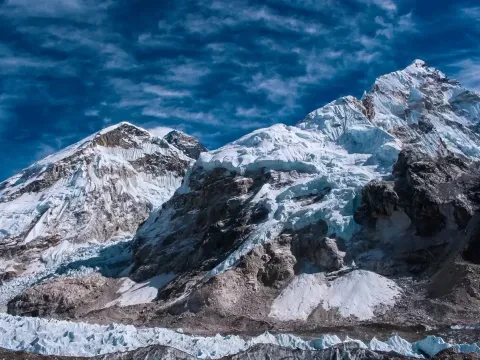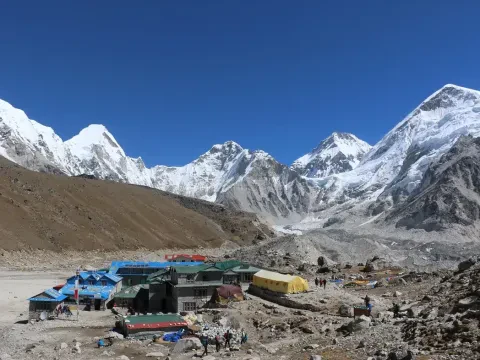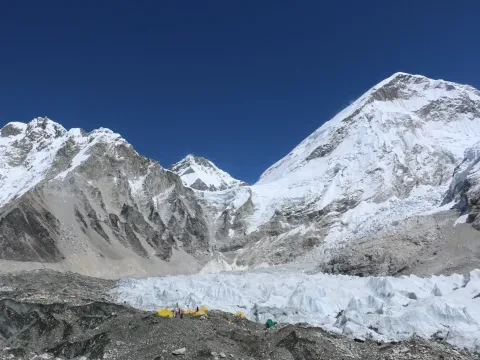
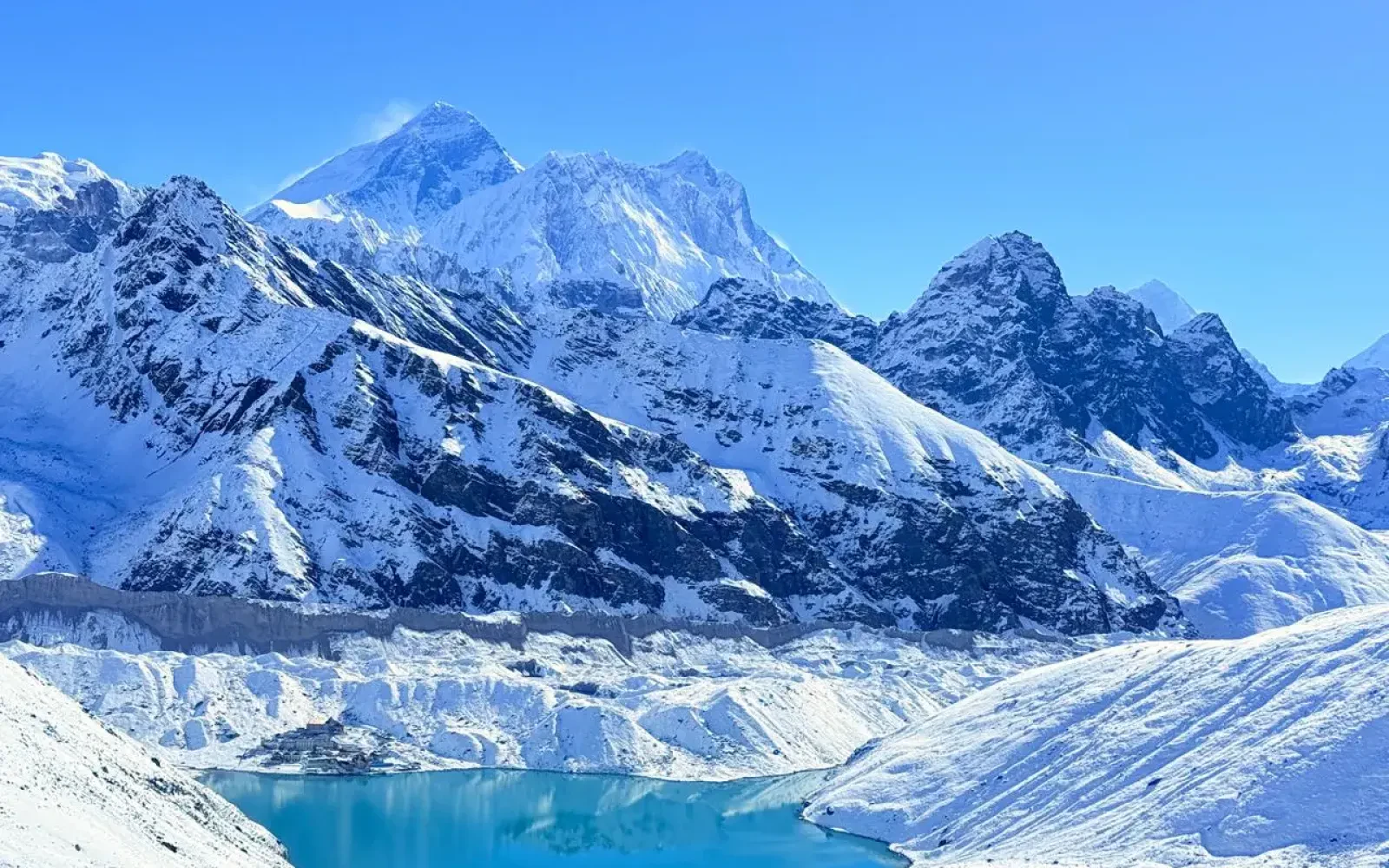
Find the best time to trek to Gokyo Lakes. See blue Gokyo Lakes at 4,700m and climax the summit of Gokyo Ri at 5,357m by choosing to trek either in spring or fall so that the visibility will be perfectly clear and to view Himalayas without a single disruption. Book your Everest trekking experience in Nepal right now for a perfectly safe trek.
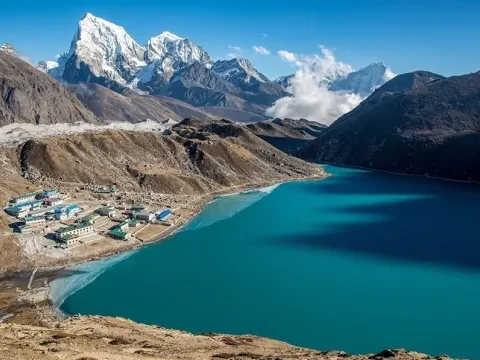
Apart from this, Gokyo Lake Trek is also an out-of-this-world trekking experience for everyone. Hikers gaze at vibrant turquoise colored Gokyo lakes (4,700 m) along with climbing Gokyo Ri peak (5,357m) and its astonishing Himalayan highlights in a crystal clear and sunny climate. This is what Gokyo Lake Trek season makes you get-a bliss.
In addition, you get to trek the seven holy lakes along the trail, hike through Sagarmatha National Park very comfortably while being awarded breathtaking views of Mount Everest (8,848 m) and Cho Oyu (8,188 m) against a clear blue sky. Season choice not only increases joy but prevents hazardous consequences too.
Henceforth, every single stride of your trip is governed by this particular choice. Hikers get to skip hazardous storms due to right season choice. They pack minimal stuff along with experiencing the warmest environment. You convert a decent trip into a grand Gokyo Lake Trek trip.
Contrarily, in unfavorable seasons, one needs to deal with intense rainfall and poor visibility. Trekkers get to witness slippery pathways around Gokyo lakes (4,700 m) with completely unachievable views of Gokyo Ri peak (5,357 m). Hence, season choice is the main thing to consider keeping security and remembrance of this trip in mind.
Lastly, proper season also enhances the amount you spent. Usually the Everest region trekking package for this trekking trip costs roughly 1,200 USD and you could maximize the benefits by avoiding an unnecessary additional cost and hike to those Himalayan highlights. Choose your best season and make this an out-of-this-world Gokyo Lake Trekking trip.
Why Season Choice Matters for Gokyo Lake Trek :
In addition, Nepal has four specific seasons of trekking. People chose spring as the trekking time in Nepal due to the comfortable temperature and colorful flowers. Moreover, trekkers chose autumn for clear view of mountain. This time is best for every Gokyo Lake Trek plan.
However, in the monsoon season of June-August, many trekkers can face difficult routes and muddy ground near Lukla(2,860 m) and in other high altitude zones. Trekkers may have zero visibility of Gokyo Lakes (4,700 m). Experienced trekker will avoid this risky trekking time in Everest region.
Moreover, winter trekking time (December-February) offers lonely traveling with its quite atmosphere. Adventurers will suffer the freezing cold nights in higher altitude of Gokyo Ri(5,357 m), but at least they can gain clear view of the mountain; However, trekkers must wear proper trekking clothes while doing trekking in this Everest region trekking season. It is a recommended period for experienced travelers who prefer less-crowded trip.
Hence, trekking during spring or autumn time is the most popular choices. Flowers bloom during spring (March to May). Postcard views and colorful mountain landscapes are a specialty of autumn trekking (September to November). Thus, this season is an unforgettable experience to the Gokyo Lake Trek.
Consequently, knowing these seasons enables us to make better planning; such as booking flights to Lukla (2,860 m) without any disruption and prepare proper equipment for trekking in Everest region. In sum, it guarantees the successful trip.
Nepal Trekking Seasons Comparison :
| Season | Months | Weather Highlights | Best for Gokyo Lake Trek? | Key Tips. |
|---|---|---|
| Spring | March-May | Mild days, rhododendrons bloom | Yes | Enjoy flowers at 4,700 m. |
| Summer/Monsoon | June-August | Heavy rain, low visibility | No | Avoid slippery trails. |
| Autumn | September-November | Clear skies, stable conditions | Yes Capture Everest (8,848 m). |
| Winter December-February | Cold but crisp views | For experts only | Carry warm layers. |
Actually, Spring (March-May) are some of the greatest times to go for Gokyo Lake trek. Here, Gokyo Lake Trek in spring, the climate is pleasant and rhododendrons bloom along trekking routes. There are colorful scenes all over the Everest region. During this time the day time climbs to Gokyo Ri (5357m) are extremely comfortable.
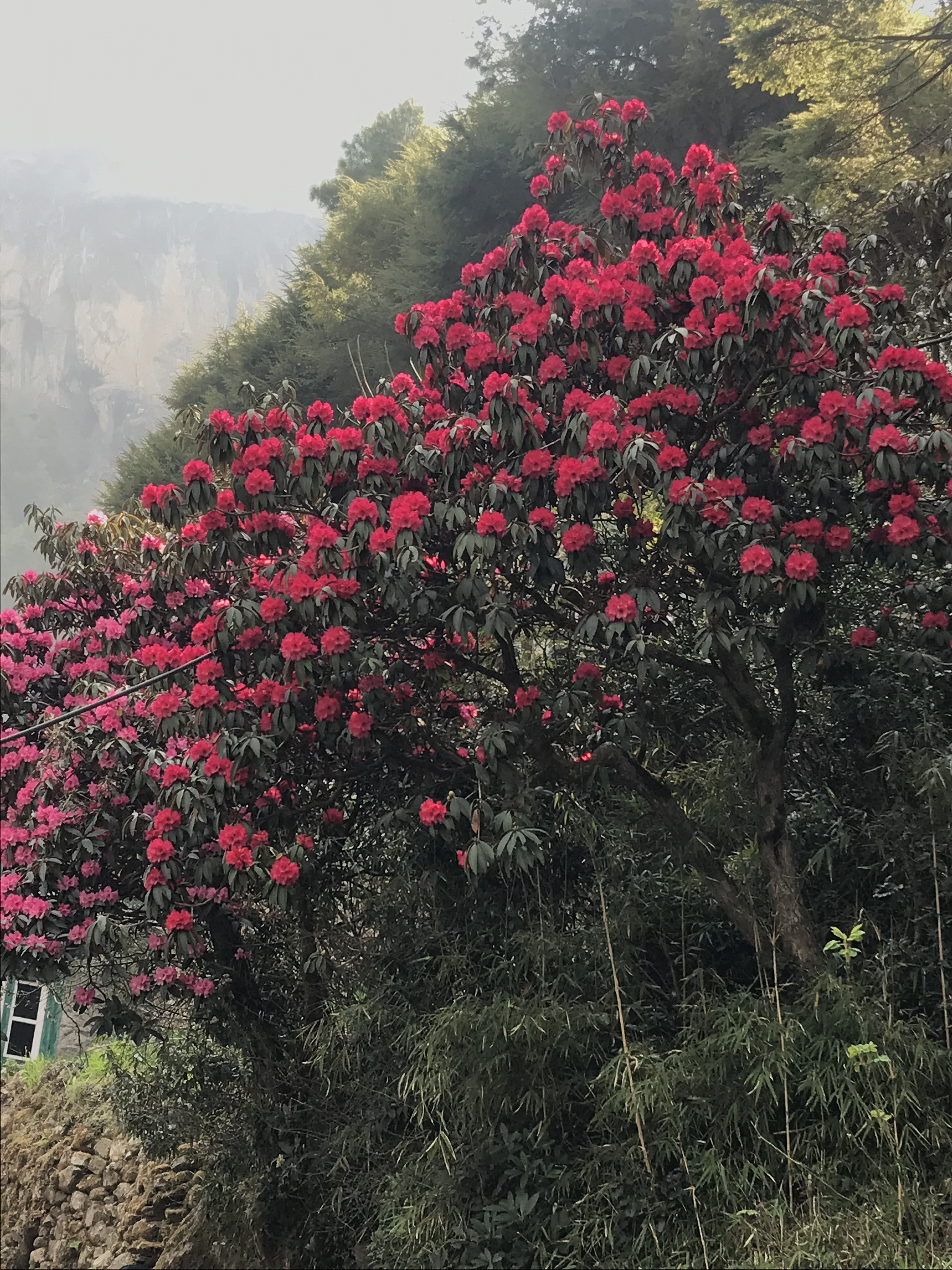
From March the flowers have just begun to bloom on low lying regions. Hiking trails bloom with Rhododendrons and trekkers can enjoy flower strewn walks towards Namche Bazaar (3440m). There are fewer trekkers to this area compared to the peak months and there is a gradual view of Mount Everest (8848m).
Likewise, April often holds the top spot for Gokyo Lake Trek because of the stability of the climate and lesser rain fall. Rhododendrons are in their full blooming glory of red, pink, and white in contrast with snowy peaks of Cho Oyu (8188m) etc.
By May the area is covered in verdant green cover and daylight hours are longer. Adventures are enjoyed in the warm trekking trails up to Gokyo Lakes (4700m) and also full bloom and good temperature prevails. This period is good for family and inexperienced trekker to Everest region.
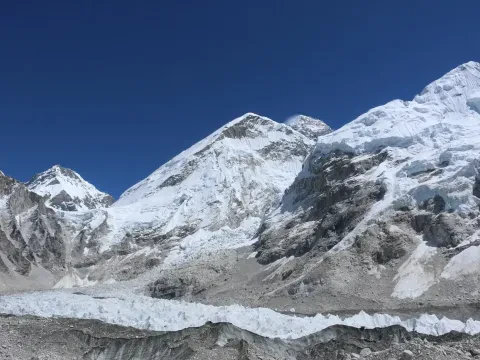
Hence, spring has stunning natural beauty with a lot of safety to witness; trekkers pack light clothes to walk during the day and minimize snow problems in the higher regions. Choose spring season to create amazing memories of rhododendron-filled Gokyo Lake Trek.
Spring Gokyo Lake Trek Advantages :
Actually, Autumn (September-November) is the best season for Gokyo Lake Trek. Trail wanderers appreciate post-monsoon transparency and normalcy. Visitors have a heavenly like mirror reflection on turquoise Gokyo Lakes (4,700). Autumn offers maximum of Himalayan heaven including Mount Everest (8,848).
Moreover, September is the beginning of a new season, with stark dry trails after rains. Trekkers walk out of moist Lukla (2,860 m) without a trace of mud. They breathe fresh, washed clean air all the way to admire mighty mountain views. Early autumn lacks thick visitors but delivers consistent weather conditions.
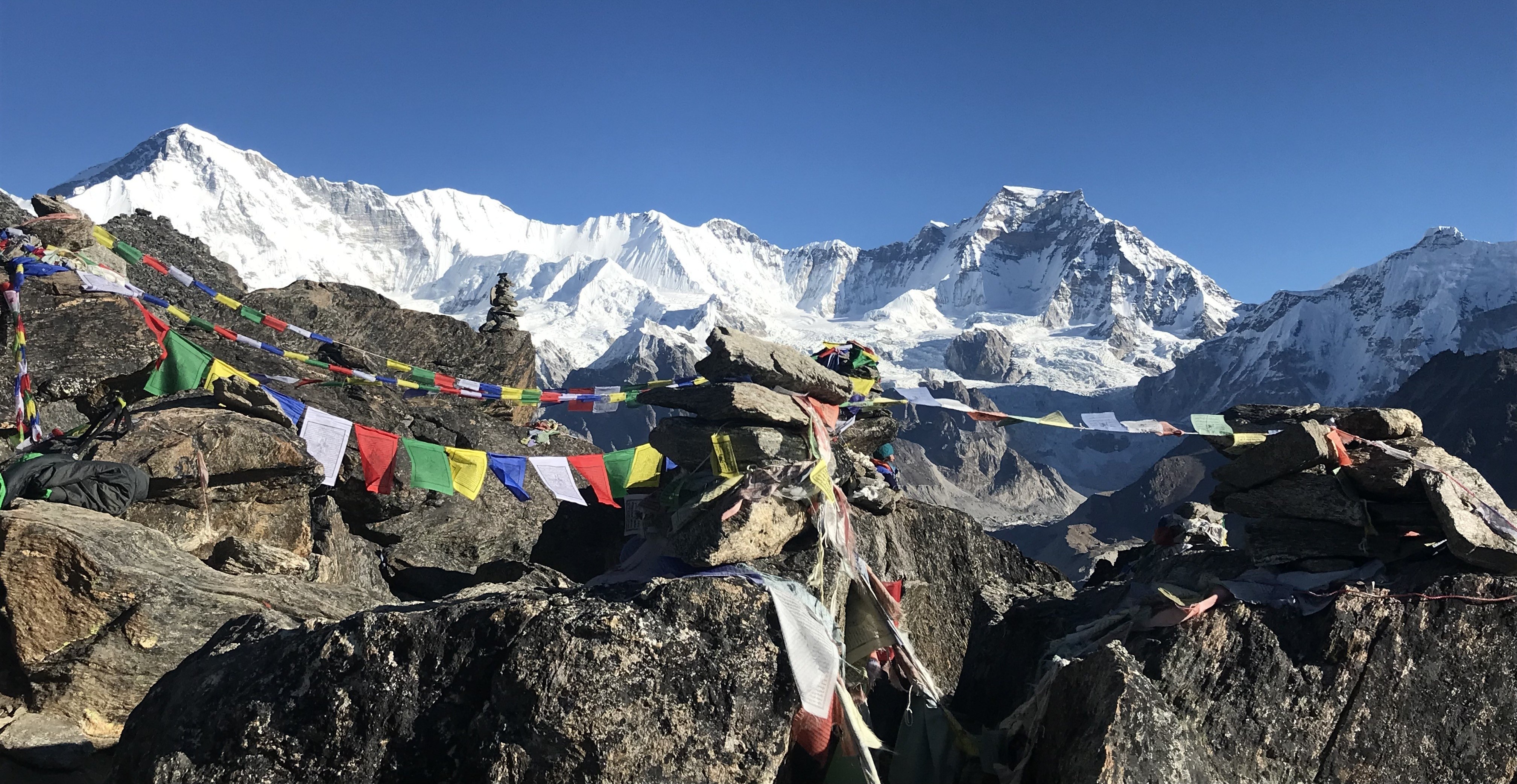
October additionally has world record climate of Gokyo Lake Trek best season. Visitors get photographic opportunities of dawns with beautiful blue sky daily. Trekkers ascend Gokyo Ri summit (5,357 m) with clear views. October has the perfect mix of warm days and cold nights.
Additionally, November offers superb visibility and cooler weather. Hikers camera amazing lake reflections of Cho Oyu (8,188 m). The trails are quieter at this time. November is good for photographers wanting stunning Everest trekking images.
Thus, visitors get the clearest views and clearest paths in the autumn months. For trekking in October, they reserve transportation and accommodations months in advance. They wear sweatshirt and jacket as it gets cold above 4,700 meters. Fall therefore is the season for postcard-clear Gokyo Lake Trek.
Autumn Gokyo Lake Trek Highlights :
| Month | Key Features | Visibility & Weather | Popularity Level | Best For. |
|---|---|---|
| September | Post-monsoon fresh trails, mild start | High clarity, dry paths | Moderate | Avoiding early crowds. |
| October | Crystal-clear skies, peak stability | Exceptional mountain views | High | Gokyo Ri (5,357 m) panoramas. |
| November | Cooler days, mirror lake reflections | Sharp air, fewer clouds | Moderate-High | Photography at Gokyo Lakes (4,700 m). |
For the Gokyo Lake Trek, both spring and autumn season is believed to be the most suitable. Trekking through excellent visibility and temperatures of trekking season can give one more pleasure and less danger with the trails dry enough to trekking without risk to reach the Gokyo Ri (5,357m) summit during these seasons.Also, daytime temperatures hover around 10-20C in places like Namche bazaar (3,440m) when you trek Everest region, and one won’t have to experience cold or rain like in the summer season. On the Gokyo lakes at (4,700m), clear skies and blue turquoisy waters and excellent visibility can get one perfect shot.
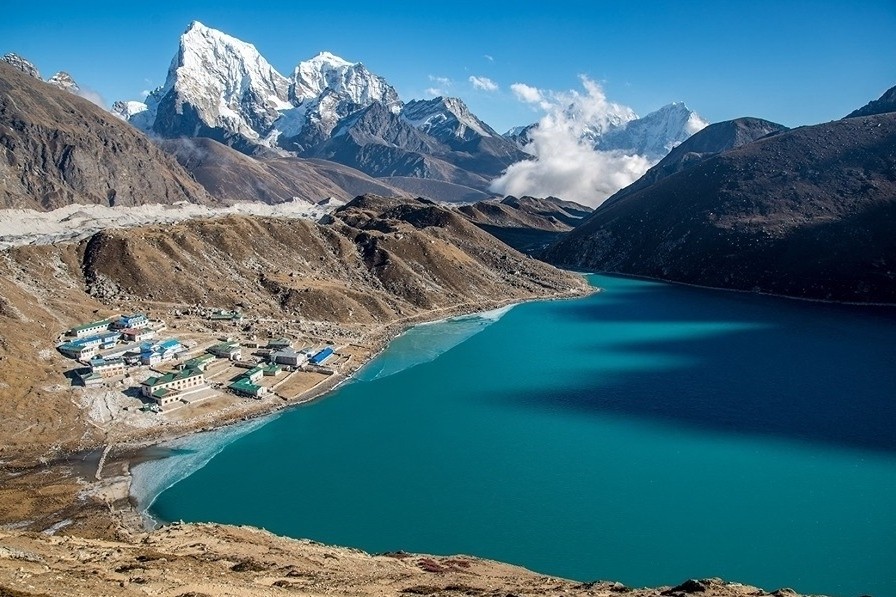
Moreover, springtime exhibits flowering rhododendrons, giving a colorful tapestry. The trekkers enjoy taking photo shots of the contrast of colors against Everest (8,848m). With the post monsoon crisp air in autumn, the highlights of the mountains get clearer. And there are fewer cases of landslides or flights to Lukla (2,860m) in both these seasons.
And of course, weather related dangers are reduced. You can confidently ascend the higher passes without facing storms while exploring the Gokyo Lakes. Autumn season brings more clearer, reflective images to the lakes, creating some picture-perfect photos of mountain ranges and lakes. In spring, there are longer hours of light, enabling a comfortable trek.
Thus, spring and autumn season can provide perfect condition for the Gokyo Lake trek with very few complications. And to sum up, spring and autumn seem to win in terms of overall visibility and comfort and amazing photographs.
Spring vs Autumn Comparison for Gokyo Lake Trek :
Meanwhile, Monthly temperature change is notable in Everest region and variable. While trekking, trekkers are aware of the values of height form Nanchap Bazaar (3,445 m) to Gokyo Lakes (4, 700 m) during day and night. That assist they in arrangement Gokyo Lake Trek at optimal season.
Additionally, from March the season begins with 5-15C' daytime temperature under Namche Bazaar (3,440 m) when nights drop to-10C or less in higher elevations. Trekks have to through chilly wind and remaining snow. Luminous mornings provide early Himalayan views.
Likewise, April is also a good time to warm up with daytime 10-18C in lower elevations. Weather conditions are stable during Kathmandu-Gokyo (4,700 m), Gokyo – Everest region trekking path. Night time is about -5 C to 0 C Near Gokyo (4,700 m); Kyajo Ri (6,035 m) and Gokyo Ri( 5,357 m) become successful.
Furthermore, May also consists of warmer days measuring 12-20C underneath 4,000 m. Higher elevations experience 0-10C during the daytime 510 C at night. There may be the occasional pre-monsoon cloud. Trekkers can enjoy the scenery before the rains.
Actually, September follows, bringing a gentle transition to the local weather with temperatures of 10-18C. Cold -5C to 0C nights at the Gokyo Lakes (4,700 m). Dry trekking routes. 3 months of monsoon end, much clearer atmospheric conditions mean enhanced mountain views.
Furthermore, in October the temperature for comfort during the day comes to 10-15C. The nights are on average -.8C to -2 C higher; the air is held smothering, and clear. Panoramic views from Gokyo Ri (5,357 m) is positively wintry when the temperatures get down.
In fact, November provides slight temperature moderation with days at 5-12C. The 4,700 m nights show down to 10 C or colder. The stable weather remains into the latter days of autumn. Proper clothing remains important.
Monthly Temperature Averages (Everest Region) :
| Month | Lower Elevations (e.g., Namche 3,440 m) Day/Night | Higher Elevations (e.g., Gokyo 4,700 m) Day/Night | Key Expectations |
|---|---|---|
| March | 5–15°C / -5 to -10°C | 0–10°C / -10 to -15°C | Crisp, possible snow patches. |
| April | 10–18°C / -5 to 0°C | 5–12°C / -8 to -5°C | Stable, blooming flowers. |
| May | 12–20°C / 0 to -5°C | 0–10°C / -5 to -10°C | Warmer, occasional clouds. |
| September | 10–18°C / -5 to 0°C | 5–12°C / -8 to -5°C | Dry trails, improving clarity. |
| October | 10–15°C / -8 to -2°C | 0–10°C / -10 to -5°C Peak clear views, crisp air. |
| November | 5–12°C / -10 to -5°C | -5 to 5°C / -15 to -10°C | Chilly nights, sharp panoramas. |
Find out why the majority of trekkers do not travel Gokyo Lake Trek during monsoon season. A lot of rain falls from June to August causing some serious issues. It is common that most of Gokyo Lake Trek package operators cancel or reroute during this time.
On top of this, daily showers make trails a slipery combination of mud and melted snow. Trekkers experienced difficulty from Lukla 2,860 meters to Namche Bazaar 3,440 meters. More hiking trail side-slides occur with the rising elevation. Gokyo Lake Trek tries through rainforests sur plagued with leeches during monsoon season.
Apart from snow, low visibility also entirely obscures Himalayan features. Clouds shroud Everest (8,848 m) and Cho Oyu (8,188 m) for many weeks. Trekkers do not see the Gokyo Ri summit (5,357 m) view at all. At Gokyo Lakes (4,700 m), fog and rain limit photographer opportunities.
In addition, flights to Lukla 2,860 m are notoriously cancelled. Groups are delayed for days in Kathmandu. The vast majority of reliable operators do not schedule the popular season Gokyo Lake Trek. By definition safety is more important than dollars earned during monsoon season.
Hence, monsoon brings unwanted, dangerous environment. Even during nice forecast, trekkers may get injured, as the trails to Gokyo (4,700m) are slippery. Furthermore, they have to carry and wear soggy gear. In summary, most experts advise to avoid the whole time period of June-August.
Monsoon Challenges for Gokyo Lake Trek :
Actually, winter (December to February) at Gokyo Lake Trek means extreme solitude, at the expense of extreme conditions. Enthusiastic adventurers look for uncrowded trails and the winter beauty that covers the Everest region. But it challenges a trekkers stamina to the point that the weather is brutal.
Additionally, crystal clear skies present sharp mountain peaks after snowfall. Tourists photograph the snow-drenched Gokyo Lakes (4,700 m) and climb the summit of Gokyo Ri (5,357 m) under bright blue skies. An increased amount of solitude at trails is perceived by trekkers due to less people.
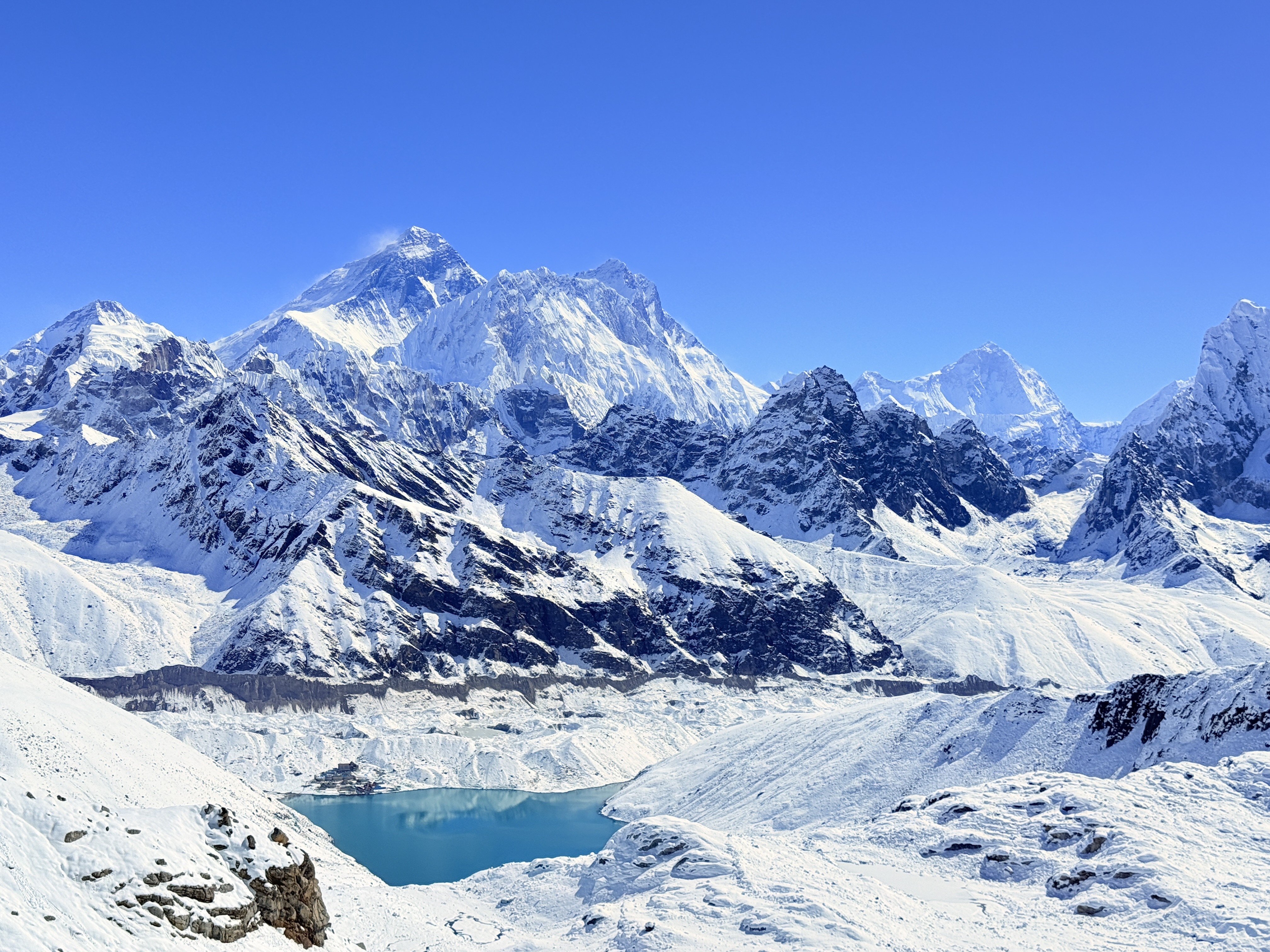
What's more, the nights in the Everest region drop below the freezing point even at higher altitudes. It can be as cold as -15C to -25C around Gokyo (4,700 m) and require one to wear heavy down jackets and four season sleeping bags. Most tea houses might close due to the limited tourist attraction.
Furthermore, snowblocks can close off some passages of the path above Namche Bazaar (3,440m), and therefore microspikes or crampons might be essential on icy paths, and trekkers must face high winds on exposed ridges on their way to Gokyo Ri (5,357m). The amount of daylight is short in winter and limits the trekkers progress of reaching his or her destination on a particular day.
Lastly, winter trekking would be for seasoned and well-prepared trekkers and visitors are rewarded with an excellent panorama of Mt. Everest (8,848 m) in snow, as well as absolutely no tourists at the trekking trails and lodges.
Winter Gokyo Lake Trek Pros and Cons :
| Aspect | Pros | Cons | Best For |
|---|---|---|
| Crowds | Very few trekkers, peaceful solitude | Limited teahouse options | Introverts & experienced hikers. |
| Weather & Views | Crystal-clear skies, snow beauty | Nights -15°C to -25°C at 4,700 m | Stunning winter photography. |
| Trail Conditions | Fresh snow landscapes | Icy paths, possible deep snow | Those with proper winter gear. |
| Accessibility | Fewer flight delays than monsoon | Shorter days, higher avalanche risk | Physically fit adventurers. |
| Overall Experience | Unique quiet Everest region trekking | Extreme cold requires expert preparation | Off-season solitude seekers. |
Compare Gokyo Lake Trek crowds, costs, and permits for each season. High seasons usually require advanced bookings. Off-season trek costs less but have distinct problems. By knowing these specifics, you can strategically plan when to undertake Gokyo Lake Trek.
Additionally, high season treks (from March to May) are busy. From Namche Bazaar (3,440 m) to Gokyo (4,700 m), trekkers fill all teahouses during peak trekking periods. Booking Gokyo Lake Trek packages for 4 to 6 months in advance is advised. The weather is usually better during this season, and the flights into Lukla (2,860 m) are generally on time.
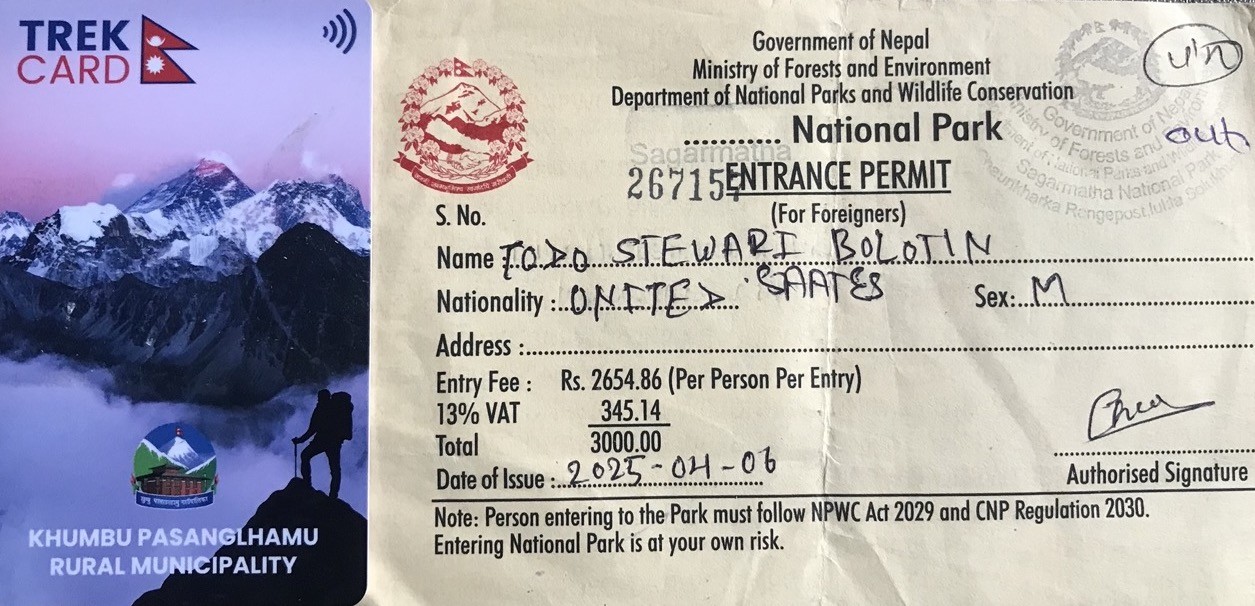
Furthermore, permits for trekking in the Everest region remain constant throughout the year. You will require Sagarmatha National Park entry permits along with TIMS card. Permits cost an amount of 30-50 USD all together and do not change during the months of the year. Costs vary with the seasons as regards the guide, porter, and accommodation services only.
In addition to this, Gokyo Lake Trek in peak seasons ranges between 1,200 to 1,800 USD per person. This includes teahouse accommodation and food along with Lukla flights. Winter and monsoon trekkings reduce the price to about 900 to 1,300 USD per person. Crowds are smaller during the low season, and it is easy to find teahouses.
In summary, trekking during peak season guarantees the flights as well as amenities are readily available. Travelers on a low budget can choose low season treks to conserve money. Each individual considers privacy over ease of travel carefully. Trekking in spring and autumn is a balance between costs, crowds and safety for all.
Crowds, Costs, and Permits Comparison :
| Season | Crowds Level | Teahouse Availability | Approximate Cost (USD) | Lukla Flight Reliability | Booking Tips |
|---|---|---|
| Spring (Mar–May) | High | Often full | 1,200–1,800 | High | Book 4–6 months early. |
| Autumn (Sep–Nov) | Very High Very competitive | 1,300–1,800 | Highest | Reserve earliest for October. |
| Monsoon (Jun–Aug) | Very Low | Plenty available | 900–1,300 | Low (frequent delays) | Avoid unless experienced. |
| Winter (Dec–Feb) | Low | Many closed | 900–1,400 | Moderate–High | Confirm open teahouses in advance. |
Select the ideal month for your trek to Gokyo Lakes based on personal preferences. If photography is a high priority, keep in mind whether you are an enthusiast in landscapes or more interested in capturing clear views of the surrounding peaks. Also, decide if you want a quiet trek or are indifferent to the number of other travelers on the trail. Many trek through Gokyo along with Cho La Pass (5,420m). The following tips should help you pick the perfect month based on how you trek in Everest.
Here, professional photographers, particularly those looking to capture mirror reflections of Gokyo Ri(5,357m) and Gokyo Lakes (4,700m), recommendOctober andNovember. These months have consistently crisp skies that create sharp views of these peaks, and autumn colors will provide dynamic views of Everest (8,848m). This is also a spectacular time of year to visit the Himalayas for a more serious photographer.
Actually, travelers who don’t want to share their Everest experience and like to avoid crowded trails often recommend lateMarch or April. This is also rhododendron blossom season, when trekkers can expect fewer fellow travelers on the trail and can move at a good pace while acclimatizing to the elevation on their journey to Gokyo.
In fact, it is also recommended to trek to Gokyo Lakes along with Cho La Pass in late autumn for clear weather. You will not have issues trekking across the passes and your descent from Gokyo to Everest Base Camp will present few challenges, but October generally has the safest weather window.
Overall, each month has its merits depending on the trekker’s individual goals. Pick the time of year that aligns best with your Everest trekking intentions.
Tips for Choosing Your Ideal Gokyo Lake Trek Month :
Stock up on must-have equipment for the superior season in Gokyo Lake Trek. Effective layering is the rule for spring and autumn. Enjoy the comfortable trek from Lukla (2,860 m.) to Gokyo Lakes (4,700 m.). Be fully prepared for altitude before Everest region trek.
Furthermore, the layering system begins with moisture-wicking material in the form of a base layer. The hikers settle on an insulating mid-layer such as a fleece or down jacket. The hikers then have a waterproof windproof outer shell for quick weather changes. This system may be worn comfortably in varying daytime warm hours of 10-20 C, as well as in the frigid, sub-zero nights near Gokyo Ri (5, 357 m).
Here, don't forget to pack your clear weather gear for the best vision conditions. Trekkers will wear polarized sunglasses and high-SPF sun block. They can also bring strong trekking poles. A light weight daypack is all he or she needs for sightseeing in the Himalaya.
Additionally, altitude training occurs weeks ahead of trip. Guests perform cardio and walking up-hill daily. Many are familiar with early signs of acute mountain sickness. Dehydration and slow acclimatization profiles above Namche Bazaar (3,440 m).
Hence, need to buy sleeping bags rated -10 C or below, Four season tents if camp you on Gokyo lake trek. Carry medications like Diamox for altitude support.Sleeping mats, good rain gear and thick warm clothes. Hence proper preparation assures maximum fun during Gokyo lake trek optimum season.
Essential Packing List for Gokyo Lake Trek (Spring/Autumn) :
Spring and fall boast the best season for Gokyo Lake Trek. You will get to have perfect trekking weather with clear skies, incredible highlights of the Himalayas, less risk while maximizing the beauty of the blue Gokyo Lakes (4,700 m). Book early and make sure you get the best time of the Gokyo Lake Trek.
Secondly, never venture during the monsoon season as you have high risk of landslides while during the winter the extreme cold might be harsh on your health. However during this season you have assured Lukla (2,860 m) flights and all teahouses are open. This time you get to easily click photographs from Gokyo Ri summit (5,357 m) and rhododendrons in spring, while reflections of the mighty Himalayas can be enjoyed in fall.
Thirdly, booking months in advance help trekkers to reserve Gokyo Lake Trek package for as early as 4-6 months so that they will get all the required permits and accommodations. Not only will this lead to fewer problems but the best trekking in Everest region trekking journeys.
Fourth, let us decide your dates according to your priorities; October is great for photographing whereas April might be suitable for the first-timers. We recommend selecting dates based on what matters most to you and your trip to Everest region.
Finally, make sure you make your reservation now for your adventurous trip. Get in touch with trusted operators and get Gokyo Lake Trek plans designed exclusively for your needs, get training ready, start packing, and head to a truly unforgettable journey to the Himalayas during the right time of the year.
Why Choose Spring or Autumn for Gokyo Lake Trek – Final Summary :
Our travel experts are ready to assist you with any questions.
Send us a message.Have a question before you book? Send your enquiry below and our travel experts will get back with the required information.