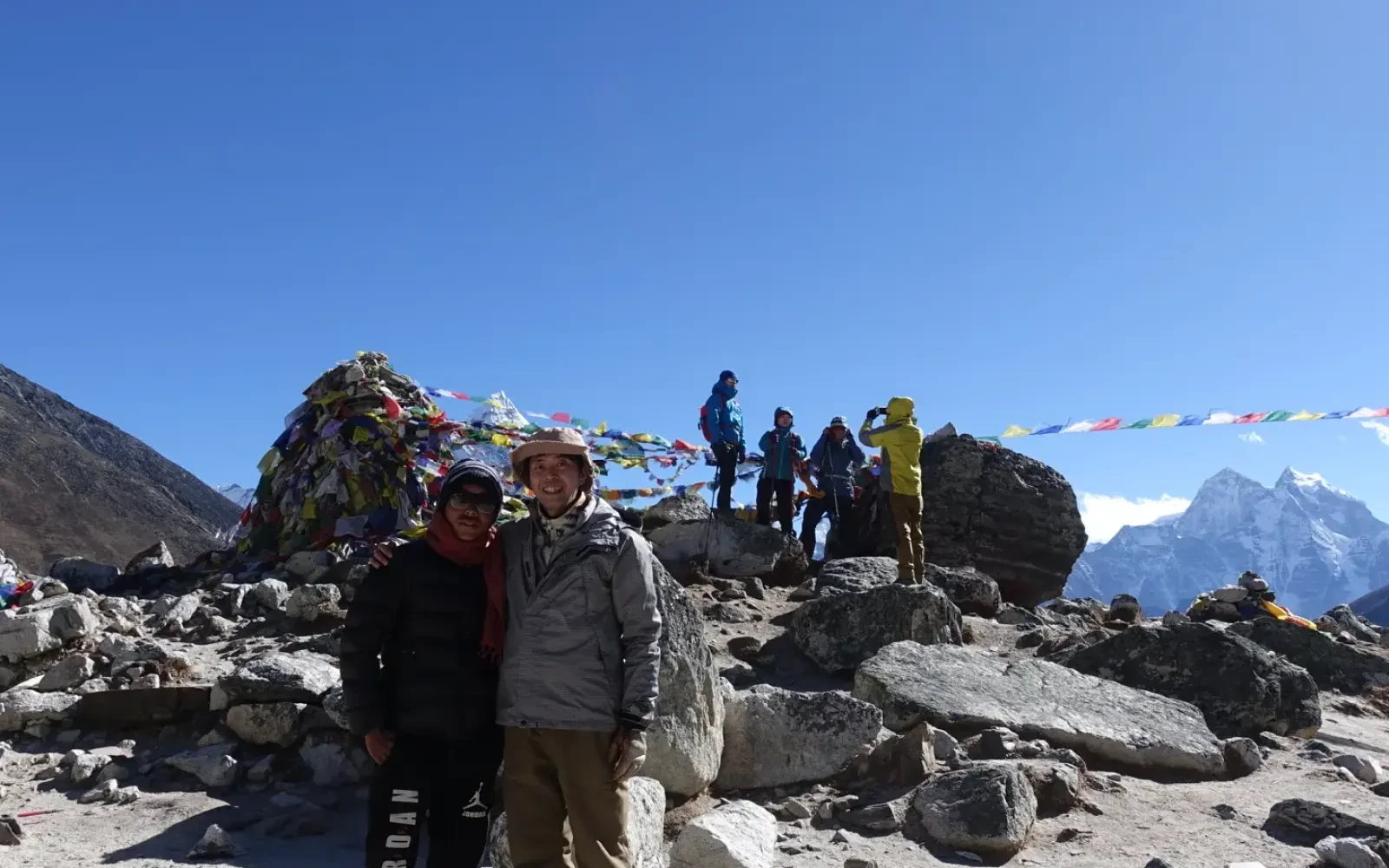
Yes, October is one of the busiest months for the Everest Base Camp Trek as good post-monsoon weather coincides with mostly clear skies over the Himalayas. It falls within the main trekking season in Nepal, which spans from September to November.
However, the popularity of the month comes with several downsides, such as crowds, higher prices for tea-house accommodation, and busy flight schedules to Lukla.
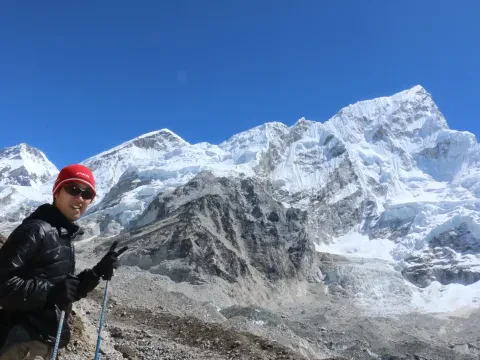
Here, the appeal of October for Everest Base Camp is simple to grasp. The month is generally comparatively dry and warm, allowing for comfortable exploration of the lower altitudes and valleys.
As the trail rises from Lukla at 2,860 m to Namche Bazaar at 3,440 m, Tengboche at around 3,860 m, Dingboche at 4,410 m, and Lobuche at approximately 4,910 m, and finally to Everest Base Camp at 5,364 m, the vegetation gives way to rocky mountainous landscapes.
Meanwhile, the peak of Kala Patthar at 5,545 m offers an additional viewpoint over the Everest massif, which is one of the highest altitudes reachable on a regular EBC trekking itinerary.
| Factor | October conditions |
|---|---|
| Season | Peak season (autumn) |
| Weather | Generally good and dry |
| Visibility | Usually excellent |
| EBC trail crowds | High |
| Teahouse demand | High |
| Lukla flight demand | High |
| Mountain views | Good to excellent |
| Trail conditions | Usually good |
| Booking recommendation | Well in advance |
Meanwhile, the requirement is, of course, that “peak season” is a relative term : cloudy days, strong winds, snow showers, flight cancellations, and even trail closures are not uncommon for October in the Everest region.
Moreover, the crowds are a real-life experience, not an overestimated marketing tool. For example, in October 2024, Sagarmatha National Park authorities recorded 8,902 visitors in the Everest region between mid-September and mid-October, with the Park Service estimating that peak-season crowds see about 1,000 hikers per day on average.
Thus, that is why October is a good choice for hikers who seek value in terms of weather and visibility and are willing to trade privacy for these seasonal benefits.
But, for those who want privacy, less crowded months could be an option, depending on the acceptable temperature range for the EBC trek.
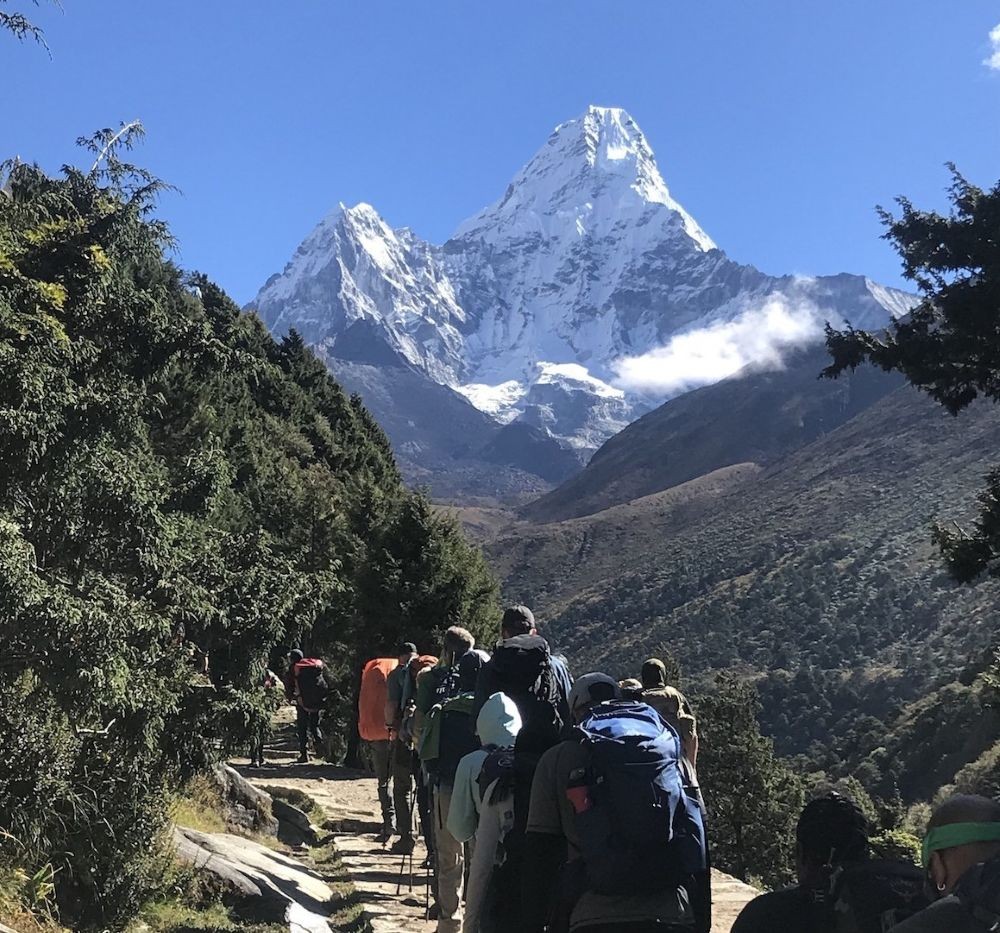
One nuance that is often overlooked in many Everest Base Camp articles is that Nepal’s government tourism department does not have an official Everest Base Camp “visitor count” for October or any other month. The closest available approximation is the list of foreign visitors who entered Sagarmatha National Park, which encompasses the Everest region and therefore the EBC trek.
Inevitably, this is not an entirely accurate reflection of the number of people who actually embark on the EBC trek, as it includes day-trippers, hikers who give up halfway, and visitors to other peaks and areas within the Park. Here is the relevant data:
| Year | Official figure |
|---|---|
| 2025 | 47,524 foreign visitors |
| 2024 | 49,372 foreign visitors |
| 2025 vs 2024 | Down by 3.7% |
In short, these are the numbers for Sagarmatha National Park as a whole, and not specifically for EBC. It contains other trails, circuits, and peaks within the Everest region, including popular options such as Gokyo.
Hence, these 2025 visitor figures should be used with caution when talking about EBC-specific tourism.
According to Nepal’s Ministry of Culture and Tourism, the number of foreign visitors to Sagarmatha National Park peaked in October 2024, with 9,549 international arrivals recorded for the month. This figure was considerably higher than the 7,404 visitors in November 2024 and the 4,546 visitors in September 2024.
| September 2024 | 4,546 |
|---|---|
| October 2024 | 9,549 |
| November 2024 | 7,404 |
| December 2024 | 2,591 |
Thus, October’s visitor numbers are more than double those of September and are also higher than those of November by nearly 30%.
There is nothing wrong with saying that 9,549 people visited Everest Base Camp in October 2024.
Here, the figure sounds impressive and is easy to understand: you might be thinking that roughly 9,500 people went to EBC in October. It is an effective marketing tool, and it is not entirely wrong, as the majority of these people indeed went to EBC.
At the same time, you have to realize that it is not completely accurate either. The figure represents the number of foreign visitors who entered the Sagarmatha National Park in October 2024.
Here, it does not distinguish between day-trippers and those who went to Namche Bazaar or Tengboche or tried the Gokyo Valley trek or followed a different EBC trail variation or stayed in the Park overnight during their Everest Base Camp Trek.
Hence, I think it is safer to use the phrasing “9,549 foreign visitors entered Sagarmatha National Park in October 2024” instead of “9,549 people went to Everest Base Camp in October 2024.”
Another perspective on the value of this data comes from independent research conducted in the Everest region during October 2025.
According to the study of Science Direct, there were 1,857 visitors on the trails between Namche Bazaar and Gorakshep in October 2023 and October 2024, including 805 visitors who were counted by an automatic camera set up on October 3–5, 2024. The researchers were analyzing the pattern of trekking-pole use on the trails, not counting all visitors who went to EBC, so these figures should not be taken as hard statistics on EBC visitors.
Notably, the number of visitors is also supported by the observation of the other side of the EBC trekking experience – the one involving the flight to Lukla.
According to reports by Ratopati, on October 8, 2024, Lukla Airport saw 1,539 tourists entering the Everest region in a single day. This figure includes both airplane and helicopter passengers.
Overall, October is clearly a very popular month for the Everest Base Camp Trek. It is not just a hype generated by trekking companies; official visitor numbers speak for themselves. The EBC trail gets crowded, flights to Lukla are busier, and trail-side accommodations are harder to find during this peak season.
For your purposes as an EBC trekking visitor, what does this mean?
The busiest time for the Everest Base Camp Trek falls between mid-September and mid-November.
More specifically, you should expect greater crowds around Namche Bazaar and other trail viewpoints during October, such as the ones around Everest Base Camp and Gorakshep.
Moreover, you will have to book accommodations and flights to Lukla well in advance, as availability will be much more limited than during other months.
On the other hand, October offers you excellent weather and clear mountain views. In essence, the popularity of the month comes with perks for you as a visitor. It is peak season, which makes certain aspects busier, but the trails and mountain scenery are at their best.
In short, these are the facts behind the numbers and the numbers behind the claims about October being a busy month for the Everest Base Camp Trek.
For the most part, they are accurate, but they should be tempered with a degree of caution: the visitor figures represent the entire Sagarmatha National Park region, not just the Everest Base Camp area.
After all, your article is about EBC, not the entire Sagarmatha region.
The primary reason October EBC weather pattern attracts the most people is due to relatively favorable conditions, including stable weather and mountain visibility. The rainy summer season typically ends by October, which results in dry trails, more open skies, and clearer mountain vistas.
Meanwhile, daytime temperatures remain relatively comfortable for hiking despite the high altitude – averaging 12C – 16C (depending on the location) around Namche Bazaar at 3,440 meters.
Higher up on the trek, it gets colder: at Tengboche (3,860m), Dingboche (4,410m), Lobuche (~4,910m), and Everest Base Camp (~5,364m).
Here, the following table provides an overview of October weather patterns at various campsites along the Everest Base Camp trail:
| Location | Approximate elevation | Weather notes |
|---|---|---|
| Lukla | 2,860 m | Usually mild, dry |
| Namche Bazaar | 3,440 m | Average daytime: 12C – 16C |
| Tengboche | 3,860 m | Cool(er) nights / evenings |
| Dingboche | 4,410 m | Night cold, days mostly sunny |
| Lobuche | 4,910 m | Cold, especially during the evening |
| Everest Base Camp | 5,364 m | Very cold, especially during morning |
| Kala Patthar | 5,545 m | Extremely cold and windy |
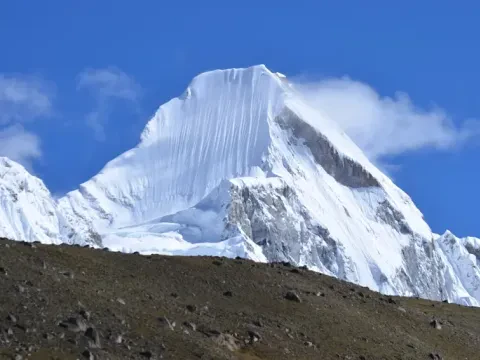
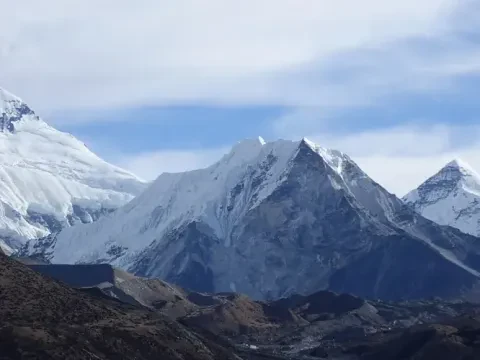
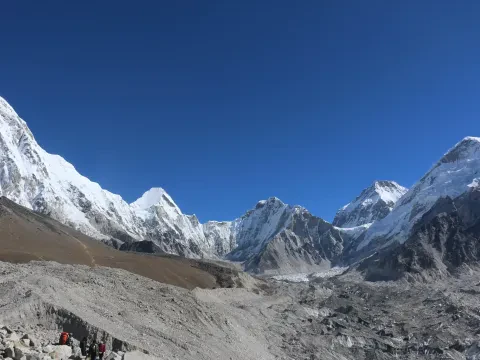
Likewise ,the most important thing is the mountain visibility from the trail around Everest Base Camp. With the end of the rainy season, there is a far greater chance of seeing Everest (8,848.86 m), Lhotse (8,516 m), Nuptse (7,855 m), Ama Dablam (6,812 m), Pumori (7,161 m), Thamserku (6,623 m), and other Himalayan peaks.
Of course, just because it is October does not mean that clear skies are guaranteed – far from it. For one thing, strong winds can easily hide the mountains behind dense clouds.
Moreover, it is not uncommon for it to snow or for the sky to become overcast in the afternoon.
The post-monsoon trek in Nepal is incredibly popular for a good reason. First, the sky is typically clear after a month of heavy monsoon rains and clouds.
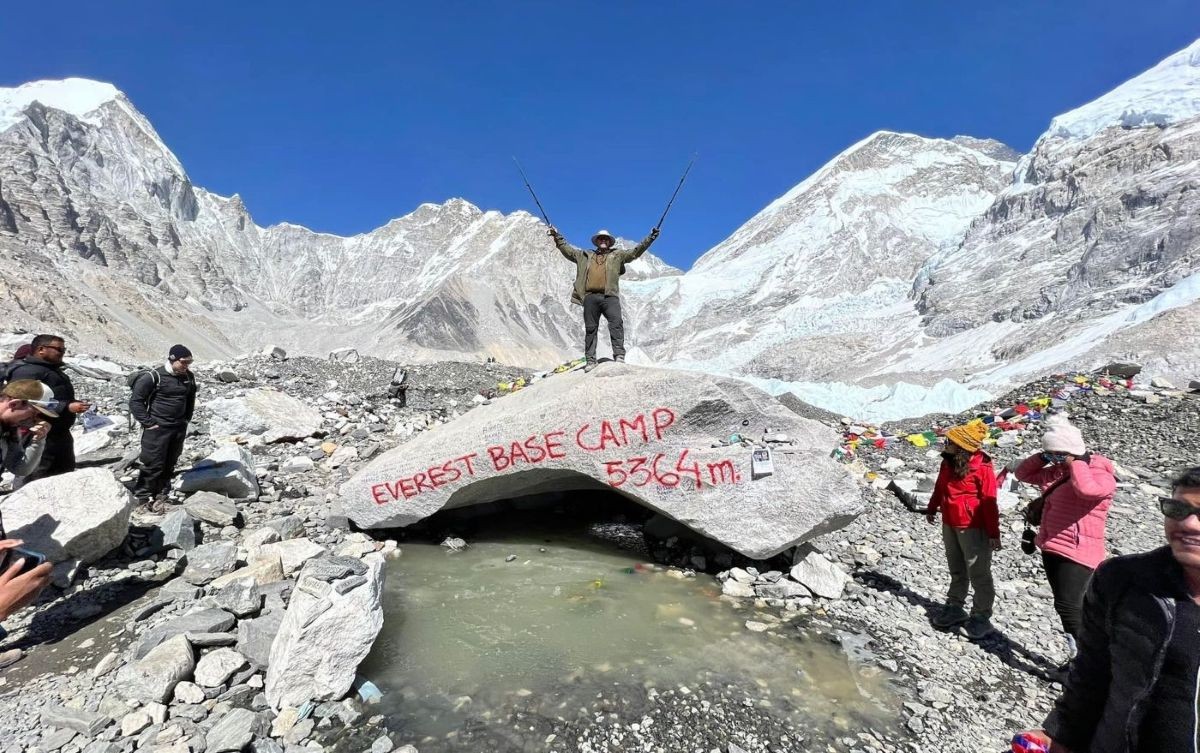
Second, compared to the rainy season, October sees significantly less rainfall.
Third, the trails are generally drier than in the monsoon months.
Fourth, the temperatures during the day are relatively comfortable for trekking, although it gets significantly colder at night in the higher altitudes (see table above).
Thus, October weather pattern seems to be an excellent choice for most trekkers in search of reliable mountain visibility, less rain, and dry campsites.
At the same time, “October weather pattern” is not synonymous with “warm weather.” For one thing, it gets very cold at night in Dingboche, around 4,410 meters. It gets even colder at night in Lobuche (~4,910 m). At 5,364 meters in Everest Base Camp, the wind often makes it feel much colder than it is.
Similarly, crowds are the other reason why October is not the best month for those who prefer hiking to Everest Base Camp in solitude. People come from all over the world to witness the majesty of Everest, and the post-monsoon season offers generally reliable trekking weather and mountain visibility.
As a result, it is not uncommon to see crowds of people around Namche Bazaar, Tengboche, Dingboche, Lobuche, Gorakshep, and Everest Base Camp itself.
Moreover, during sunrise hours, it is common to see lines of people waiting in turn to take pictures from the viewpoint.
As a result, October is a good month for people who want to see the peaks of the Himalayas; it is less suitable for those who want to enjoy total solitude.
Now, it is essential to note that the phrase “October weather pattern” does not mean that the sky will be clear in October. As mentioned above, there are times when it is cloudy, rainy, snowy, and generally grey.
Thus, a more accurate definition would be:
October normally offers some of the most favorable trekking weather in the Khumbu, but Himalayan weather can be extremely fickle.
Likewise, even in October, it is critical to have warm clothes, raincoats, sunglasses, suncream, warm gloves, and good walking shoes.
After all, the weather can quickly change, impacting both trekking and your flight.
Thus, in October, crowds are the price to pay for post-monsoon trekking weather and mountain visibility in exchange for generally comfortable temperatures during the day and cold nights at higher altitudes.
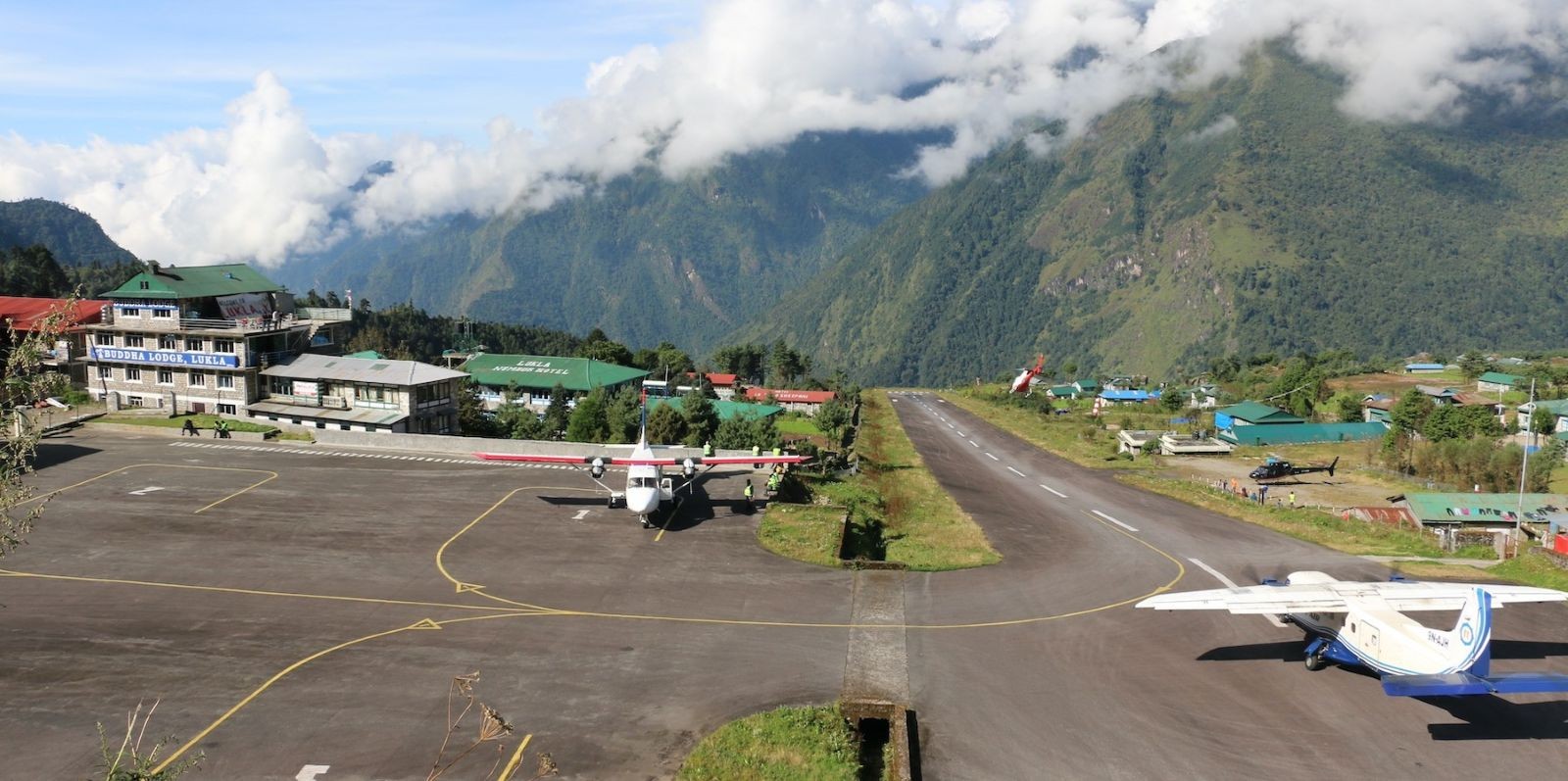
The busiest trekking season in Nepal also means the most challenging time for people who want to fly to Lukla and start their Everest Base Camp trek.
Meanwhile, flights to Lukla are often crowded during the peak season, so people can easily find themselves stranded in a queue waiting for a plane.
Moreover, during the peak season, it is often the Ramechhap airport (Manthali), not the Kathmandu airport, that handles flights to Lukla.
Thus, it is essential to spend a few extra days in the capital in October to get to Ramechhap, which involves a road trip from Kathmandu.
Ramechhap to Lukla Overview,
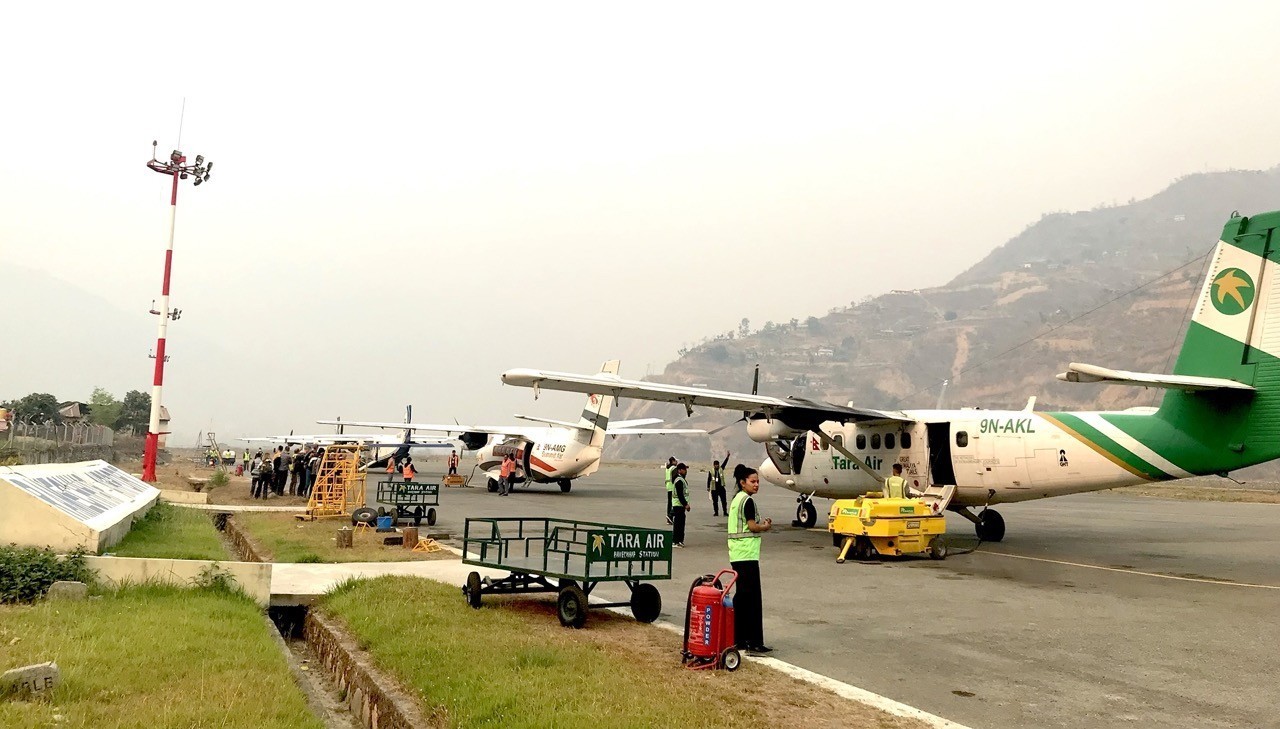
The distance from Kathmandu to Ramechhap is approximately 130 km, but how long it takes to get there depends on the time of day, traffic, and the condition of the roads. Most flights from Ramechhap to Lukla are seasonal, which means they only operate during the peak trekking seasons ( Spring and Autumn)
Why October is a busy month for trekkers in general, and why Ramechhap is a popular alternative to the Kathmandu airport:
As a result, Ramechhap is an important consideration for anyone planning to fly to Lukla during peak season.
| Factor | Details |
|---|---|
| Departure airport | Ramechhap/Manthali for many seasonal flights |
| Destination | Lukla, Tenzing-Hillary Airport |
| Lukla elevation | 2,860 m |
| Flight duration | 20-30 minutes (under normal conditions) |
| Main concern | Weather and congestion |
| Demand | Very high in October |
| Booking advice | Book early and ask for flexibility |
Importantly, it is important to note that the flight from Ramechhap to Lukla itself is short – no more than 30 minutes under good weather conditions. However, the entire process of arranging transportation requires much more time and effort.
It is entirely normal for trekkers to spend the night in Ramechhap or even to reach the airport in the pre-dawn hours in order to board the earliest available flight.
Thus, when booking a Ramechhap–Lukla flight, it should be assumed that it cannot be used as a convenient day-trip.
In other words, a responsible and experienced trekker will have to plan an itinerary that will allow him to arrive at the Ramechhap airport on time. Not doing so will result in disappointment and frustration as delays and cancellations are completely within the realm of possibility.
Lukla flight delays should be taken into account when creating a travel itinerary in October. The simple truth is that a flight to Lukla can be delayed for any reason: low visibility, bad weather, limited airspace availability, airplane maintenance, and so on.
As a result, it is critical to leave extra days in your schedule when organizing long-distance domestic flights (especially during peak season).
Here’s an example:
Another thing to note is that it is best to book flights well in advance. October is a busy month, and last-minute bookings can be frustrating. It is always a good idea to contact a local trekking agency to get advice on:
The departure airport (Lukla is the destination, but most flights in October originate from Ramechhap)
Transfer from Kathmandu to Ramechhap.
Baggage allowance,
In addition, it is essential to remember that conditions can change at any time. Thus, it is not enough to simply rely on the information provided by the local agents. It cannot hurt to double-check everything right before departure.
The point is that Ramechhap is not always the preferred option. The choice of the airport depends on the time of year, the airline, and even the government.
Thus, a responsible article should contain wording similar to this instead of “All flights to Lukla during October must depart from Ramechhap.”
During peak season, many airlines offer direct flights from Ramechhap to Lukla, so it is always worth contacting local agents to obtain the most relevant information.
In essence, the bottom line is that Ramechhap flights to Lukla have their own risks. The combination of busy season, few available airports, and unpredictable weather means that trekkers should never assume that they will be able to depart on a specific date under the same conditions as when they booked the flight.
Thus, when planning an Everest Base Camp trek in October, it is always better to err on the side of caution. That way, even if the weather turns out to be cloudy, or the airport is closed, or the flight is delayed, you will not have to cancel your trip.
October is one of the busy months on the Everest Base Camp trail. It is a popular time to visit the region, and it draws a great many people to the trail. Porters, guides, locals, muleteers, and yak herdsmen all add to the mix, making it a true Himalayan experience.
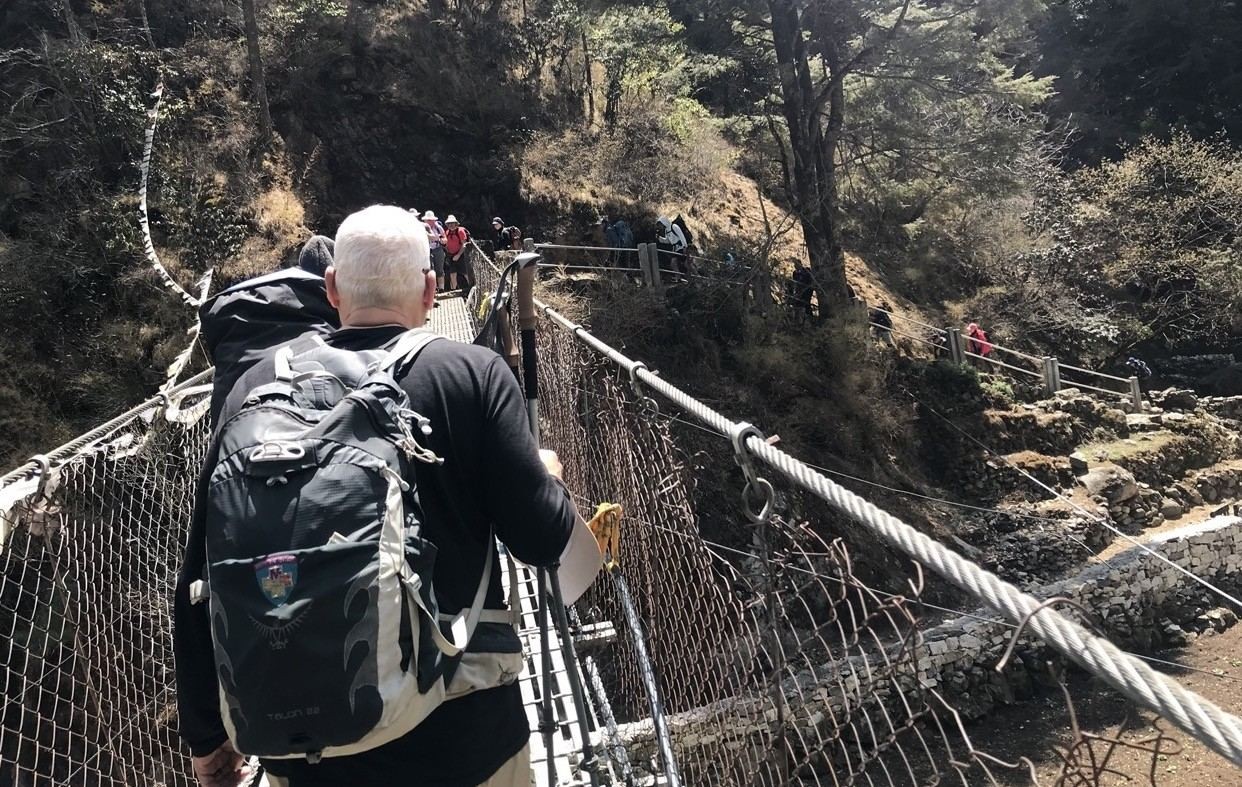
More specifically, trail traffic around Namche Bazaar tends to peak during this time of year, which also has implications for the EBC trek schedule.
Moreover, the most congested parts of the trail tend to be found around the lower Khumbu and larger settlements. After Lukla (elevation 2,860 m), the trail sees a steady mix of hikers, porters, and mountain bikers making their way up towards Phakding (2,610 m) and then on towards Namche Bazaar (3,440 m).
Along the way, there are a number of interesting trail features including suspension bridges, stairs carved into rock, and narrow passes where faster and slower groups are likely to converge.
| Trail feature | Traffic notes |
|---|---|
| Lukla | Busy arrivals/departures |
| Phakding | Heavily trafficked trekking section |
| Namche approach | Heavily trafficked |
| Suspension bridges | Can be busy |
| Yak caravans | Common on upper trails |
| Namche Bazaar | Heavily trafficked accommodation/dining |
| EBC approach | Busy, especially in early October |
| Early morning | Generally less busy than later in the day |
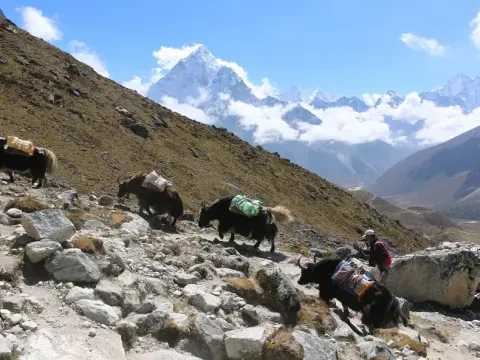
One of the most unique aspects of hiking in the Khumbu during October is the opportunity to see yak cattle. These animals, as well as yak-cow hybrids (dzopka), are a staple of the region and serve as valuable cargo carriers at higher altitudes. It is common to see them transporting supplies to outlying communities on the EBC trail, including Namche Bazaar, Tengboche, Dingboche, and other settlements.
When faced with an oncoming yak caravan on a narrow section of trail, the appropriate course of action is not to attempt to quickly pass them on the side.
Additionally, trekking traffic will cause long lines to form at trail intersections and narrow passes, and it is especially important to be patient around bridges.
The Hillary Suspension Bridge offers trekkers and local travelers an unforgettable view over the Dudh Koshi valley. It is located on the approach to Namche Bazaar and is used by hikers, porters, and pack animals taking the trail up and down the valley.
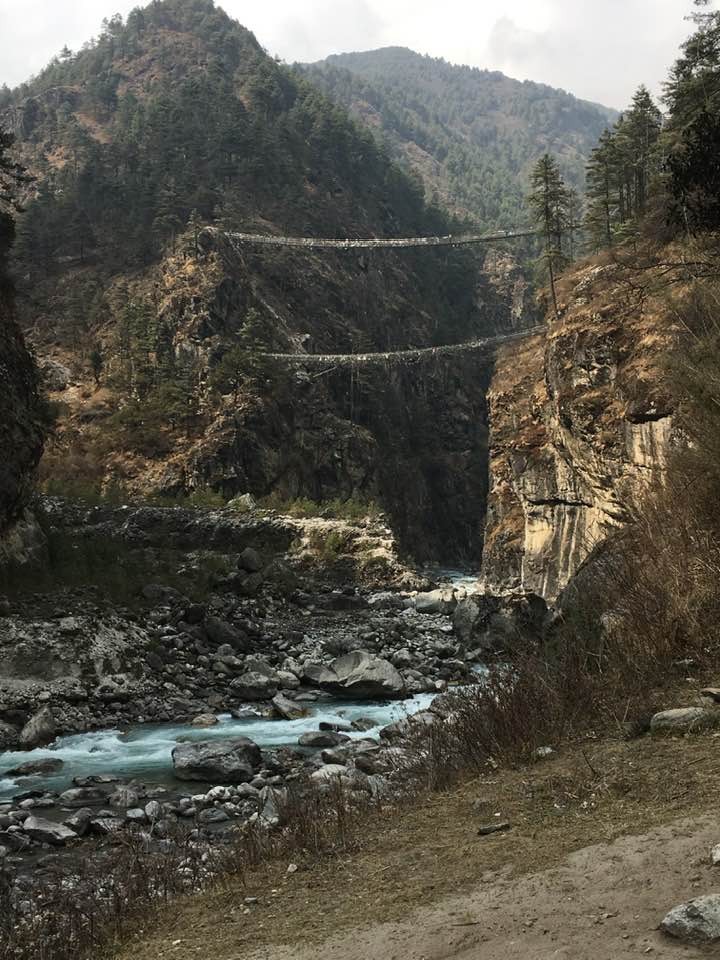
While the Hillary Suspension Bridge is undoubtedly a traffic bottleneck for hikers on the EBC trail, it is misleading to think of it as a permanent or absolute one. The amount of congestion varies greatly depending on the time of day and can be much worse during rush hour in October.
At the Hillary Suspension Bridge, you are likely to see:
The climb up toward Namche Bazaar from Phakding is one of the first opportunities for EBC hikers to see just how busy the trail can get during peak season. This stretch of trail runs along the Dudh Koshi valley and then turns up towards Namche Bazaar. The climb up towards Namche involves a large altitude gain:
Additionally, the trail includes a number of stairs carved into local rock formations as well as a set of narrow bridges. Groups of hikers tend to depart Phakding at roughly the same time every day, meaning that faster trekkers will find themselves overtaking slower groups on a regular basis and creating temporary queues at the narrow trail sections. It is during this part of the EBC trek that most people begin to get a sense of just how slow things are likely to get at higher altitudes.
When it comes to EBC trail traffic, more experienced guides will caution against trying to match the pace of another group.
An alternative approach is :
In fact, it is especially important to avoid racing the trail as you gain altitude since it will not significantly hasten your acclimatization to the higher elevation.
Likewise, yak caravans become a more common sight as one travels into the higher Khumbu, particularly around:
Here, it is important to treat these animals as working beasts of burden and to avoid obstructing their progress. Taking a photo in front of a moving yak is ill-advised, and it goes without saying that physical contact with any animal should be avoided.
While it is easy to focus on the downsides, crowding on the trail and in local accommodations actually has some advantages. Not only do you get to see a large cross-section of international hikers, but you often get the chance to meet fellow trekkers and trade information about the trail and weather. This typically happens over a meal in one of the local dining rooms.
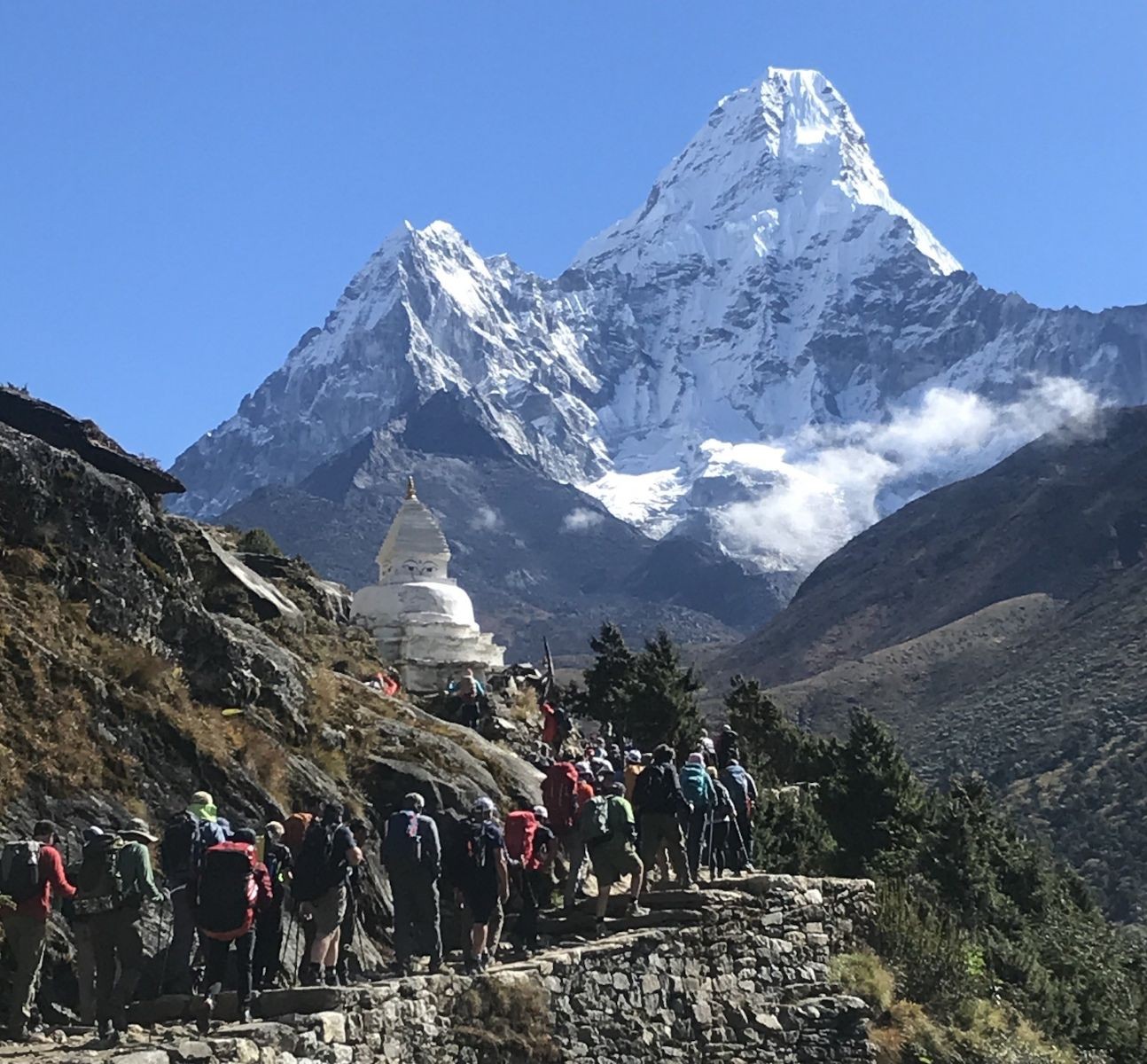
When it comes to EBC trekking in October, it is important to keep in mind that October is a social experience and not a solitary one. If you are looking to escape the crowds, you might want to consider a different time of year for your EBC trek.
If you are looking to embrace a busy Himalayan adventure, the crowds and congestion are part of the experience.
Many hikers find that the best way to avoid morning congestion is to set off for the day’s destination early. This allows you to beat the morning rush that tends to see people departing their accommodations.
However, it is also important not to set off too early in the day for the sheer sake of avoiding congestion. Safety and comfort should always come before concerns about trail traffic.
Now you know what to expect from EBC trail traffic during October. It is a mix of mountains, bridges, and crowds of both people and animals that define this unique Himalayan experience.
Accommodation is another stressful and busy topic for Everest trek lodging in October. The Khumbu region of Nepal has one of the most developed trekking-lodge systems in the country, but this does not mean that beds are always easy to find in peak season.
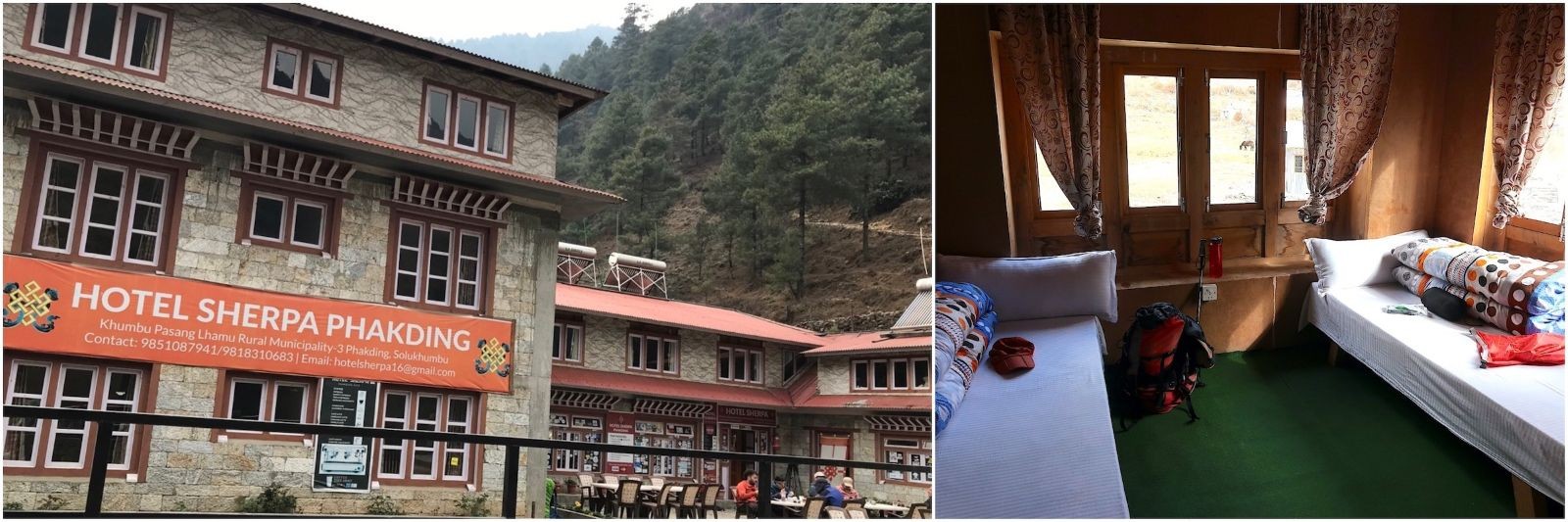
Meanwhile, popular accommodations can fill up quickly, especially at higher altitudes. This includes the lodging options in Lobuche and Gorak Shep, where a limited room supply meets surging demand.
While the Everest region has more trekking hostels than anywhere else in Nepal, this does not eliminate the possibility of encountering crowded conditions in October.
| Settlement | Approx. elevation | October availability |
|---|---|---|
| Namche Bazaar | 3,440 m | Many options, highly competitive |
| Tengboche | 3,860 m | More limited than in Namche |
| Dingboche | 4,410 m | Heavily seasonal |
| Lobuche | 4,910 m | Limited availability |
| Gorak Shep | 5,164 m | Extremely competitive |
| Everest Base Camp | 5,364 m | Not available (temporary tents) |
The higher you go, the more challenging it can be to find a place to sleep.
For the trekkers who are doing EBC Trek, this means that availability in higher-altitude settlements will be more competitive, especially in October. This is because EBC itineraries typically call for spending the night in lower-altitude settlements before ascending towards the higher ones.
Lodging in Lobuche is particularly noteworthy because most EBC trekkers spend at least one night there on their way towards Gorak Shep and Everest Base Camp. At ~4,910 m, it is one of the highest settlements in the Himalayas and has more limited lodging options compared to other regional centers like Namche Bazaar.
As a result, popular hostels in Lobuche can fill up quickly, especially during peak season. One of the reasons why solo travelers prefer to book accommodations with trekking agencies is because of the higher likelihood of securing a bed in these competitive settlements.
The demand for accommodation peaks in Gorak Shep, which is located at around 5,164 m. It is the last settlement before the Everest Base Camp trail and also the gateway to the Kala Patthar hike.
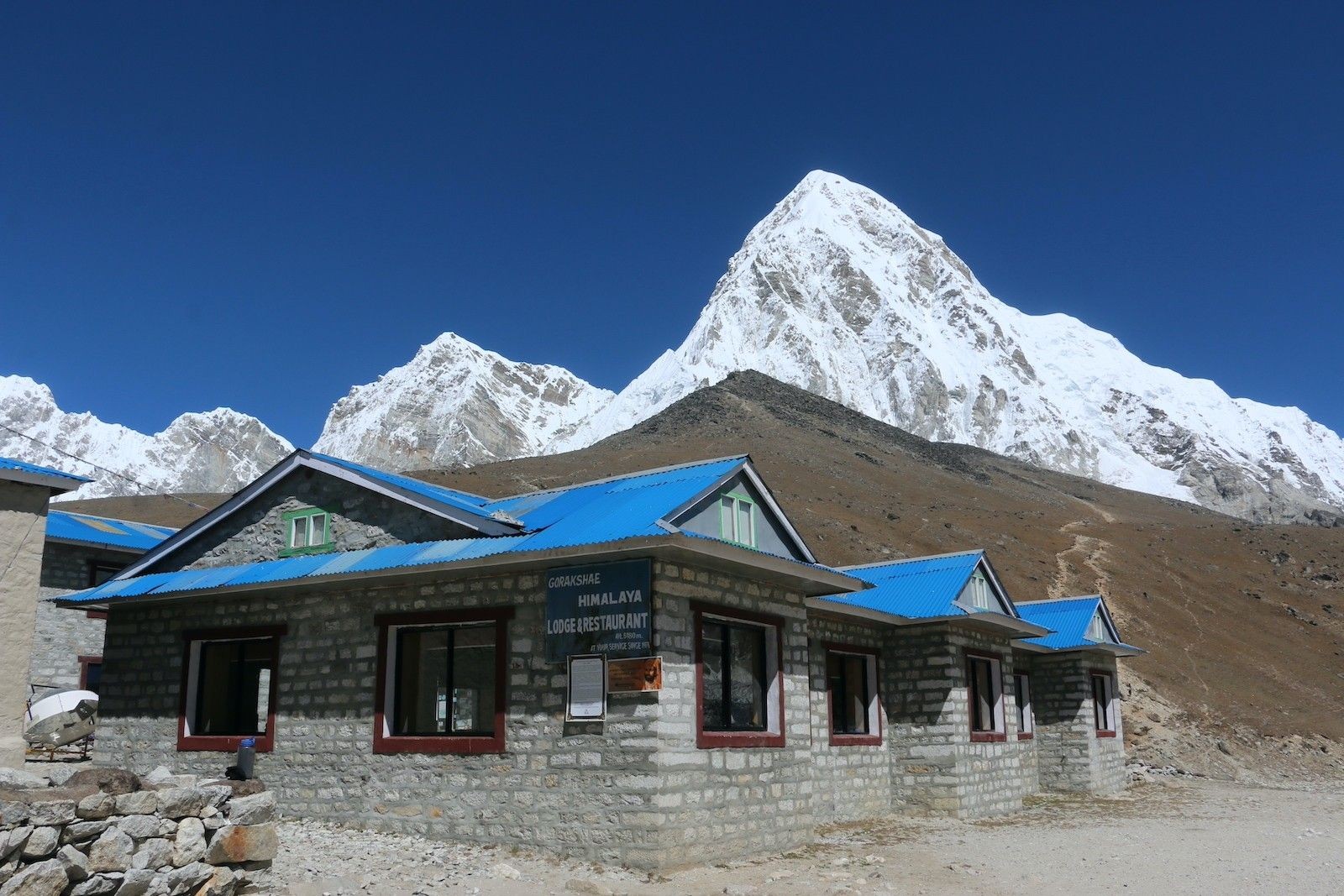
Due to its proximity to the EBC summit, there tends to be higher demand for private rooms here than elsewhere in the Everest region. This contributes to the Gorak Shep teahouse shortage, which is really just a reflection of the higher demand for higher-altitude lodging during peak season
Actually, the increased demand for higher-altitude lodging tends to result in fewer privacy options for EBC trekkers.
Likewise, it is not uncommon for shared room, twin sharing, or smaller room sizes to become the norm under these conditions.
Other changes that can be seen at hostels in high demand include:
In some cases, hostels have been known to utilize their entire space, including common areas, for accommodating extra trekkers. However, it is hard to believe that every single dining room in every single teahouse has been turned into a dormitory.
Thus, these changes to a trekking itinerary tend to vary depending on the lodges, the local demand, group vs. private accommodation, and other factors.
The dining room is the beating heart of any Khumbu teahouse, serving as the social hub where trekkers, guides, and even local travelers can gather. It is the place to stop for a hot meal of dal bhat, a cup of tea, or a chance to charge your electronic devices.
In higher-altitude settlements, the dining room is often the warmest place in the building, making it a popular spot for people to meet.
As a result, even if you have a private room, you will likely find yourself spending much of your evening in the dining room.
For EBC trekkers, pre-booking teahouse accommodations is often the preferred method for ensuring availability, especially during peak season. An organized trekking agency can help you secure a bed at the hostels of your choice, depending on your itinerary.
However, it is also important to understand that pre-booking only goes so far in terms of guaranteeing availability. There are few things that can disrupt an entire itinerary as much as the unavailability of a room at a particular hostel.
Meanwhile, this is often the result of weather disruptions, alternate itineraries, or simply the fact that a hostel’s capacity is reached quicker than expected. This is especially common in the case of flight disruptions in Lukla, which can cause hikers to arrive at their destination later than expected.
When it comes to EBC accommodations, the most realistic expectations revolve around availability. Most experienced trekkers will be able to find a bed almost anywhere, but they understand the value of pre-booking if they want a private room.
Likewise, they know or should know that the lower the altitude, the greater the likelihood of finding a teahouse with spare beds. They also know that shared rooming and twin-sharing arrangements are often the most reliable options for budget-conscious solo travelers
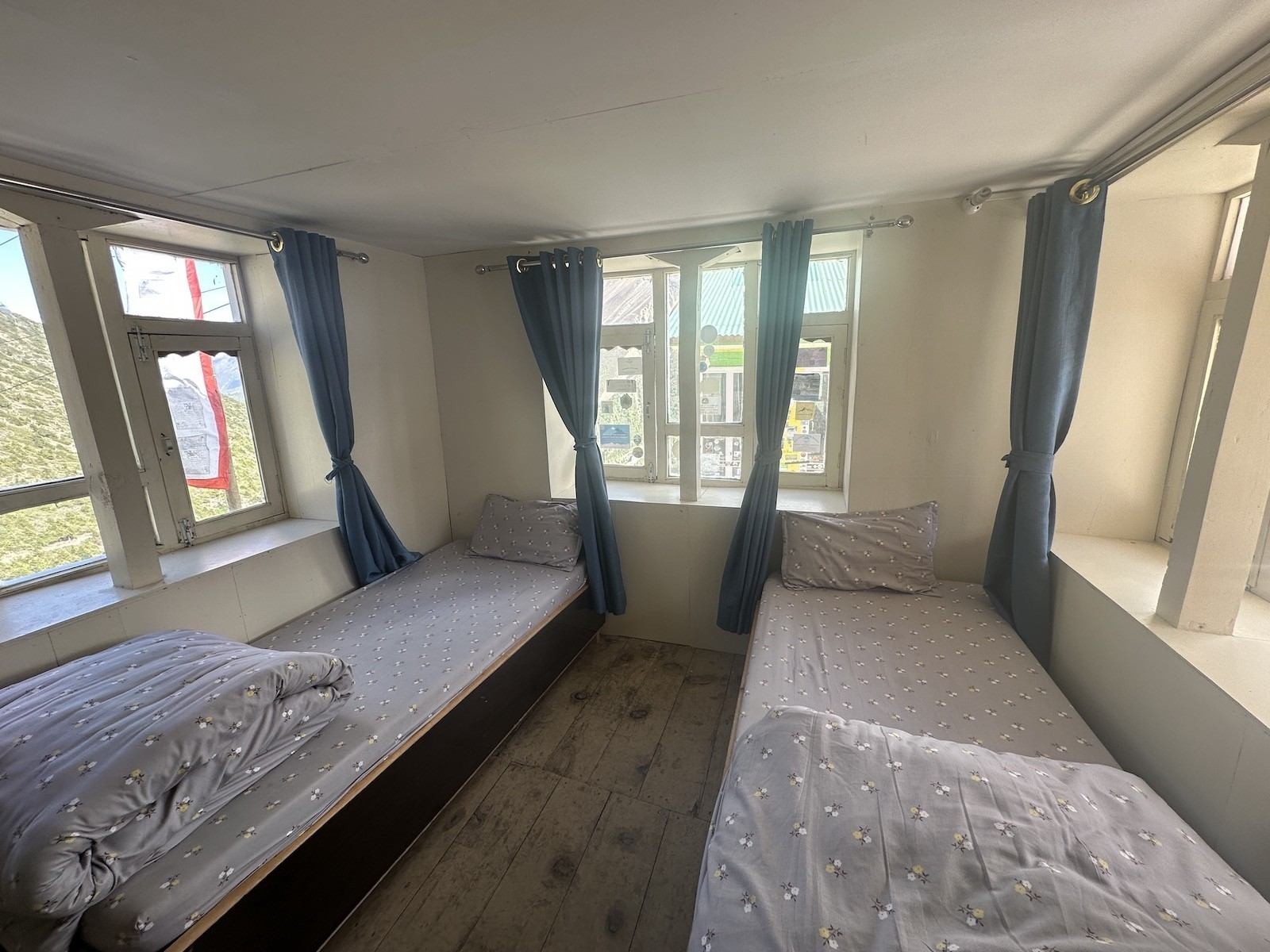
At higher altitudes, however, availability becomes more difficult, especially around Gorak Shep. The EBC teahouse availability really boils down to the following factors in order of importance:
At 5,164 m in Gorak Shep, luxury accommodations simply do not exist. For most trekkers, comfort really revolves around resting and preparing for the next day’s activities.
As one travels up the mountain, it is important to keep in mind that comfort tends to decrease while prices increase.
At a lower altitude, you are much more likely to find:
Meanwhile, at higher altitudes, one can expect:
If you are planning an EBC trek during peak season, keep the following in mind:
More importantly, it is important to remember not to judge your Everest Base Camp experience based on the quality of your teahouse accommodations. This is largely a function of altitude, with more comfortable options available at lower elevations and much stricter limitations as one gets closer to Everest Base Camp.
After all, 5,164 m in Gorak Shep is not a luxury hotel; it is a remote Himalayan settlement near one of the highest mountains in the world.
If you want to avoid crowds on the EBC trek, the easiest trick is to depart your lodge earlier than everyone else. Most groups traveling in October tend to stick to somewhat similar itineraries, eat breakfast at roughly comparable hours, and consequently leave their guesthouses together. As such, departing somewhere around 7:00 AM, latest, tends to be a good idea.
Meanwhile, 7:00 AM, latest, should not be treated as an absolute minimum, however - sunrise, the weather, how high you are, where you are going, and the state of the trail should factor in as well, with safety coming before sightseeing at all times
| Strategy | Practical advantage |
|---|---|
| Leave around 7:00 AM, latest | Avoids other hiker groups who tend to leave later in the morning |
| Cross bridges early | Fewer people on them |
| Reach lunch stops early | More options, less waiting |
| Walk the trail before afternoon traffic | Quieter trail sections |
Meanwhile, the most congested trails on the EBC route tend to be the ones going from one village to the next over river bridges and up steep inclines - Phakding-Namche, Namche-Tengboche, and the stretches around Dingboche and Lobuche being especially busy. The Phakding-Namche segment (2,610 m to 3,440 m) is a good example - it involves a long climb up the mountain, as well as a few bridges, and if several large groups have left their guesthouses at 7 or 8 in the morning, they can end up clumping together at various narrow spots and crossings.
A viable early-morning itinerary would involve waking up at 5:30-6:00, having breakfast by 6:30, and starting the hike at 6:15-6:45.
Meanwhile, this would let you reach an intermediate village by around 9-10:30 and get to the lunch stop by 11:30-1:00. You can then proceed at a relaxed pace for the afternoon if needed.
Likewise, the timing would have to be adjusted depending on what day and how far you were hiking.
In essence, a similar strategy would apply to all stages, but a walk from Namche (3,440 m) to Tengboche (3,860 m) would be considerably easier than getting from Lobuche (4,910 m) to Gorak Shep (5,164 m) and the EBC (5,364 m).
This is a crucial point that while leaving early is good for spacing yourself out from other hikers, it is not a license to hike at a breakneck pace.
Similarly, the goal should be to start earlier and walk more slowly – not the other way around
In fact, trying to rush up the mountain at high altitude is not an advisable tactic. Rather, use steady steps and pacing coordinating eachother.
Many groups tend to meander to their lunch stop, usually arriving around the same time.
If you can get to a particularly busy settlement before most others do, it can give you multiple benefits like:
Likewise, it can be especially crucial to arrive early at a lunch stop in October, as it can ease the burden on both yourself and the porters carrying your gear.
The early-morning strategy works because hiking traffic does not flow steadily throughout the day, but rather in waves, with large numbers of people departing their guesthouses at similar times.
Meanwhile, groups tend to clump together on the trail, stopping together to take pictures, have tea breaks, and so on, with everyone arriving at the next village or lunch stop at roughly the same time. You can mitigate this by leaving early and inserting yourself at an earlier “wave” than the ones you would have joined otherwise.
Some situations do not benefit from early departures. Do not risk losing out on sleep to avoid other hikers if visibility is low, the trail is icy, it is going to rain or snow soon, you are sick, or if your guide thinks it is best to wait.
Similarly, something similar applies to high-altitude sections such as Kala Patthar (5,545 m) - in bad weather, it may be safer to postpone the hike until the next day rather than risk an emergency at 5,500 m.
Unfortunately for those hoping to enjoy total solitude, October will not turn into the empty wilderness. The EBC route stays busy throughout the year, with larger concentrations of hikers at popular areas and guesthouses. Your early-morning strategy will let you carve out pockets of peace and relative emptiness in the middle of a busy trekking season, but not total isolation.
Similarly, you might come across a stretch of trail running through the woods with the Dudh Koshi river nearby and the mountains rising up in the morning mist - and then see another group of hikers walking up the hillside around the next bend. That is the reality of early-morning hiking in October.
If avoiding other groups is a priority for you, it should be combined with smaller groups, flexible lunch schedules, sparser guesthouses, and knowledgeable local guides who know what to do in adverse weather. Leaving earlier in the day is one of the easiest ways to avoid crowds on a daily basis, but it does not eliminate them on the EBC trek entirely.
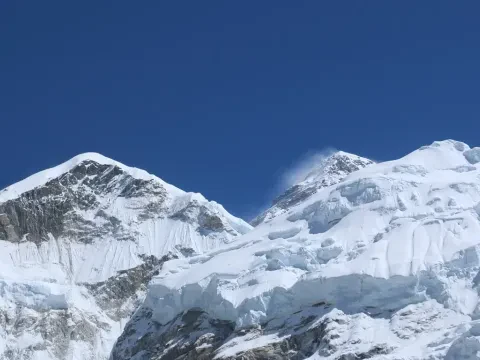
If you are looking to avoid other hikers on the EBC trek, the obvious solution is to change routes. The route to Gokyo Lakes and back to the EBC is one of the most popular alternatives, as it takes trekkers away from the busiest thoroughfares before reconnecting with the EBC trail.
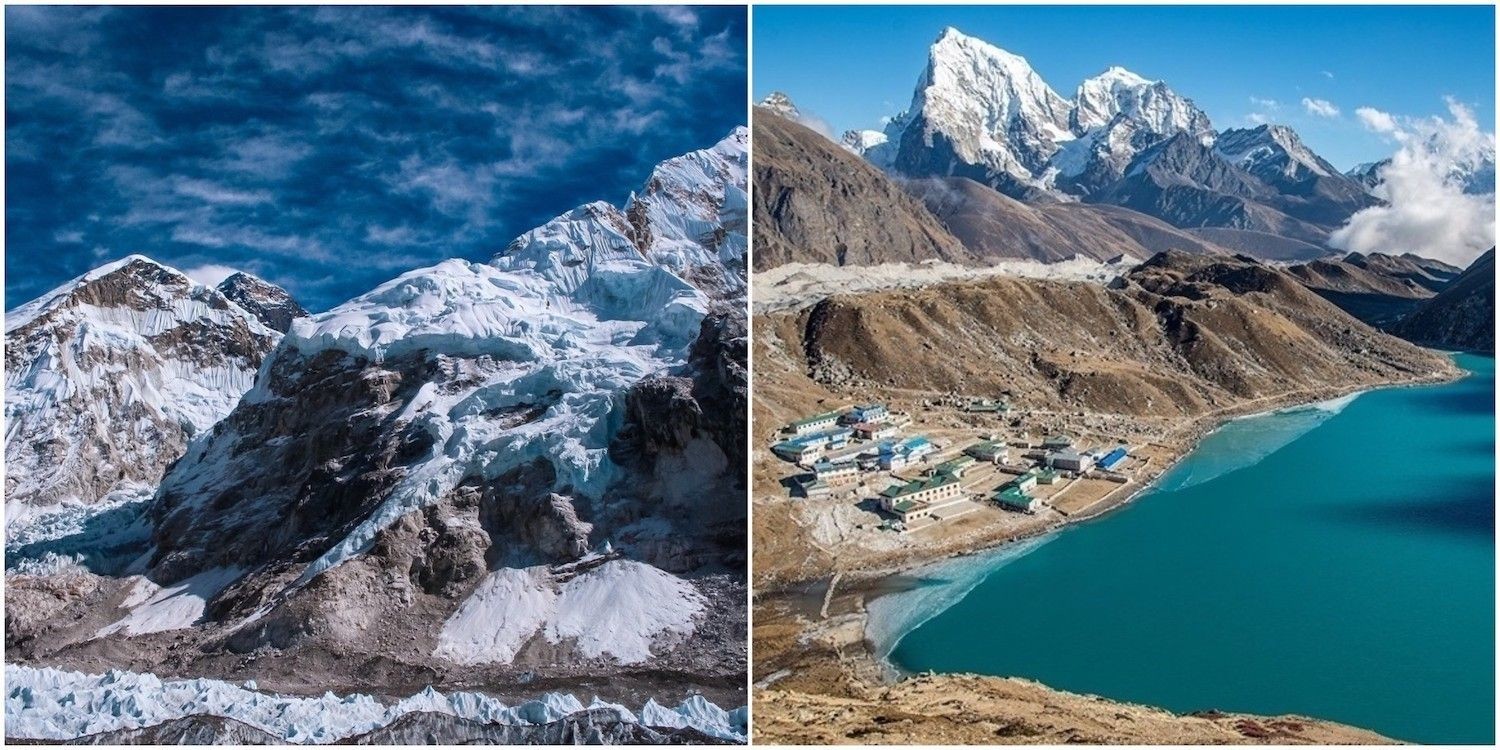
Meanwhile, the one detail that must be stressed about the Gokyo alternative is that it is misleading to think of it as a way to completely avoid busy areas - Gokyo adds another large region to the trek, which necessarily means more hikers on a different trail.
| Standard EBC route | Gokyo–Cho La–EBC route |
|---|---|
| Everest Base Camp | Gokyo Lakes + EBC |
| Does not involve Gokyo Lakes | ✓ |
| Does not involve Cho La Pass | ✓ |
| Everest Base Camp elevation : 5,364 m | Cho La Pass elevation : 5,420 m |
| Moderate–challenging | More challenging |
| Simpler- Moderate | More technical/high-pass |
| Limited Solitude in October | Some stretches of solitude |
| Easier Logistic | More demanding |
In brief, the Gokyo alternative involves getting to Gokyo Valley and taking the high trail around Cho La Pass (5,420 m), which connects back to the EBC trail.
The Gokyo alternative is a good chance to see turquoise lakes amidst the mountains, but it involves spending time in the same valley with dozens or even hundreds of other hikers. Gokyo village (4,790 m) serves as a lunch stop before proceeding to Cho La Pass, and while the valley and the lakeviews are spectacular, they come with a price - the price being other hikers. You would still have to deal with congestion in Gokyo, even if it is not as busy as the standard trail from Lukpa to EBC.
More importantly, the Cho La Pass (5,420 m) option is significantly more demanding that just taking another valley route.
Actually, it involves a high-altitude crossing, which can be particularly challenging if the trail is icy and slippery. Weather conditions at Cho La can change quickly - temperature drops, snowfall, strong winds, and low visibility are all things to consider. The Cho La alternative should therefore only be considered by people who have sufficient experience and equipment for high-altitude Himalayan trekking and who are prepared to potentially cancel the crossing due to weather.
It depends on what you mean by “avoiding the crowds.” The Gokyo alternative takes you away from most of the standard EBC trail, but once you get to Everest Base Camp, you are back to dealing with the same congestion that most EBC trekkers have to deal with.
The alternative route to Gokyo Lakes and Cho La Pass offers a chance to see another side of the Himalayas, while still seeing Everest Base Camp and Kala Patthar. It adds extra days and distance to an EBC trek, but it is rewarding for those willing to put in the effort.
Importantly, the Gokyo Lakes and Cho La Pass Alternative Lets You See More Than Just the Standard EBC Trek
Here, some things are worth noting about the Gokyo alternative:
All of this means the Gokyo alternative can serve as a great option for more experienced trekkers who want something more varied than the standard EBC trek. It can also provide some opportunities for avoiding other hikers.
Similarly, there are other options for avoiding the same trails and congestion on an EBC trek, and some of them can even take you through the Gokyo Valley. The options will vary depending on the weather, as well as your preferences and experience. October is generally a good time to do most types of trekking, but high-altitude passes tend to be exposed to the elements.
Do not attempt Cho La just to avoid other hikers. A high-altitude crossing adds an additional element of danger to an EBC trek. The 5,420-meter Cho La Pass is challenging enough as it is - unpredictable weather oftentimes making the trail slippery and even more difficult to navigate.
Importantly, you should only consider a high-altitude crossing like Cho La if you have the right level of experience and equipment to handle the conditions.
Likewise, you should also be prepared to postpone the crossing and return to the village if the weather turns bad.
If you are looking for an alternative route that lets you see more of the Everest region while also giving you some breathing room from other hikers, a route involving Gokyo Lakes and the Cho La Pass can be a good choice. It is an option worth considering for more advanced trekkers who want a longer and more diverse EBC trek. However, it should be stressed that Gokyo does not totally remove other hikers from the picture - just some of them.
One strategy to reduce the perception of crowding on the Everest Base Camp Trek is to substitute some main route overnight stops in favor of alternative nearby villages. By doing so, you will still be on the approved trekking trail but able to enjoy a less populated, less intense experience.
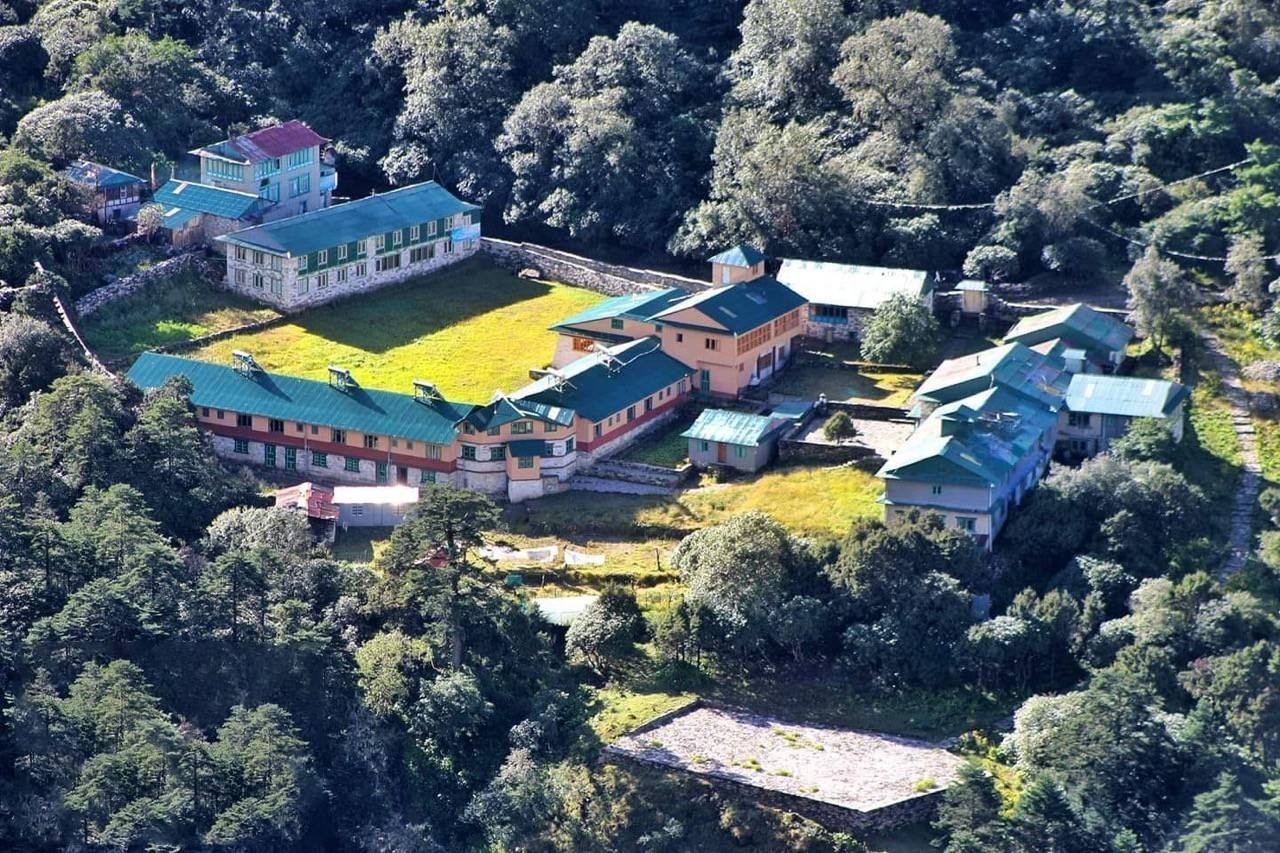
Here, the Phortse village stay is an example of that. This Sherpa village is located at an approximate elevation of 3,950 m and consists of 80 or so households. The Nepal Tourism Board even states that Phortse village is the Sherpa settlement where you can enjoy mountain views, wildlife walks and cultural experiences, if you are willing to embrace a lesser developed option.
| Main route stop | Elevation | Alternative route option |
|---|---|---|
| Tengboche | 3860 m | Phortse 3950 m |
| Dingboche | 4410 m | Various accommodation options |
| Lobuche | 4910 m | Limited alternatives |
| Gorak Shep | 5164 m | Limited alternatives |
Here, Phortse village is of particular interest since it can be integrated as an alternative to the traditional Tengboche overnight stay. However, this should not be done automatically without asking your guide.
Moreover, the route to Phortse involves different trail conditions and elevation gains, which your guide should evaluate in the context of your capabilities and the overall itinerary.
The Phortse village stay experience is fundamentally different compared to the standard trail through the Tengboche area.
Importantly, your evening in a relatively isolated village can be characterized by:
Tengboche village has clear advantages over Phortse, including proximity and cultural value. Tengboche monastery is one of the most visited Buddhist monasteries in the Khumbu region, and the settlement is also one of the most common places to stay after the Namche Bazaar stop.
Here, the Nepal Tourism Board notes that a variety of rest houses and lodges are available in the Tengboche village and that it is located on the most popular trekking trail in Nepal, the Everest Trail. This implies that the choice between Tengboche and Phortse is not as simple as ‘busy Tengboche vs. less busy Phortse’.
Rather, if you are considering alternative accommodations in Phortse, you should be aware that Tengboche will provide more convenience while Phortse will give you a different, more local experience.
The term ‘Upper Dingboche’ can be misleading, since the actual availability of ‘higher, more isolated’ accommodation can vary significantly depending on your guide or trekking company. The general idea is that compared to the crowded Tengboche, you can find isolated and comfortable rest houses in Dingboche at a similar elevation (~4410 m). However, this is a good example of why you should always ask your guide or agency about specific available options rather than making assumptions.
Similarly, Dingboche is a large settlement at an elevation of ~4410 m that serves as a crucial acclimatization point. Rather than requesting a ‘spacious upper Dingboche hotel,’ you should ask your guide or agency about options in the periphery of the main settlement and clarify the details before your arrival. Another thing to consider is that elevation gain/acclimatization is more important than avoiding crowds at higher altitudes.
It is easy to assume that you can customize almost any part of your Everest Base Camp Trek to make it less crowded.
However, the ability to do that decreases with elevation. For example, a Lobuche (~4910 m) -> Gorak Shep (~5164 m) -> Everest Base Camp (~5364 m) section offers far fewer alternative accommodations compared to the lower altitudes. You should not sacrifice precious acclimatization opportunities (and your safety) in an effort to avoid crowds.
A safer, shorter route to Everest Base Camp can be preferable to an empty but dangerously high teahouse stay.
The real value of the alternative teahouse stays in the Everest region is hard to overestimate. While the difference between standard and luxury rooms might seem marginal at first, the actual benefits of a local, less busy teahouse can be substantial.
First, the reduced number of fellow trekkers means that you will be able to enjoy more solitude and have a calmer, safer evening, both of which are especially important at higher altitudes.
Second, you may have more opportunities to appreciate the local culture and people, rather than isolating yourself inside your hotel room.
When customizing your Everest Base Camp Trek, consider the following recommendations for alternative accommodations:
Summing up, the goal of this section was to illustrate how alternative accommodations like the Phortse village stay illustrated in practice. The idea was not to suggest that fewer people equal a better Everest Base Camp Trek but rather to highlight how the excesses of the standard EBC hotel trail can be tempered without sacrificing safety, convenience or local experience.
Now, let us turn to another method of reducing the impact of crowds on your Everest Base Camp Trek.
While it is easy to assume that the popularity of the EBC trek declines linearly throughout the year, the situation is more nuanced. November 15-30 is often recommended as a good shoulder season option for people who want to avoid October crowds.
However, I would advise against claiming “50% fewer trekkers than in October” as a universal characteristic of the November 15-30 period.
In fact, there is no official data point stating that there is a universal 50% decrease in the number of visitors in the Sagarmatha National Park between October and November 15-30.
What the official statistics do show is that compared to October, November has significantly fewer international visitors willing to undertake the Everest Base Camp Trek.
According to 2024 Sagarmatha National Park statistics report:
Visitors in Sagarmatha National Park monthly,
In other words, you cannot claim that “according to the official data, there is a 50% decrease in the number of EBC trekkers between October and November 15-30”. The reality is that October is the peak month for the Sagarmatha National Park, which sees an influx of international visitors.
Here, a 22.5% decrease in November visitor numbers compared to October 2024 is an illustrative average for the EBC-specific trail dynamics based on the statistics above.
The appeal of late November largely comes down to the fact that this time of year marks the tail end of the main autumn trekking season in Nepal.
Meanwhile, fewer international tourists are willing to attempt the Everest Base Camp Trek in November than in October.
According to the Nepal Tourism Board, the number of international arrivals in Nepal decreased by almost 12% between October 2025 and November 2025.
Similarly, this seasonal decline in international arrivals helps explain why fewer people are willing to attempt the Everest Base Camp Trek in the November timeframe.
Having said that, most late November EBC treks will offer you fewer crowds, more flexibility in terms of lodging options and a generally more relaxed atmosphere at popular viewpoints and tea houses.
As a result, I would suggest considering the late November EBC trek as an option if you want to minimize your exposure to other trekkers.
In many ways, late November is the colder version of the October EBC trek. The main advantage of November compared to October comes down to the fact that you will encounter generally better weather conditions at higher altitudes.
As a rule of weather, November temperatures decrease by roughly 1°C per 100 m of elevation gain compared to October. This means that most EBC trekkers in late November will have to deal with colder mornings, shorter daylight hours and generally uncomfortable night conditions. As you can see, ‘fewer people’ does not automatically equal ‘better trekking conditions’.
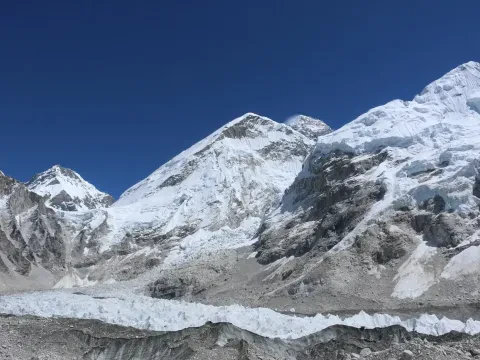
A ‘busier October, less busy November’ scenario is ideally suited for trekkers who do not want to sacrifice comfort for the chance to experience the Himalayas during the shoulder season. Fewer people means more flexibility in terms of trail options and a less intense atmosphere.
However, I think it is important to acknowledge that EBC-specific conditions in late November can be considerably more severe compared to the EBC treks undertaken in the early part of the year.
Moreover, November 15-30 can be viewed as a colder, more exposed version of the October EBC trek. If you want to have a good experience without sacrificing comfort, you should stick to the beginning of November.
For most experienced trekkers, late November represents a considerable challenge due to cold temperatures, high altitude and reduced daylight hours.
In my opinion, late November EBC treks are best suited for people who are generally comfortable with cold, high-altitude conditions.
As stated earlier, it should be impossible to formulate a complaint November promotion for the Everest Base Camp Trek that would claim an absolute 50% reduction in the level of busyness between October and November 15-30.
Having Said that, I think it is fair to claim that compared to October, most EBC treks undertaken in the November 15-30 timeframe will be generally less busy while offering you fewer crowds, more flexibility and a generally more relaxing atmosphere.
According to the government of Nepal, Ministry of Tourism, official visitor numbers saw a significant decline in late November 2024 compared to the peak season in October.
Similarly, the same trend can be observed in the international arrivals statistics published by the Nepal Tourism Board for November 2025.
Overall, this information can be used to suggest that compared to October, the visitor numbers in November do decline, although this trend may vary depending on the specific areas, trails and viewpoints.
The crowds in October can provide more than just a logistical challenge. One of the busiest times of year in Nepal is during the Dashain, Tihar, and Mani Rimdu festivals. These holidays can add unique cultural value to your Everest Base Camp trek, although the dates of these events vary from year to year.
Therefore, it’s a good idea to research which festivals, if any, fall during the year that you plan to trek.
Meanwhile, the Khumbu region is home to many Sherpa and Tibetan Buddhist communities, including the towns of Namche Bazaar (3,440 m), Tengboche (around 3,860 m), Dingboche (4,410 m), and the Everest Base Camp village itself at 5,364 m.
In short, you’ll find yourself surrounded by both stunning mountain vistas and opportunities to experience cultural traditions.
Below is a summary of major autumn cultural events in the Everest region:
| Festival / event | Cultural affiliation | What to know ? |
|---|---|---|
| Dashain | Major Hindu Festival | Dates vary by year |
| Tihar | Major Hindu/Nepali Festival | Dates vary by year |
| Mani Rimdu | Sherpa Buddhist Festival | Traditionally associated with Tengboche Monastery |
| Khumbu Buddhist traditions | Himalayan Buddhism | Broadly observed year-round |
Among these cultural events, the Mani Rimdu festival at Tengboche Monastery is of specific interest to Everest trekkers.
Moreover, Tengboche Monastery, located at roughly 3,860 m, is one of the most important monasteries in the Khumbu region. The Mani Rimdu festival is a major Sherpa Buddhist holiday, featuring religious services, masked dances, and community gatherings.
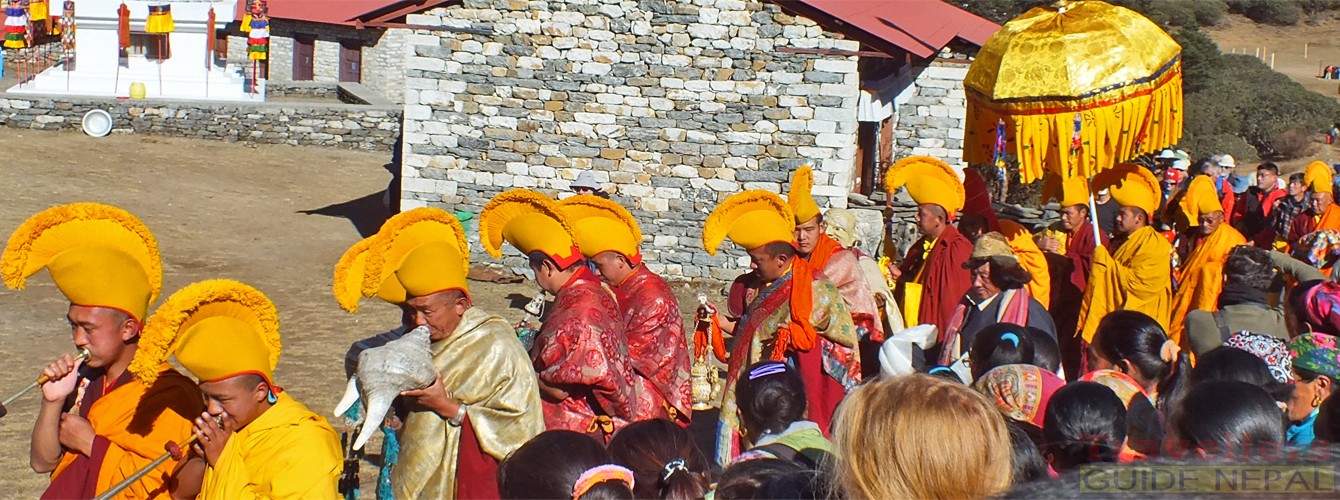
However, there is one important detail to consider: the Mani Rimdu festival does not always happen in October.
In fact, this festival traditionally falls somewhere between October and November, depending on the lunar calendar. Therefore, it’s a good idea to double-check the local festival calendar before booking any flights or accommodation if you plan on visiting the Tengboche Monastery region.
During major festivals, the Khumbu region tends to get busier with both domestic and international traffic.
Meanwhile, this is due to both the increased popularity of the region and the fact that local populations also travel between villages during this time of year. In short, you may find yourself sharing the trail with more people than usual during major festivals.
However, this is not a disadvantage - it’s a chance to see the local culture in a unique light. Instead of seeing a monastery as a curiosity, you’ll see the local Buddhist community coming together to celebrate their traditions in a way that has persisted for centuries.
The Dashain and Tihar festivals are both major holidays in Nepal, but they are not exclusively Sherpa holidays. In fact, they are widely celebrated across the country, with varying degrees of enthusiasm in different regions.
If you happen to be in the Everest region during one of these festivals, you may find yourself seeing:
Important, your personal experience will depend largely on where you are during the festival.
Festivals and holidays are not displays put on for your convenience - they are an important part of the local culture.
If you find yourself in a situation where a local religious service is taking place, remember to:
And now, the cultural bonus of an October trek during festival season becomes apparent.
October is a fantastic time to visit the Everest region from a trekking perspective, and it also has the potential to include a number of cultural highlights.
In short, the busy season in the Khumbu region has the potential to be a highlight of your trip, not a drawback.
Meanwhile, you can enjoy the company of other international trekkers at the teahouses while also witnessing local Himalayan communities going about their traditional lives.
This is, in a sense, the ultimate cultural bonus of an October EBC trek: the opportunity to see both the mountains and the people who live in them.
When planning a cultural itinerary around a specific holiday, always consider:
In short, plan carefully - a festival is a wonderful thing, but it should not be the reason why your trip is disrupted.
For travelers who value cultural experiences, an autumn Everest trek can be much more rewarding than a standard peak climbing season itinerary. With the right timing, it can even become an opportunity to witness local Sherpa and Himalayan traditions in a unique and memorable way.
For October trekkers, helicopters offer another option for reducing the stress of the Lukla airport traffic. Helicopters can be used for specific Everest helicopter return tours, including the option to fly from Kathmandu toward the Everest region or to return from the high mountains in the Khumbu.
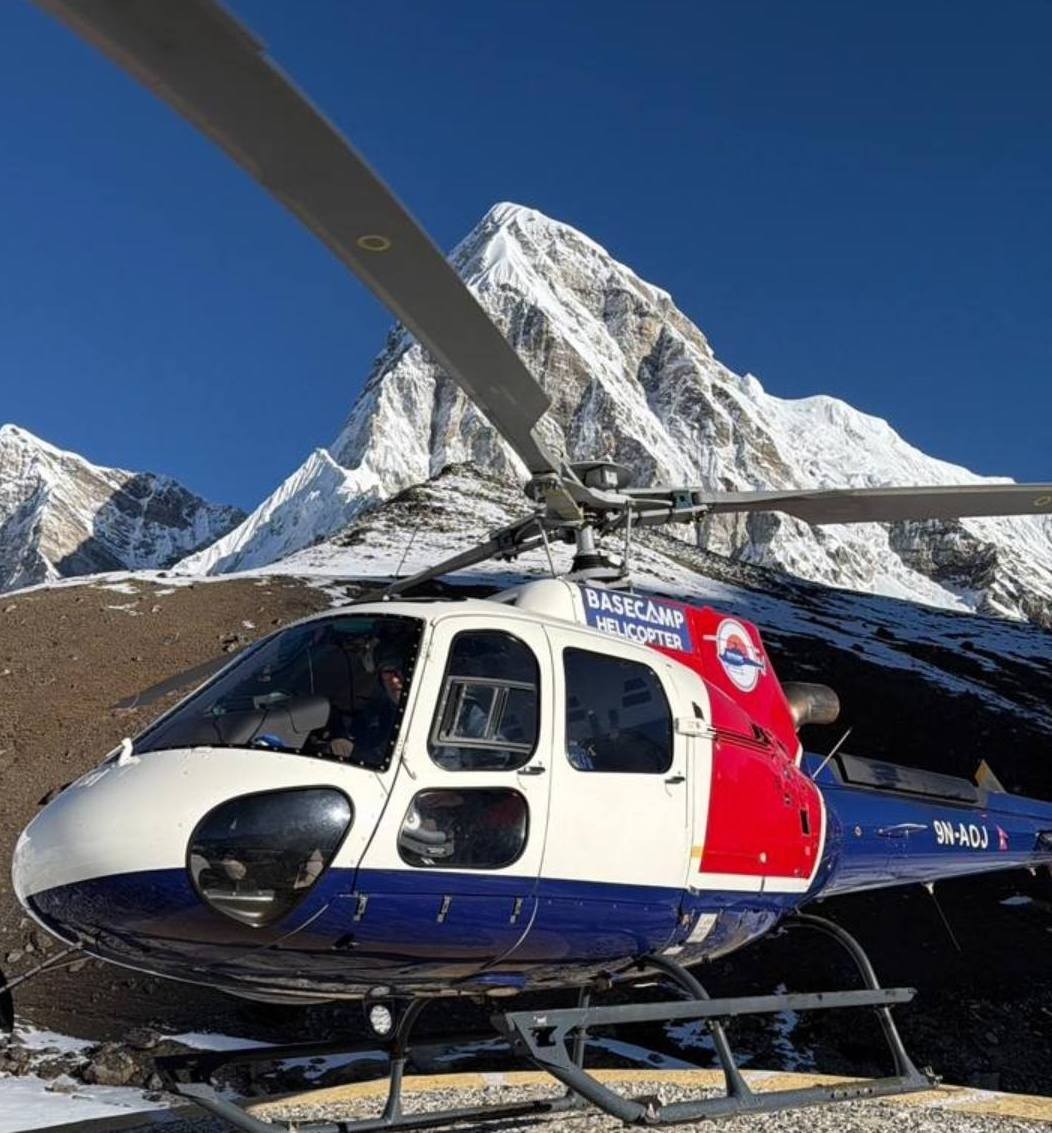
However, it’s important to remember that helicopters are not an infallible solution to Lukla’s weather or traffic issues.
Importantly, mountain aviation is still subject to the forces of nature.
A standard Everest Base Camp trek itinerary looks something like this:
Or, depending on your operator and the weather:
Kathmandu → helicopter → Everest region → trek → helicopter return
In fact, the exact details of a helicopter-supported trek will vary depending on the operator, aircraft, weather, and other circumstances.
Below is a brief comparison of standard vs. helicopter-assisted Everest Base Camp treks:
| Feature | Standard EBC trek | Helicopter-assisted trek |
|---|---|---|
| Lukla flight | Usually required | Can sometimes be bypassed |
| Retracing steps | Usually necessary | Can be reduced |
| Time | Usually longer | Shorter |
| Cost | Much lower | Significantly higher |
| Weather dependency | High | Still high |
| Experience | Full trekking | Full trekking + helicopter |
| Best for | Classical trekkers | Time-constrained trekkers |
The phrase Lukla flight bypass is a phrase that should be taken with several grains of salt.
Here, a helicopter can sometimes assist you in bypassing the congestion of Lukla airport, but it’s important to remember that helicopters are not an all-weather mode of transportation.
Actually, helicopter operations in the Everest region are limited by a number of factors, including:
Therefore, responsible trekking operators will never guarantee a helicopter ride on any specific day.
A standard Everest Base Camp trek involves a significant amount of backtracking. Once you’ve summited Everest Base Camp at 5,364 m and Kala Patthar at 5,545 m, you’ll have to descend the same trail that you used to get there.
With a helicopter, you can reduce the amount of backtracking that you have to do. For time-constrained trekkers, this can be an invaluable opportunity to reduce the length of their itinerary.
One popular option is to finish your high-altitude trekking near Gorak Shep (5,164 m) and return to Kathmandu via helicopter. This can reduce the amount of backtracking that you have to do, including passing through:
However, it’s important to remember that helicopters can only operate under certain conditions.
To an extent, yes. A helicopter can help you avoid:
However, you will still encounter crowds during your Everest Base Camp trek in October.
If you’re using a standard itinerary, you’ll pass through Lukla, Namche Bazaar, Tengboche, Dingboche, and Lobuche on your way to Everest Base Camp.
In other words, a helicopter can reduce the amount of congestion that you have to deal with, but it cannot eliminate it entirely.
Private helicopter options can provide you with greater flexibility, especially if you’re booking a private Everest Base Camp trek.
In general, private helicopter tours offer the following advantages:
However, it’s important to remember that private helicopter tours are much more expensive than standard tours. Prices can vary significantly depending on the operator, aircraft, fuel, passenger weight, and other factors.
Therefore, it’s not a good idea to publish a single price for private helicopter tours as a reference.
It’s entirely possible to have a luxury Everest Base Camp trek, especially if you’re willing to pay for private transportation.
In general, luxury treks tend to offer:
However, it’s also important to remember that the word luxury has limits in the Everest region. In other words, a luxury trek cannot turn a teahouse at 5,164 m into a five-star resort. Private transportation and guides can only do so much at such high altitudes.
In short, a helicopter is a convenient way to reduce the time that you spend on the trail, but it cannot eliminate the challenges of high-altitude trekking.
Helicopter-assisted treks are a good choice for:
Meanwhile, helicopter-assisted treks are not necessary for people who want to complete the full Everest Base Camp trail.
Never book international flights around a helicopter-assisted trek. In other words, always build in a safety buffer before your international return flight.
Similarly, helicopter operations are subject to the same weather delays as fixed-wing aircraft. In short, it’s much better to be late than stranded in the mountains.
The real value of a helicopter-assisted trek is time: time to enjoy the views, time to reduce the amount of backtracking that you have to do, and time to avoid some of the peak-season congestion around Lukla.
October is the best month for the Everest Base Camp Trek. It is also the month where Everest logistics demand the most planning: flights, teahouses, guides, porters, permits, and time.
That is why relying on a local Nepal trekking agency makes the EBC trek much easier for first-time visitors to the Khumbu.
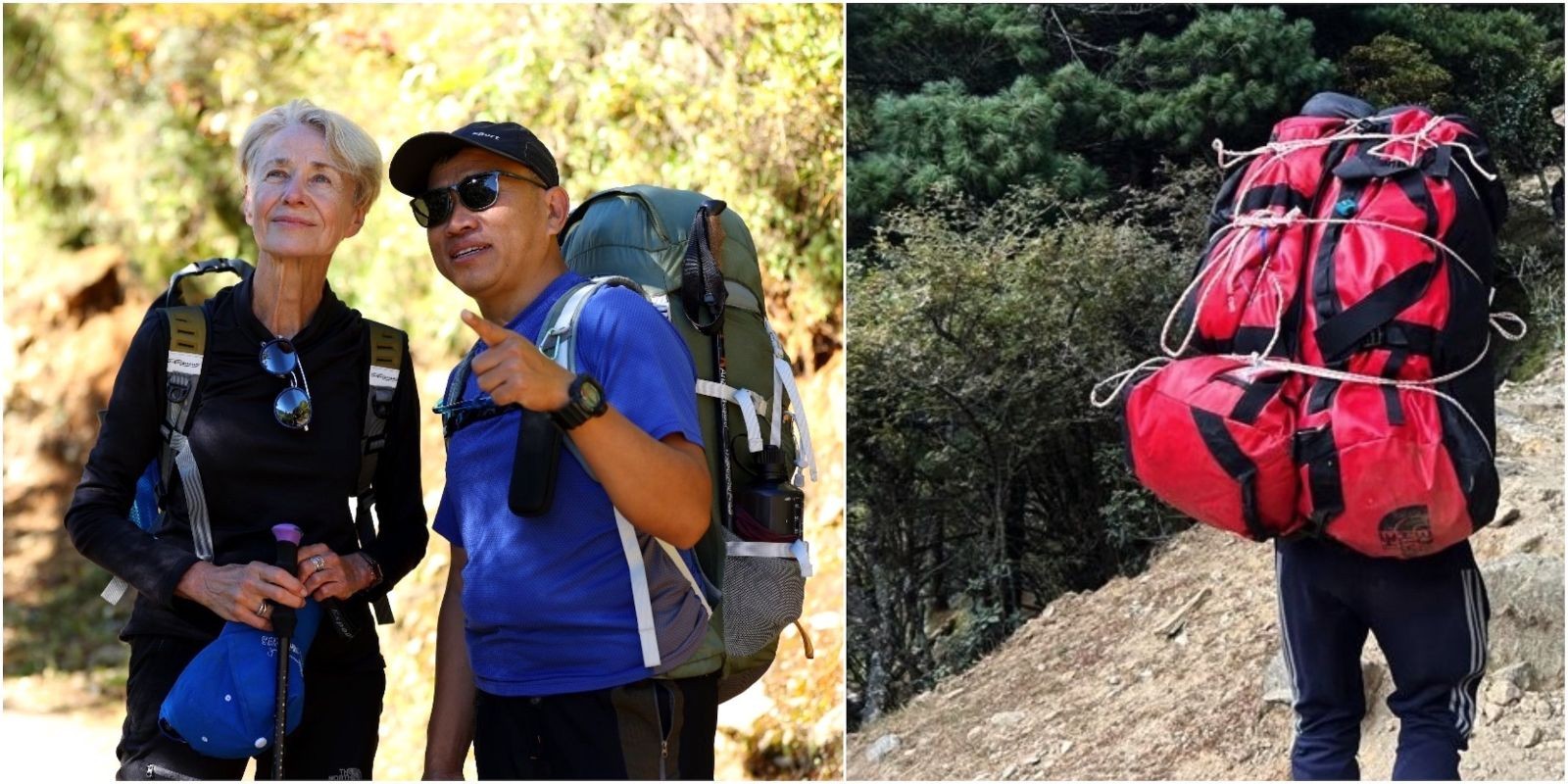
Meanwhile, a local agency does not make the Everest trail deserted. It makes the trail more navigable during peak season by understanding the demand of the route, the teahouse network, the Lukla flight schedule, weather, and the practicalities of the villages from Lukla (2,860 m) to Namche Bazaar (3,440 m), Tengboche (around 3,860 m), Dingboche (4,410 m), Lobuche (around 4,910 m), and Gorak Shep (around 5,164 m).
| Logistics | How a local agency helps ? |
|---|---|
| Lukla flights | Booking and schedule coordination |
| Ramechhap transfers | Road and airport organization |
| Teahouses | Advance coordination |
| Guide | Local route and altitude knowledge |
| Porter | Baggage facilitation |
| Permits | Applications |
| Itinerary | Adjustments based on trail conditions |
| Emergencies | Local coordination |
One of the problems of trekking in October is the accommodation demand.
For example, when I trekked up to Tengboche in the mid of October, I stayed at Tashi Delek Hotel and I had to sleep in the dining hall. This was because there were no sufficient rooms for the trekkers staying there overnight.
But fortunately, I had a good sleeping bag, spread it on the dining desk and slept.
Therefore, a good agency can coordinate with the teahouses in advance and organize the rooms along your route, particularly in Tengboche, Dingboche, Lobuche, and Gorak Shep.
However, a responsible agency must not promise a specific room regardless of the circumstances.
A flight delay, health condition, itinerary changes, or other unpredictable trail conditions may require reorganization.
In short, the most important thing is local coordination, and not necessarily a guaranteed room regardless of circumstances.
A good licensed Sherpa guide can be much more valuable than just directions on the trail.
A guide can share local knowledge on:
Here, a local guide is particularly important in October since there are many other hikers on the trail. They better know the lodges, trails and the traffic management.
Importantly, a good guide can also help you avoid unnecessary crowds by adjusting the itinerary and departure time.
During peak season, many of the Lukla flights are redirected to Ramechhap/Manthali instead of Kathmandu, depending on the airline and weather conditions.
This adds another layer of planning:
Instead of looking for the best EBC trek operator, ask yourself about the practical aspects of a reliable trekking company.
Ask if they can provide:
For those who want to book Everest Base Camp Trek via Haven Holidays Nepal, the practical benefit of a local trekking company is the coordination of the main logistics.
A local agency can organize:
In fact, it also means that your itinerary can be adjusted if something goes wrong.
For example, if your Lukla flight is delayed, your trekking company can reorganize the logistics instead of you having to do it on your own.
Crowd Control Is Really Schedule Management :
A good guide, however, can help you manage your own schedule and avoid unnecessary rush and congestion.
For example:
Earlier departure
Smaller group
Different lunch stop
Pre-arranged accommodation
Most importantly, a professional and experienced guide can make the same October trek much less crowded.
A local guide can also help you have a more authentic experience in the Khumbu.
Here, the Everest region is much more than a mountain trail. It is a home to Sherpa people, Buddhist traditions, prayer flags, mani walls, chortens, yak herders, and trade routes.
Moreover, a good guide can share this cultural wealth with you while also helping you avoid common cultural misadventures.
According to our past experience, “A reliable local agency can reduce unnecessary logistical stress, but Himalayan weather, flights, altitude, and trail conditions cannot be controlled by anyone.”
Likewise, a good EBC trek operator is not necessarily the cheapest or the most hyped-up one. It is the one that provides transparency, local expertise, realistic planning, and flexibility in the face of unpredictable conditions.
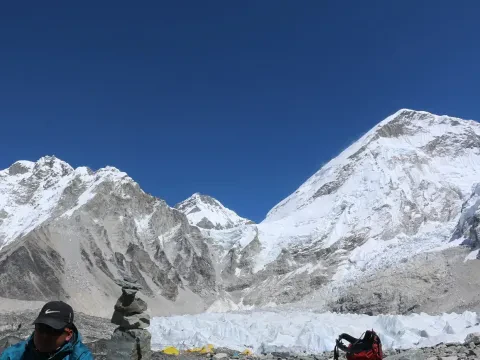
Your EBC packing list for October should reflect two seemingly contradictory conditions: relatively warm temperatures for a trek during the autumn season, and the frigid cold of high altitude. October is generally a good month for trekking in the Everest region, but nights in Lobuche (around 4,910 m), Gorak Shep (around 5,164 m), Everest Base Camp (5,364 m), and Kala Patthar (5,545 m) can be particularly cold.
A crowded teahouse can have fewer blankets, fewer charging stations, and less space to hang your wet clothes.
| Gear | Why it is important ? |
|---|---|
| Sleeping bag | A reliable backup option |
| Down jacket | Insulation at high altitudes |
| Waterproof jacket | Protection from unpredictable weather |
| Trekking boots | Stability and ankle support |
| Warm base layers | Temperature regulation |
| Gloves | Warmth |
| Warm socks | Comfort |
| Headlamp | Lighting during early starts or power failures |
| Power bank | Backup power |
| Sunglasses | Protection from bright sunlight |
| Sunscreen | UV protection |
| Water bottles | Hydration |
| Water purification | An essential backup |
| First-aid kit | Minor trail injuries |
| Personal medication | Personal needs |
A sleeping bag for Everest is strongly recommended, even if the teahouse provides blankets.
Actually, most teahouses offer only basic bedding, and October is a busy month for the Everest region. Extra blankets may be unavailable or already given to other guests.
At higher altitudes, temperatures can drop significantly at night.
Likewise, a sleeping bag is therefore a reliable way to stay warm and comfortable during your Everest Base Camp Trek.
For high altitude and October temperatures, a sleeping bag with an appropriate temperature rating is recommended. The specific rating depends on your personal tolerance and the season.
Teahouse charging stations are another peak-season consideration.
Here, most teahouses have them, but they can be busy during October. Moreover, the electricity supply is not always stable.
Many trekkers try to charge their:
Therefore, power bank stations centered at the dining can be particularly competitive during peak season.
Therefore, it is a good idea to bring your own power bank and keep your electronics charged whenever possible.
The typical layering system includes:
Similarly, you will likely need the most layers at higher altitudes, particularly near Everest Base Camp and Gorak Shep.
At lower elevations, such as Lukla and Namche Bazaar, you may need fewer layers during the day.
Do Not Overpack
A practical approach is to bring:
Here, you can then combine these items in different ways depending on the weather.
Some small items can become surprisingly important during a peak-season trek.
Consider bringing:
Not all teahouses accept cards, and not all of them have reliable internet connections.
You may need cash for:
Keep your passport, permits, insurance, and emergency contacts in a waterproof pouch.
A dry bag is an excellent option because it can also protect your electronics from rain, snow, and condensation.
The best advice for preparing for a trek during peak season is to understand the conditions you are about to face.
October means:
Therefore, it is important to prepare both physically and logistically for your EBC trek.
Before Leaving Kathmandu
Ask yourself the following questions:
Your EBC packing list for October should follow one rule: prioritize gear that protects you from the cold, the weather, altitude, and logistical stress rather than equipment that makes your pack heavier.
For the Everest Base Camp Trek in October, good preparation will not eliminate crowds or mountain weather, but it can make both much more manageable.
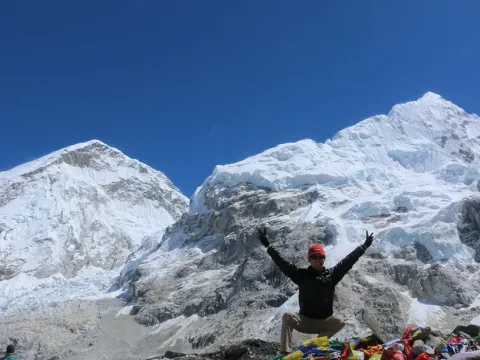
So, is EBC worth it in October? Well, for most trekkers, an October trek to Everest Base Camp (EBC) is worth it given the combination of generally good weather, excellent mountain visibility, and a busy trail.
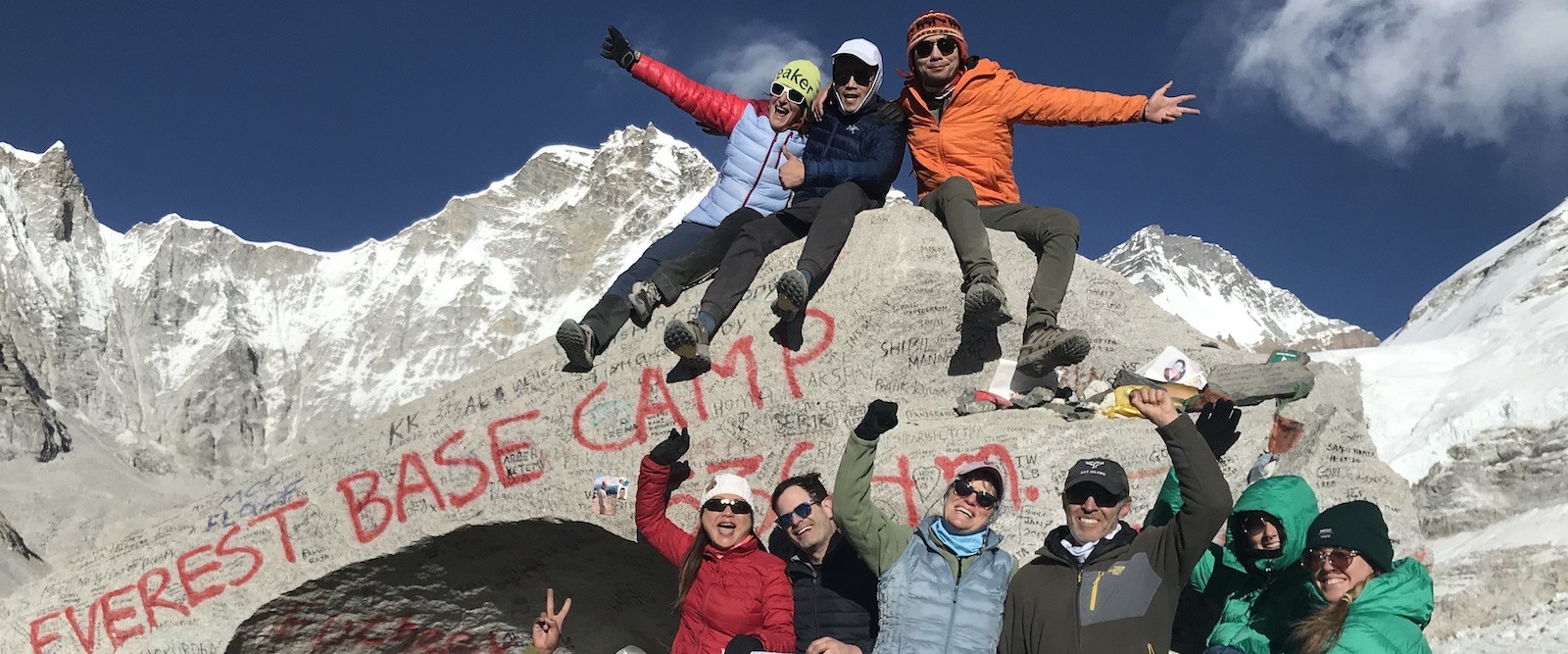
This, however, comes at the expense of EBC trail crowds, peak season prices in teahouses, and higher demand for Lukla/Ramechhap flights.
Thus, while October is a fantastic month for a trek to Everest Base Camp, it requires a slightly more sophisticated approach compared to less busy seasons.
Namely, the Everest region trail requires hikers to acclimatize at different altitudes on the way to EBC. The most prominent gain is from Lukla at around 2,860 m to Namche Bazaar at 3,440 meters.
Then, the trail reaches Tengboche at around 3,860 m, Dingboche at 4,410 m, Lobuche at approximately 4,910 m, and Gorak Shep at 5,164 m.
Finally, EBC itself is at 5,364 m, with Kala Patthar at 5,545 m offering unparalleled views of Everest.
Thus, while October weather is typically nice, the conditions at altitude require proper acclimatization to avoid serious maladies like AMS.
So, what’s the deal with an October EBC trek? Here’s a brief overview:
The obvious takeaway is that October is a busy month for trekking in the Everest region. As such, it is crucial to remain flexible and keep contingency plans in mind.
After all, weather in the Himalayas can be unpredictable, with flights being canceled and bad weather potentially hosing mountain views. Having said that, here’s how to make the most of your October EBC trek.
The best Everest Base Camp trek tips can make all the difference for an October trek. Most importantly, it is advisable to plan ahead and book accommodations with a reliable local agency.
In addition, it is essential to leave enough time for acclimatization and carry the necessary warm clothing. Furthermore, expect higher prices for most services and have extra cash on hand.
Also, keep your electronics protected from the cold, and, most importantly, do not feel hurried throughout the trek.
After all, October is not necessarily a good month for an EBC trek if solitude and pristine wilderness are your primary goals.
So, what gives? What are the specific pros and cons of an October trek to Everest Base Camp? Here’s a help for better insight:
Pros:
Cons:
As seen from the list above, October EBC has its trade-offs. In short, if you are willing to sacrifice some solitude for better trail conditions, mountain views, and a lively atmosphere in teahouses, an October trek to EBC is right for you. On the other center, if your EBC dreams involve endless wilderness, unhurried pace, and privacy, it might be better to wait for the shoulder season.
Meanwhile, the good news is that October EBC trails only see busy periods at specific campsites, including Namche Bazaar, Tengboche, Dingboche, Lobuche, and Gorak Shep. The rest of the trail, as well as lesser tracks branching from the main trail, offer excellent solitude and postcard-perfect landscapes. Thus, the key to a successful October EBC trek is balancing the two.
As mentioned, the decision between an October EBC trek and another month depends on your goals and personal circumstances. In short, consider an October trek if:
On the other hand, it might be worth waiting if you want more solitude on the trail and prefer less crowded campsites in teahouses. Another reason to postpone your EBC trek until another season is the desire to minimize stress and uncertainty regarding trail conditions.
Ultimately, the decision hinges on your attitude toward the busy season. Is October a good month for EBC trek? Well, it is not the easiest month for a trekking trip due to crowds.
Thus, it remains essential to understand the busy season challenges before embarking on an EBC trek in October. At the same time, you should remember that the Everest Base Camp trek is a high-altitude trail, which is physically taxing regardless of the season. Good weather rarely equals easy conditions as the risks of altitude sickness, dehydration, and cold-related discomfort remain ever-present.
An October EBC trek offers a unique blend of clear skies, busy trails, cultural encounters with the Sherpa people, and dramatic landscapes.
These factors, combined with the vibrant autumnal weather, can make for an unforgettable adventure for more experienced trekkers. For first-timers, expert guidance and well-thought preparation will be paramount.
Thus, the question “is October a good month to trek to EBC” has a positive answer, albeit with a set of crucial caveats.
Yes. The Everest Base Camp Trek is busy in October, as this month falls right in the middle of Nepal’s prime autumn trekking season and is one of the most favored times to visit EBC. The benefit lies in consistently good weather, unobstructed mountain views, and mostly dry paths.
1. Is the Everest Base Camp Trek crowded in October?
Yes, the Everest Base Camp Trek sees high footfall in October. As the peak of Nepal’s autumn trekking window, it draws large numbers due to stable weather and clear skies. Key stops like Namche Bazaar, Tengboche, Dingboche, and Gorak Shep face strong demand for lodging, making it one of the busiest periods on the trail.
2. Why is the Everest Base Camp Trek so busy in October?
October offers ideal trekking conditions after the monsoon ends—dry trails, minimal rain, and excellent visibility of the Himalayas. These factors make it a top choice for international trekkers. The combination of favorable climate and scenic beauty leads to a surge in visitors aiming to experience Everest at its most accessible.
3. When are the busiest times on the Everest Base Camp Trek in October?
The trail tends to be most crowded from mid to late October, especially between the 10th and 25th. During this stretch, flights to Lukla, teahouse availability, and guide services are in highest demand. For a slightly quieter start, consider beginning your trek in the first few days of the month.
4. Is October the busiest month for the Everest Base Camp Trek?
October is widely considered the busiest month for the EBC trek, thanks to optimal weather and widespread popularity. November also sees significant traffic, but visitor numbers typically decline toward the end of the month. While October delivers near-perfect trekking conditions, it also means sharing the trail with many others.
5. Do crowds make walking the Everest Base Camp trail difficult in October?
While some sections—especially near villages, viewpoints, and narrow paths—can feel congested, the crowds don’t impact the physical difficulty of the trek. Most hikers find that starting early in the day helps avoid bottlenecks and allows for a more relaxed pace along the route.
6. Are teahouses full during the Everest Base Camp Trek in October?
Yes, teahouses often operate at full capacity in October, particularly in major stops like Namche Bazaar, Tengboche, Dingboche, Lobuche, and Gorak Shep. With limited lodging options at high altitudes, securing a room can be challenging without prior arrangements. Booking through a trusted agency is advisable.
7. Should I book accommodation in advance for the EBC Trek in October?
Yes, pre-booking accommodation is strongly advised for an October trek. Teahouses fill up quickly, especially during peak weeks. Reserving ahead ensures better room selection and reduces stress upon arrival. This step is crucial for a smoother experience during one of the busiest times on the EBC trail.
8. Are flights to Lukla busy during the Everest Base Camp Trek in October?
Flights to Lukla are in high demand throughout October, as most trekkers begin or end their journey there during this period. Schedules often sell out, and weather delays can cause further congestion. To minimize disruptions, book flights early and allow some flexibility in your travel plans.
9. Is early October less busy than late October for the EBC Trek?
Early October generally sees slightly fewer trekkers compared to the middle and final weeks of the month. However, it's still part of peak season, so trails remain active and accommodations fill fast. Starting early can help reduce crowd exposure while still enjoying excellent autumn weather.
10. Is late October too crowded for the Everest Base Camp Trek?
Late October remains popular and can still be quite busy, especially around key viewpoints and overnight stops. While the number of trekkers may taper slightly toward month’s end, the difference isn’t dramatic. For a quieter experience, consider November or shoulder-season treks when visitor numbers drop.
11. Does crowding affect accommodation prices on the EBC Trek in October?
With high demand during peak season, prices for teahouses and services may be higher in October than in quieter months. Costs vary by location and lodge quality. Planning ahead allows you to budget effectively and understand what to expect in terms of meals, lodging, and overall trek expenses.
12. Is Kala Patthar crowded during the October EBC Trek?
Yes, Kala Patthar is often packed at sunrise in October, as it's one of the best spots to view Everest, Lhotse, and Nuptse. Many trekkers arrive early for golden-hour photos. To secure a good vantage point, follow your guide’s timing or start just before the usual groups.
13. Can I still find quiet moments on the EBC Trek in October?
Yes, despite the crowds, it’s possible to experience peaceful moments on the trail. Early mornings, side paths, and less-frequented stretches offer calm. Walking at your own pace, starting hikes early, and using a knowledgeable guide can help you find tranquility even during peak season.
14. How can I minimize crowd exposure on the EBC Trek in October?
To reduce contact with large groups, begin each day early, choose less popular teahouses, and consider starting in the first week of October. A local guide can suggest quieter routes and optimal timing. For greater solitude, alternative treks like Gokyo Valley offer similar scenery with fewer people.
15. Is the Everest Base Camp Trek still worthwhile despite October’s crowds?
Absolutely. Despite the number of trekkers, October provides some of the best conditions—clear skies, mild temperatures, and reliable weather. The vibrant atmosphere and stunning mountain vistas often outweigh the downsides of busy trails and full lodges for most hikers.
16. Is October suitable for first-time trekkers despite the crowds?
Yes, October is a great choice for first-time EBC trekkers due to favorable weather and well-marked trails. However, newcomers should be prepared for crowded teahouses and busy paths. Proper acclimatization, pacing, and preparation for cold nights remain essential for a safe and enjoyable trek.
17. Does crowding increase the risk of altitude sickness on the EBC Trek in October?
No, crowd levels do not influence the likelihood of altitude sickness. The condition depends on elevation gain, ascent speed, and individual physiology. Regardless of how many people are on the trail, it’s important to ascend gradually, stay hydrated, and communicate any symptoms to your guide.
18. Is October or November better for avoiding crowds on the EBC Trek?
If minimizing crowds is your main goal, November—especially late November—tends to be quieter than October. However, October usually offers warmer days and clearer skies. Choose October for ideal conditions or November if you prefer fewer people and don’t mind cooler temperatures.
19. What are the best ways to handle crowds on the EBC Trek in October?
Key strategies include booking flights and lodging early, starting daily hikes before dawn, and traveling with an experienced guide. Maintain a flexible schedule, avoid skipping acclimatization days, and be ready for full dining areas. Thoughtful planning makes a big difference in managing peak-season traffic.
20. Should I go on the Everest Base Camp Trek in October even with the crowds?
Choose October if you prioritize clear mountain views, steady weather, and a lively trekking environment. Avoid it if you're seeking solitude. With early bookings, a reliable guide, smart timing, and proper preparation, you can navigate the crowds and enjoy a rewarding autumn adventure to Everest Base Camp.
Our travel experts are ready to assist you with any questions.
Send us a message.Have a question before you book? Send your enquiry below and our travel experts will get back with the required information.