The Annapurna Base Camp alternatives are worth considering by any hiker that prefers less crowded trails to experience the Himalayas. ABC is undoubtedly one of the most popular treks in Nepal, traversing through the Annapurna Conservation Area.
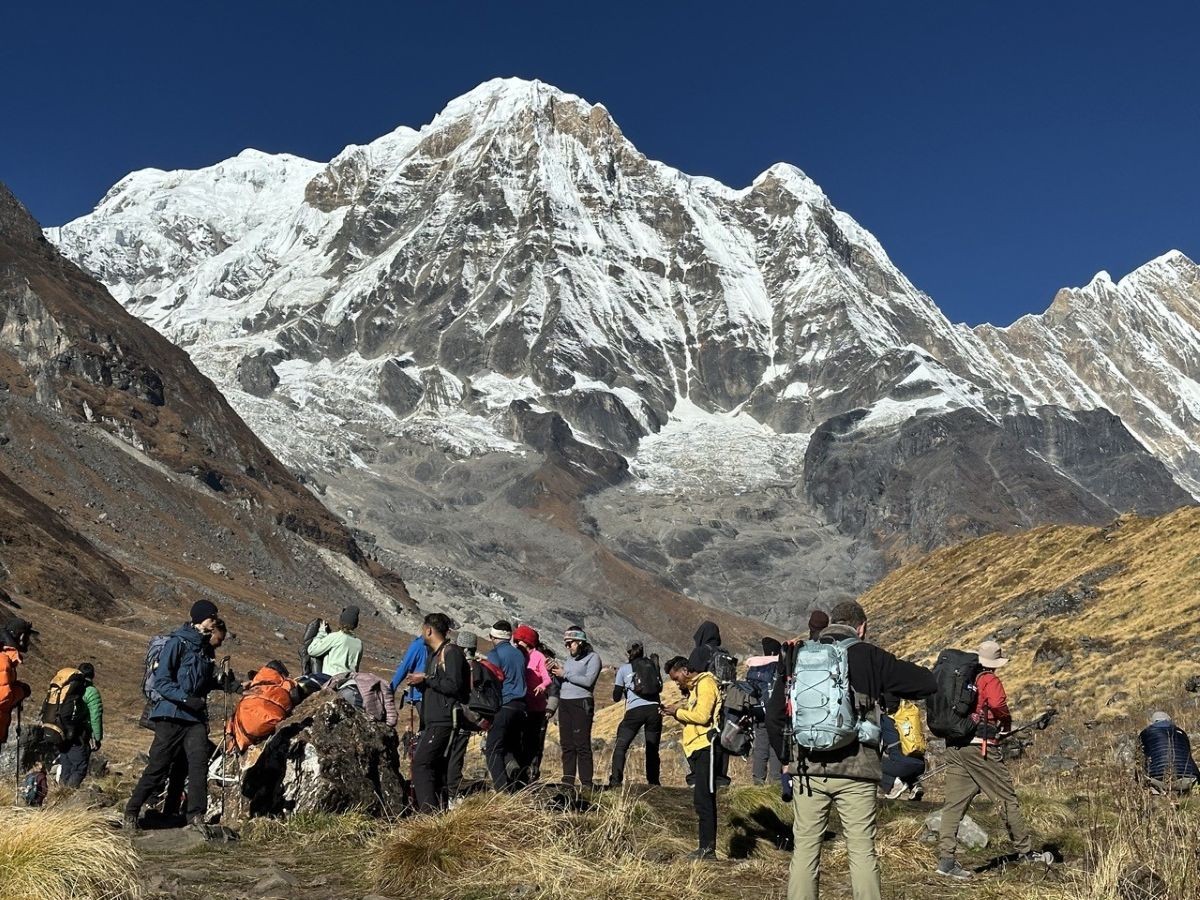
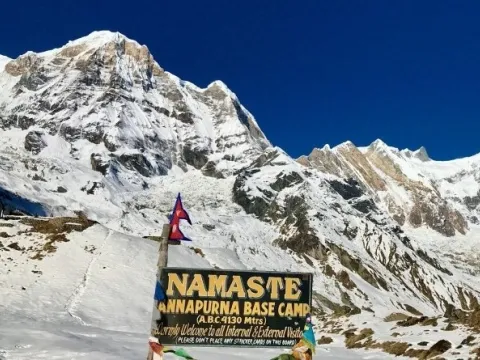
In fact, the region sees thousands of visitors annually, attracted by the dramatic snow-capped mountains, Gurung villages, rhododendron forests, and the sight of the Annapurna Sanctuary at 4,130 m high.
Meanwhile, the ABC trek offers magnificent views of Annapurna I (8,091 m), Annapurna South (7,219 m), Mount Machhapuchhre (6,993 m), Hiunchuli (6,441 m), and Dhaulagiri (8,167 m).
However, with popularity comes crowds and congestion, particularly on designated trekking trails and teahouses during peak season. Some hikers are now seeking calmer, less crowded treks, isolated trails filled with cultural discoveries or different natural landscapes.
Fortunately, Nepal has numerous less-crowded Himalayan trekking options in 2026/2027, including Langtang, Mardi Himal, Manaslu, Tsum Valley, Nar Phu Valley, Khopra Ridge, Tilicho Lake and Upper Mustang. Each region has unique features, such as cultural experiences, natural attractions, and even altitudes.
So, rather than asking which trek is better than Annapurna Base Camp, it is necessary to determine which alternative fits personal preferences. The five options below will highlight the differences in scenery, height, difficulty, accessibility, culture, and crowdedness.
A superb Annapurna Base Camp alternative must offer more than just fewer crowds; hikers should find a wide range of cultural and natural landscapes, ease of access, and a suitable challenge.
Meanwhile, Nepal is well-known for the variety of its trekking destinations. The Nepal Tourism Board classifies Annapurna, Manaslu, Everest, Langtang, Kanchenjunga, Mustang, and other regions as popular trekking destinations in Nepal. Thus, there is a long list of hiking areas to choose from, each with distinct sights, cultural experiences, and difficulty levels.
However, potential trekkers should consider a handful of requirements when looking for the best Himalayan trek alternative. Here are the eight most crucial criteria:
The first criterion is self-explanatory; most hikers prefer less crowded trails and enjoy isolation wherever possible. Fewer visitors on the trail allow for more opportunities to enjoy nature.
Moreover, a less busy trek usually means more authentic cultural interactions. This does not mean that the trail has to be deserted, as even the best alternative routes will have more visitors during the peak season. Nevertheless, less congestion is critical for a better experience.
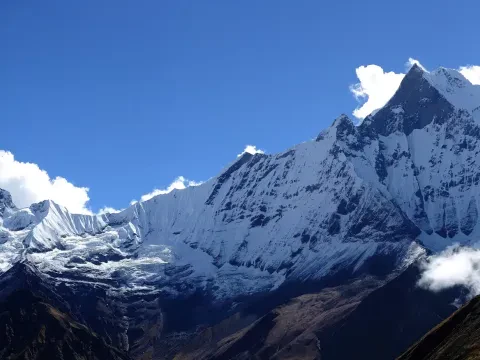
As the most popular trek in Nepal, Annapurna Base Camp has an obvious advantage in terms of mountain scenery. The trail provides fantastic views of Himalayan peaks, including the highest summit in the Annapurna massif, Annapurna I. Hence, any decent alternative should also offer spectacular views of the mountains or unique geological formations.
For instance, Langtang has Langtang Lirung peak (7,245 m), while Mardi Himal offers splendid views of Machhapuchhre. Meanwhile, Manaslu circuit hikers get an unparalleled view of Manaslu (8,163 m). Thus, these regions can provide excellent vertical landscapes comparable to those seen on the ABC trek.
While natural scenery is essential, authentic cultural interactions are often a decisive factor for many Himalayan trekkers.
In that regard, Annapurna Base Camp is a fantastic choice, as it takes hikers through traditional Gurung villages.
However, other trails offer more accessible opportunities to learn about local cultures.
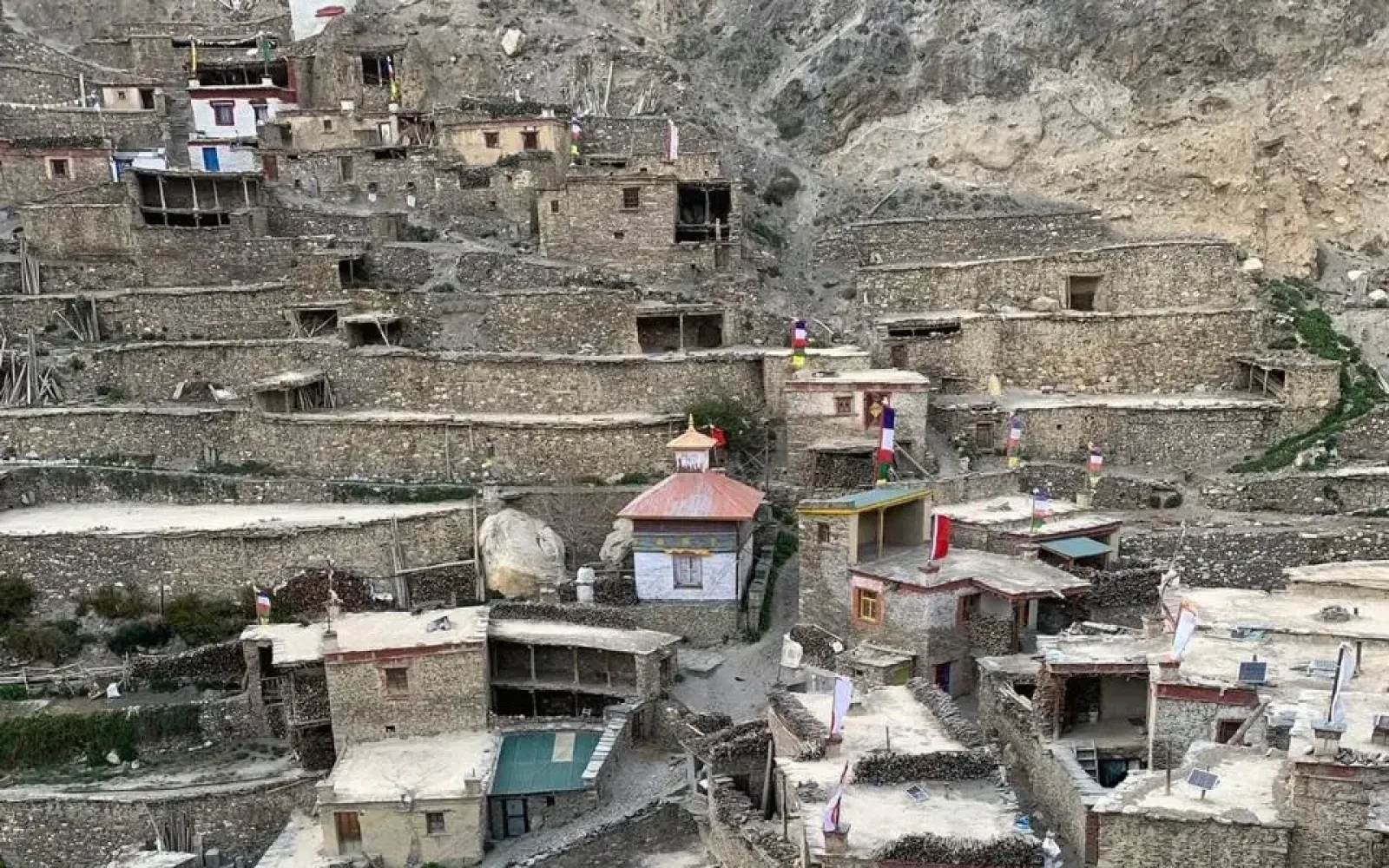
For example, Langtang region is famous for its Tamang community members, while Manaslu circuit and Upper Mustang provide unique insights into Tibetan traditions.
Therefore, a variety of cultural experiences should be considered when choosing between trekking routes.
Not every hiker is prepared to attempt another high-altitude trek right after Annapurna Base Camp.
Thus, potential trekkers should compare the difficulty of the alternative route with their current skill level. Annapurna Base Camp is generally considered a moderate trek, reaching 4,130 m. Mardi Himal base camp is comparatively lower at around 4,500 m. At the same time, Manaslu circuit involves crossing Larkya La (5,106 m), while Langtang Valley routes only reach about 3,870 m (Kyanjin Gompa).
Finally, Upper Mustang only gets up to Lo Manthang at approximately 3,840 m. Therefore, each alternative has its own challenge, and hikers must evaluate their fitness and acclimatization.
Another crucial aspect of the Himalayan trekking experience is transportation to the trailhead. As the most popular trekking region in Nepal, Annapurna has excellent accessibility from both Pokhara and Kathmandu. Mardi Himal is also well-connected to Pokhara, while Langtang valley is even closer to Kathmandu, as per Nepal Tourism Board.
Specifically, the guide describes Langtang as roughly 130 km north of Kathmandu.
In contrast, Manaslu circuit and Upper Mustang require more transport infrastructure, which may take additional time. Therefore, hikers need to compare the travel days before selecting a trek.
When exploring the Himalayas on foot, tea houses and lodges are an indispensable part of the journey. Fortunately, most of the trails mentioned above have excellent teahouse infrastructure.
However, the conditions can differ dramatically at different altitudes. According to Nepal Tourism Board, most of the popular Langtang routes are well-developed, featuring teahouses and lodges.
Meanwhile, the higher one hikes, the more primitive the accommodations become.
Therefore, hikers should be aware that they might not find the same level of comfort at high elevations.
In addition, it is worth mentioning that the trails are well-signed, which enhances the level of convenience.
7. Strong Seasonal Options
Here, a reliable option for a Himalayan trek should also have favorable weather conditions for travel. In general, the best time to trek in Nepal is during the spring (March – May) and autumn (September – November) seasons.
According to Nepal Tourism Board, Langtang region is best explored between March – May and October – November. Other trails follow similar seasonal patterns, with some variations depending on the altitude and terrain.
For instance, most trails are closed during the monsoon season (June – August) due to poor weather and road conditions. At the same time, extremely cold temperatures can halt adventure in winter.
Therefore, each trail has its optimal season, which must be taken into account when comparing alternatives.
Here, many Himalayan trekking routes require permits, which is an essential consideration for would-be adventurers. Some trails only need a TIMS card, whereas others have more restrictions.
For instance, Manaslu region is a restricted area, which requires special permits from local authorities.
Moreover, Nepal Tourism Board notes that trekking agencies issue TIMS cards under the Trekking and Mountain Treks (TMT) revised policies for Manaslu, Mardi Himal, Khopra, and other Annapurna trails.
Therefore, it is always advisable to research permit regulations rather than relying on old travel guides.
| Alternative | Highest main point | Main attraction | Best for |
|---|---|---|
| Mardi Himal | 4,500 m | Ridge and Machhapuchhre views | Shorter, quieter adventure |
| Khopra Ridge | 3,660 m | Annapurna and Dhaulagiri panoramas | Views and solitude |
| Langtang Valley | 3,870 m(Kyanjin Gompa) | Tamang culture and mountains | Kathmandu-based trekkers |
| Manaslu Circuit | 5,106 m (Larke Pass) | Remote culture and high pass | Experienced trekkers |
| Upper Mustang | 3,840 m (Lo Manthang) | Tibetan culture and desert landscapes | Culture and unusual scenery |
Meanwhile, the table above compares the five Annapurna Base Camp alternatives with a particular emphasis on the highest elevation and main attraction.
At the same time, it is worth noting that these figures may vary depending on the specific itinerary.
For instance, Mardi Himal base camp can get up to around 4,450 m, while High Camp only reaches 3,580 m, according to Tourism Nepal.
In general, each alternative has its own benefits, and hikers should evaluate them based on personal preferences.
Importantly, the key takeaway is that there is no definite best alternative to Annapurna Base Camp, as everything depends on the individual. Those who wish to minimize time and effort while enjoying panoramic views can opt for Mardi Himal or Khopra Ridge.
By contrast, Langtang Valley is appropriate for those who want a closer adventure to Kathmandu. More challenging and remote trails such as Manaslu and Upper Mustang are reserved for the most enthusiastic explorers.
If you are looking for an alternative to Annapurna Base Camp trek in Nepal, each option will provide a substantially different experience.
Here, Mardi Himal is focused on the spectacular ridge views over the Annapurna massif.
Likewise, Langtang Valley combines mountain trekking with cultural immersion in Tamang villages.
Similarly, Tsum Valley offers a longer cultural pilgrimage through remote Himalayan hamlets while Manaslu Circuit provides higher-altitude adventure around the world’s eighth-highest peak.
Lastly, Khopra Ridge trek allows to enjoy panoramic views of Annapurna from less-crowded trails.
This table below will help you to quickly understand which alternative best suits your preferences and itinerary.
However, it is essential to note that not only the highest altitude determines the difficulty of trekking. The trail categories (easiest, moderate, challenging, most difficult) and daily average horizontal distance, vertical gain, as well as your personal acclimatization aptitude, should be considered as well.
| Feature | Mardi Himal | Langtang Valley | Tsum Valley | Manaslu Circuit | Khopra Ridge |
|---|---|---|
| Duration | 5 - 7 days | 7 - 10 days |10 - 14 days | 12 - 18 days| 6 - 9 days |
| Highest point | 3,500 - 4,500 m | 3,870 - 4,773 m | 3,700 m+ | 3,900 - 5,106 m | 3,200 - 3,660 m |
| Difficulty | Moderate | Moderate | Moderate | Moderate- Challenging | Moderate |
| Focus | Short trek + ridge views | Culture + accessibility | Culture + solitude | High-pass trekking | Panoramic + less crowded |
More specifically, the popular Langtang Valley trail usually stays around 3,870 m with an optional side hike to Kyanjin Ri peak at 4,773 m. Hence, when talking about altitudes, it is critical to consider what specific point your itinerary includes.
When it comes to choosing the best alternative to ABC Trek, it ultimately depends on your preferences. However, if you are concerned about crowds of people, keep in mind that even supposedly less busy trails tend to get busier during October, November, April, and other peak seasons.
In fact, the above mentioned treks are the best alternatives according to the different internet platforms and on the google search basis. But, in my personal experience, 5 best alternatives to Annapurna Base Camp are: Langtang Valley, Mardi Himal, Tsum Valley, Nar Phu Valley and Tilicho Lake Trek.
Now, Lets, see them one by one comparing each to Annapurna Base Camp Trek that why they are better than ABC Trek.
Picture yourself on a narrow ridge hiking trail with Machhapuchhre’s 6,993 m peak rising dramatically in front of you. To your far left extends the breathtaking view of the Annapurna massif, while the valley far below disappears into the rhododendron forest.
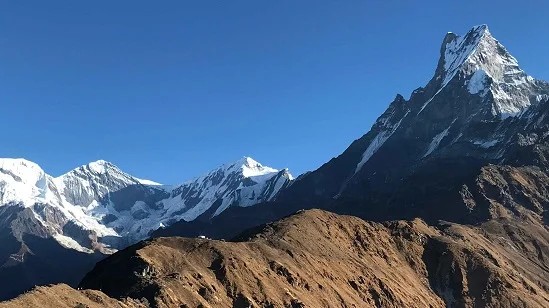
Meanwhile, this is precisely the magic of Mardi Himal trek – one of the most popular short alternatives to ABC. Not only does it provide amazing views of the Machhapuchhre and Annapurna ranges, but it also features traditional Gurung villages and alpine ridges for a unique multi-landmark Himalayan adventure.
While taking five to seven days, this trek is a fantastic option for hikers who want to get up close to Machhapuchhre without spending a week on the ABC trail. Additionally, you will also be rewarded with beautiful forested valleys and mountain ridges.
Mardi Himal Trek Overview
The table below provides a brief summary of the key points of the Mardi Himal trek.
| Feature | Detail |
|---|---|
| Region | Annapurna |
| Start | Pokhara |
| Duration | 5-7 days |
| Highest camp | 3,580-3,780 m |
| Upper viewpoint | 4,200-4,500 m |
| Mardi Himal Base Camp | Approx. 4,500 m |
| Machhapuchhre | 6,993 m |
| Annapurna South | 7,219 m |
| Hiunchuli | 6,441 m |
| Difficulty | Moderate |
| Best seasons | Spring, Autumn |
| Highlight | Ridge panoramic views |
The most prominent feature of the Mardi Himal trek is its proximity to Machhapuchhre. While on the ABC trail, you will eventually get to the Annapurna Sanctuary, which provides fantastic views of the Machhapuchhre massif, the scenery of the Mardi Himal trail is substantially different.
More specifically, while hiking the ridges of Mardi Himal, you will have an unparalleled opportunity to admire Machhapuchhre as well as other mountain peaks such as Annapurna South, Hiunchuli, and Annapurna III, Gangapurna, etc. For photography lovers, this trek offers incredible photo opportunities.
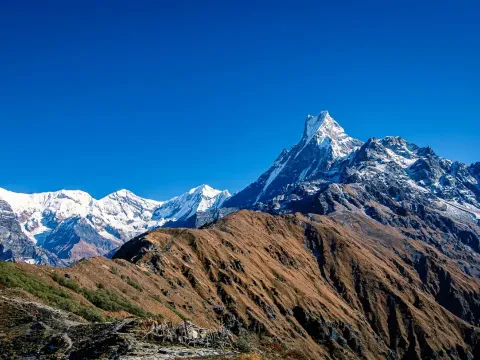
While both itineraries are set in the Annapurna region, the differences between the Mardi Himal trek and the ABC trek are substantial.
First, while both hikes are generally moderate, the former includes more ridge hiking while the latter provides deeper insights into the local culture.
Second, Mardi Himal trek is shorter than the ABC trek, although it offers similar high-altitude vantage points.
| Feature | Mardi Himal | ABC |
|---|---|
| Duration | 5 - 7 days | 7 - 12+ days |
| Highest point | 4,500+ m | 4,130 m |
| Highest mountain | Machhapuchhre | Annapurna |
| Trail type | Ridge-focused | Sanctuary-focused |
| Cultural immersion | Moderate | Rich |
| Forest views | Good | Good |
| Mountain views | Exceptiona l Exceptional |
| Crowds | Fewer | More |
In fact, the Mardi Himal trek vs Annapurna Base Camp is not a competition since both routes provide substantially different experiences.
While the ABC trek offers a classical Himalayan adventure with a sense of isolation, the Mardi Himal trek is all about amazing ridge views against the stunning alpine backdrop.
A 4-day itinerary allows for a quick and exciting adventure on the Mardi Himal trail. The description below provides an idea of what you will see and do on the most popular 4-day trek.
Day 1: Pokhara to Kande + Forest Camp
You start your Mardi Himal trek by driving from Pokhara towards Kande village at 1,770 m. Then, you begin hiking through forested trails to reach the Forest Camp at 2,520-2,600 m. The scenery on Day 1 includes beautiful rhododendron and oak forests.
Day 2: Forest Camp to High Camp
As you leave the Forest Camp, the trail gradually climbs up and opens up to expansive views.
In particular, the hike of Day 2 leads you through forests transitioning to alpine ridges.
Eventually, you reach the High Camp at 3,580-3,780 m, where you will enjoy spectacular views of Machhapuchhre. Overall, Day 2 is similar to Day 1 in terms of difficulty.
Day 3: Upper Viewpoint + Descent to Low Camp
On Day 3, you head to the Upper Viewpoint at 4,200-4,500 m and then descend to the Low Camp at 2,880 m.
From the Upper Viewpoint, you will have breathtaking views of Machhapuchhre, Annapurna South, Hiunchuli, and Annapurna I. Hence, this is the most exciting day of the trek in terms of adventure and scenery.
Day 4: Low Camp to Siding and drive back to Pokhara
The fourth day of the Mardi Himal trek is the most exhausting one as you descend from the Low Camp to Siding at 1,700 m. Nevertheless, this is also the most scenic day, as you enjoy forested landscapes changing into different habitats along the trail.
After you have lunch, you will drive from Siding to Pokhara. Actually, the last day of the Mardi Himal trek is relatively short and is spent driving back to Pokhara from Siding.
Mardi Himal trek is generally considered moderate. On the other hand, Day 3 of the 4-day itinerary includes challenging sections and steep ascents/descents.
Furthermore, the trail can be slippery at times, especially on the ridge parts. Another factor to consider is the altitude.
More specifically, while ABC trek peaks at 4,130 m, the viewpoints on the Mardi Himal trail can be as high as 4,500 m.
Hence, Mardi Himal is not considerably easier than the ABC trek, and it still requires proper preparation.
Note: If you are confused with which one is better, Annapurna Base Camp or Mardi Himal, you can visit our authentic blog article " ABC Vs. Mardi Himal" and can finalise the plan.
Mardi Himal trek is a great option for different types of hikers. First, if you want to see the Machhapuchhre peak and enjoy panoramic views, this is the best short alternative to ABC.
Second, it can be a fantastic option for a first Himalayan trek, assuming you opt for the easier itinerary.
Third, those of you who want to minimize the impact of crowds will appreciate the Mardi Himal trail, which is generally less frequented than the ABC trek.
Lastly, you might want to consider this option if you are short on time but want to experience a high-altitude adventure.
However, if you prefer to stick to easier trails without navigating through the steep ridges, then you might want to choose a different itinerary.
Likewise, if you are seeking a culturally immersive experience, then you might prefer the Langtang or Tsum Valley trek over Mardi Himal.
The Mardi Himal trail may not offer the unique experience of the Annapurna Base Camp trek, but it certainly provides an exciting alternative for those hikers who want to see Machhapuchhre, enjoy scenic ridges, and complete the trek in a shorter time.
Furthermore, this option is less crowded than many other treks in the region and conveniently located near Pokhara.
Therefore, if you prioritize Machhapuchhre views, ridge hiking, shorter duration, and fewer crowds, then the Mardi Himal trek is a fantastic alternative to Annapurna Base Camp, offering you a great value for your Himalayan adventure.
If you are a fan of high-altitude trekking, love panoramic views, and want to immerse yourself in the traditional Annapurna culture without spending a lot of time on the trail, then the Mardi Himal trek is the perfect choice.
Actually, there is an option to the Annapurna Base Camp trek if you are serching for. The Langtang Valley trek offers dramatic Himalayan views without requiring a long journey from Pokhara. It also provides an introduction to Tibetan influenced Tamang culture, making it a good alternative for those seeking a less crowded Himalayan trekking experience near Kathmandu.
Meanwhile, the Langtang Valley trek extends northward from Kathmandu toward the Tibetan border. It is a great option for hikers looking to get dramatic mountain views without a long trek from Pokhara. While exploring the valley, one also gets an introduction to Tibetan influenced Tamang culture.
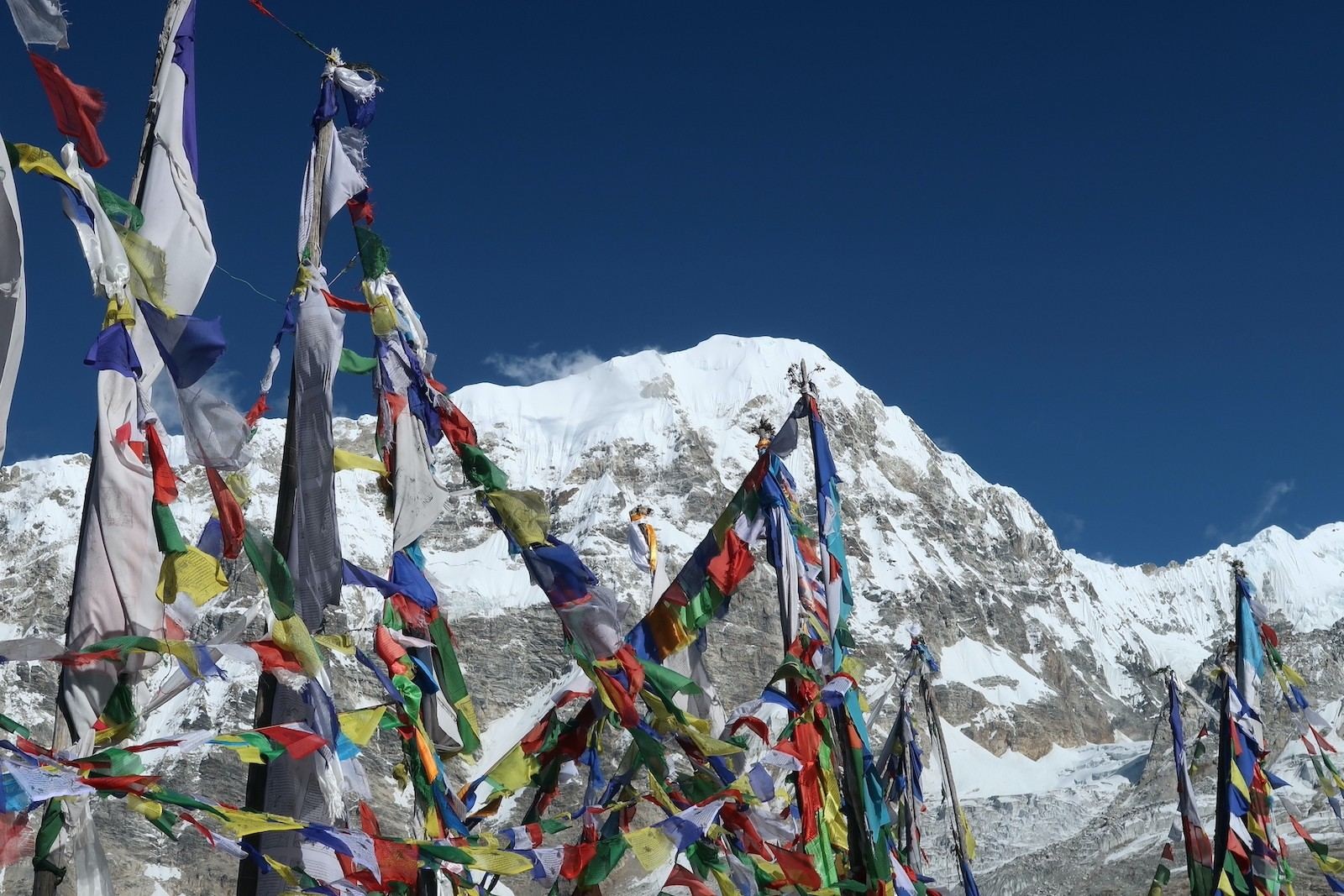
Here, Syabrubesi, located at around 1,550 m, is the gateway to the Langtang valley. The trail winds through the valley, taking in the forested scenery and local culture before reaching higher ground. The vegetation changes from subtropical at the valley floor to alpine at higher elevations.
Similarly, the trail peaks at Kyanjin Gompa at 3,870 m, offering incredible views of Langtang Lirung at 7,227 m, Langtang Ri at 7,205 m, and Dorje Lakpa at 6,966 m.
For dramatic views, make sure to also visit Kyanjin Ri, which rises to about 4,773 m. Another peak of interest is Tserko Ri at approximately 4,984 m (depending on the source).
| Feature | Langtang Valley | Annapurna Base Camp |
|---|---|---|
| Primary access | From Kathmandu | From Pokhara |
| Primary Goal | See Langtang peaks from Kyanjin Gompa (3,870 m) | See the views from Annapurna Sanctuary (4,130 m) |
| Optional Viewpoints | Tserko Ri, 4,984 m | Various viewpoints around ABC |
| Prominent Mountains | Langtang Lirung, 7,227 m | Annapurna I, 8,091 m |
| Cultural Interest | Tamang people and traditions | Gurung people and traditions |
| Trail Atmosphere | Generally less busy | Generally busier |
| Typical Trekking Duration | 7–10 days | 7–12+ days |
As can be seen in the table above, the choice between Langtang vs Annapurna Base Camp is primarily a matter of preference. Annapurna Base Camp (ABC) is, indeed, a popular and spectacular destination for many trekkers.
However, the Langtang Valley trek offers a more cultural experience with a generally less busy trail and convenient access from Kathmandu.
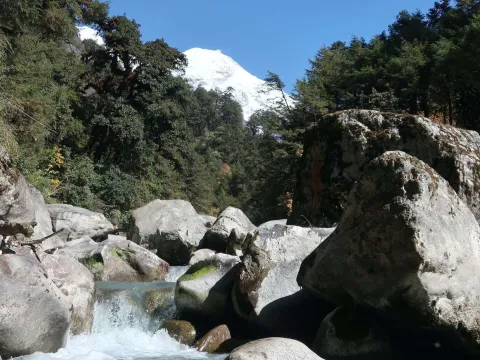
Culture is one of Langtang’s strongest attractions. Another reason why the Langtang Valley trek is a great alternative to Annapurna Base Camp is because it provides excellent opportunities to learn about the local Tamang people and their culture.
As the trail passes through traditional Tamang villages, one can get an insight into their daily lives while marveling at the mountainous scenery.
Meanwhile, Lama Hotel, Langtang Village ,Mundu, and Kyanjin are all great places to interact with the local people. The traditional architecture, Buddhist practices, prayer flags, mani walls, and monasteries contribute to the area’s unique charm.
Additionally, Tibetan cultural elements can also be observed, as the region has a strong historical connection to Tibet. Thus, visiting Langtang is a wonderful way to experience Tibetan Buddhist culture.
For those who are up to the challenge, Tserko Ri offers spectacular views from around 4,984 m (depending on the source). The climb to Tserko Ri summit starts from Kyanjin Gompa. It is a steep, strenuous scramble that becomes progressively more difficult and should not be underestimated. Nevertheless, those willing to put in the effort are rewarded with stunning views.
From the top of Tserko Ri, one can see Langtang Lirung at 7,227 m, Langtang Ri at 7,205 m, and Dorje Lakpa at 6,966 m, among other peaks. The glaciers and valleys that can also be seen from this vantage point make it a great location for photography.
However, it should also be noted that Tserko Ri is an optional side excursion that can be found on many Langtang Valley trek itineraries.
Thus, it is possible to enjoy the views of Langtang from Kyanjin Gompa without making the hike to Tserko Ri.
The Langtang Valley trek has an additional advantage over Annapurna Base Camp: it has a heartfelt story told in the resilience of the local people. Unfortunately, the village of Langtang was severely impacted by the 2015 earthquake. Many of the local residents perished due to landslides, and the valley’s infrastructure was greatly damaged.
Nevertheless, the people of Langtang have rebuilt their lives and welcome trekkers with open hearts. As such, a journey to Langtang is not just an adventure – it is also a meaningful experience.
Choose Langtang if you want convenience (it is closer to Kathmandu), if you want to learn about the local Tamang culture, if you prefer a less busy trail, and if you want an optional Himalayan viewpoint.
Here, the Langtang Valley trek offers incredible mountain views without requiring you to summit a challenging pass. The trail’s primary sleeping location, Kyanjin Gompa at 3,870 m, is lower than Annapurna Base Camp’s 4,130 m. However, it should be noted that treks to Tserko Ri and other viewpoints can approach 5,000 m, meaning that altitude should still be taken into account.
In conclusion, Langtang is a great alternative to Annapurna Base Camp for those who desire a more cultural, less strenuous, and generally more laid-back Himalayan trekking experience closer to Kathmandu.
One of the best alternatives to Annapurna Base Camp (ABC) is the Tsum Valley trek. It is a fascinating detour into a remote Himalayan valley covered in Tibetan Buddhist culture.
Meanwhile, the trail follows narrow dirt tracks through the valley, passing through villages with ancient monasteries, stone buildings, prayer flags, and mani walls. These cultural and religious elements are complemented by dramatic mountain views.
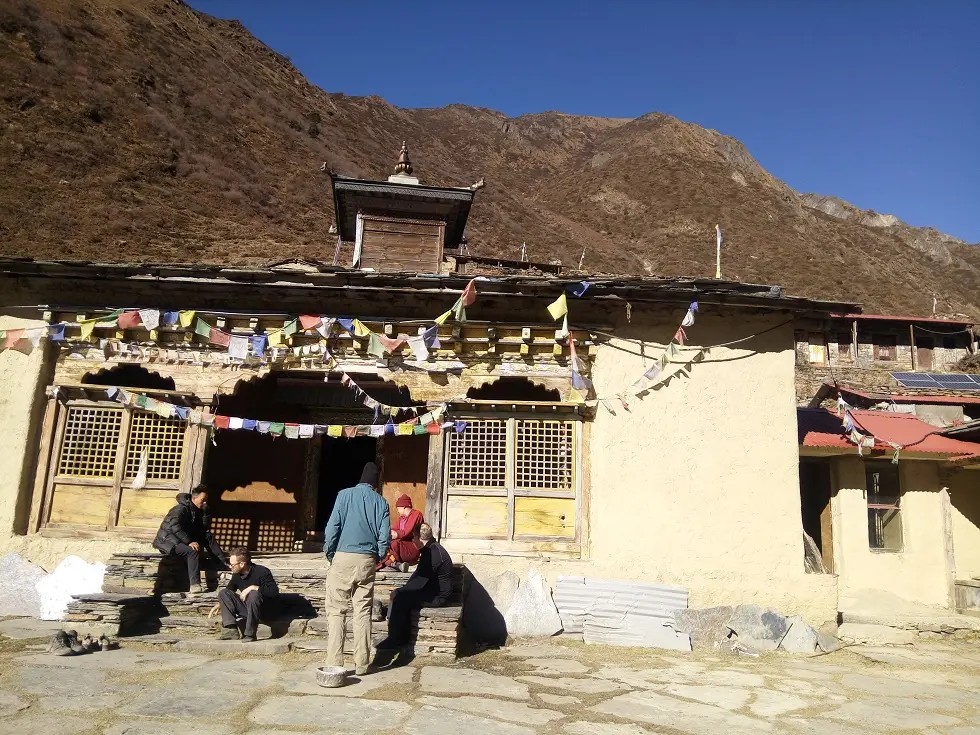
Here, the Tsum Valley trek offers a unique Himalayan experience that feels like a world apart from the rest of Nepal. This secluded valley has long been isolated from the outside world and has developed its own unique cultural heritage. The locals are deeply pious and highly devoted to their religion.
Similarly, Tsum is also surrounded by some pretty spectacular mountains. For example, Ganesh Himal rises to an impressive 7,422 m, while Sringi Himal and Himalchuli also reach well over 7,000 m.
Thus, the valley has a certain mysticism about it, which probably explains why it has so much in common with Shangri-La.
The Tsum Valley is part of the Manaslu region, which means that these treks are also classified as restricted area treks. With that said, a restricted area permit and a guide are required for all hiking trips into the Tsum Valley, including day hikes.
In fact, this policy protects both the local environment and the privacy of the local residents. It also means that independent trekking is not permitted, and a licensed guide must always accompany you and your group.
Additionally, it should also be noted that permit costs, conditions, and requirements are subject to change, so make sure to contact your preferred trekking agency to confirm the information.
Mu Gompa is a great place to begin exploring the valley’s religious culture. Located at around 3,700 m in the upper region of Tsum, this monastery complex represents the valley’s unique cultural heritage. As such, this is a great place to learn about Tibetan Buddhism and the region’s culture.
At the same time, visiting Mu Gompa also provides stunning mountain views. It should also be noted that the local customs and culture should be respected at all times, both inside and outside the monastery.
Thus, it is important to follow the rules and guidelines established by the locals.
| Location | Elevation |
|---|---|
| Machha Khola | 900 m |
| Jagat | 1,340 m |
| Lokpa | 2,240 m |
| Chumling | 2,386 m |
| Chhokangparo | 3,010 m |
| Nile | 3,360 m |
| Mu Gompa | 3,700 m |
In fact, the exact elevation depends on the source, as well as which trek you take, since the Tsum Valley trek has several variations.
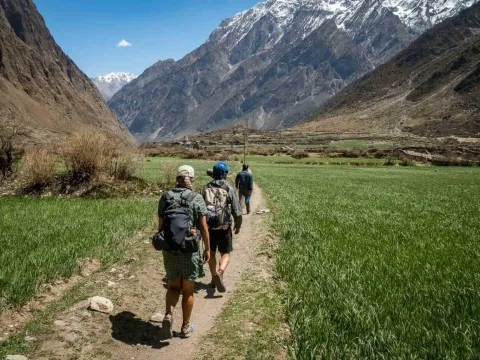
As can be seen from the chart above, Tsum Valley hikes generally do not reach the dizzying heights of Larke Pass. Still, it is important to note that altitude should still be taken into consideration.
| Feature | Tsum Valley | Annapurna Base Camp |
|---|---|---|
| Primary Goal | Explore the valley and its unique culture | See the views from Annapurna Sanctuary. |
| Highest Major Destination | Mu Gompa, at 3,700 m | ABC at 4,130 m |
| Cultural Interest | Tibetan Buddhist traditions | Gurung and Magar traditions |
| Trail Atmosphere | Remote and isolated | Generally busier |
| Major Attractions | Ancient monasteries | Local Villages |
| Typical Trekking Duration | 10–14 days | 7–12+ days |
| Permits | Restricted area permit (guide required) | Standard Annapurna permits |
As can be seen from the table above, the Tsum Valley has more to offer in terms of cultural experiences, whereas Annapurna Base Camp has more to offer in terms of mountainous vistas.
Overall, however, the differences between the two treks are primarily a matter of preference. They both provide incredible opportunities for Himalayan trekking in Nepal. The choice between
In summary, Tsum Valley vs Annapurna Base Camp ultimately depends on which destination appeals to you more: a remote valley with interesting cultural and religious history or a high-altitude mountain sanctuary.
If you are wondering who should choose the Tsum Valley trek as an alternative to Annapurna Base Camp, the answer is: everyone who has an interest in Tibetan Buddhism, unique cultural experiences, and secluded Himalayan valleys.
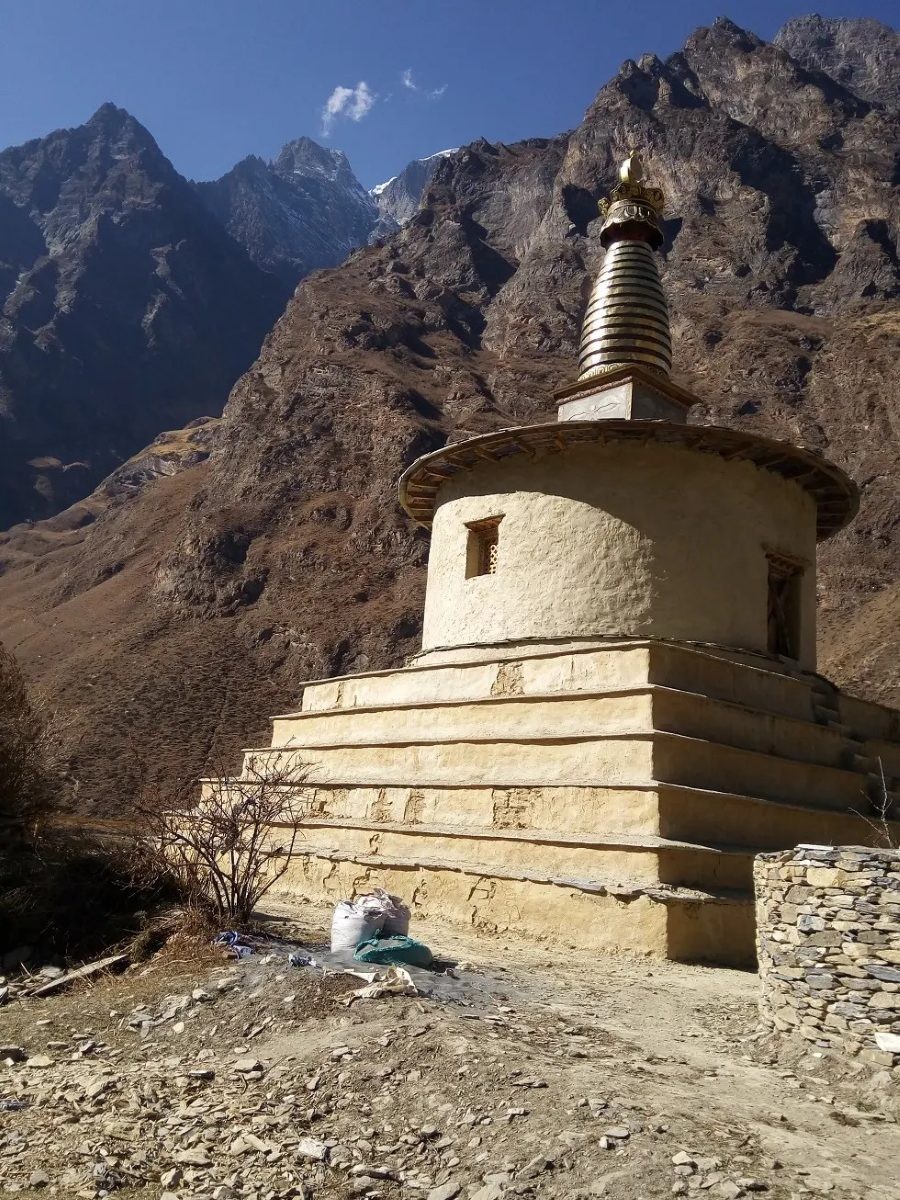
In fact, the Tsum Valley trek is a fantastic adventure for photographers, with its dramatic mountain scenery and ancient cultural heritage. It is also a great option for more experienced trekkers, since it provides a more isolated experience than many other treks in the region.
Having said that, it is important to keep in mind that the Tsum Valley trek is quite long and should not be attempted by inexperienced hikers or those with limited time.
Additionally, those who are looking for more high-altitude trekking opportunities may want to consider the Manaslu Circuit or Annapurna Base Camp instead.
Still, there is something special about the atmosphere and cultural experiences offered by the Tsum Valley that is hard to find elsewhere.
Thus, if you are looking for an unforgettable Himalayan adventure, this trek is definitely worth considering.
Tsum Valley is an incredible Himalayan destination with much to offer in terms of cultural and natural appeal. It has spectacular mountainous scenery comparable to Annapurna Base Camp (ABC), but it also has unique cultural experiences that set it apart from other treks in the region.
Here, the valley’s remoteness also means that it is generally less busy than some of the more popular hiking destinations. With that said, the primary reason why the Tsum Valley trek is one of the best alternatives to Annapurna Base Camp is simply because it offers a chance to experience a unique cultural heritage in a secluded Himalayan valley. This includes dramatic mountain views, ancient monasteries, and beautiful landscapes covered in prayer flags.
In short, the Tsum Valley trek is a wonderful Himalayan adventure that will stay with you long after you return home.
The Nar Phu Valley trek is undoubtedly one of the most remote trekking adventures in Nepal. This trail leads through isolated Tibetan villages while also taking hikers through spectacular Himalayan landscapes. The trail is much less crowded than the classic Annapurna trekking trails.
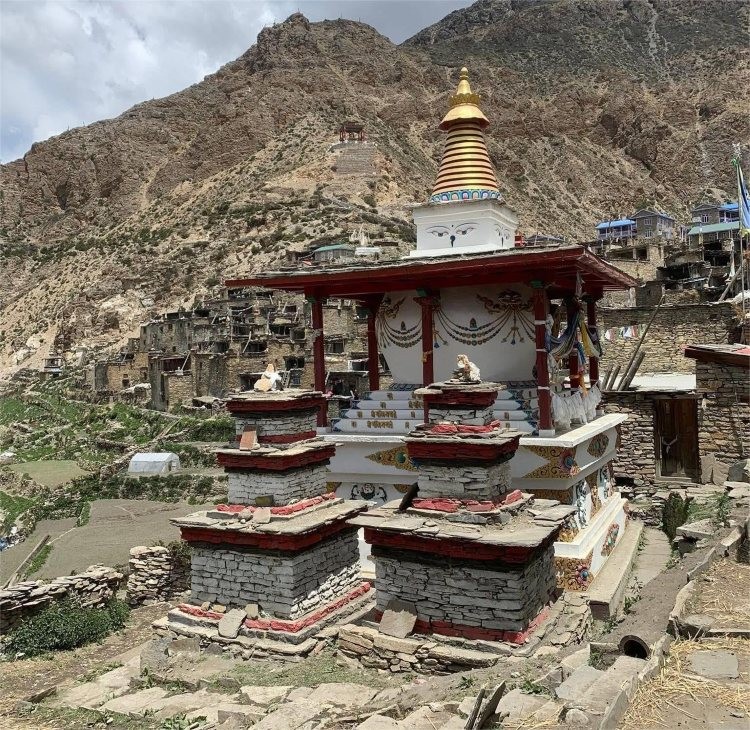
Moreover, Nar Phu Valley trek crosses high mountain passes to reach remote monasteries. Thus, this trail might appear as one of the most elusive experiences in the Annapurna region.
Yet, it is worth noting that this trek is significantly more remote than most of the popular Annapurna hikes.
Meanwhile, the narrow canyons, deep gorges, and high-altitude passes characterize this trail. Moreover, it takes hikers through spectacular Tibetan-style villages and monasteries.
Similarly, the primary trail leads through two Tibetan-style villages, Nar and Phu. Thus, these settlements represent unique architecture with their traditional stone buildings.
Here, the highest point on this trail is Kang La Pass, which is around 5320 meters above sea level. However, the exact elevation might vary depending on the source.
Moreover, Nar Phu trek is considerably different from the typical Annapurna hikes. This trail leads through isolated and traditional Tibetan-style villages surrounded by high mountainous walls.
Furthermore, one can witness unique Tibetan Buddhist monasteries and cultural heritage along the trail. Hence, this trail is one of the most authentic experiences in the Annapurna region in terms of culture and geography.
In addition to, the trail also takes hikers through spectacular narrow canyons and deep gorges.
Thus, apart from Tibetan villages and their unique culture, one can also enjoy the natural beauty of the high mountains.
Specifically, the trail offers incredible views of sheer cliffs, ancient chortens, mani walls, and traditional stone buildings.
Additionally, hikers will see high-altitude alpine pastures, deep gorges, and narrow canyons with high suspension bridges.
Accordingly, such a trail can be considered one of the most unique adventures in the Himalayas.
The trail offers incredible views over the traditional Tibetan-style villages of Nar and Phu. The village of Phu is located at an elevation of around 4080 meters above sea level. This settlement represents unique Tibetan architecture. Accordingly, it appears to be a unique mountainous village with traditional stone buildings.
Meanwhile, the village of Nar is situated at around 4150 meters above sea level. Similarly to Phu, the houses in Nar are built from stone bricks.
However, compared to Phu, Nar has stone buildings with farmyards.
Nevertheless, it is vital to remember that both villages are not only unique cultural heritages but also local settlements.
Therefore, when exploring these places, it is essential to respect the local traditions and religion.
The highest point on the trail is Kang La Pass, which is around 5320 meters above sea level. Therefore, one should consider that this trek might be more challenging than most of the popular Annapurna treks.
Furthermore, crossing Kang La pass is not an easy task as well. First, hikers need to wake up early in order to reach the summit before sunset.
Additionally, the weather might rapidly deteriorate due to snowfall or strong winds. Consequently, the trail becomes slippery and even more challenging.
Moreover, one should remember that the higher altitudes might be more challenging than expected. Hence, it is vital to have sufficient experience at high elevations.
Finally, a proper acclimatization before the trek is essential as well.
Indeed, the high-altitude challenge should not be underestimated.
Accordingly, it might be much more demanding than most of the local treks in Annapurna.
While on Kang La pass, hikers will be able to enjoy spectacular mountain views as well. Specifically, clear weather conditions allow for breathtaking views over the Annapurna range.
While on the pass, it might even be possible to see the summits of Annapurna II, Annapurna IV, and Gangapurna.
Additionally, one can see other high peaks such as Tilicho Peak and Lamjung Himal.
In fact, the elevation of Kang La pass allows for magnificent views over the local valleys and mountains.
Hence, the natural beauty of this place might be considered one of the most remarkable parts of this trek.
It is vital to note that the Nar Phu Valley trek is a restricted area. Accordingly, one needs to hire a licensed and registered guide in order to enter this region.
Moreover, hikers should be aware that special permits are required as well. Therefore, it is essential to contact a local trekking agency in order to organize this adventure.
In addition, it is worth noting that restricted area permits might be more expensive as well. Hence, the prices can vary depending on the time of the year as well.
Overall, this trail is considerably more challenging not only due to its remoteness but also due to entry formalities.
Accordingly, one should contact a trustworthy trekking company in order to get the correct information about permits and prices for the specific season.
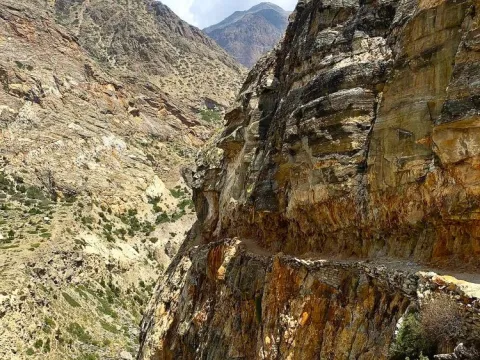
The main difference between Annapurna Base Camp (ABC) and Nar Phu Valley is that the latter is considerably more remote and isolated.
Indeed, ABC is a popular trekking destination with a well-developed trail system. On the contrary, Nar Phu Valley trail is not only isolated but also requires experienced guides and special permits.
As a result, there are much fewer hikers on this trail compared to ABC. Accordingly, one can enjoy spectacular wilderness without encountering many other trekking groups.
Moreover, the local villages also appear to be much more isolated and less visited.
Hence, when choosing between these two famous treks in Annapurna, one should remember that Nar Phu Valley appears to be a much more remote and authentic experience.
Nar Phu Valley trek can be considered one of the most unique adventures in Annapurna. Firstly, this trail is much more isolated and less accessible compared to other popular treks in the region.
Secondly, it takes hikers through traditional Tibetan-style villages with unique cultural heritage.
Thirdly, the trail also follows narrow canyons with high suspension bridges.
However, one should remember that this trek can be considered relatively strenuous as well.
Accordingly, it is not suitable for beginners or people who are unfamiliar with high-altitude hiking.
In addition, it also lacks proper accommodations compared to the easier treks in Annapurna.
Hence, it is better suited for more experienced trekkers who enjoy challenges.
On the contrary, less demanding treks such as ABC might be a better option for families with children or inexperienced hikers.
In fact, Nar Phu Valley trek is an excellent alternative to the ABC trail for those who seek more authenticity and remoteness in the Himalayas.
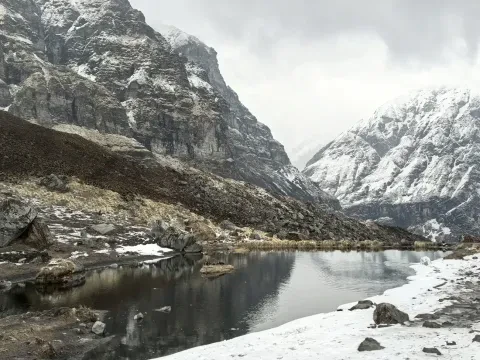
Few landscapes are as spectacular as the view over the Tilicho Lake. Surrounded by sheer mountain walls, this lake appears as a giant blue or turquoise pool at an elevation of around 4919 meters above sea level.
Meanwhile, the Tilicho Lake trek can be demanding but rewarding at the same time. This trail is usually a side adventure for those who want to complete the Annapurna Circuit trek as well.
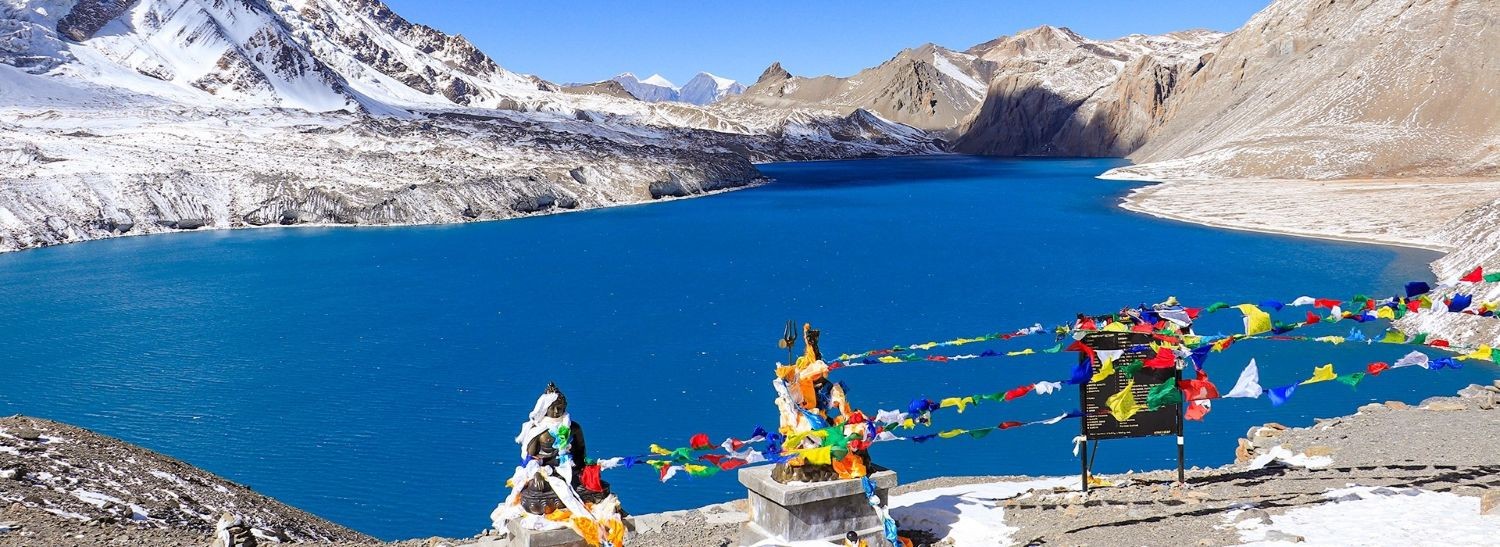
Thus, adding Tilicho to the standard Annapurna Circuit itinerary can be one of the best decisions for any trekker who seeks both remote wilderness and authentic Himalayan adventure.
Importantly, the view over the Tilicho Lake can keep you mesmerized for hours.
Here, this side-trip to Tilicho Lake is an additional challenge for Annapurna Circuit hikers.
Moreover, the scenery around this lake might be even more rewarding than the view over Pisang Peak.
As mentioned above, Tilicho can be a great addition to the standard Annapurna Circuit trek.
Firstly, it is always vital to understand what kind of experience one will gain from such a trek.
Furthermore, many sources consider Tilicho Lake as one of the highest lakes in Nepal.
However, it is always better to avoid phrases such as “the highest lake in Nepal” due to various controversies about this title.
Here, the trail to Tilicho Lake typically starts from the Manang side, taking hikers through a variety of landscape types.
From the trailhead, the scenery changes dramatically with every step.
At lower elevations, one can see the forested valleys and villages. Yet, as the trail becomes higher, forests become less common as you arrive at Manang, and the landscape starts transforming into a high-altitude desert.
Ultimately, the trail becomes quite exposed as the hiker gains elevation while approaching to Tilicho Base Camp. Accordingly, one should always be cautious along the last stretch of the trail to Tilicho Lake.
Nevertheless, the view from Tilicho Lake will leave you speechless!
It is unforgettable to experience such a high-altitude adventure in the Himalayas. The deep blue or turquoise color of the lake contrasts with the white peaks surrounding it.
Moreover, one can also enjoy the complete silence and isolation of this place.
Meanwhile, this lake is one of the highest alpine lakes in Nepal situated at an elevation of 4,919 meters above sea level.
Furthermore, the view over the Tilicho Peak of 7,134 meters can also be extraordinary. Indeed, if the local weather permits, one might see patches of snow on the mountain ridges as well.
Additionally, it is not unusual to witness the swift clouds passing over the Tilicho Lake.
Besides, an early start is essential in order to experience the best view from this lake.
Here, Tilicho Lake can be an incredible addition to the Annapurna Circuit trek. A typical route from Besisahar to Tilicho Lake and back looks like that:
Besisahar- Chame- Manang- Khangsar- Tilicho Base Camp- Tilicho Lake- Manang- Yak Kharka- Thorong Phedi -Thorong La-Muktinath
As a result, one gets a unique view of the Marsyangdi valley, Manang region, Tilicho Lake, and the high Himalayan mountains.
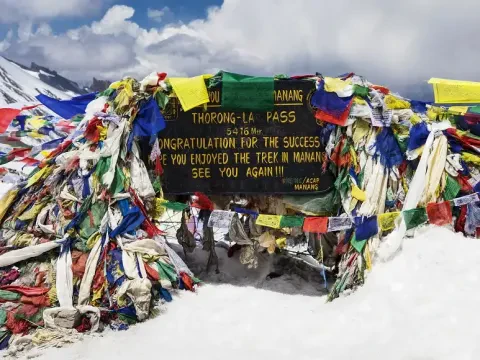
Moreover, Thorong La pass at around 5416 meters above sea level offers a fantastic view as well.
Nevertheless, the final destination of this challenging trek is Muktinath at around 3800 meters above sea level.
Hence, Annapurna Circuit with Tilicho Lake appears to be a much more rewarding adventure compared to Tilicho as a standalone trek.
The trail to Tilicho Lake offers spectacular views over the local mountainous landscape. However, some exposed and potentially hazardous parts of this trail require caution as well. Specifically, one should always keep a safe distance from the local cliffs.
Likewise, this trail section has a risks for landslides, and it is better to follow the instructions of local guides as well.
Accordingly, one should always keep in mind that the trail to Tilicho Lake can also provide some serious challenges apart from its breathtaking beauty.
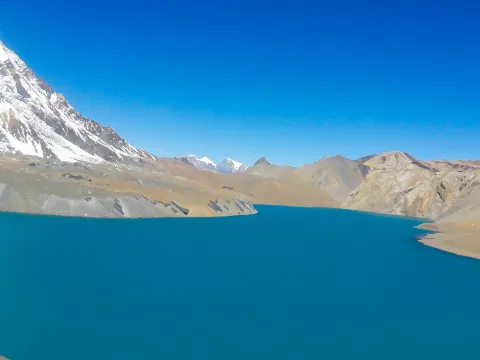
Tilicho Lake trek can be considered as a moderate to strenuous adventure. Although it is not a climbing expedition, it still requires proper acclimatization. Furthermore, the altitude of Tilicho Lake is around 4,919 meters above sea level.
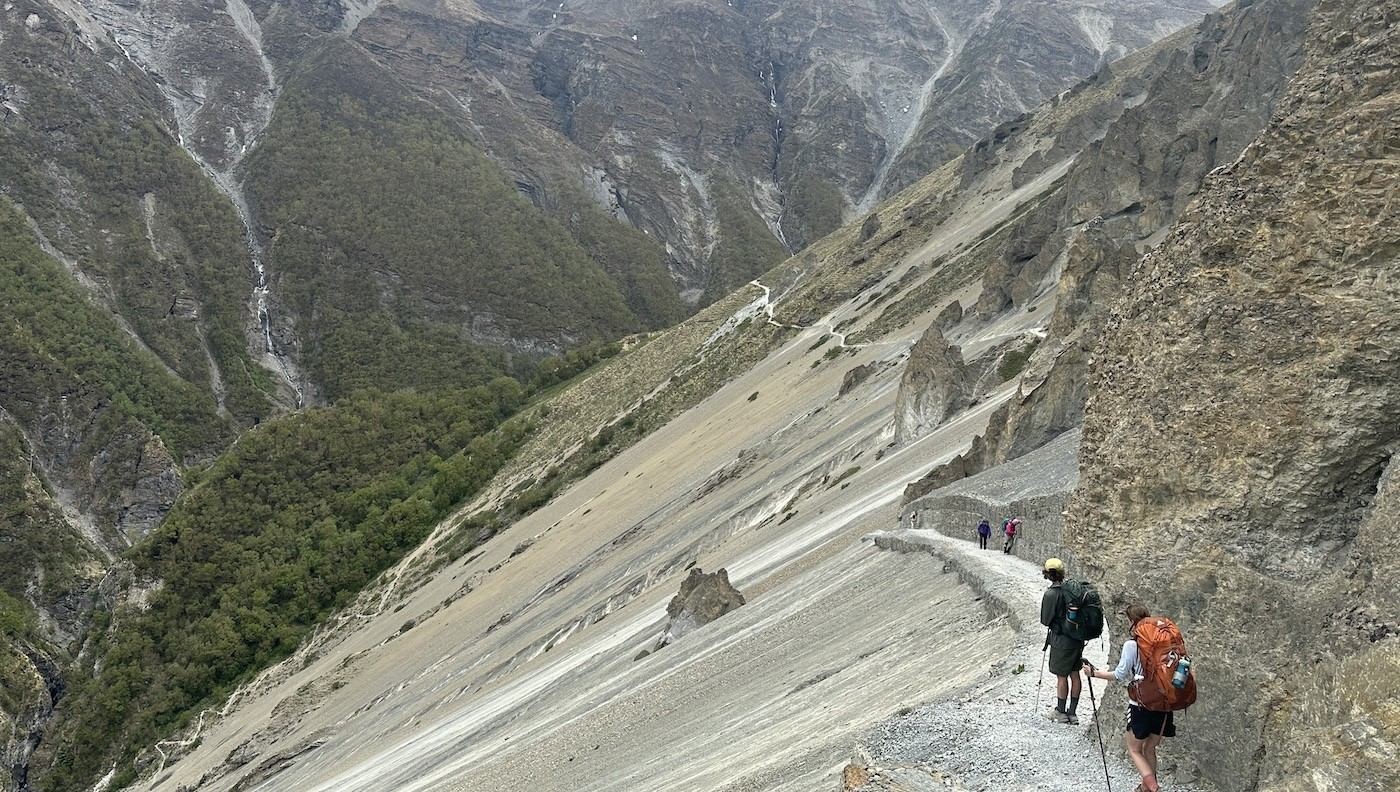
Accordingly, it is essential to pay a specific attention to altitude-related effects.
Moreover, the trail to Tilicho Lake also has exposed and challenging parts.
Thus, a slower pace and sufficient hydration are two crucial elements for a successful trek.
Nevertheless, if altitude sickness occurs, it is vital to reduce the elevation rather than trying to stay on a higher altitude.
| Place / Mountain | Approximate Elevation |
|---|---|
| Besisahar | 760 m |
| Chame | 2,670 m |
| Manang | 3,540 m |
| Khangsar | 3,760 m |
| Tilicho Base Camp | 4,150 m |
| Tilicho Lake | 4,919 m |
| Tilicho Peak | 7,134 m |
| Thorong Phedi | 4,450 m |
| Thorong La | 5,416 m |
| Muktinath | 3,800 m |
Importantly, it is always important to remember that elevation data might vary for different sources as well.
Meanwhile, it goes without saying that Tilicho Lake trek is one of the most rewarding adventures in Nepal. The breathtaking beauty of this high-altitude lake combined with dramatic mountainous scenery creates an unforgettable experience.
Hence, one should consider that Tilicho Lake trek is primarily suitable for nature lovers and photography enthusiasts.
Moreover, people who are already planning the Annapurna Circuit trek might find Tilicho Lake as a fantastic addition to their expedition.
On the other hand, this trek might not be suitable for everyone.
Indeed, Tilicho Lake trek is a more strenuous adventure compared to lower-altitude hikes in Annapurna.
Additionally, it lacks proper facilities and trail structures as well. Accordingly, it can be more challenging for people who are used to well-developed trail systems. Another factor to consider is the altitude as well.
Actually, the altitude of Annapurna Base Camp (ABC) trek is around 4,130 meters above sea level. Tilicho Lake reaches around 4,919 m.
Thus, one should remember that altitude-related discomfort might be more noticeable for Tilicho Lake compared to ABC.
Tilicho Lake and Annapurna Base Camp (ABC) represent two distinct Himalayan adventures.
ABC is a local trekking destination with spectacular mountainous views.
On the other hand, Tilicho Lake offers a unique alpine lake experience as well.
Furthermore, the altitude of Tilicho Lake is considerably higher compared to ABC.
Yet, both treks offer incredible opportunities to explore the beauty of the Himalayas.
Likewise, Annapurna Base Camp trek is a more popular option compared to Tilicho Lake.
It has a well-developed trail system and offers incredible views over the local mountains.
On the contrary, Tilicho Lake requires more efforts in terms of both remoteness and altitude.
Nevertheless, both treks are worth being explored while in the Annapurna region.
Tilicho Lake trek represents a unique Himalayan adventure that is much more demanding than the standard Annapurna Base Camp (ABC) trek. This trek has dramatic mountainous scenery that takes hikers to an elevation of almost 5,000 meters above sea level.
Furthermore, the trail to Tilicho Lake offers spectacular views over the local valleys and mountains.
Indeed, many travelers consider this trail as one of the most challenging experiences in Nepal.
However, the true beauty of Tilicho Lake is best seen during the short and intense expedition to this remote alpine lake.
Apart from the natural beauty of the high mountains and the unique view over the lake, one can also witness the unique Tibetan culture.
In particular, the local monasteries and traditions can be found in the villages of Manang.
Moreover, as mentioned above, the local trail to Tilicho has exposed and narrow sections as well.
Finally, the Annapurna Circuit trek represents an incredible opportunity to see the most spectacular parts of the Annapurna region. This trail encompasses a variety of landscapes from the forested valleys to high mountain passes and isolated Tibetan villages.
In particular, the Annapurna Circuit trek covers the following highlights:
Hence, the Annapurna Circuit trek with Tilicho Lake is much more rewarding and varied compared to most of the local treks in Annapurna.
The five alternatives to ABC Trek involve surprisingly different experiences. For this reason, it is important to identify individual preferences regarding available time, physical activity, scenery, and culture.
Actually, Mardi Himal is suitable for short trips while Langtang offers a good balance between accessibility and local culture. In turn, Tsum Valley and Nar Phu provide exceptional opportunities for solitude, whereas Tilicho Lake attracts those fascinated by high-altitude landscapes.
Here, the listed elevation denotes trail peaks or approximate altitudes based on various resources.
Therefore, there might be discrepancies between different GPS devices, local information, and official records. This information service as a general reference rather than survey-grade data.
| Trek | Duration | Highest Point | Difficulties | Crowds | Culture | Notes |
|---|---|---|
| Mardi Himal | 5–7 days | Mardi Himal BC / View, 4,500 m | Moderate | Low-moderate | Moderate | Short trek, photography. |
| Langtang Valley | 7–10 days | Tserko Ri ~4,984 m | Moderate | Moderate-low | High | Culture, beginner-friendly with preparations |
| Tsum Valley | 10–14 days | Mu Gompa ~3,700 m | Moderate | Low | Very high | Monasteries, solitude |
| Nar Phu Valley | 9–12+ days | Kang La ~5,320 m | Strenuous | Very low | Very high | Remote region, adventure |
| Tilicho Lake | 7-9 days | Tilicho Lake, 4,919 m | Moderate-strenuous | Moderate | Moderate-high | Alpine lake, Annapurna Circuit |
| ABC | 7–12+ days | ABC 4,130 m | Moderate-strenuous | High | High | Classic sanctuary, high demand |
Opt for Mardi Himal if time is a limiting factor. It offers spectacular views of Machhapuchhre (6,993 m) while the trek’s high point only reaches around 4,500 m.
Likewise, choose Langtang for cultural immersion combined with relative accessibility. The trail to Syabrubesi is easily accessible from Kathmandu while the valley itself provides spectacular views of Langtang Lirung (7,227 m).
Additionally, visit Tsum Valley to experience unique Tibetan Buddhist culture. Its high point only reaches Mu Gompa at 3,700 m, making it ideal for those seeking cultural experiences rather than high-altitude adventure.
Moreover, Nar Phu is recommended for those seeking absolute solitude. Due to its remote location, it attracts few visitors.
In addition, it offers unique cultural and historical insights, although its high point at Kang La (5,320 m) is quite challenging. At the same time, the local villages of Nar and Phu are worth discovering.
In turn, Tilicho Lake attracts those seeking unique alpine landscapes. The lake’s high altitude of 4,919 m makes it extremely scenic, while crossing Tilicho Peak adds to the challenge of the expedition.
Moreover, it is the highest point along the Annapurna Circuit, making it a great option to explore the region in great detail. The lake is a must for any serious trek through the area, which also includes crossing Thorong La (5,416 m).
Consider this brief selection guide:
However, your physical fitness is a key determining factor as well. Note that Nar Phu and Tilicho Lake require especially high altitude endurance.
At the same time, Mardi Himal’s 5–7 days itinerary is relatively short but still features rapid elevation gain. Likewise, Langtang becomes much more strenuous when including Tserko Ri.
Finally, note that the best alternative to Annapurna Base Camp is not necessarily the highest or most remote experience.
Rather, consider your individual circumstances when selecting a trek. All things considered, the five options above are the best alternatives to the Annapurna Base Camp Trek.
In turn, their individual advantages and disadvantages are described below in great detail.
If you are looking beyond the Annapurna Base Camp Trek, permit requirements vary considerably between these five alternatives. Mardi Himal and Tilicho Lake are within the Annapurna Conservation Area. Langtang Valley lies inside Langtang National Park. Meanwhile, Tsum Valley and Nar Phu have additional restricted-area permits.
The figures below reflect the current official information available for 2026. Permit rules can change, so trekkers should verify them shortly before departure. The official NTNC e-permit system currently lists NPR 3,000 for foreign visitors entering its conservation areas.
| Trek | Required Permits | Current Cost for Foreigners | SAARC Cost | Guide Requirement |
|---|---|---|
| Mardi Himal Trek | ACAP + TIMS | ACAP NPR 3,000 + TIMS NPR 2,000 | ACAP NPR 1,000 + TIMS NPR 1,000 | Licensed guide required under current TIMS rules. |
| Tsum Valley Trek | Tsum Restricted Area Permit + MCAP + TIMS | US$40/week + NPR 3,000 + NPR 2,000 in Sep–Nov | Conservation-area fees differ | Licensed guide required. |
| Nar Phu Valley Trek | Nar Phu Restricted Area Permit + ACAP + TIMS | US$100/week + NPR 3,000 + NPR 2,000 in Sep–Nov | Conservation-area fees differ | Licensed guide required. |
| Tilicho Lake Trek | ACAP + TIMS | NPR 3,000 + NPR 2,000 | NPR 1,000 + NPR 1,000 | Licensed guide required under current TIMS rules. |
| Langtang Valley Trek | Langtang National Park + TIMS | NPR 3,000 + NPR 2,000 | NPR 1,500 + NPR 1,000 | Licensed guide required. |
Important: The TIMS figures above use the current Nepal Tourism Board rate of NPR 2,000 for non-SAARC trekkers and NPR 1,000 for SAARC trekkers. NTB's current TIMS page also identifies Mardi Himal, Tilicho-related Annapurna routes, Langtang, Tsum, and Nar Phu routes among areas subject to the guide/TIMS provisions.
Mardi Himal is inside the Annapurna Conservation Area. Therefore, trekkers need an Annapurna Conservation Area Permit (ACAP). The current NTNC online permit system lists the ACAP entry fee at NPR 3,000 for foreign nationals and NPR 1,000 for SAARC nationals.
Likewise, you also need the applicable TIMS card. The current NTB TIMS information lists NPR 2,000 for non-SAARC trekkers and NPR 1,000 for SAARC trekkers. Mardi Himal is specifically included among the Annapurna routes covered by the current guide/TIMS provisions.
Mardi Himal Estimated Permit Cost,
Non - SAARC foreigner:
SAARC trekker:
The ACAP permit can be obtained through the NTNC system or authorized counters. The NTNC system currently supports online payment and counter payment.
Tsum Valley is more complicated because it is a restricted trekking area. Therefore, trekkers need a special Tsum Valley Restricted Area Permit in addition to conservation-area documentation.
The official Department of Immigration currently lists the Tsum Valley Restricted Area Permit at:
These rates apply to the designated Tsum Valley restricted area.
Tsum Valley also falls within the Manaslu Conservation Area, so an MCAP entry permit is required. The current NTNC fee is NPR 3,000 for foreigners and NPR 1,000 for SAARC nationals.
TIMS also applies to Tsum Valley under the current trekking regulations.
Tsum Valley Example
| Permit | Cost |
|---|---|
| Tsum Restricted Area Permit | US$ 40 / week |
| MCAP | NPR 3,000 |
| TIMS | NPR 2,000 |
| Total | US$40 + NPR 5,000 |
A licensed trekking guide is required for this restricted-area trek. NTB specifically lists Tsum Valley among routes requiring a licensed guide and agency-issued TIMS.
Nar Phu has one of the highest permit costs among these alternatives. The reason is its restricted-area status.
The official Department of Immigration currently lists the Narpa Rural Municipality restricted-area fee at:
Here, Nar Phu is specifically included within the Narpa restricted area.
Likewise, you also need an Annapurna Conservation Area Permit (ACAP).
The current ACAP fee is :
TIMS also applies to the Nar Phu Annapurna route.
Nar Phu Valley Permit Cost,
| Permit | Cost |
|---|---|
| Nar Phu Restricted Area Permit | US$100/week |
| ACAP | NPR 3,000 |
| TIMS | NPR 2,000 |
| Total | US$100 + NPR 5,000 |
A licensed guide is required. Nar Phu should therefore be arranged through a properly registered trekking agency. NTB's current TIMS guidance specifically includes Nar Phu Annapurna Circuit Trek among routes requiring a guide and agency-issued TIMS.
The applicable TIMS card is also required under current regulations.
| Permit | Foreigners | SAARC |
|---|---|---|
| ACAP | NPR 3,000 | NPR 1,000 |
| TIMS | NPR 2,000 | NPR 1,000 |
| Estimated total | NPR 5,000 | NPR 2,000 |
If Tilicho Lake is combined with the Annapurna Circuit, the same ACAP/TIMS framework applies, although your exact route should be stated when arranging the permits.
The current Nepal Tourism Board park-fee schedule lists the Langtang National Park entry fee as:
The current TIMS requirement also covers Langtang Valley routes. NTB specifically lists Langtang Trek, Langtang-Gosaikund, Tamang Heritage, and related routes.
| Permit | Foreigners | SAARC |
|---|---|---|
| Langtang National Park | NPR 3,000 | NPR 1,500 |
| TIMS | NPR 2,000 | NPR 1,000 |
| Estimated total | NPR 5,000 | NPR 2,500 |
The National Park permit can be obtained through authorized channels. Keep it with you because checkpoints can request to see your documentation.
| Trek | Main Special Permit | Conservation / Park Fee | TIMS | Approx. Foreign Total |
|---|---|---|
| Mardi Himal | — | ACAP NPR 3,000 | NPR 2,000 | NPR 5,000 |
| Tsum Valley | US$ 40 / week Sep–Nov | MCAP NPR 3,000 | NPR 2,000 | US$ 40 + NPR 5,000 |
| Nar Phu Valley | US$ 100 / week Sep–Nov | ACAP NPR 3,000 | NPR 2,000 | US$ 100 + NPR 5,000 |
| Tilicho Lake | — | ACAP NPR 3,000 | NPR 2,000 | NPR 5,000 |
| Langtang Valley | — | National Park NPR 3,000 | NPR 2,000 | NPR 5,000 |
For non-SAARC foreign trekkers. Restricted-area fees shown are for September–November. Additional agency, guide, transportation, or service charges are not included.
First, the official NTNC e-permit system says conservation-area permits are non-refundable and non-transferable. It also allows online payment, with a 2.9% payment gateway charge for online transactions.
Second, Tsum Valley and Nar Phu require special restricted-area permits. These are obtained through the Department of Immigration, and restricted-area trekking is regulated differently from ordinary trekking.
For a 2026 itinerary, I would therefore recommend confirming the exact permit combination immediately before departure, especially if your itinerary combines Nar Phu + Annapurna Circuit or Tsum + Manaslu Circuit.
While spring and autumn are usually the best seasons, individual treks react differently to temperature variations, snow, and monsoon conditions.
Specifically, expect the best mountain views and pleasant trail temperatures during March–May. In turn, September–November is also a good option that usually provides stable weather and clear skies. October is especially popular among trekkers visiting the region, although mountainous areas tend to be crowded during this season.
Moreover, cold winter nights, heavy snow, and unreliable monsoon conditions can impact several treks in particular ways. Altogether, there are subtle differences between the alternatives to Annapurna Base Camp, which are outlined below in detail. Note that the following information serves as a general guideline only.
Here, always check the latest permits, road conditions, and weather patterns before departing on any adventure. Lastly, remember that individual endurance may be impacted by extreme weather and altitude in these regions.
In addition, the mountainous terrain can present additional challenges during certain seasons.
March–May is an excellent season for Mardi Himal trekking. In particular, expect to see blooming rhododendron flowers while hiking through the lower forests.
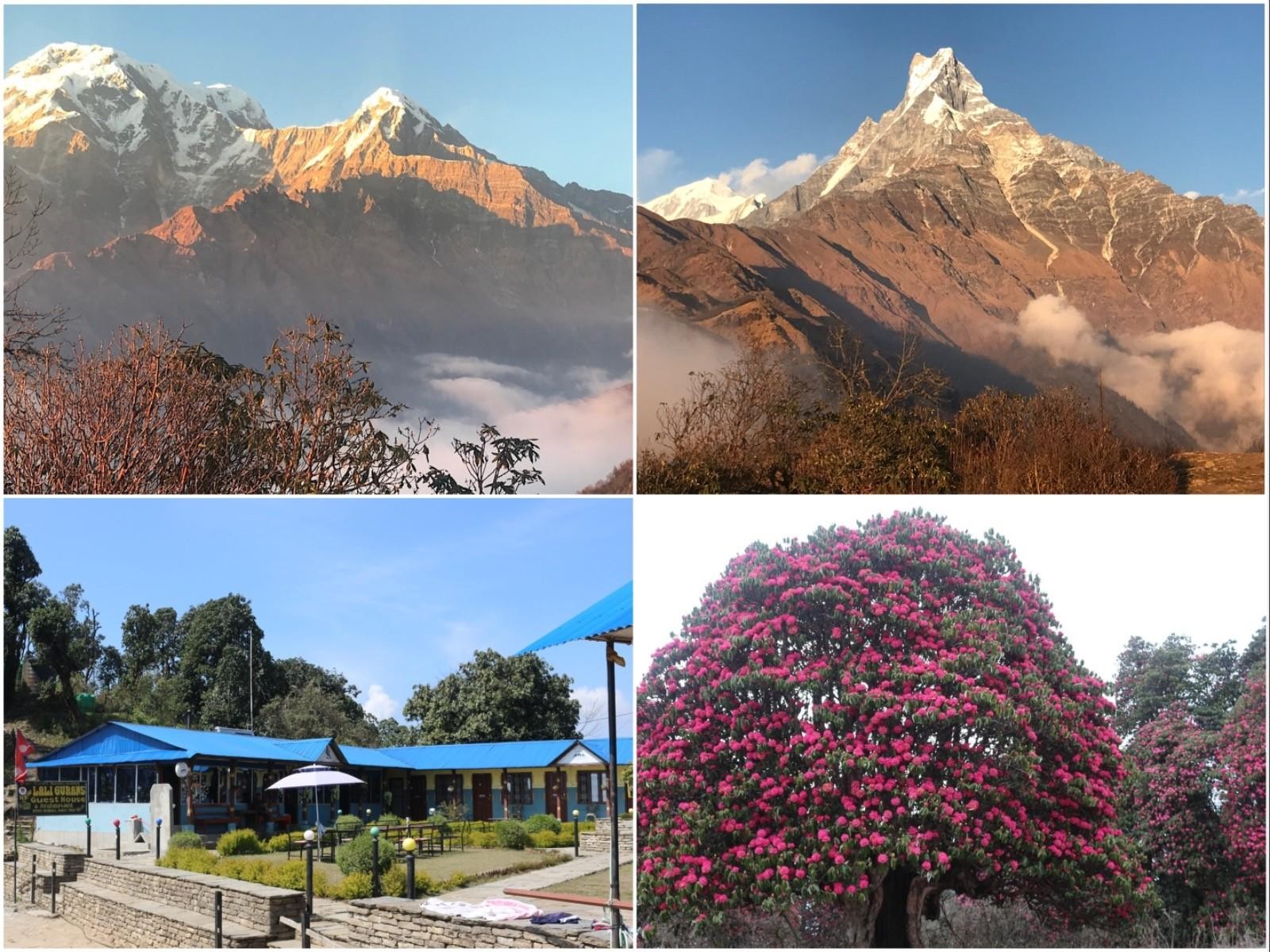
At the same time, mountainous landscapes tend to provide excellent views. The highlight of the trek, however, is the view of Machhapuchhre (6,993 m). Autumn is similarly a great season for this trek.
Specifically, September–November is a great season for mountainous trekking in general. Clear skies are common throughout this period, although October is even more popular with tourists.
As a result, certain sights, such as the views of Machhapuchhre, tend to be crowded during peak season. Finally, consider that winter weather can still be suitable for the Mardi Himal trekking.
Here, expect colder nights and potentially snowy conditions at higher altitudes, such as around 3,500–4,500 m. As such, it is important to bring additional warm clothing.
On the other hand, this season is also generally dry, making it a great option for exploring forests and lower mountainous areas. Note that the monsoon season is generally ill-advised due to wet and slippery conditions.
Moreover, heavy clouds tend to obscure mountainous views. Altogether, the best time for Mardi Himal is March–May and September–November. Consider that peak season sees increased crowds throughout the trail.
Langtang Valley trekking is exceptionally popular among trekkers who seek cultural experiences. In particular, the region offers the best sights and views during the spring season. March–May is associated with pleasant temperatures and blooming rhododendron flowers.
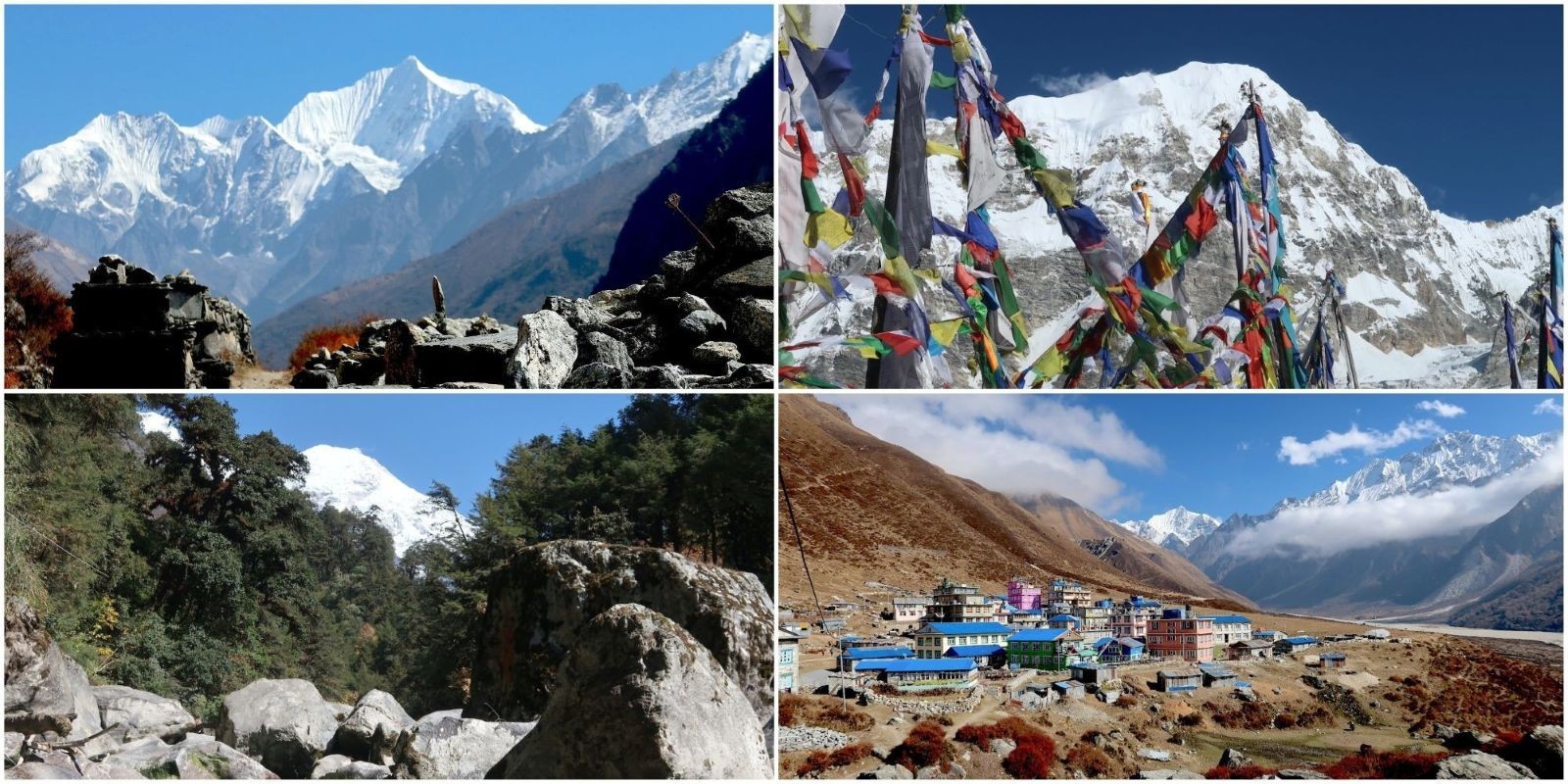
April, in particular, is exceptionally picturesque due to the combination of wildflowers and forests. At the same time, autumn is arguably the best season for visiting this region.
Specifically, September–November is generally characterized by stable weather and clear skies. As such, mountain views are spectacular throughout the area, particularly in regards to Langtang Lirung (7,227 m). Note that the overnight stay in Kyanjin Gompa (approx. 3,870 m) tends to be significantly cold during winter.
In addition, there are optional viewpoints in Langtang Valley that require additional acclimatization. For example, Kyanjin Ri reaches 4,773 m, while Tserko Ri peaks at 4,984 m.
Furthermore, while winter weather is generally dry, several road closures are common due to snow. The road to Syabrubesi can also be affected by cold weather conditions.
On the other hand, the monsoon season is generally poorly suited for Langtang Valley trekking due to wet and slippery conditions. Note that the region attracts a large number of tourists during autumn, which is the peak season.
Consequently, it is important to prepare for challenging weather and potentially overcrowded trails. Altogether, the best time for Langtang Valley trekking is March–May and September–November.
In turn, always consider the weather and road conditions before departing for your expedition. Lastly, note that Tserko Ri requires significant acclimatization since it peaks at 4,984 m.
As such, it should be approached with caution during the winter season. Similarly, cold weather tends to affect night stays and campsites near the region’s monasteries and viewpoints.
Altogether, consider that cold weather conditions tend to prolong the duration of your expedition. Moreover, prepare additional warm clothing and equipment, especially when visiting remote higher-altitude regions.
Similarly, always double-check local conditions before venturing into the mountains.
Tsum Valley is a unique region that is home to several Tibetan Buddhist monasteries. Its cultural sights are best explored during the spring season.
Specifically, March–May is characterized by pleasant weather and blooming rhododendron forests. In turn, higher altitudes tend to stay significantly cold during this season.
On the other hand, days spent hiking are generally enjoyable. The best time for Tsum Valley trekking, however, is autumn. September–November is exceptionally popular among visitors, with October being the busiest month.
During this season, days are generally warm and clear, offering spectacular mountain views. In particular, Tsum Valley offers unparalleled cultural and natural landscapes during clear autumn weather. Note that the valley’s monasteries and villages tend to look particularly impressive during this season.
For reference, consider the altitudes of several popular destinations within the region, including Chumling (approx. 2,386 m), Chhokangparo (approx. 3,010 m), and Mu Gompa (approx. 3,700 m). During the winter season, significant portions of the valley tend to be covered in snow. Higher altitudes can be particularly challenging during this season. On the other hand, monsoon weather is generally ill-advised due to wet and challenging conditions.
Lastly, note that travelers should conduct additional research before visiting the region since it is officially closed to independent exploration. Tsum Valley trekking is generally best suited for March–May and September–November.
Here, always consider the local conditions and regulations before visiting any region. In turn, the Tsum Valley trekking season is impacted by extreme winter weather, making it challenging between December and February.
Moreover, rainy conditions can affect lower trails and roads during the monsoon season. Altogether, these factors should be taken into consideration before planning an expedition. Prepare additional warm clothing during the colder months, especially since night stays tend to take place at higher altitudes. As for the rainy season, always check road conditions and weather forecasts before departing.
On the other hand, higher altitudes tend to be challenging during the winter season. Altogether, the best time for Tsum Valley trekking is April–May and October–November.
In particular, avoid the peak season of September–November due to potentially overcrowded trails and cold weather conditions. At the same time, always account for local conditions and travel restrictions. Remember to check the status of road closures and weather patterns before visiting this unique region.
Lastly, ensure that all necessary permits are up to date before departing for your expedition. For reference, there are two permitted entry points to the region: Changu Narayan and Kagbeni.
As such, ensure that you understand the regulations and have the necessary permits ready before entering the valley.
Overall, your local guides should be able to recommend the best season for your expedition based on your personal preferences. Altogether, consider that Tsum Valley trekking is best suited for clear weather and stable temperature conditions.
In turn, it is important to account for the cold, dry winters and snowy passes before venturing into this fascinating region. Likewise, be prepared for unpredictable weather during the monsoon season.
Lastly, always ensure that you have the necessary permits and equipment before departing for your expedition. Altogether, the best time for Tsum Valley trekking is April–May and September–November.
During this period, the region offers unparalleled cultural and natural landscapes without extreme weather conditions. Note that travelers should conduct thorough research and consult with local agencies prior to all expeditions.
After all, local conditions and regulations tend to affect Tsum Valley in particular ways. In turn, consider the season and current weather conditions before visiting this unique region.
Altogether, the most popular time for Tsum Valley trekking is between April and November. Moreover, it is a great option for those who seek cultural encounters and dramatic mountainous landscapes.
On the other hand, it is important to remember that winter weather can impact higher altitude stays and night campsites.
Lastly, be prepared for unpredictable rainy season weather if planning an expedition between June and August.
All five Annapurna Base Camp alternatives offer a great range of difficulty. Mardi Himal is generally the most accessible, while Langtang is right behind it. Tsum Valley is more demanding due to the long itinerary, while Tilicho Lake is challenging due to the altitude. The most strenuous option is Nar Phu due to the remote terrain and 5320 m high Kang La Pass.
| Trek | Difficulty | Average Walking per Day | Highest Major Ascent |
|---|---|---|
| 1 Mardi Himal | Moderate | 4 - 7 hours / day | Mardi Base Camp ~ 4500 m |
| 2 Langtang Valley | Moderate | 5 - 7 hours / day | Tserko Ri ~4984 m |
| 3 Tsum Valley | Moderate – Strenuous | 5 - 8 hours / day | Mu Gompa ~3700 m |
| 4 Tilicho Lake | Moderate – Strenuous | 5 - 8 hours / day | Lake ~4919 m |
| 5 Nar Phu Valley | Strenuous | 5 - 8+ hours / day | Kang La ~5320 m |
Note: The listed hours are approximate.
Mardi Himal Trek is generally moderate. It should be easily manageable by most people, including fitness novices. A standard walking day is 4-7 hours long on average. The trail is a bit taxing due to steep sections of forest, stones, and ridges. The elevation gain is also considerable. High Camp is located between 3580-3780 meters. The upper reaches of the trail can see a 4200-4500 m ascent.
Hence, it is important to prepare for the altitude. On the other hand, the relatively short distance makes Mardi Himal attractive for those who are just getting into trekking. Using trekking poles is advisable at all times.
Langtang Valley Trek is generally moderate for appropriately prepared hikers. Your walking days should last 5-7 hours on average. The trail will take you through forests and local villages. You will also enter higher alpine regions. Kyanjin Gompa is located at 3870 meters and is the highest point in this trek.
However, two optional viewpoints must be noted. They are Kyanjin Ri (4773 m) and Tserko Ri (4984 m). Hence it is possible to adjust the difficulty of this trek based on your own preferences.
For example, you might skip any of the two mentioned viewpoints if you so desire. Another advantage is that a reasonably fit person can manage this trek without any issues.
Tsum Valley Trek is more demanding. Your walking days will last 5-8 hours on average.
Moreover, the trail will frequently involve ascents and descents. Here are some of the major passes and their approximate altitudes:
Machha Khola: ~900m, Jagat: ~1340m, Chumling: ~2386m, Chhokangparo: ~3010m, Nile: ~3360m, Mu Gompa: ~3700m
As seen in the list above, the highest point in this trek is not very high compared to Nar Phu.
However, Tsum is still strenuous due to its remoteness and requires more extensive preparations. Prior trekking experience is strongly advised for this route.
Nevertheless, a determined beginner with an appropriate fitness level can manage Tsum with ease.
The primary challenge of the Tilicho Lake Trek is its altitude. First of all, the lake is located at ~4919 m above sea level.
Moreover, the trail to it involves exposed and sometimes technical sections. Hence it is crucial to prepare accordingly for this trek. Your typical walking day will last 5-8 hours. The altitude is the primary concern when it comes to Tilicho, so it is important to allow your body enough time for acclimatization.
On the other hand, this trek is not significantly more difficult than Annapurna Circuit. The latter involves Thorong La Pass at 5416 m, so it is always important to keep in mind that the entire route must be completed with caution.
As a result, a determined and reasonably fit trekker will not find Tilicho to be very difficult.
The Nar Phu Valley Trek is the most demanding option on this list. It is a remote and extremely challenging route. Your average walking day will last 5-8 hours, with some days including 8+ hours of walking and hiking. The major obstacle of this trek is the Kang La Pass at 5320 m. It is especially challenging due to heavy snow and strong winds that can be found there during specific seasons.
Another thing to note is that the landscape is very exposed and rugged throughout the hike. The major settlements of this trek are also located at high altitudes: Phu (4080 m), Nar (4150 m).
Hence, it is crucial to take the altitude into consideration when preparing for this trek. Previous high-altitude trekking experience is strongly advised for this route. Overall, I would not recommend Nar Phu for a first-time trekker.
You do not need to be an endurance sportsman to complete any of these treks. However, it is important to develop your walking endurance prior to the adventure. A good target to aim for is 5-7 hours of walking per day.
In fact, it is also good to practice steep ascents and descents on stairs or slopes. Additionally, it is important to prepare your leg muscles for walking and trekking boots. You can do this by engaging in regular walking or hiking excursions on weekdays and longer hikes on weekends.
Finally, it is critical to practice wearing a day backpack during your training. At the same time, it is impossible to prepare your body for altitude in terms of acclimatization. Thus it is important to walk slowly at higher altitudes and to stay well-hydrated. You should also avoid trying to outrun altitude sickness.
In case of severe altitude sickness symptoms, it is always better to descend rather than risk your health. Overall, it is important to pay attention to altitude-related symptoms such as headaches, fatigue, dizziness, nausea, or trouble with coordination.
If these symptoms become too severe, it is better to stop and reassess the situation.
There is a significant variance in permit and guide requirements for the mentioned treks. Mardi Himal, Langtang, and Tilicho follow the standard conservation area + trekking police permit rules. In turn, Tsum Valley and Nar Phu require restricted area permits.
Importantly, note that permit costs and rules in Nepal are subject to change, so it is important to confirm the latest information prior to departure.
| Trek | Main Permit Requirements | Guide Requirement |
|---|---|---|
| Mardi Himal | ACAP + applicable TIMS | Recommended |
| Langtang Valley | LNPA + applicable TIMS | Recommended |
| Tsum Valley | RAP + MCAP + applicable TIMS | Licensed guide is mandatory |
| Nar Phu | RAP + ACAP + applicable TIMS | Licensed guide is mandatory |
| Tilicho | ACAP + applicable TIMS | Highly recommended |
Mardi Himal is located within the Annapurna Conservation Area. Hence, this trek requires an Annapurna Conservation Area Permit (ACAP). The ACAP costs Rs. 3000 for foreigners and Rs. 1000 for SAARC nationals.
Moreover, it is typically an agency’s responsibility to secure the permits for you. As such, if you are considering an independent trek, it is important to research TIMS requirements directly with relevant authorities.
The Langtang route is found within the Langtang National Park. Therefore, a Langtang National Park entry permit is required for this trek.
Here, Langtang National Park Entry Permit Costs Rs. 3000 for foreigners and Rs 1500 for SAARC nationals.
Additionally, a TIMS permit might be necessary. Most people begin their Langtang trek from Syabrubesi village. There are several permit checkpoints along the Langtang trail.
Hence, it is essential to keep your documents in order. It will also expedite the permit control process if you are in the Langtang Valley.
A Tsum Valley Trek requires additional permits. For one, the region is under restricted area rules. As such, a Tsum Restricted Area Permit is necessary.
In addition, you will also need the Manaslu Conservation Area Permit (MCAP). Additionally, a TIMS permit might be necessary. On the other hand, it is important to note that a licensed guide is mandatory for the Tsum Valley Trek.
Therefore, independent travel is not allowed in this region. The cost of a restricted area permit can vary drastically depending on the season. It can also depend on the number of days you will spend in the region.
As a result, agencies charge a higher price for this trek by adding the cost of the permit to the total price of the tour. It is important to clarify all details in advance.
Nar Phu has similar restrictions to Tsum Valley. Specifically, a Nar Phu Restricted Area Permit is necessary to enter this region.
Additionally, an Annapurna Conservation Area Permit (ACAP) is also required. Note that a TIMS permit might also be needed. A licensed guide is mandatory for this trek as well. Therefore, it is unwise to travel to Nar Phu independently.
Rather, it is best to contact a registered agency to plan your trip, arrange transportation and accommodation, receive assistance from a guide, and manage any permits.
Moreover, note that the cost of a restricted area permit can vary drastically depending on the season, as well as the number of days permitted. This is why it is crucial to plan ahead.
Tilicho Lake is found within the Annapurna Conservation Area. Hence, an Annapurna Conservation Area Permit is necessary to visit this region.
Moreover, a TIMS permit might also be required. Note that Tilicho trek is often combined with an Annapurna Circuit trek.
As a result, most trekkers secure their permits in advance. In turn, if you are visiting Tilicho via the Annapurna Circuit route, make sure to keep your permit documents accessible at all times in case of a permit checkpoint.
It is unwise to estimate a single figure for permit costs. Rather, it is better to consider a few categories:
Here, restricted permit costs are the most flexible category. Their costs can vary drastically between seasons, off seasons and peak seasons. They also depend on how many days you will spend in a region. Hence, check the price for restricted area permits before you plan Tsum Valley and Nar Phu Valley Trek.
A local guide offers more than just trail insight; they bring invaluable knowledge about weather patterns and local cultures. Having a guide is often essential, especially in restricted areas like Nar Phu and Tsum, where permits and logistics can be complicated.
Moreover, high-altitude passes such as the 5320 m Kang La in the Nar Phu Valley or 5360 m Tsum La in the Tsum Valley require proper timing to ensure safety. A licensed guide can help navigate these challenges, providing both a regulatory and practical advantage.
Additionally, when traveling independently, knowing the local language or having a guide who does can make communication with locals much easier. All things considered, a certified guide serves as both as an official requirement and an asset in remote high-altitude trekking.
It is always recommended to contact a local trekking agency to learn about current permit rules and other requirements.
Meanwhile, the rules regarding TIMS (Trekking Information Management System) can change from year to year.
Moreover, permit costs and availability might also fluctuate.
Therefore, always request the latest information before making any travel plans. Finally, a reliable trekking agency in Nepal can assist with permit arrangements, transportation, accommodations, and more. This is especially important for restricted area treks such as Tsum Valley and/or Nar Phu.
Opting for a trek other than the ABC circuit has its advantages, as it allows experiencing the Himalaya in lesser crowds.
Nevertheless, each route has its challenges, and a proper preparation is mandatory, especially for the Tsum Valley, Nar Phu, and Tilicho Lake hikes.
Moreover, exercises to develop thigh, calf muscles, as well as core and back muscles are mandatory. One should also practice controlled downhill walking.
Here, Mardi Himal and Langtang Valley trekking options are less demanding, meaning that they may be suitable for inexperienced trekkers after a moderate training course.
However, Nar Phu and Tilicho require a more serious approach. The altitude gained in the former is 5,320 ft., while the latter involves gaining 4,919 ft. Thus, preparing your body is as important as acclimatizing to high altitudes.
Elevated altitude is one of the most challenging aspects of Himalayan trekking.
Therefore, a serious assessment of one’s capabilities is required prior to embarking on any hiking adventure. Mardi Himal involves a gain of 4,500 ft., while the optional Tserko Ri peak in the Langtang Valley hike involves nearly 5,000 ft.
In fact, the Tsum Valley, another popular alternative to the ABC circuit, involves a gain of 3,700 ft. Meanwhile, Tilicho Lake and Nar Phu treks involve gaining nearly 5,000 ft. and 5,320 ft., respectively.
Thus, it is crucial to remember that a long walk at a high altitude can be more stressful than walking on the flat, so the pace should be carefully chosen.
Additionally, it is vital to pay attention to all symptoms of altitude sickness, and the most common are headaches, nausea, dizziness, fatigue, loss of appetite and sleep, and shortness of breath. Even if the symptoms subside, one should not continue ascending.
In case of acute manifestations, it is vital to descend immediately since there is no other effective remedy for altitude sickness.
The strategy of acclimatization should be an integral part of any Himalayan adventure.
Especially it is important to include rest days at a given altitude for those who decide to go mountain climbing, i.e., to gain significant altitudes during their hikes. Acclimatization days should be included when going beyond 3,000 ft.
Moreover, it is advisable to do day hikes to higher altitudes and return to the sleeping elevation following the principle of ‘climb high, sleep low’. Day hikes also allow to assess how one’s body reacts to exertion at a given altitude.
Therefore, it is better to cancel any excursions on cloudy days if there is a concern about altitude sickness. This is more relevant to Kyanjin Gompa, Kyanjin Ri, and Tserko Ri (4,773 ft., 4,984 ft.) in the Langtang Valley, Phu (4,080 ft.) and Nar (4,150 ft.) regions in the Nar Phu Valley, as well as Tilicho Lake (4,919 ft.) in the Tsum Valley, and Kang La (5,320 ft.) in the Nar Phu Valley.
The packing list for a Himalayan trek should be based on the anticipated temperature variation. Despite the common belief, lower valleys are generally warm, whereas higher ridges tend to be extremely cold.
That is why the following items are mandatory in any packing list for a Himalayan trek:
Lightweight and warm clothes, along with a good tent, sleeping bag, and a backpack, are essential for a trek to Nar Phu Valley and Tilicho Lake. The weather in these regions can be unpredictable, so it is better to be prepared for the worst.
It goes without saying that UV protection is of extreme importance in the mountains due to the thin atmosphere and the likelihood of getting sunburned.
Besides, snow and pale rocks can reflect sunlight, so it is a must to use sunglasses, a good sunscreen (SPF 30+), and a wide-brimmed sun hat. Even on cloudy days, the sun can be quite strong, so it is a must to use these protective means.
Trekking poles are essential for any Himalayan trek as they reduce the stress on knees, especially when walking downhill. They are also helpful in maintaining balance. It is even more important to use trekking sticks in the Mardi Himal region due to narrow slopes.
Additionally, they are necessary in the Langtang Valley, where one has to walk on stone, and in the Nar Phu Valley, where the trail is uneven.
Moreover, there are sections in the Tilicho Lake trek, which involve a lot of exposure. Thus, trekking sticks are definitely a must in these regions, as they are quite helpful and not very demanding in terms of technique.
Appropriate hiking boots are vital for a Himalayan trek, so it is better to invest in a good pair. Hiking boots should have a good grip and be comfortable and reliable. It is better to avoid new boots at the beginning of the trek to prevent blisters. It is also a good idea to carry blister plasters with you as an alternative to bandages.
Staying hydrated is essential when hiking at higher altitudes, as dehydration can cause altitude sickness. That is why it is a must to drink water more frequently than usual, and not wait until one feels thirsty. Warm drinks and soups also contribute to hydration, but drinking alcohol is better to avoid, as it can lead to dehydration. Moreover, alcohol impairs sleep, which is especially detrimental when sleeping at higher altitudes.
A good travel insurance is a must for any Himalayan trek as it can be expensive, and many things can go wrong. It is vital to make sure that one’s travel insurance covers trekking activities and that the maximum altitude included in the policy is higher than the peak to be conquered. This is especially important for Tilicho Lake, Tserko Ri, and Kang La, which involve gaining altitudes of 4,919 ft, 4,984 ft, 5,320 ft, respectively. One should also check whether helicopter evacuation is included in the travel insurance, as it is a safer and faster option but might be excluded.
It is vital to be prepared for emergencies in the Tsum Valley and Nar Phu regions, including limited access to cash and a poor mobile phone coverage. Thus, it is better to carry some cash with you for emergencies.
Additionally, it is a must to keep all medicines and documents, such as passport or visas, in separate, waterproof bags. A good preparation is the key to surviving any Himalayan trek, so it is advisable to remember this rule before embarking on any adventure.
It is hard to say which alternative to the Annapurna Circuit is better, as it ultimately depends on individual preferences.
Nevertheless, a short Himalayan trek, as a rule, implies visiting fewer places, so it is better to prioritize breathtaking views and choose Mardi Himal. This is a great option for a short and less strenuous Himalayan adventure with stunning views of Machhapuchhre, or Fish Tail, Peak (6,993 ft). Another advantage is that it combines nature with cultural immersion.
On the contrary, if one prioritizes cultural immersion, it makes more sense to choose the Tsum Valley trek, which involves spending several days in Mu Gompa (3,700 ft).
Moreover, this region is home to traditional Tibetan monasteries. On the other hand, for those who want to get more off-the-beaten-track adventure, the Nar Phu Valley trek is a great choice, as it is quite isolated compared to other alternatives.
Lastly, those who want to enjoy the unique alpine scenery should consider the Tilicho Lake trek. The lake located at 4,919 ft combines a sense of isolation with a stunning view.
Moreover, the decision is ultimately yours, but it makes sense to keep in mind that each region offers a unique set of experiences, and a longer trek does not necessarily mean a better one.
Quick Guide,
The choice between the alternatives ultimately depends on the priorities and time frame of the individual trekker. Below is a table summarizing the benefits of each option.
Now, after reviewing the benefits of each alternative, it is time to choose the one that best fits your priorities. The main reason why most people opt for the Annapurna Circuit is its unique combination of culture and adventure with spectacular views.
However, if one wants a less strenuous trek, it makes sense to choose Mardi Himal. As for the Annapurna Circuit, it offers an opportunity to experience both the cultural and natural diversity of the region. It is also important to consider how much time one has at one’s disposal. The following chart may help in making the final decision.
| Your Priorities | The Best Choice | Why to Choose it ? |
|---|---|---|
| Short itinerary | Mardi Himal trek | Offers spectacular views while being less strenuous. |
| Cultural immersion | Tsum Valley trek | Traditional Tibetan monasteries and way of life. |
| Adventure | Tilicho Lake or Nar Phu Valley trek | Unique alpine scenery and an off-the-beaten-track experience. |
| Easy access | Langtang Valley trek | Closer to Kathmandu with cultural diversity. |
| Longer trek | Annapurna Circuit trek | Offers variety and is quite safe. |
| Time constraints | Mardi Himal, Langtang, or Tsum Valley trek | Less strenuous than Annapurna Circuit trek. |
Thus, it becomes evident that the ultimate choice depends on one’s priorities, but it is always important to consider one’s capabilities. A trek that seems less popular is not necessarily less strenuous than a more crowded one, and a short itinerary does not mean that altitude will not be a challenge.
Therefore, choose the adventure that best fits your needs.
Searching for the best alternative to the Annapurna Base Camp Trek is not about finding better or worst options. It is more about exploring different opportunities that may offer unique cultural discoveries and mountain views.
In fact, each alternative has its own benefits and challenges, so it is important to choose the one that suits your preferences and needs.
Here, Mardi Himal Trek is a great choice if you want to enjoy local culture and capture remarkable mountain photos. It has a short route but steep climbs to offer fantastic views of Machhapuchhre, 6,993 m. The maximum altitude is located on the upper trail and reaches 4,500 m.
Likewise, Langtang Valley Trek combines cultural interactions with great scenic beauty. It is a family-friendly adventure that takes you to Kyanjin Gompa, which is situated at 3,870 m. The optional climbs to Kyanjin Ri (4,773 m) and Tserko Ri (4,984 m) will reward you with breathtaking views over the valley.
Similarly, Tsum Valley Trek is another cultural adventure, which allows you to explore unique Tibetan Buddhist traditions. It is famous for its ancient monasteries and stunning mountain scenery. Mu Gompa, for example, is located at 3,700 m. The highlight of the trail is visiting monasteries and encountering local people in this region with a rich cultural history.
In addition to, Nar Phu Valley Trek is suitable for experienced hikers and mountain explorers. You will find traditional villages enclosed in a magnificent Himalayan landscape. It is a challenging trek with a demanding pass over Kang La, which reaches 5,320 m.
Finally, Tilicho Lake Trek offers one of the most unique alpine experiences in Nepal. Tilicho Lake, surrounded by towering peaks, is a great destination to visit at 4,919 m. If you want to enjoy the views of Thorong La (5,416 m), you can also include this lake trek in your Annapurna Circuit.
There are several reasons why you might consider these options instead of the Annapurna Base Camp Trek.
Some of the alternatives tend to offer:
More specifically, fewer people on popular trails may sound like an advantage, but some alternatives have fairly difficult trails. For instance, Nar Phu and Tilicho Lake Treks are considered extremely challenging.
Meanwhile, Mardi Himal has a steep ascent. Therefore, it is important to choose an alternative according to your fitness level and preferences.
Now that you have some general ideas about what you would like to pursue in your trek, you can start thinking about how to turn this dream into a reality.
Here, you will need to set your priorities and goals.
If you want to visit remote valleys, experience unique local cultures, and encounter spectacular alpine lakes, then Tilicho Lake Trek is probably the best option.
Likewise, you may also consider the challenging Nar Phu Valley Trek if you are an experienced hiker.
On the other hand, the Langtang Valley Trek will take you to traditional Tamang villages, whereas the Tsum Valley Trek offers you a fantastic opportunity to explore unique Tibetan Buddhist culture.
Finally, you may enjoy shorter climbs and spectacular mountain views on the Mardi Himal Trek.
In conclusion, the best alternative to the Annapurna Base Camp Trek is not a matter of finding the best but instead realizing different Himalayan adventures.
Most importantly, some options allow you to travel through remote areas and fewer people on the trails. Others provide a richer cultural experience.
Most of them, however, give you a fantastic opportunity to enjoy spectacular mountain views for days or even weeks.
So why not start your Himalayan adventure now? The professional team at Haven Holidays, a leading trekking company in Nepal, will help you plan each detail of your trip according to your time, preferences, and fitness. Before leaving for your adventure, make sure to check the necessary permits and restrictions in some of these restricted areas.
In a nutshell, it is also vital to consider local conditions and transportation. All of these details are critical for a successful mountain trek.
When it comes to the best alternatives to the Annapurna Base Camp Trek, the options tend to be different depending on your preferences and needs. Some of these adventures are great for shorter trips, while others require days or even weeks to complete.
Meanwhile, some alternatives provide fewer crowds on popular trails, while others offer a chance to enjoy more cultural interactions. It is also important to consider the scenery, as well as the level of difficulty and your fitness. In addition, certain options provide a unique opportunity to visit remote regions and alpine lakes that are challenging to reach.
1. What are the best alternatives to the Annapurna Base Camp Trek?
The best alternatives to the Annapurna Base Camp Trek are the Mardi Himal Trek, Tsum Valley Trek, Nar Phu Valley Trek, Tilicho Lake Trek, and Langtang Valley Trek. These are all excellent options for those looking to experience the beauty of the Himalayas while avoiding the crowds of the ABC trek.
Each of these treks offer something a bit different than the Annapurna Base Camp Trek, while still being relatively easy to get to from Pokhara or Kathmandu.
2. Why is Mardi Himal a good alternative to the Annapurna Base Camp Trek?
The Mardi Himal trek is a shorter, less busy alternative to the Annapurna Base Camp Trek that takes hikers through forests of rhododendrons and along ridgelines offering spectacular views of Machhapuchhre and the Annapurna range. This trek is a great option for those who are looking for an introduction to trekking in Nepal or have a shorter time window, as it is much shorter than the Annapurna Base Camp Trek.
3. How is the difficulty of the Mardi Himal Trek compare to the Annapurna Base Camp Trek?
The Mardi Himal Trek is generally considered a moderate trek that is slightly easier than the Annapurna Base Camp Trek. Most days of the hike last between 4-7 hours and have a mix of steep climbs and descents, as well as some ridge walking. While the trails are not as long as those on the Annapurna Base Camp Trek, the Mardi Himal trek reaches a maximum altitude of 4,500 meters.
4. What makes the Tsum Valley Trek a unique alternative to Annapurna Base Camp?
The Tsum Valley Trek is a great alternative to the Annapurna Base Camp Trek for those looking for a more cultural experience. This trek takes hikers through a restricted area of the Annapurna region that is home to numerous Tibetan Buddhist monasteries, including the impressive Mu Gompa monastery. The trail is also much less busy than the Annapurna Base Camp Trek, offering a more isolated and authentic Himalayan experience.
5. Do I need a special permit for the Tsum Valley Trek?
Yes, a special permit is needed for the Tsum Valley Trek. The permit, which is called the Restricted Area Permit (RAP), can be obtained in Kathmandu. Because of the restricted status of the region, hikers must also hire a licensed guide and travel in groups of at least two people. The cost of the permit varies depending on the time of year, but it generally costs between USD 30-40 for the first week and USD 50-60 for the second week.
6. How difficult is the Tsum Valley Trek compared to other treks in the Annapurna region?
The Tsum Valley Trek is generally considered to be a moderate trek. Day hikes last between 5-7 hours and have a mixture of steep climbs and descents as well as some ridge walking. The trail reaches a maximum altitude of around 3,700 meters at Mu Gompa.
7. Why is the Nar Phu Valley Trek a good alternative to Annapurna Base Camp?
The Nar Phu Valley Trek is a great alternative to the Annapurna Base Camp Trek for those looking for a more adventurous and isolated trekking experience. The trail takes hikers through two remote Tibetan villages before crossing the challenging Kang La Pass at 5,320 meters. This trek is much less popular than the Annapurna Base Camp Trek, making it a good option for those who want to avoid the crowds.
8. How long does the Nar Phu Valley Trek generally last?
The Nar Phu Valley Trek generally lasts between 9-12 days and starts in Koto near the Annapurna Circuit trail. This timeframe allows for acclimatization to the altitude as well as time to explore the remote villages of Nar and Phu. It is also possible to extend the trek to make it even longer.
9. Are there any special permits needed for the Nar Phu Valley Trek?
Yes, because the Nar Phu Valley Trek is in a restricted area, hikers must obtain a special permit in addition to the Annapurna Conservation Area Permit (ACAP). Because of this, it is best to hire a licensed guide to help with obtaining permits and navigating the trail. Because of the remote and difficult nature of the trek, it is also recommended to travel in a group of at least two people.
10. How difficult is the Nar Phu Valley Trek compared to other Annapurna treks?
The Nar Phu Valley Trek is generally considered a moderate to challenging trek due to its high altitude and remote location. The trail is quite rugged and requires hikers to be in good physical shape. However, most days of the trek only last 5-8 hours. The most challenging part of the trek is undoubtedly the Kang La Pass at 5,320 meters.
11. What makes Tilicho Lake a unique alternative or side trip from the Annapurna Circuit ?
Tilicho Lake is one of the highest lakes in the world at around 4,919 meters and offers spectacular views of the surrounding mountains. This challenging 3-day side trip from the Annapurna Circuit is much less crowded than the Annapurna Base Camp Trek, making it a good option for those looking to avoid the busy trails of the Annapurna region.
12. How difficult is the trek to Tilicho Lake?
The trek to Tilicho Lake is moderately challenging and primarily takes place at a high altitude. Most days of the hike last 5-8 hours and have a steep incline. The trail is also quite rocky near Manang, making it challenging to navigate. It is important to make sure to acclimatize properly before attempting this trek, as the high altitude can be very taxing on the body.
13. Can Tilicho Lake be done as an independent trek or is it only possible as a side trip from the Annapurna Circuit?
While it is possible to do Tilicho Lake as an independent trek, most people opt to do it as a side trip from the Annapurna Circuit. Independent treks to Tilicho Lake generally only last 3-4 days and start from Manang, while multi-day treks from Kathmandu to Manang and then to Tilicho Lake can last up to 2 weeks.
14. Why is the Langtang Valley Trek a good alternative to Annapurna Base Camp?
The Langtang Valley Trek is a good alternative to Annapurna Base Camp because it is much closer to Kathmandu and generally less crowded. It is also a moderately challenging trek that offers spectacular views of the Langtang Lirung mountain range. Similar to the Annapurna Base Camp Trek, this trek is best suited for hikers who have some trekking experience and want to acclimatize to high altitudes.
15. How long does the Langtang Valley Trek generally last?
The Langtang Valley Trek generally lasts between 7-10 days on the trail, with the full trek from Kathmandu to Langtang and back taking between 9-12 days. This timeframe allows for acclimatization to the altitude as well as time to explore the beautiful Langtang Valley and its unique Tibetan culture. There are also some optional side trips that can be taken if there is extra time.
16. How difficult is the Langtang Valley Trek compared to other Annapurna region treks?
The Langtang Valley Trek is a moderately challenging trek that involves a steady climb to higher altitudes. Most days of the trek last 5-7 hours and have a mixture of inclines and declines. The trail reaches a maximum altitude of 3,870 meters at Kyanjin Gompa, with some of the viewpoints reaching up to nearly 5,000 meters. It is not a technically difficult trek, but it does require a good level of fitness to complete.
17. Which alternative to Annapurna Base Camp is best for a first-time trekker?
Both the Mardi Himal Trek and the Langtang Valley Trek are excellent options for first-time trekkers. They are both shorter or easier alternatives to the Annapurna Base Camp Trek and offer spectacular views of the surrounding mountains. Additionally, these treks are not as crowded as the Annapurna Base Camp Trek, and there are plenty of teahouses along the trails.
18. Which of the alternative treks to Annapurna Base Camp require special permits?
The Tsum Valley Trek and the Nar Phu Valley Trek are both in restricted areas, so they both require special permits in addition to the regular Annapurna Conservation Area Permit. The other alternative treks to Annapurna Base Camp (Mardi Himal, Tilicho Lake, and Langtang Valley) only require the standard permits and are therefore much easier to organize.
19. What is the best time of year to go on any of these alternative Annapurna treks?
The best time of year to go on any of these alternative Annapurna treks is during the spring (March to May) or autumn (September to November) seasons. The weather during these times of year is generally clear and pleasant, making it ideal for trekking. It is best to avoid the monsoon season (June to August) as the trails can be very muddy and slippery, and it can be extremely cold during the winter months (December to February).
20. How do the altitudes of these alternative Annapurna treks compare to the Annapurna Base Camp Trek?
The Annapurna Base Camp Trek reaches a maximum altitude of around 4,130 meters, while the Mardi Himal Trek reaches 4,500 meters. Tilicho Lake is even higher at around 4,919 meters, and the Kang La Pass on the Nar Phu Valley Trek reaches an astonishing 5,320 meters. The Tsum Valley Trek and Langtang Valley Trek both have a maximum altitude of around 3,700 and 3,870 meters, respectively.
Our travel experts are ready to assist you with any questions.
Send us a message.Have a question before you book? Send your enquiry below and our travel experts will get back with the required information.