The overall Everest Base Camp Trek cost in 2027 is roughly USD 1,375 – USD 2,355 per person for a well-organized trekking package. This is an approximate range, however, since the Everest Base Camp price 2027 can vary depending on services preferred, the chosen season, itinerary and group sizes.
Actually, a smaller group trek can be cheaper, whilst a private and longer trek can be more expensive.
Furthermore, peak-seasons (Autumn and Spring) departures can see higher accommodation and transportation costs, therefore comparing the advertised package price can be misleading.
| Cost Factor | Description |
|---|---|
| Group size | Larger groups can reduce the overall costs per person |
| Trek duration | Longer itineraries generally cost more |
| Season | Specific costs can arise during peak seasons ( Spring and Autumn) |
| Guide service | Private and professional guides can raise the price |
| Porter service | Porter costs depend on the number of people and luggage |
| Accommodation | Kathmandu hotel standard impacts the overall cost |
| Transportation | Flight and ground transportation costs are included or not |
| Package inclusions | More inclusions increase the overall package value |
| Comfort level | Higher comfort services tend to cost more |
One of the main determinants of the EBC Trek cost is the group size, since a shared group trek can split the overall guide, transportation and other costs. In contrast, a private group will necessarily see a higher cost-per-person.
Likewise, the duration of the trek is another relevant consideration, since each additional trekking day will see additional accommodation, meals, guide and porter costs. As a result, a 12-day itinerary can be cheaper than a 14- or 16-day itinerary with extra rest days.
Moreover, the season can also impact the overall price, since spring and autumn months tend to be the most popular trekking seasons and accordingly busier.
Here, departures during the winter or monsoon season, on the other hand, may reflect different accommodation, transportation and operational realities
More importantly, the choice of guide and porter services furthermore plays a role, since a professional package with a licensed guide and porter support will necessarily be more expensive than a self-supported trek.
In addition to , accommodation and comfort level should furthermore be considered, since teahouse stays can keep costs low, whilst Kathmandu hotel comfort standards and upgrades can increase the overall cost.
Above all, the overall inclusions of a package are paramount, since one company can quote a price that includes Lukla flights, meals, permits, transfers and staff, whilst another company can advertise a cheaper price that excludes several relevant items.
The above planning range represents a properly organized Everest Base Camp Trek package, rather than a bare minimum. Depending on the inclusions, the above cost range can entailed necessary transportation, accommodation, meals, guide and porter support, permits and selected additional services.
However, it should always be carefully evaluated before finalizing a trekking arrangement, however, since the cheapest EBC Trek package is not necessarily the most value-for-money option if several services are not included.
Even for those who opt for an organized arrangement, it is advisable to have additional funds for personal expenses.
Those additional costs can include:
An Everest Base Camp Trek package can include airport transfers, Kathmandu transportation, Lukla flights or land transportation, accommodation, meals, guide and porter services, permits, local fees, selected equipment and other services.
Naturally, the details should always be clarified with the chosen company, since there is no standard EBC Trek cost.
For example, some packages can include trekking equipment, whilst others can offer it as an optional additional service. The same applies to Kathmandu hotel accommodation, where some packages count it towards the included nights and others require travelers to book separate accommodation.
| Service | Description |
|---|---|
| Airport transfers | Airport pickup/drop-off usually included |
| Kathmandu transportation | Ground transportation as required |
| Lukla flights | Flights as per itinerary, depending on the departure point |
| Ground transportation | Kathmandu to Surke Jeep via Salleri included (sharing) |
| Guide | Licensed and professional guide |
| Porter | Porter support, depending on the package |
| Teahouse accommodation | Standard teahouse accommodation |
| Meals | Breakfast, Lunch and Dinner during the trek |
| Trekking permits | Required permits are included |
| Government/local fees | Applicable fees are normally included |
| Trekking equipment | Equipment inclusions vary between companies ( Poles, sleeping bags, duffle bag and Down jacket) |
| Emergency support | Guide coordination, emergency assistance |
Organized packages normally include airport pickup and drop-off in Kathmandu. Those airport transfers, therefore, reduce the overall stress of first-time visitors to Nepal. The service should include airport transportation from Tribhuvan International Airport to the designated Kathmandu hotel, but it is advisable to confirm whether airport transfers are provided on arrival and departure.
Those Kathmandu transportation costs are included within the overall EBC cost, either as a separate item or as a factor when booking the group size and itinerary.
It can, furthermore, include any required transportation before and after the trek. The vehicle depends on the group size, where private vehicles can allow more comfort without increasing the overall cost.
For the classical Everest Base Camp Trek, Lukla flights are one of the biggest costs. A typical package therefore includes the required flights from Kathmandu airport or the designated flight airport and/or destination to Lukla.
Nevertheless, flight operations can vary, depending on weather, airport and seasonal arrangements. Accordingly, the package should specifically confirm whether both sectors are included and clarify any additional costs in case of flight delays and additional accommodation.
If the trekkers prefer using jeep from Kathmandu to Surke via Salleri, this service is included in the cost. This jeep transfers will be sharing basis.
A good EBC Trek package includes a professional and licensed guide, whilst porter support depends on the selected package. The guide assists with the overall route, timing, communication and accommodation, in addition to emergency coordination. A porter can furthermore carry some of the load, particularly on steep upward sections.
The typical teahouse accommodation is included during the trekking days, with twin-sharing rooms being the standard. Room availability, however, depends on the season and altitude, with fewer options at Thimphu and during the higher season. Private room options can be limited and more expensive.
A package normally includes breakfast, lunch and dinner during the trek. Teahouses provide a variety of food and drinks, but those can be further limited at higher altitudes and increase in cost due to the distance from Kathmandu.
Applicable trekking permits and local fees are commonly included in an organized EBC Trek package, but the specific inclusions should be clarified with the selected trekking company. The required permits can furthermore change before 2027, therefore double-checking those details with the selected guide is always advisable.
Some packages can include trekking equipment, such as a sleeping bag, down jacket, duffel bag and/or trekking poles. Naturally, equipment inclusions should be clarified before finalizing the package choice, since those can vary significantly between companies.
A professional package includes emergency support through guide coordination, but evacuation assistance normally requires insurance coverage. Emergency support, in other words, does not replace emergency insurance, which should always be purchased separately and should cover high-altitude emergency scenarios.
The details regarding what travelers must pay for themselves should furthermore be clarified before finalizing the EBC Trek cost 2027.
Most notably, international flights, tourist visa, travel insurance, personal equipment and expenses tend to be separately charged.
Additionally, snacks, Tips to guide and porter and drinks are usually not included, unless a specific arrangement is made.
| Included | Excluded |
|---|---|
| Airport transfers | International airfare |
| Trekking transportation | Nepal tourist visa |
| Lukla flights | Travel insurance |
| Guide | Personal equipment |
| Porter | Personal expenses |
| Teahouse accommodation | Snacks and drinks |
| Trekking meals | Showers and Laundry |
| Required permits | Connectivity/charging |
| Local fees | Tips |
| Basic emergency coordination | Uncovered emergency costs |
| Basic staff | Extra coordination |
In summary, the bottom line is that the overall package needs to be carefully compared prior to finalizing the EBC Trek booking. A higher Everest Base Camp price 2027, in other words, can provide better value if it includes flights, meals, accommodation, permits, staff and service.
For Haven Holidays Nepal, a transparent description can also contribute to traveler confidence by explicitly outlining what customers pay for.
The major EBC trek costs include flights, ground transportation if chosen, accommodation, food, guides, porters, permits, transportation, insurance, equipment and personal spending. Understanding the expenses means you can have a clearer EBC trek budget for 2027.
Here, certain costs are relatively set, while others rise with trekking days, size and comfort. In addition, the final EBC price breakdown depends substantially on the difference between a standard group trek and a private and potentially more comfortable itinerary.
| Major Expense | Usually Fixed or Variable? | What Affects the Cost? |
|---|---|---|
| Lukla flights | Mostly fixed | Season, airport and airfare adjustments |
| Accommodation | Variable | Nights and room type |
| Food | Variable | Days and selections |
| Guide | Variable | Trek length and private/group option |
| Porter | Variable | Days, luggage and group size |
| Permits and local fees | Mostly fixed | Government-regulated charges |
| Ground transportation | Variable | Distance, vehicle and group size |
| Travel insurance | Mostly fixed | Coverage and trip length |
| Equipment | Variable | Personal, rental or purchase options |
| Personal expenses | Variable | Spending habits |
Flights are one of the largest EBC trekking expenses on the standard Lukla route. A typical package might include both outgoing and return flights, although it is always worth double-checking.
Fare variations depend on the season, airport and airline, plus adjustments in regulations. Therefore, avoid viewing a single airfare as a set 2027 price.
Teahouse accommodation normally counts as a daily expense since you generally need a room for every trekking night. Therefore, longer itineraries automatically increase the cost.
Standard twin-sharing rooms are the rule on a budget/standard EBC trek. Private rooms, luxury Kathmandu hotel options and overall comfort levels raise the price.
Food expenses rise automatically with any extra trekking day. Breakfast, lunch and dinner are commonly included as part of an organized EBC trek, although prices generally increase with altitude.
Here, common options include dal bhat, noodles, pasta, soup, rice, vegetables, eggs and potatoes. Extra snacks, drinks and special requests generally count as personal expenses.
The guide represents a large operational expense due to the time they spend on the EBC trek. Therefore, longer private treks automatically have higher guide costs.
Likewise, the group size reduces the guide cost on a per-person basis since the overall obligation is shared between more people. At the same time, a private guide offers greater flexibility and control.
Porter costs follow a similar pattern to the guide, with the working days and luggage volume affecting the final price. A longer trek generates more porter days, while a larger group shares the cost more efficiently.
Similarly, some trekkers even opt for porter-guide combinations rather than additional support staff. The exact option should always be clarified before making arrangements.
Required permits and applicable local fees tend to be generally predictable, although prices for specific government charges can fluctuate before 2027.
Therefore, it is best to treat the figures as a general guide for the EBC trek 2027. Your chosen EBC trekking company should give a more comprehensive permit breakdown.
Transportation includes airport transfers, Kathmandu ground movement and the flight arrangement. It might also cover alternative options such as Ramechhap/Manthali transfers during busy flight periods.
In addition to, ground transportation ranges from Surke via Salleri road access to other trailheads in the Everest region. In other words, the EBC transportation cost varies substantially with the itinerary.
Travel insurance covers a separate but equally important part of the EBC trek cost. A suitable policy should include high-altitude trekking and general emergency medical care.
Meanwhile, the coverage should also explicitly mention helicopter rescue and the maximum altitude. Insurance prices vary depending on the destination, age, duration and selected plan.
Trekking equipment depends largely on personal preferences and existing outdoor gear. If you already have suitable boots, clothing, a backpack and other necessities, the additional equipment cost remains relatively low.
On the other hand, buying a complete set of gear can add considerably to the EBC price. Alternatively, Kathmandu also offers a selection of equipment for rent.
Personal spending has the widest variance of any EBC-related expense. Hot showers, Wi-Fi, charging, laundry, extra food, drinks and souvenirs can all add up quickly. It is also wise to leave an emergency fund for unexpected or changed circumstances.
Importantly, weather or flight delays might dictate additional accommodation or transportation costs, and an emergency fund helps in such situations.
Which EBC Expenses Increase With Trekking Days?
The expenses that expand with every extra EBC day on a trek include :
Meanwhile, the following costs remain relatively set :
Therefore, adding two or three days does not affect every item in the EBC price breakdown.
Comfort directly impacts the final EBC budget, with a standard teahouse trek having shared rooms and group services. However, private guides, transport, higher-end Kathmandu hotels, private rooms and extra services increase the overall cost.
Here, it is vital to decide on a preferred comfort level before comparing different EBC trek packages since value varies considerably. It always makes sense to understand what you get for the money rather than focusing on the lowest advertised price.
The Lukla flight cost 2027 will likely form a large part of the transportation expenses for a standard EBC trek. As a planning guide, current 2026 fares offer a rough USD 255-285 one way from Kathmandu and an approximate USD 185-210 one way from Ramechhap/Manthali, although prices can change in 2027.
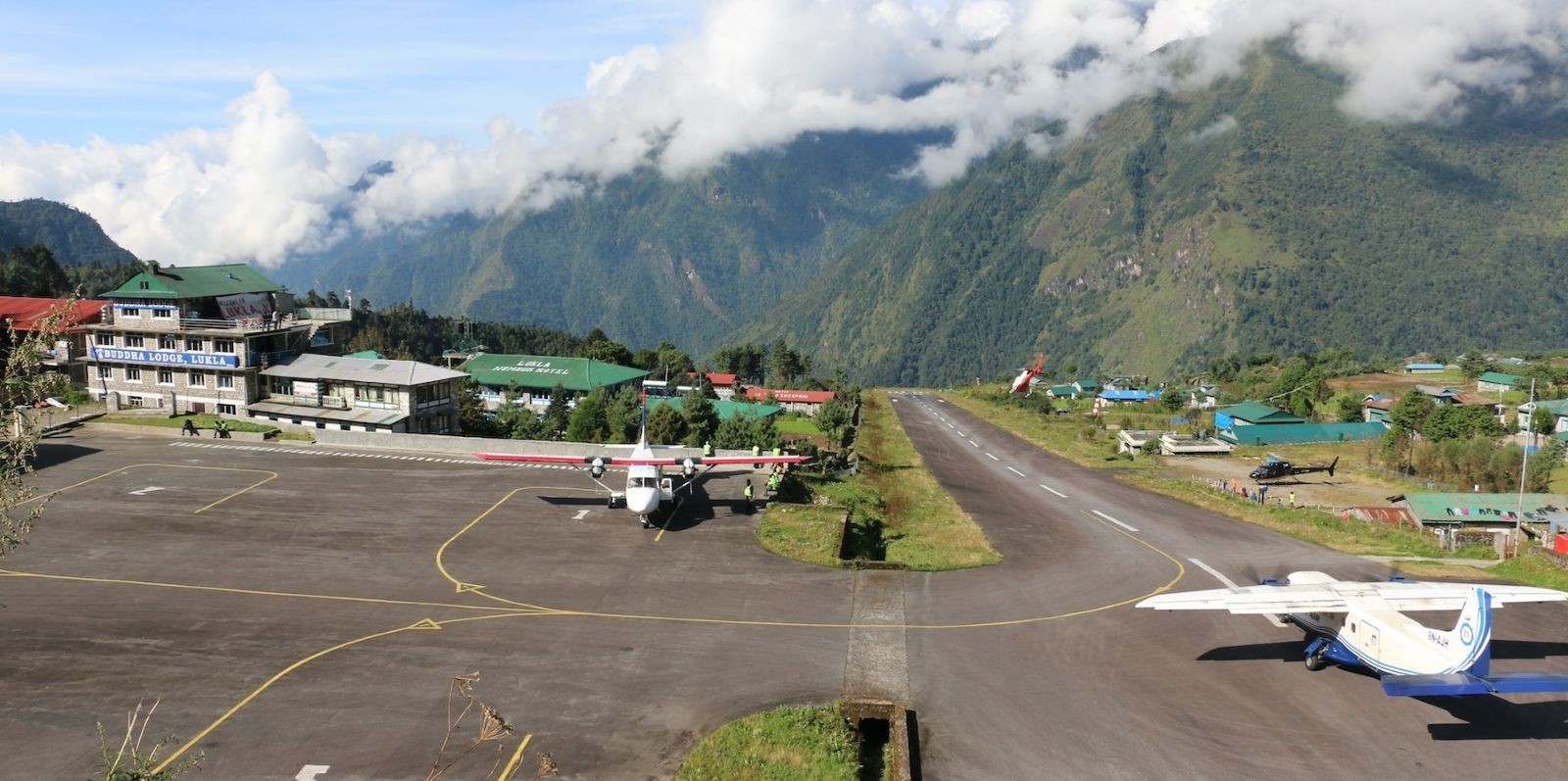
Actually, the figures represent a useful guide for the overall range, but make sure to treat them as such rather than a set price. Airlines, regulations, fuel prices, seasonal restrictions and other factors can affect the final Kathmandu to Lukla cost.
| Transportation Option | USD Approximate Planning Cost | Main Consideration |
|---|---|---|
| Kathmandu → Lukla | 255-285 one way | Off-peak/when operating from Kathmandu |
| Lukla → Kathmandu | Similar planning range | Depends on current airfare |
| Ramechhap → Lukla | 185-210 one way | Common during peak periods |
| Kathmandu → Ramechhap | 20-30 shared | Usually 4-5 hours by road |
| Shared helicopter | 500-700 per person | Depends on availability and size |
| Private helicopter | Several thousand USD per charter (4500USD) | Depends on aircraft and passengers |
| Kathmandu → Thamdanda | 380-500+ per vehicle-Private (USD 65-75 sharing- one way) | Depends on vehicle and road conditions |
Importantly, the figures represent a realistic planning range, although current 2026 sources show considerable differences between operators. Always double-check the final price before making any arrangements.
A reasonable planning estimate suggests an approximate USD 255-285 per person one way for a foreign traveler when flights operate from Kathmandu. Current 2026 fares match the guidance, depending on the airline.
Thus, a return flight ticket can then represent a rough USD 510-570 per person before additional transportation expenses, although 2027 fares can change. Always confirm the final price with your chosen EBC trekking company.
During peak periods, some Lukla flights operate from Ramechhap Airport near Manthali rather than Kathmandu. Current 2026 planning guidance suggests a USD 185-210 one way for a foreign traveler.
In fact, the lower airfare does not include the Kathmandu to Manthali road transfer, which generally costs around an additional USD 20-30 per person for shared transportation.
Likewise, the road transfer also takes around 4-5 hours on average with the additional challenge of departing around midnight or early morning for the Lukla flight if you are flying from Manthali. It happens during peak seasons ( Autumn and Spring).
A standard EBC trek package should state clearly whether the return flight from Lukla is included or not. If you buy tickets separately, budget for one more one-way fare from Lukla.
Likewise, the return fare also depends on the weather, so it is worth discussing extra days in Kathmandu if your international travel schedule allows.
Lukla flights tend to be highly restricted by mountain weather conditions. Delays and outright cancellations are not uncommon due to reduced visibility and airport restrictions.
The additional days can lead to extra costs for :
When creating your EBC budget, you must consider the possibility of delays or disruptions. A good EBC trekking company should help with the necessary reorganization.
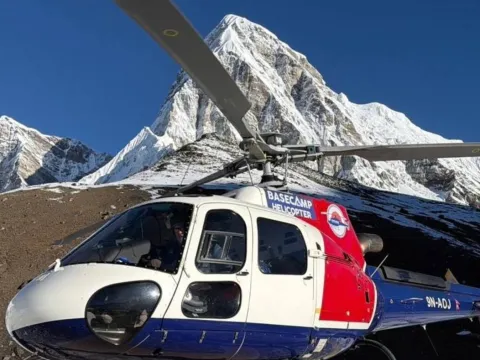
A helicopter offers a far more expensive alternative to a fixed-wing flight. Current 2026 costs suggest around a USD 500-700 per person for a shared helicopter seat, with private charters costing several thousand dollars ( 4500 USD), depending on the aircraft and number of passengers.
Importantly, helicopter travel remains subject to the same weather restrictions as fixed-wing aircraft.
A road-based alternative can replace the flight to Lukla, with one option involving a drive toward Thamdanda or Surke via Salleri or another road-accessible area before continuing on foot.
Here, current 2026 road access guidance places Thamdanda/Surke( below Lukla) among the available road endpoints for an overland approach to Everest. Private vehicle costs vary considerably but reach around a USD 380-500+ per vehicle, depending on conditions.
But, sharing jeep from Kathmandu to Surke costs between USD 65-75 per seat one way.
In summary, the road-based alternative removes the dependency on flight conditions but also requires additional trekking days.
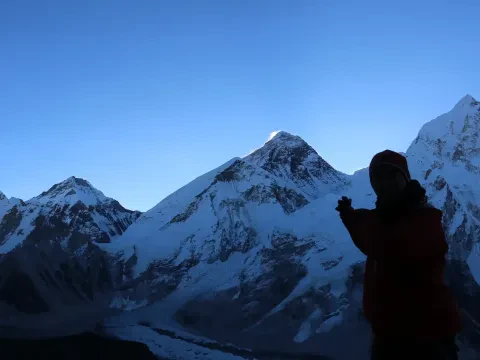
There is no single cheapest transportation option for every situation. A shared Ramechhap transfer and fixed-wing flight can represent a good choice during busy periods, while a road-based approach can be preferable for larger groups in shared private jeeps.
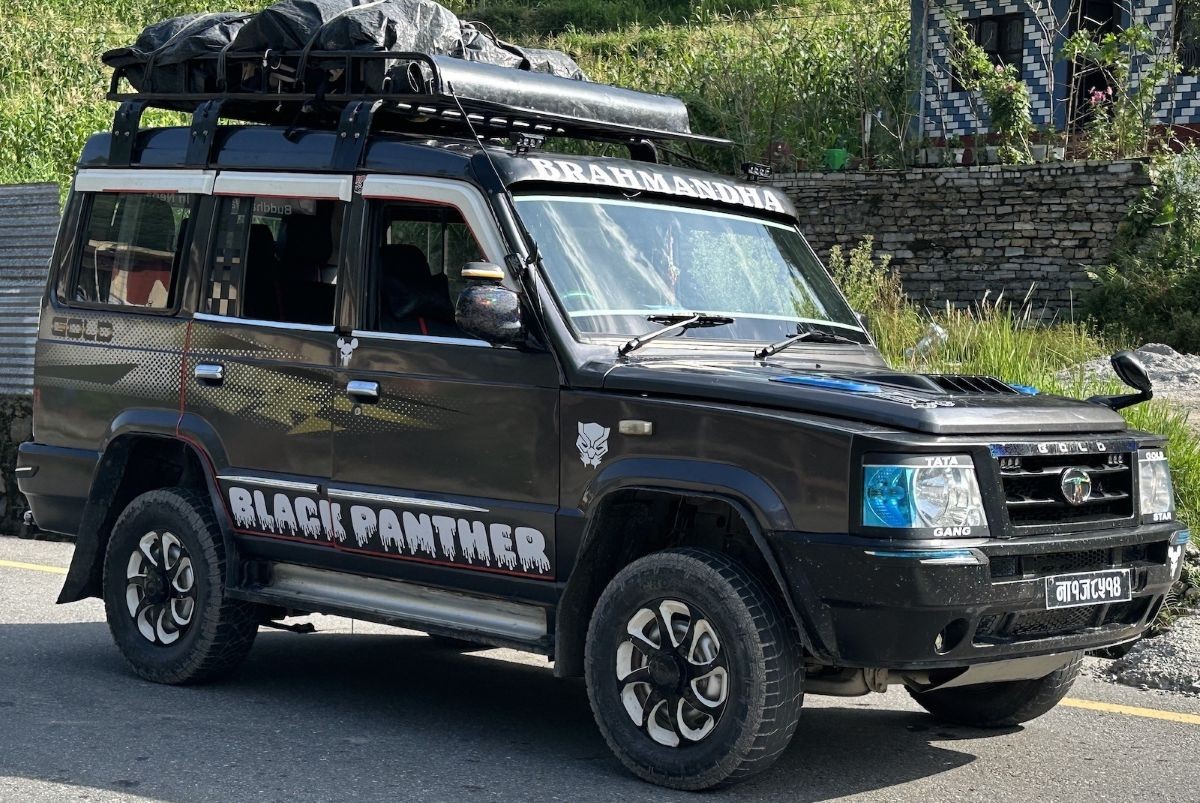
However, the overall cheapest option is not always the best value, with total time, comfort, flexibility and additional days all playing a role.
Before making any payments, ensure that :
As a general rule, treat current fares as a guidance when budgeting for the 2027 EBC trek. Always confirm the actual price before making any commitments. This way, you can ensure the accuracy of the USD 1,375-2,355 range for a standard EBC trek.
The main on-trail costs consist of permits, accommodation and food. These are the largest elements of your Everest Base Camp Trek budget, particularly accommodation and food which increase in cost with longer trekking days.
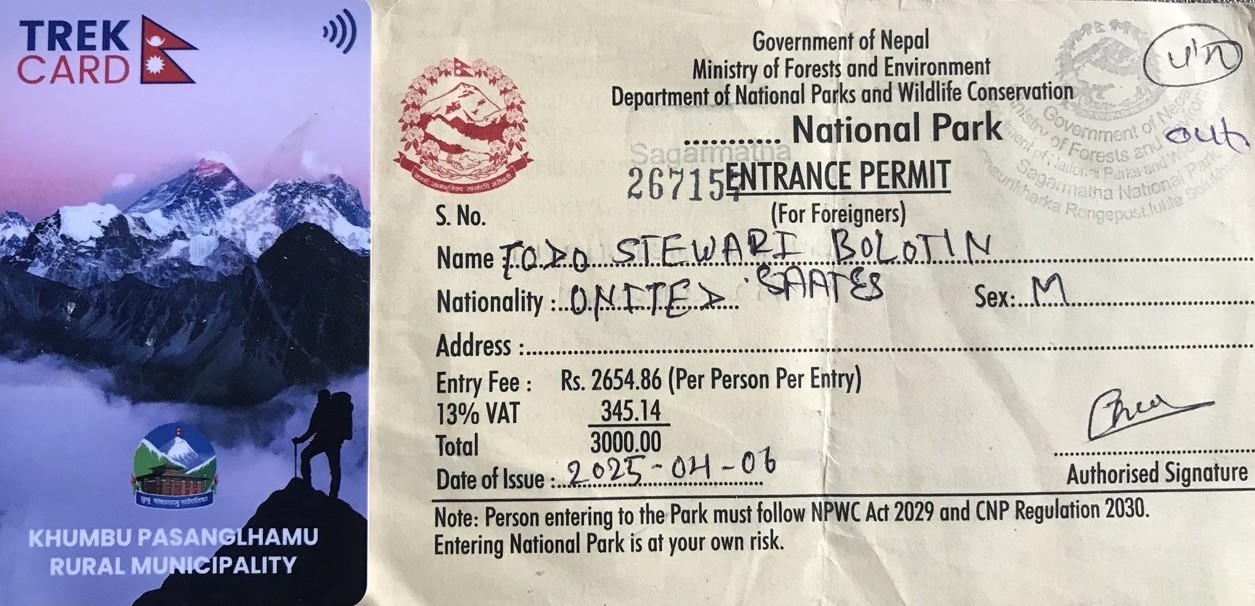
For 2027 planning, the current Sagarmatha National Park entry is NPR 3,000 for foreign visitors. The Khumbu Pasang Lhamu Rural Municipality also has a fee (Rs 3000 for foreigner), and TIMS requirements should be assessed under the latest rules before departure.
| Permit | Fee 2027 Planning Guidance | Cost Feature |
|---|---|---|
| Sagarmatha National Park | NPR 3,000 currently | Mostly fixed |
| Khumbu Pasang Lhamu Rural Municipality | NPR. 3000-Check latest official rate | Mostly fixed |
| TIMS | Depends on current rules | Depends on applicable rules |
| Local or government fees | Depends on current regulations | Mostly fixed |
Here, the 2027 EBC trek permit cost will most likely change before your trip departs, therefore the figures above should be treated as planning guidance rather than guaranteed 2027 rates.
However, the Sagarmatha National Park entry fee is now listed by Nepal Tourism Board at NPR 3,000 for foreign visitors, while SAARC visitors currently pay NPR 1,500.
Likewise, there is also a Khumbu Pasang Lhamu Rural Municipality fee applicable to Everest region trekkers, the current rate for which should be confirmed before making any bookings as these can change between trekkers.
In addition to, TIMS requirements can also vary depending on current trekking rules and route, therefore your trekking agency should confirm whether TIMS is applicable and if it is included in your package.
Teahouses provide the standard accommodation on the EBC route, with a basic room costing around USD 5-15 at lower elevations and going up to around USD 10-25 per night or higher at mid and higher elevations.
Here, it is important to note that teahouse prices can be misleading if considered in isolation, as many will keep room rates relatively low while expecting you to eat your meals at the same lodge.
| Accommodation | Approximate planning range |
|---|---|
| Lower-elevation teahouse | USD 5-15 per night |
| Namche area | USD 10-30 per night |
| Mid-route teahouse | USD 8-20 per night |
| Lobuche/Gorak Shep area | USD 10-25+ per night |
| Private/upgraded room | Higher and availability-dependent |
Mainly, twin-sharing rooms are common on organized treks, while private rooms may be available in some villages and become more basic at higher elevations.
Likewise, bathrooms may be shared at higher elevations, while hot showers, Wi-Fi and charging are commonly available extra charges.
Prices increase the further you go on the EBC route as supplies have to be brought further and transportation becomes more difficult at higher elevations.
For example, accommodation around Lobuche and Gorak Shep is likely to cost more than similar accommodation at lower elevations, and this also applies to food, hot showers, charging and any other extra charges.
Therefore, avoid using Kathmandu prices as a guide for EBC accommodation cost as remote mountain services increase in price due to greater transport and supply costs.
Food will depend on the number of trekking days and what you choose to eat, with a planning range of around USD 25-40 for food and basic lodging together per person per day, although this will vary depending on elevation and comfort.
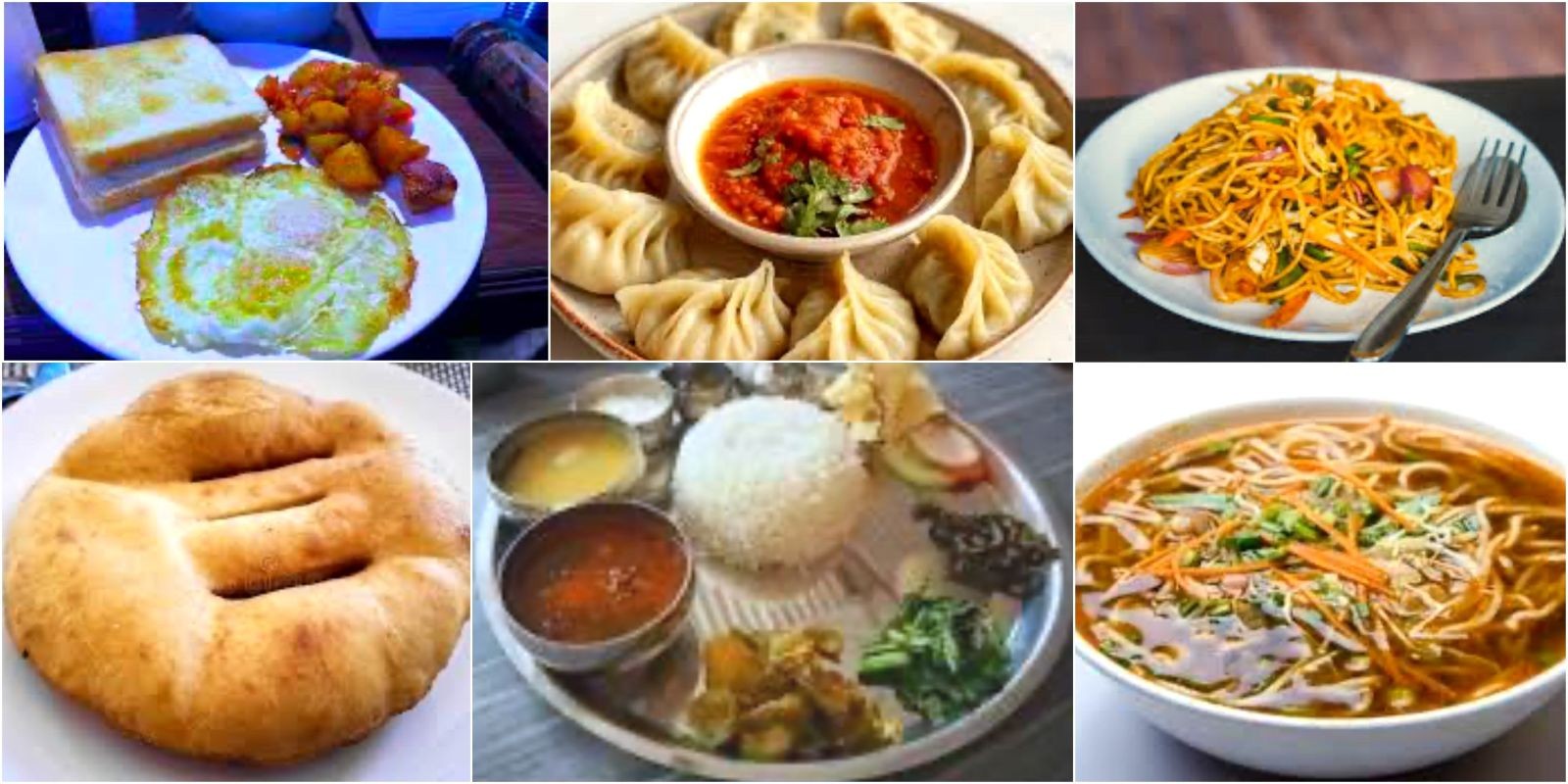
Breakfast :
As with accommodation, prices increase the further you get on the EBC route, as it becomes harder to bring food to higher elevations.
Similarly to accommodation, a meal in Gorak Shep will also likely to be more expensive than one at lower elevations such as Lukla or Namche. The same applies to drinks, with current published estimates showing boiled water increasing substantially towards Gorak Shep.
Thus,tThis is why Everest Base Camp food cost should be calculated according to your entire itinerary and duration, with more days and higher daily spending creating a noticeable impact to your overall food cost.
With meals and accommodation often being included in an organized EBC Trek, if they are not it is a reasonable planning allowance to budget around USD 25-40 per person per day for basic food and accommodation plus extra money for snacks, drinks, showers, charging and Wi-Fi.
Therefore, always check if your quoted EBC Trek package includes breakfast, lunch, dinner and teahouse accommodation.
For 2027 planning, a licensed Everest trekking guide can cost roughly USD 25-40 per day, while a porter commonly costs around USD 18-30 per day depending on experience, service level and arrangement. Current 2026 market sources show similar ranges.
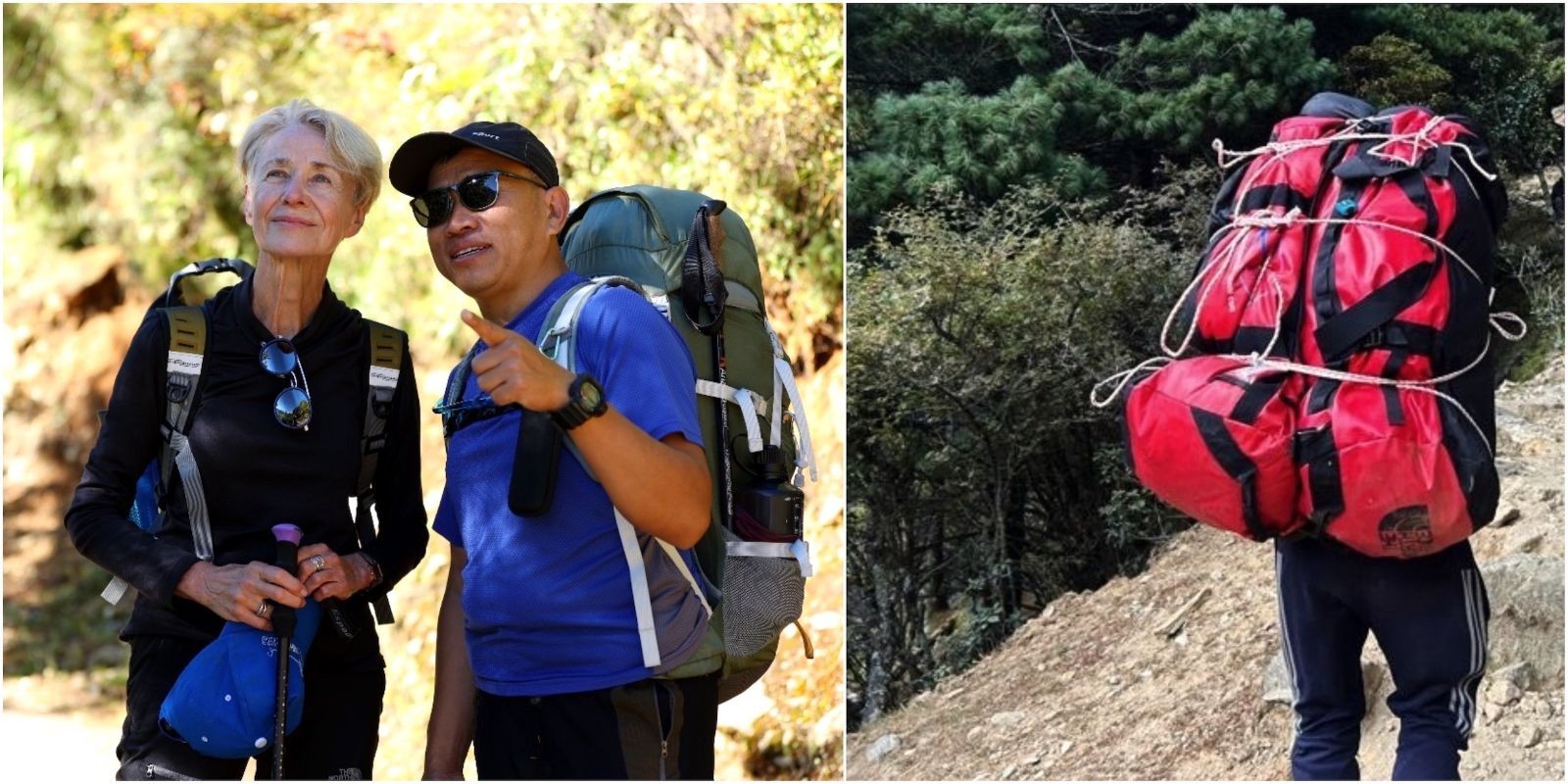
Here, these are planning figures rather than set wages for 2027 and in an organized EBC Trek, guide and porter costs are normally bundled in to the package price.
A licensed guide can be around USD 25-40 per day for planning purposes, with more experienced, senior guides often costing more, especially for private trips and specialized itineraries.
Here, this means that for a 14-day trek, the basic guide service could represent around USD 350-560 before factoring in how the operator has structured any staff meals, accommodation, insurance and other employment costs.
A porter commonly costs around USD 18-30 per day, with current published market figures commonly around USD 20-25 and some higher service arrangements costing more.
Actually, a porter generally carries the luggage for two trekkers, although this depends on the agency and weight of luggage.
Similarly, responsible trekking also means that you respect porter weight limits, with current industry guidance commonly around a maximum of 30 kg per porter and many EBC operators planning around 20-25 kg.
One porter for two trekkers is a common arrangement, while allowing the porter to carry collectively-owned luggage this keeps the weight manageable for the porter and spreads cost between two trekkers.
For example, two trekkers could share a couple of duffel bags while having a small daypack each, although those with heavier luggage or special needs may require an additional porter.
One porter can carry maximum 25 kg load collected from two trekkers.
A group trek spreads the cost of a guide across multiple trekkers and is therefore more economical per person.
A private guide works with your group or family specifically, providing greater flexibility with walking pace and other activities, although cost per person may be higher.
| Service | Approximate planning cost | Best for |
|---|---|---|
| Licensed guide | USD 25-40/day | Safety, logistics and guidance |
| Porter | USD 18-30/day | Carrying trekking luggage |
| Private guide | Higher per person (USD 40-60) | Families and private groups |
| Group guide | Shared cost | Budget-conscious trekkers |
| Porter for two trekkers | Common arrangement | Luggage support |
A guide is far more than someone who walks with you, they provide navigation and guidance for the route, as well as managing your itinerary, accommodation and communication with teahouses and other lodges.
Meanwhile, a good guide will be able to manage your condition at altitude and recognize any warning signs, while also providing access to any emergency or specialist services that you may need.
Other responsibilities can include :
Therefore, guide cost should be considered as part of your safety and logistics budget, rather than an extra expense.
A porter carries the main luggage between lodges, allowing you to walk lighter and with less strain.
Here, porters may also carry personal clothing and sleeping gear, however they should not be expected to carry excessive weight and should be provided with appropriate working conditions and insurance.
This will depend on the package, with professional trekking agencies providing for staff wages, accommodation, meals, insurance and any other necessary costs. However, mostly, the guide and porter foods, their accommodation, transportation and insurance are included in the cost.
Importantly, those hiring staff independently will normally have to budget for these separately, therefore always ask if the daily staff rate quoted is all inclusive or for the basic wage. Current market sources show that staff food, accommodation and insurance can be separate costs in some arrangements.
Tipping is normally not included in the advertised trekking price and is a personal choice to reward good service from guides, porters and other staff.
Here, current operator guidance commonly suggests around USD 8-15 per day for a guide and USD 5-10 per day for a porter, depending on service quality and group size, although this is entirely up to the client.
Mainly, the important thing is to treat it as a separate charge outside of regular wages, as staff should receive fair contracted pay regardless of whether a tip is given.
Before booking an EBC Trek package, check :
In conclusion, a reliable EBC Trek package should provide clear information on these, with a slightly higher price representing greater value if it includes properly paid staff, reasonable porter loads, insurance, accommodation and emergency coordination.
The advertised Everest Base Camp Trek cost of 2027 does not always cover all the expenses of the journey. Therefore, it is important to separately budget for personal expenses, optional services, delays and unforeseen costs.
Likewise, it is important to understand that these hidden costs on Everest Base Camp Trek can add significantly to the price of a cheap package.
Moreover, some of the expenses increase naturally as one travels to higher altitudes in the Khumbu region.
| Extra Expense Type | Typical Cost Feature | Why You May Need It ? |
|---|---|---|
| Nepal tourist visa | Fixed by visa type (USD 30) | Required for most foreign visitors |
| Travel insurance | Variable | Depends on coverage and duration |
| Helicopter evacuation | Potentially very high | Emergency situations |
| Hot showers | Pay per use (USD 2-5) | Limited mountain service |
| Wi-Fi | Pay per use ( USD 2-5) | Available at many teahouses |
| Charging | Pay per use ( USD 2-5) | Electricity becomes limited |
| Bottled water | Variable (USD 2-4) | Prices rise at higher elevations |
| Snacks | Variable (USD 2-6) | Personal preference |
| Drinks | Variable ( USD 2-6) | Tea, coffee and soft drinks |
| Laundry | Pay per service (USD 2-7 per kg) | Useful on longer treks |
| Gear rental | Variable | Depends on equipment needed |
| Tips | Personal choice (USD 18-40) | Guides and porters |
| Extra | Kathmandu nights | Per night Flight delays or itinerary changes |
| Flight delays | Variable | Weather and operational disruptions |
| Emergency accommodation | Variable | Delays or route changes |
A pragmatic traveler can easily set aside around USD 150-300 or more for personal and unexpected expenses. At the same time, one’s spending will also depend on the chosen itinerary, level of comfort and personal habits.
For example, a more tech-savvy traveler will spend more on Wi-Fi and hot showers at teahouses. Similarly, one’s EBC Trek personal expenses may rise significantly if one buys snacks and drinks on a regular basis.
Typically yes – these services are not included in the basic teahouse stay. Moreover, the prices for such services may rise significantly at higher altitudes.
Therefore, it is important not to assume that your accommodation package covers all the bases. It is better to clarify with your trekking company what services are actually included.
One should expect to pay more for water and drinks as one climbs higher. In general, bottled water, tea, coffee, soft drinks and other beverages are personal expenses, unless one’s package specifically states otherwise.
Using a water purification system can not only save money, but also significantly reduce plastic waste on the trail.
Yes, if one does not have appropriate equipment for a high-altitude trek. Sleeping bags, down jackets, trekking poles and some other gear can usually be rented in Kathmandu.
It is important, however, to bring suitable trekking boots from home. Buying inappropriate shoes or renting them without breaking them in can lead to blisters and other issues.
Delayed flights should receive particular attention on the Everest Base Camp Trek. Reduced visibility, wind, haze or other factors can create turbulence and lead to the cancellation of Lukla flights.
A flight delay can create additional costs for :
Therefore, it is wise to have an emergency fund allocated for such situations. Having a flexible ticket for international travel can also be beneficial.
In most cases, helicopter rescue should not be considered as part of the base price for a trek. Even more importantly, travel insurance and helicopter rescue are not the same thing.
Importantly, it is vital to have an appropriate insurance policy that actually covers helicopter rescue. It is also important to study the fine print regarding the altitude covered and other restrictions.
Unforeseen flight delays and other incidents can create some of the largest unplanned costs. Extra hotel accommodation and transport can quickly balloon the final cost of a trip.
Thus, this is why a responsible Everest Base Camp Trek budget should include an emergency fund. A low advertised price might mask the final amount that one actually spends on the trek.
Before making a deposit, it is important to request a complete list of inclusions and exclusions from one’s trekking company.
Make sure to clarify:
In conclusion, revealing the full range of services is more important than shopping around for the cheapest package. A slightly more expensive option can actually be more cost-effective if some services are included.
The cheapest Everest Base Camp Trek is usually a shared group trek, while private and premium itineraries are more expensive. Although independent trekking may seem cheaper because one avoids some agency costs, it requires independent organization of many components.
Therefore, the choice of the trekking option should be made based on one’s experience level, financial priorities and preferred degree of independence.
| Trek Style | Approx. Cost Level | Best For |
|---|---|---|
| Independent | Lower to moderate | Experienced trekkers |
| Group Trek | Moderate | Budget-conscious travelers |
| Private Trek | Higher | Flexible itineraries |
| Premium Trek | Higher | Extra comfort |
| Helicopter Option | Highest | Time-conscious travelers |
Here, these are approximate planning categories, rather than fixed 2027 prices. In reality, the price can vary significantly depending on the content and level of service.
It can be, especially for those who have the necessary skills and confidence. By selecting a budget teahouse option, one avoids many additional costs. One also avoids many service charges normally imposed by agencies.
On the other hand, independent trekking requires one to organize all aspects of the journey. This includes transport, permits, accommodation, food, route finding and other details. Thus, lowest price is not always the most cost-effective option.
Yes – and one also receives the benefit of a traveling companion. Group trekking divides many costs between participants. This makes it one of the most economical organized options. In addition, the social aspect of a multi-day trek is invaluable.
A private trek is typically more expensive because it is specifically organized for one’s party. On the other hand, one receives greater flexibility concerning the route and other details.
One can usually negotiate :
A premium trek is more about luxury and comfort. There may also be opportunities for extra acclimatization, special photography stops and other amenities. The higher standard of hotels in Kathmandu and other aspects can also contribute to a more comfortable stay.
On the other hand, even on a premium trek, one still camps or stays in teahouses. Thus, the level of comfort is still quite limited.
Yes – but it also allows one to reach Everest Base Camp in record time. This option is also ideal for those who want to experience the Himalayas from above.
On the other hand, helicopter travel depends on the weather and other factors. Therefore, it is not always possible to use such a service even when regular flights are closed.
For most first-time Everest Base Camp Trek enthusiasts, a well-organized group tour is most cost-effective. This option provides the greatest level of security at a moderate price. At the same time, a private tour is more appropriate for those who value flexibility and comfort.
Here, an independent trek is good for those who have the necessary experience and skills. On the other hand, most travelers will not receive sufficient support in case of an emergency.
In any case, it is important to look at the entire picture. There is no single best EBC Trek price 2027, only different options that suit different people. Compare the content of the packages, the staff support, the standard of accommodation, transport, permits, emergency services and other details.
You can cut your Everest Base Camp Trek 2027 costs without sacrificing safety. However, smart savings mean eliminating unneeded spending, not vital services. Therefore, focus on smarter planning, level of comfort, and quality of trekking support.
Joining a small group can reduce trekking costs as you will share expenses. Moreover, a small group size still offers professional support throughout the climb.
Additionally, a group can provide you with travel companionship. Hence, group trekking can cut costs and enhance safety.
A standard teahouse package is sufficient for most trekkers. You can enjoy a basic but clean accommodation, meals, and other services. Hence, you do not have to pay for a luxury teahouse experience when an average one will suffice for a comfortable EBC Trek.
However, ensure that you understand exactly what the teahouse package includes before booking to avoid nasty surprises.
You do not have to buy all the gear you need for the Everest Base Camp Trek. You can rent gear in Kathmandu, Thamel when necessary to cut costs.
However, make sure to examine the gear condition, warm enough, and cleanliness before renting any equipment.
Luxury rooms, meals, and transport come at a steep price. Therefore, you should only consider them if they will enhance your trekking experience.
Teahouse EBC Trek already provides teahouse services at a reasonable rate. Hence, a teahouse experience is sufficient to offer you the necessary comfort during the climb.
Reusable water bottles can help you save considerably on the EBC Trek water costs. You can refill your reusable bottle with boiled, filtered, or treated water at various points along the trail.
Furthermore, bringing a reusable bottle is an economical and responsible way of reducing plastic waste on the Everest trail.
A reliable local operator can help you cut costs while offering critical services. They could provide you with emergency support services, porter service, local guide, permits, and other vital services.
For example, Haven Holidays Nepal can organize your Everest Base Camp Trek with all the necessary services. However, ensure you understand a comprehensive list of inclusions and exclusions before finalizing your booking.
The cheapest package is not always the best value. Comparing what different operators include in their packages is a smarter way of finding the best budget-friendly Everest Base Camp Trek deals.
| Cost Area | What to Look For |
|---|---|
| Flights | Return Lukla Flight Inclusions |
| Accommodation | Accommodation Nights Covered by the Package |
| Meals | Meal Plan Covered by the Package |
| Guide | Guide Service Inclusions |
| Porter | Porter Service Inclusions |
| Permits | Permits Covered by the Package |
| Transfers | Airport and Kathmandu Transfers Inclusions |
| Emergency Support | Emergency Support Services Offered |
| Insurance | Travel Insurance Coverage Inclusions |
| Extra Costs | Inclusions of Extra Costs such as Showers, Wi-Fi, and Charging |
A comparison of the inclusions and exclusions of various packages will help you find the best affordable Everest Base Camp Trek deals.
Some costs are non-negotiable when it comes to the Everest Base Camp Trek. You should never compromise on travel insurance, appropriate clothes, good trekking boots, and other safety necessities.
Besides, you should not risk cutting costs on allowances for acclimatization. Your acclimatization schedule should be sufficient to help your body adapt to the mountainous conditions.
Similarly, you should never compromise on personal safety, health, and comfort to save on costs. Walking tours without adequate provisions is a recipe for disaster.
Importantly, always remember that the best way to save is to reduce unneeded luxury items and leave room for essential items such as insurance, gear, acclimatization allowances, good support systems, and contingency funds.
The realistic total budget for Everest Base Camp Trek 2027 will depend on your travel needs and preferences. While your trek package cost will provide most of the essential services for the climb, it might not include all your personal requirements for the journey. Below is a budget range for a typical Everest Base Camp Trek:
A budget trekker refers to a traveler who selects a standard group trekking package and reduces personal spending on the climb. The trekkers select the standard guided group package that provides the basic needs for the trip while eliminating personal expenses.
A budget trekker usually includes:
Here, the budget trekker option is suitable for individuals who prefer an adventurous and authentic experience on the Everest Base Camp Trek without the unnecessary upgrades and extras.
A standard trekker refers to a traveler who selects a reasonable group trekking package and increases personal spending on the climb. The trekkers select the reasonable guided group package that provides moderate needs for the trip while increasing personal expenses.
A standard trekker usually includes:
Thus, the standard trekker option is suitable for most international trekkers who prefer a comfortable experience on the Everest Base Camp Trek. However, personal expenses will still vary depending on the itinerary and personal preferences of the trekker.
A premium trekker refers to a traveler who selects a luxurious private trekking package and increases personal spending on the climb. The trekkers select the luxurious private group package that provides all the necessary needs for the trip while increasing personal expenses.
A premium trekker usually includes:
Here, the premium trekker option is suitable for individuals who prefer a luxurious and comfortable experience on the Everest Base Camp Trek. However, personal expenses will vary depending on the itinerary and personal preferences of the trekker.
Note that the optional helicopter services could raise the expense budget considerably and should be regarded as an enhancement or time-saving luxury rather than a necessary expense.
If you are a standard trekker, the range of about USD 1,850 – 2,350 is appropriate for the Everest Base Camp Trek 2027. Your total trip budget should provide you with a comfortable experience, normal personal expenses, and should not include international airfare.
If you are a budget trekker, a range of about USD 1375-1,850 is sufficient to enjoy a good but careful spending experience on the EBC Trek 2027. However, a premium experience on the EBC Trek will cost you a minimum of USD 2,500.
Therefore, you should also consider having an emergency reserve budget to allow for any unplanned costs during the expedition.
This is one of the most crucial considerations when determining the realistic total budget for the EBC Trek 2027. While the trekking package usually covers most of the primary costs of the trekking, personal and international expenses could be separate.
| Expense | Usually Part of Trek Package? |
|---|---|
| International airfare | No |
| Nepal visa | Usually no |
| Travel insurance | Usually no |
| Trek package | Yes |
| Guide and porter | Usually yes |
| Teahouse accommodation | Usually yes |
| Trekking meals | Usually yes |
| Required permits | Usually yes |
| Personal snacks and drinks | Usually no |
| Hot showers | Usually no |
| Wi-Fi and charging | Usually no |
| Laundry | Usually no |
| Tips | Usually no |
| Extra hotel nights | Usually no |
| Emergency evacuation | Usually no |
Therefore, always compare the entire range of inclusions and exclusions provided by various local trekking operators before finalizing your booking decisions.
In short, a realistic 2027 EBC budget starts around USD 1,375 for a careful budget, around USD 1,850 – 2,350 for a comfortable standard experience and above USD 2,500 for a premium experience. These figures are only estimates and actual 2027 prices, fares, and other costs might differ considerably before your expedition.
1. How Much Does the Everest Base Camp Trek Cost in 2027?
The Everest Base Camp Trek cost in 2027 can range from about USD 1375 to USD 2,355, depending on the itinerary, group size, transportation, accommodation, guide, porter, and services included. Budget packages cost less, while private, longer, and premium options cost more. The final price should always be checked against the package inclusions.
2. What Is Included in the Everest Base Camp Trek Cost?
The Everest Base Camp Trek cost commonly includes accommodation, meals during the trek, a guide, porter support, required permits, ground transportation, and airport or hotel transfers, depending on the package. Some packages also include domestic flights. Always compare inclusions carefully because Wi-Fi, hot showers, charging, tips, insurance, and personal expenses are often excluded.
3. How Much Does a 14-Day Everest Base Camp Trek Cost?
A 14-day Everest Base Camp Trek can cost approximately USD 1375 to USD 2,355 or more, depending on the service level and group size. A standard package generally includes teahouse accommodation, meals, guide and porter services, permits, and transportation. Private rooms, premium accommodation, flight upgrades, and additional services can increase the total cost.
4. How Much Do Guide and Porter Services Cost for Everest Base Camp Trek?
The guide and porter cost for Everest Base Camp Trek depends on experience, duration, group size, and whether the service is private or shared. Generally, the guide costs USD 30-40 and the porter USD 25-35 per day. Rather than choosing only the cheapest option, prioritize licensed, experienced staff with appropriate insurance and equipment. A good guide also helps with route decisions, acclimatization, communication, and emergencies.
5. How Much Do Lukla Flights Cost for Everest Base Camp Trek 2027?
The Lukla flight cost for Everest Base Camp Trek 2027 will depend on airline pricing, season, departure airport, and government or aviation changes. Fares can change before 2027, so an exact price should not be presented as guaranteed now. Travelers should also budget for possible Manthali transportation when seasonal flight operations require it.
However, it is expected to have the cost between USD 185-285 depending on the flight point, Kathmandu or Manthali.
6. How Much Do Permits, Accommodation and Food Cost on the EBC Trek?
EBC Trek permit, accommodation, and food costs form a major part of your daily trekking budget. The current Sagarmatha National Park entry fee for foreign visitors is NPR 3,000, according to Nepal Tourism Board. Teahouse rooms and meals become progressively more expensive at higher elevations because supplies require transportation into the mountains.
7. What Extra and Hidden Costs Should You Budget for on Everest Base Camp Trek?
Hidden Everest Base Camp Trek costs can include hot showers, Wi-Fi, electronic charging, bottled or purified water, snacks, laundry, drinks, tips, gear rental, travel insurance, emergency transportation, and personal purchases. Lukla or Manthali transportation changes can also affect your budget. Therefore, keeping a reasonable contingency fund is essential for the EBC Trek.
8. Is Everest Base Camp Trek Cheaper as a Group, Private Trek, or Independent Trek?
A group Everest Base Camp Trek is usually more economical because guide, porter, transportation, and operational costs can be shared. A private trek provides greater flexibility but generally costs more per person. Independent trekking may reduce some package costs, but current regulations, permits, guide requirements, safety, and logistical responsibilities should be considered before choosing this option.
9. How Can I Reduce Everest Base Camp Trek Cost Without Sacrificing Safety?
You can reduce the Everest Base Camp Trek cost by joining a small group, choosing standard teahouses, renting rather than buying expensive gear, avoiding unnecessary luxury upgrades, and carrying reusable water bottles.
However, do not cut costs by skipping insurance, proper acclimatization, experienced guides, essential equipment, or reliable transportation. Safety should remain your first priority.
10. What Is the Realistic Total Budget for Everest Base Camp Trek 2027?
A realistic Everest Base Camp Trek 2027 budget should include the trekking package plus international flights, Nepal visa, insurance, personal expenses, tips, gear, and contingency money. For the trek package itself, USD 1375–2,355 is a useful planning range. Your actual total will depend on whether you choose a budget, standard, private, or premium experience.
Our travel experts are ready to assist you with any questions.
Send us a message.Have a question before you book? Send your enquiry below and our travel experts will get back with the required information.