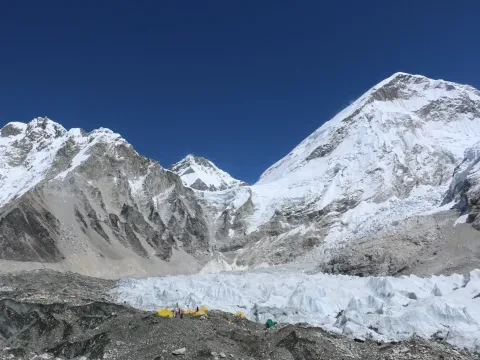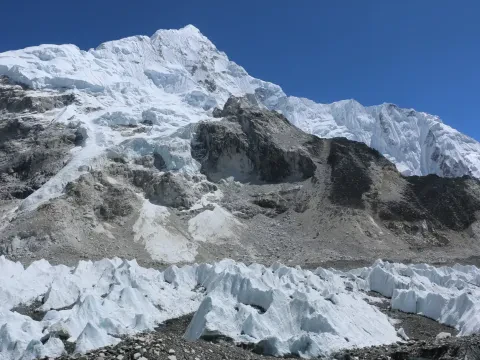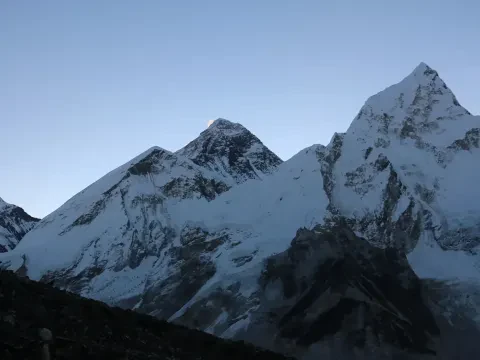
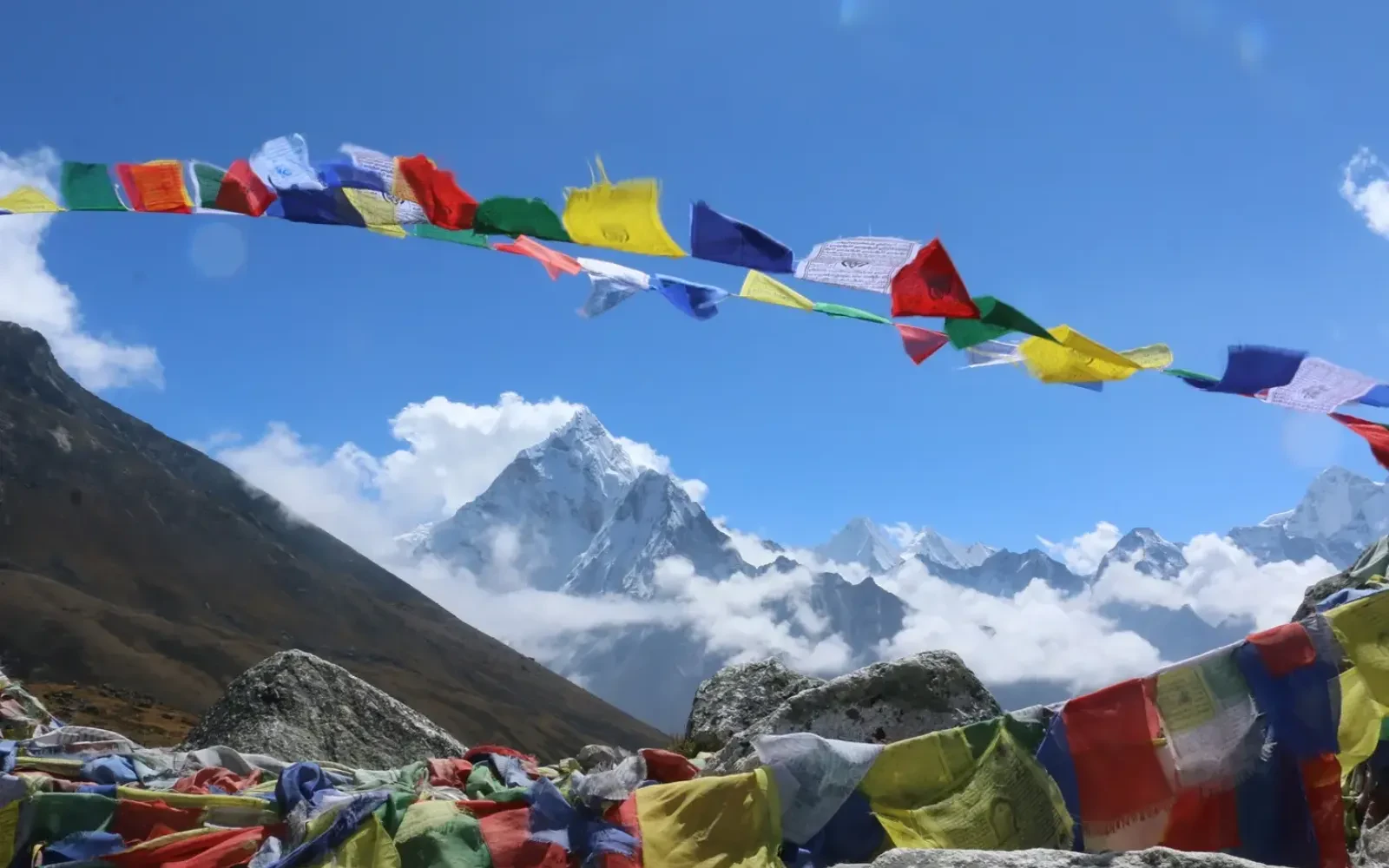
The Everest Base Camp Trek 2027 is a Himalayan hiking route that goes through the Khumbu region of Nepal with the goal of reaching Everest Base Camp (5,364 m) below Mount Everest (8,848.86 m). The route is famous for its dramatic mountain peaks, glaciers, Sherpa communities, Buddhist monasteries, and high-altitude trekking.
Here, the Everest Base Camp Trek 2027 normally takes between 12-16 days depending on the route variations, acclimatization stops, and transport options. The classic route includes Namche Bazaar (3,440 m), Tengboche (3,860 m), Dingboche (4,410 m), Lobuche (4,910 m), Gorak Shep (5,164 m), Everest Base Camp (5,364 m) and Kala Patthar (5,545 m).
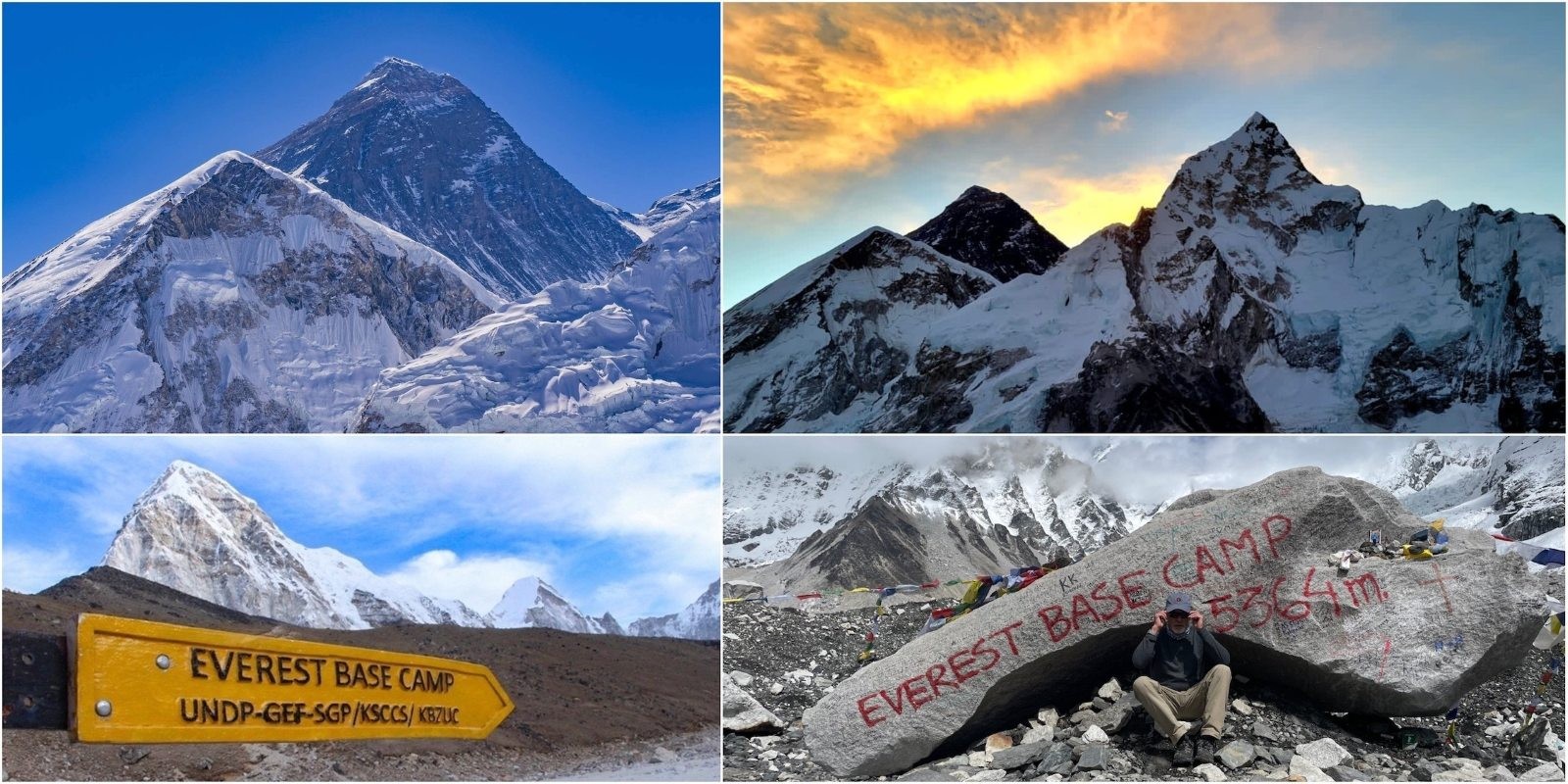
Everest Base Camp Trek 2027 at a Glance :
Top Highlights :
Also, the Sagarmatha National Park is included in the Everest Base Camp Trek 2027 route as it represents an outstanding example of natural mountain-glacier ecosystems, valleys, biodiversity, and the way of life of the Sherpa people.
| Challenge | Importance |
|---|---|
| High altitude | The route goes higher than 5,000 m |
| Long walking days | Multiple days 5-8 hours of walking |
| Ascents | Several days of climbing during the trek |
| Weather | Mountain weather can be unpredictable |
| Acclimatization | Necessary to adjust to high altitude |
Likewise, the most important factor in considering the Everest Base Camp Trek 2027 is the altitude as a higher percentage of people suffer from acute mountain sickness at altitudes above 5,000 m. For instance, Nepal Tourism Board notes that it is crucial to give the body time to acclimatize to the altitude as the Everest region has a sudden increase in altitude.
Thus, an ideal itinerary for the Everest Base Camp Trek 2027 should focus on a gradual increase in altitude rather than reducing the number of days.
Therefore, choose the EBC Trek itinerary 2027 that suits you for the complete safety and comforts.
The ultimate reason to go on an Everest Base Camp Trek 2027 is the chance to experience the world's highest peak Everest in an outstanding landscape. However, the Everest Base Camp Trek 2027 is not only about the mountain as the journey includes discovering the local culture, visiting mountain monasteries, exploring glacial valleys and visiting a UNESCO World Heritage Site.
In particular, first, the Everest Base Camp Trek 2027 is a great opportunity to see some of the most famous peaks such as Everest (8,848.86 m), Lhotse (8,516 m), Ama Dablam (6,812 m) and many others.
In addition, reaching Everest Base Camp (5,364 m) and Kala Patthar (5,545 m) is an incredible feeling that every trekker should experience.
| Experience | Highlights |
|---|---|
| Everest views | Closeup views of the world's highest mountain |
| Sherpa culture | Villages, monasteries, traditions, and hospitality |
| Namche Bazaar | Popular trading center among locals and trekkers |
| Tengboche | Iconic mountain monastery |
| Glaciers | Khumbu Glacier and Himalayan landscapes |
| EBC | Reach 5,364 m height |
| Kala Patthar | One of the best views on Everest |
| National park | Explore a UNESCO-listed landscape of Sagarmatha National Park |
One of the main highlights of the Everest Base Camp Trek 2027 is visiting and viewing the world's highest peak Everest which attracts many visitors every year.
In particular, the most popular viewing point on the Everest Base Camp Trek 2027 is Kala Patthar (5,545 m) offering magnificent views on Everest and other peaks.
The Everest Base Camp Trek 2027 is also a cultural journey discovering the unique local culture and customs of the local people.
For instance, trekkers will have a chance to visit mountain villages inhabited by Sherpa people, Buddhist Monasteries, and experience the local traditions.
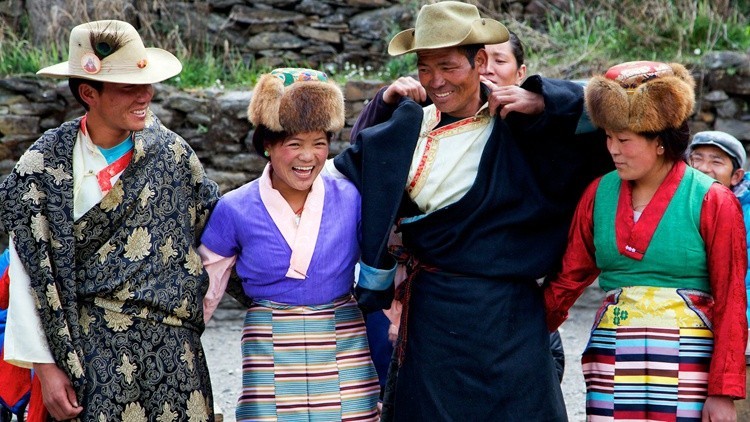
Notably, UNESCO highlights the significance of the bond between the local people and the environment in Sagarmatha National Park.
The Sagarmatha National Park is a UNESCO World Heritage Site with a unique ecosystem with diverse wildlife and vegetation. This natural site is also recognized for its tremendous value in terms of biodiversity, geology, and sociology.
Finally, the Everest Base Camp Trek 2027 is an ultimate test of physical and mental power. Although the journey offers a fantastic view of mountains and unique landscapes, the trek is physically demanding, especially since the altitude reaches up to 5,364 m at Everest Base Camp and 5,545 m at Kala Patthar.
Thus, proper training and acclimatization should be the main priorities in preparation for the Everest Base Camp Trek 2027.
In short, the Everest Base Camp Trek 2027 is not only a journey towards the world's highest peak but also an exploration of nature, culture, mountains, and an ultimate self-challenge.
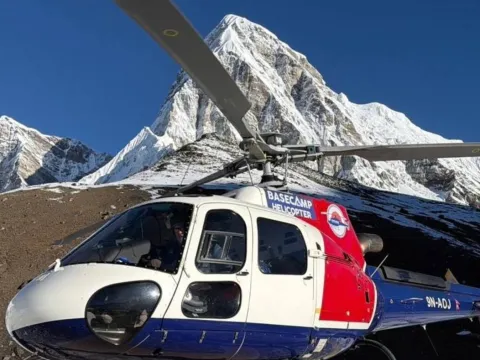
The typical Everest Base Camp Trek duration is between 12 and 16 days. This includes trekking, acclimatization, and travel days between Kathmandu and Lukla.
While a 12-day Everest Base Camp Trek itinerary is good for short trips, the 14-day EBC trek schedule gives more breathing room for acclimatization and weather delays. And including the arrival and departure days, it will be total 16 days.
| Trek stage | Typical days | Approximate altitude |
|---|---|---|
| Lukla - Namche Bazaar | 2 | 2,860 – 3,440 m |
| Namche acclimatization | 1 | 3,440 m |
| Namche - Dingboche | 2 | Up to 4,410 m |
| Dingboche acclimatization | 1 | 4,410 m |
| Dingboche - Lobuche | 1 | 4,910 m |
| Lobuche - Gorak Shep | 1 | 5,164 m |
| Everest Base Camp | 1 | 5,364 m |
| Return trek | 3 - 4 | Descending altitude |
| Total | 12-14 days | - - - |
Because acclimatization is a key part of any Everest Base Camp Trek itinerary, we must not reduce the trek duration by removing acclimatization days.
At Namche Bazaar, trekkers typically spend a day or two exploring the village surroundings, to allow their body to adjust to the altitude.
Likewise, another acclimatization day is usually spent around Dingboche or Pheriche. In fact, the Nepal Tourism Board recommends spending extra days at lower altitudes, and warns against rapid ascents.
| Feature | 12-Day EBC Trek | 14-Day EBC Trek |
|---|---|---|
| Duration | Shorter | More relaxed |
| Acclimatization | Essential | More comfortable |
| Walking pace | Faster | Moderate |
| Weather flexibility | Limited | Better |
| Suitable for | Fit trekkers | Most trekkers |
| Altitude management | Requires discipline | Easier to manage |
| Recommended for | Experienced hikers | First-time high-altitude trekkers |
Here, the 12-day EBC Trek schedule is viable, but the 14-day itinerary allows better altitude management and more flexibility.
Importantly, note that the duration of an EBC trek can vary significantly, due to weather, health, and other factors.
As a rule of thumb, it's a good idea to plan an extra day or two for unexpected delays during your Nepal trip.
The classic Everest Base Camp route goes through Lukla, Namche Bazaar, Tengboche, Dingboche, Lobuche, and Gorak Shep.
Similarly, the trail goes from verdant valleys upwards towards the Himalayan peaks. Thus, the EBC trek elevation gain is a steady increase, rather than sudden gains and losses.
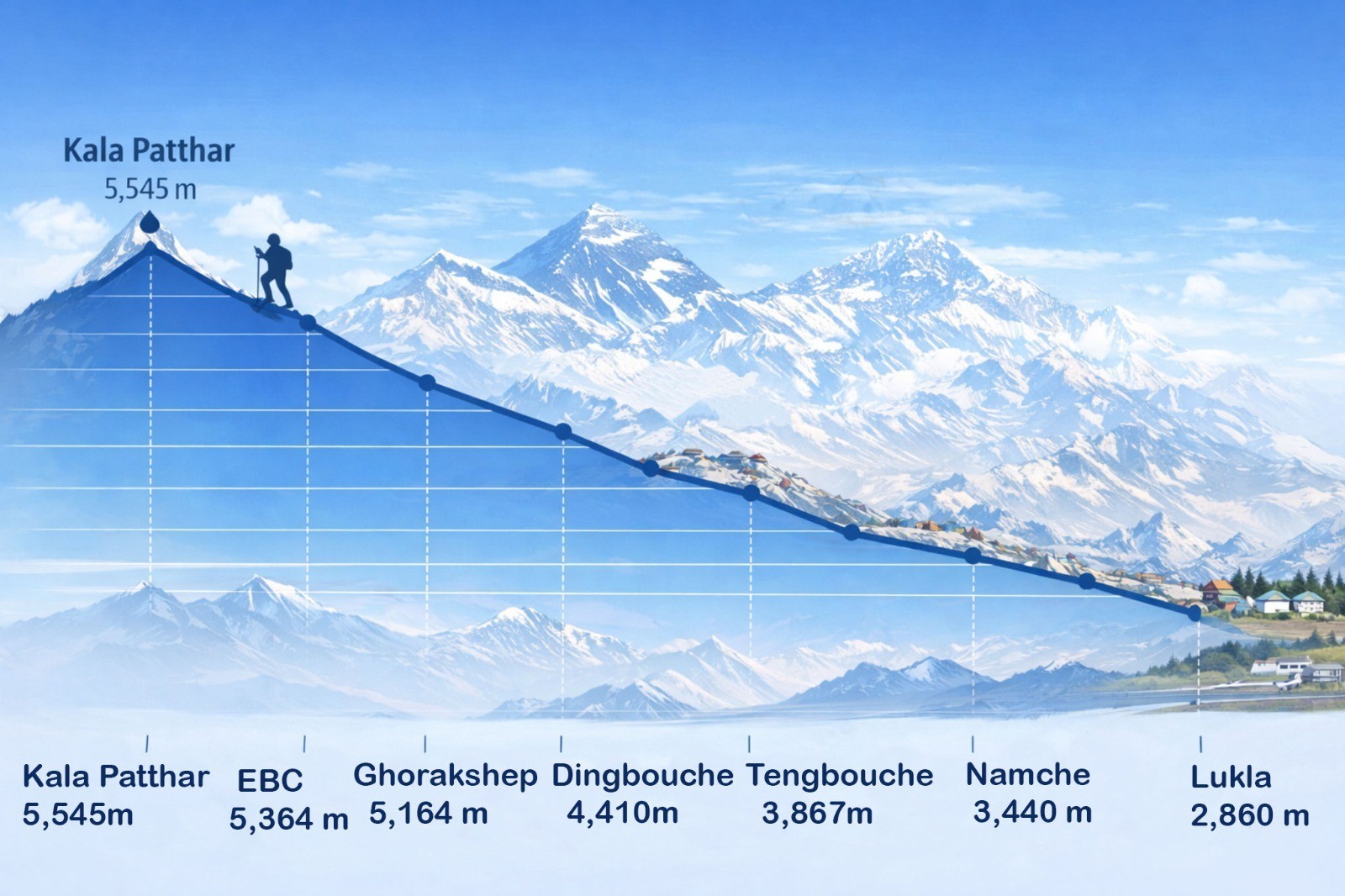
| Location | Approx. elevation | Importance |
|---|---|---|
| Lukla | 2,860 m | Main trekking gateway |
| Phakding | 2,610 m | First overnight stop |
| Namche Bazaar | 3,440 m | Major Sherpa town and acclimatization |
| Tengboche | 3,860 m | Famous monastery and mountain views |
| Dingboche | 4,410 m | Important acclimatization point |
| Lobuche | 4,910 m | High-altitude settlement |
| Gorak Shep | 5,164 m | Last settlement before Base Camp |
| Everest Base Camp | 5,364 m | Trekking destination |
| Kala Patthar | 5,545 m | Famous Everest viewpoint |
The first significant climb on the EBC route is between Lukla and Namche Bazaar.
After that, the trail goes up through Tengboche and Dingboche, towards the high-altitude villages.
Key Stages of the Everest Base Camp Route :
Starting at around 2,860 m in Lukla, the trail ends at 5,364 m in the Everest Base Camp. Thus, the total elevation gain on the EBC trek is about 2,500 m.
However, the actual walking elevation gain is higher than the difference between the two altitudes. This is because the EBC route includes several descents and ascents along the valleys, rivers, ridges, and glaciers.
Importantly, altitude management is one of the main challenges of the EBC trek. Thus, extra precautions, hydration, acclimatization days, and awareness of altitude sickness symptoms are of particular importance.
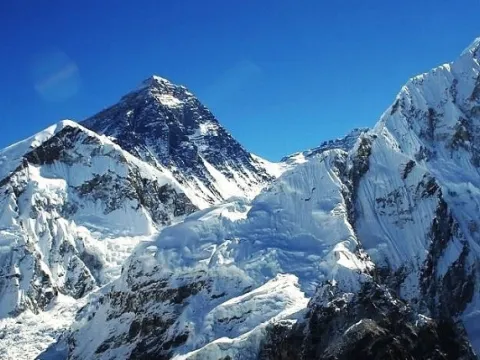
The Everest Base Camp Trail in 2027 should remain focused on the standard walking route above Lukla.
Meanwhile, road construction below Lukla will extend toward the Surke and Chaurikharka regions.
Likewise, main trekking experience should therefore remain largely unchanged. Trekkers will still proceed through Namche Bazaar, Tengboche, Dingboche, Lobuche, and Gorak Shep.
| Expected change | What it means for trekkers |
|---|---|
| Road extension | More overland access toward Lukla |
| Fewer flight-dependent trips | More alternatives with disrupted flights |
| More road traffic | Some lower-route congestion |
| Trail remains protected | Main EBC route continues on foot |
| Changing road endpoints | Require trip-specific road evaluations |
| Better transport choice | Road + flight combination option |
Note that the road construction remains focused below the main protected trail corridor. Therefore, it should not replace the standard walking route through Sagarmatha National Park.
Moreover, a second development will likely involve greater use of road-based EBC itineraries. In 2027, travelers will be choosing Salleri, Thamdanda, or Surke approaches over flights.
But it's important not to overstate the road accessibility in 2027. Monsoon rains can create landslides, mudflows, and washouts on the rugged road approaches.
For EBC Trek in 2027, expect :
Therefore, make sure to evaluate the latest road conditions before departure. Your local trekking agency can advise on the realistic 2027 road endpoint and trail accessibility.
Yes, an Everest Base Camp Trek using road access should be possible in 2027. Current 2026 reports indicate that vehicles are already reaching beyond Salleri toward Thamdanda and Surke regions.
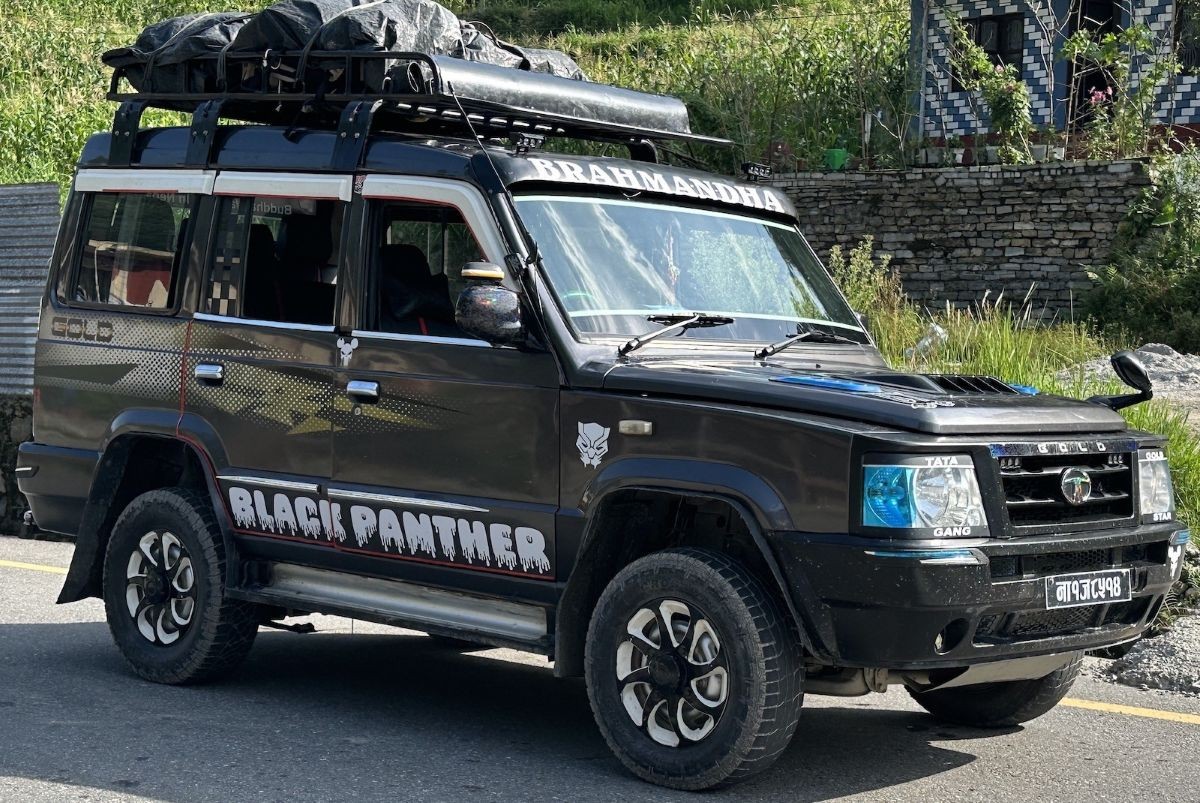
Note that the road does not reach Everest Base Camp. Hopefully, the road access will go up to Chaurikharka and Lukla. The trekking trail continues as a protected walking route above the lower Khumbu region.
Kathmandu → Salleri → Thamdanda/Surke → Lukla area (Road access) → Phakding (Trek) → Namche( Trek) → EBC ( Trek)
Thus, the road endpoint is expected to change substantially by 2027. Therefore, confirm the road accessibility and endpoint before finalizing your EBC Trek plans.
| Option | 2027 expectation | Main advantage |
|---|---|---|
| Kathmandu–Lukla flight | Available | Fastest access |
| Kathmandu–Salleri by road | Available | Avoids Lukla flight |
| Salleri–Thamdanda by jeep | Likely develops | Shorter walking approach |
| Salleri–Surke by jeep | Developing and improving the condition | Closer to Lukla |
| Surke–Lukla on foot | Possible | Avoids airport |
| Lukla–EBC on foot | Essential | Main trekking route |
Here, the road option provides an important alternative to weather-dependent flights. But note that rough road conditions can create long travel times and delays.
In fact, perhaps the best option for many EBC Trek 2027 travelers will be a road + trek combination. Consider driving toward Surke, then walking into the Lukla region and following the standard EBC trail.
Important 2027 planning considerations:
Therefore, yes, a road-based EBC Trek will be possible in 2027. The road from Surke to Chaurikharka or Lukla is being extended. But keep in mind that the road endpoint can change significantly. The best approach is to confirm current road conditions with your trekking operator just before departure.
The Everest Base Camp Trek cost in 2027 may be slightly higher than in 2026, but it is too early to predict the final 2027 price.
More than one cost factor for trekking can change from year to year, including flights, transport, permits, accommodation, food, guide, and porter costs.
| The cost factor | Possible 2027 change | Why it matters ? |
|---|---|---|
| Lukla flights | May increase | Airline and fuel prices |
| Road transportation | May increase | Fuel and road maintenance |
| Accommodation | May increase | Rising operating expenses |
| Food | May increase | Transport expenses at altitude |
| Guide and porter | May increase | Wages and services changes |
| Permits | May change | Government fee revisions |
| Wi-Fi and charging | May increase | Energy and equipment cost |
| Travel insurance | Varies | Depends on coverage |
For instance, according to Nepal Tourism Board, Sagarmatha National Park charges foreign visitors NPR 3,000, but this fee is subject to change in 2027 season.
Likewise, the overall price also depends on the type of travel package, so a budget trek can be significantly different from a luxury lodge stay.
How to reduce Your EBC Trek cost in 2027:
Thus, it is more likely that the final 2027 price will not increase dramatically, but a trustable local operator will give you the best quotation before departure.
In conclusion, the Everest Base Camp Trek Cost 2027 will range between USD 795-2355 depending on the mode of trek, group size and services in the package.
The facilities during the Everest Base Camp Trek will improve in 2027, but they will be more basic as you approach Lobuche and Gorak Shep.
Actually, the lower altitude villages already have most comforts of home, including tea houses, restaurants, Wi-Fi, and charging. Namche Bazaar is considered the best place with the most variety of services available along the trek.
Similarly, Dingboche also has good facilities of accommodation and meals along the EBC route.
| The facility | Lower Khumb | Higher Khumbu |
|---|---|---|
| Tea house | Good | Basic |
| Private room | Commo | Limited |
| Hot shower | Widely available | Limited and expensive |
| Wi-Fi | Better | Unreliable |
| Electricity | More reliable | Mostly solar |
| Device charging | Easy | Limited |
| Food choices | Wider | More limited |
| Bakeries and shops | More common | Few |
| Medical services | Better | Limited |
In fact, higher altitude villages have more limited facilities due to the increased difficulty of supplying goods and services to these areas.
For instance, current 2026 information indicates that electricity and Wi-Fi costs vary depending on the altitude, with Gorak Shep village having the most expensive price. This settlement also tends to have the most basic facilities due to its high altitude of around 5,164 m.
Nevertheless, 2027 trekkers could expect improved lodging options, new electricity and Wi-Fi facilities, and better food choices in certain villages.
On the other hand, trekkers should still plan on limited facilities above 4,000 m, so it is vital to bring a power bank, headlamps, personal hygiene items, and warm clothes.
What you can expect in 2027 :
In conclusion, the Everest Base Camp Trek will get more comfortable, but it will remain a challenging experience. The harsh Himalayan environment will still limit most facilities at the higher altitudes.
According to Lonely Planet, “The Everest Base Camp Trek could well be more crowded in 2027, with visitor numbers growing strongly around the Everest region”.
Furthermore, almost 59,000 visitors set off towards Everest Base Camp between mid-2024 and mid-2025 – with 80% of these hikers visiting during the prime spring and autumn trekking seasons.
| Period | Expected crowd level | Trail experience |
|---|---|---|
| March–May | High | Busy trails and teahouses |
| June–August | Low | Quieter but wetter |
| September | Moderate–high | Increasing activity |
| October–November | Very high | Busiest period |
| December–February | Low | Cold and quieter |
Meanwhile, crowds are thickest around Lukla, Namche Bazaar, Tengboche, and popular viewpoints. This makes early starts and advance accommodation bookings more important than ever.
While overcrowding is unlikely on the Everest Base Camp Trek 2027, viewpoints, suspension bridges, teahouse accommodations, and other specific spots can get rather busy during peak hours.
There are several potential reasons why more people might want to go on the Everest Base Camp Trek in 2027, and why the growing popularity could indeed continue.
In fact, better transportation, higher quality teahouse accommodations, and general international interest will make the EBC trek more accessible than before.
Primary causes for increased demand in 2027 :
Here, you can get away from the bulk of the crowds by starting the trek early in the morning, visiting alternative routes, and booking accommodations well in advance.
Thus, the most crucial months for EBC 2027 booking are October, November, and the early days of December, March, and September.
So, the EBC trek will likely be busy in 2027, but the level of enjoyment depends to a large extent on what time of a year you choose to go.
The Everest Base Camp Trek cost 2027 depends on the chosen group size and comfort level – with the range of approximately 795-2355 for a single trekker. It is important to note that the figures represent the approximate range for a package, and not the entire cost of your EBC experience. The cost of the 2026 Everest Base Camp Trek also varies significantly with regard to the services included between USD 595-2150.
| Trek style | Approx. 2027 package price | Suitable for |
|---|---|---|
| Budget/group trek | USD 795–900 | Cost-conscious |
| Standard group trek | USD 900–1,300 | Most trekkers |
| Comfortable/private trek | USD 1,300–1,700 | More comfort |
| Premium trek | USD 1,700–2,355 | Private services |
Here, a cheaper group trek usually means shared porter and guide services – and a more expensive private trek involves fewer people and better accommodations. The more personalized (and expensive) options are available depending on your needs, the cost will vary accordingly.
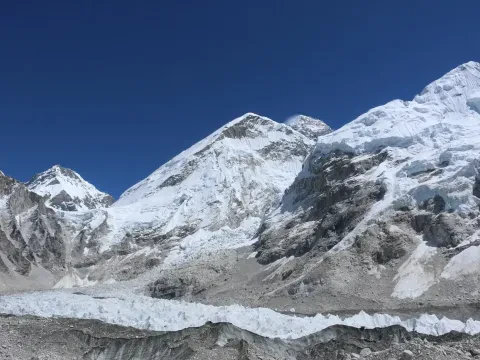
An EBC package can vary significantly in terms of what it covers – so it’s important to clarify all inclusions before signing up for the trek.
A standard EBC Trek package usually includes the following:
Here, your Everest Base Camp Trek cost 2027 will be significantly higher if you do not include the personal expenses in your EBC budget.
| Personal expense | Suggested budget |
|---|---|
| Tips for the guide and porter | USD 100–250+ |
| Snacks and drinks | USD 50–120 |
| Hot showers | USD 20–60 |
| Wi-Fi | USD 20–50 |
| Charging | USD 10–40 |
| Personal laundry | USD 10–30 |
| Travel insurance | USD 80–200+ |
| Emergency reserve fund | USD 100–300+ |
Note: The figures are only approximate guidelines. Prices are higher at higher altitudes due to limited supply.
Lukla flight tickets might be slightly more expensive in 2027 – so it is possible to reserve an extra USD 10–20 per person as a contingency fund for your EBC travel plan. Airline tickets vary significantly in price depending on the season and the airports of departure/destination.
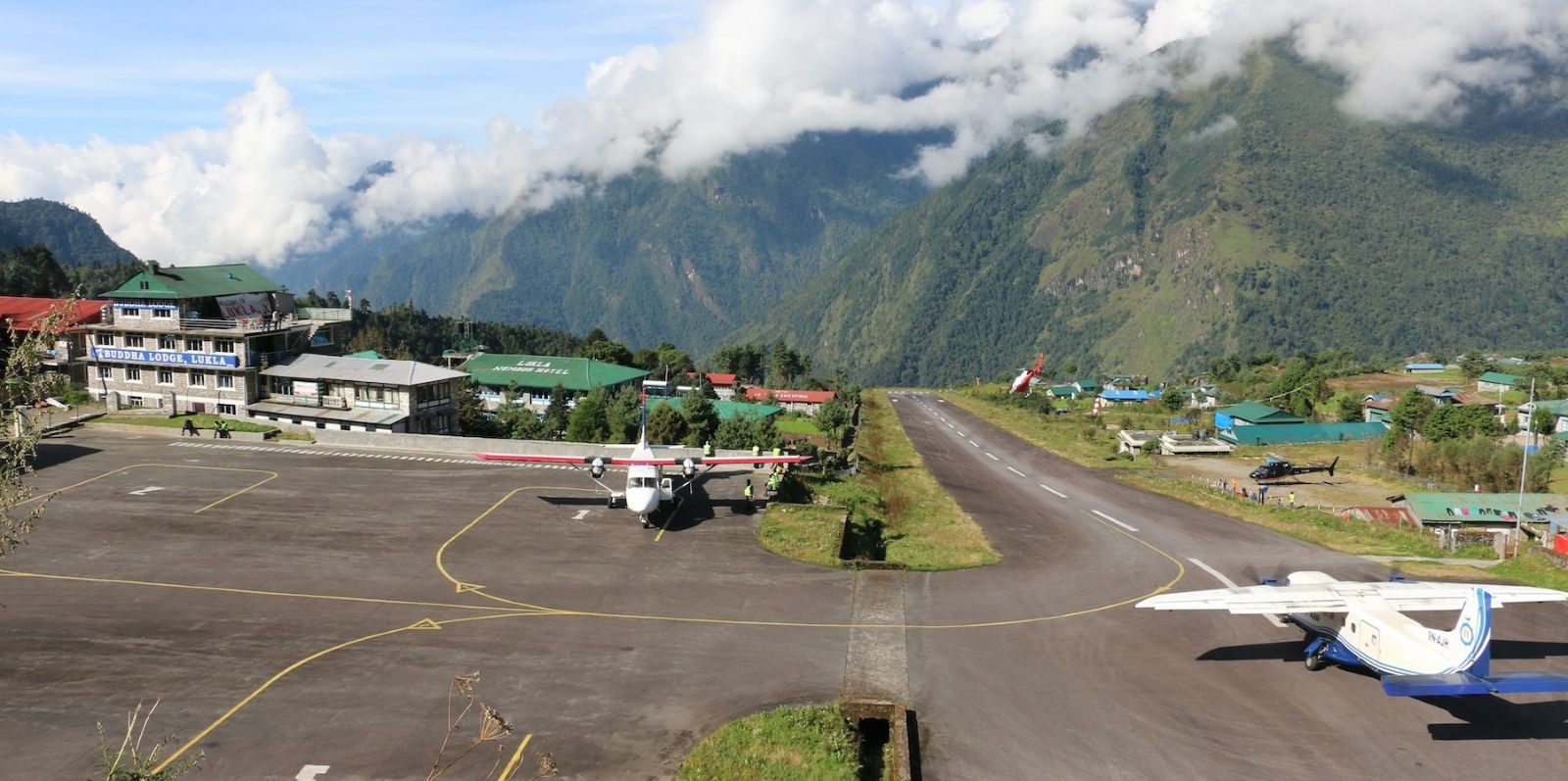
According to the 2026 resources, round-trip Lukla flights cost between USD 350 and USD 480, depending on whether you depart from Ramechhap or Kathmandu.
So, the entire EBC travel budget must account for a certain percentage of flight cost contingency funds for possible 2027 ticket increases.
You can reduce your Everest Base Camp Trek cost without eliminating key comforts and services. The single most important way of lowering your Everest Base Camp Trek cost 2027 is to join a group, rather than going on a private EBC tour.
Some practical tips for reducing your EBC costs :
In short, budget between USD 795 and USD 2,355 for the EBC package, depending on the style of trekking you choose. Add the personal expenses for a more realistic picture of your 2027 EBC costs.
The most important Everest Base Camp permits generally include Sagarmatha National Park, Khumbu Local Area Entry and TIMS. The current Nepal Tourism Board guidelines also recommend a licensed guide plus agency TIMS card for the EBC route.
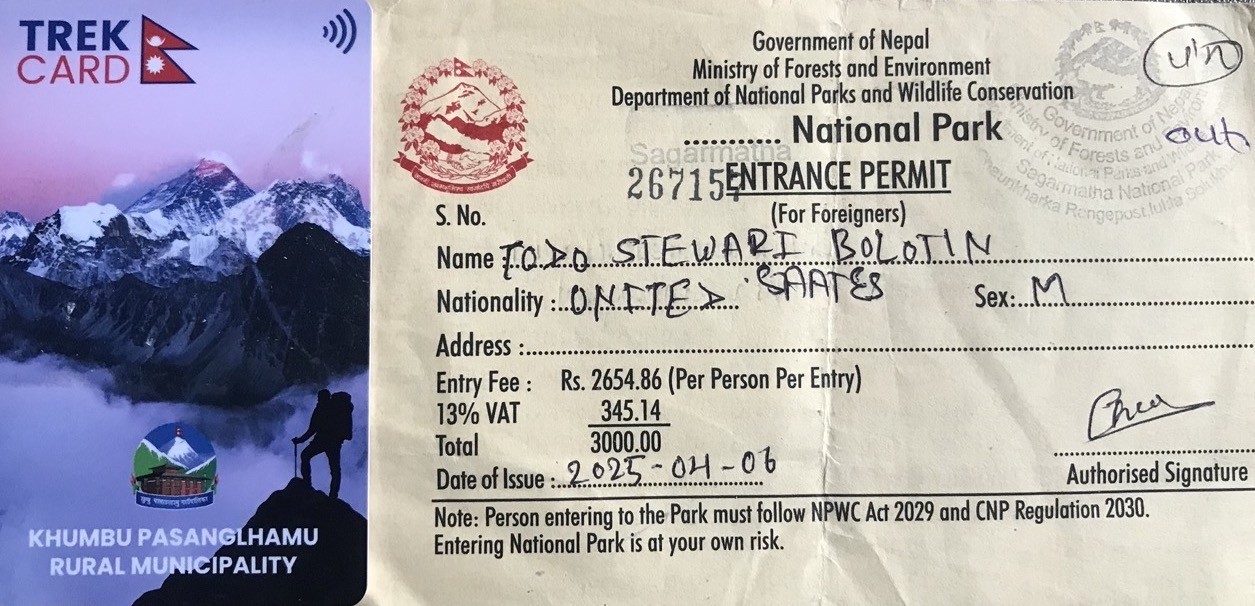
| Sagarmatha National Park Permit NPR 3,000 for foreigners | Guide or trekking agency |
|---|---|
| TIMS Card Required under current NTB rules (check the current status) | Trekking agency |
| Khumbu local permit/ Local entry fee may apply | Guide or agency |
Here, Sagarmatha National Park Permit is obligatory as the EBC route runs through the protected area. The current foreigner entry is NPR 3,000, though 2027 fees may vary.
Likewise, TIMS Card is another vital requirement under current national guidelines. Always check the current updates for TIMS card. Nepal Tourism Board explicitly recommends a licensed guide plus agency TIMS card for Everest Base Camp Trek route.
Likewise, the Khumbu Local permit is short for the local entry fee collected by the Khumbu Pasang Lhamu Rural Municipality. This 2027 charge can fluctuate, so arrange with your agency regarding the current rate.
In 2026, the cost of Khumbu Local Area Entry Permit is NPR. 3000 for foreigners.
Organized trekkers rarely need to interact with all permit offices. Your registered agency normally arranges all the documents and procedures for you.
Your trekking agency normally takes care of :
However, keep your passport and permit information available in case guides or authorities request to see them.
Permit regulations and fees can change before the season, so consult your agency or the Nepal Tourism Board before departure regarding the latest requirements.
For a standard EBC Trek Nepal route, budget separately for permits. Do not assume that a package price includes or excludes all local charges without researching its written terms.
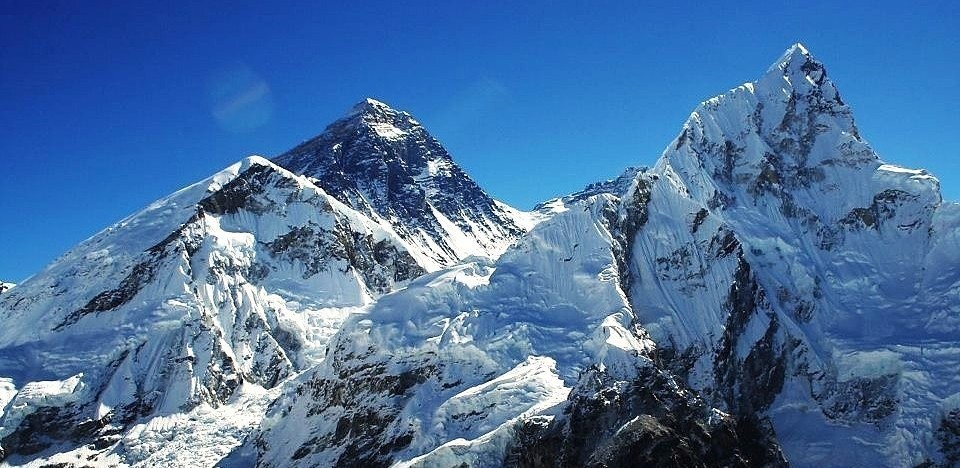
The best time for Everest Base Camp is traditionally spring and autumn months. These seasons provide the best combination of mountain visibility, moderate temperatures, trail condition, and trekking value.
| Season | Months | Visibility | Crowds | Trail conditions | Lukla flights |
|---|---|---|
| Spring | March–May | Spring | March–May | Excellent | High | Mostly dry Generally reliable |
| Autumn | September–November | Excellent | Very high | Dry and stable | Generally reliable |
| Winter | December–February | Very good | Low | Cold and snowy | More weather risk |
| Monsoon | June–August | Poorer | Very low | Wet and slippery | More disruption |
Spring is an outstanding season for Everest Base Camp as rhododendrons bloom below the higher ground while Everest expeditions create lively energy around Base Camp.
Here, March stays cold at higher altitudes but April and May become progressively warmer across the EBC Trail. April is especially popular because the weather warms up while morning clarity remains high.
Autumn is the busiest season for Everest Base Camp as the monsoon clears away dust and haze for spectacular visibility. Views across Everest, Lhotse, Nuptse, and Ama Dablam are typically at their best.
Meanwhile, October is the traditional favorite for EBC Trek Nepal, though it also involves the most competition for teahouses, flights, and guides. November has equally clear skies with fewer people but colder weather near the end of the season.
Winter offers the best value and trail conditions while still providing impressive mountain visibility on many mornings. Colder temperatures above 4,000 m and snow on higher passes can make the EBC Trek more challenging.
Likewise, some higher-altitude lodges reduce services during the coldest period. Therefore, consider winter trekking only if you are properly equipped for cold weather.
Monsoon season creates cloudy conditions and wet ground across lower Khumbu. Mountain visibility becomes more limited while landslides and flight cancellations disrupt the EBC Trek itinerary.
However, monsoon season is not impossible for experienced trekkers. The main value is reduced competition, though unpredictable weather makes this a challenging time for inexperienced EBC Trekkers.
For most people, April and October represent the best combination of weather, visibility, trail conditions, and availability.
For fewer crowds, consider November or March. Winter requires more preparation but offers the most solitude if you can handle cold weather.
Therefore, the best month for EBC Trek 2027 depends on your preferences. If choosing between the best overall value versus the lowest crowds, early October would be my recommendation.
The difficulty of the EBC trek is moderate to challenging: although there’s no need for rock climbing skills, expect long days of walking and getting acclimated to the altitude.
Here, most trekking days are about 5-8 hours long, but some can be longer due to a steep incline, altitude, and uneven ground.
Difficulty Factors and What to expect :
In fact, the trail consists of several steep ascents, stone stairs, uneven paths, and rockfalls: meaning that endurance and leg muscles are more important than climbing experience.
In conclusion, the most difficult part about the EBC trek for most people is getting acclimated to the altitude. The trail leads from Lukla (around 2,860 m) up to the Everest Base Camp (5,364 m).
Beginners can do the Everest Base Camp trek, as long as they prepare correctly and set up a realistic schedule for themselves.
However, keep in mind that not climbing Mount Everest doesn’t mean that the EBC trail is an easy walk.
Here, the most important aspect of preparing for the EBC trek as a beginner is getting acclimated to the altitude. That’s why it’s a very bad idea to skip any of the acclimatization days.
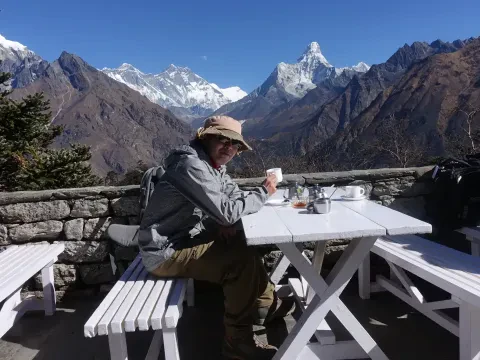
There are several things that a beginner should consider before attempting the EBC trek:
Get ready for the EBC trek a few weeks in advance by doing cardio and leg workouts. A good fitness routine for the Everest Base Camp trek would also include walking with a light backpack.
Try to go for walks multiple days in a row, as you would do during the trek itself. That way, your body will get used to walking for long periods without a recovery day in between.
Hence, a beginner is quite capable of doing the EBC trek, as long as they train appropriately, set up a realistic plan, and don’t overestimate their abilities.
The best approach to the EBC packing list is prioritizing items according to their importance. It’s also a good idea to keep the overall weight to a minimum: especially as you reach altitudes of over 4,000 m.
Therefore, a lightweight, flexible, and warm packing list becomes your best friend during the EBC trek.
Clothes,
It’s better to pack layers of warm clothing than a single thick jacket: as you go higher, the temperature will drop, and you will need to keep yourself warm.
Moisture-wicking base layers :
Footwear,
Good quality footwear is the primary condition for a successful and comfortable Everest Base Camp trek. It’s a good idea to break in your boots before the trek starts.
Sleeping Gear,
Although teahouses provide you with a bed and a blanket, it’s a good idea to bring a sleeping bag rated for cold temperatures.
Electronics,
Most teahouses have electricity, but it’s not available everywhere. It’s crucial to keep your devices charged in case of unpredictable mountain weather.
Documents and Money,
Make sure to keep your documents and money safe. It’s also a good idea to bring some cash in Nepalese rupees, as credit cards may not always work.
Personal Items,
Pack personal items according to your personal preference. It’s important not to overload your backpack: every additional kilogram will make a noticeable difference on a multi-day trek.
Medical Supplies,
A small personal medical kit is a responsible thing to bring on the EBC trek. However, it’s important to keep personal medications with you at all times.
Personal prescription medications – necessary :
| Item | Priority | Why essential or not ? |
|---|---|---|
| Trekking boots | Essential | Protection for the feet on rocky trails |
| Down jacket | Essential | Warmth and protection from the cold |
| Sleeping bag | Essential | Warmth during the night |
| Waterproof jacket | Essential | Protection from the weather |
| Headlamp | Essential | Lighting during early mornings |
| Power bank | Essential | Extra battery power |
| Sunglasses | Essential | Protection from the sun |
| Trekking poles | Recommended | Reduces stress on knees |
| Gaiters | Optional | Protection from the snow |
| Camera | Optional | Photographic purposes |
| Solar charger | Optional | Extra battery power |
| Luxury toiletries | Unnecessary | Extra weight and volume |
Importantly, the primary rule of packing for the Everest Base Camp trek is to bring only essential items. The fewer things you have, the better and safer it will be during the challenging parts of the trek.
Meanwhile, Everest Base Camp accommodation mostly involves family-run places and teahouses, meaning the EBC route includes plenty of teahouses in Phakding, Namche, Tengboche, Dingboche, and other centers of the trail.
Here, lodges mostly only have twin-bed rooms with simple furnishings, suggesting that the EBC trek is not comfortable for solo travelers. The bathrooms can be either private or shared facilities inside the lodge.
| Facility | Lower Khumbu | Higher Khumbu |
|---|---|---|
| Twin rooms | Common | Common but limited |
| Private bathroom | Sometimes available | Less common |
| Shared bathroom | Common | Very common |
| Hot shower | Available | Limited and usually paid |
| Wi-Fi | Available | Slower and less reliable |
| Electricity | Generally available | More limited |
| Charging | Available | Usually paid |
| Laundry | Available | Limited |
| Dining room | Common | Common |
| Heating | Common dining areas | Usually limited to dining areas |
However, Namche Bazaar hosts more accommodations and services than other higher villages. Likewise, Dingboche also has better facilities of accommodation and meals than other villages along EBC Trail. The higher you go on the EBC trek, the more primitive and expensive the facilities tend to be due to the difficulties of providing supplies.
The EBC teahouses offer a place to stay and a dining area to eat and socialize with other trekkers. Rooms usually have beds, mattresses, pillows, and blankets, although bringing your sleeping bag remains strongly recommended for higher altitudes.
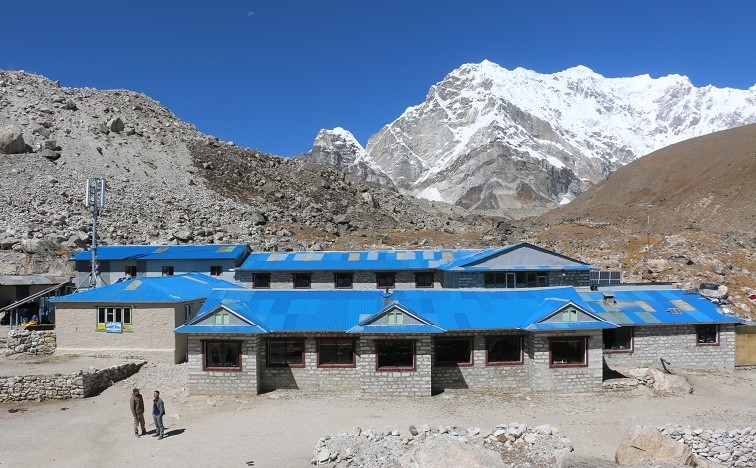
Likewise, hot shower availability is common in most of the EBC teahouses and is usually available in the evenings. The showers tend to be more expensive, especially when you get close to Gorak Shep.
Moreover, internet access is available in most EBC teahouses, although the connection is far from reliable due to high altitude and the remote location.
Furthermore, you can charge your devices at most teahouses, making a power bank a good investment that will keep your phone and other equipment working.
Also, some teahouses have laundry facilities, mainly larger hotels and guesthouses in Namche and other bigger villages like in Dingboche and Lukla.
However, washing your own clothes remains a cheaper way to refresh your clothing. Still, it will take time that many trekkers do not have.
The Everest Base Camp trek cuisine offers Nepali, Tibetan, Indian, and simple international food items such as dal bhat, noodles, soups, potatoes, pasta, rice, eggs, bread, and momos.

In particular, Nepal bhat is a favorite among trekkers due to its ability to fill you up with energy with complex carbohydrates and proteins. A lot of teahouses offer complimentary unlimited rice and lentils with the bhat set. The following table shows the most common foods and their benefits.
| Food | Why trekkers choose it ? |
|---|---|
| Dal bhat | It provides complex carbohydrates and proteins and it is filling and nutritious. |
| Vegetable curry | A great option for vegetarians who want to have local Nepali cuisine |
| Noodles | They are quick and easy to prepare |
| Thukpa | A warming option that fills you up with nutrients and energy |
| Momos | It is a Nepalese-style dumpling popular among local and foreign travelers |
| Pasta | Another carbohydrate-rich option that is easy to prepare |
| Rice and vegetables | Vegetables are a good source of fiber, and combined with rice, they form a wholesome meal. |
| Breads | These are also available in teahouses, comfortable and time saving food |
| Eggs | It is one of the easiest and cheapest sources of proteins for trekkers on a budget |
| Porridge | It warms you from inside and is a great breakfast option |
| Soup | On cold mountain evenings, a hot soup is a great option for a quick meal |
Importantly, vegetarian dishes are widespread on the EBC trail, but vegans need to inform the teahouse or restaurant about their dietary restrictions since some vegetarian dishes contain dairy products such as butter or milk.
Moreover, gluten-free trekkers also need to discuss their options since most of the EBC trail cuisine is based on rice, potatoes, eggs, and some vegetables.
Most importantly, the Nepal Tourism Board recommends eating well-cooked food and avoiding raw foods and untreated water to prevent gastrointestinal illness.
The EBC trek is generally a safe but challenging experience, as long as the traveler is physically and mentally prepared for it. The dangers posed by the Everest Base Camp trek mainly regard altitude sickness, unpredictable weather, and emergency situations.
However, with the proper precautions, most of these dangers can be mitigated or avoided.
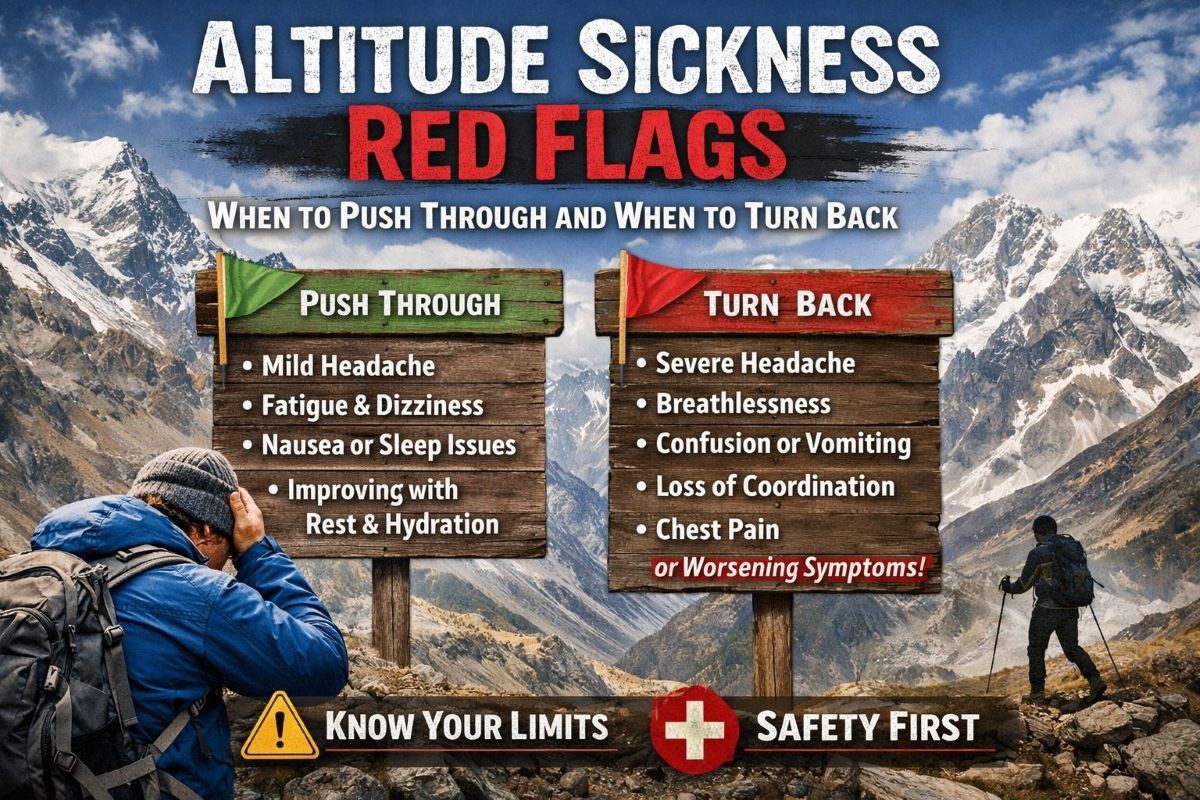
The Nepal Tourism Board warns that altitude sickness is a common occurrence above 2,500 m in the Everest region.
Here, the early symptoms of altitude sickness are a headache, nausea, and decreased appetite, dizziness, and unusual tiredness. It is essential for trekkers not to dismiss the symptoms of altitude illness, just because a headache is a typical discomfort during a trek.
| Warning sign | Recommended response |
|---|---|
| Mild headache or fatigue | Rest and observe the development of the symptoms |
| Nausea or dizziness | Stop ascending |
| Symptoms worsening | Descend and seek help |
| Severe headache | Descend |
| Repeated vomiting | Seek medical assistance |
| Confusion or difficulty walking | Emergency descent |
| Breathlessness at rest | Emergency medical attention |
Importantly, the only good strategy against altitude illness is a gradual climb and acclimatization. It is important not to sleep above 2,500 m and to allow the body enough time to adjust to the new environment, especially when changing significantly the altitude.
In fact, you should descend immediately when experiencing altitude sickness symptoms. Furthermore, if the symptoms persist for too long or become severe, you need to seek professional help.
Drink enough water throughout the day, and make sure that it is clean. The Nepal Tourism Board recommends avoiding raw foods and untreated water to prevent diarrheal diseases.
Furthermore, it is essential to continue eating even when you feel like you do not want to. Finally, eating complex carbohydrates can help you feel full and give you energy during the long walks.
Weather in the mountains is notorious for being unpredictable, and the EBC trail is not an exception. You should keep in mind that the mountain passes surrounding Everest are particularly dangerous, and it is better to listen to your guide concerning the current conditions.
Since Lukla airport is the gateway to the Everest region, its closure due to weather is a real emergency. It is always a good idea to keep a few buffer days in case of bad weather.
Likewise, there is also the alternative of approaching Everest through the lower Khumbu region via road. However, the road can also be blocked due to weather and landslides.
The EBC travel insurance needs to cover altitude-related illnesses and other emergency situations. In particular, the Nepal Tourism Board recommends that policyholders have insurance that covers medical expenses and emergency helicopter rescues.
Before departure, examine your policy in detail to understand what risks it covers and what it does not.
Additionally, make sure that it covers helicopter rescue, hospitalization, emergency treatment, and repatriation when necessary.
Your guide or trekking agency usually arranges rescue operations in case of an emergency. Your best option during an emergency is to contact your local agency and inform them of the situation.
Meanwhile, the Himalayan Rescue Association has a clinic at the Everest Base Camp and an aid post at Pheriche, which are open during the main trekking season.
However, it is always safer to prevent an emergency if you can, as the resources at your disposal in the mountains will be limited.
Essential Everest Base Camp Safety Rules :
In conclusion, the most critical rule about the Everest Base Camp safety regulations is that health comes first, and an injured or sick trekker cannot complete the EBC trail just because they want to. A responsible trekking agency will support the traveler in withdrawing from the trek if their health allows them to do so safely.
Preparation for the Everest Base Camp trek 2027 needs to begin several weeks in advance and include body, gear, papers, insurance, and planning.
Since days are long, trekking requires high levels of endurance, far more than raw muscle power,
Start walking and hiking well ahead of time, and increase both distance and elevation gained with every session.
Here, a balanced training schedule for EBC should include walking, hiking, stairs, cardio, legs, core, and practice with a loaded rucksack, plus adequate rest and recovery days.
| Training | Focus |
|---|---|
| Walking | 4-5 days/week |
| Hiking | Distance and elevation |
| Stairs | Endurance |
| Cardio | Aerobic fitness |
| Leg training | Strength |
| Core training | Stability |
| Backpack practice | Load bearing |
| Rest | Recovery |
Importantly, include occasional long walks or hikes before departure, and get used to walking days in a row since that's how it will be on the trail.
Don't leave gear preparation to the last minute - test boots on training walks and check that they are comfortable
Test and prepare sleeping bags, down jackets, waterproofs, trekking poles, headtorch, gloves and backpacks - and swap anything out if it proves unsuitable.
Make sure to arrange and budget for travel insurance that covers high altitude trekking, including helicopter rescue if necessary.
Check that the level of altitude it covers exceeds 5,500m and that it specifically covers medical treatment, rescue, evacuation, cancellation and emergency return.
Keep your passport, insurance papers, permits, flight details, and emergency contacts in one place. Have digital copies stored securely as well.
Carry sufficient cash in Nepalese Rupees for expenses along the way, and don't rely on cards or mobile payments in remote villages.
Lukla flights are at the mercy of fickle mountain weather, so allow at least one or two buffer days on either end of your itinerary
Alternatively consider the road route via Salleri and Surke, but be aware that conditions on this remote mountain road can also be unpredictable.
A good trekking agency can help with permits, transport, accommodation, guides and emergency cover.
Similarly, it is suggested to look for an agency that offers transparency on what their price includes and take the time to select an operator that offers the right itinerary to suit your abilities rather than focusing purely on price.
Also, it is better to ask about acclimatization days, staff insurance, emergency protocols, and cancellation/refund policies.
Everest Base Camp Preparation Checklist
Before leaving home, make sure you have:
The Everest Base Camp Trek 2027 makes a fantastic Himalayan bucket list experience when properly prepared for. It requires sensible pacing and careful acclimatization, suitable clothing and equipment, good physical conditioning, and responsible trekking practices.
If you'd like expert help with organization and support from arrival in Kathmandu to your return home, Haven Holidays Nepal offers comprehensive Everest Base Camp packages and specialist advice for independent trekkers too.
From permits and transport to guide, accommodation and trekking support, local specialists can give you confidence and peace of mind for your Himalayan adventure. Plan ahead for 2027 and let the Everest Base Camp trek be an unforgettable experience.
Here, the EBC Trek Cost 2027 ranges between USD795-2355 depending on group size, itinerary and services in the package.
a. How much will Everest Base Camp Trek 2027 cost?
The Everest Base Camp Trek 2027 cost ranges between USD 795 to USD 2,355 depending on the route, duration, transportation, accommodation, and other services. The low-cost Everest Base Camp Trek 2027 packages are cheaper, while the luxury and helicopter Everest Base Camp Trek 2027 packages are expensive. Haven Holidays Nepal offers affordable and high-end Everest Base Camp Trek 2027 packages to suit every traveler’s budget.
b. Can I book Everest Base Camp Trek 2027 now?
Yes, you can book Everest Base Camp Trek 2027 now to enjoy hiking and exploring the Himalayan landscape. The early booking ensures you get your preferred hiking schedule, professional guides and porters, comfortable accommodations, and flight tickets. It also gives you sufficient time to prepare physically, mentally, and logistically before departing for Nepal.
c. Can I do Everest Base Camp Trek 2027 by road?
Yes, you can do Everest Base Camp Trek 2027 from Kathmandu by road and hike to Lukla or Everest Base Camp. The Everest Base Camp Trek 2027 road trip allows you to drive from Kathmandu to Surke and then trek to Namche Bazaar and Everest Base Camp. This option bypasses the busy and unpredictable Lukla airport while exploring the charming mountain villages.
d. What facilities do I expect on Everest Base Camp Trek in 2027?
The Everest Base Camp Trek 2027 has improved trekking facilities, including teahouses, dining halls, and Wi-Fi hotspots in most villages. You can also enjoy drinking, hot water, and shower facilities in teahouses while camping in high altitudes. Mobile network coverage is available in almost every village of the Everest Base Camp Trek 2027.
e. Will Everest Base Camp Trek be more crowded in 2027?
The Everest Base Camp Trek 2027 promises to be crowded due to its fame as the most popular trekking destination in Nepal. Improved road connection, teahouse accommodations, and overall trekking experiences will only increase tourist visits to the Everest region. To avoid crowds, it is advisable to go for a less busy season or an alternative trail.
f. Will Everest Base Camp Trek be more popular in 2027?
Yes, the Everest Base Camp Trek 2027 will be more popular than before as it has become easily accessible with modern facilities. Moreover, trekking companies are offering diverse ranges of Everest Base Camp Trek 2027 packages, including helicopter and luxury camps. It can be a once-in-a-lifetime mountain biking experience for many people due to the natural splendor and cultural richness of the Himalayan region.
g. Will road access reach Lukla in 2027?
The road access from Surke towards Lukla has opened; jeeps can pass through the road when the weather permits. This allows hikers to do Everest Base Camp Trek 2027 by road and then trek to Everest Base Camp. Although Lukla’s road connection offers a unique option for EBC hikers, travelers should keep in mind that the journey can be dangerous and unpredictable.
h. What permits do I require for Everest Base Camp Trek in 2027?
For the Everest Base Camp Trek 2027, most probably two permits – Sagarmatha National Park and Khumbu Pasang Lhamu Rural Municipality.
At present, the rules regarding treks in the Everest region are regularly changing. Therefore, it is suggested to get in touch with a trustworthy trekking agency like Haven Holidays Nepal to acquire the necessary permits for the Everest Base Camp Trek 2027.
Our travel experts are ready to assist you with any questions.
Send us a message.Have a question before you book? Send your enquiry below and our travel experts will get back with the required information.