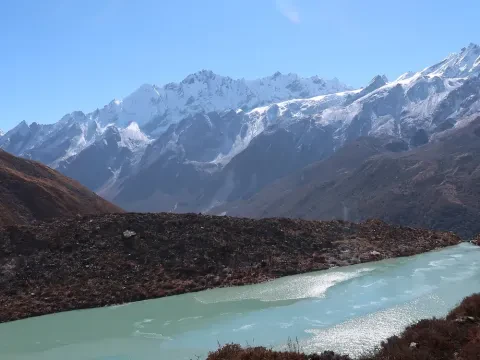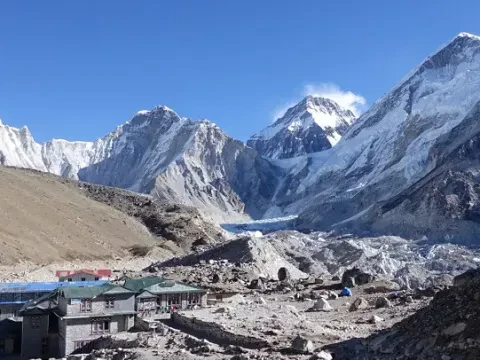
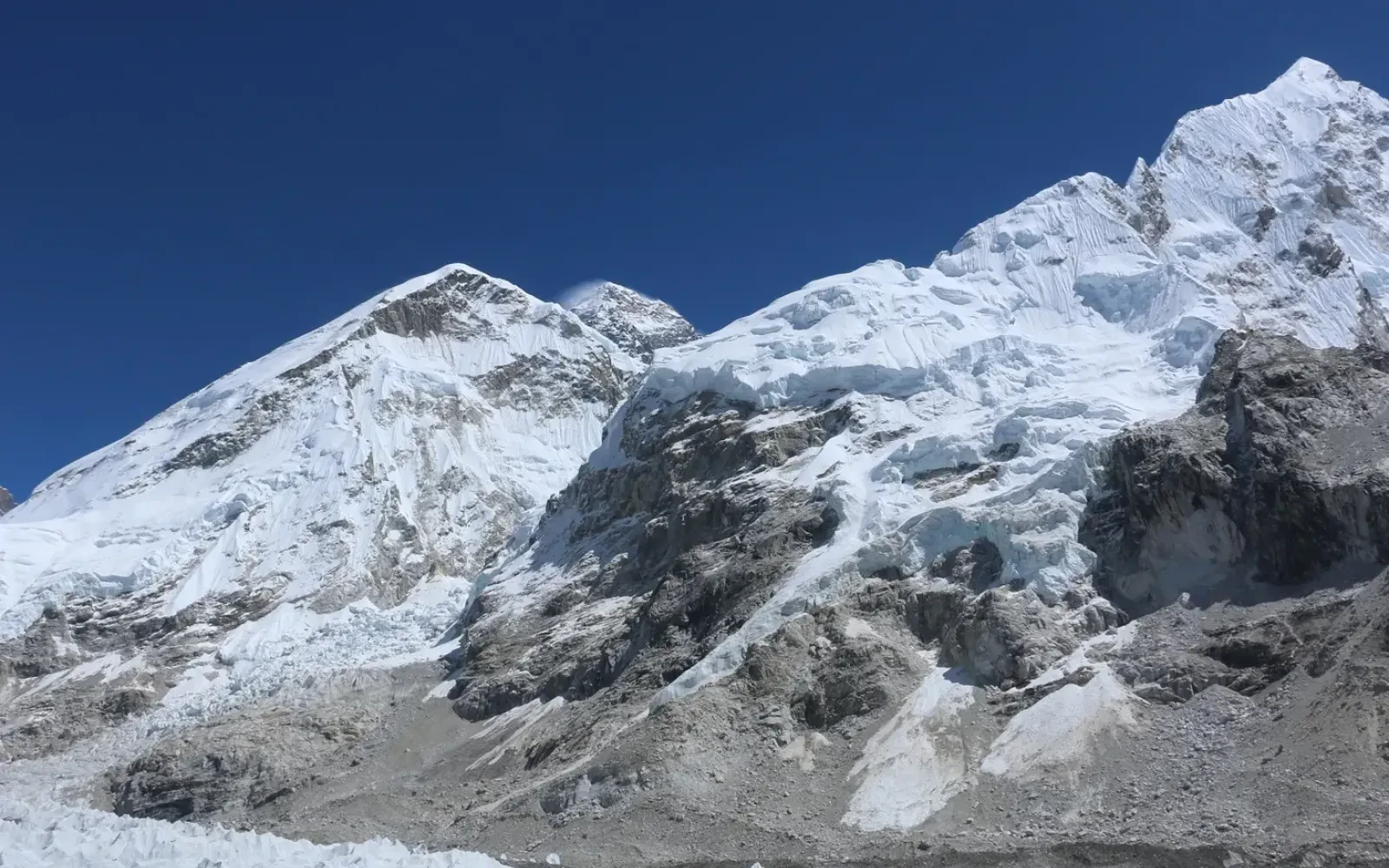
Everest Base Camp Trek 2027 is one of the most popular Himalayan treks in Nepal, offering outstanding views and unique cultural experiences. Moreover, the Everest Base Camp Trek passes through Sagarmatha National Park towards the Everest Base Camp at around 5,364 m.
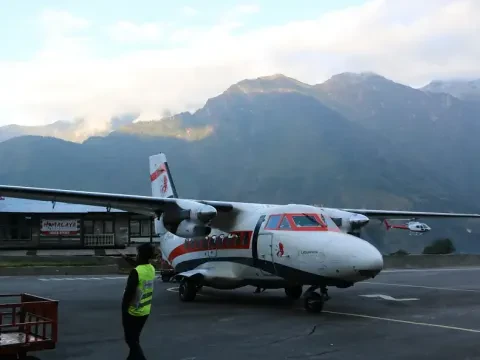
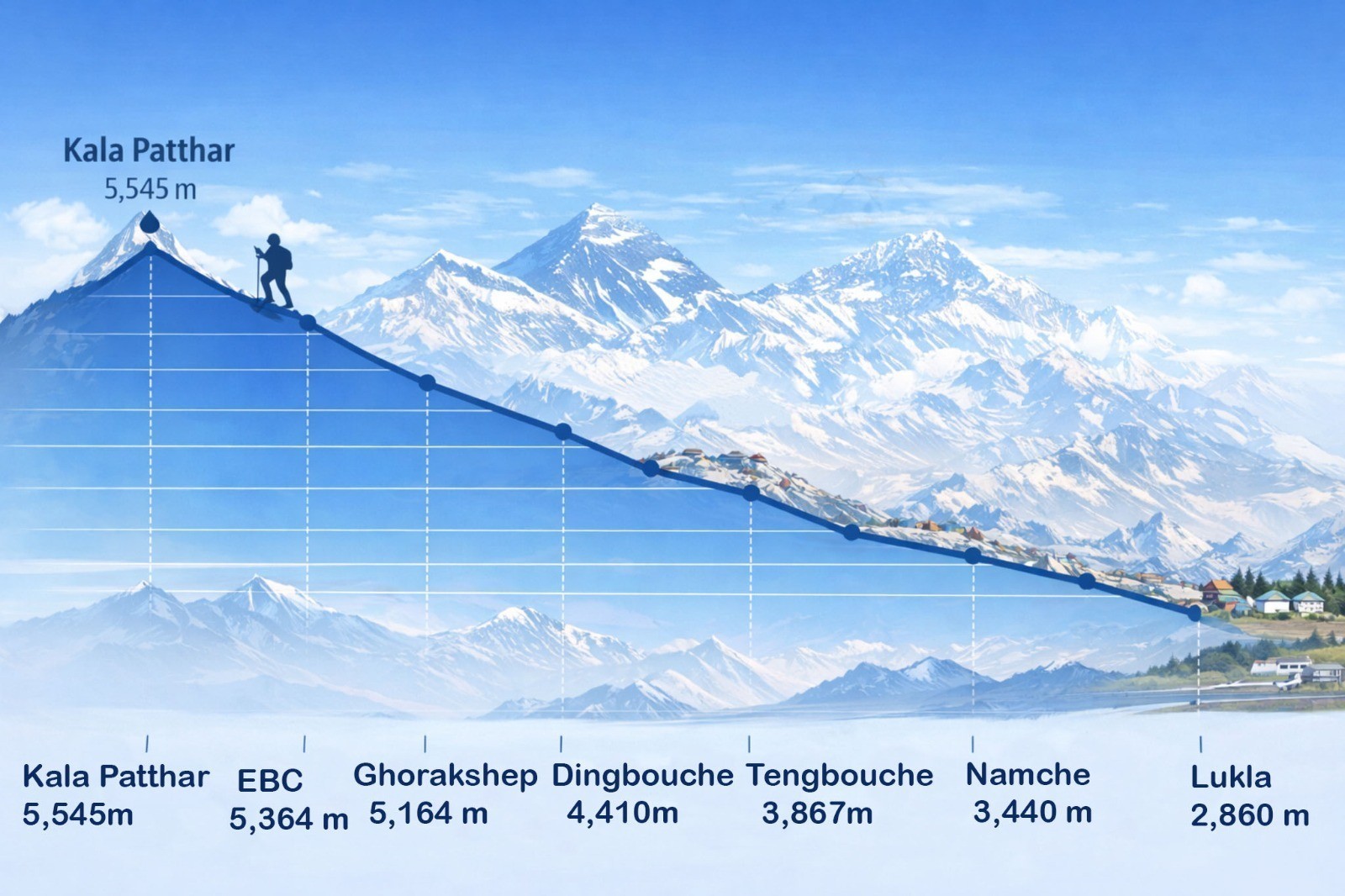
Here, it typically begins with a scenic flight from Kathmandu to Lukla at approximately 2,860 m, followed by a trek through Phakding and Namche Bazaar towards the EBC. Hence, it navigates through forests, suspension bridges, mountain villages, monasteries, and valleys.
Major Highlights of the EBC Trek :
| Location | Approx. Elevation |
|---|---|
| Lukla | 2,860 m |
| Phakding | 2610 m |
| Namche Bazaar | 3,440 m |
| Tengboche | 3,860 m |
| Dingboche | 4,410 m |
| Lobuche | 4,910 m |
| Gorak Shep | 5,164 m |
| Everest Base Camp | 5,364 m |
| Kala Patthar | 5,545 m |
| Mount Everest | 8,848.86 m |
Hence, trekkers should be prepared for long walks, steep climbs, cold temperatures, and basic accommodations. So, acclimatization, equipment, fitness, and professional guidance are essential for a successful EBC trek in 2027.
In addition, the EBC route in Sagarmatha National Park enables cultural encounters with Sherpas, Buddhist traditions, and unique Himalayan landscapes.
Thus, the Everest Base Camp Trek is an unparalleled experience due to its natural, cultural, and adventurous appeal.
Besides, the Everest Base Camp Trek offers an unforgettable mountain journey for those seeking a challenge, with stunning views and a deeper connection to the world's highest peak.
Why should you select the Everest Base Camp Trek in 2027, if Nepal has numerous hiking trails? Well, the EBC Trek is an extraordinary experience of viewing the Everest, Himalayan beauty, Sherpa culture, Buddhist heritage, iconic viewpoints, and the sense of accomplishment at the Everest Base Camp.
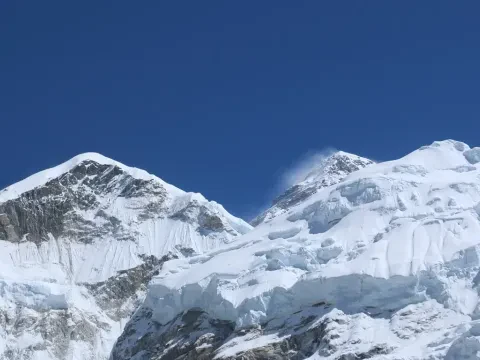
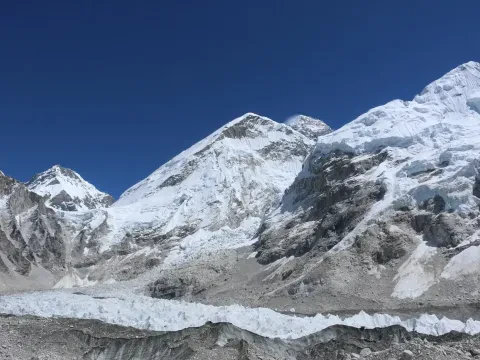
Meanwhile, the Everest (8,848.86 m) and other remarkable peaks like Lhotse, Nuptse, Ama Dablam, and Thamserku offer a phenomenal view of the Himalayas.
Furthermore, the EBC route presents a wide range of natural beauty, from lower valleys to high-altitude mountain desert.
Top Reasons to Choose EBC Trek 2027 :
| Attraction | Elevation | Main Experience |
|---|---|---|
| Namche Bazaar | 3,440 m | Experience of acclimatization and Sherpa culture |
| Tengboche | 3,860 m | Monastery visit and mountainous view |
| Dingboche | 4,410 m | Acclimatization and alpine landscape |
| Everest Base Camp | 5,364 m | Iconic trek destination and highest camp |
| Kala Patthar | 5,545 m | Sunrise view and Himalayan panorama |
| Mount Everest | 8,848.86 m | The highest peak in the world |
Moreover, the Sagarmatha National Park safeguards the protected landscapes and biodiversity of the Himalayas and is famous for cultural significance. It is a UNESCO World Heritage Site that symbolizes the ecological and cultural wealth of Sagarmatha.
Thus, the Everest Base Camp highlights not only the natural beauty of the Himalayas but also the rich cultural heritage of the local people.
In addition, there are numerous reasons to go to EBC, however, if you want to do Everest Base Camp Trek 2027, you should know the essentials about the EBC route, permits, and travel tips.
How many days do you need for the Everest Base Camp Trek in 2027? The answer will depend on your available time, fitness, preferred route, and acclimatization needs but 14 days is the most balanced duration for first-time trekkers.
Meanwhile, the classic route begins at Lukla around 2,860 m passing through Phakding, Namche Bazaar, Tengboche, Dingboche, Lobuche, and Gorak Shep before arriving at Everest Base Camp at 5,364 m and usually includes a hike up Kala Patthar at approximately 5,545 m before descending.
Everest Base Camp Itinerary Options for 2027 :
| Itinerary | Main Route | Highest Point | Typical Walking |
|---|---|---|
| 12 Days | Lukla–EBC–Lukla | 5,545 m | 5–8 hrs/day |
| 14 Days | Lukla–EBC–Lukla | 5,545 m | 4–8 hrs/day |
| 16 Days | Kathmandu–Surke–EBC–return | 5,545 m | 4–8 hrs/day |
| Helicopter Return | Lukla–EBC–Gorakshep–Heli | 5,545 m | 4–8 hrs/day |
| Short EBC | Compressed classic route | 5,364–5,545 m | Longer days |
The 14-day EBC itinerary includes acclimatization at Namche Bazaar around 3,440 m and Dingboche around 4,410 m, days that typically include short acclimatizing hikes rather than complete rest to help trekkers adjust gradually.
Here, a typical classic itinerary involves trekking around 120–130 km although distances will vary on the route and side trips as examples: Lukla–Phakding around 7–8 km, Phakding–Namche around 11 km, and Lobuche–EBC–Gorak Shep that can require approximately 12–13 km.
For most travelers, the 14-day Everest Base Camp Trek duration therefore offers the best balance of walking time, acclimatization, scenery, and comfort.
Furthermore, trekkers should budget an additional 1 or 2 days because weather conditions can impact Lukla or Ramechhap flights.
What is the expected Everest Base Camp Trek cost 2027? A realistic planning budget is approximately USD 1,400–2,355 per person for a standard guided package and premium services and helicopter returns can increase the total considerably.
Current 2026 market prices show standard guided EBC packages commonly ranging from about USD 1,195 to USD 1670 depending on services, season, group size, and itinerary, therefore a 2027 budget should be flexible to allow for flight fares, inflation, permit changes, and optional services. The Everest Base Camp Trek Cost 2027 will range between 1375-2355 USD.
Main Everest Base Camp Trek Expenses :
| Expense Category | Estimated 2027 Planning Range |
|---|---|
| Standard guided package | USD 1,375–2,355 |
| Return Lukla flights | USD 256–500 |
| Travel insurance | USD 80–250 |
| Personal expenses | USD 150–300 |
| Gear purchase/rental | USD 100–400 |
| Guide and porter tips | USD 150–250 |
| Premium/helicopter options | USD 2,500–5,000+ |
Here, Nepal Tourism Board currently lists the Sagarmatha National Park entry fee at NPR 3,000 for foreign visitors although government fees should be reconfirmed for the 2027 season.
A guided Everest Trek package normally bundles permits, accommodation, meals, guide, porter, domestic transportation, and other agreed services in one price whereas independent trekking requires arranging and paying for these components separately while current regulations and local requirements should be checked before departure.
For most first-time trekkers, a local agency package offers better logistical support and predictable budgeting, moreover Haven Holidays Nepal can structure the package according to your preferred duration, accommodation level, transportation, guide service, and optional helicopter return.
Importantly, remember that international airfare to Nepal, Nepal visa fees, and some personal expenses are often excluded from trekking package prices, so compare exactly what each EBC Trek price includes before choosing the cheapest quotation.
[trip:everest-base-camp-trek-with-helicopter-fly-out-10-day]
Do Everest Base Camp trekkers fly directly from Kathmandu to Lukla in 2027? Not always; most peak-season (Spring and Autumn) Lukla flights are operated from Ramechhap/Manthali, with Kathmandu-Lukla flights often operating during less congested periods ( Winter and Monsson).
Meanwhile, the Tenzing-Hillary Airport at Lukla is perched at roughly 2,860 m in altitude. The Kathmandu-Lukla flight takes about 30-35 minutes while the Ramechhap-Lukla flights generally take 15-20 minutes.
Main Everest Region Transportation Options :
| Routea | Approximate Time | Typical Use |
|---|---|---|
| Kathmandu → Lukla | 30-35 min | Direct flights |
| Kathmandu → Manthali | 4-5 hrs Drive | Peak-season transfer |
| Manthali → Lukla | 15-20 min flight | Spring/autumn operations |
| Kathmandu → Lukla by helicopter | Variable | Premium alternative |
| Kathmandu → Thamdanda/Surke | Road | Flight-free EBC option |
When the flights are operating out of Manthali, trekkers may want to leave Kathmandu as early as 12:30-2:00 AM to make the trip to the airport in time for an early morning flight.
Therefore, it's a good idea to double-check with your airline/trekking agency a few days before departure as to what airport you'll be departing from and at what time.
Weather is the greatest wildcard factor since operations out of Lukla are dependent on clear flying conditions and mountain visibility.
Accordingly, it's entirely possible to experience delays and cancellations even in fine weather over Kathmandu or Manthali, so it's wise to plan on having 1 or 2 extra days built into your itinerary.
For those who wish to avoid the Lukla airport entirely, the Thamdanda road approach is an alternative, although the extent of the road extension and trailhead specifics should be confirmed for 2027.
Thus, the best way to get to Everest Base Camp will depend greatly on your specific travel plans and current conditions.
For this section, I would emphasize October and November as particularly attractive autumn months while March-May offer strong spring conditions. The Nepal Tourism Board identifies October-November and March-May as among the best periods for the Everest region, while December-February is relatively cold and June-September is the rainy period.
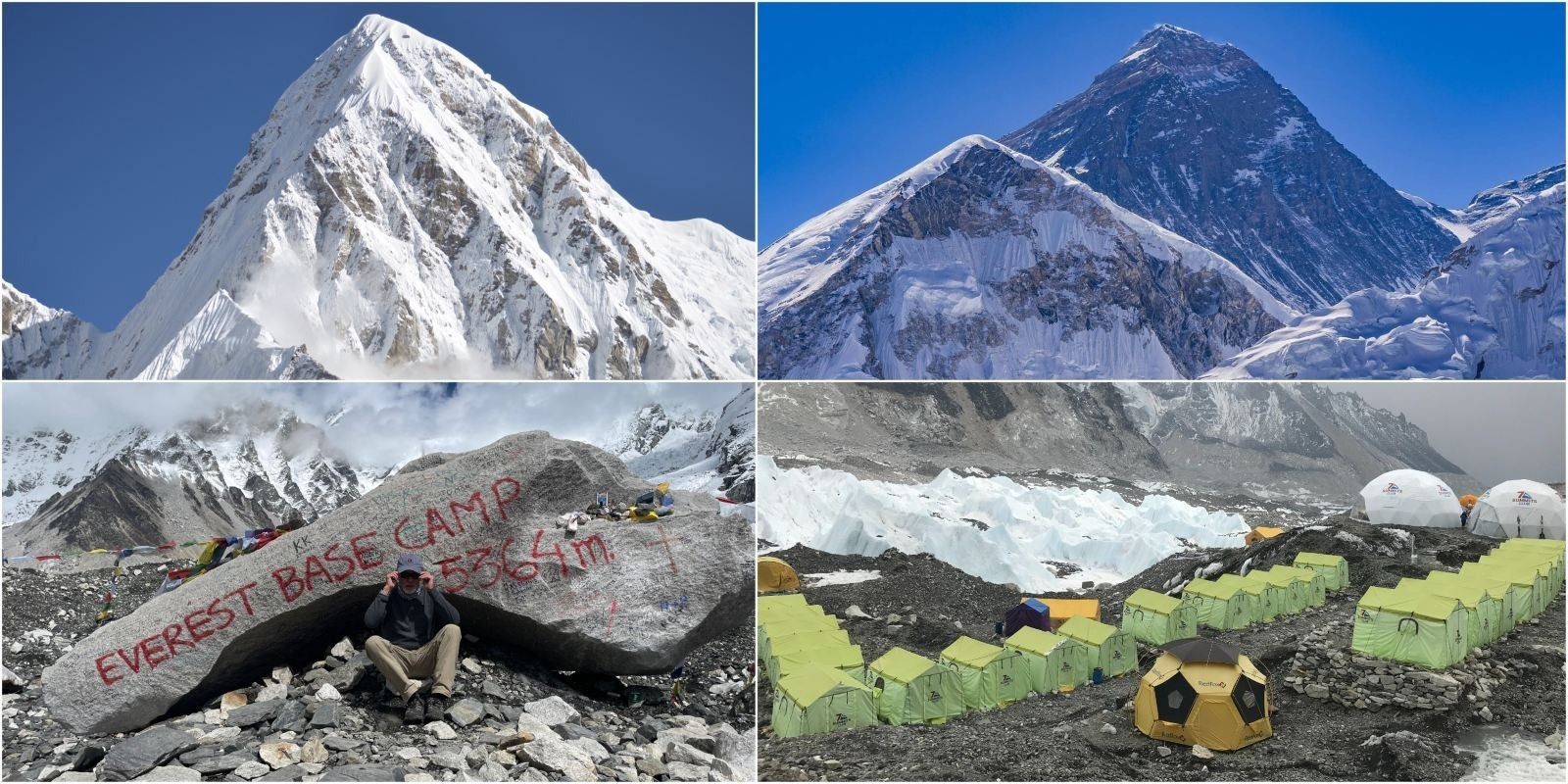
Which month is best for the Everest Base Camp Trek 2027? Generally speaking, the months of October and November have excellent visibility conditions and stable autumn weather, while March, April, and May offer clear views of the mountains with increasing temperatures.
Meanwhile, there are blooming rhododendrons in spring, while the days are generally warm enough for trekking.
At the same time, the trails are drier and visibility is excellent after the monsoon season, making it a popular period for Himalayan photography.
| Month | Daytime Conditions | Visibility | Snow/Trail | Crowds |
|---|---|---|
| March | Cold to mild | Good | Possible at high elevations | Moderate |
| April | Mild | Excellent | Usually manageable | High |
| May | Mild to warm lower down | Good (cloud may increase) | Generally manageable | Moderate-High |
| June | Warm and wet | Variable (visibility) | Wet trails | Low |
| July | Wet lower trails | Poor-Variable | Rain and mud | Low |
| August | Wet and cloudy | Variable (visibility) | Rain/mud | Low |
| September | Improving | Variable-Good | Trails drying | Moderate |
| October | Cool and dry | Excellent | Generally stable | Very High |
| November | Cold but dry | Excellent | Possible high-altitude snow | Moderate-High |
| December | Cold | Often clear | Snow possible | Very Low |
| January | Very cold | Often clear | Snow and icy trails | Very Low |
| February | Very cold | Often clear | Snow possible | Low |
Seasonal Highlights :
On higher elevations, temperatures will always be significantly colder than in Kathmandu as a result of the altitude. The Nepal Tourism Board points out that the Everest region remains cool throughout the year with winter bringing snow and summer monsoon conditions affecting trekking.
In fact, October is normally one of the busiest months as a result of excellent weather conditions attracting a large number of trekkers. November can be a good compromise with clear skies, dry trails, colder temperatures, and reduced crowds, particularly towards the end of the month.
Likewise, September can be a transition month as there may still be some monsoon conditions lingering at the beginning of the month.
As such, most trekkers aiming to avoid adverse weather will probably consider late September through November or March through May as the best months for an EBC trek.
In terms of the best time for Everest Base Camp Trek, October is the classic choice and April makes for a really good alternative for those seeking spring conditions. However, weather at high altitude can change rapidly, however, and so every trek should be prepared with appropriate clothing and have extra days built in for transport disruptions.
What permits are required for the Everest Base Camp Trek 2027? Trekkers normally require the Sagarmatha National Park entry permit and the Khumbu Pasang Lhamu Rural Municipality permit while TIMS requirements should be reconfirmed before travel as trekking rules can change.
Meanwhile, the Sagarmatha National Park permit is needed to enter the national park area and currently, the entry fee for foreign visitors is NPR 3,000 per person, according to the Nepal Tourism Board.
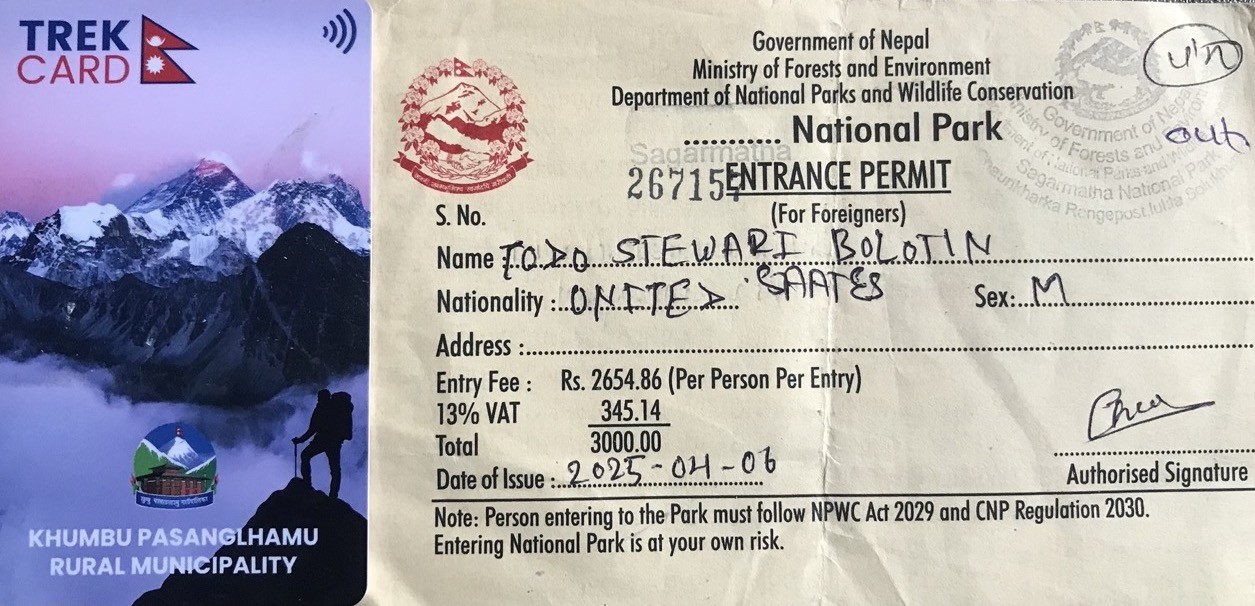
Meanwhile, a Khumbu Pasang Lhamu Rural Municipality permit is also needed, as a local entry permit, to enter the Khumbu region which is same cost NPR. 3000 as Sagarmathan National Park Entry Permit. In consequence, your trekking agency should normally arrange the required local permits and registrations as part of the trekking service.
Main Everest Base Camp Permits and Documents :
| Requirement | 2027 Planning Status | Important Note |
|---|---|---|
| Sagarmatha National Park Permit | Required | Confirm latest 2027 fee |
| Khumbu Local Permit | Required | Usually arranged locally |
| TIMS | Verify before travel | Rules may change |
| Passport | Required | Carry original |
| Travel Insurance | Strongly recommended | Include high altitude evacuation |
| Trekking Registration | Verify current rules | Follow local requirements |
Importantly, permit rules change because Nepal authorities update trekking registration and tourism guidelines from time to time. As a result, trekkers should check official government requirements or confirm with a Nepal trekking agency before starting their EBC Trek 2027.
Most importantly, keep digital and paper copies of relevant documents (protect your passport from moisture and damage), but most importantly, do not rely on old TIMS card Everest rules as requirements applicable in the past may change in 2027.
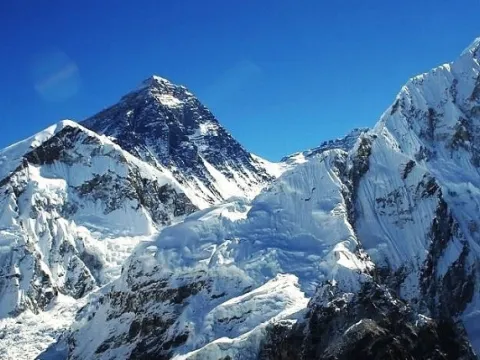
Is the Everest Base Camp trek suitable for beginners? Well, fit beginners can make the trek with good preparation, acclimatization, pacing, and professional support, but the Everest Base Camp difficulty should not be underestimated.
Here, the main problem is altitude as the trail extends from Lukla at around 2,860 m to Everest Base Camp at about 5,364 m. In addition, trekkers may also climb to Kala Patthar at approximately 5,545 m, where the air is very thin, making it significantly more difficult to walk.
Main Challenges on the EBC Trek :
| Location | Approx. Elevation | Trekking Consideration |
|---|---|---|
| Namche Bazaar | 3,440 m | Important acclimatization point |
| Tengboche | 3,860 m | Higher-altitude walking |
| Dingboche | 4,410 m | Major acclimatization area |
| Lobuche | 4,910 m | Thin air becomes noticeable |
| Everest Base Camp | 5,364 m | Trek's main destination |
| Kala Patthar | 5,545 m | Highest common viewpoint |
Likewise, altitude sickness can occur regardless of age or fitness because everyone has different acclimatization rates. As a result, trekkers must allow for proper acclimatization, hydration, rest, and avoid overexertion. It is essential that individuals report any symptoms, such as severe headache, weakness, dizziness, or shortness of breath, to their trek leader immediately.
How to Prepare for EBC Trek in 2027?
Meanwhile, a well-designed itinerary for EBC Trek normally contains acclimatization days in Namche and Dingboche rather than continuous ascents. As a consequence, a gradual increase in altitude is one of the best ways to ensure Everest Base Camp safety and prevent altitude sickness.
In addition, it is crucial to remember that fitness is only one factor that determines if a trekker will experience altitude sickness; therefore, good EBC Trek fitness, careful pacing, adequate acclimatization, and a responsible attitude to symptoms will give you a much better chance of having a safe trek.
What do you need to pack for the Everest Base Camp Trek 2027? Think about packing in warm, loose-fitting clothing and gear that can withstand the weather in different altitudes. You can layer thin clothing to keep yourself warm in the chilly mornings and nights, but wear light clothing when it is hot.
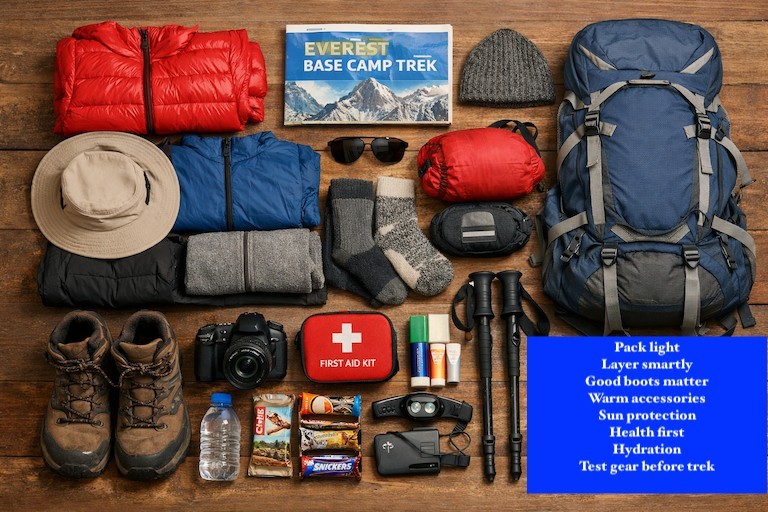
However, it is better to pack fewer items because your bag will be heavy when trekking uphill.
Everest Base Camp Packing List :
| Gear | Purpose | Priority |
|---|---|---|
| Trekking boots | Grip and foot protection | Essential |
| Down jacket | High-altitude warmth | Essential |
| Sleeping bag | Cold-night protection | Essential |
| Thermal layers | Body insulation | Essential |
| Sunglasses | UV and snow protection | Essential |
| Headlamp | Early starts and emergencies | Essential |
| Water purification | Safe drinking water | Essential |
| Trekking poles | Balance and knee support | Recommended |
| Power bank | Device charging | Recommended |
Avoid packing too much clothing, large toiletries, unnecessary gadgets, books, and duplicate equipment.
Instead, pack versatile clothes and personal items in small size. Also, make sure not to overload your porter by packing only the necessary equipment.
In essence, your EBC packing list should be seasonal; for example, you may want more layers during the winter than during the spring or autumn. The best Everest trekking gear is one that you can carry comfortably, is not heavy, and can protect you from the severe cold.
How can you prepare for a successful Everest Base Camp Trek in 2027? Make sure to pick an itinerary that gives you enough time to acclimatize yourself to the high altitude so that you can enjoy trekking without having altitude sickness. You should also start exercising a few weeks before the trek to allow your body to adjust to walking long distances, especially uphill. Prepare yourself for the long, tiring days and cold nights of the high camps.
Moreover, be ready for the difficult trekking days and tough weather conditions at high altitudes.
Essential Planning Tips for 2027 :
| Planning Area | What to Confirm ? |
|---|---|
| Itinerary | Duration, route, acclimatization |
| Flights | Kathmandu/Lukla or Manthali/Lukla |
| Accommodation | Teahouses and Kathmandu hotel |
| Permits | Required permits and registrations |
| Guide | Licensed and experienced trekking guide |
| Porter | Porter service and baggage limit |
| Insurance | High-altitude trekking and evacuation |
| Buffer Days | 1-2 additional days recommended |
| Package | Clearly stated inclusions and exclusions |
Importantly, booking early is advisable, especially during the peak season, to avoid disappointment. However, it is essential to confirm the latest news about flights, permits, weather, and other factors before your trip.
If you are looking for local help, Haven Holidays Nepal offers Everest trekking services to help you with itinerary planning, transportation, trekking guides, porters, permits, accommodation, and package deals.
In short, a reliable Nepal trekking agency can help you get the most out of your EBC experience.
In conclusion, a successful Everest Base Camp (EBC) Trek booking and planning tips depend on your ability to prepare yourself adequately.
Therefore, instead of looking for the cheapest deal, consider the duration of your trip, prepare yourself physically, give yourself enough buffer days, and choose a reliable trekking company.
1. How much does Everest Base Camp Trek cost in 2027
The Standard Everest Base Camp Trek cost in 2027 varies between USD 1395 and USD 2,355. This depends on the type of itinerary, transportation, accommodation, permits, guide, porter and services included. Shorter itineraries and those without helicopter support are cheaper, while longer itineraries with high-end services are costlier. Make sure to inquire about what your Everest Base Camp Trek package includes.
2. What is the best itinerary for Everest Base Camp Trek 2027
The best itinerary for Everest Base Camp Trek 2027 usually takes 14-days with two acclimatization days. It generally includes Kathmandu, Lukla or road-way to Manthali/Ramechhap, Phakding, Namche Bazaar, Tengboche, Dingboche, Lobuche, Everest Base Camp and return. The acclimatization days are crucial to adjust to higher altitudes.
3. Is Everest Base Camp Trek suitable for beginners ?
The Everest Base Camp Trek in 2027 is suitable for beginners as long as they have prior experience and/or are physically prepared. Prior hiking experience at altitude is not necessary.
However, one should be prepared for long walks and adjust altitude accordingly. With a good guide, training, fitness, gear, hydration and acclimatization, the Everest Base Camp hike is easily achievable.
4. What is the best month for Everest Base Camp Trek 2027
The best month for the Everest Base Camp Trek in 2027 is between March to May and October to November. Spring (March to May) has milder weather and is a great time to see blooming flowers in the mountains. Autumn (October to November) is the peak trekking season with good weather and clear skies. The views of the mountains are also clear during this time of the year.
5. Do I need a guide for Everest Base Camp Trek in 2027
It is advisable to hire a guide for the Everest Base Camp Trek in 2027. This is especially so if you are a first-time trekker. An experienced guide will know the route, help you acclimatize and be prepared in case of altitude sickness. He/she will also assist with accommodation and other logistics. Make sure to check current guidelines pertaining to Everest Base Camp Trek 2027.
6. How difficult is Everest Base Camp Trek?
The Everest Base Camp Trek is moderately to severely difficult because of the altitude, long trekking hours and unpredictable mountain weather. The trek has high altitude with overnight stays at places with an altitude of more than 4000 meters. The Everest Base Camp altitude is 5,364 meters above sea level. A good level of fitness, acclimatization and gear is needed for the trek.
7. What should I pack for Everest Base Camp Trek ?
For the Everest Base Camp Trek 2027, it is advisable to bring light clothing, down jacket, thermal underwear, waterproof gear, hiking boots, trekking pole, balaclava, cap, sun glasses, sleeping bag, torch, water and water purification tablets, dry food, power bank and first aid kit.
8. How do I get to Lukla for Everest Base Camp Trek ?
The most common way to get to Lukla is by taking a domestic flight from Kathmandu. Flights are sometimes cancelled due to weather conditions.
Alternatively, one can travel to Manthali or Ramechhap by road depending on the road condition, and then fly to Lukla. Roads have also been opened from Kathmandu to Salleri to Thamdanda to Surke to Lukla and jeeps can navigate through this rout ?e.
9. How many days are needed for Everest Base Camp Trek
The Everest Base Camp Trek can be done in 12-16 days on average, depending on the transportation used and personal preference of the trekker. A 14-day Everest Base Camp Trek itinerary is common as it allows adequate time for acclimatization. Longer itineraries allow for more time to adjust to the altitude and are safer.
10. What permits are required for Everest Base Camp Trek ?
The Sagarmatha National Park entry permit and the Khumbu Pasang Lhamu Rural Municipality permit are the primary permits for the Everest Base Camp Trek 2027. You should ensure that you have the latest permits and pay the fees required. A trekking agency usually takes care of this as part of the services offered.
Our travel experts are ready to assist you with any questions.
Send us a message.Have a question before you book? Send your enquiry below and our travel experts will get back with the required information.