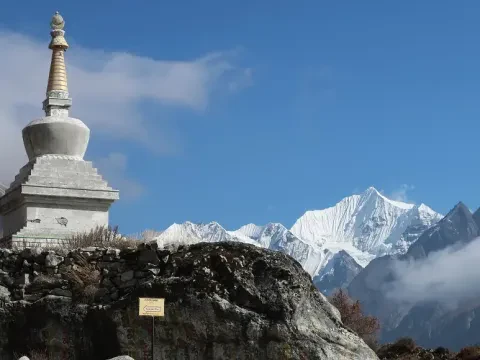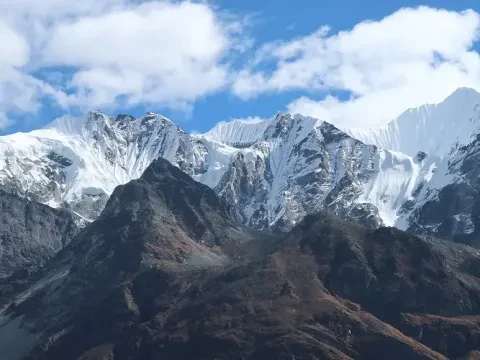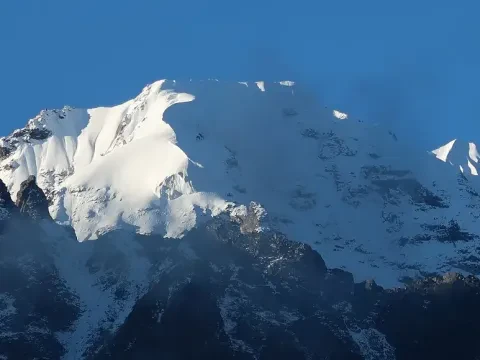
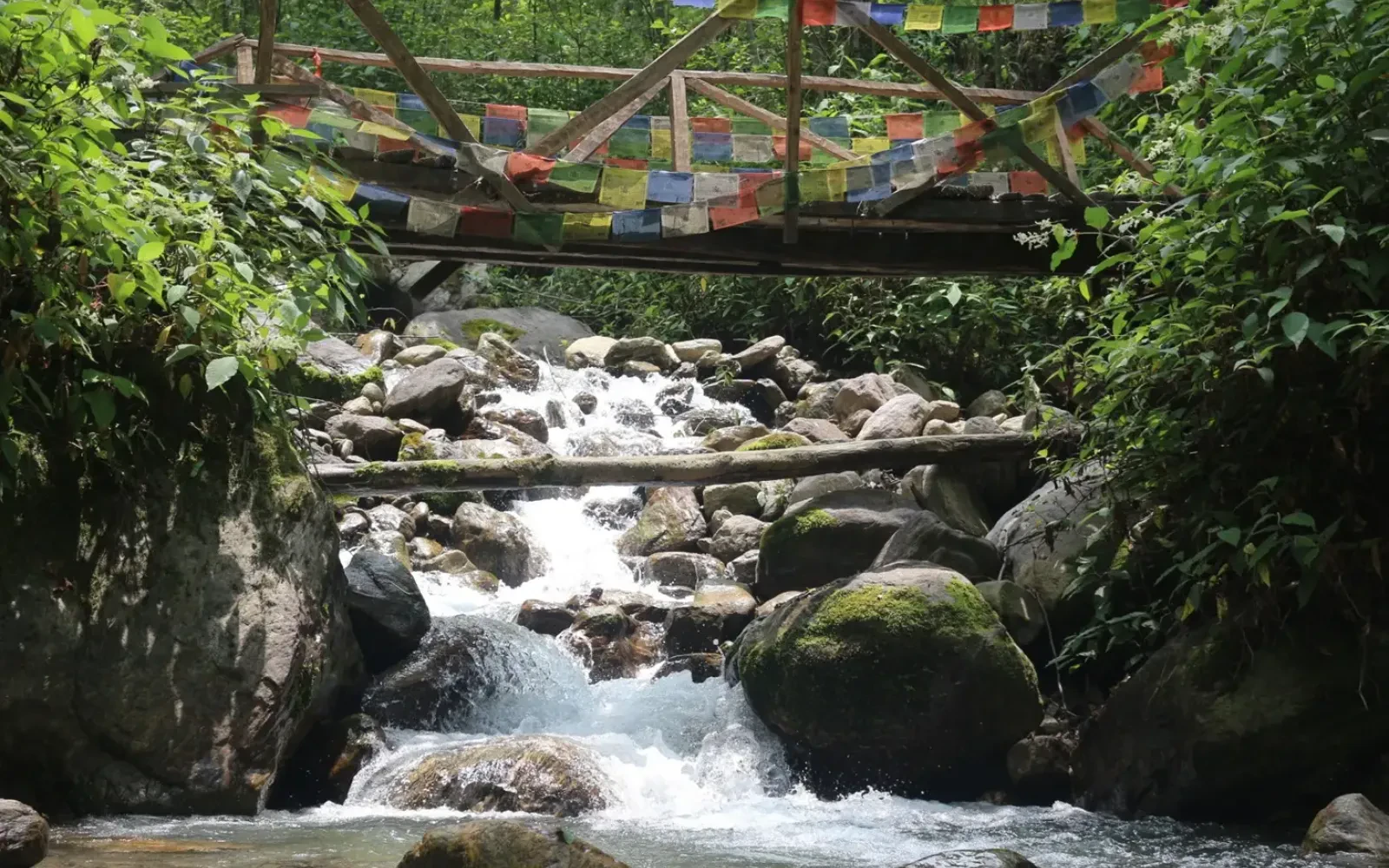
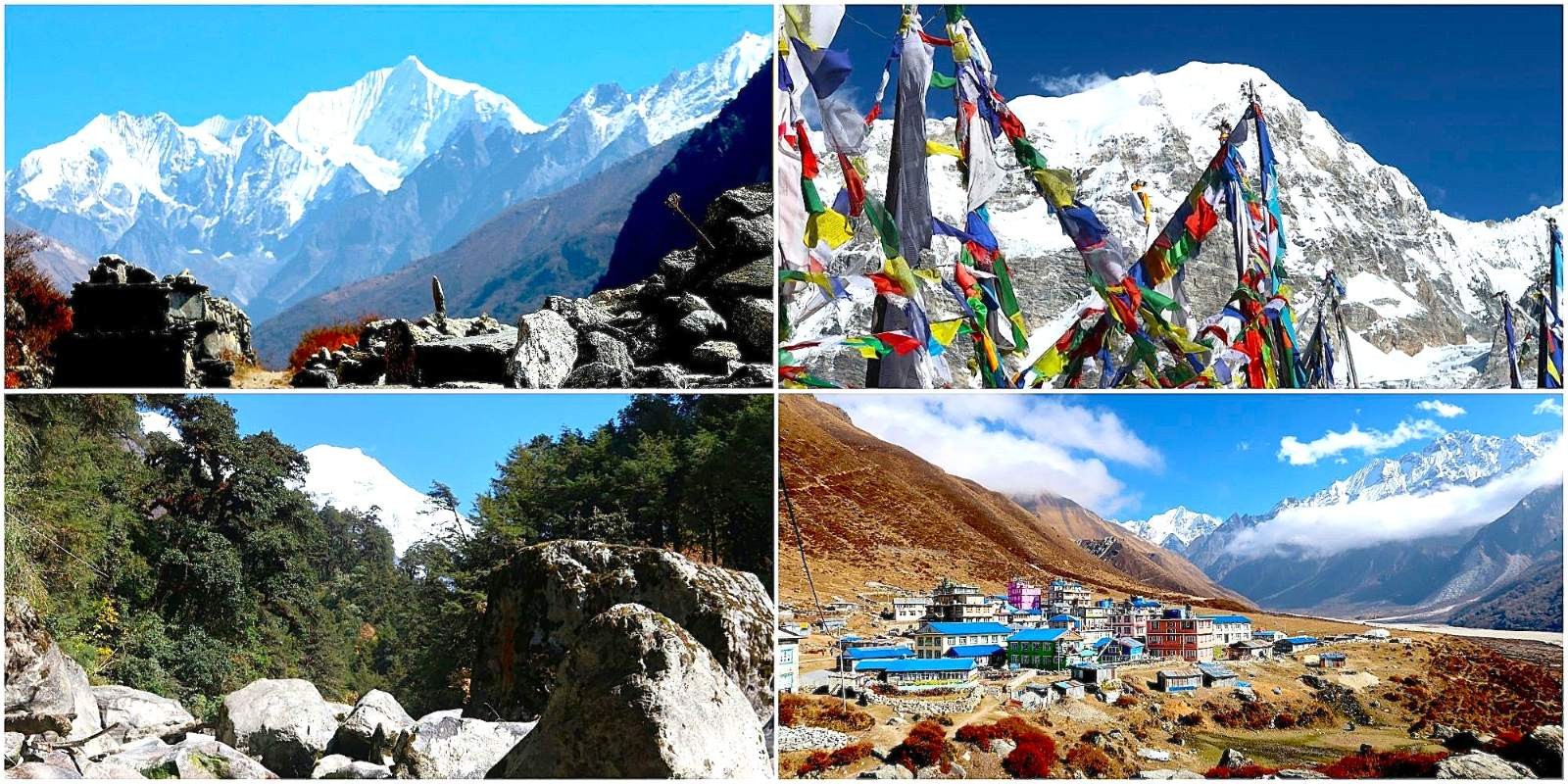
Imagine colorful prayer flags fluttering above the mountainous trail and the sound of the Langtang Khola river flowing. As I look up, the sunrise peaks over the snow-capped Langtang Lirung (7227 m) mountain range in the clear blue sky. Warm faces from local Tamang villagers, ancient Buddhist temples, and tranquil yak pastures are some of the scenes that welcome any visitor to the Langtang Valley Trek.
Meanwhile, the Langtang Valley Trek is one of the best places in Nepal for nature lovers to experience the Himalayas’ most spectacular mountain views and authentic cultural heritage. Set within the Langtang National Park, this fantastic trail is a complete wilderness and only a day’s drive from Kathmandu. Taking the Langtang Valley Trek is an opportunity for hikers to enjoy high-altitude nature and discover the fascinating Tibetan Buddhist traditions of the local Tamang people, which have been preserved for centuries. Langtang’s unique combination of Himalayan splendor and local hospitality is a one-of-a-kind experience.
Likewise, rich in natural beauty, this Himalayan trek takes you through dense rhododendron and bamboo forests inhabited by rare and endangered species such as the red panda, Himalayan black bear, musk deer, and various birds. Further along the trail, breathtaking views of glaciers, rivers, and snow-capped mountains open up to the trekker. The trail is characterized by a rich alpine forest, waterfalls, and crossings of local bridges built over streams with yak pastures and spectacular mountain peaks in the distance.
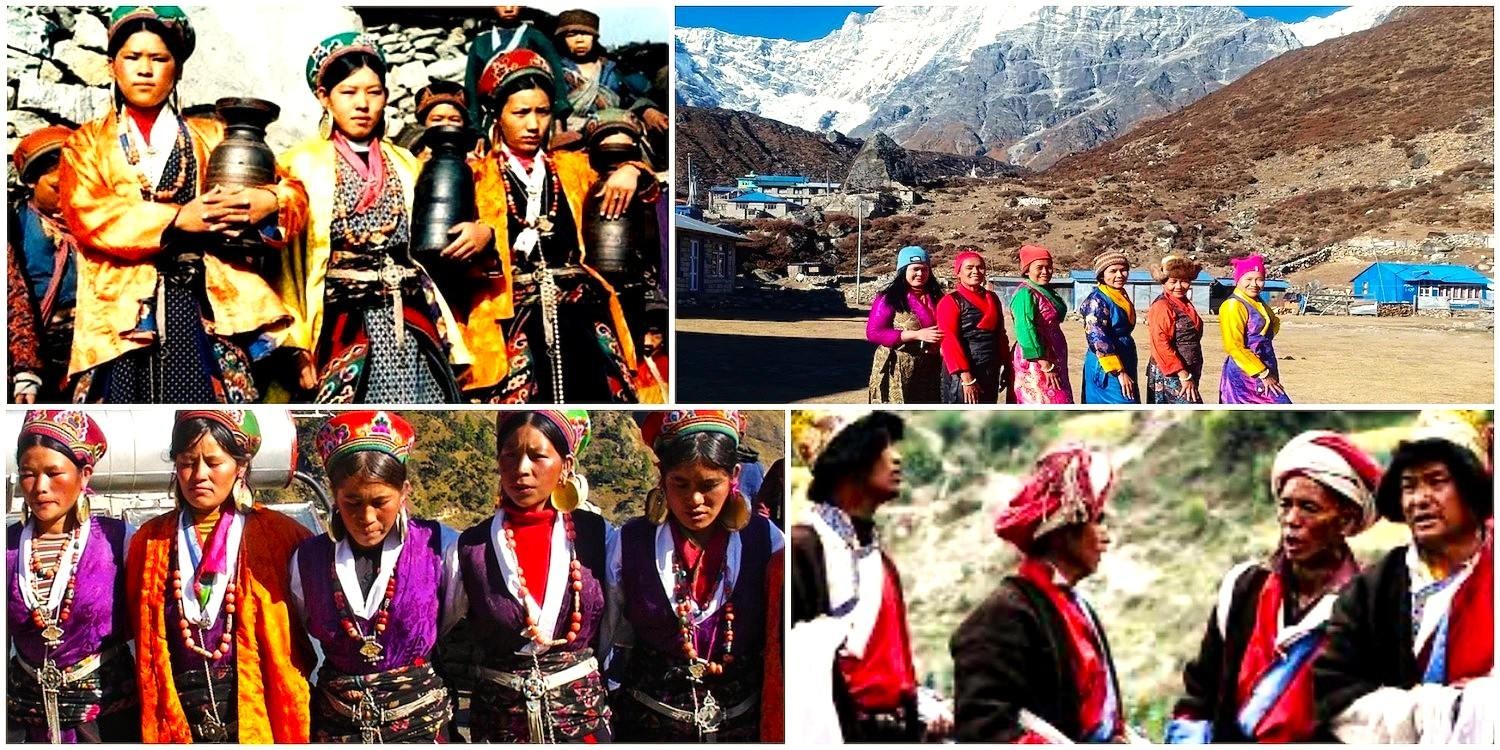
Moreover, not far behind in appeal are the cultural heritage and traditions of the local Tamang people. The trek offers a glimpse into an ancient culture and an authentic Himalayan lifestyle. The trail winds through villages where one can see traditional mani (prayer) walls, chortens (altars), monasteries, and experience the unique Tibetan Buddhism culture of the locals. The local hospitality is legendary, and sharing a simple tea with a family or eating the local yak cheese is something no trekker should miss.
Whether you are a novice or an experienced hiker, your Himalayan adventure should include the Langtang Valley Trek. In the following sections, we will explore what makes the Langtang Valley Trek special and unique, the cultural heritage and natural landscape, and the suggested travel itinerary, difficulty level, travel season, permits, accommodation, food, wildlife, and other valuable insights to help you prepare better for this unforgettable trek.
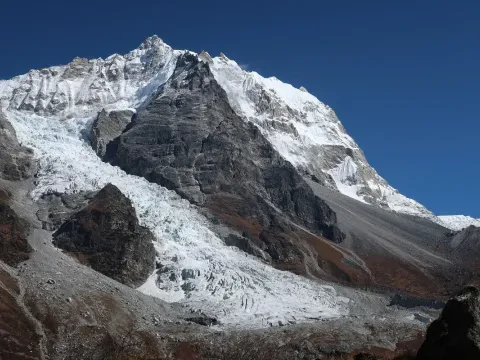
Among all the Himalayan adventures, the Langtang Valley Trek is a hidden gem offering one of the most rewarding trekking experiences in Nepal. In addition to the spectacular mountain views of the Langtang ranges, this trail offers a fascinating insight into the Tibetan Buddhist culture of the local Tamang people. With its lesser-known and less-crowded trails, Langtang is a fantastic alternative for hikers who want an authentic Himalayan adventure near Kathmandu.
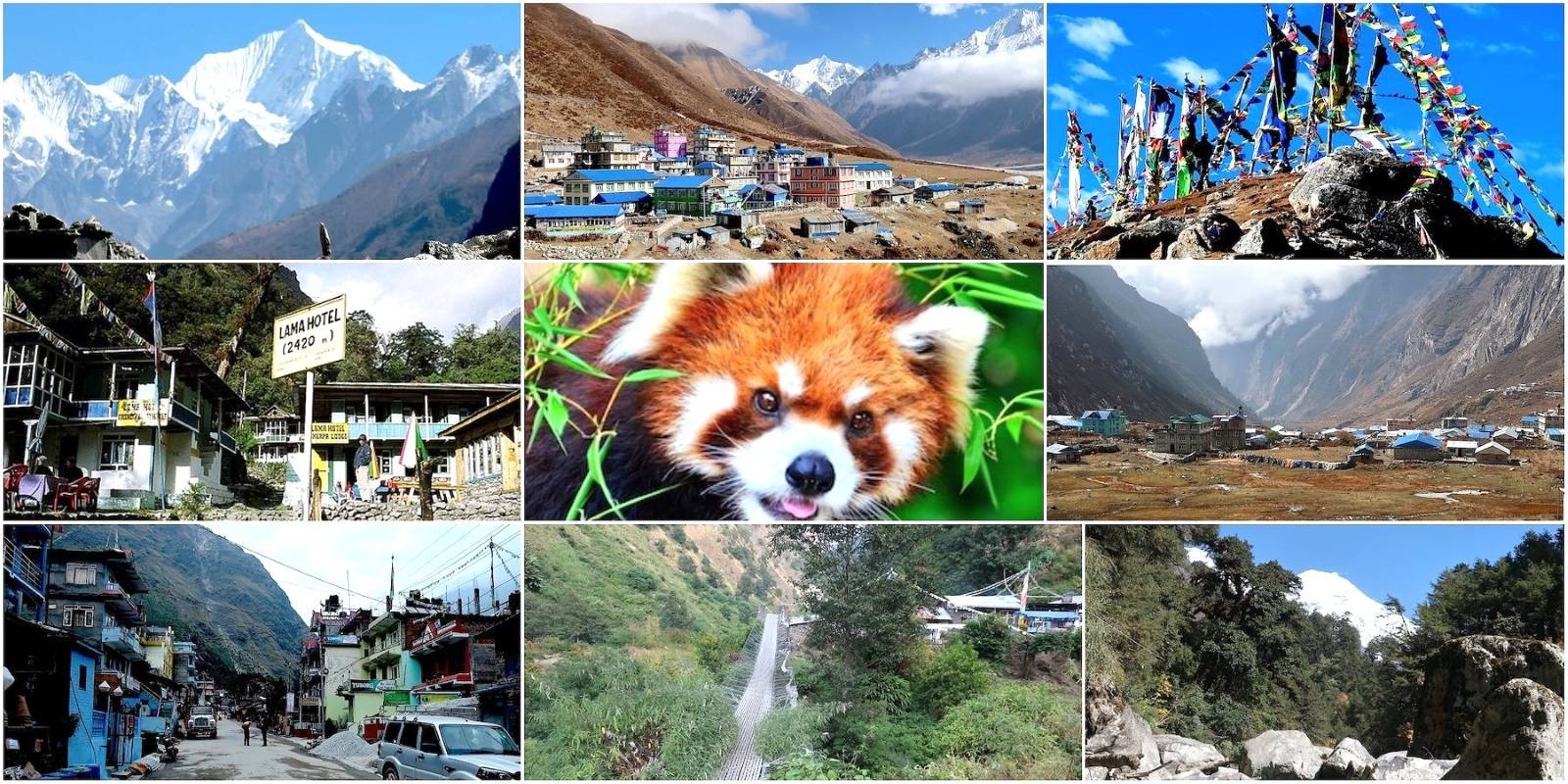
In addition to the incredible landscapes and cultural experiences, there are several reasons why the Langtang Valley Trek is one of the best hiking trails in Nepal.
Meanwhile, the Langtang Valley Trek is one of my favorites in Nepal, offering stunning Himalayan vistas with spectacular wildlife and cultural heritage experiences. It is one of those trips that offer incredible nature experiences with a touch of authenticity in the local village culture. The trail is less strenuous than other trekking routes in Nepal. With a variety of landscapes, dramatic mountainous terrain, and local culture, the Langtang Valley Trek is a fantastic choice for hikers who seek unique Himalayan adventures beyond the usual trails.
Comparison of Langtang, Everest, Annapurna Trekking Routes,
| Feature | Langtang Trek | Everest Base Camp Trek | Annapurna Base Camp Trek |
|---|---|---|---|
| Distance from Kathmandu | Drive from Kathmandu: 7-8 hour | Flight to Lukla Airport | 7- 8 hrs from Kathmandu drive/ 25 mins flight. |
| Crowds | Fewer crowds | More crowds: mostly between March and May, September and November | More crowds: mostly between March and May |
| Cultural Heritage | Tamang Tibetan Buddhist Culture | Sherpa Tibetan Buddhist Culture | Gurung and Magar Indigenous Culture |
| Maximum Altitude | Kyanjin Ri (4773 m) or Tserko Ri (4984 m) | Kala Patthar (5545 m) | Annapurna Base Camp (4130 m) |
| Trek Duration | 7-10 days | 12-14 days | 7-11 days |
| Difficulty Level | Moderate to Difficult | Moderate to Difficult | Easy to Moderate |
| Best For | Nature and Cultural Heritage | Viewing Everest from Kala Patthar | Annapurna Mountain Range views |
In conclusion, this comparison shows that the Langtang Valley Trek offers a fantastic alternative to the more popular Everest and Annapurna Base Camp treks. It has a shorter trekking duration, comparable day hikes, and similar cultural experiences. The trail is slightly less challenging than the Everest Base Camp Trek but more demanding than the Annapurna Base Camp Trek. The Langtang Valley Trek is perfect for hikers seeking an authentic wilderness experience with fewer crowds than the more well-known trekking routes.
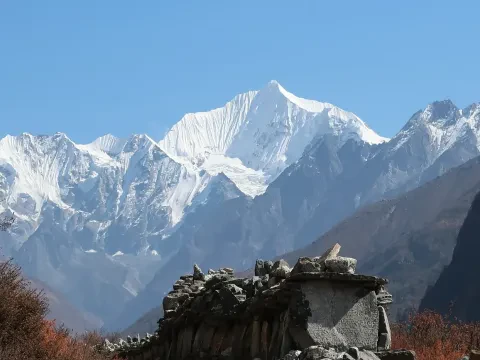
Langtang Valley Trek is undoubtedly the most easily accessible Himalayan trekking route. This route offers a unique opportunity to enjoy nature, admire mountain views while exploring local traditions and experience the authentic life of the local people. The Langtang Valley trek route starts with a drive from Kathmandu to Syabrubesi (elevation: 1,503 m). Then Langtang Khola River scenery will take you to Kyanjin Gompa (elevation 3,870 m) – the mountainous heart of Langtang Valley. It takes most trekkers 7 to 10 days to finish the Langtang Valley trek from Syabrubesi and return back to the starting point following more or less the same trail.
Unlike some of the longer Himalayan treks, this trail offers a relatively short and not very strenuous experience of gradually climbing up the mountain while enjoying nature and exploring local culture. Hiking trails pass through beautiful forests, yak pastures, and Buddhist monasteries, leading to spectacular views over high-mountain landscapes of Langtang Valley.
| Day Description | Elevation | Walking time |
|---|---|---|
| Day 1 Drive Kathmandu to Syabrubesi | 1,503 m | 7-8 hrs |
| Day 2 Syabrubesi to Lama Hotel | 2,470 m | 6-7 hrs |
| Day 3 Lama Hotel to Langtang village | 3,430 m | 6-7 hrs |
| Day 4 Langtang village to Kyanjin Gompa | 3,870 m | 3-4 hrs |
| Day 5 Exploration of Kyanjin Gompa, hike to Kyanjin Ri (4,773 m) or Tserko Ri | (4,984 m) 4,984 m or 4,773 m | 5-7 hrs |
| Day 6 Kyanjin Gompa to Lama Hotel | 2,470 m | 6-7 hrs |
| Day 7 Lama Hotel to Syabrubesi | 1,503 m | 5-6 hrs |
| Day 8 Drive from Syabrubesi to Kathmandu | 1,320 m | 7-8 hrs |
| Feature | Information |
|---|---|
| Departure Point | Syabrubesi |
| Return Point | Syabrubesi |
| Trek Duration | 7-10 days |
| Trek Distance | 65-75 km |
| Highest Overnight Stay | Kyanjin Gompa (3,870 m) |
| Highest Elevation | Tserko Ri (4,984 m) or Kyanjin Ri (4,773 m) |
| Difficulty | Moderate |
| Best Trekking Season | Spring (Mar-May) and Autumn (Sept-Nov) |
In fact, one of the great benefits of the Langtang Trek is that it is a straightforward trail. There are plenty of good teahouse guesthouses in the villages which makes the overnight stays much more comfortable. Many trekkers add an extra day to do more exploring around Kyanjin Gompa and its surroundings on their way back to Syabrubesi.
In conclusion, Langtang Valley trek itinerary can be adjusted to either last for 8 days or include more sightseeing and last around 10 days. This trek route is quite unique and offers great variety both in terms of wonderful Himalayan vistas and cultural exploration.
So, either choose the 8-day classic or the 10-day extended option of Langtang Valley trek and enjoy the view!
Langtang National Park is one of the most spectacular natural regions in Nepal. The park is the area where the Langtang Valley trek trail passes through.
Here, it is one of the most recent national parks established in Nepal in 1976. The park’s primary goal is to preserve the area’s outstanding ecological, natural history, and cultural diversity values. This region covers an area of about 1,710 square kilometers. The trails pass through different landscapes, providing amazing opportunities to enjoy nature on your Langtang Valley trek adventure.
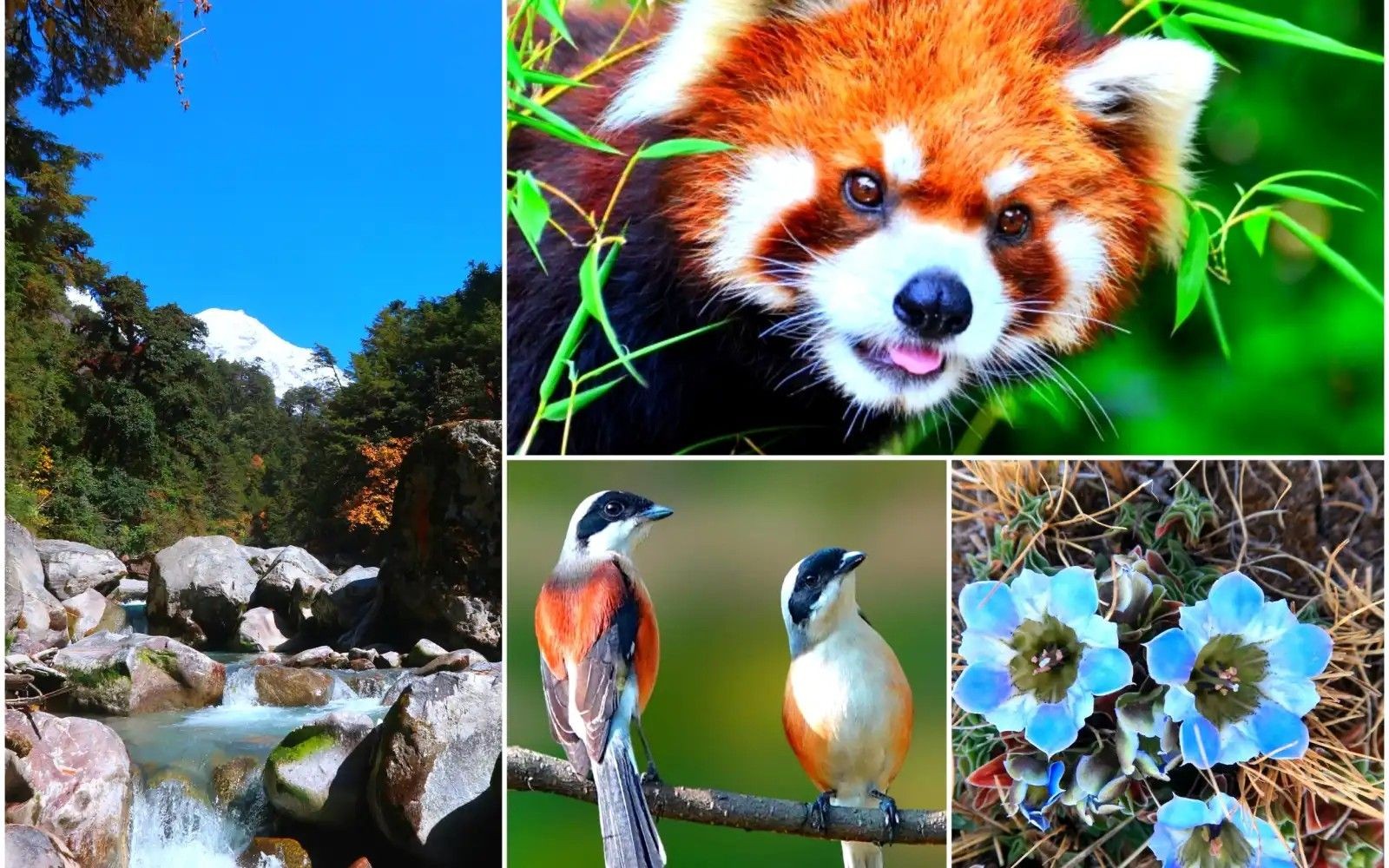
On the lower elevations of the trail, you will experience the subtropical climate typical of the foothill regions. You will see beautiful valleys of oak and pine trees, bamboo groves, and other healthy greenery. On the way to Kyanjin Gompa and beyond, the forest scenery changes into a dense rhododendron forest. The rhododendrons bloom in spring and make the trails one of the most beautiful sights in Nepal. Further up the trail, the forests give way to alpine pastures, rocky terrains, and glaciers.
If you have a chance to make this trek to Langtang Valley, you also have a fantastic opportunity to witness one of the most incredible ranges of Himalayan flora and fauna in the world.
| Elevation | Nature Landscapes |
|---|---|
| 1,500-2,500 m | Subtropical forests, rivers, bamboo groves |
| 2,500-3,500 m | Rhododendron, pine, fir, and oak forests |
| 3,500-4,000 m | Alpine meadows, yak pastures |
| Above 4,000 m | Glaciers, rocky terrain, snowfields, high Himalayan peaks |
Diversity of Wildlife in Langtang Valley Trek Region,
Langtang National Park is a habitat for many wild animal species. So, you have a very good chance to see some of the following animals:
In Langtang, you also have great opportunities to experience the local culture where the local community has been living in the mountainous forest for centuries. It is especially noticeable in Kyanjin Gompa village.
As you walk along the trail, you will hear the sounds of running water, birdsongs, rustling leaves, and the ringing bells of yaks. When approaching Kyanjin Gompa, you will see outstanding glaciers flowing from the mountain peaks.
Moreover, Langtang’s spectacular high mountains also provide excellent opportunities for nature and wildlife photography, but you need to put in effort for the reward. The mountains of Langtang Lirung (7,227 m highest peak), Dorje Lakpa (6,966 m), and Gang Chhenpo (6,387 m), as well as Yala Peak (5,520 m), offer unique scenic views.
In fact, the unique beauty of Langtang Valley trek landscapes will captivate any nature lover. The trek passes through pristine forests, alpine meadows, glacial valleys, and snow-capped mountains. All of this together creates one of the most scenic Himalayan trekking trails in Nepal.
The Langtang Valley Trek is famous for its fantastic views of the towering Himalayas. While most trails keep you at a distance, Langtang keeps you surrounded by snow-capped peaks as you trek. Each day the views become more dramatic as you approach Kyanjin Gompa, with glaciers and towering summits dominating the landscape.
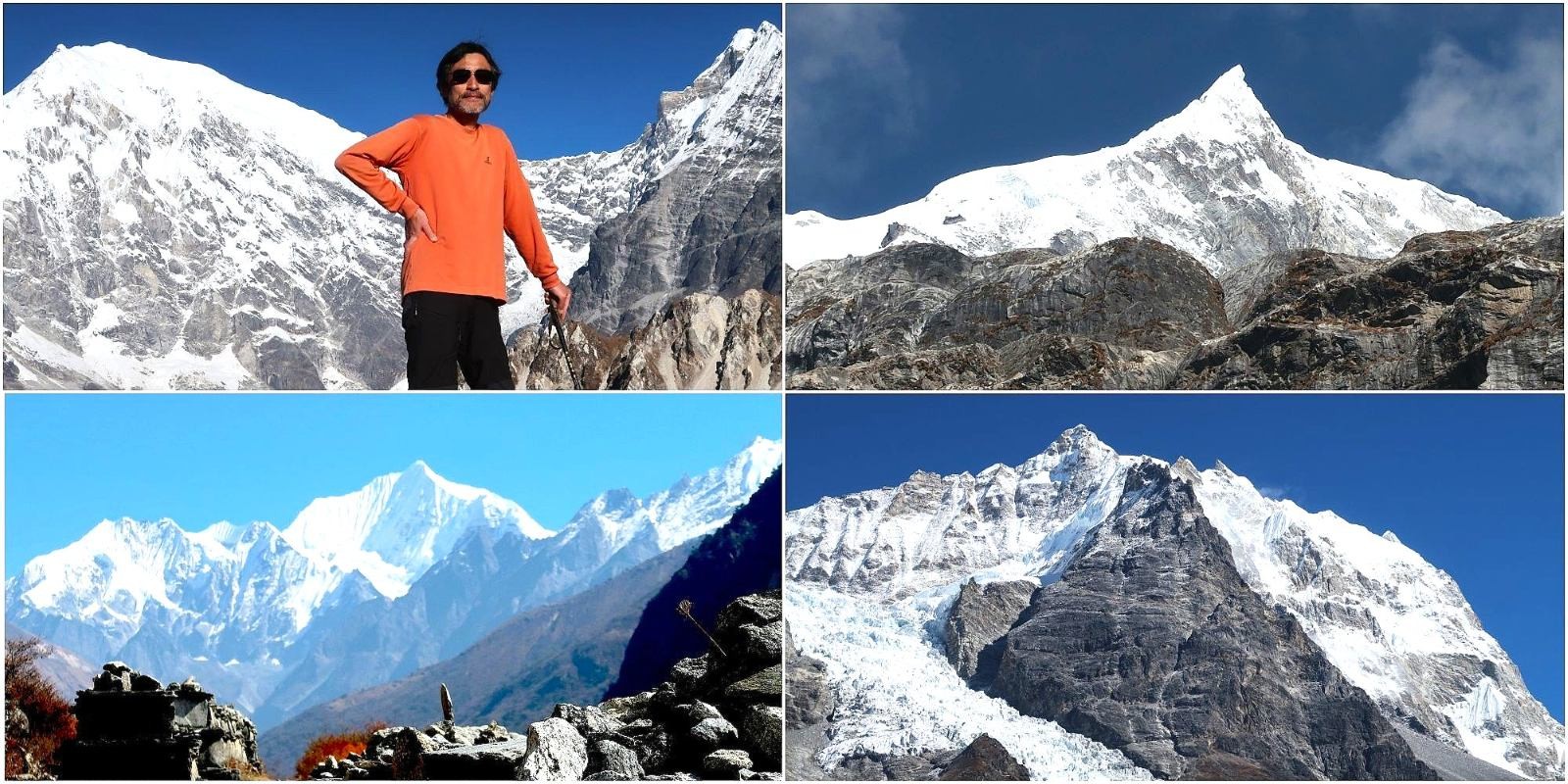
Meanwhile, the crown jewel of Langtang’s mountain vistas is Langtang Lirung (7,227 m) which rises almost perpendicularly above the valley. The impressive sight of this great peak with its glaciers and snowfields stretches out over the trek for days. At sunrise and sunset, the whole mountain glows with an orange and pink hue, making for great photo opportunities.
Surrounding Langtang Lirung are a number of equally-impressive summits that contribute to the dramatic mountain backdrop of this trek.
| Mountain | Approx. Elevation | Highlights |
|---|---|
| Langtang Lirung | 7,227 m | Highest peak in the valley and iconic landmark |
| Dorje Lakpa | 6,966 m | Elegant pyramid-shaped peak visible from higher points in the trail |
| Gangchenpo | 6,387 m | Large glaciated peak to the north of Kyanjin |
| Yala Peak | 5,520 m | Popular trekking peak for novice mountaineers |
| Naya Kanga (Ganja La Chuli) | 5,844 m | Beautifully-shaped snow-capped summit near Ganja La |
In fact, these towering Himalayan peaks are complemented by one of the region’s other natural wonders – the Langtang Glacier. The glacier stretches down the valley from the main peaks, forming large icefalls, rocky moraines and beautiful glacial rivers. Standing right next to the glacier, you can hear the sounds of the cracking ice and rushing waters.
Discover the Valley of Glaciers,
The Langtang region is also known as the “Valley of Glaciers” due to the large number of glaciers that can be found in the area.
While exploring the valley, you will see:
Kyanjin Ri: The Classic Himalayan Viewpoint
Most hikers will have the opportunity to visit Kyanjin Ri (4,773 m) on their acclimatization day. With its panoramic views of the Langtang Valley, it is one of the most popular viewpoints in the region.
From this mountain ridge, you will see:
Likewise, the relatively easy climb to Kyanjin Ri is well worth the effort for the spectacular views. It is one of the best places to see the classic Himalayan scenery of towering snow-capped peaks against the sky.
Tsergo Ri: The Ultimate Panorama,
Another great viewpoint is Tsergo Ri (4,984 m), which offers some of the most breathtaking views in the Langtang region. While it is a longer and more strenuous hike than Kyanjin Ri, the reward is well worth it.
From the summit of Tsergo Ri, you will see:
Majestic Mountains and Glaciers of Langtang,
Standing atop Kyanjin Ri or Tsergo Ri with the snow-capped peaks and glaciers stretching out before you is simply one of the most memorable experiences on this trek. With the stillness and serenity of the mountains, the crisp mountain air, and the endless views of the Himalayas, you will be overwhelmed by the majesty of it all. No doubt, this is one of the most unforgettable parts of the Langtang Valley Trek.
While the Langtang Valley Trek offers spectacular mountain scenery, it is also a great opportunity to experience the local culture and unique way of life of the Tamang people. The people of Langtang have lived in this region for centuries, developing their own unique traditions and way of life. As you trek through this Himalayan valley, you will see traditional stone buildings, enjoy local hospitality and cuisine, and experience the local Tibetan Buddhist traditions.
As you trek from village to village, you will see traditional stone buildings with wooden roofs dotting the landscape. Along the trails you will see prayer flags fluttering from rooftops, mani walls with carved Buddhist symbols, and white chortens that mark the entrances to villages. Monasteries with their beautiful murals and prayer wheels add to the spiritual atmosphere of this region.
Life in the Langtang Valley,
Life in the Langtang Valley is closely tied to the mountains. Local Tamang people live in small villages scattered throughout the valley.
Many of them make a living by:
You will see local villagers going about their daily routines, tending to their animals or harvesting crops. They are also very hospitable and friendly, often inviting you to their homes for a meal.
Traditional Culture of the Tamang People,
The local Tamang people have developed a unique culture that is distinct from other ethnic groups in Nepal.
Some of the unique cultural aspects you will see in Langtang include:
One of the most special aspects of this trek is the opportunity to experience the local hospitality and cuisine. Staying in family-run teahouses, you will be able to sample local dishes and enjoy conversations with the local people. You can also try local specialties such as yak cheese, Tibetan bread, noodle soups, and the hearty dal bhat.
The Langtang region was severely impacted by the devastating earthquake that struck Nepal in 2015. The village of Langtang was completely destroyed by landslides and avalanches triggered by the earthquake. However, the people of Langtang have shown incredible resilience in the face of such disaster. With the support of the local community and international donors, the village has been gradually rebuilt and restored.
Today, you will see both traditional and modern buildings throughout the valley. Many teahouses and shops have been rebuilt, offering great food and accommodation to hikers. By visiting this region, you will also contribute to the livelihood of the local people.
Preserving the Local Culture,
When visiting the Langtang Valley, you can help preserve the local culture by:
Here, the people of Langtang are very friendly and welcoming. In fact, one of the most special parts of this trek is the interaction with the local people. Combined with the spectacular mountain scenery, this unique cultural experience makes the Langtang Valley Trek one of the most memorable treks in Nepal.
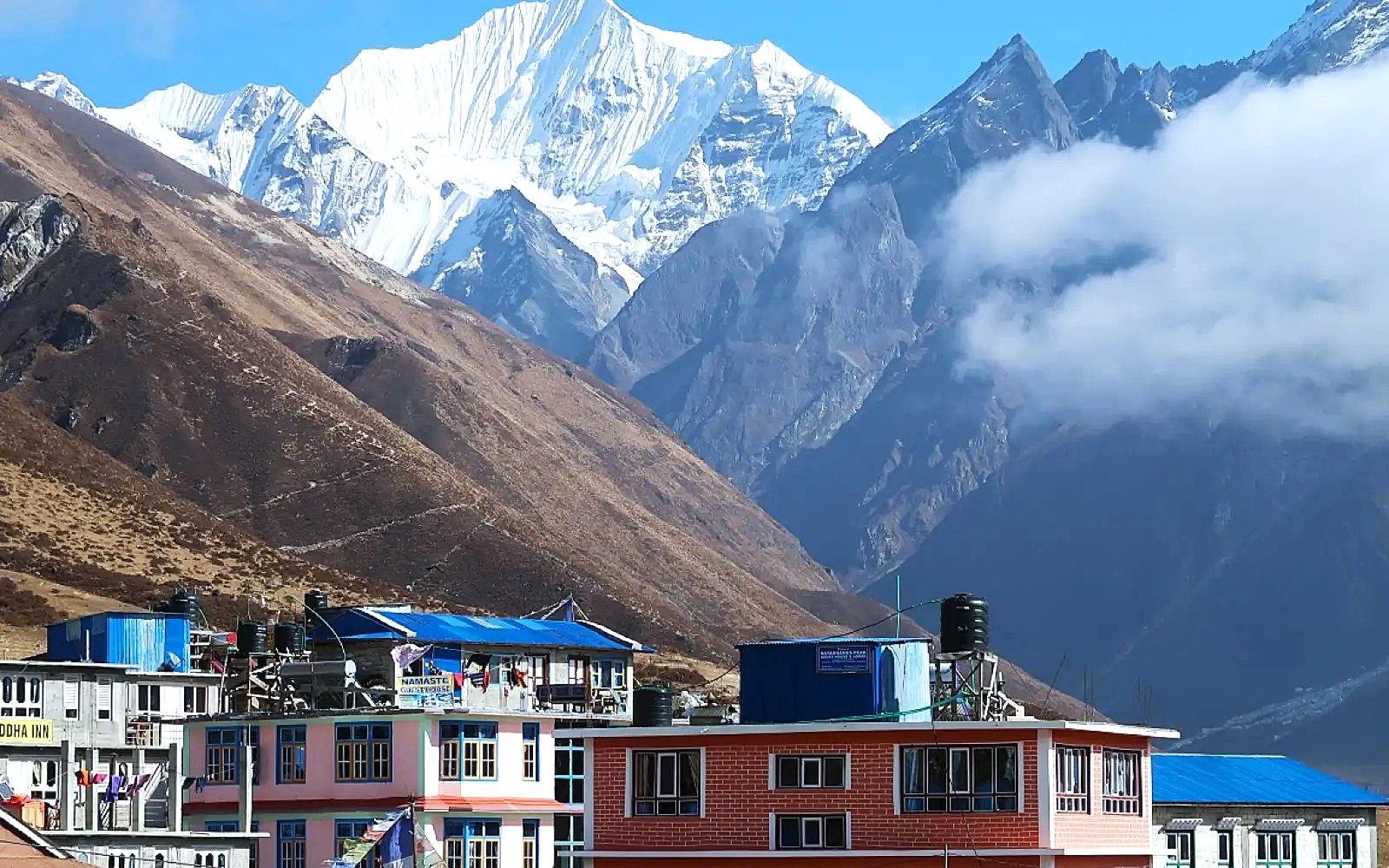
Reaching the highest village guesthouse in the Langtang Valley Trek is only one part of the experience, but for many trekkers, visiting Kyajin Gompa (3,870 meters) is an adventure that touches the heart. Surrounded by towering peaks, Kyanjin Gompa is a true sanctuary with a unique atmosphere of serenity, enhanced by the fluttering of prayer flags overhead. This is a place where age-old Buddhist customs come to life among the spectacular Himalayas.
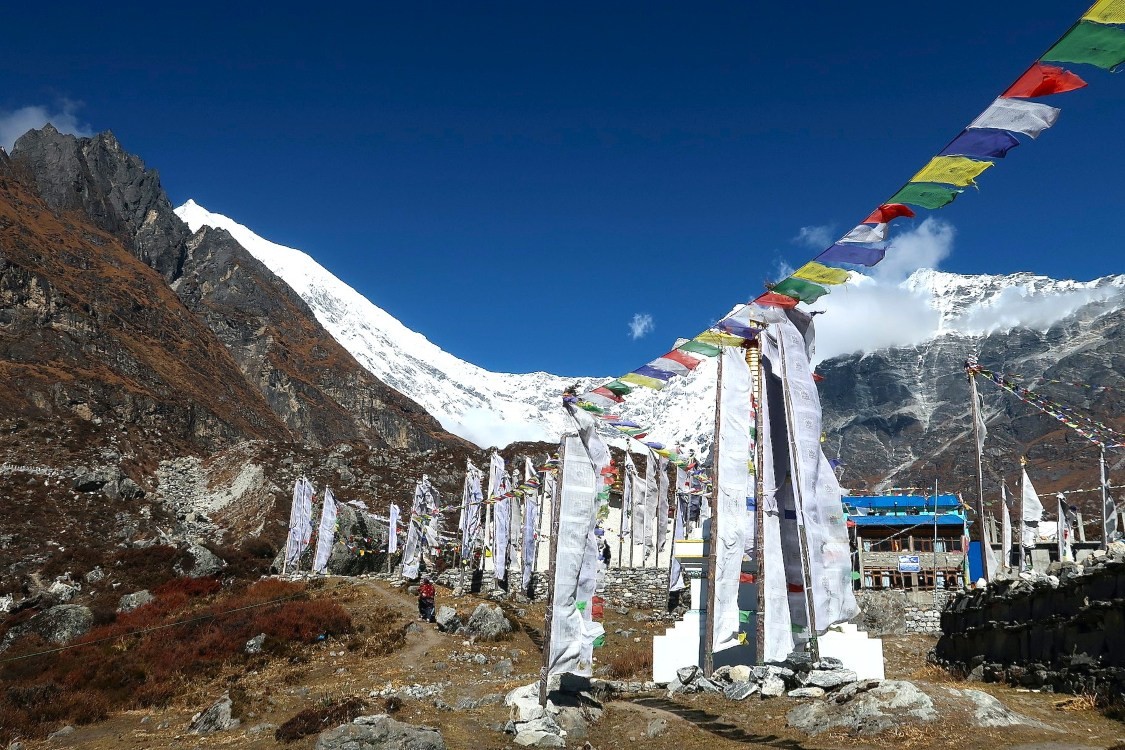
Here, nestled in the mountains of Kyanjin, the village derives its name from the ancient Buddhist monastery that is the center of spiritual life for the Tibetan Buddhist traditions of the local Tamang people. While not as imposing as some other Himalayan monasteries, Kyanjin Gompa’s natural setting adds to its mystique and allure.
The Langtang Valley trek is a fabulous opportunity to understand Tibetan Buddhism, which has had a tremendous influence on the region.
While exploring around the monastery, you will come across :
You will see locals spinning the giant prayer wheels or pay your respects to the mani walls by walking around them clockwise, as it is customary in Nepal.
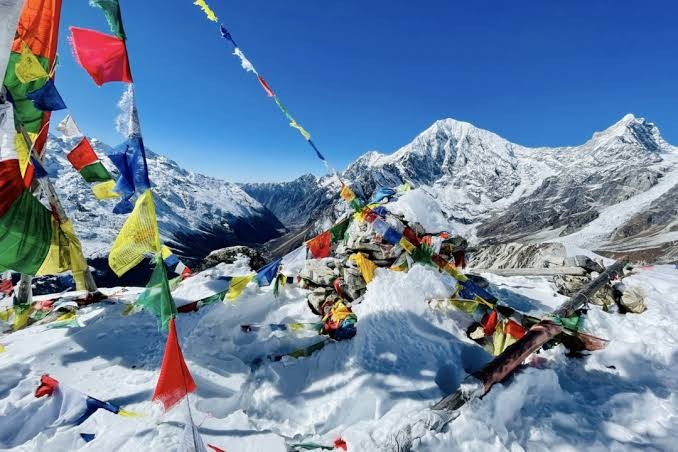
One of the most memorable sights around the Kyanjin monastries are the colorful prayer flags fluttering over the valley.
According to Buddhist beliefs, the wind carries the prayers of the Buddha, saints, and ancestors that are printed on these sacred rectangles to bless the land with compassion, peace, wisdom, and prosperity.
Actually, the view of the bright prayer flags against the snowy peaks is one of the most iconic sights in the Langtang region.
The stunning mountain peaks that rise majestically above the region are not only a natural wonder but are also considered to be sacred by the local Tamang people.
For instance, Langtang Lirung (7,227 meters), Dorje Lakpa (6,966 meters), and Gangchenpo (6,387 meters) are believed to be inhabited by protective spirits. This unique spiritual connection to the Himalayas is the reason why the Tamang people take such great care of the forest and mountainous landscape.
It is not uncommon for trekker to extend their stay in this special village due to the magical experience of watching the monks’ morning rituals, listening to the continuous chanting, and getting lost in the beauty of the village and the valley. Popular activities also include exploring the local stupas, meditation, taking photos, and enjoying breathtaking views of Langtang Lirung and other Himalayan peaks.
Here, a visit to the monastery is a great chance to immerse yourself in the tranquility of the place and contemplate the valley from a completely different perspective.
When visiting Kyanjin Gompa, it is best to follow a few simple rules of conduct to be considerate of the locals and their customs. In particular, always dress modestly, remove your headgear in temples, and walk around monuments and prayer wheels in a clockwise direction. Ask for permission before taking photos inside the monastery complex, and remember to speak softly in religious sites.
Moreover, the authenticity of the local traditions, the magnificent views of the Himalayas, and the warmth of the local people combine to make this village the highlight of the Langtang Valley Trek. Everything comes together in an amazing blend of nature, spirituality, and community life that is worth experiencing.
One of the most enjoyable aspects of the Langtang Valley Trek is the opportunity to sample the local flavors. After many hours of walking through mountain trails, there is nothing better than sitting in a local teahouse, feasting on mountain specialties and sipping a steaming mug of butter tea while delighting in the panoramic views. The local cuisine is a true reflection of the lifestyle and traditions of the Tamang people and other ethnic minorities of the region. They make the most of the local produce and have developed hearty, healthy, and simple dishes that are perfectly suited for the mountainous environment.
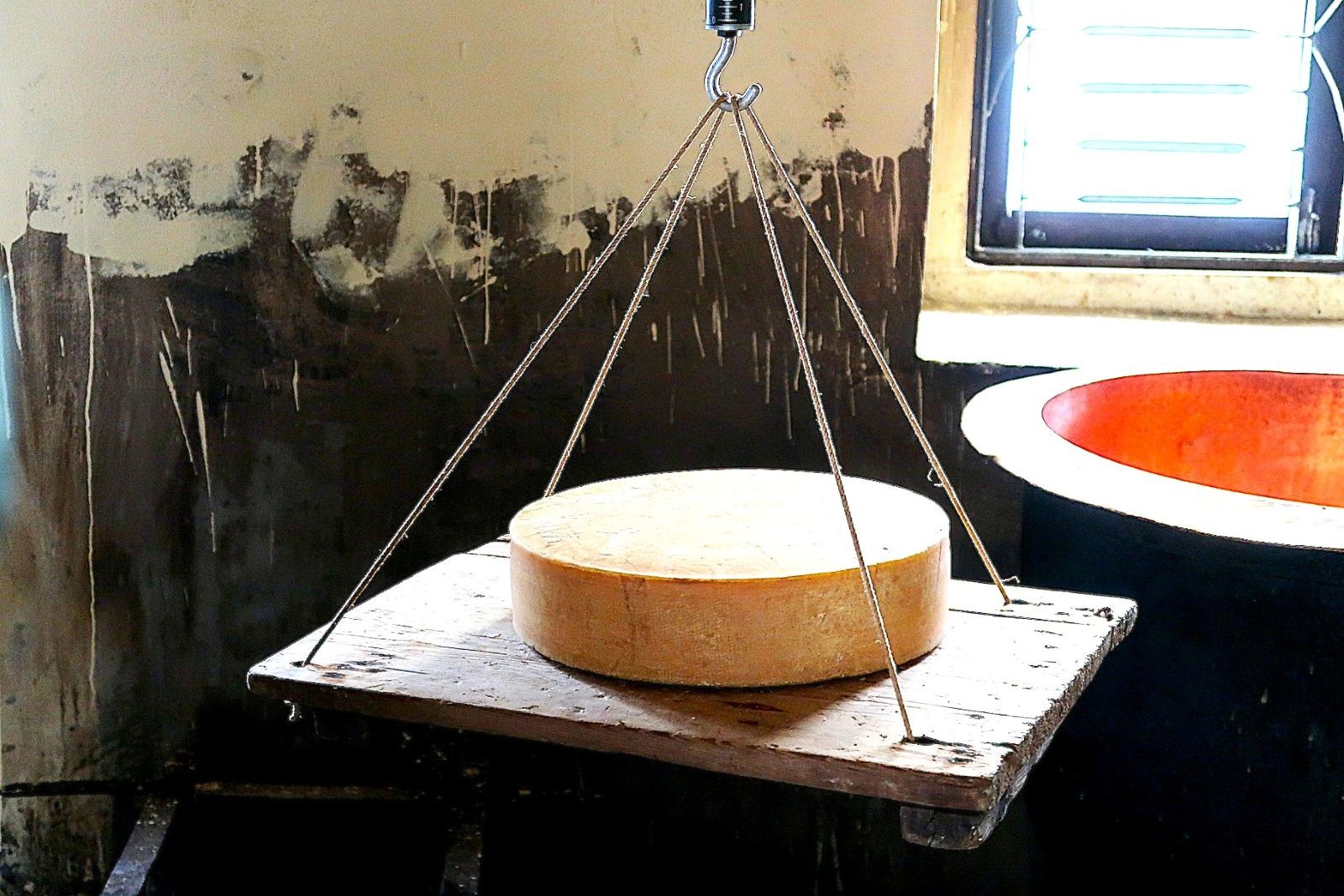
Moreover, one of the most popular stops for food tasting is the Kyanjin Cheese Factory, which has been producing high-quality yak cheese for decades. It is the perfect place to learn how local dairy farms operate, sample various regional products, and enjoy spectacular views of the Langtang Lirung peak.
No Langtang Valley Trek is complete without a visit to the Kyanjin Cheese Factory.
At this local dairy, you can taste a variety of local cheese and learn more about how they are produced and traditional methods of preservation.
In fact, the factory produces a range of handmade cheese made from yak milk and yak-cow milk from the village’s dairy farms. This dairy product has a rich flavor and is high in nutrients. This dairy specialty is a must-try when visiting Kyanjin Gompa village or preparing for the Kyanjin Ri or Tsergo Ri hikes.
When it comes to traditional beverages in the Langtang Valley, Tibetan butter tea is definitely worth trying.
This favorite local drink is made from tea leaves, yak butter, salt, and water or sometimes milk. Butter tea’s unique flavor is difficult to describe, as it tastes simultaneously salty and sweet, and nothing can substitute it for a traveler in the mountains. Local people have been drinking this tea for centuries, particularly due to its energizing effects.
Traditional Teahouse Foods
Despite the remote location, local eateries offer a variety of dishes made of seasonal food. Some of the most popular Langtang Valley Trek foods are:
In particular, the humble dal bhat has been a staple dish for Nepalese people for centuries and remains a favorite among trekkers due to its nutritional powerhouse of goodness.
Yaks are essential to the lives of the local people. They are multi-purpose animals whose milk, cheese, butter, yogurt, wool, and fertilizer are used in everyday life and traditional crafts. Without these resilient creatures, it would be impossible to survive in the harsh climate of the Himalayas.
When in Langtang, you must certainly try the local cuisine that reflects the traditions of the region’s people. Sitting in a mountain teahouse or a lodge surrounded by towering peaks while enjoying delicious and wholesome local foods is an incomparable experience. The food and warm hospitality of the locals will undoubtedly help you recharge after long days of trekking through the mountains.
From tasting freshly made yak cheese in Langtang Valley to enjoying a butter tea in Kyanjin village while watching the colorful prayer flags flutter in the wind, every meal in the mountains is an opportunity to enjoy a unique cultural experience. The simple local flavors perfectly complement the beauty of the Himalayas and become an unforgettable addition to a trek through this spectacular region.
The best time for the Langtang Valley Trek is during the months of March to May and September to November. These months offer pleasant weather, great mountain views, and unique opportunities to experience local culture and wildlife. Come to see the rhododendron blooms, snow-capped peaks, and traditional Tamang festivals.
Likewise, the Langtang Valley Trek is one of the most popular treks in Nepal. It is known for its natural beauty, diverse range of trekking trails, and unique cultural heritage. The best season to experience the Langtang Valley is during the spring and autumn months. This is the period when the rhododendron blooms, the forests turn green, and the snow-capped peaks become visible.
During the spring season, Langtang Valley offers a great opportunity to enjoy the natural beauty of Nepal. The weather is mild, the trails are clear, and the views of the mountains are breathtaking. It is also a great time to experience the local culture, as the village life is in full swing during this season.
Moreover, the best time to witness the natural beauty of the Langtang Valley is during the months of March to May. The weather is generally warm and comfortable, while the nights are cool. During this season, the rhododendron flowers bloom in all colors, the forests turn green, and the wildlife is abundant. Moreover, the mountain views are clear, which allows for great photo opportunities.
Similarly,the months of September to November are considered the best season for trekking in Nepal. The weather is generally dry, warm, and sunny, which makes for ideal hiking conditions. This season is also great for enjoying the local festivals and the village life in Langtang.
| Season | Months | Weather | Nature Highlights | Cultural Highlights | Recommendation |
|---|---|---|
| Spring | March – Mar | Mild weather | Rhododendron blooms, wildlife | Vibrant village life | Great trekking conditions |
| Summer/Monsoon | June – August | Warm/hot weather | Lush green forest | Fewer crowds |★★★☆☆ |
| Autumn | September – November | Sunny weather | Beautiful mountain views | Dashain/Tihar, local festivals | Great photo opportunities |★★★★★ |
| Winter | December – February | Cold weather | Snowy scenery | Local village life | Fewer crowds |★★★☆☆ |
Spring Season for Langtang Valley Trek,
The months of March to May are ideal for experiencing the natural beauty of the Langtang National Park.
Highlights :
During the spring season, the forests of the Langtang Valley are covered with blooming Rhododendron flowers of different colors. The weather is generally warm, while the nights are cool. Moreover, the wildlife is very active during this season, and the valleys are green with snow-capped mountains in the distance. All these elements create the most scenic views of Langtang.
Autumn Season for Langtang Valley Trek,
The months of September to November are considered the best season for trekking in Langtang.
Highlights :
Importantly, Autumn is a great season for enjoying the mountain views of the Langtang Valley. The weather is generally clear, sunny, and warm, while the trails are free of snow. Furthermore, this is the best season to witness the village life in Langtang and experience the local culture. The months of September to November are also perfect for photography due to the great visibility of the mountains. Moreover, the local festivals of Dashain, Tihar, and other traditional celebrations are very common during this season. In addition, the Tamang people actively participate in Buddhist festivals throughout the year.
If you are visiting the Langtang Valley during the months of January to February, there is a great chance to witness the traditional dances and songs of the Tamang people. This is the time of the year when the local community gathers to celebrate Sonam Lhosar, the Tamang New Year. The date of this celebration may vary, but it is usually held between the end of January and the beginning of February.
Shoulder Seasons for Langtang Valley Trek,
The best time to trek in the Langtang Valley is during the months of late February and early December.
Highlights :
Here, Langtang Valley Trekking in these months is generally less crowded. The teahouses are less busy, the trails are free of snow, and the mountain views are clear. In addition, the weather is generally comfortable, which makes for pleasant hiking conditions. Although the temperature may be cooler, this period offers great opportunities for photography and exploring the village life in Langtang.
There are two periods of the year when trekking in the Langtang Valley is not recommended. The first period is the monsoon season, which lasts from June to August. The second period is the deep winter, which is usually found between December and February.
Monsoon Season (June – August) :
During the months of June to August, heavy rainfall makes the trails slippery and unsuitable for trekking. Moreover, leeches are very common during this period, and mountain views are limited due to the frequent cloud cover.
Deep Winter (December – February) :
During the deep winter, the Langtang Valley is covered with snow. As a result, the hiking trails are difficult to access and the accommodations are closed. Furthermore, the night temperature can drop significantly, which can be dangerous for the trekkers.
The Langtang Valley Trek is a great adventure, which requires proper preparation. Although it is a moderate-level trek, there are certain things that every trekker should know in order to have a great experience.
Permits for Langtang Valley Trek,
| Permits | Approximate Cost |
|---|---|
| Langtang National Park Entry Permit | NPR 3,000 for foreign visitors |
| TIMS Card (if applicable) | Depending on the regulations |
It is important to research and understand the permit requirements before visiting the Langtang Valley.
Packing List for Langtang Valley Trek,
Packing light, but having all necessary equipment is the key to a comfortable trek :
Although the altitude of the Langtang Valley Trek is generally moderate, there is still a chance of altitude sickness.
Prevention Tips :
In fact, it is important to stay hydrated and give your body enough time to adjust to the altitude. Moreover, it is crucial not to ignore the symptoms of altitude sickness.
Most trekkers prefer a teahouse-style trek to a camping trek. The teahouse-style trek provides more comfort, as the teahouses offer a variety of food, warm rooms, and comfortable beds. Moreover, it is easier to charge electronic devices and enjoy hot showers at the teahouses. On the other hand, camping treks are usually organized for specific groups of people.
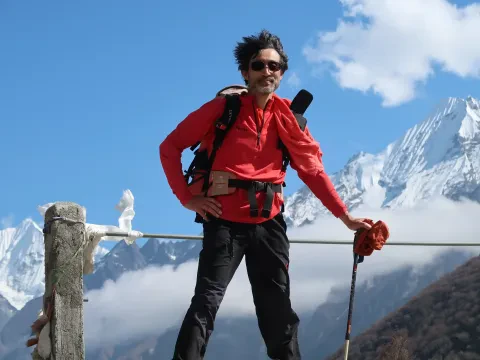
A professional guide is a great addition to any trek to the Langtang Valley. The guides are knowledgeable about the local culture, can help navigate the trails, and assist in case of an emergency. In addition, they often have connections with the local teahouses and can help arrange accommodations. A porter is also a great option for people who want to have a more comfortable trek. The porters can carry most of the luggage, so that the hiker only has to carry a small day pack.
Other Practical Tips for Langtang Valley Trek
There are a few more practical tips for those, who want to have a comfortable and unforgettable trek to the Langtang Valley.
Practical Tips:
Here, the Langtang Valley Trek is a great adventure, which requires proper preparation. Following these practical tips will greatly contribute to a comfortable and enjoyable trek.
One of the best parts of a Langtang Valley Trek is staying up at Kyanjin Gompa (3,870 m). Most trekkers take an extra day to explore the area taking on one of the classic day hikes from Kyanjin. The views are some of the best in Nepal and the added hikes are a great opportunity to get some extra mountain air.
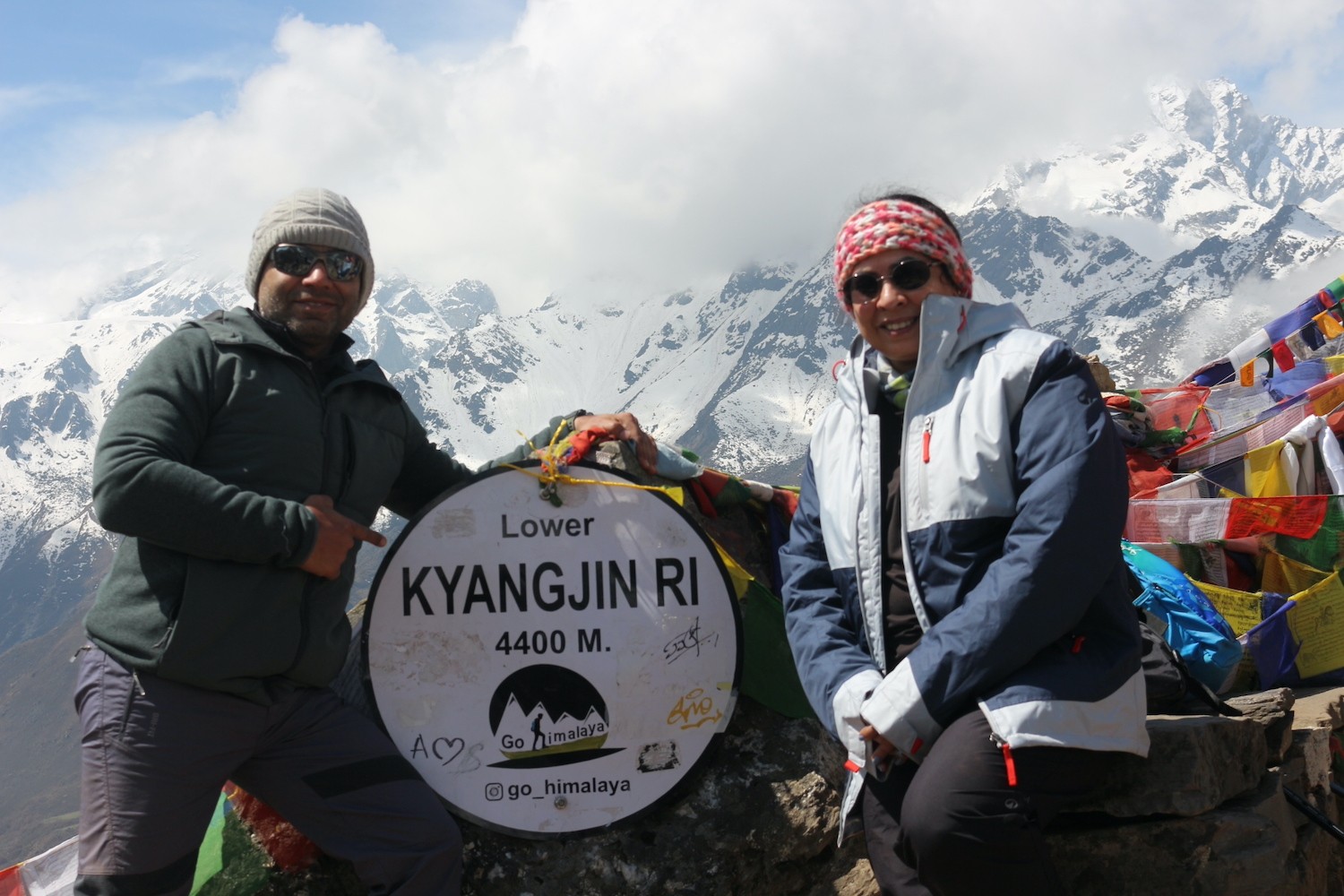
Meanwhile, there are two main day hikes – Kyanjin Ri and Tsergo Ri – both of which afford fantastic views of the glaciers and peaks of the Langtang Valley. You can’t go wrong with either hike. The choice depends on how long you want to spend hiking and what sort of challenge you want.
Day Hikes From Kyanjin Gompa :
The Kyanjin Ri hike is by far the most popular day hike in the Langtang region. It departs right from the large village of Kyanjin Gompa and ascends a rocky ridge. While the hike does have some steep sections, it’s nothing too challenging and not too long. Kyanjin Ri is a popular local hike as well for those who have extra time.
From the top of Kyanjin Ri, you’ll see absolutely amazing views that include:
Here, it’s best to hike up Kyanjin Ri in the mornings when the conditions are the clearest. As a result, the hike is particularly popular with photographers.
If you’re looking for something a little more challenging and you have the time, the Tsergo Ri hike is the best one-day option in Langtang. The hike to Tsergo Ri summit (4,984 m) starts first thing in the morning and wanders up some pretty steep inclines. It’s definitely longer than the Kyanjin Ri hike, but it’s nothing that you can’t handle. As an extra bonus, this viewpoint has some of the best Himalayan views in Nepal.
While up on the summit, you’ll be able to see:
Many intrepid travelers consider the Tsergo Ri viewpoint to be one of the finest Himalayan summits in Nepal.
Which Hike To Choose?
Tips for Day Hiking
Here are some additional tips to consider for your day hikes:
Use trekking poles :
Whether you decide to hike Kyanjin Ri or tackle Tsergo Ri, these hikes will greatly enhance your Langtang Valley Trek! The amazing 360 degree vistas, plus the glaciers and close views of Langtang Lirung, will stay with you long after you return home.
In addition to seeing the amazing landscapes, the Langtang Valley Trek takes you through one of the most bio-diversity rich regions in Nepal and introduces you to the local Tamang people. By following responsible trekking practices in Nepal, you’ll help preserve this region and ensure that future trekkers can enjoy the same wonderful experience.
Every trekker can play his or her part in maintaining the pristine beauty of the Langtang National Park as well as supporting the local community.
One of the best ways to help preserve the natural landscape is to follow the principles of Leave No Trace. This means that you should carry your own refillable water bottle, bring reusable bags whenever possible, and pack out all of your trash. It also means staying on established trails, not littering, and not picking wildflowers. By doing your part to leave this beautiful place as you found it, you’ll ensure that the forests, rivers, glaciers, and wildlife will continue to thrive.
Helping the Local Community,
Helping local communities is an important aspect of any responsible trekking in Nepal. You can make a meaningful difference by supporting the local economy wherever possible.
Support the local economy by:
Your support goes a long way toward helping to sustain the local culture and economy.
The Langtang region is home to one of the oldest Tibetan Buddhist traditions in Nepal. While exploring the region, it’s important to show respect for the local people and their beliefs and customs. A helpful starting point is to dress modestly when visiting villages and monasteries. It’s also customary to walk around chortens and mani walls in a clockwise direction. It’s best to remove your hat when inside a monastery and to ask for permission before taking photos of people. Finally, speak softly and avoid touching religious objects when visiting temples.
Monasteries: What To Do and What Not To Do,
When visiting monasteries such as Kyanjin Gompa, it’s important to follow local customs to avoid offending the local people and to ensure a meaningful experience for yourself as well.
Do: Avoid:
The 2015 Nepal earthquake not only claimed hundreds of lives but also left many villages and trekking areas in ruins. However, with the help and support from all around the world, the residents of the Langtang region were able to rebuild their homes, monasteries, and trekking routes.
Meanwhile, your responsibility as a trekker going to Nepal is to support the local economy. By doing so, you not only give an opportunity for local people to earn a livelihood but also help to protect the local culture and natural environment. Responsible trekking in Nepal is the best way to support the local community in the Langtang region.
Travel Sustainably in Nepal
It’s important to make sustainable choices whenever possible. The following are a few suggestions for being more eco-friendly during your Himalayan trek.
Tips for Sustainable Trekking in Nepal:
While the Langtang Valley welcomes foreign visitors, it is also the home of the local Tamang people. Being a respectful guest is always important, but when traveling abroad it’s especially vital to be mindful of local customs and traditions. Above all, it’s important to treat others as you would like to be treated. By being a responsible guest, you’ll have more enriching experiences and you’ll also contribute to the sustainability of the local community.
By being a responsible trekker in Nepal, you will help to preserve this pristine region for years to come. By supporting the local community, you’ll contribute to the wellbeing of the local Tamang people. In turn, they will be able to continue preserving their unique culture and traditions as well as their wonderful natural environment.
The difficulty level of the Langtang Valley Trek is moderate. It is a fantastic opportunity for a fit beginner to experience trekking in the Himalayas without testing their fitness levels.
In fact, the trek is not technically challenging, but it involves several days of moderate uphill walking and is quite strenuous.
Likewise, compared to other popular trekking destinations in Nepal, the Langtang Valley Trek is more demanding than the Ghorepani Poon Hill Trek but easier than the Everest Base Camp Trek and the Annapurna Circuit Trek. It is a moderate-level trek because of the relatively lower maximum altitude and shorter duration.
Langtang Valley Trek Difficulty at a Glance :
Daily Walking Challenges,
On most days of the Langtang Valley Trek, you will have to:
The trail is well-groomed and does not require technical climbing skills. However, you should have endurance and a good pair of hiking shoes.
Altitude on the Langtang Valley Trek,
| Location | Elevation |
|---|---|
| Syabrubesi | 1,550 m |
| Lama Hotel | 2,470 m |
| Langtang Village | 3,430 m |
| Kyanjin Gompa | 3,870 m |
| Kyanjin Ri | 4,773 m |
| Tsergo Ri | 4,984 m |
\Most people do not sleep above Kyanjin Gompa, which makes this trek less challenging than the Everest Base Camp Trek.
Can Beginners Do the Langtang Valley Trek?
Yes, the Langtang Valley Trek is suitable for beginners. It is a fantastic choice for a first-time trekker who wants to challenge themselves without testing their fitness levels too much.
The Langtang Valley Trek is suitable for:
Here, you do not need to have prior trekking experience at higher altitudes to do the Langtang Valley Trek. However, you should exercise regularly before the trek to build stamina.
How to Prepare for the Langtang Valley Trek Physically,
It is a good idea to prepare your body for the Langtang Valley Trek. You should:
Importantly, it is best to start training at least a month before the trek begins. You will find the hike much easier if you have trained consistently for four to six weeks.
Altitude sickness is a common problem on mountain treks. Different people have different tolerance levels for altitude. Some people may feel sick or have headaches due to the lower oxygen levels.
Here are some ways to prevent altitude sickness:
Since the Langtang Valley Trek is a gradual uphill trek, most people acclimatize well at the higher altitudes.
| Trek | Difficulty | Crowds | Maximum Sleeping Altitude |
|---|---|---|
| Ghorepani Poon Hill Trek | Easy to Moderate | Moderate | 2,885 m |
| Langtang Valley Trek | Moderate | Moderate to Light | 3,870 m |
| Everest Base Camp Trek | Moderate to Challenging | Heavier | 5,164 m |
| Annapurna Circuit Trek | Challenging | Moderate | 4,900 m + |
The Langtang Valley Trek offers some of the best value-for-effort Himalayan views in Nepal.
Overall, the Langtang Valley Trek difficulty is challenging enough to be rewarding but not unachievable for a fit beginner. With the right amount of preparation and a lighter step, it can be one of the most enjoyable treks in Nepal.
The Langtang Valley Trek is one of the best destinations for nature and adventure photography. From the snow-capped peaks to the traditional monasteries, from the prayer flags to the friendly faces of the local Tamang people, there is always something captivating that you can capture on camera. However, the most magical moments on this trek are often those when you stop to appreciate the stillness and beauty of the trail.
Whether you have a professional camera or a smartphone, you will find plenty of opportunities to take beautiful pictures in the Langtang Valley.
Best Photo Opportunities on the Langtang Valley Trek.
| Location | Langtang Photography Highlights |
|---|---|
| Syabrubesi | Traditional village |
| Bamboo | Forest, Mossy trails and forests |
| Langtang Village | Stone houses with mountain views |
| Kyanjin Gompa | Monastery, prayer flags, glaciers |
| Kyanjin Ri | 360-degree Himalayan views |
| Tsergo Ri | High-altitude landscapes |
| Langtang Glacier | Beautiful ice formations |
Every viewpoint in the Langtang Valley offers different photo opportunities.
Golden Hour Photography
The most spectacular mountain photos are taken during the golden hour. The golden hour is the period just after sunrise and before sunset when the sky is clear, and the mountains are aglow with golden light.
Golden hour photography is best because of :
The view of the sunrise from Kyanjin Ri is particularly spectacular as the first light hits the Langtang Lirung (7,227 m) peak.
Photographing Prayer Flags and Monasteries,
Prayer flags are a spectacular addition to any mountain landscape. You can frame the prayer flags and the white chortens (stupas) against the snow-capped peaks for a striking composition.
Some composition tips for taking pictures of prayer flags and monasteries are:
You should always ask permission before taking pictures of the monks or the local people.
Village Life Photography,
Some of the most beautiful photos you can take in Langtang are of the local village life. You can capture the daily lives of the people and the animals that inhabit the valley.
Some of the best subjects for village life photography are:
Wildlife Photography,
The Langtang National Park is home to some of the most elusive wildlife in Nepal. You can spot Himalayan monal birds, musk deer, langur monkeys red pandas ( if lucky), and Himalayan griffon vultures during your Langtang Valley Trek. The yaks are also commonly seen grazing in the higher altitudes of the valley.
Tips for Wildlife Photography:
In addition to taking pictures of the beautiful landscapes and village life, you should also take some time to enjoy the stillness and majesty of the Langtang Valley. Some of the most memorable moments are the ones when you stop to listen to the Langtang Khola’s gentle stream or enjoy your morning tea in Kyanjin Gompa.
Moreover, you should also spend time interacting with the local people and other trekkers. You can strike up a conversation with a local family or listen to the monks’ chants at the monastery. The evenings spent chatting with fellow trekkers at the teahouse are also some of the most magical moments of the trek.
Photography Tips,
Here are some additional photography tips for the Langtang Valley Trek:
Moreover, the beautiful Langtang Valley offers endless opportunities for photography. The mountains, forests, and villages are stunning at any time of the day, and the changing weather creates unique photo opportunities.
However, the most valuable memories of the Langtang Valley Trek are the ones captured not on camera but in your heart. The Langtang Valley Trek offers magical moments for everyone, from the breathtaking mountain views to the simple conversations with the local people.
The Langtang Valley Trek is not just another mountain hike. It is a unique adventure combining pristine Himalayan wonderland and unique Tamang culture. From picturesque forests, rivers, and waterfalls to towering glaciers and ancient monasteries, a visit to the Langtang Valley offers a truly unforgettable outdoor experience.
Furthermore, it is one of the least crowded trekking routes in Nepal. You will have a fantastic opportunity to enjoy stunning Himalayan views while discovering ancient indigenous cultures in a remote mountainous region.
The Langtang Valley Trek is an amazing opportunity to witness the best of nature and human creativity in the Himalayas.
Natural Attractions,
Langtang offers a wide range of spectacular Himalayan views, including:
Cultural Interest,
Additionally, you will be able to enjoy:
A visit to the Langtang Valley is a rare find in Nepal because it offers a great combination of nature and culture.
For first-time Himalayan trekkers, it is an excellent option. This trail is also good for families with children, as it is not too strenuous. Moreover, nature lovers and photographers will appreciate the Langtang Valley’s unique beauty, including its dramatic Himalayan peaks and authentic ethnic cultures.
However, more experienced trekking enthusiasts may also want to consider this trek. If you are looking for a less strenuous Himalayan adventure than Everest Base Camp or Kanchenjunga, the Langtang Valley Trek is a great option. This trek is exciting for everyone, from first-time hikers to professional mountaineers.
Here, the table below summarizes for whom the Langtang Trek is the best option and why.
| Type of Traveler | Langtang Valley Trek Suitable? |
|---|---|
| First-time Himalayan trekker | ✅ Very good choice |
| Nature lover | ✅ Perfect |
| Cultural traveler | ✅ Highly recommended |
| Photographer | ✅ Excellent |
| Family with school-age children | ✅ Good |
| Experienced trekker | ✅ Great for a break |
Why Langtang Valley Trek Inspires Travelers
While most tourists are amazed by the natural beauty of the Langtang National Park, they always depart discovering new things about the local Tamang culture.
However, the most memorable experiences are usually personal and unique for each visitor.
Likewise, some people are fascinated by serene mountain mornings and evening fireside chats on a tea shop’s terrace. Some prefer to take pictures of traditional flags and mani walls in ancient monasteries, or taste local cheese made of yak milk. However, each visitor will have his own moments and reasons to visit Langtang Valley.
A trip to the Langtang Valley is an unparalleled Himalayan adventure. It features dramatic mountain views with a chance to visit unique ancient villages with local culture and hospitality.
However, there are several important things to do to prepare for the Langtang Valley Trek.
Below is a list of essential tips for your Langtang Valley adventure:
In addition to these general guidelines, we recommend you to learn more about this incredible destination. Moreover, the Langtang Valley Trek is a fantastic opportunity to participate in cultural exchange. Helping to protect the local environment and traditions is always a good idea for responsible travelers.
Therefore, the Langtang Valley Trek is a unique experience that combines unforgettable Himalayan wilderness and cultural exchange. It is never too late to start planning your own Langtang Valley Trek adventure. You will see magnificent peaks and enjoy the beautiful nature of the Himalayas. Furthermore, you will be able to witness traditional Tibetan Buddhist culture and learn more about local ethnic customs.
Finally, it will be fascinating to meet all sorts of amazing people that you will meet on your way. So why not jump into exploring this wonderful place right now?
Contact us and book your Langtang Valley Trek, enjoy it with our professional team and make it memorable.
1. What is the Langtang Valley Trek in Nepal?
The Langtang Valley Trek in Nepal is a Himalayan trekking route found in Langtang National Park. The trail offers wonderful mountain views as well as Tamang culture and heritage. During the nature tour in Nepal, the hikers pass through forests, rivers, monasteries, and villages to enjoy the spectacular view of Langtang Lirung and other peaks around the valley. The trail is famous for its beautiful Himalayan scenery and local Tamang culture in addition to being a relatively short and easy trekking sojourn for beginners. Thus, the Langtang Valley Trek in Nepal has become one of the most popular hiking destinations in the country.
2. Why is the Langtang Valley Trek called “Nature and Culture Together”?
The Langtang Valley Trek in Nepal: Nature and Culture Together package allows the travelers to explore the Himalayan landscapes while learning about the local village life and traditions. It offers a great chance to enjoy the forest, waterfalls, alpine meadows, and glacial valleys while connecting with the local Tamang people, visiting ancient monasteries, and experiencing the unique culture of the community. Moreover, the local handicrafts, dances, and traditions of the culture-rich villages also add to the beauty of the mountainous landscape of the trail. As such, the Langtang Valley Trek in Nepal promises the tourists an ultimate nature and culture experience together.
3. How difficult is the Langtang Valley Trek?
The Langtang Valley Trek difficulty is considered easy to moderate and can be completed by most hikers within 7 to 10 days. In addition to the relatively short hiking period, the trail is not very challenging with some uphill and downhill sections, although it can be tiring at times. Besides, the trek offers a spectacular view of the Himalayas from Kyanjin Gompa at an altitude of 3,870 meters. Thus, in terms of moderate difficulty and beautiful scenery, the Langtang Valley is a fantastic trekking destination in Nepal.
4. What is the best season for the Langtang Valley Trek?
The Langtang Valley Trek best season falls between March to May and September to November. The former is a perfect season for witnessing the blooming rhododendrons and enjoying clear mountain views, whereas the latter provides the hikers with pleasant weather, clear skies, and superb Himalayan scenery to capture beautiful photographs. In fact, the Langtang Valley Trek in spring and autumn is ideal for experiencing the most pleasant trekking conditions in Nepal.
5. How many days does it take to complete the Langtang Valley Trek?
The Langtang Valley Trek in Nepal usually takes between 7 to 10 days from Kathmandu. Most hikers spend an extra day acclimatizing in Kyanjin Gompa. Besides, it is also possible to extend the trek to 11 or 12 days by including Kyanjin Ri or Tserko Ri hikes or to explore Langtang village. Therefore, the Langtang Valley Trek itinerary can be adjusted based on the individual preference of the travelers as well as their fitness level.
6. What permits are required to do the Langtang Valley Trek?
For the Langtang Valley Trek in Nepal, getting Langtang National Park Entry Permit and TIMS card is essential since they help the authorities to monitor the number of tourists and ensure their safety during the trek. Additionally, it is crucial to carry the printed copies of the permits and passports while on the trek since the trail has multiple checkposts where the officials will ask to produce the documents for verification.
7. Is Langtang Valley Trek suitable for a beginner?
The Langtang Valley Trek for beginners is one of the best trekking options in Nepal as it is an easy and short Himalayan adventure. The trail offers the hikers a chance to enjoy the spectacular mountain views while exploring the local culture and heritage. Moreover, with its tea house and villages along the route, the Langtang Valley Trek is relatively less demanding as compared to the Everest Base Camp Trek. Therefore, as a beginner, you should consider preparing yourself physically and mentally before starting the trek.
8. What mountains can be seen during the Langtang Valley Trek?
During the Langtang Valley Trek, the most prominent peaks to spot include Langtang Lirung (7,227 meters), Gang Chhenpo (6,388 meters), Dorje Lakpa (6,966 meters), Yala Peak (5,520 meters), and other snow-capped summits in the Langtang region. In addition, the panoramic views of the Himalayas from Kyanjin Gompa and Kyanjin Ri are worth experiencing at dawn when the atmosphere is clear. As such, the Langtang Valley Trek offers unforgettable mountain views to the hikers and trekkers.
9. What cultural activities can be experienced during the Langtang Valley Trek?
The Langtang cultural trek in Nepal offers a fantastic opportunity to learn about the Tibetan Buddhist culture and traditions of the local Tamang people. From visiting monasteries and Buddhist shrines to exploring the fascinating local handicrafts and lifestyles of the locals, the Langtang Valley Trek is an ultimate cultural experience for those who aim to have a deeper understanding of the Tibetan Buddhist civilization or simply witness it firsthand. As such, the Langtang Valley trekking is a fantastic option for a cultural expedition in Nepal.
10. What is the highest altitude reached on the Langtang Valley Trek?
The highest altitude reached on the Langtang Valley Trek is Kyanjin Gompa (3,870 meters). In addition to the overnight stay at Kyanjin Gompa, most hikers also spend a day hiking to Kyanjin Ri (4,773 meters) or Tserko Ri (around 4,984 meters) for panoramic views of the Langtang Himalayas. As such, it is essential to acclimatize the body at Kyanjin Gompa before proceeding to Kyanjin Ri or Tserko Ri.
11. Are tea houses available on the Langtang Valley Trek?
The Langtang Valley Trek accommodations feature tea houses where hikers can relax, spend the night, and enjoy various local meals. Particularly, the most common tea houses include Lama Hotel, Langtang Village, and Kyanjin Gompa. Hence, as the Langtang tea houses provide hikers with simple and affordable overnight stays, it is best to opt for them to support the local economy.
12. What food can be eaten on the Langtang Valley Trek?
During the Langtang Valley Trek, the most common foods are dal bhat, noodles, fried rice, soup, Tibetan bread, momos, porridge, eggs, and drinks. Moreover, vegetarian dishes are also available in most tea houses. Thus, to experience the local Nepalese flavors, hikers should consider trying various foods served at the Langtang Valley tea houses.
13. Can altitude sickness occur on the Langtang Valley Trek?
Like any other mountainous adventure, the Langtang Valley Trek can also lead to altitude sickness due to the higher altitude as compared to Kathmandu. Some of the most common altitude sickness symptoms are nausea, fatigue, difficulty sleeping, and headaches. Therefore, to avoid altitude sickness, the hikers should descend down immediately once they feel ill and consult a doctor. Moreover, staying hydrated and taking a day to acclimatize in Kyanjin Gompa can also be helpful.
14. How do I get to the starting point of the Langtang Valley Trek?
Langtang Valley Trek begins at Syabrubesi that is around 7-9 hours drive from Kathmandu. There are many buses and private vehicles available for transportation to Syabrubesi. The drive from Kathmandu to Syabrubesi takes you through the rolling hills, terraced farmland, and rivers before entering the Langtang region. Most of the Langtang Valley Trek itineraries begin with a day of hiking on the day following your arrival in Syabrubesi.
15. Is a guide necessary for the Langtang Valley Trek?
Hiring an English-speaking and professional local guide is a must for the Langtang Valley Trek since most trails can be confusing, particularly for first-time hikers. A professional guide will make your Langtang Valley Trek smooth and safe while giving you a deeper insight into the local history, culture, and traditions. Moreover, a good guide can also be instrumental in communication with the locals as well as offering general assistance during the Langtang Valley Trek in Nepal.
16. What wildlife can be seen in Langtang National Park?
The Langtang National Park is home to a variety of wildlife, including red pandas, musk deer, and Himalayan black bears. However, wildlife spotting is a matter of luck since animals are elusive and only appear occasionally during the Langtang Valley Trek. Nevertheless, visiting Lama Hotel and staying in the forest offers a good chance to see a wide range of Himalayan wildlife. Thus, it is always a good idea to keep a keen lookout while on a nature tour in Nepalese mountainous forests. In addition to these wild animals, the Langtang region is also abundant in bird species.
17. Can I combine the Langtang Valley Trek with other treks?
It is possible to customize the Langtang Valley Trek with other nearby destinations like Gosainkunda or Tamang Heritage Trek. This way, the travelers can have a more comprehensive understanding and experience of the Langtang region while enjoying panoramic views of snow-capped peaks in the Langtang Himalayas. In general, combining the Langtang Valley Trek with the Gosainkunda or Tamang Heritage Trek usually takes 12-16 days for the entire expedition.
18. What should I pack for the Langtang Valley Trek?
The most essential items to pack for the Langtang Valley Trek include a pair of trekking boots, warm clothes, a waterproof jacket, gloves, a beanie, a sleeping bag, trekking staffs, a water bottle, sunscreens, and a first aid kit. In addition, hikers also need to carry an umbrella or raincoat. Basically, dressing in layers is advisable for the Langtang Valley Trek as the temperatures can vary from cold at night to comparatively warm during the day.
19. Is the Langtang Valley Trek safe after the 2015 earthquake?
The Langtang Valley Trek in Nepal is safe after the 2015 earthquake. Besides restoring the trails and tea houses, the people in the region have made the valley an even more attractive trekking destination. Thus, the Langtang Valley Trek is now a fantastic opportunity for nature lovers to experience incredible Himalayan views as well as witness the rich Tibetan Buddhist culture and traditions. Moreover, trekking in this region also supports the locals by contributing to the local economy through tourism.
20. Why choose Haven Holidays Nepal for Langtang Valley Trek?
Haven Holidays Nepal Langtang Valley Trek packages feature professional and courteous local guides, as well as tailor-made itineraries according to the preferences and budget of the travelers. In addition to the flexible and customized Langtang Valley Trekking itineraries, the company also arranges all necessary permits, transportation, and accommodation on your behalf. Moreover, you will be offered valuable insights and tips for your Himalayan adventure. As such, the Langtang Valley Trek with Haven Holidays Nepal offers an unparalleled trekking experience in Nepal.
Our travel experts are ready to assist you with any questions.
Send us a message.Have a question before you book? Send your enquiry below and our travel experts will get back with the required information.