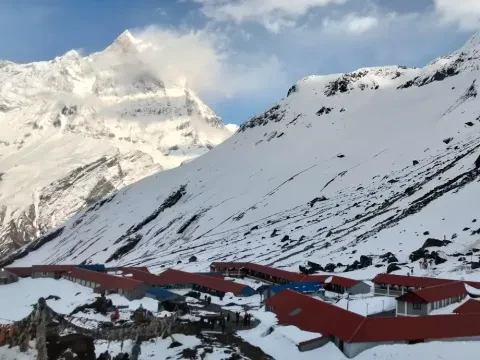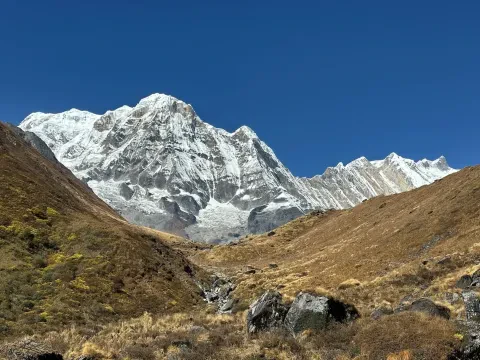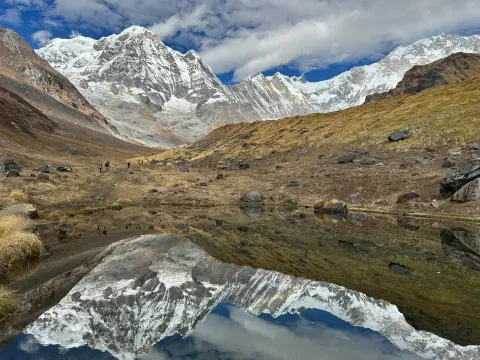
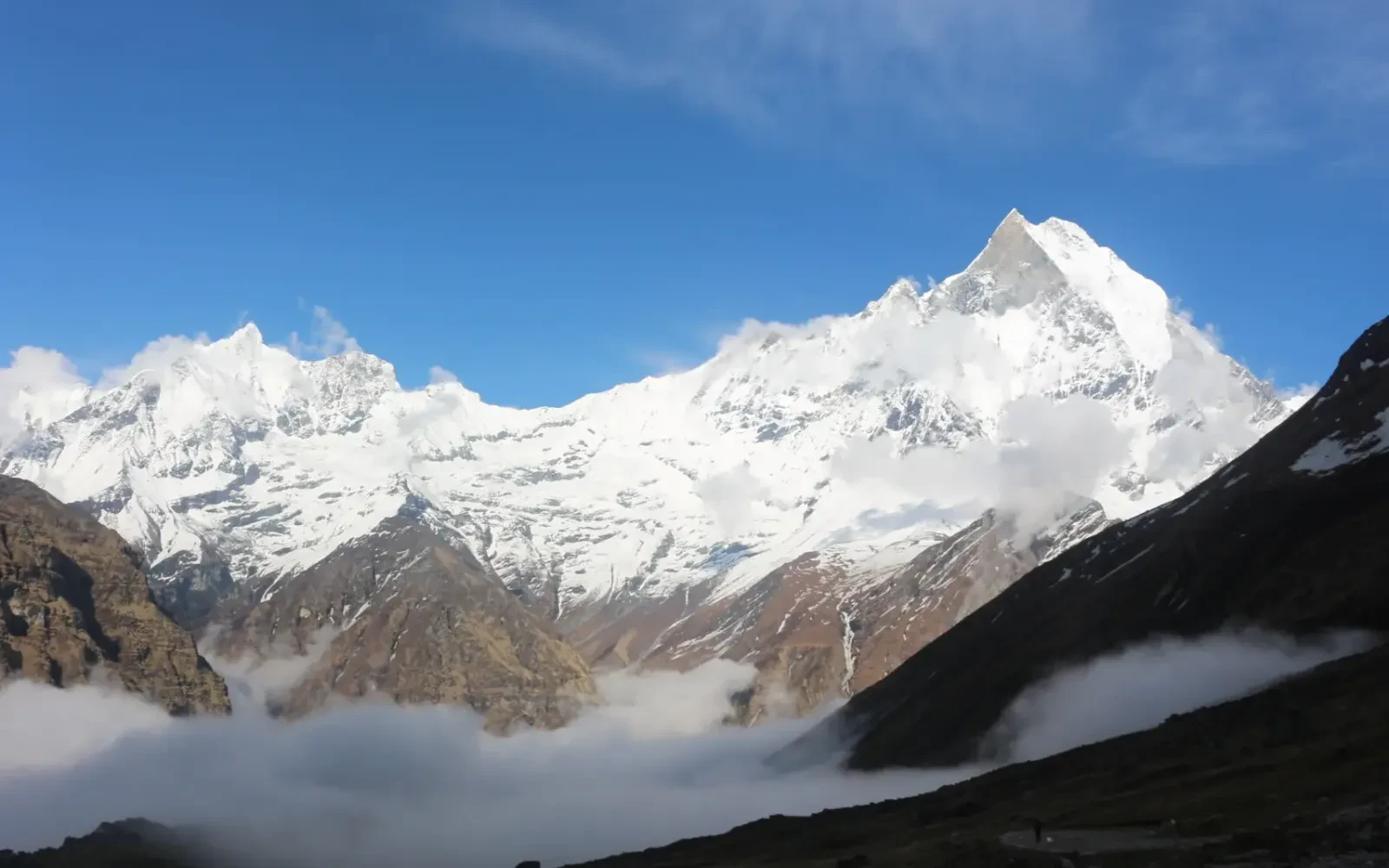
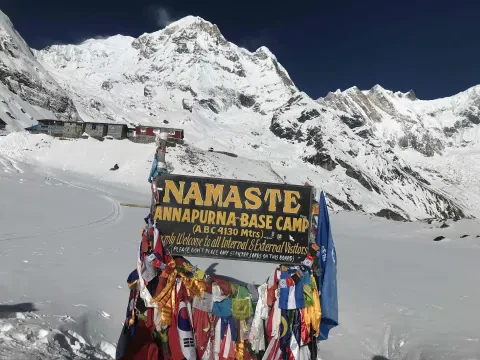
The short ABC trek 5 days is a great option for fit and time-conscious trekkers. Actually, this 5 day Annapurna Base Camp itinerary from Pokhara makes good use of road transport to minimize walking days and maximize the Annapurna Sanctuary views.
Likewise, the journey offers a chance to see Gurung villages, rhododendron forests, Modi Khola, Machhapuchhre Base Camp, and Annapurna Base Camp itself.
Here, the highlight of the trekking itinerary is Annapurna Base Camp at 4,130 m, from where you can see the towering Annapurna I at 8,091 m. The sight of other Himalayan peaks such as Annapurna South (7,219 m), Hiunchuli (6,441 m), Machhapuchhre (6,993 m), Gangapurna (7,455 m), and more is also spectacular.
However, it is important to note that a five-day ABC trek is a strenuous activity, so it is only suitable for hikers who have previous trekking experience and are in good fitness condition.
| Day Route | Elevation | Walking | Highlight |
|---|---|---|
| 1 Pokhara → Jhinu Danda → Sinuwa | 822 m → 2,360 m | 4–5 hrs | Gurung villages, rivers, terraced fields, water falls |
| 2 Sinuwa → Deurali | 2,360 m → 3,200 m | 6–7 hrs | Forests and Modi Khola |
| 3 Deurali → MBC → ABC | 3,200 m → 4,130 m | 6–7 hrs | Sanctuary panorama |
| 4 ABC → Sinuwa/Bamboo | 4,130 m → 2,360 m | 7–8 hrs | Sunrise and descent |
| 5 Sinuwa/Bamboo → Jhinu → Pokhara | 2,360 m → 822 m | 4–5 hrs | Hot springs and return |
In conclusion, the above-trekking itinerary is only a recommendation, as road conditions can greatly affect the distance and time needed to complete a short ABC trek.
The 5-day ABC trek vs classic trek is a great option for time-crushed explorers. Classical Annapurna Base Camp itineraries take between 7-12 days to complete, whereas the shorter version utilizes road transport to minimize the walking days.
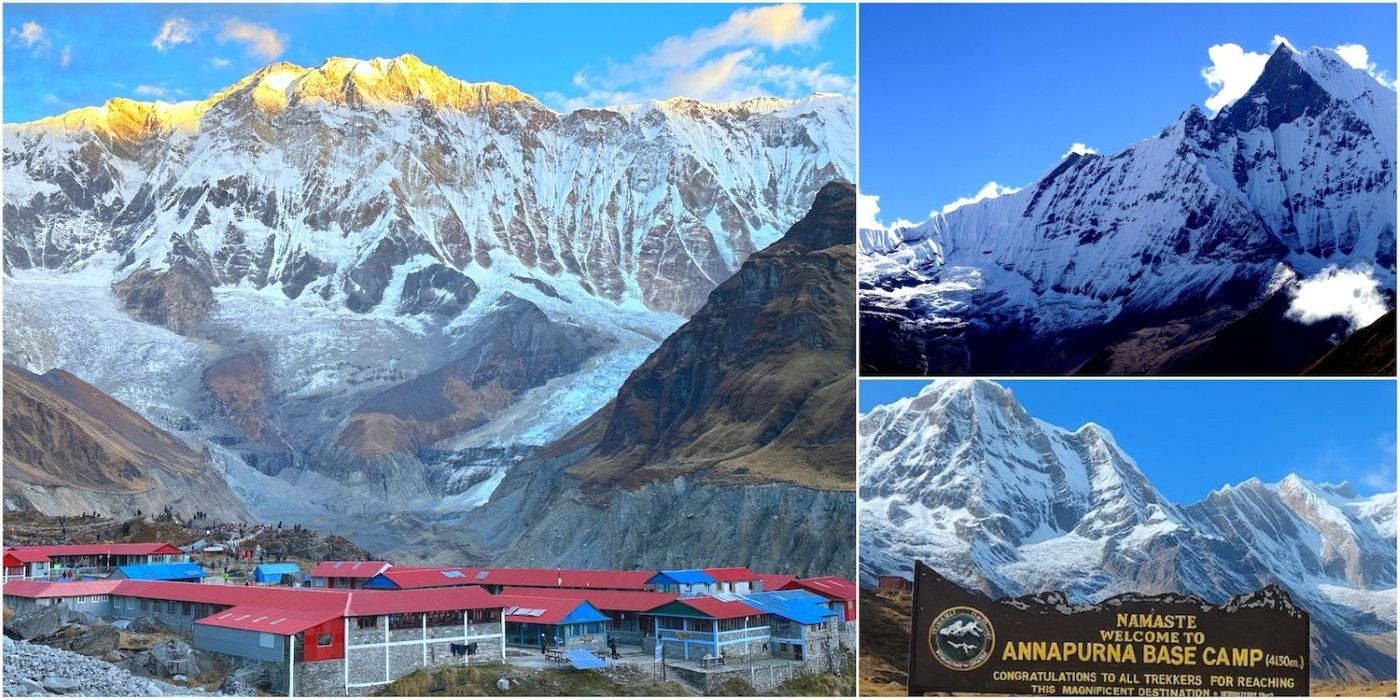
As such, the 5-day ABC trek is a better option for people who only have a short period of time to explore the Annapurna region.
However, it is important to note that the 5-day short ABC trek is a high-altitude, strenuous adventure, so it is only recommended for experienced hikers who are in good fitness condition.
In addition, the 5-day itinerary is faster, which means that there is less time for acclimatization.
Even though the 5-day short ABC trek is a fast-paced adventure, it still offers a chance to experience the following:
In fact, the 5-day short ABC trek also takes you through several villages, including Sinuwa at 2,360 m, Deurali at 3,200 m, and Machhapuchhre Base Camp at 3,700 m.
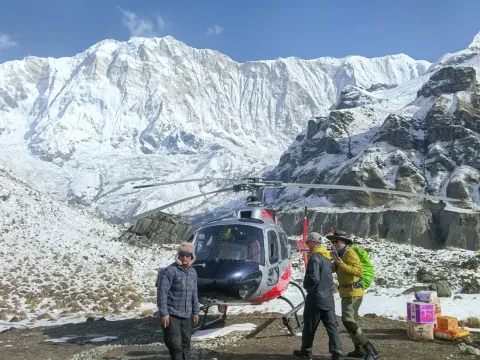
The short ABC trek is a great option for the following type of travelers:
| Feature | 5-Day ABC Trek | Classic ABC Trek |
|---|---|---|
| Duration | 5 days | 7-12 days |
| Starting point | Pokhara | Pokhara |
| Max. Elevation | 4,130 m | 4,130 m |
| Pace | Fast | Slow |
| Roads | More | Less |
| Acclimatization | Little | More |
| Fitness level | High | Moderate |
| Sanctuary views | Yes | Yes |
| Village views | Yes | More |
To sum up, the main advantage of the 5-day ABC trek is that it allows you to enjoy the views of the Annapurna Sanctuary while minimizing the time spent on the hike. Thus, the main disadvantage is the accelerated pace, which is necessary to complete the trek within 5 days.
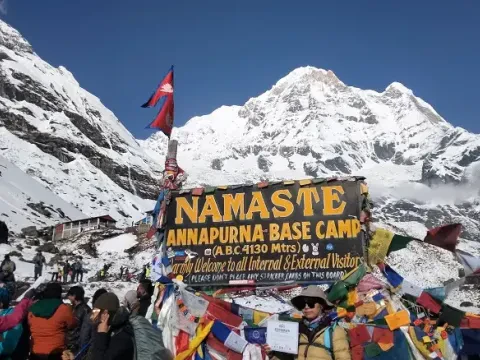
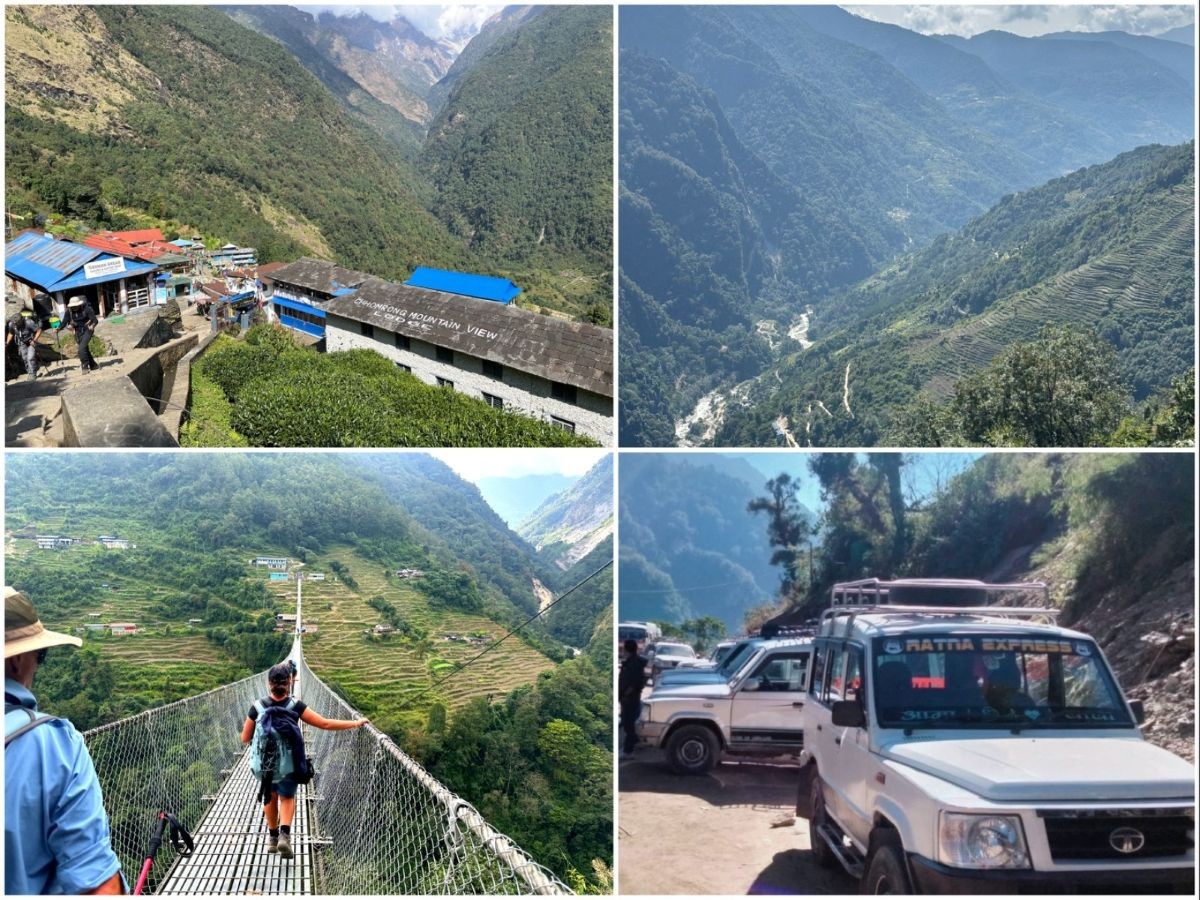
Your short ABC trek will begin in Pokhara, which is located at 822 m. You will be able to use a private vehicle for the lower part of the trek. The higher you go, the more rugged the road becomes, which is why the driver will have to leave you somewhere around Jhinu Danda at 1,780 m. Jhinu is a great place to enjoy natural hot springs. From Jhinu Danda, you will have to trek to Sinuwa at 2,360 m.
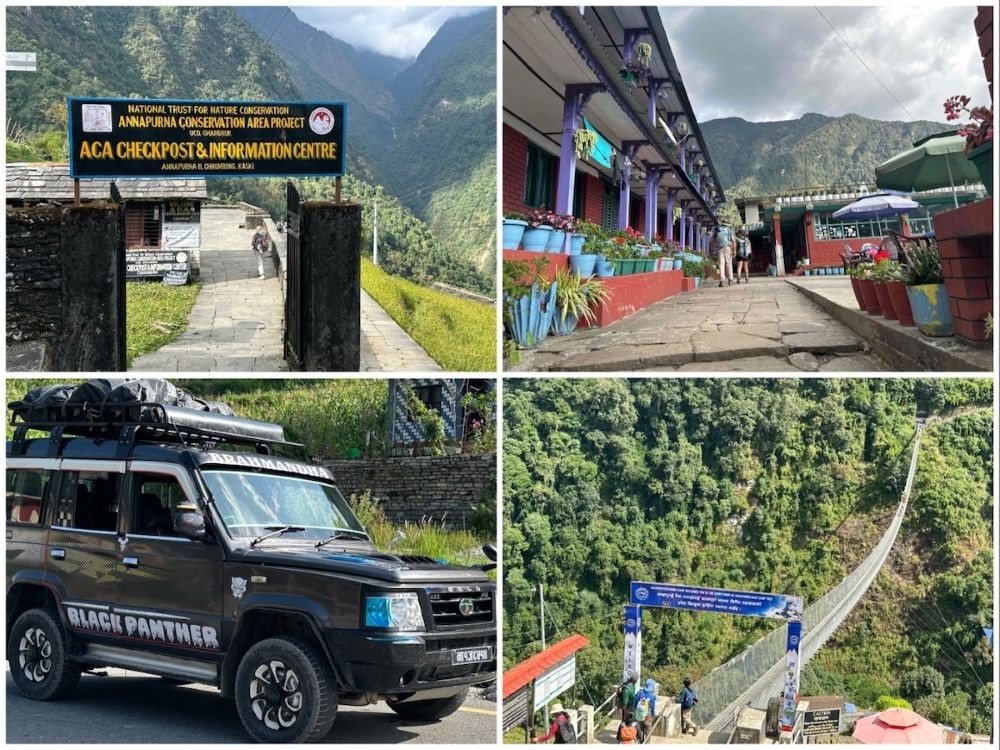
Day 1: Pokhara to Jhinu Danda and Trek to Sinuwa
Detail Information :
Here, the first day of your short ABC trek will take you through forests and villages. As such, it is important to maintain a steady, comfortable pace in order to conserve energy for the following days.
Day 2 of your short ABC trek will begin at around 2,360 m. You will be able to enjoy the scenery of bamboo and rhododendron forests on your way to higher grounds.
Along the trail, you will pass by several villages, including Bamboo at 2,310 m and Dovan at 2,600 m. Further along, you will reach Himalaya at 2,920 m and Deurali at 3,200 m, where you will spend the night.
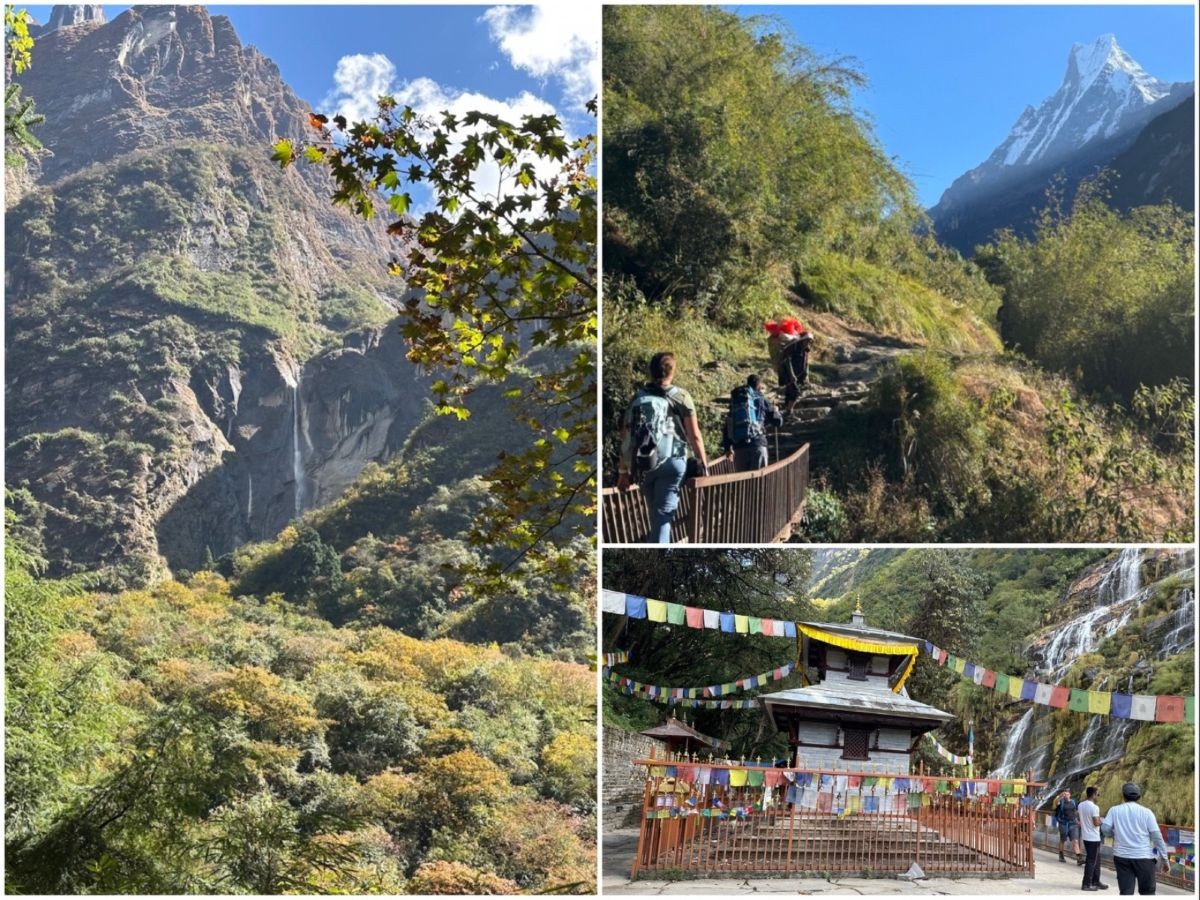
Day 2: Trek from Sinuwa to Deurali
Detail Information :
Day 2 of your short ABC trek is the hardest one, as you will have to gain a considerable amount of elevation.
As such, it is important to maintain a steady, slow pace and drink plenty of water.
Day 3 of your short ABC trek is the most scenic one, as it takes you through the upper Modi Khola valley. You will be able to enjoy the view of the sacred Machhapuchhre at 6,993 m before reaching Machhapuchhre Base Camp at 3,700 m
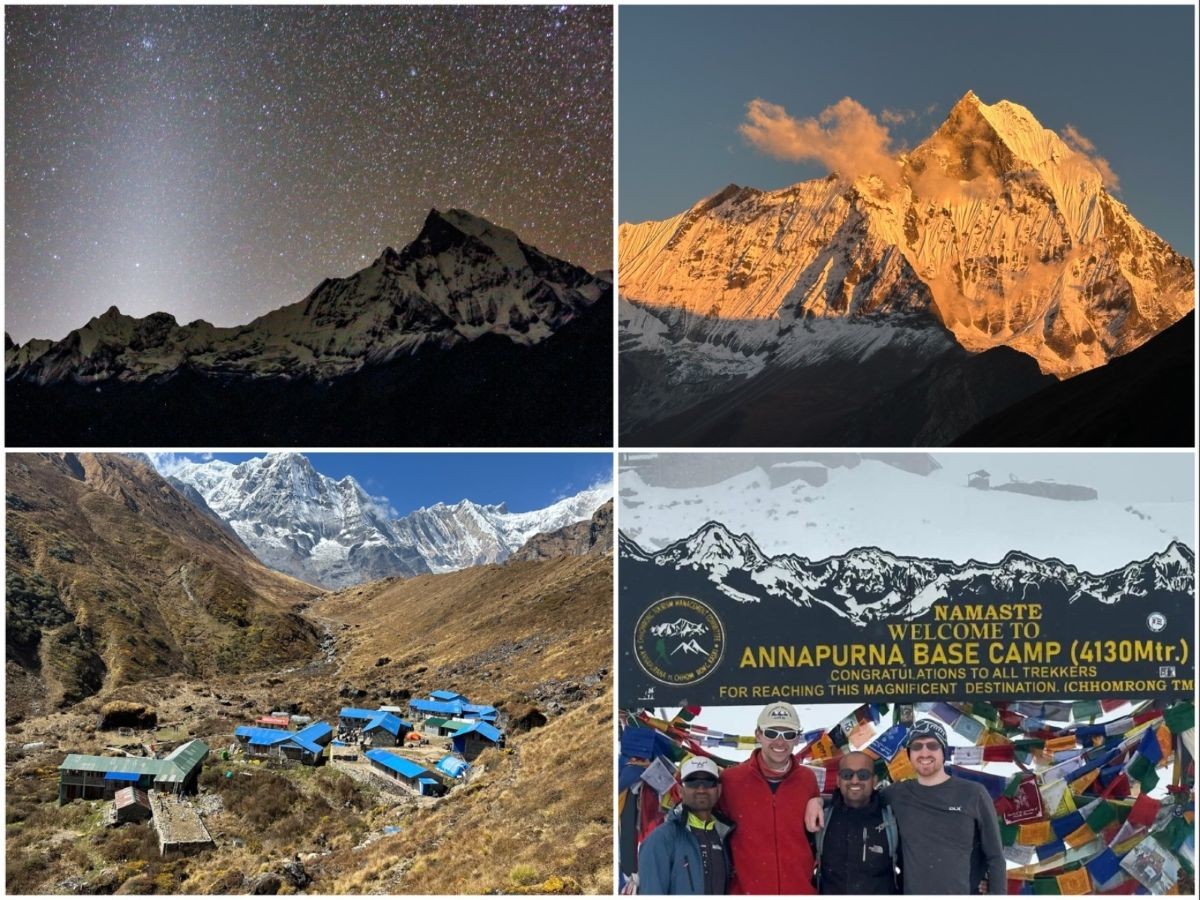
From there, you will continue your trek to Annapurna Base Camp at 4,130 m.
| Mountain | Elevation |
|---|---|
| Annapurna I | 8,091 m |
| Annapurna South | 7,219 m |
| Hiunchuli | 6,441 m |
| Machhapuchhre | 6,993 m |
| Gangapurna | 7,455 m |
| Annapurna III | 7,555 m |
| Annapurna IV | 7,525 m |
Here, the beautiful valley and the impressive Himalayan peaks are the highlights of Day 3.
Day 3: Trek from Deurali to Machhapuchhre Base Camp and Annapurna Base Camp
Detail Information :
In conclusion, it is advisable to reach Annapurna Base Camp before sunset, as the view of the surrounding peaks is spectacular in the golden hour. However, it is important to note that altitude is a serious concern at 4,130 m, so you should not rush in order to enjoy the view.
Day 4 of your short ABC trek will begin at Annapurna Base Camp, where you will be able to enjoy the sunrise views over Annapurna I at 8,091 m and other Himalayan peaks. After that, you will have to descend back to Sinuwa at 2,360 m. Along the way, you will pass by Machhapuchhre Base Camp at 3,700 m and Deurali at 3,200 m.
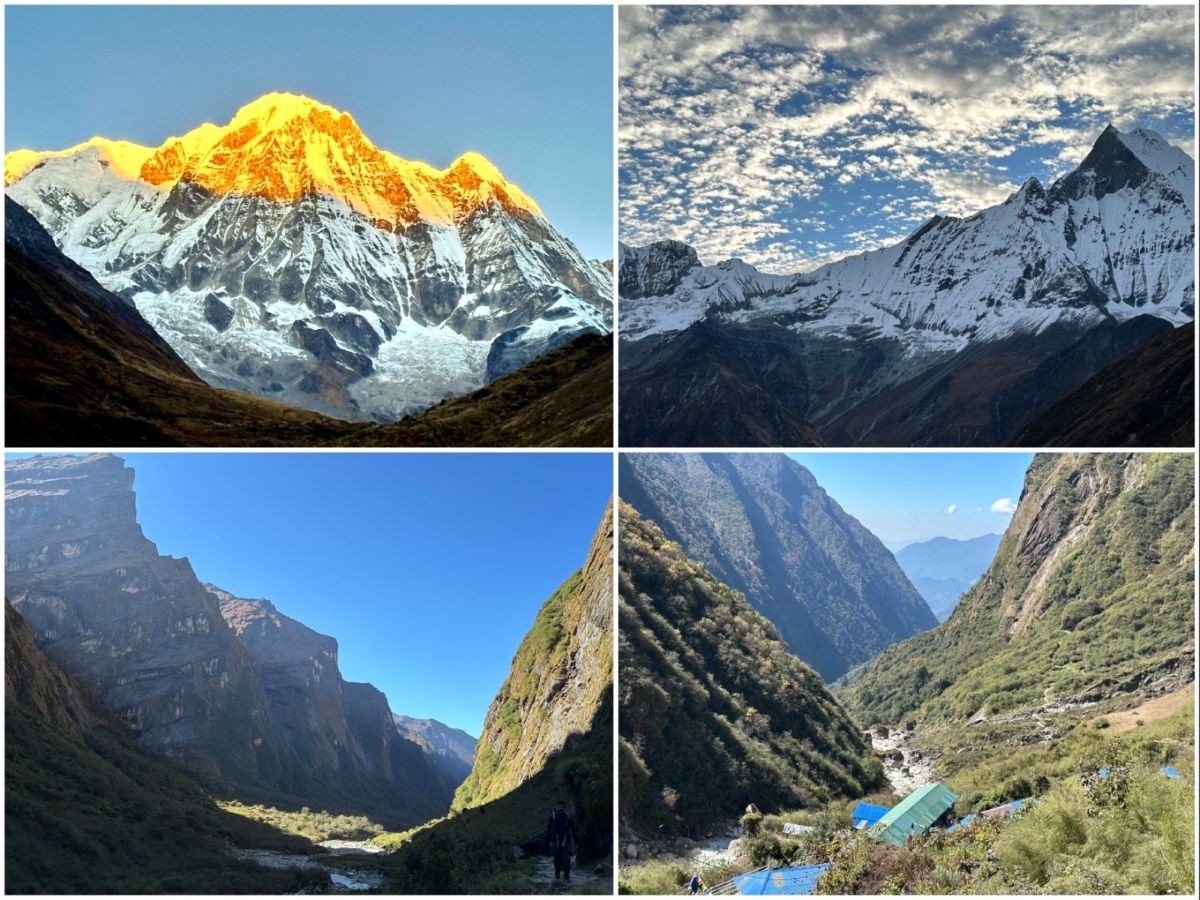
Day 4: Sunrise at Annapurna Base Camp and Trek Back to Sinuwa
Detail Information :
In fact, the long trek down is the most exhausting part of the short ABC trek. However, it will be worth it when you see the sunrise over the Annapurna Sanctuary. In addition, you should consider using trekking poles to reduce stress on your knees.
On the final day of your short ABC trek, you will have to trek from Sinuwa to Jhinu Danda at 1,780 m. If you have some extra time, you can enjoy the natural hot springs. After that, you will be able to drive back to Pokhara at 822 m.
Day 5: Trek from Sinuwa to Jhinu Danda and Drive to Pokhara
Detail Information :
Here, the final day of your short ABC trek is a great opportunity to relax and enjoy the beautiful hot springs at Jhinu.
| Place | Approx. Elevation |
|---|---|
| Pokhara | 822 m |
| Jhinu Danda | 1,780 m |
| Sinuwa | 2,360 m |
| Bamboo | 2,310 m |
| Dovan | 2,600 m |
| Himalaya | 2,920 m |
| Deurali | 3,200 m |
| MBC | 3,700 m |
| ABC | 4,130 m |
Here, the highest altitude you will reach during the short ABC trek is Annapurna Base Camp at 4,130 m. As such, you should be prepared for the physiological stress that high altitude can cause.
The scenery on the short ABC trek is truly breathtaking. The view changes from subtropical forests to alpine meadows before opening up to the impressive sight of towering Himalayan peaks at Annapurna Base Camp.
Is the 5-Day Short ABC Trek Suitable for You?
Actually, it is always advisable to choose a longer itinerary if you are unfamiliar with high-altitude trekking and want to minimize the physiological stress that altitude can cause.
However, if you only have a short period of time to explore the Annapurna region and you are a confident trekker, the 5-day short ABC trek is a great way to see some of Nepal’s most spectacular sights.
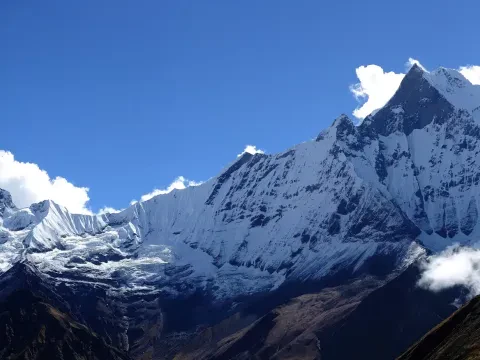
The 5 day ABC trek difficulty can be best described as moderate to strenuous. There is no technical climbing to worry about, but the long walking days, steep stone steps, and high altitude gain are challenging.
Moreover, the trail goes from Pokhara at around 822 m to Sinuwa at 2,360 m, Deurali at 3,200 m, Machhapuchhre Base Camp (MBC) at 3,700 m, and finally to Annapurna Base Camp (ABC) at 4,130 m.
As a result, the short 5-day ABC itinerary is more demanding than a longer 7-12 day ABC trek.
| Factor | What to Expect |
|---|---|
| Overall difficulty | Moderate–strenuous |
| Daily walking | 6 – 8 hours |
| Typical distance | 10 –15 km daily |
| Highest point | ABC – 4,130 m |
| Steep sections | Frequent |
| Stone steps | Extensive |
| Technical climbing | None on standard route |
| Altitude concern | Significant |
| Recommended fitness | Good |
1. Long Walking Days
You have a limited amount of time to complete this trek, so you have to walk long days. Some of the days are particularly long and can stretch to 8 hours. The most strenuous day is day 3, as you climb from Deurali (3,200 m) to MBC (3,700 m) and then to ABC (4,130 m).
2. Steep Stone Steps
There are a lot of stone steps on the Annapurna trails. Some are particularly steep, which can put a strain on your legs. Downhill sections can be hard on your knees, so trekking poles are recommended.
3. Rapid Elevation Gain
As mentioned, you have to gain a lot of elevation in a short period. You climb from Pokhara at 822 m to ABC at 4,130 m in just a few days. The optional viewpoints are even higher (Kyanjin Ri is 4,775 m).
Fitness Benchmarks for the 5-Day ABC Trek
In fact, you don’t have to be extremely fit, but it is recommended that you meet these benchmarks:
| Training | Frequency |
|---|---|
| Brisk walking | 3 – 4 days weekly |
| Hills or stairs | 2 days weekly |
| Legs | 2 days weekly |
| Long hike | Once weekly |
| Recovery | 1–2 days weekly |
Importantly, focus especially on squats, lunges, step-ups, and calf raises. Do long hikes before your trek, and try to break them up with some rest days. Make sure to do these hikes in your trekking boots which you are going to use for ABC Trek.
The short ABC itinerary is not for everyone. Consider the longer version if:
Here, a 7–12 day ABC itinerary is more flexible and gives you more time to adjust to the altitude. It also allows you to enjoy the scenery and hike at a more leisurely pace.
The 5-day version is best for those who:
In summary, remember, the five-day ABC trek is not impossible. It is just more demanding and should not be rushed. With the right attitude and preparation, you will complete it successfully.
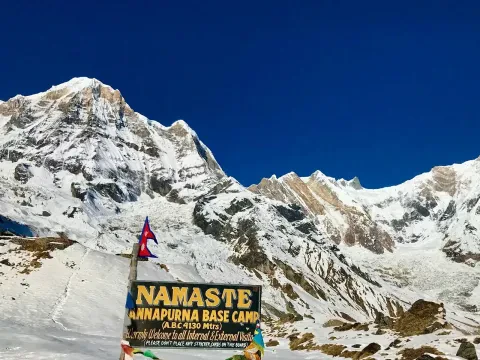
Actually, the months of March to May are generally considered spring, while September to November are autumn. Both seasons are great for visiting Annapurna Base Camp at 4,130 m.
Spring is one of the most popular times to visit Nepal. The trails are relatively dry, the mountain views are good, and the forests are bursting with color.
Meanwhile, the lower trails are particularly scenic and covered in rhododendron flowers. The forests around the lower Annapurna region are especially beautiful during this time of year. The mountain views are generally good, too, with long-range clarity on clear mornings.
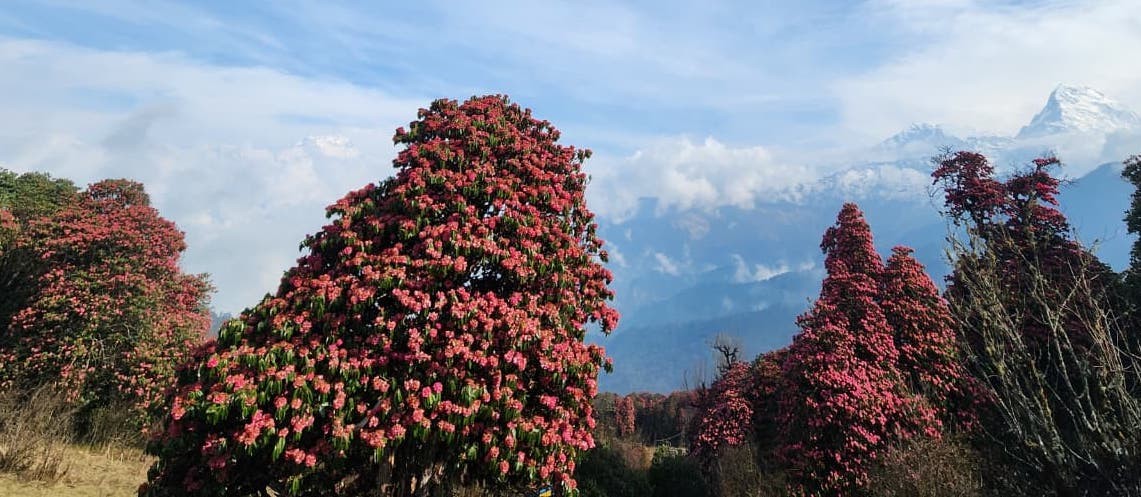
Highlights of Trekking in Spring :
In fact, March can be quite chilly, especially at night. April and May are generally warmer, but expect more clouds as the season progresses.
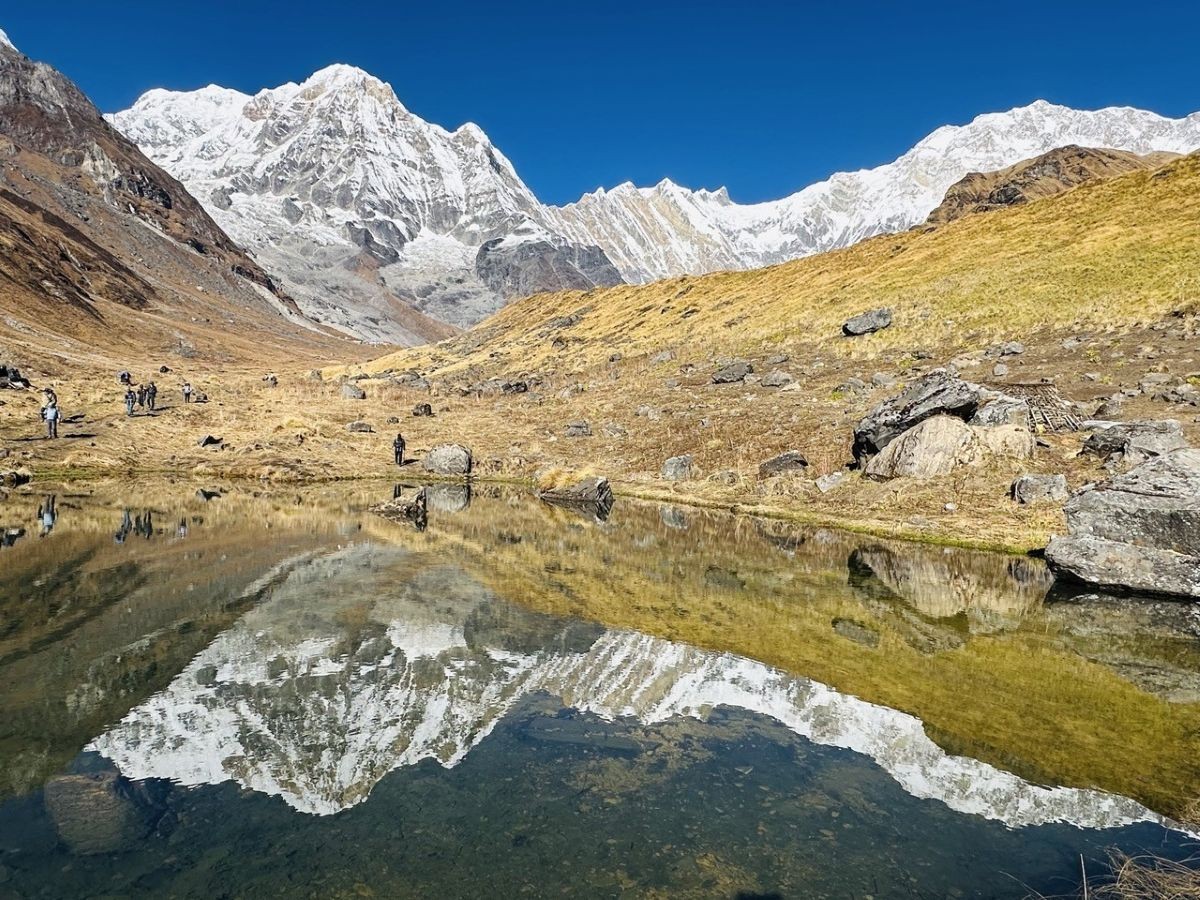
Autumn is arguably the best season for Annapurna Base Camp short trek. The skies are clear, and the views of the surrounding mountains are spectacular. The monsoon season has ended in September, so the trails are relatively dry. This is a great time to enjoy the mountain vistas.
Here, September can be a rainy month, so you may want to avoid this month if possible. October is the busiest month and the most crowded. November is also a good month, with cold, clear days.
| Month | Weather | Crowds | Difficulty | Main advantage |
|---|---|---|
| September | Improving | Moderate | Green landscapes |
| October | Stable | High | Excellent mountain views |
| November | Cool and clear | Moderate | Crisp mountain vistas |
For photography, October and November are excellent months. The mountain views are particularly good around MBC at 3,700 m and ABC at 4,130 m. The views tend to be the clearest in November.
It is possible to trek in the winter, but it is not recommended. The temperatures can get quite cold, especially at night. The higher trails can be particularly challenging. Likewise, you will also find fewer people on the trails.
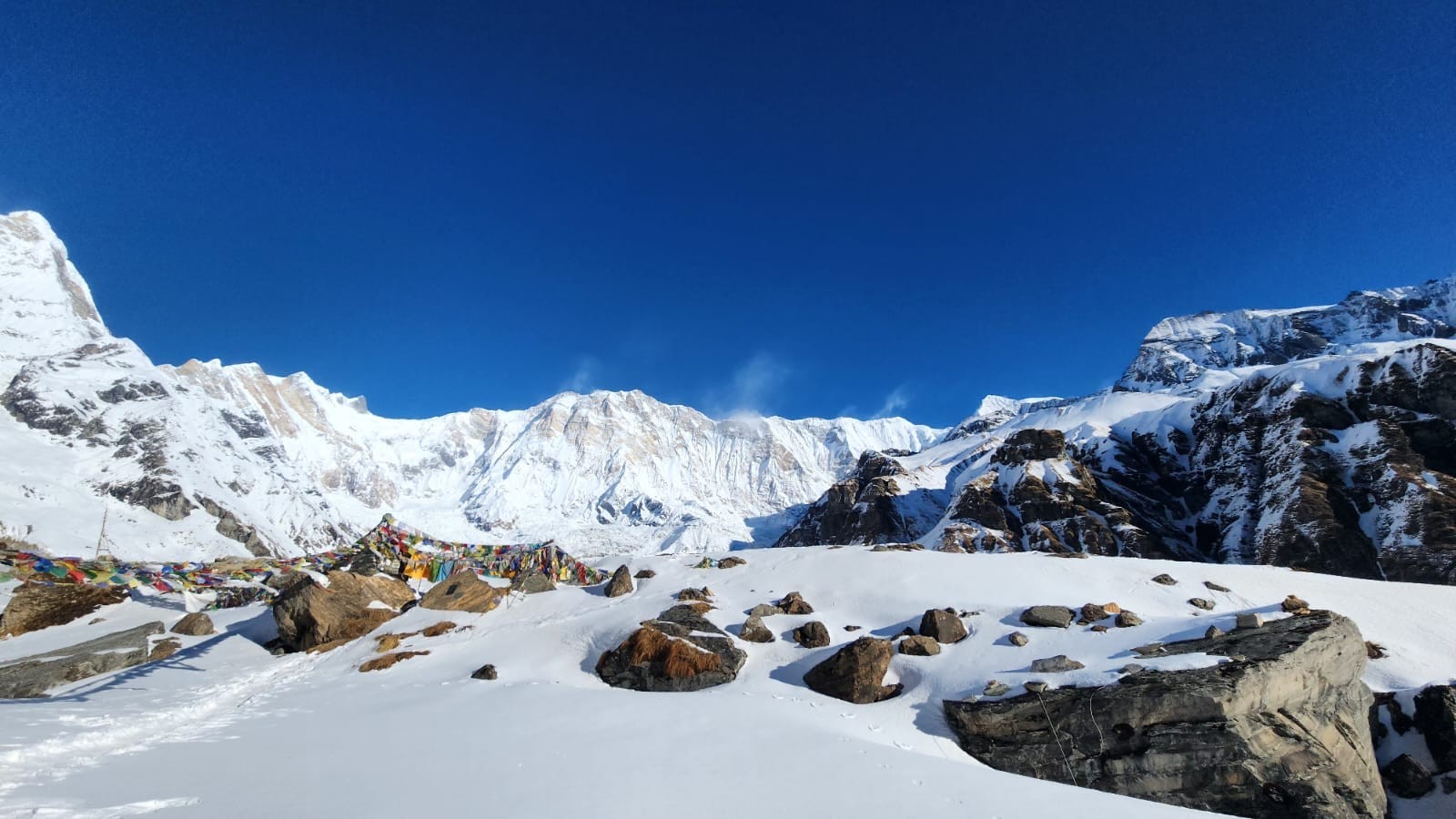
If you are considering a winter trek, make sure to prepare properly. You will need warm sleeping bags, thermal clothing, and good trekking boots. Here, you may also want to bring extra layers of clothing and gloves.
In summary, the main advantage of a winter trek is that the trails are less crowded. The higher altitudes tend to be quite cold, so you should be prepared for cold nights.
The monsoon season is generally not a good time for trekking. Actually, the trails can be muddy and slippery, and the weather can be unpredictable. The mountain views are often obscured by clouds.
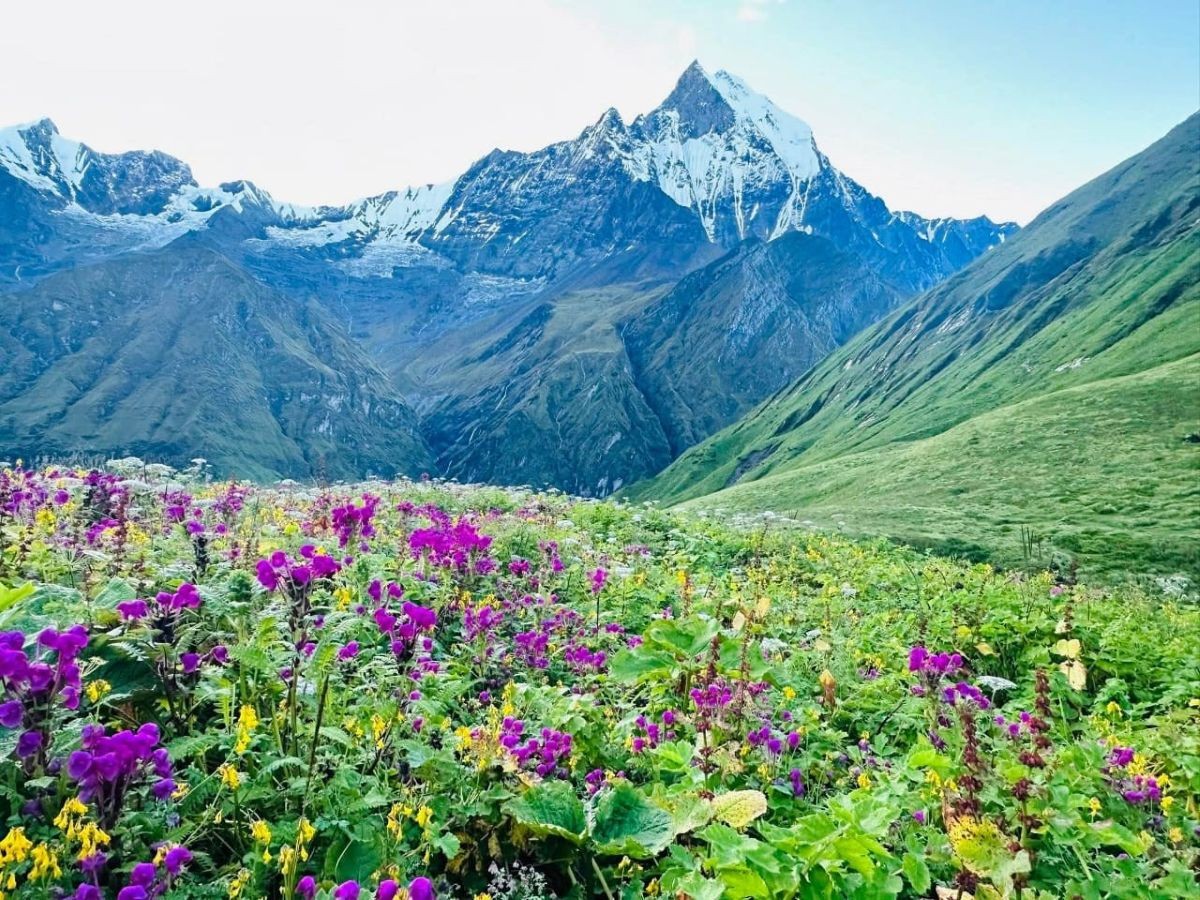
In addition, landslides can occur, making some trails inaccessible.
Importantly, Monsoon season is also not a good time for road travel. The roads from Pokhara at 822 m can be particularly challenging. As a result, it is not a good time for a short 5-day trek.
Seasonal Verdict :
For the most part, autumn and spring are the best seasons for a 5-day ABC trek. However, the weather can be unpredictable, so it is always a good idea to check the forecast before you go.
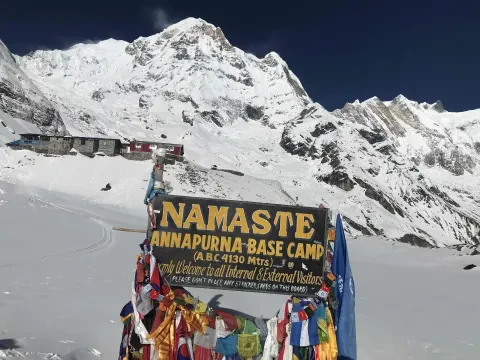
The cost of the 5 day trek to Annapurna Base Camp depends on transportation, guides, hotel, eating, and season. A realistic budget for a foreigner is between USD 450-700+ for a guided five-day ABC trek from Pokhara. Private or higher standards will cost more.
Since a 5-day ABC trek implies more days on the roads, jeeps’ costs can dominate over longer itineraries’.
| Expense Item | Estimated Cost |
|---|---|
| ACAP permit | NPR 3,000 (US$23) |
| TIMS card | Around NPR 2,000 (US$15) |
| Jeep/road transportation | Jeep/road transportation |
| ( Private) | US$ 60 - 120 |
| Jeep/road transportation ( Sharing) | US$ 15 - 25 |
| Teahouse accommodation | US$ 30 - 60 |
| Meals and drinks | US$ 100-150 |
| Trekking guide | US$ 120-180 |
| Porter, if hired | US$ 80 - 120 |
| Miscellaneous expenses | US$ 30 - 60 |
| Guided package tour | US$ 450 - 700+ |
Here, these are just suggested ranges, not set-in-stone numbers. Transportation, season, group sizes, accommodation, and many other factors affect the final cost.
In summary, the official Annapurna Conservation Area entry permit cost for 2026, according to the E-Permit service is NPR 3,000 for foreign nationals and NPR 1,000 for SAARC nationals.
Hiring a guide and going with an agency can cut costs considerably, but it is important to be aware of the current rules.
According to the Nepal Tourism Board, Poon Hill-ABC trek is among those requiring a licensed trekking guide and an agency-issued TIMS card, according to the updated TIMS rules.
So, it is important not to rely on the old independent-trekking rules anymore.
A 5-day guided ABC trek from Pokhara is a good choice if you want to simplify your logistics. A guided package tour generally includes:
However, it is a good idea to double-check what exactly is included in the package.Some tours offer tea, hot shower, electricity, WiFi, tips, and expenses, while others do not.
There are a few general ways of reducing the costs of a trek to Annapurna Base Camp:
So, in order to complete a 5-day Annapurna Base Camp trek in comfort and safety, you should budget at least ~US$500-700 per person to cover the costs.
The necessary permits for the ABC trek are the Annapurna Conservation Area Permit (ACAP) and the TIMS card.
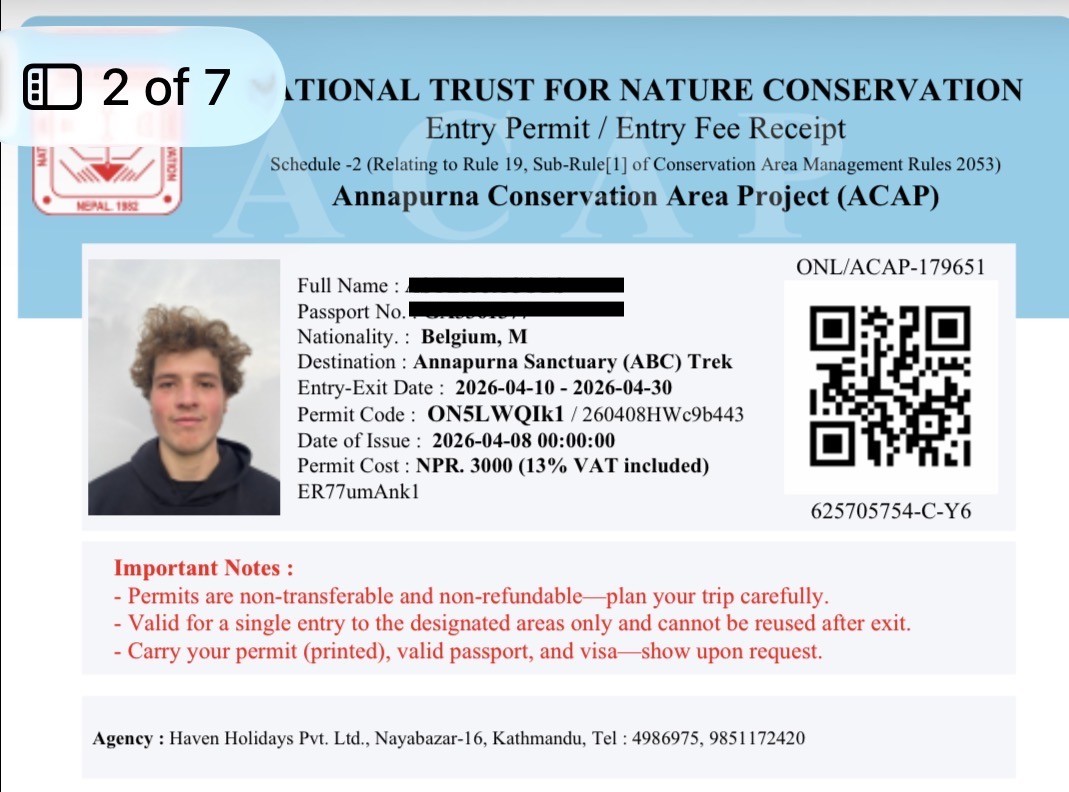
Both are generally required to contribute to the region’s conservation and management.
| Permit | Foreign Travelers | SAARC Travelers | Purpose |
|---|---|---|
| ACAP | NPR 3,000 | NPR 1,000 | Annapurna Conservation Area entry |
| TIMS | Generally required | Generally required | Trekker’s information management system |
While the Nepal Tourism Board’s official website states the conservation area entry fee as NPR 2,000, the current NTNC online permit system lists NPR 3,000 for foreigners and NPR 1,000 for SAARC nationals for the Annapurna Conservation Area entry. Since both websites are official, their discrepancy should be double-checked before submitting the payment.
As for my 2026 preparations, I would lean more towards NTNC’s NPR 3,000 since it is the current online system.
What Is the ACAP Permit?
Meanwhile, the permit itself funds the management and conservation of the region. It also provides general information about the area. The Nepal Tourism Board confirms conservancy requirements for the Annapurna region.
What Is the TIMS Card?
Where Can I Get the Permits?
To get permits for a five-day trek to Annapurna Base Camp, the easiest options are to either go with a trekking agency or apply directly through the NTNC official permit system. The current NTNC system allows you to pay online or at the counter.
Can I Get the Permits in Pokhara?
Generally, yes! Pokhara is the common starting point for most Annapurna treks, including the 5-day trek to Annapurna Base Camp. Agencies can assist you in securing the necessary permits even before your arrival. Given the duration of the trek, it is best to avoid spending transit time on administrative tasks.
What Should I Carry with Me?
Always carry the following documents:
Here, it is a good idea to make digital copies of your documents and carry them with you at all times.
The Department of Immigration publishes trekking-permit information, while the Nepal Tourism Board and NTNC websites offer the most updated immigration and conservation information.
So, when in doubt, always verify the most updated permit rules before your travel. For a short trek to Annapurna Base Camp, permits are a vital part of preparation. They help organize your trip while contributing to local conservation efforts.
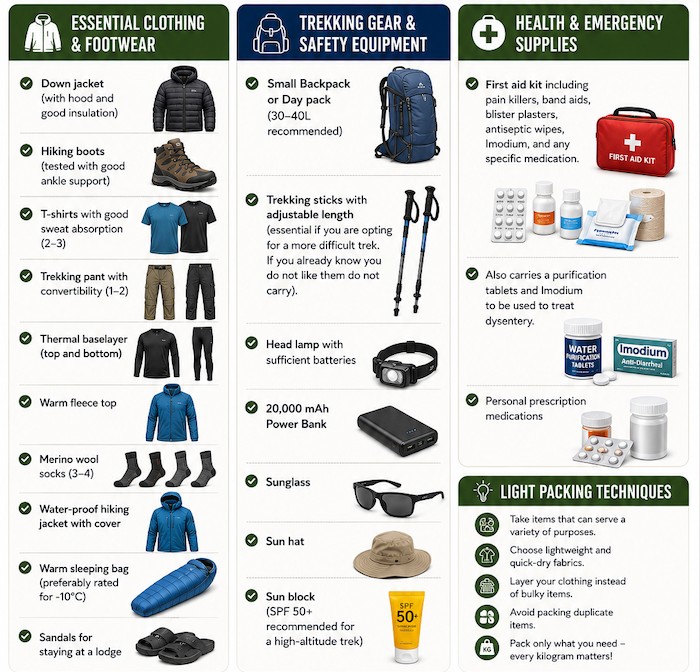
A good packing list for 5 day ABC trek should be focused on the weight, warmth, and protection from the weather. The five-day itinerary is a short one, so leaving unnecessary equipment will make the long walks significantly easier.
Meanwhile, the temperatures can vary greatly between Pokhara at 822 m and Annapurna Base Camp at 4,130 m. You should be prepared for both warm and cold weather at different stages of your trek.
| Category | Essential items | Priority |
|---|---|---|
| Footwear | Trekking boots, camp sandals | Essential |
| Base layers | 2-3 quick-dry shirts | Essential |
| Warm layers | Fleece, thermal top and bottom | Essential |
| Insulation | Down or synthetic jacket | Essential |
| Rain protection | Waterproof jacket, pack cover | Essential |
| Bottoms | Trekking pants, warm trousers | Essential |
| Head protection | Sun hat, warm hat, buff | Essential |
| Hands | Warm gloves, lightweight liner gloves | Essential |
| Socks | 3 - 4 pairs trekking socks | Essential |
| Daypack | 20 - 30L comfortable pack | Essential |
| Water | 2 - 3L capacity | Essential |
| Sun protection | Sunglasses, sunscreen, lip balm | Essential |
| Lighting | Headlamp and spare batteries | Essential |
| Health | First-aid kit, personal medicines | Essential |
| Trekking aids | Trekking poles | Highly recommended |
| Electronics | Phone, power bank, charging cable | Recommended |
| Documents | Passport, permits, insurance | Essential |
1. Layer up,
Instead of packing one big puffer jacket, think about a layering system. At 822 m in Pokhara, you may feel right at home.
However, at 3,200 m in Deurali, it will already get cold at night. It gets even colder at Machhapuchhre Base Camp at 3,700 m. The nights in Annapurna Base Camp at 4,130 m will be freezing. A good layering system could look like this:
Base layer → fleece → insulated jacket → waterproof shell
2. Good trekking boots
Your feet will thank you for it. The trail can be quite challenging with stone steps, rocks, mud, and uneven paths. Break in your boots before the trek, and avoid wearing new ones at ABC.
3. Pack rain gear
The weather can change quickly, so it is a good idea to have a rain jacket with you at all times. You may think that it will not rain in Nepal in spring or autumn, but it can happen. A backpack rain cover is also a must-have to keep your clothes dry.
4. Altitude
You will be hiking at altitudes up to 4,130 m in Annapurna Base Camp. Every hiker will react differently to the altitude, but it is a good idea to have some medication with you if you have any health concerns.
Additionally, it is a good idea to pack:
Here, it is important to remember that medication cannot replace proper acclimatization.
5. Daypack and porter bag
A porter can carry your porter bag, but your daypack will contain your most prized possessions. Here is a good checklist of things to pack in your daypack:
Importantly, it is a good idea to keep the weight of your daypack at around 5-8 kg. It will make the steep parts of the hike much more manageable.
What not to pack ?
Avoid packing unnecessary and heavy items as much as you can. You will not need:
Day 1 of the ABC trek from Pokhara is all about the drive and a relatively short but steep hike. Together, they form a five-day itinerary.
Here, you will leave Pokhara at approximately 822 m and head towards the Annapurna foothills. Depending on the road and the drop-off point, the drive can take 3-4 hours.
Day 1 route :
| Section | Approx. Elevation | Transport / Walking Approx. Time |
|---|---|---|
| Jhinu Danda | 1,780 m | Jeep 3-4 hrs drive |
| Chhomrong | 2,170 m | Trek ~2-3 hrs |
| Sinuwa | 2,360 m | Trek ~3-4 hrs |
Note: The road from Birethanti to Jhino Danda can be quite challenging, so the time may vary.
Morning: Drive from Pokhara
Jhinu Danda: the trek starts
Jhinu Danda to Chhomrong
Mountain views
On a clear day, you will have great views of the mountains. In particular, look out for:
Actually, they are all great sights to see on your way to Annapurna Base Camp.
Chhomrong to Sinuwa
Overnight at Sinuwa
Sinuwa is a great place to spend your first night in the mountains. Most of the teahouses only have twin beds, but they will provide you with a warm meal and a warm room.
Here, it is important to save your energy for the next day as you will be heading to Deurali at ~3,200 m. Stay hydrated and do not overexert yourself on the first day of your trek.
Day 1 summary – Detail Information
Day 1 tip :
Day 2 of the ABC trek from Sinuwa to Deurali is usually one of the longer and more challenging days. You leave Sinuwa at approximately 2,360 m and work your way up to Deurali at around 3,200 m
Likewise, the trail leads through bamboo and rhododendron forests, so the views are nothing like the open scenery you can see from the villages. Here, you also pass through the Modi Khola Valley, where waterfalls and streams add to the beauty of the trail.
| Section | Approx. Elevation | Walking Time | Trail |
|---|---|---|
| Sinuwa | 2,360 m | Start | Forest trail |
| Bamboo | 2,310 m | 1 hour | Bamboo forest |
| Dovan | 2,600 m | 1 – 1.5 hrs | Steep forest trail |
| Himalaya | 2,920 m | 1.5 – 2 hrs | Rocky forest trail |
| Deurali | 3,200 m | 1.5 – 2 hrs | Higher altitude trail |
Note: Walking time is approximate and can vary depending on the group’s pace, weather, and trail conditions.
Sinuwa to Bamboo :
Bamboo to Dovan :
Moreover, waterfalls can be especially spectacular on this trail after rainy weather, and the sound of running water is often heard along the way.
Things to See :
Dovan to Himalaya :
Himalaya to Deurali :
Day 2: Difficulty
Moderate to Strenuous
The long day includes a steady climb, so you should take frequent breaks and drink plenty of water. Avoid rushing on the final leg as you near Deurali.
Day 2: Summary- Detail Information
By reaching Deurali at 3,200 m, you have officially entered the high altitude region of the trek. Tomorrow, you will see the most spectacular views of the Annapurna range.
Day 3 of the trek to Annapurna Base Camp (ABC) is the most spectacular leg of the Annapurna Base Camp trek. Here, You leave Deurali at around 3,200 m and enter the Annapurna Sanctuary.
Likewise, you follow the Modi Khola Valley for much of the day, and the valley begins to open up to reveal the amazing expanse of the Himalayan Mountains. The excitement builds as you near Annapurna Base Camp.
| Section | Elevation Approx. | Walking Time |
|---|---|
| Deurali | 3,200 m | Start |
| Machhapuchhre Base Camp | 3,700 m | 2 – 3 hrs |
| Annapurna Base Camp | 4,130 m | 2 – 3 hrs |
Note: Walking time is only approximate and can vary depending on weather and acclimatization.
Deurali to Machhapuchhre Base Camp :
Machhapuchhre Base Camp (MBC)
From MBC, you have stunning views of the surrounding mountains: Machhapuchhre – 6,993 m, Annapurna South – 7,219 m, Hiunchuli – 6,441 m, Gangapurna – 7,455 m
Importantly, take some time to enjoy the views before continuing on to Annapurna Base Camp. However, remember that you still have a long way to go!
Entering the Annapurna Sanctuary
From MBC, you continue on towards the Annapurna Sanctuary. The trail becomes more alpine as you leave the forest behind. Then, the vegetation becomes sparse, and huge rock walls surround the valley.
Here, you feel as if you are in the middle of a natural amphitheater, and it is one of the most awe-inspiring parts of the trek. The mountains are no longer distant peaks – they are towering right above the valley.
Importantly, walk at a steady pace and take your time – don’t try to keep up with anyone else! Eventually, the Annapurna Sanctuary opens up before you, and you can see the Annapurna Base Camp.
The Mountains Around Annapurna Base Camp.
| Mountain | Elevation |
|---|---|
| Annapurna I | 8,091 m |
| Annapurna III | 7,555 m |
| Annapurna IV | 7,525 m |
| Gangapurna | 7,455 m |
| Annapurna South | 7,219 m |
| Machhapuchhre | 6,993 m |
| Hiunchuli | 6,441 m |
Reaching Annapurna Base Camp (ABC) at 4,130 m is a unique experience. Unlike other trekking destinations, you don’t feel as if you have arrived at a specific place. Instead, you are amazed by the view surrounding you.
Here, you have walked through forests, crossed streams, followed the Modi Khola, and hiked past Machhapuchhre Base Camp at 3,700 m.
Now, you are amazed by the sight of the towering mountains around you. If the weather is clear, the sunset can be truly spectacular, and the following morning is also something special.
Likewise, you should wake up early and watch the sunrise over the Himalayas.
Most importantly, the first light will shine on the amazing peaks of Annapurna I, Annapurna South, Machhapuchhre, and Gangapurna.
Day 3 Summary- Detail Information :
Altitude Note,
Remember that Day 3 is a long day that involves a significant amount of climbing. If you begin to feel unwell, make sure to let your guide know.
Common symptoms of altitude sickness include:
Note: It is essential not to ignore these symptoms. The best thing to do is to let your guide know and descend if necessary.
Moreover, your goal should not be to simply reach 4,130 m – your goal should be to enjoy the amazing views of the Annapurna Sanctuary!
Here, sunrise at Annapurna Base Camp is one of the most magical experiences. You wake up at 4,130 m above sea level before dawn, while the mountains are still dark. Then the first rays of the sun come out, and the Himalayas turn to gold.
Actually, Annapurna I has a height of 8,091 m, while Annapurna South reaches 7,219 m. The mountain called Machhapuchhre peaks at 6,993 m, and Hiunchuli has a height of 6,441 m. Gangapurna has a height of 7,455 m.
| Before sunrise | Early morning | Sunrise | After sunrise Morning |
|---|---|---|
| Wake up and prepare to go outside | Walk around and enjoy the views of the mountains | Peaks turn to gold | Have breakfast Start your descent. |
Next, you pass by Machhapuchhre Base Camp at 3,700 m and then head to Deurali at 3,200 m.
Day 4: Route
Annapurna Base Camp- MBC Deurali- Himalaya -Dovan Bamboo
However, your knees might complain on the way down.
How to Protect Your Knees While Walking Down :
Reaching Bamboo :
Day 4 Summary,
Starting elevation:
Note: Day four is a great day as it offers a different view than the previous days.
Day 5: Route Overview,
Bamboo - Sinuwa - Chhomrong - Jhinu Danda - Pokhara
2,310 m ~ 2,360 m ~ 2,170 m ~ 1,780 m ~ 822 m
1 - 1.5 hrs ~ 1.5-2 hrs ~ 1.5-2 hrs ~ Jeep
On average, you will walk for 4-5 hours on day five, depending on the road and the route.
Bamboo to Sinuwa :
Sinuwa to Chhomrong :
Chhomrong to Jhinu Danda :
Jhinu Danda Hot Springs :
Why You Should Visit the Hot Springs at Jhinu Danda ?
Alert:
Drive From Jhinu Danda to Pokhara :
Day 5 Summary :
The End,
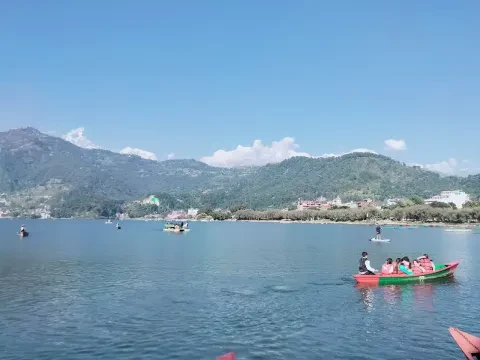
More importantly, the 5-day ABC trek route is a rapid ascent from Pokhara (822 m) to Annapurna Base Camp (4,130 m). Your body may have a hard time adapting to the rapid increase in altitude on such a short hike. That is why it is vital to learn altitude sickness prevention tips for a fast ABC trek.
A standard ABC itinerary is usually 8 or 9 days. During these 8 or 9 days, the trekker has more than enough time to acclimatize. Here, the 5-day ABC trek is a shorter version of the regular trek to Annapurna Base Camp.
With five days, it is not possible to gain altitude as slowly as on an 8 or 9-day itinerary. Hence, on a 5-day trek, the altitude gain per day is much higher. Thus, this increase in daily altitude gain can put additional strain on your body, and it is one of the most crucial factors contributing to altitude sickness.
Does it mean that on a 5-day itinerary, every trekker will get sick? No, it does not. However, it definitely increases the risks, and additional precautions should be taken to minimize them. One more thing – even if your body used to higher altitudes, the rapid change can still affect you.
1. Go slow
2. Stay hydrated
Drinking plenty of fluids is also essential when hiking to Annapurna Base Camp on a 5-day itinerary. Do not wait until you are dehydrated – drink water regularly and in small sips. However, do not overdo it – drink no more than necessary.
Moreover, warm soups will also help you prevent altitude sickness. On the other hand, alcohol abuse at higher altitudes is strongly discouraged. It is better not to drink at all when trekking to ABC on a 5-day itinerary.
3. Know early altitude sickness symptoms
If you feel that something is not well, inform your guide immediately. Do not attempt to ignore these symptoms and continue your trek to ABC. Even though some of these symptoms are mild, they are definite signs of AMS. They will only get worse as you continue to ascend.
More importantly, the best thing to do is to stop, rest, and assess the situation. Your guide will explain what to do if you have altitude sickness on a 5-day ABC trek.
4. Know severe altitude sickness symptoms
When going to ABC on a 5-day itinerary, you should also know the severe altitude sickness symptoms because they can develop suddenly and without warning.
If you have severe altitude sickness, the following life-threatening symptoms may occur:
Any of these symptoms can occur suddenly, so you need to be prepared for them. If you have any of the severe altitude sickness symptoms, do not continue ascending to ABC. The best thing to do is to descend as soon as possible, preferably with the help of your guide.
Importantly, the faster you descend, the better because time is of the essence when dealing with severe altitude sickness. If necessary, the nearest hospital can be contacted to airlift you to the nearest health facility.
5. Extra acclimatization overnight
The 5-day ABC trek itinerary is already short, but adding an extra day on a higher altitude is the best option if you want to give your body more time to get used to the conditions.
One of the best ways to do it is to spend an additional night around the 3,200 – 3,700 m elevation range. It will give your body more time to adapt to the reduced levels of oxygen at higher altitudes.
Another benefit of spending an extra day is that you will have more flexibility in case something goes wrong.
Therefore, people with lesser altitude experience should consider this option. It is a wise decision to add an extra day for safety reasons.
6. Do not rely on medication
7. Do not rush on the final climb
Fast ABC Altitude Checklist
Before the trek:
During the trek:
After the trek ;
In conclusion, the most crucial altitude sickness prevention tip for a 5-day ABC trek is to never continue trekking if your altitude sickness is getting worse. The most dangerous part of your hike to Annapurna Base Camp is when your body begins to have problems with a drop in oxygen levels at higher altitudes.
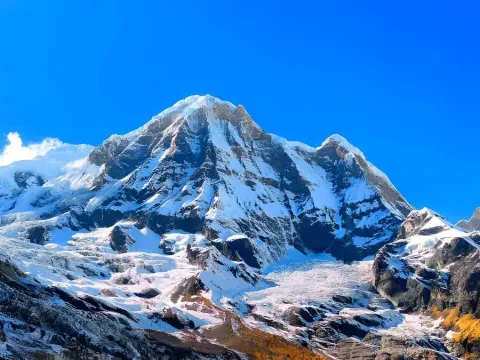
The ABC trek highlights are pretty amazing. Even though it is a short trek, Annapurna Base Camp offers beautiful 360-degree mountain views and diverse mountain hikes. You can expect to see high mountain peaks, beautiful valleys, different types of forests, local village, and hot natural springs.
Here, your journey to Annapurna Base Camp starts at Pokhara (822 m) and ends at Annapurna Base Camp (4,130 m). In between these two points, there are beautiful landscapes and exciting adventures that await you. Let’s explore the main 5-day ABC trek highlights and what to expect from this mountain challenge.
| Highlight | What to expect |
|---|---|
| Annapurna Sanctuary | Massive peaks around the valley |
| Annapurna Base Camp 4,130m | Spectacular Himalayan amphitheater |
| Annapurna I – 8,091m | Close view of 8,000-meter mountain |
| Machhapuchhre – 6,993m | Sacred Fishtail Mountain |
| Annapurna South – 7,219m | Beautiful face of the moun :tain |
| Hiunchuli – 6,441m | Wonderful mountain peak |
| Gangapurna – 7,455m | High Himalayan range behind Annapurna |
| Gurung villages | Local community hospitality |
| Rhododendron forests | Colorful flowers in spring season |
| Bamboo forests | Interesting lowlands vegetation |
| Modi Khola Valley | Beautiful hiking trail with waterfalls |
| Jhinu Danda | Natural hot water springs |
The Annapurna Sanctuary is an experience of a lifetime for a trekker. Here, massive peaks enclose the Annapurna Base Camp valley, creating a spectacular Himalayan amphitheater.
Meanwhile, Annapurna I (8,091 m), Annapurna South (7,219 m), Gangapurna (7,455 m), Machhapuchhre (6,993 m), and Hiunchuli (6,441 m) rise majestically above the Annapurna Sanctuary. Likewise, photographs do not do this place justice; experiencing the wonder of this natural amphitheater is something that everyone who visits ABC should do at least once in their life.
In addition to, beautiful views of high mountain peaks, you will also witness lovely valleys during your journey to Annapurna Base Camp. On your way to Deurali (3,200 m), you will find yourself surrounded by tall bamboo forests.
Further, along the trail to MBC (3,700 m), you will also be able to enjoy lovely Rhododendron forests, whose flowers have amazing colors during the spring season.
More importantly, your stay in the Annapurna region will also allow you to explore Gurung villages. Chhomrong (2,170 m) is an excellent representative of local villages where you can stay overnight at a traditional teahouse run by local Gurung people.
At the same time, you will be able to taste local cuisine such as dal bhat and experience the hospitality of mountain villagers. Local teahouse restaurants offer Tibetan-style foods including bread, tea, and coffee and provide simple but comfortable rooms. It is important to respect local customs in these villages, just as you would anywhere else. Ask permission before taking photos of people and avoid loud noises near houses and temples.
On your way to MBC, you will also be able to enjoy the beauty of Modi Khola Valley. The Modi Khola River runs alongside the hiking trail part of the way, and there are many waterfalls to enjoy as well.
In addition, Modi Khola Valley offers a unique experience for a trekker due to its suspension bridges and dramatic landscapes that become more spectacular as you approach the Annapurna Sanctuary.
Most importantly, the closer you get to MBC (3,700 m), the more dramatic the views will be compared to the beauty of Pokhara Valley.
Finally, your short ABC trek will reward you with a visit to Jhinu Danda (1,780 m), where you can relax in natural hot water springs after days of challenging hiking. These hot springs are located above the Modi Khola River, ready to give you an unforgettable mountain experience and help you unwind after several days of adventure.
The short ABC trek is a compressed version of a longer trek to Annapurna Base Camp. With a 5-day ABC trek, you will be able to experience:
Pokhara → Gurung villages → bamboo forests → Modi Khola valley → MBC → ABC → hot springs → Pokhara
A successful five-day Annapurna Base Camp is the result of careful preparation. The trek to Annapurna Base Camp (ABC) is short in terms of distance but very steep. Travelers go from the starting point in Pokhara at 822 m to the end point at 4,130 m above sea level in just a few days.
Consequently, there are several tips for a short ABC trekking adventure that make this trip safer, more comfortable, and more enjoyable.
Here is a list of what to wear on an ABC trek:
In addition, you should always have warm clothes on hand since it can get quite chilly on the mountain at night.
The most challenging aspect of trekking to ABC is the altitude. It is essential to understand that the five-day schedule allows you only a limited amount of time to adjust to the new conditions. In other words, you climb fairly quickly, and there is not much you can do about it.
However, if you have a poor reaction to the altitude, it will affect you much more once you get to Deurali village (3,200 m). The situation only gets worse when approaching the MBC at 3,700 m. Remember that the altitude is the highest (4,130 m) at the ABC.
It is critical to stay hydrated on the trek since water is essential for the body. You simply cannot trek or hike without proper hydration.
Therefore, you should drink plenty of fluids during your walking days. In addition, be sure to carry enough water with you for the day.
As for healthy foods to eat while trekking to Annapurna ABC, here are some great options:
While the ABC trek is not as technically demanding as other Himalayan treks, it is still an adventure.
A good guide can make a real difference on a short five-day ABC trek. A professional guide will help you navigate the trail and will know what to do in case of an emergency.
Similarly, they will also help you deal with difficult weather conditions as well as altitude sickness. In short, a good guide knows the trails, local regulations, accommodations, and much more.
Most importantly, a good guide will make the trek more enjoyable by sharing local knowledge and stories with you.
So, it is vital to hire a certified trekking guide from an authorized trekking company. In addition, be sure to check if they have the right insurance and if emergency arrangements have been made.
It is essential to purchase travel insurance, especially when trekking to high altitudes. The key point is to make sure that your insurance covers trekking at the altitude you are planning to go.
While trekking to ABC, you will pass through villages inhabited by local Gurung people. These are traditional communities whose primary source of income is tourism. As such, it is essential to be respectful of their homes and culture.
For example, always ask permission before taking someone’s picture, and do not disturb people. Moreover, it is best to avoid drinking and loud behavior around local temples and other religious sites.
Likewise, buy local products when possible. Staying in local guesthouses is also a good way to support local communities.
The Annapurna Sanctuary is a protected area, which means that all hikers must help preserve it. There are plenty of ways to do that, from avoiding unnecessary plastic use to carrying out all trash.
Even more importantly, hikers should always use the toilets provided. Furthermore, it is crucial not to damage the trail, vegetation, or even the local wildlife. By respecting the local environment, you will help ensure that this pristine region stays that way for years to come.
Besides the physical aspect, it is also essential to prepare yourself mentally for the ABC trek. The five-day ABC trek may seem short, but it still requires you to be in good shape. Remember that some of these days can be as long as 6–8 hours, which can be tiring.
What to Pack for a Short ABC Trek: Checklist
Your ABC trek is five days long, but it should not be rushed. In addition to all the other advice mentioned here, here are a few more tips to help you get the most out of your short ABC trek.
First and foremost, always remember to train before your trek. Second, make sure to pack light. You do not want to overload yourself on the way to the ABC.
Similarly, you should break in your boots before the trek to avoid blisters. Most importantly, bring trekking poles and use them!
Furthermore, make sure to always have enough water with you on the trail. And, of course, always dress in layers! Last but not least, always listen to your guide and never ignore the warning signs about altitude!
Here, you see, the five-day trek to Annapurna Base Camp is relatively short. You go from a warm 822 m in Pokhara to an awesome 4,130 m in just a few days.
On the way, you will see traditional Gurung villages, rhododendron forests, bamboo groves, the beautiful Modi Khola Valley, and majestic Himalayan peaks. It really is an unforgettable experience.
But, of course, like all high-altitude trekking, it is physically demanding. Nevertheless, seeing the magnificent view from the ABC at the foot of towering Annapurna I (8,091 m) makes it all worth it.
So, book the 5 day ABC Trek, prepare well for your adventure and have fun trekking in the magnificent Himalayas!
1. What is the ABC Short Trek 5-day itinerary from Pokhara?
The ABC Short Trek 5-day itinerary from Pokhara is a short adventure in the mountains leading to the Annapurna base camp. The trail covers beautiful mountain villages and forests before eventually reaching the Annapurna base camp at an elevation of 4,130 meters. This short itineraries trek is perfect for an experienced trekker who wants to achieve Annapurna Base Camp in a short time and with limited effort.
2. Can I do the Annapurna Base Camp trek in 5 days?
Yes, it is possible to do the Annapurna base camp trek in 5-days if you follow the right itinerary. The ABC trek 5-day itineraries usually start from Pokhara by road to cut down on trekking time. However, doing the trek in five days can be strenuous, and you must ensure you have the right fitness level, acclimatize properly, and take enough breaks during the adventure.
3. What is a 5-day ABC trek itinerary from Pokhara?
A 5-day ABC trek itinerary from Pokhara usually follows the trail of Chhomrong, Himalaya, and Machhapuchhre base camp to eventually reach the Annapurna base camp. The 5-day trek itinerary from Pokhara has longer walking hours compared to a standard ABC trek itinerary.
4. How challenging is the ABC Short Trek 5-day itinerary?
The ABC Short Trek 5-day itinerary is moderately challenging to challenging. The ABC short trek 5-day itinerary has longer walking hours and requires one to have a good level of fitness. If you are preparing for this short itineraries trek, ensure you do regular exercises such as walking, stairs, and hill climbing.
5. What is the elevation of Annapurna Base Camp?
The Annapurna base camp is located at an elevation of 4,130 meters above sea level. The ABC base camp is higher than most of the trekking trails in the Himalayas, therefore, it is important to acclimatize if you are doing a 5-day ABC trek itinerary from Pokhara.
Moreover, when exploring the Annapurna base camp, make sure to drink a lot of fluids to combat the effects of high elevation. The spectacular mountain range of the Annapurna peak is a sight to behold.
6. Is a 5-day ABC trek suitable for a beginner trekker?
A 5-day ABC trek might be a bit challenging for a beginner trekker as compared to a 7-day trek itinerary. A 5-day short trek has a condensed schedule that does not give much room for acclimatization. For first-time trekkers, it is advisable to do a longer trek itinerary so that they have ample time to adjust to the changes in altitude. If a beginner trekker insists on doing a 5-day ABC trek, it is important they hire an experienced guide.
7. Where does the ABC Short Trek start from Pokhara?
The ABC Short Trek from Pokhara usually starts by road towards the trail. Depending on the road conditions, the starting point of the trek might change. Mostly treks start from either Jhinu Danda or other nearby trailheads.
8. How many hours do I walk on a 5-day ABC Trek?
Depending on the trail, you can walk for 6 to 8 hours a day on a 5-day ABC Trek. Moreover, heading towards the Annapurna base camp can be challenging. It is advised to leave early in the morning to utilize the extra daylight.
9. What mountains can I view on the ABC Short Trek?
The ABC Short Trek offers panoramic views of the Annapurna mountain range. You can see the towering peaks of the Annapurna South, Annapurna I, Hiunchuli, Machhapuchhre, and other Himalayan peaks.
On the ABC Short Trek, you can see different peaks, with the Machhapuchhre peak reaching an astonishing 6,993 meters. Viewing the mountains becomes better on the trek to the Machhapuchhre Base Camp and the Annapurna base camp.
10. What accommodation options are available for a 5-day ABC Trek?
The ABC Short Trek from Pokhara offers different accommodation options for trekkers. Most of the mountain tea houses have beds, mattresses, and blankets for the comfort of their guests.
However, as you climb higher, the facilities get minimal. Most tea houses have food, hot water, charging facilities, and Wi-Fi.
11. What food options are available on the ABC Short Trek?
There are different food options available during the ABC Short Trek. Some of the most common delicacies include the local dal bhat, noodles, pasta, rice, soup, momo, eggs, bread, and potatoes. The most recommended dish is the dal bhat, as it gives you a lot of energy. You can also bring along some snacks such as energy bars and chocolates.
12. What permits are required for the 5-day ABC Trek?
The 5-day Annapurna Base Camp Trek requires specific trekking permits for entry into the Annapurna conservation area. It is important to apply for the relevant permits well in advance. The ABC Short Trek from Pokhara usually has a permit that covers most of the trekking expenses.
13. What is the best time to do the 5-day ABC Trek?
The best time to do a 5-day ABC Trek is during the spring and autumn seasons. The months of March to May are relatively warm, and the landscapes are covered in blooming flora and flowers. The months of September to November are also perfect for trekking as they offer clear skies and amazing views of the Himalayas. December can also be a great month to do a 5-day ABC Trek, although, it can get very chilly at night.
14. Can I do the ABC trek in October?
Yes, you can do the ABC Short Trek in October. The month of October is relatively warm, allowing you to enjoy the magnificent views of the Himalayas. However, the month can be a busy time for trekking, and you might need to book your accommodations and guides in advance.
15. What should I pack for the ABC Short Trek?
The ABC Short Trek packing list should include clothing, boots, warm clothes, sleeping bags, headlamps, water bottles, sunscreens, sunglasses, and personal medication. You should also carry trekking sticks. Moreover, it is advisable to carry lighter items as you will be walking almost the whole day for five days.
16. Do I need a guide for the 5-day ABC Trek?
A guide can be the difference between a successful and unsuccessful trek. A good guide can take you along the best routes, ensure you have comfortable accommodations, and help you avoid unnecessary inconveniences. Moreover, a tour guide can look after you in case of an emergency, especially at higher elevations. A guide is highly recommended, especially for a 5-day ABC Trek itinerary from Pokhara due to the short schedule that does not allow much flexibility.
17. Can I get altitude sickness on the ABC Short Trek?
Yes, you can get altitude sickness on the ABC Short Trek. The ABC Short Trek reaches an elevation of 4,130 meters and the short schedule of 5-days offers less acclimatization time. Altitude sickness is brought about by rapid changes in elevation.
Here, some of the symptoms of altitude sickness include; headaches, vomiting, and loss of appetite. Moreover, altitude sickness can also lead to more severe complications such as extreme fatigue and confusion.
It is, therefore, important to acclimatize before and during the ABC Short Trek. You should also descend immediately if the symptoms persist.
18. How much does the ABC Short Trek from Pokhara cost?
The cost of the ABC Short Trek from Pokhara largely depends on the services you choose. The expenses incurred during the trek include; transportation, accommodation, food, guide, and porter. The mode of transport also plays a vital role in deciding the overall expenses. Usually, private tours are more expensive than group tours. Ensure you understand what is included in your tour package.
19. Can I customize a 5-day ABC Trek itinerary?
Yes, you can customize the 5-day ABC Trek itinerary depending on your preferences and needs. Some trekkers might have different preferences concerning transport and accommodation, while others might want to take a longer trekking route. However, it is important to speak to the trek organizer to get an itinerary that suits your fitness level and hiking style.
20. Why go for ABC Short Trek 5-day itinerary from Pokhara?
The ABC Short Trek 5-day itinerary from Pokhara offers an amazing opportunity to explore the mountain village, forests, waterfalls, and the Annapurna base camp in a short time.
Even though the ABC Short Trek 5-day itinerary is challenging compared to the standard trek, it is a great opportunity for a rewarding adventure. With the best professionals at your disposal, this short 5-day itinerary trek can be a once-in-a-lifetime experience for you.
Our travel experts are ready to assist you with any questions.
Send us a message.Have a question before you book? Send your enquiry below and our travel experts will get back with the required information.