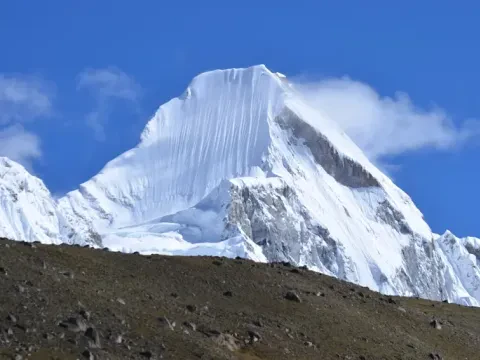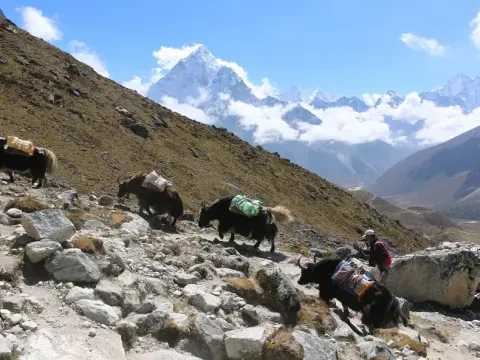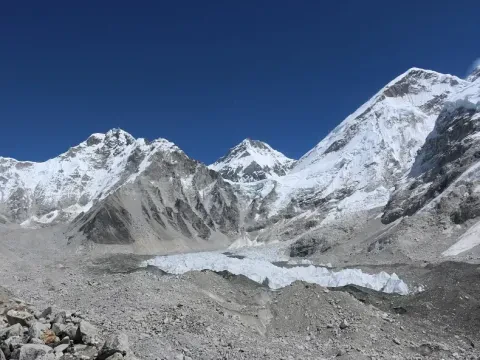
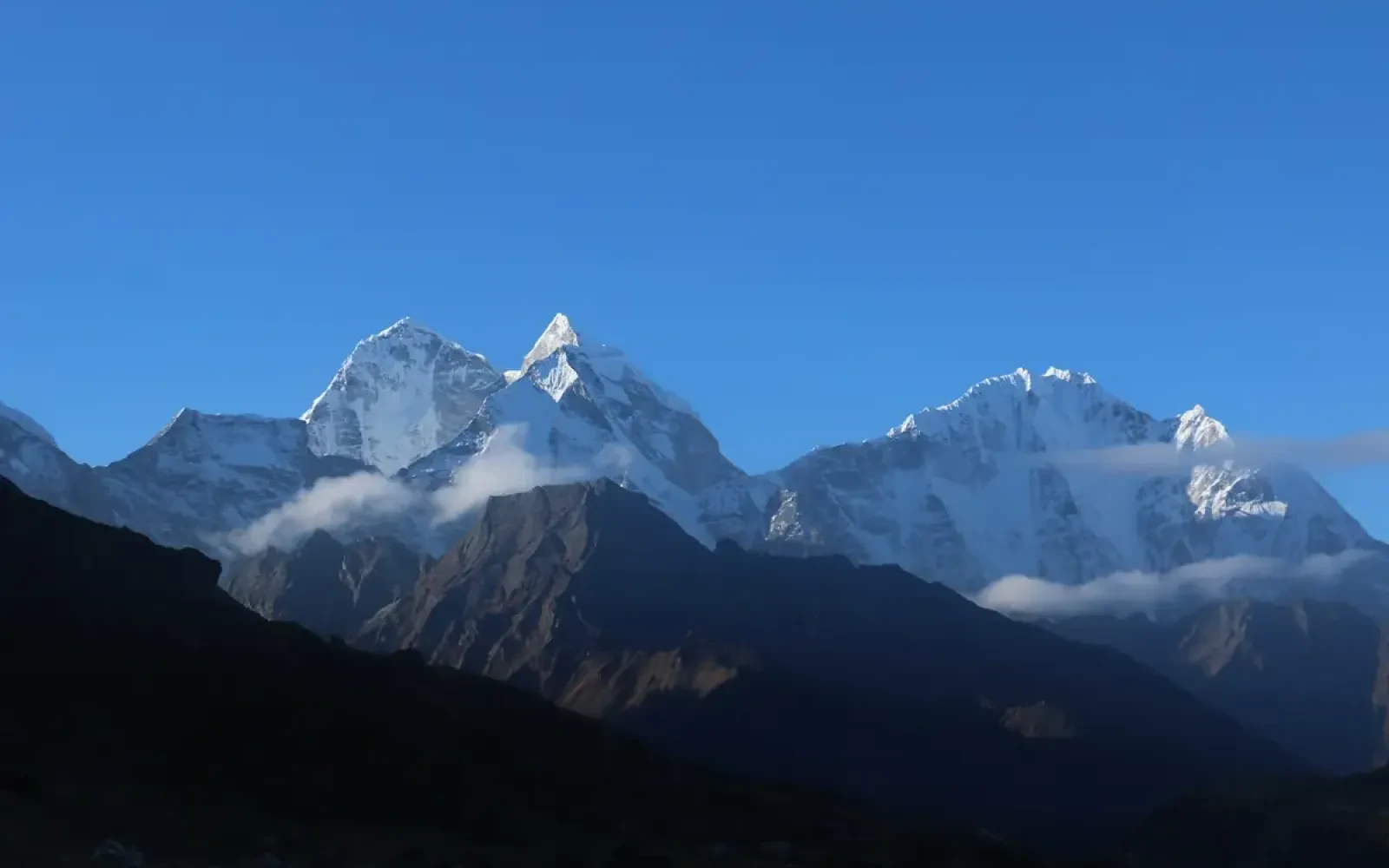
Everest treks in Nepal are among the Himalayan region's most popular adventures. The Khumbu region of Nepal's northeastern corner offers a unique combination of snow mountain ranges, Sherpa culture, Buddhist monasteries, glaciers, and valleys.
Even the Yeti footprints and its skulls can be eperienced during the Everest Treks in Nepal.
Meanwhile, this area is home to Mount Everest, which is 8,848.86 m high and represents the roof of the world. A large amount of this area is included in Sagarmatha National Park that is a UNESCO World Heritage Site.
Importantly, this national park safeguards one of the world’s most remarkable high-altitude ecosystems encompassing Mount Everest, Lhotse, Cho Oyu, glaciers, deep valleys, and diverse Himalayan wildlife.
But the Everest trek does not always mean an Everest Base Camp (EBC) trek. There are different routes to explore the Everest region.
For example, a trekker can choose between the Everest Base Camp (5,364 m) route, or the Gokyo Lakes route that involves turquoise-colored lakes, or the Everest View route that is shorter, or the Everest Three Passes route that involves crossing high-altitude passes.
Thus, the choice of the Everest trek depends on a person's availability, fitness level, altitude tolerance, personal preferences, and the purpose of their trek.
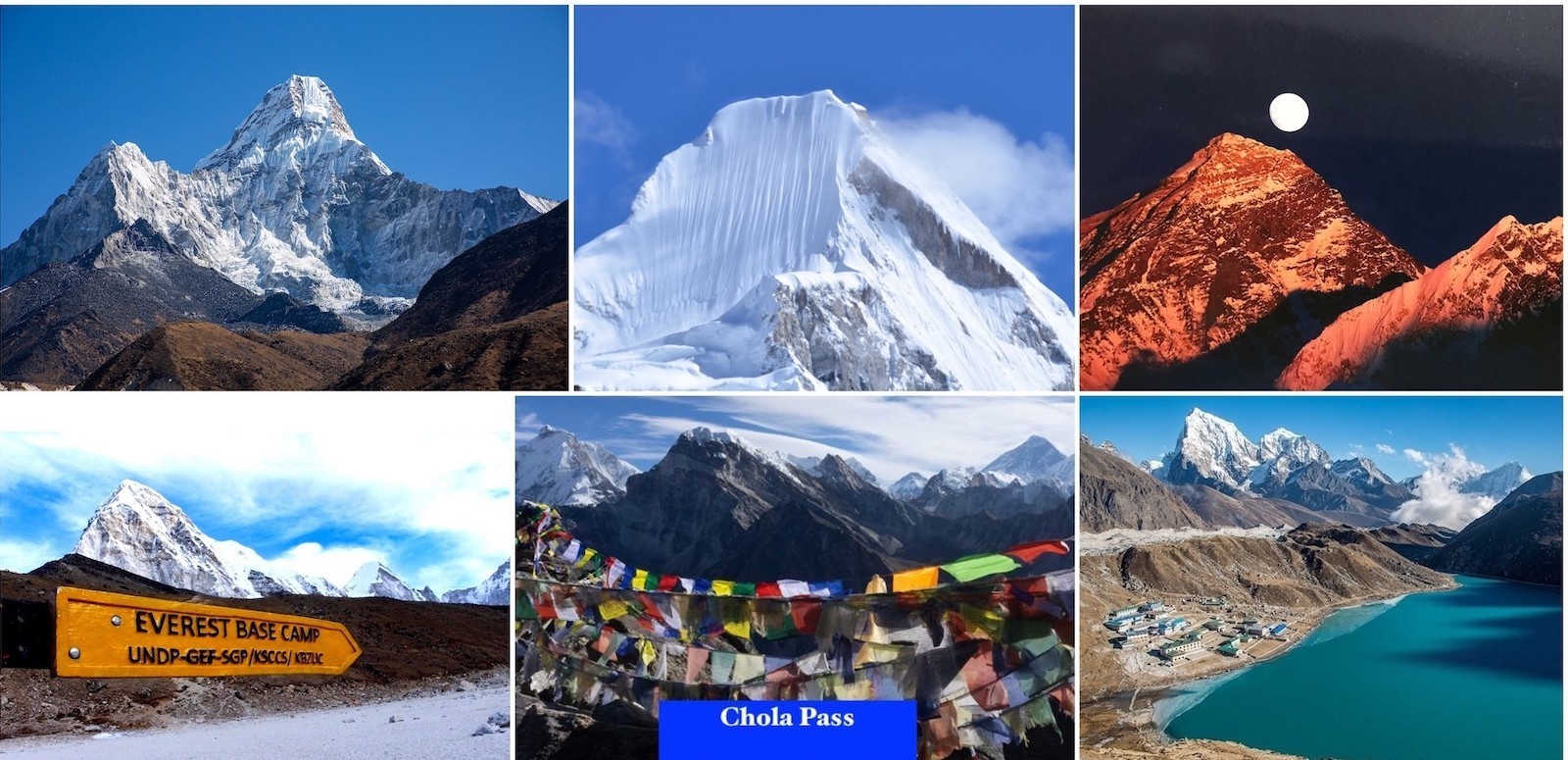
Among all, the most common EBC route goes through Namche Bazaar, Tengboche, Dingboche, Lobuche, and Gorak Shep before reaching the Everest Base Camp. Notably, Nepal Tourism Board emphasizes the need for proper acclimatization as altitude increases rapidly on the route.
Importantly, a trekker must always be accompanied by a licensed trekking guide and have a TIMS card issued by the trekking agency as per the current rules of trekking in Nepal. This rule applies to most of the Everest-region trekking routes including EBC, Gokyo Lakes, Cho La, Three Passes, and Everest View routes.
From the 5 most popular treks in the Everest region, each trek offers substantially different itineraries and attractions. EBC is the most popular trek, while Gokyo Lakes offers a view of glacial lakes and mountain ranges. The Everest View is a shorter trek, while the Three Passes and Cho La routes involve high-altitude passes.
| Trek | Main attraction | Highest point | Typical character |
|---|---|---|
| Everest Base Camp Trek | Everest Base Camp | 5,545 m at Kala Patthar | Classic |
| Gokyo Lakes Trek | Gokyo Lakes and Gokyo Ri | 5,357 m | Scenic |
| Everest View Trek | Everest panorama and Sherpa culture | 3,880 m | Shorter |
| Everest Three Passes Trek | Kongma La, Cho La, Renjo La | 5,535 m | Strenuous |
| Everest Cho La Pass Trek | EBC + Gokyo + Cho La | 5,545 m at Kala Patthar | Challenging |
Highest point varies depending on itinerary. Everest Base Camp is 5,364 m; Kala Patthar is 5,545 m; Gokyo Ri is 5,357 m.
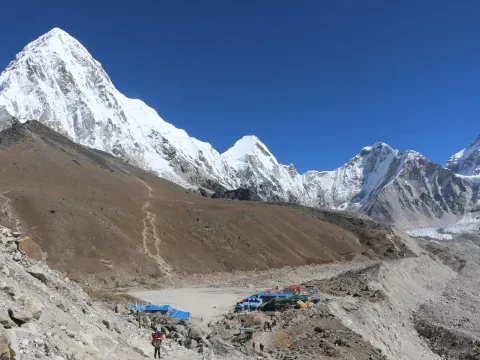
Here, Everest Base Camp Trek is the most famous trek in the Everest region that usually involves a route from Lukla to Namche Bazaar and then to Tengboche, Dingboche, Lobuche and Gorak Shep before reaching the Everest Base Camp.
Meanwhile, the main goal of this trek is to reach the Everest Base Camp (5,364 m). But many trekkers also enjoy climbing Kala Patthar (5,545 m) for an unparalleled view of Everest and surrounding peaks.
Best for: First-time Everest trekkers, iconic vistas and Himalayan experience
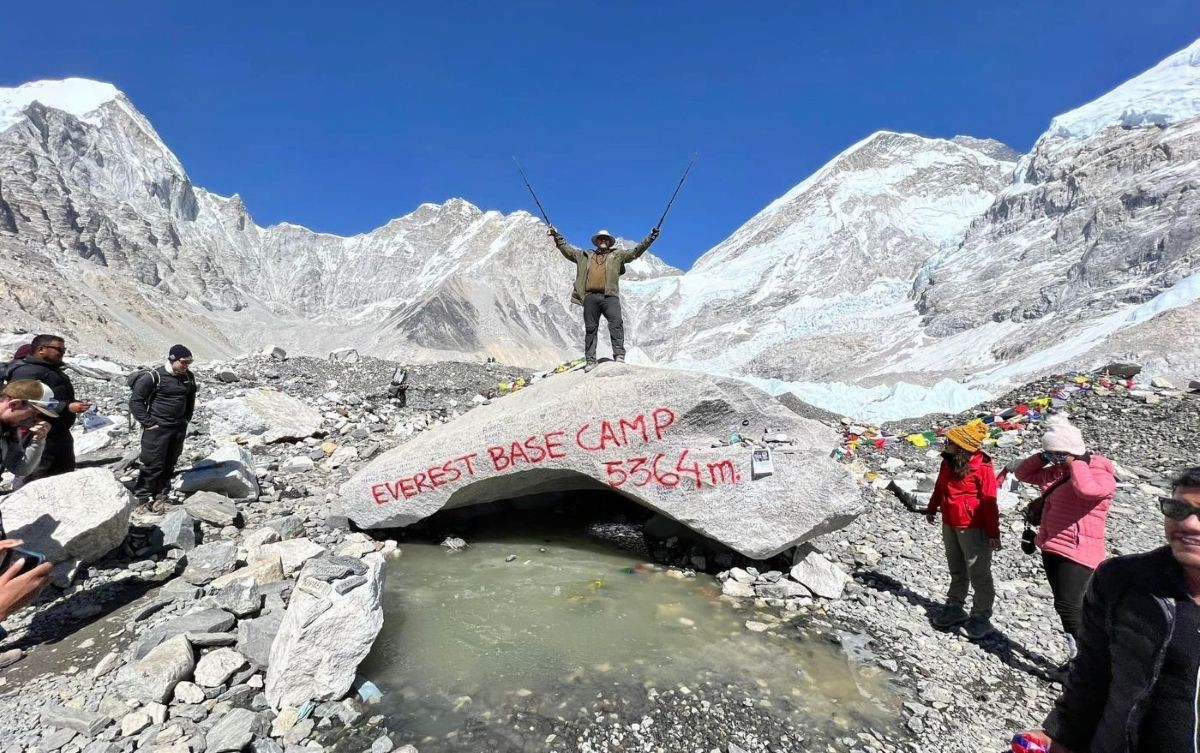
The Gokyo Lakes Trek is a more offbeat route compared to the EBC route. Highlight of this trek includes the turquoise-colored glacial lakes, Ngozumpa Glacier, local Sherpa culture, and a panoramic view of Everest, Lhotse, Makalu and Cho Oyu.
Climbing Gokyo Ri (5,357 m) offers a spectacular view of the surrounding mountain peaks. Notably, Nepal Tourism Board observes that the viewpoint offers an unparalleled view of the surrounding eight-thousanders. Nepal Tourism Board.
Best for: Gokyo Lakes, panoramic views, and offbeat routes
Everest View Trek is best suitable for those who want a Himalayan experience without going to the Everest Base Camp. The trek usually goes to the Namche and Khumjung area offering a view of mountains and Sherpa culture without heading to EBC.
Actually, the trek is ideal for those who have a limited schedule or prefer a lighter adventure in the Himalayas.
Best for: Shorter trip, beginners, families, and those who want a view of Everest without going to EBC
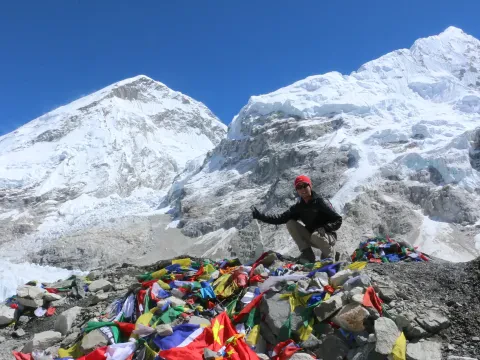
Everest Three Passes Trek is one of the most challenging standard teahouse treks in the Khumbu that involves crossing three high-altitude passes:
Here, this trek can also include EBC, Kala Patthar, Gokyo Lakes, and Gokyo Ri, making it substantially more comprehensive than the EBC trek.
Best for: High-altitude passes and a comprehensive tour of the Everest region.
Everest Cho La Pass Trek combines the EBC route with the Gokyo Valley, and the main attraction is the crossing of the Cho La (5,420 m) pass that links the Everest and Gokyo valleys. Depending on itinerary, Gokyo Lakes, Gokyo Ri (5,357 m), EBC (5,364 m), and Kala Patthar (5,545 m) can also be visited.
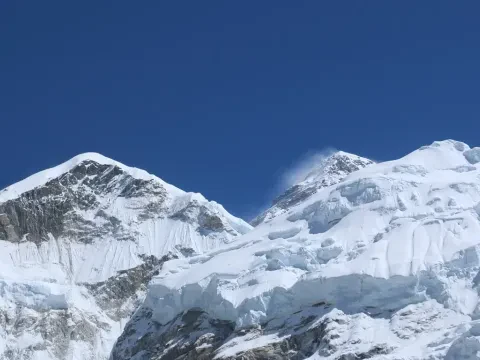
Best for: EBC and Gokyo with a challenge of high-altitude pass
| If you want... | Best choice |
|---|---|
| The classic Everest experience | EBC Trek |
| Turquoise glacial lakes | Gokyo Lakes Trek |
| A short Everest adventure | Everest View Trek |
| The ultimate high-pass adventure | Three Passes Trek |
| EBC + Gokyo + one major pass | Cho La Pass Trek |
Overall, the Everest Base Camp remains the best option for most trekkers to have an authentic Himalayan experience.
In fact, the Gokyo Lakes trek is better for those who prefer scenery and solitude, while the Three Passes and Cho La routes are suitable for serious trekkers who enjoy the challenge of high-altitude trekking.
Notably, acclimatization, a licensed trekking guide, equipment, travel insurance, and current information about the trail are essential for all treks. In particular, acclimatization is emphasized by Nepal Tourism Board for treks in the Everest region.
Now, let’s see each of the top 5 Everest Treks in Nepal one by one in detail:
Everest Base Camp trek is Nepal’s most popular Himalayan trekking route. This trail leads through traditional Sherpa villages, crosses beautiful suspension bridges over deep gorges, passes by ancient monasteries and offers breathtaking views of the surrounding Himalayan peaks.
Importantly, the Everest Base Camp trek is primarily focused on reaching the base camp of the world’s highest peak, Everest (5,364 m) and the acclimatization allows the trekkers to witness a close view of the majestic Mount Everest from Kala Patthar (5,545 m).
Here, most common trails for Everest Base Camp start with a flight from Kathmandu to Lukla and walk through Phakding (2,610 m), Namche Bazaar (3,440 m), Tengboche (3,860 m), Dingboche (4,410 m), Lobuche (4,910 m), and Gorak Shep (5,164 m).
The trek to the Everest Base Camp usually takes a minimum of 12-16 days as it requires proper acclimatization which typically involves spending one or two nights at Namche and Dingboche.
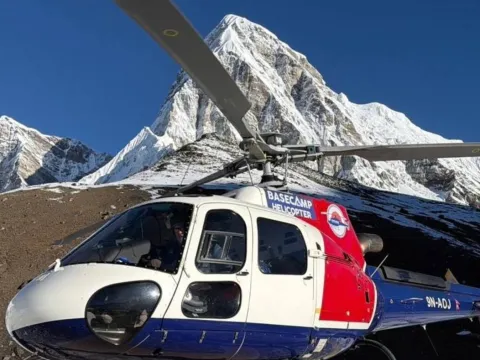
EBC Trek Overview :
Likewise, the Everest Base Camp trek passes through Sagarmatha National Park which is a UNESCO World Heritage Site that protects the unique natural ecosystem found in the Everest region, including the world’s highest mountain and diverse wildlife.
In conclusion, Everest Base Camp Trek is mostly recommended for first-time Himalayan trekkers who are fascinated by the view of the world’s highest peak, unique Sherpa culture, and challenging adventure.
Gokyo Lakes trek is one of the incredible Himalayan trekking trails in the Everest region. Unlike the Everest Base Camp trek, the Gokyo Lakes trek is centered around the Gokyo Valley and its famous turquoise-colored glacial lakes and beautiful Ngozumpa Glacier.
Meanwhile, this trek mainly explores the lower Everest trails passing through Namche Bazaar (3,440 m) heading towards Dole (4,200 m), Machhermo (4,470 m), and Gokyo (4,790 m).
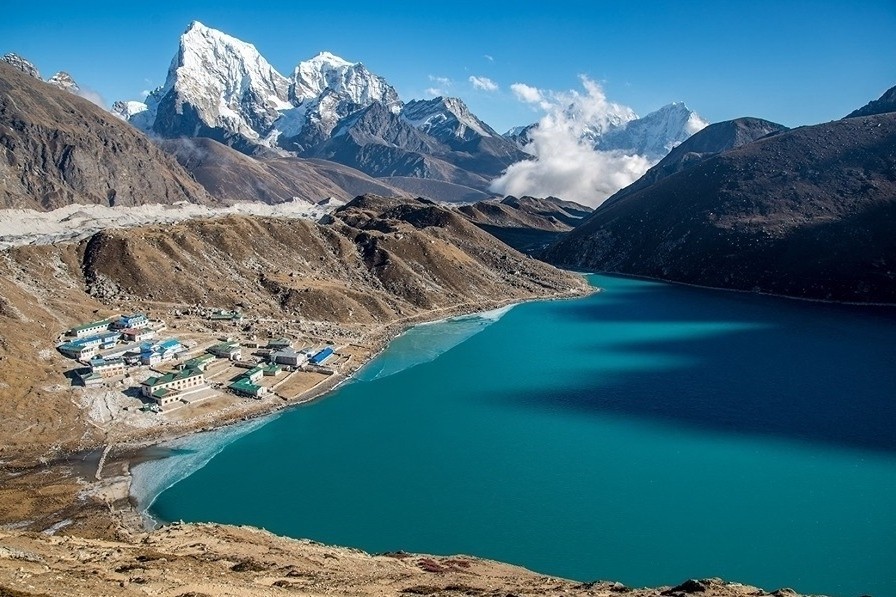
Likewise, the Gokyo Lakes trek also allows trekkers to witness an unparalleled view of Everest and other Himalayan peaks by climbing Gokyo Ri (5,357 m).
Thus, making this trek more attractive and competitive than the Everest Base Camp trek.
Gokyo Lakes Trek Overview :
Highlights of Gokyo Lakes Trek :
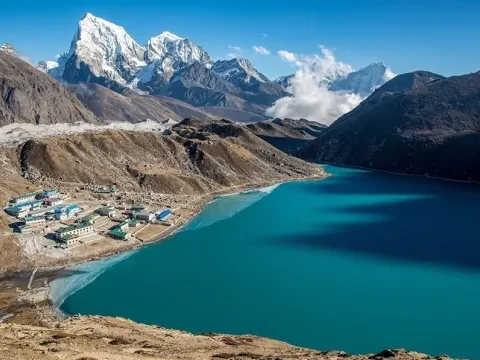
In conclusion, an excellent view of towering Himalayan peaks from Gokyo Ri (5,357 m) is the best part of this trek. The mountain panorama from Gokyo Ri witnesses the Everest massif, including Lhotse, Makalu, Cho Oyu, and other snow-capped peaks.
| Feature | EBC Trek | Gokyo Lakes Trek |
|---|---|---|
| Main attraction | Everest Base Camp | Gokyo Lakes/Gokyo Ri |
| Highest common viewpoint | Kala Patthar (5,545 m) | Gokyo Ri (5,357 m) |
| Mountain panorama | Excellent | Excellent |
| Lakes | Fewer | Significant |
| Glaciers | Khumbu Glacier | Ngozumpa Glacier |
| Crowds | More | Fewer |
| Best for | Iconic EBC Experience | Dramatic Himalayan panorama and lakes |
Gokyo Lakes vs Everest Base Camp Trek: The Gokyo Lakes trek is a fantastic option for those who want an incredible Himalayan view and visit the turquoise-colored lakes. Whereas the Everest Base Camp trek is best for those who want to experience the most famous trekking route to the Everest base camp.
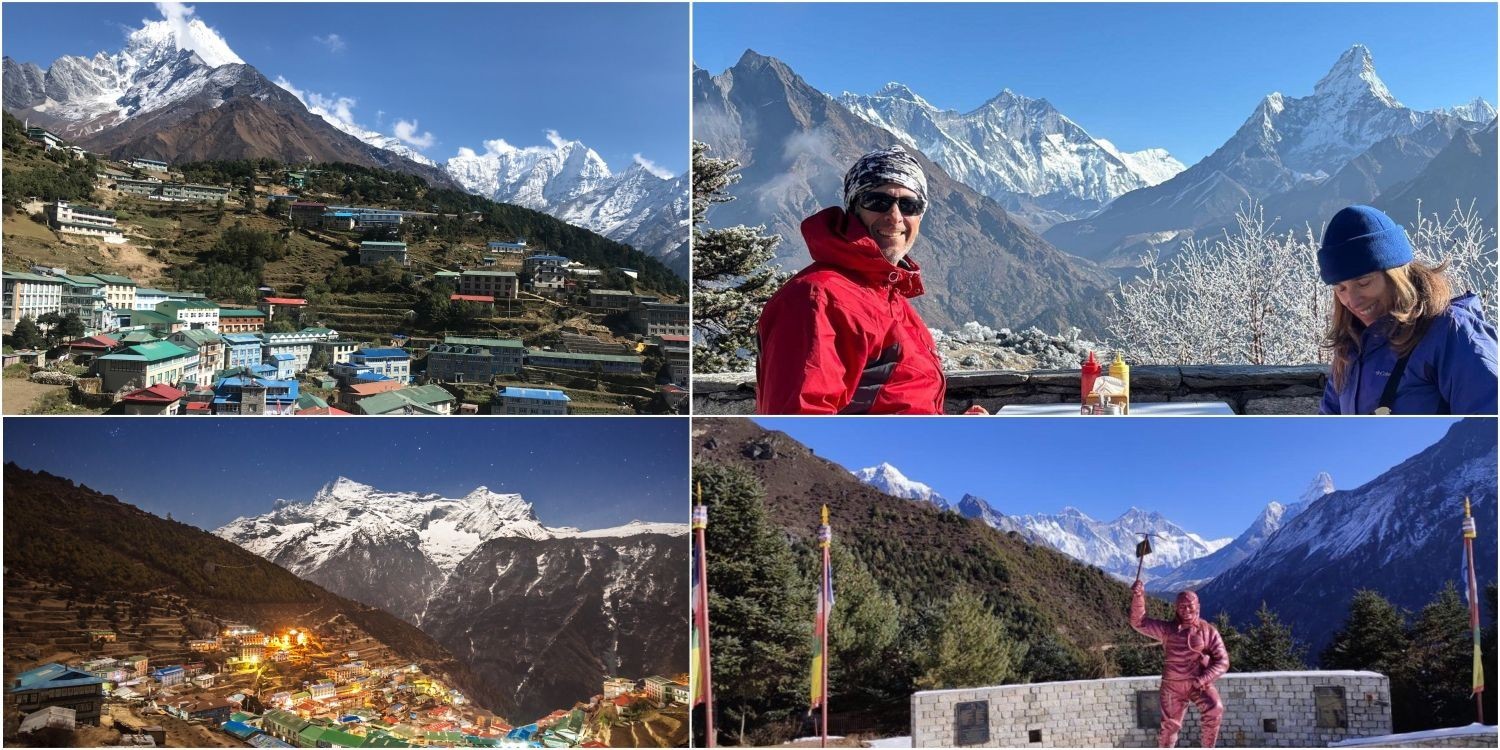
The Everest View Trek is one of the best short hikes in Nepal if one wants an incredible view of Everest without having to embark on the full Everest Base Camp expedition.
Actually, it brings you into the Khumbu region and typically includes stops at Namche Bazaar (3,440 m), Khumjung (3,790 m), Khunde, and Syangboche (3,880 m).
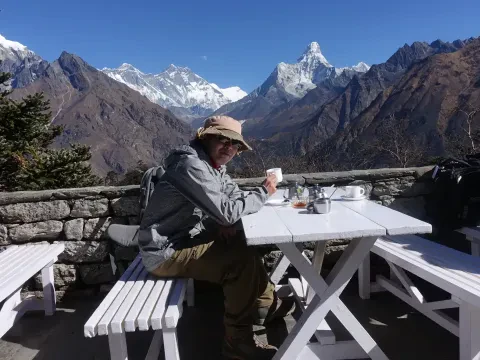
Here, the highlight is the outstanding panorama of mountains that can be seen from the Everest View Hotel area, located some 3,880 m above sea level. It is possible to see Mount Everest (8,848.86 m), Lhotse (8,516 m), Ama Dablam (6,812 m), Thamserku (6,623 m), and Kongde Range on a clear day.
| Category | Detail |
|---|---|
| Region | Khumbu, Everest |
| Duration | 5 – 7 days |
| Highest point | Syangboche/Everest View (3,880 m) |
| Difficulty | Easy to moderate |
| Viewpoint | Everest View Hotel |
| Villages | Namche, Khumjung, Khunde |
| Attraction | Everest panorama |
| Accommodation | Teahouses/lodges |
| Seasons | Spring and autumn |
| Climbing | No |
Typical Route,
Kathmandu → Lukla (2,860 m) → Phakding (2,610 m) → Namche Bazaar (3,440 m) → Khumjung/Khunde → Syangboche (3,880 m) → Namche → Lukla → Kathmandu
Note: People can do Everest View Trek by road via Salleri and Surke these days. Please check the accessibility with the local trek operator before departure from Kathmandu.
Here, exact itineraries may vary – some packages include an acclimatization day in Namche, whereas others follow a shorter schedule.
Major Highlights :
Here, the Nepal Tourism Board recommends visiting the Namche area and the surrounding villages like Syangboche, Khumjung, Khunde, and Thame as a short side-trip from Namche.
Advantages of Everest View Trek :
But needs to think:
Best for: Shorter trips, tourists with limited time, families, and inexperienced hikers looking for an authentic, yet not over-demanding taste of the Everest region.
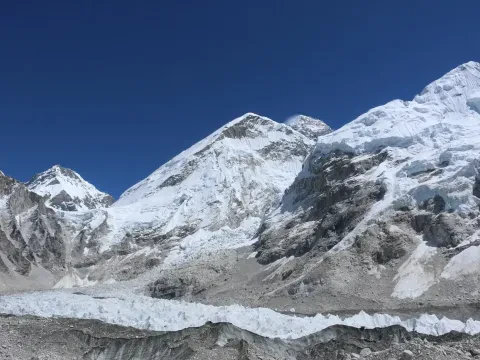
The Everest Three Passes Trek is the most demanding teahouse tour in the Everest region. It entails completing a circuitous route through the high Khumbu, passing Kongma La (5,535 m), Cho La (5,420 m), and Renjo La (5,360 m), three of the highest passes in the region. A classic 18-21 day itinerary from Lukla often includes the Everest Base Camp, Kala Patthar, Gokyo Lakes, and Gokyo Ri.
As opposed to the classic EBC trek, this route is not a simple up-and-down tour, but one that meanders through valleys on either side of the main trail, giving you a far more comprehensive view of the region.
| Category | Detail |
|---|---|
| Region | Khumbu, Everest |
| Duration | 18–21 days |
| Difficulty | Very strenuous |
| Kongma La | 5,535 m |
| Cho La | 5,420 m |
| Renjo La | 5,360 m |
| Kala Patthar | 5,545 m |
| Everest Base Camp | 5,364 m |
| Gokyo Ri | 5,357 m |
| Start Lukla | (2,860 m) |
| Accommodation | Teahouses/lodges |
| Seasons | Spring and autumn |
Typical Route,
Lukla (2,860 m) → Phakding (2,610 m) → Namche (3,440 m) → Tengboche (3,860 m) → Dingboche (4,410 m) → Chhukung (4,730 m) → Kongma La (5,535 m) → Lobuche (4,910 m) → Everest Base Camp (5,364 m) → Kala Patthar (5,545 m) → Dzongla (4,830 m) → Cho La (5,420 m) → Thagnak (4,700 m) → Gokyo (4,790 m) → Gokyo Ri (5,357 m) → Lungden (4,380 m) → Renjo La (5,360 m) → Thame (3,820 m) → Namche → Lukla. ([Nepal Tourism][2])
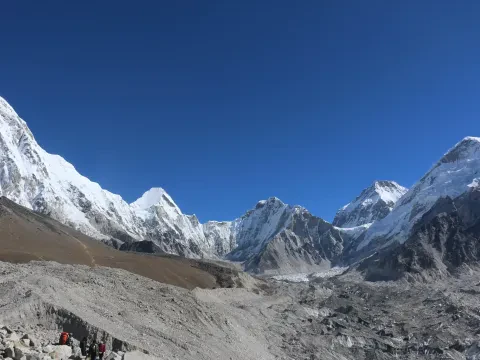
Actually, Kongma La (5,535 m) stands the tallest of the three. It involves quite a climb, traversing moraine, rocky patches, and glaciers.
Likewise, Cho La (5,420 m) is perhaps the most technically demanding pass, and it is common to require special equipment and expert guidance to cross it safely, especially in winter conditions.
Moroever, Renjo La (5,360 m) offers spectacular views of the Gokyo lakes and the surrounding Himalayan peaks. It is generally less technical but equally as taxing.
Major Highlights :
The single most significant advantage the Everest Three Passes Trek offers is variety – in contrast to the EBC trekking that takes you up and down the same valley track multiple times, this tour allows you to see the entire Khumbu circuit. You can combine EBC, Gokyo Lakes, Gokyo Ri, Kala Patthar, and three high passes in one go.
Importantly, this makes it particularly well-suited for those who want a more comprehensive Himalayan experience.
Some Dark Sides of Everest Three Passes Trek :
In summary, it is widely advised to consider the Three Passes Trek only after gaining considerable experience in high-altitude trekking. Recent 2026 guidance and travelers’ reviews consistently labels the route as very strenuous.
Choose it if:
But Avoid it if:
| Category | Everest View Trek | Three Passes Trek |
|---|---|---|
| Duration | 5–7 days | 18–21 days |
| Difficulty | Easy to moderate | Very strenuous |
| Highest point | 3,880 m | 5,545 m |
| EBC included? | No | Usually yes |
| Gokyo included? | No | Usually yes |
| High passes? | No | 3 |
| Best for | Shorter trips, inexperienced travelers | Highly trained and experienced trekkers |
| Physical demand | Moderate | Very high |
| Scenery | Excellent | Exceptional, diverse |
| Main shortcoming | Doesn’t reach EBC | Quite difficult and costly |
In a nutshell, the Everest View Trek is a great option if you only have limited time for a short, easy hike into the Khumbu region. The Three Passes Trek is almost the complete opposite – a very demanding high-altitude circuit for those who want to explore the Everest region far beyond the standard trail.
The Everest Cho La Pass Trek is one of the most challenging trails to complete within the Khumbu region. This mountain trail explores some of the most iconic sights of Gokyo Valley and Everest Base Camp. The trail crosses Cho La Pass (5,420 m), a high mountain pass which connects the Gokyo Valley with the Everest Base Camp trail.
Here, this trek provides the best of two worlds, compared with the standard Everest Base Camp (EBC) Trek. A typical itinerary includes Gokyo (4,790 m), Gokyo Ri (5,357 m), Cho La (5,420 m), Everest Base Camp (5,364 m), Kala Patthar (5,545 m).
| Feature | Details |
|---|---|
| Region | Khumbu, Everest |
| Typical duration | 16–18 days |
| Difficult | Challenging |
| Cho La Pass | 5,420 m |
| Gokyo Ri | 5,357 m |
| Everest Base Camp | 5,364 m |
| Kala Patthar | 5,545 m |
| Gokyo elevation | 4,790 m |
| Accommodatio | Teahouses |
| Best season | Spring and autumn |
| Main attraction | EBC + Kalapatthar+ Gokyo + Cho La |
Highlights :
Here, Nepal Tourism Board describes Cho La as the most travelled high pass connecting Gokyo with the Khumbu Valley near Lobuche.
The Route,
Lukla (2,860 m) → Namche Bazaar (3,440 m) → Dole (3,680 m) → Machhermo (4,470 m) → Gokyo (4,790 m) → Thagnak (4,700 m) → Cho La (5,420 m) → Dzongla (4,830 m) → Lobuche (4,910 m) → Everest Base Camp (5,364 m) → Kala Patthar (5,545 m) → Pheriche → Namche → Lukla.
Benefits :
Drawbacks :
Therefore, it is critical to allow sufficient acclimatization and to have an experienced guide. The 2026 guidance also recommends appropriate preparation for crossing the high pass.
Appropriate for: This trek is appropriate for trekkers who want to combine Gokyo Lakes, Cho La Pass, Everest Base Camp, and Kala Patthar with high level of fitness.
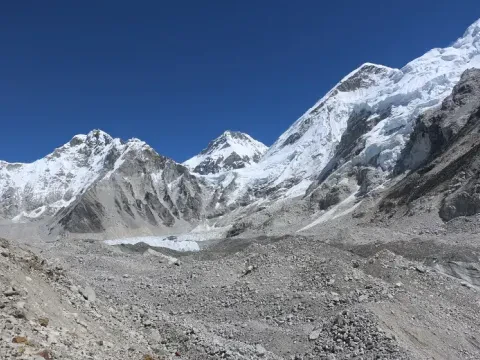
Among the five itineraries, Everest Base Camp (EBC) Trek is far and away the most popular. Nepal Tourism Board describes Everest Base Camp as being high on trekkers’ priority lists and one of the most visited regions within the Himalaya.
In fact, the popularity is well-deserved. EBC offers the most iconic combination of Mount Everest (8,848.86 m), Sherpa villages, Tengboche Monastery, Namche Bazaar (3,440 m), Khumbu Glacier, Everest Base Camp (5,364 m), and Kala Patthar (5,545 m). It also benefits from the most developed trekking infrastructure among the five options.
Likewise, the recent article in Lonely Planet estimated nearly 59,000 people trekked to EBC between mid-July 2024 and mid-July 2025, reflecting the enormous popularity of this classic trail.
| Rank | Trek | Popularity | Reason |
|---|---|---|
| 1 | Everest Base Camp | ⭐⭐⭐⭐ | Iconic Everest experience |
| 2 | Gokyo Lake | ⭐⭐⭐ | Lakes and panoramic scenery |
| 3 | Everest View | ⭐⭐ | Short and accessible |
| 4 | Everest Cho La Pass | ⭐⭐ | EBC + Gokyo + high pass |
| 5 | Everest Three Passes | ⭐ | Challenging high-altitude circuit |
Here, the above comparison should probably be understood as the relative popularity comparison within the five classes rather than an official government ranking of individual trekking routes.
Generally speaking, the official visitor statistics are reported for Sagarmatha National Park or the Everest region rather than for individual trekking itineraries.
For example, Sagarmatha National Park recorded 47,524 foreign visitors in 2025 in tourism statistics reported in 2026.
1. World-renowned:
2. Well-developed infrastructure:
3. Less challenging than high-pass routes:
4. Rich cultural experience:
5. More novice-friendly:
| Your priority | Recommended trek |
|---|---|
| First Everest trek | EBC/Everest View |
| Stand at Everest Base Camp | EBC |
| Best glacial lake | Gokyo |
| Shortest Everest experience | Everest View |
| EBC + Goky | Cho La Pass |
| Ultimate high-altitude challenge | Three Passes |
Final Verdict,
Everest Base Camp (EBC) Trek is the most popular among the five options due to its iconic sights, cultural experiences, well-established infrastructure, and the world-renowned Everest Base Camp. Gokyo is an excellent alternative for those who want to see lakes and panoramic mountain views. Everest View Trek is appropriate for time-constrained travelers, whereas Cho La Pass and Three Passes are for more experienced high-altitude trekkers.
In summary, the Everest Base Camp (EBC) Trek is the most recommended option for first-time trekkers in the Everest region, in terms of popularity and infrastructure, rather than ease of the route.
Of the five options, the Everest Three Passes Trek is the most demanding of these five. With three high passes to cross (Kongma La 5,535 m, Cho La 5,420 m, Renjo La 5,360 m), long treks, and remote areas.
Meanwhile, the Everest Cho La Pass Trek follows closely as it involves crossing Cho La (5,420 m), while the Gokyo Lakes Trek and EBC are considered more accessible, though not easy.
In contrast, the Everest View Trek is considerably easier as it stays lower down and involves fewer trekking days.
| Rank | Trek | Difficulty | Highest point commonly reached |
|---|---|---|
| 1 | Everest Three Passes Trek | Very difficult | Kongma La (5,535 m)/Kala Patthar (5,545 m) |
| 2 | Everest Cho La Pass Trek | Very challenging | Kala Patthar (5,545 m) |
| 3 | Gokyo Lakes Trek | Moderate-challenging | Gokyo Ri (5,357 m) |
| 4 | Everest Base Camp Trek | Moderate-challenging | Kala Patthar (5,545 m) |
| 5 | Everest View Trek | Easy-moderate | Everest View area (~3,880 m) |
Moreover, the Cho La Pass section can be particularly challenging if there is snow or ice. Thus, Three Passes and Cho La are better for experienced high-altitude trekkers.
Verdict: For a challenging Himalayan trek, go with Everest Three Passes. For a "lesser" challenge, try the Cho La Pass.
The Everest View Trek is the easiest of these five Everest-region treks. This trail ends at the Namche and Syangboche area instead of continuing on to the much higher settlements of Dingboche, Lobuche, and Gorak Shep. The highest point is generally around Syangboche/Everest View area (3,880 m).
It is, therefore, considerably shorter and less exposed to extreme altitude than EBC, Gokyo, Cho La, or Three Passes.
| Trek | Difficulty | Highest point | Typical duration |
|---|---|---|
| Everest View Trek | Easy-moderate | 3,880 m | 5-7 days |
| Everest Base Camp | Moderate-challenging | 5,545 m | 12-16 days |
| Gokyo Lakes | Moderate-challenging | 5,357 m | 12-15 days |
| Cho La Pass | Challenging | 5,545 m | 16-18 days |
| Three Passes | Very challenging | 5,545 m | 18-21 days |
The Everest View Trek involves Himalayan terrain, which means stone steps, steep stretches, suspension bridges, and lots of walking up and down. Namche Bazaar (3,440 m) is also high enough that you could experience altitude symptoms.
Therefore:
| Traveler type | Best choice |
|---|---|
| First-time trekker | Everest View |
| Limited vacation | Everest View |
| Family wanting Everest scenery | Everest View |
| Wants Everest Base Camp | EBC |
| Wants lakes | Gokyo Lakes |
| Wants EBC + Gokyo + pass | Cho La |
| Experienced high-altitude trekker | Three Passes |
Final verdict: Of these five options, the Everest View Trek is the easiest and Everest Three Passes Trek is the most difficult. The EBC falls somewhere in the middle and remains the most popular option among travelers seeking the Everest Base Camp experience without the multiple high-pass traverses.
In general and in practice, the Everest Three Passes Trek is the least crowded route, followed by Cho La Pass Trek and Gokyo Lakes Trek. The Everest Base Camp and Everest View itineraries are typically more popular than others.
However, there is no official or government database of how many people do each of these 5 treks, so the following comparison is based on general observations and not on an authoritative source.
| Rank | Trek | Relative crowd level | Experience |
|---|---|---|
| 1 | Everest Three Passes | Lowest | Remote and quieter |
| 2 | Cho La Pass | Low | Quieter high altitude sections |
| 3 | Gokyo Lakes | Low-Moderate | Peaceful compared with EBC |
| 4 | Everest View | Moderate-High | Busy around Namche |
| 5 | Everest Base Camp | Highest | Busy during peak seasons |
1. Everest Three Passes Trek – Least Crowded
The Three Passes route branches off from the main EBC trail and crosses Kongma La (5,535 m), Cho La (5,420 m), and Renjo La (5,360 m), which are all high mountain passes.
While those sections tend to be less busy than the main EBC trail, keep in mind that many people do pass through this trail on their way to EBC or Gokyo – so you will not find absolute solitude along the way.
2. Everest Cho La Pass Trek
Cho La Pass combines the Gokyo and EBC trails and adds Cho La (5,420 m). Therefore, several sections tend to be less busy, notably around the high pass and Gokyo Valley.
3. Gokyo Lakes Trek
Gokyo Lakes is a popular alternative to EBC, but fewer people choose it. As a result, the trail tends to be less crowded than the one leading to EBC, although Gokyo Ri (5,357 m) and the Gokyo Lakes can get rather busy during peak seasons.
4. Everest View Trek
The Everest View route is shorter, but it runs near Namche Bazaar (3,440 m) and the Everest View area (~3,880 m) – both of which tend to get crowded with hikers.
5. Everest Base Camp Trek
EBC is the most popular trek in the region, so it is not surprising that it also has the highest concentration of walkers during peak seasons.
The busiest parts are typically around Namche, Tengboche, Dingboche, Lobuche, and Gorak Shep (5,164 m).
If you specifically want to minimize the chance of encountering other people, your best options are Three Passes or Gokyo Lakes. Those who want fewer crowds but are not up for a 3-pass trek might find Gokyo a good choice.
The Everest View Trek is the most suitable for beginners – it simply requires fewer days, fewer high altitude days, and no high mountain pass.
While the Everest Base Camp trek can also be done by beginners, it is much more physically demanding and requires more careful acclimatization.
| Trek | Beginner suitability | Difficulty | Max elevation commonly reached |
|---|---|---|
| Everest View | 5 stars – excellent | Easy-Moderate | 3,880 m |
| EBC Trek | 4 stars – good with preparation | Moderate-Challenging | 5,545 m |
| Gokyo Lakes Trek | 4 stars – Good with preparation | Moderate-Challenging | 5,357 m |
| Cho La Pass Trek | 2 stars – limited | Challenging | 5,545 m |
| Three Passes Trek | 1 star – not recommended | Very challenging | 5,545 m |
The Everest View trek is the easiest way to see the Everest region.
You will be able to experience and get familiar with the local mountain village life in Namche Bazaar (3,440 m) and Khumjung (3,790 m) and enjoy the view of the Everest massif from the Everest View area (~3,880 m). It is a great way to build up your skills or simply enjoy the view without having to walk all the way to EBC.
People who choose this option tend to be those who:
An average beginner in reasonable health will likely be able to manage the EBC trek – provided they give themselves enough time and do appropriate acclimatization hikes.
However, they need to realize that the EBC trek will be more physically taxing than the Everest View trek, and proper rest days should be scheduled.
Similarly, a good Everest Base Camp trek itinerary should include enough acclimatization days, especially if you are new to trekking and mountain hiking.
A fit beginner – meaning someone who has already done a multi-day trek – will likely be able to manage the Gokyo Lakes trek.
In fact, it is a good training experience for higher altitudes since you will be exploring areas of up to 4,790 m (Gokyo) and 5,357 m (Gokyo Ri), but it is still within the limits of many beginners’ physical preparedness.
The Cho La Pass requires much more endurance and training than the previous options – and probably more than a novice or first-time trekker would care to provide.
Moreover, the pass itself includes snow and ice, which is not a trivial undertaking in and of itself.
The Three Passes option is definitely not a good choice for a first-time trekker or even for a moderately trained beginner.
Because it combines the hardships of EBC and Gokyo and adds another high mountain pass to the mix.
So, while a three-pass trek is a great choice for an experienced trekker who wants to get a real feel for the high Himalayan landscape, it is not a good choice for a first-time visitor.
Unless you are an experienced trekker, your first option should be the Everest View trail.
If you decide you want to try EBC and you are reasonably fit, then you can try to prepare enough for the EBC trek and do it as your first high altitude Himalayan trek.
However, I would not recommend doing the Three Passes trek before even attempting EBC.
In short, I would rank the beginner-friendliness as follows:
Everest View > EBC > Gokyo Lakes > Cho La > Three Passes
Another important note: beginner-friendly does not equal low altitude.
Importantly, the Everest View trail is still a high altitude trek – you simply start at a lower altitude and spend less time there.
As the Nepal Tourism Board also advises, altitude should not be taken lightly, and acclimatization should be carefully planned even on lower-altitude trails such as the Everest View route.
Within the top 5 Everest region treks, the Everest View Trek is the only realistic option for a 7-day trek. A standard itinerary lasts between 5-7 days, based on the Lukla flight schedule and the time spent in Namche.
An EBC, Gokyo Lakes, Cho La Pass or Three Passes itinerary simply cannot be completed within 7 days, although attempting a condensed version of these itineraries would be overly ambitious.
| Trek | Can it fit 7 days? | Typical duration | Recommendation |
|---|---|---|
| Everest View | ✅ Yes | 5-7 days | Best choice |
| EBC | ❌ No | 12-16 days | Too short |
| Gokyo Lakes | ❌ No | 12-15 days | Too short |
| Cho La Pass | ❌ No | 16-18 days | Too short |
| Three Passes | ❌ No | 18-21 days | Too short |
| Day Route | Elevation |
|---|---|
| 1 | Kathmandu → Lukla → Phakding | 2,610 m |
| 2 | Phakding → Namche Bazaar | 3,440 m |
| 3 | Acclimatization → Everest View Hotel | 3,880 m |
| 4 | Namche → Khumjung/Kunde → Namche | 3,440 m - 3,790 m |
| 5 | Namche → Phakding | 2,610 m |
| 6 | Phakding → Lukla | 2,860 m |
| 7 | Lukla → Kathmandu | 1,338 m |
While certain parts of the itinerary can be cut out like from Namche to Phakding will be too short , an acclimatization day around Namche Bazaar at 3,440m is highly recommended.
It is not uncommon to see itineraries offering a 7-day EBC itinerary. However, a one-week EBC trek is not a good recommendation, due to the combination of the fast altitude gain and long walking days.
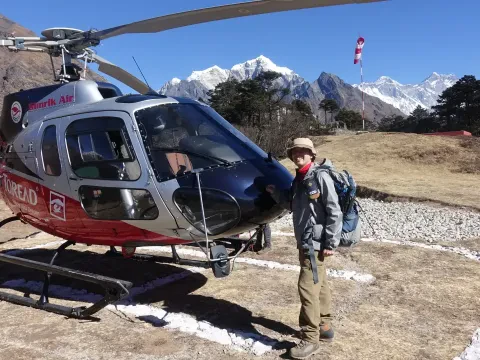
But, using helicopter while flying our from Kalapatthar can be the best option for 1 week EBC Trek Itinerary.
Such an itinerary would take you up to Everest Base Camp at 5,364m and usually Kala Patthar at 5,545m. After that, you will directly fly back to Kathmandu by helicopter.
Verdict: If you only have a week, the Everest View Trek is your best choice. It can deliver authentic Everest region experience without rushing to extreme altitudes.
With 14 days at your planning and schedule, the Everest Base Camp Trek is the most popular trek for this duration. A well-planned 12-14 day itinerary can take you from Lukla to EBC and back, with appropriate acclimatization.
Likewise, the Gokyo Lakes Trek can also be squeezed into two weeks or less than that, depending on the itinerary. However, the Cho La Pass and Three Passes Trek require more than 14 days, unless you attempt a hurried version of the itineraries.
| Trek | Can it fit 14 days? | Typical duration | Suitability |
|---|---|---|
| Everest View | ✅ Yes | 5-7 days | Very easy to fit |
| EBC | ✅ Yes | 12-16 days | Best choice |
| Gokyo Lakes | ✅ Usually | 12-15 days | Good option |
| Cho La Pass |⚠️ Tight | 16-18 days | Not recommended rushed |
| Three Passes | ❌ Usually no | 18-21 days | Needs more time |
A standard two week EBC itinerary could look as follows:
Lukla (2,860m) → Phakding (2,610m) → Namche Bazaar (3,440m) → Tengboche (3,860m) → Dingboche (4,410m) → Lobuche (4,910m) → Gorak Shep (5,164m) → Everest Base Camp (5,364m) → Kala Patthar (5,545m)
Here, the above route represents a typical EBC itinerary, with acclimatization days in Namche Bazaar and Dingboche. This is important, since you will be above 5,000m during this trek.
Gokyo Lakes is another wonderful option for a two-week holiday. You will be able to reach Gokyo (4,790m) and Gokyo Ri (5,357m) without having to traverse Cho La.
This could be a preferred option, if:
The Cho La Pass Trek combines elements of Gokyo and EBC treks, while crossing Cho La Pass (5,420m). It is not impossible to attempt a shortened version of this itinerary, but 14 days is a very tight timeframe to complete this trek, especially considering the weather conditions and acclimatization needs.
The Three Passes Trek is the least suitable option for a 14-day holiday. You would have to cross:
Therefore, it is better to give yourself at least 18-21 days for this trek, in order to allow proper acclimatization and to adjust to the changing mountain conditions.
Final Recommendation :
If you have 18-21 days, the Everest Three Passes Trek is an excellent choice. If you have around 16-18 days and you want to combine Gokyo and EBC, the Cho La Pass Trek is a superb combination.
Above all, do not sacrifice acclimatization or flexibility for the weather in order to complete a shorter itinerary. At Everest region altitudes, good acclimatization and flexibility are far more important than a few extra trekking days.
Everest treks usually range between USD 595 and USD 2,150 per trekker, depending on the itinerary, group size, extra services, travel, accommodations, and other expenses. A short Everest view tour costs significantly lower than a long Three Passes or Cho La adventure.
Here, the transportation option plays a particular role – tours that include a package with flight tickets on Lukla tend to be more expensive than road adventures (Salleri – Surke).
At the same time, private excursions cost more than group trips.
Below is an overview of the most frequently chosen itineraries, price ranges, and other elements related to them:
| Trek | Approx. cost | Duration | Main cost factor |
|---|---|---|
| Everest view trek | USD 595 – 1000 | 5 – 7 days | Short duration |
| EBC trek | USD 875 – 1500 | 12 – 16 days | Flight tickets & other services |
| Gokyo Lakes trek | USD 1000 – 1600 | 12 – 15 days | The length of the route |
| Cho La pass trek | USD 1300 – 1900 | 16 – 18 days | High altitudes |
| Three passes trek | USD 1500 – 2150 | 18 – 21 days | Long & complicated itineraries |
Here, these are rough estimates of package costs, and the government does not put exact figures on them. Actual figures can vary depending on the organization and additional services.
Factors That Influence The Cost Of The Everest Trek:
If one intends to make their travels affordable and comfortable, the option of the road from Kathmandu to Salleri/Surki should be considered as a cheaper alternative to flying to Lukla airport.
Yet, the latter option implies additional day(s) of walking or driving since the shortest road distance from Kathmandu to Lukla is approximately 380 km.
A well-developed private or group tour from reputed agencies like Haven Holidays Nepal can provide affordable rates for accommodation, transportation, and all additional costs like permits, guiding, and other. The best value option is a combined package that includes group visits and road adventures with standard teahouse accommodations.
Lukla flight problems seem to become a critical point with every endeavor to reach Mount Everest, and this is partly due to the nature of this region. At the altitude of 2,860 m, with a limited runway surface, Tenzing-Hillary Airport is vulnerable to weather conditions.
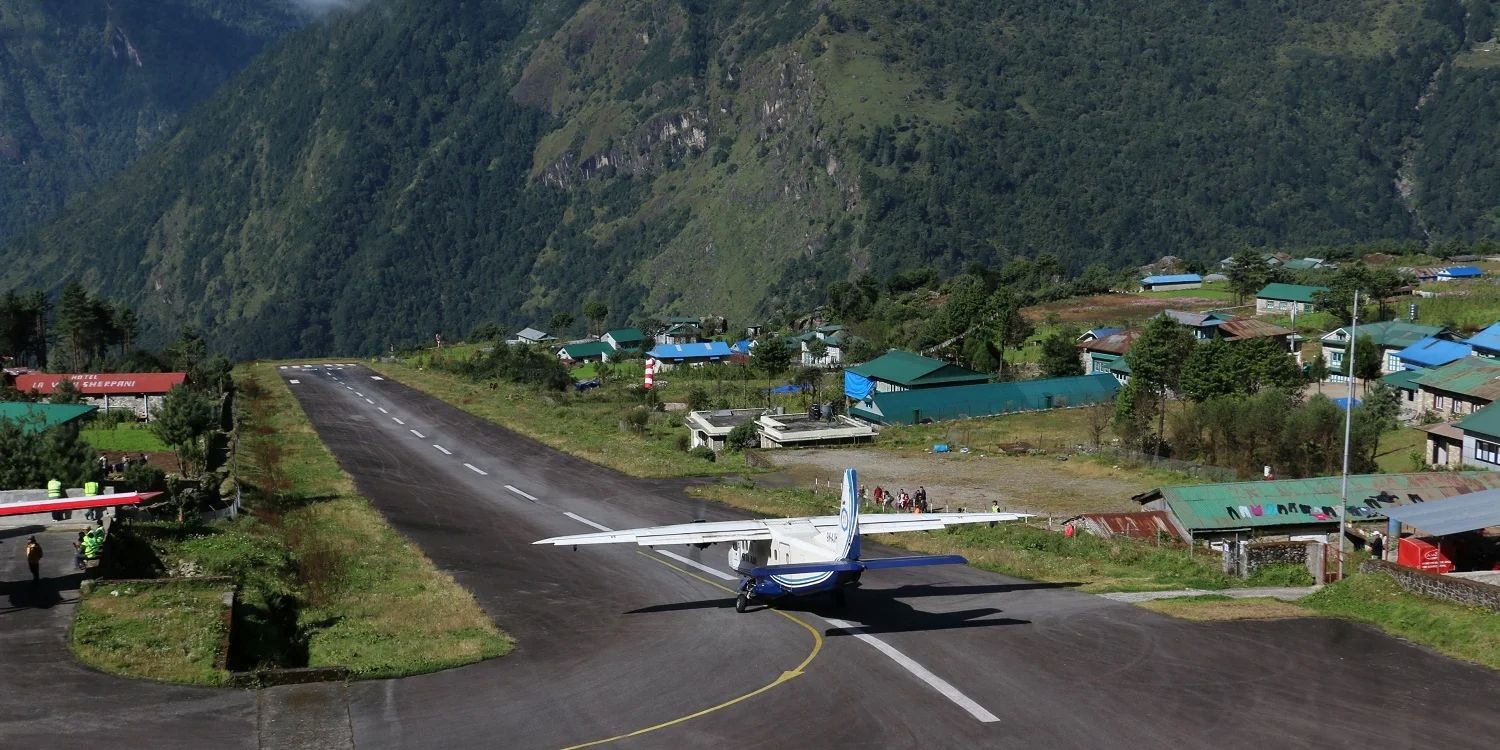
Thus, it is advisable to plan additional days for the itinerary in case of flight cancellations or delays. The flight may be suspended and postponed due to the weather conditions in accordance with the requirements of aviation safety.
| Reasons For Delays or Flight Cancellations | Description |
|---|---|
| Reduced visibility due to weather conditions | A limited visual field can force the flight cancellation |
| Strong winds | A rapid horizontal movement of air causes temporary turbulence |
| Clouds | Pilots cannot fly a plane under the cover of clouds |
| Congestion at the airport | Departures are postponed to avoid crowding at the airport |
| Unfavourable seasons | Increases disruptions to a minimum degree |
Here, airline companies relocate flights to Ramechhap under certain conditions Flights are redirected to the Ramechhap/Manthali Airport, changing the whole principle of transportation especially in Spring and Autumn.
If an alternative transportation option via the Ramechhap/Manthali Airport becomes available, it will be preferable due to its proximity to Lukla. In this scenario, an additional option is to drive from Kathmandu to Manthali instead of flying.
Thus, it is recommended that the detailed statement of work include provisions regarding:
Actions To Take:
If an expedition participant plans their own trip and chooses the route and the means of transportation, they should:
1. Leave a “buffer” for the travel dates
2. Monitor the weather
An authorized travel agent should watch for changes in flight schedules and Lukla weather forecasts. Some of the changes are predictable based on the peak seasons for travel – spring and autumn.
3. Replace the flight with a road journey (if applicable)
If there is an option, it should replace the flight from Kathmandu to Lukla because it will provide a reliable alternative on days when flights are closed due to cloudy weather.
4. Follow the guidelines and recommendations of your travel agency
Local operators have much better insight into the current state of affairs and can react more easily to any changes.
Likewise, it is especially important to be guided by these recommendations at the moment of departure. The company should provide support and assistance in the work with the airline.
5. Think about the insurance policy
The best choice is the one that explicitly covers the insurance benefits concerning tours at a given altitude and other risks. One should check whether the travel insurance covers altitude-related risks or other issues with the planned excursion.
A flight above the Himalayas is not necessary for every tourist willing to explore the beauty of this region.
Yet, the road through the mountains from Kathmandu to Salleri/Surke will consume additional days of walking and a solid budget. It is important to keep in mind the high season and check the forecast, as it is a typical occurrence in the mountains for weather to change in an hour.
However, this does not necessarily indicate that one should not travel around Mount Everest. The most sensible advice would be to ensure flexible dates, leave a “safety margin” for unforeseen events and check the itinerary and transportation system with the travel agency.
Yes! You can use the road instead of the flight to Lukla for many of the popular Everest Region trekking routes. For a budget-friendly alternative you can take the road from Kathmandu (1,320 m) to Salleri (2,390 m) and then continue hiking towards Surke (~2,300 m).
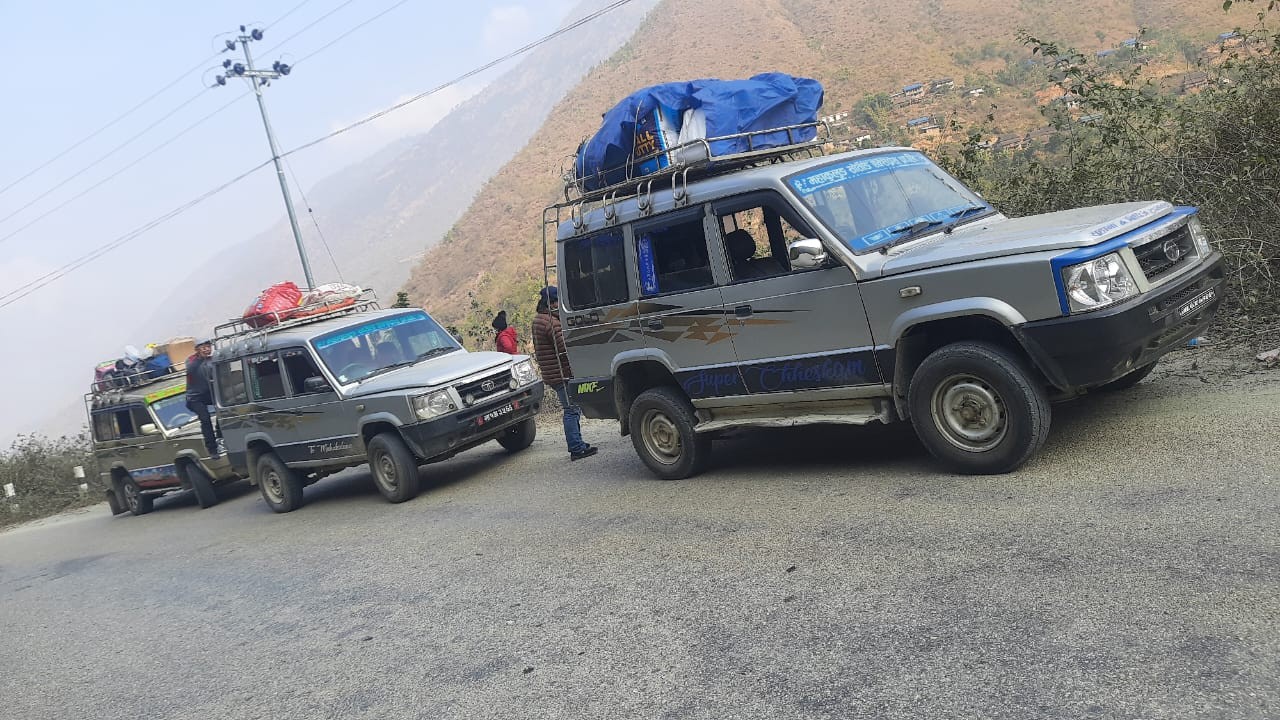
From Surke you then simply follow the normal trekking trail to Phadking (2,610 m) and onwards to Namche Bazaar (3,440 m).
Using the road gives you an alternative to the flight and saves you money. You still get to see the Himalayas and experience trekking the famous Everest trail. There will simply be the trade-off of having to endure a more extended, less exciting road transfer instead of the quick but potentially delayed and dangerous flight to Lukla.
A brief description of what this road route looks like:
And here are some of the reasons that this road route might be preferred:
There are, of course, a few downsides as well:
Therefore, you should also bear in mind that road conditions are subject to change depending on the weather, maintenance works and other factors.
So, be sure to ask your local agency if the road is open for transit before you set off.
As a budget alternative, your route could look something like this:
Kathmandu > Salleri > Surke > Phakding > Namche Bazaar > Tengboche > Dingboche > Lobuche > Gorak Shep > Everest Base Camp > Kala Patthar > and back the same way.
In brief, the road route via Salleri and Surke is quite an alternative to the usual and highly recommended hiking trail. This is mainly due to the fact that there is a cheaper – although much longer – way of getting to the Everest region which avoids the dangers of the unpredictable weather and potential delays at Lukla.
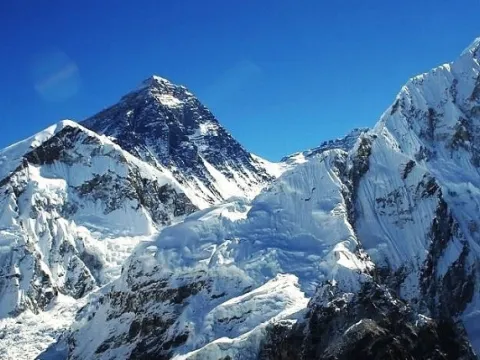
There is no shortage of beautiful trekking trails in the Everest region. You could go on the Everest View Trek, or scale one of the passes on the Three Passes Trek. Whatever the route, they will all offer you unique opportunities for seeing the Himalayas.
For the first-time visitor or trekker the Everest Base Camp is the clear favorite. It offers breathtaking views of the mountains and includes cultural experiences like visiting the local monasteries as well as trekking through valleys with teahouses and local villages.
In addition, you can enjoy the full experience of climbing up to Kala Patthar (5,545 m) and seeing Everest’s summit. Not to be forgotten are the amazing views from Namche Bazaar and Tengboche, and the sense of accomplishment when reaching the Everest Base Camp.
Having said that, you are not limited to one specific trail, but you can choose whichever of these options best fits your specific needs and preferences.
If you are interested in the beauty of alpine lakes and seeing the mountains from a different vantage point, the Gokyo Lakes Trek is perfect for you.
If you want the shortest possible trek, the Everest View would be your best option. And if you are a serious trekker seeking a real challenge and plenty of beautiful sights, the Three Passes or Cho La Pass trek would be the best choices.
In brief, here are some of the options you have:
How to choose?
Well, there is one crucial fact that you need to consider before making your decision.
And that is altitude. Your altitude, in terms of experience and fitness level, as well as acclimatization. You should make sure to leave enough time for gradual ascending and proper rest. This way you will avoid dangerous altitude sickness and unnecessary stress.
But you also do not have to take the flight to Lukla, which can be both risky and unpredictable. You can also use the road from Kathmandu to Salleri and then to Surke as an alternative to the flight.
In any case, this should give you some inspiration and help you make a decision.
Because no matter which trail you choose, there is nothing quite like an Everest trek to give you a sense of wonder and adventure.
And it would be a real shame not to experience it if you have the time and opportunity.
1. What are popular Everest Treks?
Everest Base Camp Trek, Everest View Trek, Gokyo Valley Trek, Everest Three Passes Trek, Everest Base Camp Short Trek, Everest Base Camp Heli Trek are some of the popular treks in the Everest region. There are various Everest trek packages with different itineraries depending upon the duration, difficulty level, and experiences. Haven Holidays Nepal arranges customized and flexible Everest base camp tour packages for first-time trekkers, professional trekkers, and adventure lovers.
2. Which Everest Trek is for beginners?
Everest View Trek is considered the best option for first-timer or inexperienced trekkers. This trek involves a short and easy trail to Namche Bazaar and Syangboche. The Everest view trek route provides an incredible view of Everest, Ama Dablam, and Lhotse. Moreover, this Everest view trek does not require extensive walking and acclimatizing at high altitudes, making it perfect for beginners.
3. How much do Everest Treks cost?
The Everest trek cost varies depending upon the type of trek, duration, group size, transport, accommodation, permits, and other services. The Everest View Trek is an affordable short trek ideal for inexperienced trekkers whereas, the Everest Three Passes trek and Luxury Everest base camp packages offer higher costs due to their complexity and extended duration. Haven Holidays Nepal offers various Everest treks for different group sizes and budgets.
4. Which Everest Treks take me to Everest Base Camp?
Everest Base Camp Trek, Everest Base Camp Short Trek, Everest Base Camp Trek via Thamdanda, Everest Three Passes Trek, and Everest Base Camp Heli Trek are some of the most common and famous treks to reach Everest Base Camp. These treks vary from moderate to highly demanding and require a minimum of 5-8 trekking days depending upon the pace and acclimatization. Thus, selecting an Everest base camp route depends upon the personal preference, physical fitness, and experience level of the trekker.
5. How difficult is Everest Three Passes Trek?
Everest Three Passes Trek is a demanding and difficult trek compared to Everest base camp trek. It covers an altitude of more than 5000 meters crossing the Renjo La, Cho La, and Kongma La passes. This challenging mountain trek involves long trekking hours combined with steep sloping trails, rough terrain, and high altitude. Hence, one needs to be physically and mentally prepared for this rigorous trek.
6. How difficult is Everest Base Camp Trek?
The Everest Base Camp Trek is a moderate to difficult mountain trek depending upon the fitness level of trekkers and the time of year when they start. This 16-day classic Everest base camp trail consists of multiple days of walking, climbing, and traversing rocky paths. In addition, the trail requires acclimatization to altitude, which can be physically and mentally demanding for inexperienced trekkers.
7. How many days does it take to complete Everest Base Camp Trek?
The Everest Base Camp Trek generally takes 12-16 days depending upon the itinerary of the trek package. An uncomplicated Everest base camp trek usually lasts 12 days with an extra two days added for acclimatization and emergency days. Thus, the duration of the Everest base camp trail also depends upon the pace of walking, group size, and weather conditions. However, short Itineraries are available for professional trekkers willing to trek fast.
8. Can beginners do Everest Base Camp Trek?
Beginners or inexperienced trekkers can do the Everest base camp trek with proper acclimatization and physically demanding workouts. Previous high-altitude trekking experience is not required to accomplish this trek. However, an individual must be sufficiently fit to handle the challenging mountain trails, long trekking hours, and cold temperatures. Moreover, a well-structured itinerary and professional guide can help the trekker adjust to the altitude and reduce the risks of AMS.
9. Can beginners do Everest View Trek?
Novice or inexperienced trekkers can do the Everest view trek with appropriate fitness levels. An Everest view trek is a short and easy trek with an average of 7-8 trekking days. This trek provides an insight into the Everest region while visiting the Everest view point and exploring the local culture and traditions. Furthermore, it entails a gentler altitude compared to Everest Base Camp and is an excellent option for first-timer trekkers looking to challenge themselves.
10. Is Gokyo Lake less crowded than Everest Base Camp?
The Gokyo valley is a less crowded alternative to the popular Everest Base Camp with fewer crowds of tourists. This trek involves a less strenuous trail to the Gokyo Lakes offering an incredible view of Lhotse and Everest. However, the Gokyo Valley route can get busy during the peak season just like the Everest Base Camp trek.
Our travel experts are ready to assist you with any questions.
Send us a message.Have a question before you book? Send your enquiry below and our travel experts will get back with the required information.