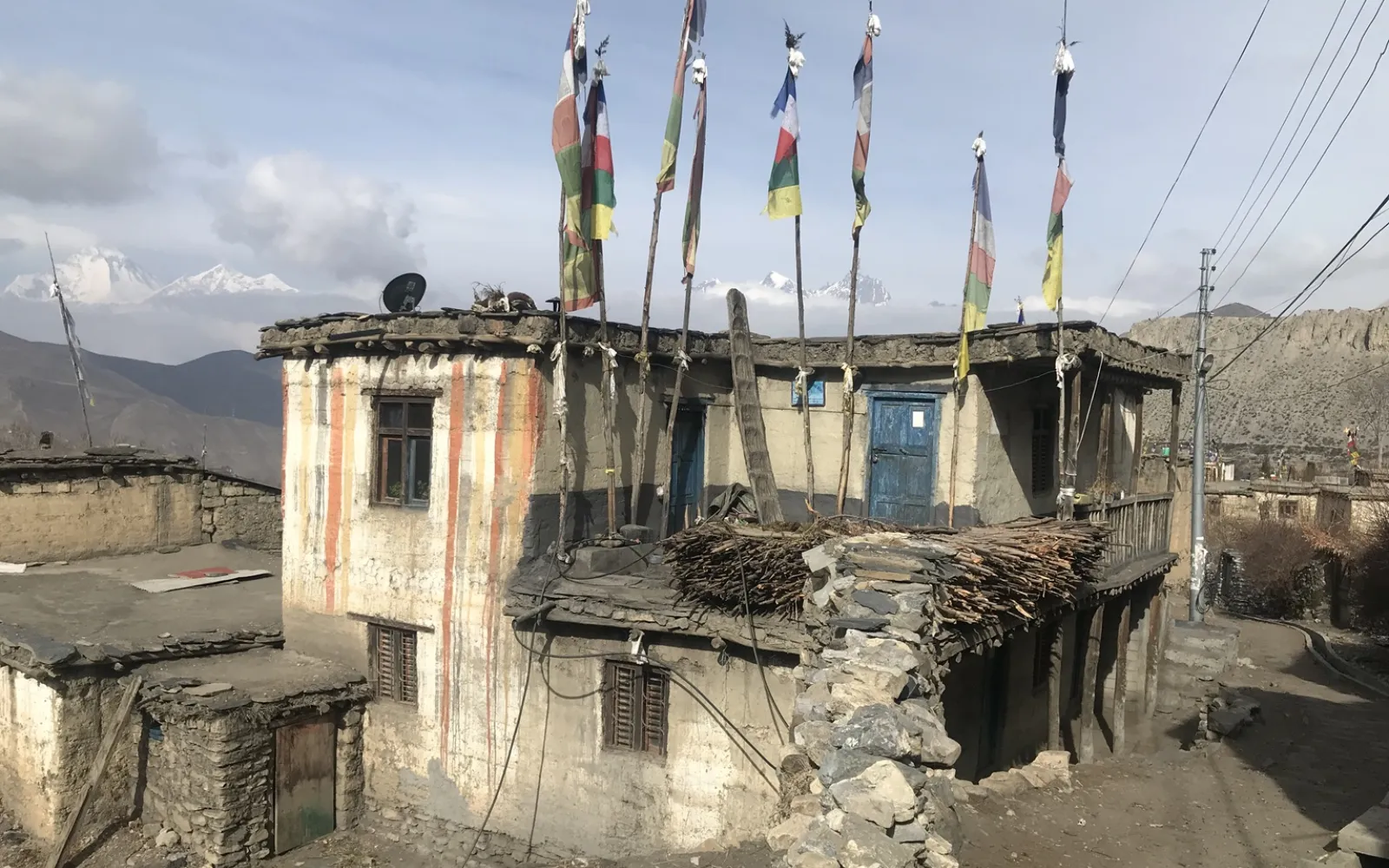
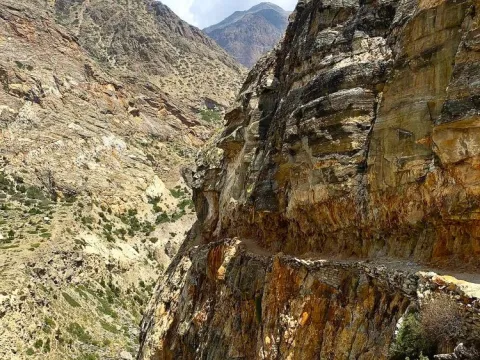
The Nar Phu Valley trek is an amazing classical adventure which takes you to the ancient villages and narrow gorges of the Annapurna range and passes by a 5320m pass.
Beginning from rough road at Koto the Nar Phu trail winds down the narrow Phu Khola gorge towards Phu village and across the pass joins Manang side of the Annapurna circuit.
In fact, Nar Phu valley is a great place to see an ancient Tibetan culture of stone built villages but also offers the less visited side of the Annapurna Circuit.
As you walk higher the landscape changes from pine and juniper forests to dry alpine hills with views of Annapurna II (7937m), Gangapurna (7455m), Tilicho peak (7134m) and the surrounding Himalayan peaks.
Nar Phu Valley Trek Facts
| Description | Details |
| Region | Annapurna, Nepal |
| Main starting point | Koto |
| Main villages | Meta, Phu, Nar |
| Highest pass | Kang La pass (~5320m) |
| Phu village | ~4080m |
| Nar village | ~4150m |
| Trekking duration | ~10-14 day trek |
| Style of trek | Tea house and basic lodge trekking |
| Main attraction | Remote Himalayan villages of Nar and Phu |
| Major challenge | High altitude and crossing of Kang La pass |
| Assistance required | Licensed guide, restricted area permit |
Unique features of a Nar-Phu Valley trekking
Remote Himalayan Valleys: This trek allows you to visit the remote Himalayan valleys of Nar and Phu which are rarely visited by tourists.
Ancient villages: You can explore the Tibetan influenced stone built villages and monasteries of Phu, Nar and Meta.
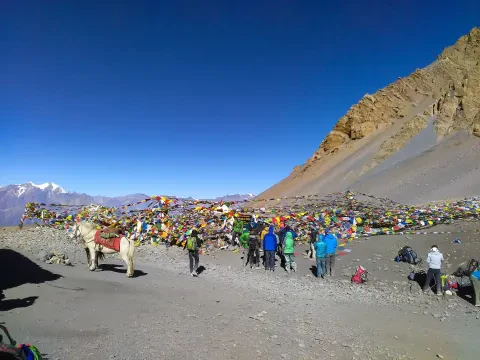
Kang La pass: One of the high passes of Annapurna circuit, the Kang la pass (5320m) is crossed during this trek.
Dramatic Landscape: Deep gorges of pine and juniper forest, alpine pastures and barren hills of the high altitude valleys and mountain peaks offer great opportunities for photography and sightseeing.
View of Mountains: Great views of Annapurna II, Gangapurna, Tilicho peak and many other Himalayan peaks.
Annapurna Circuit Connection: This trek can be combined with the famous Annapurna circuit trek around Manang.
Remote and Less-Crowded/Developed trails: Simple, less developed trails with minimal accommodation and facilities as compared to the Annapurna circuit trek.
Therefore, the Nar-Phu trek is more classical and more challenging as compared to a lower altitude Annapurna trek due to the high altitudes and the long day of crossing the Kang La pass (5320m).
Thus, a good level of fitness, acclimatization and appropriate gear along with a licensed and professional guide is required to complete the trek safely.
To sum up, the Nar-Phu valley trek is a good option for those seeking a remote Himalayan trekking as opposed to the teahouse stays of the lower altitude Annapurna treks.
Most importantly, ancient Tibetan culture, dramatic landscapes, high altitude trekking and crossing of Kang La pass makes the trek unique and challenging.
The Nar Phu Valley Trek cost approximates around USD 1,175–1,385 per person through Haven Holidays, depending primarily on the group size and selected services.
Here, Haven Holidays' Nar Phu Valley Trek offers Nar Phu Valley Trek package at USD 1175-1385, while the final sum can vary according to transportation, trekking days, accommodation and other arrangements.
Nar Phu Valley Trek Cost at a Glance:
| Package Type | Approx. Cost Per Person | Generally Suitable For |
| Group Package | USD 1,175+ | Larger groups to share guide, porter and transportation costs |
| Standard Package | USD 1,250–1,325 | Small groups seeking a balanced level of service |
| Upgraded/Private Package | Up to USD 1,385 | Smaller groups, private 4WD transportation or upgraded arrangements |
However, the Nar Phu Trek cost varies due to transportation from Kathmandu, the number of trekking days, group size and guide and porter arrangements affecting the overall operating cost.
In addition, accommodation, restricted-area permits, Annapurna Conservation Area fees, TIMS, season and choice between shared and private local transport can have an impact on the final Nar Phu Valley trek package cost.
What Makes the Nar Phu Valley Trek Cost Different?
Group size: Larger groups can share guide, porter and transportation costs.
Transportation: Local shared transport generally costs less than private 4WD transportation.
Trekking duration: Additional days of trekking increases guide, porter, accommodation and meal costs.
Guide and porter: A licensed guide is required for the Nar Phu Annapurna Circuit route, and porter arrangements impact the package cost.
Restricted-area permit fee: Narpa Rural Municipality is a restricted area, hence the special permit is a significant part of the budget.
ACAP and TIMS cost: The route also includes conservation and trekking registration costs.
Season: Autumn and spring can see increased demand for transportation and accommodation.
Accommodation: General teahouse is standard, while private or upgraded arrangements can increase the price.
Current Permit Costs to Consider
The current Nepal Tourism Board lists the Nar Phu restricted permit at USD 100 per person for the first week during the months of September–November, and USD 75 per person for the first week from December–August, with additional daily charges USD 15 beyond that.
Likewise, the Annapurna Conservation Area entry permit can be obtained at NPR 3,000 for foreign visitors and NPR 1,000 for SAARC visitors.
Personal Expenses Are Extra
Generally, the advertised Nar Phu Valley Trek package price per person is unlikely to include your complete holiday budget.
Thus, travelers should normally include additional money for international flights, Nepal visa, travel insurance, personal drinks and snacks, Wi-Fi, charging, hot showers, tips, extra accommodation and other personal purchases.
Consequently, for a realistic cost estimation for the Nar Phu Valley Trek in 2027, plan around USD 1,175–1,385 per person for the Haven Holidays trekking package, and have a separate personal expense budget.
Important, prior to booking, confirm the exact group size, itinerary, transportation, guide and porter service, accommodation standard and current government fees.
The Nar Phu Valley Trek package cost from Haven Holidays has been designed to cover the main services needed for the trek. Here, our package includes transportation, accommodation, meals, licensed guide, permits and trekking staff arrangements.
However, services can vary depending on the selected package, and therefore travelers should confirm the final inclusions and exclusions prior to making a booking.
Included in the Nar Phu Trek Package
| Service | Included in Package | Details |
| Transportation | Yes | Transport from Kathmandu to the trekking route as per confirmed itinerary |
| Accommodation | Yes | Teahouse/lodge accommodation during the trek |
| Meals | Yes | Breakfast, lunch and dinner during trekking days |
| Licensed Guide | Yes | Experienced licensed trekking guide |
| Porter | Package dependent | Confirm ratio of porter to client and luggage allowance |
| Restricted Area Permit | Yes | Nar Phu special trekking permit |
| ACAP Permit | Yes | Annapurna Conservation Area entry permit |
| TIMS | Yes | Agency-arranged TIMS where applicable |
| Guide Expenses | Yes | Guide wages, meals, accommodation and required expenses |
| Porter Expenses | If included | Porter wages, meals, accommodation and agreed staff expenses |
| Staff Insurance | Yes | According to the confirmed trekking package |
| First-Aid Support | Basic | Basic first-aid provisions via the trekking team |
| Government Taxes | Yes | Applicable company taxes and service charges |
| Trekking Equipment | Selected items | Any equipment specifically stated in the confirmed package |
In fact, the Nar Phu route is a restricted-area trek, and Nepal Tourism Board states that special trekking permits need to be obtained from the Department of Immigration.
Also, the current regulations also require a licensed guide and TIMS for the Nar Phu Annapurna Circuit route.
What Is Usually Not Included?
The following expenses are normally not included unless specifically stated in your quotation:
International airfare.
Nepal tourist visa.
Travel insurance.
Emergency helicopter evacuation
Personal medical expenses.
Personal drinks and snacks.
Bottled water.
Hot showers
Wi-Fi charges.
Battery charging.
Personal trekking equipment.
Extra nights caused by delays.
Personal accommodation in Kathmandu unless stated.
Tips for guide and porter.
Personal purchases.
Laundry and other optional services.
Why Check the Inclusions Before Booking?
The Nar Phu Valley Trek cost comprises many essential services, yet two packages of the same advertised price can deliver different levels of transportation, accommodation and staff support.
Thus, request the trekking company to provide a complete itinerary and a written list of inclusions prior to paying the deposit.
What Should You book With Haven Holidays?
Prior to booking your Nar Phu Valley Trek package, confirm the following points:
Exact number of trekking days.
Group size.
Shared or private transportation.
Licensed guide arrangement.
Porter arrangement and luggage limit.
Accommodation standard.
Meals included each day.
Restricted-area permit.
ACAP entry permit.
TIMS arrangement.
Guide and porter insurance.
Staff wages and meals.
Taxes and service charges.
Kathmandu accommodation, if required.
Emergency arrangements.
Excluded personal expenses.
Importantly, a transparent package allows greater understanding of the Nar Phu Valley Trek price and helps avoid any additional expenses during your journey.
With Haven Holidays, the final quotation should clearly define what is included, what is excluded and which services are dependent on the selected group size or itinerary.
The main Nar Phu Trek expenses include restricted-area permits, transportation, licensed guide services, accommodation, meals and trekking staff including porter.
For Haven Holidays, the 2027-estimated Nar Phu Valley Trek package costs USD 1,175-1,385 per person, while your personal expenses and optional expenses should be budgeted separately.
Nar Phu Trek Price Breakdown
| Main Expense | Typical Cost Factor | Why It Matters |
| Nar Phu Restricted Area Permit | Seasonal government fee (USD75-100) | Required, because Nar Phu is a restricted area |
| ACAP | Government entry fee (Rs 1000-3000) | Required for the Annapurna Conservation Area |
| TIMS | Current agency-issued fee (Rs 1000-2000) | Required for the Nar Phu Annapurna Circuit route |
| Licensed guide | Daily service cost (USD 30-40) | Mandatory on this route |
| Porter | Daily service cost (USD 25-35) | Optional, based on the package, but useful for luggage |
| Kathmandu-Besisahar | Bus/shared/private vehicle (USD 20-100) | Depends on the transport option |
| Besisahar-Koto | Shared/private jeep (USD 30-50) | Rough mountain road and longer transfer |
| Teahouse accommodation | Per night (USD 10-20) | Basic rooms and limited facilities in Nar and Phu |
| Meals | Per trekking day (USD 25-45) | Increased food costs in remote areas |
| Staff expenses | Guide/porter wages, meals and lodging | Part of responsible trekking operations |
| Insurance and taxes | Package dependent | Staff insurance and applicable government/company taxes |
| Personal expenses | Traveler dependent (USD 230-335) | Showers, charging, Wi-Fi, drinks, snacks and tips |
| Emergency contingency | Variable (300-500 USD | For delays, weather or unexpected transport |
Actually, the Nar Phu Trek daily cost is higher in the remote valleys, because supplies and services have to travel further from the road network.
Here, the accommodation for Nar Phu Valley Tek is generally basic teahouse or homestay-style.
Here, the published 2026 local accommodation commitee estimates commonly place rooms around USD 10-20 per person while food becomes more expensive as you move deeper into the valley.
Why Is Nar Phu Valley Trek More Expensive?
Actually, Nar Phu is not necessarily expensive due to a single service, but due to multiple combined costs.
Here, the trek requires a restricted-area permit, a licensed guide, agency-arranged TIMS, extended road transportation and several days of accommodation and meals in remote local teahouses/lodges.
Likewise, transportation is another important aspect of the Nar Phu trekking cost, because the journey normally continues from Kathmandu to Besisahar and then by road toward Koto.
Importantly, current local transportation estimates shared Besisahar-Koto jeep travel around USD 30-50 per person, while private vehicles cost considerably more but can be divided among several trekkers.
What Should You Budget Personally?
Your package price covers the main trekking services, but carry extra Nepali rupees for personal requirements. A practical personal budget can cover:
Hot showers.
Wi-Fi.
Battery charging.
Tea, coffee and soft drinks.
Extra snacks.
Personal medication.
Laundry.
Tips for guide and porter.
Emergency purchases.
Additional accommodation or transportation if required.
Because card facilities and ATMs are limited or unavailable in the remote Nar Phu Valley, it is practical to carry sufficient cash before entering the restricted area.
Nar Phu Trek Budget: What Makes the Biggest Difference?
Group size is one of the biggest factors in the Nar Phu Trek budget, because the guide and transportation costs can be shared among several travelers.
Similarly, a private jeep, smaller group or additional acclimatization days can raise the per-person price, while a larger group using shared transportation generally distributes fixed costs more efficiently.
Therefore, the Nar Phu Valley Trek price should be assessed based on the complete service package, rather than the advertised starting price.
If you are booking your Nar Phu Valley Trek with Haven Holidays booking, confirm the exact itinerary, group size, transportation, guide and porter arrangement, accommodation, meals, permits and government fees before making the final payment.
The Nar Phu Valley Trek requires a Nar Phu Restricted Area Permit (RAP), an Annapurna Conservation Area Permit (ACAP), and TIMS under the current trekking rules.
In fact, Nar Phu is located within Narpa Rural Municipality in Manang and is officially designated as a restricted trekking area.
Therefore, the required permits should be arranged through an authorized trekking agency before entering the route.
Nar Phu Valley Trek Permit Checklist
| Permit / Document | Current Requirement | Who Arranges It? |
| Nar Phu Restricted Area Permit (RAP) | Required | Trekking agency |
| ACAP | Required | Trekking agency |
| TIMS | Required under current rules | Registered trekking agency |
| Passport details | Required for permit processing | Traveler provides |
| Trekking itinerary | Required for restricted-area processing | Agency prepares |
| Licensed guide | Required | Trekking agency |
1. Nar Phu Restricted Area Permit
The Nar Phu Restricted Area Permit is the most important permit, because Narpa Rural Municipality is designated as a restricted area.
Here, the Department of Immigration's current detailed fee schedule lists USD 100 per person per week during September-November and USD 75 per person per week during December-August, with USD 15 per additional day beyond the first week.
Therefore, the exact Nar Phu Trek permit cost for 2027 should be reconfirmed with the Department of Immigration before publication and booking.
2. Annapurna Conservation Area Permit
The Nar Phu route lies within the Annapurna Conservation Area, so trekkers also need the ACAP entry permit.
Here, the current Nepal Tourism Board fee table lists NPR 3,000 for foreign visitors, NPR 1,000 for SAARC visitors and NPR 100 for Nepali visitors, although fees can change and should be rechecked for the 2027 season.
3. TIMS Card
The current Nepal Tourism Board specifically lists the Nar Phu Annapurna Circuit Trek among the Annapurna routes where trekkers must be accompanied by a licensed trekking guide and carry an agency-issued TIMS Card.
Thus, the current TIMS charge listed by NTB is NPR 2,000 for non-SAARC applicants and NPR 1,000 for SAARC applicants.
Who Gets the Permits?
When you book the trek with Haven Holidays, the company can arrange the required permits and TIMS before you enter the restricted area.
Meanwhile, you normally provide your passport details and other required information, while the registered trekking agency handles the agency-side application and payment process.
Documents Needed for Permit Processing
Valid passport copy.
Passport-size photograph or digital photograph where required.
Confirmed trekking itinerary.
Trekking dates.
Trekker information.
Travel insurance details where required for agency processing.
Agency documentation.
Applicable permit fees.
Note: the restricted-area permit must remain with the trekker during the journey and can be requested by immigration officials or police, according to Nepal Tourism Board guidance.
Important 2027 Permit Note
Permit regulations and fees should be checked for the current trekking season, because government fees and trekking procedures can change. F
For 2027 Nar Phu Valley Trek, Haven Holidays should reconfirm the RAP, ACAP and TIMS requirements immediately before issuing the final quotation.
For this reason, the safest approach is to show the 2027 estimated package price separately from government permit fees, and then update the exact permit figures when the latest official government schedule is confirmed.
There isn't a single right itinerary for everyone when it comes to the Nar Phu Valley Trek. This is because walking ability, acclimatization needs, available time and if you're going onto the Annapurna Circuit are going to be different for each person.
Meanwhile, Haven Holidays suggests planning for enough time at Phu and Nar rather than trying to make the trek as short as possible.
Here, the Nar Phu Valley route starts with driving from Kathmandu to Dharapani, Koto and walking the remote trail toward Meta, Phu and continuing to Nar Phedi and Nar.
After seeing the villages, we'll cross Kang La Pass at around 5,320 m and head down to Ngawal, rejoining the Annapurna Circuit.
Recommended Nar Phu Valley Trek Route
| Stage | Approx. Elevation | Walking / Travel Time | Main Purpose |
| Kathmandu → Dharapani | 1,860 m | 7–9 hrs drive | Get to the area of Annapurna |
| Dharapani → Koto | 2,600 m | 4–5 hrs | Get to Nar Phu gateway |
| Koto → Meta | 3,560 m | 5–6 hrs | Get to restricted valley |
| Meta → Phu | 4,080 m | 5–6 hrs | Get to Phu Village |
| Phu exploration | 4,080 m | 3–5 hrs optional hike | Acclimatization |
| Phu → Nar Phedi | 3,490 m | 4–5 hrs | Gorge passage |
| Nar Phedi → Nar | 4,110 m | 2–3 hrs | Get to Nar Village |
| Nar exploration | 4,110 m | 3–4 hrs optional hike | Acclimatization |
| Nar → Kang La → Ngawal | 5,320 m pass | 7–9 hrs | High-pass crossing |
| Ngawal → Manang | 3,540 m | 3–5 hrs | Rejoin Annapurna Circuit |
Here, the published itineraries above have Meta around 3,560 m, Phu closer to 4,080–4,250 m, Nar around 4,110 m and Kang La around 5,320 m, with some variance between maps and routes.
Why Phu and Nar Need Enough Time
Phu gets a bit of an extra consideration since it's above 4,000 m. Here, coming up from Meta gives us extra time to explore the old settlement, monasteries, chortens and surrounding viewpoints without heading upwards immediately.
Similarly, Nar also warrants more than a single night since the village is another acclimatization point before the major effort of Kang La Pass.
In fact, a local hike around Nar and relaxed afternoon is more reasonable than trying to push through with tired legs.
Nar Phu Trek 10 Days or 12 Days?
A 10-day Nar Phu Trek would be possible if everyone is fit and the roads are good, but there's less leeway for weather, walking pace and altitude adjustment.
However, the 12-day itinerary gives more breathing room, and is easier to manage without rushing.
Here, those doing the Nar Phu Valley Trek with the Annapurna Circuit need extra days beyond Manang.
And also, the trekkers could include stops at Yak Kharka, Thorong Phedi, Thorong La at 5,416 m and down to Muktinath, eventually picking up transportation toward Pokhara or continuing by road further.
In conclusion, Nar Phu can easily extend into a much longer circuit depending on where you want to go after Manang.
Recommended Itinerary Sequence
Kathmandu → Dharapani → Koto → Meta → Phu → Nar Phedi → Nar → Kang La Pass → Ngawal → Manang
Here, this sequence puts us in a good spot for the remote valley while still giving us gradual altitude changes and enough leeway that the high-pass day isn't rushed.
If we have the time to spare, getting to Manang and exploring onward is a much longer Himalayan adventure, with a shorter option turning back towards the road network after Manang.
The following day-by-day Nar Phu Valley Trek itinerary is based on realistic walking days rather than trying to fit everything into a smaller timeframe.
Meanwhile, it leaves us enough time to adjust at Phu and Nar before the big day at Kang La, and the distances and walking time are approximate since conditions on the ground, weather and pace can change.
Day 01: Kathmandu to Dharapani
Route: Kathmandu → Besisahar → Dharapani
Distance: Approximately 180–200 km by road
Travel time: About 7–9 hours
Elevation: Kathmandu ~1,400 m → Dharapani ~1,860 m
Overnight: Dharapani
Here, we'll travel along the Prithvi Highway and head towards Besisahar before getting into the Marsyangdi Valley.
Then, the road gets narrower and rougher as we travel further into the mountains, and the environment changes from urban centers, rivers, waterfalls and terraced hills to more mountainous terrain.
Day 02: Dharapani to Koto
Distance: Approximately 12 km
Walking time: 4–5 hours
Elevation: ~1,860 m → Koto ~2,600 m
Overnight: Koto
The trail follows the Marsyangdi Valley with forested areas and mountain communities until we get to Koto. This particular village acts as the gateway and checkpoint for the restricted Nar Phu Valley.
Day 03: Koto to Meta
Distance: Approximately 13 km
Walking time: 5–6 hours
Elevation: ~2,600 m → Meta ~3,560 m
Overnight: Meta
This section of the Nar Phu Valley Trek takes us into much more remote territory, and we follow the Nar Phu Khola through forests, gorges, suspension bridges and steep areas.
Here, the valley becomes much more rugged as we continue to higher altitude, with dramatic cliffs and mountain views replacing the more green forested areas of the lower Marsyangdi Valley.
Day 04: Meta to Phu Village
Distance: Approximately 10 km
Walking time: 5–6 hours
Elevation: ~3,560 m → Phu ~4,080 m
Overnight: Phu
We follow the trail along the gorge with exposed cliffs, streams, bridges and Tibetan-style chortens as we get to the ancient village of Phu. Next, the area ahead becomes drier and more alpine-oriented with the stone house village.
Day 05: Explore and Acclimatize at Phu
Walking: Approximately 3–5 hours of optional exploration
Elevation: Around 4,080 m
Overnight: Phu
This acclimatization day isn't spent entirely without walking, since a short hike around Phu is a good way to get used to the altitude while still being active. Actually, there's plenty to see in this ancient village, including monasteries, old stone buildings, local homes and surrounding viewpoints.
Day 06: Phu to Nar Phedi
Distance: Approximately 9 km
Walking time: 4–5 hours
Elevation: ~4,080 m → Nar Phedi ~3,490 m
Overnight: Nar Phedi
Downhill walking from Phu towards Nar Phedi passes through a spectacular gorge with more bridges and steep areas to navigate. Nar Phedi is a village that includes a monastery, giving us cultural experiences and another chance to lower our sleeping altitude before heading up toward Nar.
Day 07: Nar Phedi to Nar Village
Distance: Approximately 3 km
Walking time: 2–3 hours
Elevation: ~3,490 m → Nar ~4,110 m
Overnight: Nar
The trail from Nar Phedi to Nar is mostly a climb with stone walls, Buddhist chortens and mountain villages on either side. It's a short walking day, so exploring Nar upon arrival is a good way to spend the afternoon.
Day 08: Nar Village and Acclimatize
Walking: Approximately 3–4 hours of optional local hiking
Elevation: Around 4,110 m
Overnight: Nar
Rather than hiking longer distances today, we'll explore the village and surrounding hills to get used to the conditions. The stone houses, monasteries, prayer flags and terraced fields add to the atmosphere, with an optional short hike providing extra altitude adjustment for the big day.
Day 09: Nar to Kang La Pass and Ngawal
Distance: Approximately 15–17 km
Walking time: 7–9 hours
Elevation: Nar ~4,110 m → Kang La ~5,320 m → Ngawal ~3,650 m
Overnight: Ngawal
This long day is one of the hardest on the Nar Phu Valley Trek, so starting early is recommended. Here, we climb from Nar into high alpine terrain, crossing Kang La Pass at around 5,320 m, and then heading steeply downhill toward Ngawal.
From Kang La Pass, we'll be able to see Annapurna II, Gangapurna and other peaks under generally clear conditions.
In fact, the trail down to Ngawal is still a demanding walking day, but we're back into the more familiar Annapurna Circuit environment.
Day 10: Ngawal to Manang
Distance: Approximately 8 km
Walking time: 3–5 hours
Elevation: ~3,650 m → Manang ~3,540 m
Overnight: Manang
The trail from Ngawal to Manang is another gradual descent through villages and juniper and pine forests, opening out into more expansive Himalayan views.
From Manang, we either continue on the Annapurna Circuit or make travel arrangements depending on the overall itinerary.
Nar Phu Trek – Days at a Glance
| Day | Route | Distance | Walking/Travel | Elevation |
| 01 | Kathmandu → Dharapani | ~180–200 km road | 7–9 hrs drive | ~1,400 → 1,860 m |
| 02 | Dharapani → Koto | ~12 km | 4–5 hrs | ~1,860 → 2,600 m |
| 03 | Koto → Meta | ~13 km | 5–6 hrs | ~2,600 → 3,560 m |
| 04 | Meta → Phu | ~10 km | 5–6 hrs | ~3,560 → 4,080 m |
| 05 | Phu acclimatization | ~3–5 km optional | 3–5 hrs | ~4,080 m |
| 06 | Phu → Nar Phedi | ~9 km | 4–5 hrs | ~4,080 → 3,490 m |
| 07 | Nar Phedi → Nar | ~3 km | 2–3 hrs | ~3,490 → 4,110 m |
| 08 | Nar acclimatization | ~3–4 km optional | 3–4 hrs | ~4,110 m |
| 09 | Nar → Kang La → Ngawal | ~15–17 km | 7–9 hrs | 4,110 → 5,320 → 3,650 m |
| 10 | Ngawal → Manang | ~8 km | 3–5 hrs | ~3,650 → 3,540 m |
Continuing on the Annapurna Circuit
If we're continuing beyond Manang into the Annapurna Circuit, we have a Nar Phu plus Annapurna Circuit itinerary rather than a standalone Nar Phu Trek.
Here, that means going from Manang through Yak Kharka, Thorong Phedi, Thorong La at 5,416 m and lower toward Muktinath before picking up road or flight transport toward Pokhara.
Meanwhile, the benefit of the extended Nar Phu and Annapurna Circuit itinerary is seeing both the Nar Phu Valley and the more familiar Annapurna Circuit trail, but we're adding a few more days of high altitude walking.
Importantly, the focus should be on fitness, acclimatization, weather and available time for this portion rather than simply putting distance together without considering the overall conditions.
In conclusion, Haven Holidays' approach to the Nar Phu Trek focuses on Phu and Nar as true acclimatization and cultural stops, rather than rushing from one village to the next.
Moreover, it makes the following day at Kang La less demanding, but the trail is still challenging enough in this remote area that the itinerary is more about a careful balance rather than shortest possible time.
The Nar Phu Valley Trek is a challenging high-altitude trek, primarily due to the rapid gain from the lower Marsyangdi Valley to over 5,300 m at Kang La Pass.
However, it does not involve technical climbing, but the steep ascents, rocky trails, extended walking days, limited facilities and altitude make it considerably more demanding than shorter lower altitude Annapurna treks.
7.1 Nar Phu Trek Altitude at a Glance
Location | Approx. Elevation | Trekking Significance
Koto | ~2,600 m | Gateway to Nar Phu Valley
Meta | ~3,560 m | First major high-altitude overnight |
Phu Village | ~4,080 m | Remote village and acclimatization
Nar Phedi | ~3,490 m | Lower overnight stop before Nar
Nar Village | ~4,110 m | High village before Kang La
Kang La Pass | ~5,300–5,320 m | Highest point of the main route
Ngawal | ~3,650 m | Descent after the pass
Manang | ~3,540 m | Annapurna Circuit connection
Thus, the published route itineraries above commonly place Kang La around 5,320 m, with Phu and Nar both above 4,000 m, so altitude is an important part of the trek's challenge.
7.2 Physical Difficulty
The Nar Phu Valley trail becomes progressively more demanding after Koto, with steep uphill sections, rocky surfaces, narrow gorges, suspension bridges and uneven mountain paths.
Meanwhile, the Koto to Meta and Meta to Phu segments involve sustained climbing, with the Nar to Kang La to Ngawal crossing normally the longest and hardest day.
Therefore, you should also expect to encounter repeated ascents and descents, not simply a continuous uphill trail, so strong legs and good endurance are more useful than just simply being able to walk long distances on flat ground.
7.3 Altitude Difficulty
Physical fitness alone does not prevent altitude-related problems, as your body needs time to adjust to lower oxygen levels. The itinerary therefore includes time around Phu at around 4,080 m and Nar at around 4,110 m before attempting the Kang La crossing.
Importantly, walk slowly at higher elevations, stay hydrated and communicate with your guide about symptoms such as headache, dizziness, unusual fatigue, nausea or difficulty breathing.
If symptoms become severe or worsen despite rest and reduction in altitude, the trekking team should follow appropriate emergency procedures.
7.4 Trail and Facility Conditions
Generally, the Nar Phu Valley is more remote than the Annapurna Circuit's busier sections, and accommodation becomes simpler as you travel deeper into the valley.
Actually, trails can include loose rock, steep steps, exposed sections, stream crossings and narrow paths, with weather also making the surface slippery or snowy.
In addition to, facilities are also limited compared to Kathmandu, Pokhara or the main Annapurna Circuit settlements.
Therefore, you should be comfortable with basic teahouse accommodation, limited hot-water availability, basic charging facilities and fewer options for food and supplies.
7.5 Is Nar Phu Trek Suitable for Beginners?
The trek is not an ideal first Himalayan trek for an inexperienced beginner, particularly if the person has little experience walking at altitude.
In fact, a reasonably fit first-time trekker can potentially complete it with proper preparation, a conservative itinerary, an experienced licensed guide and sufficient acclimatization.
7.6 How Should You Prepare?
Begin physical preparation around 8–12 weeks before departure, and build endurance gradually rather than attempting difficult hikes immediately prior to the trek.
Walk or hike 4–5 days per week
Include regular uphill and stair training
Build up to 5–7 hours of comfortable hiking
Train with a light backpack
Strengthen your legs, calves and core
Practice walking on uneven terrain
Break in your trekking boots
Include regular recovery days
Prepare mentally for basic mountain facilities
Here the most important preparation is not simply increasing your walking speed, but getting comfortable with long uphill days and sustained effort at altitude.
Because the route reaches approximately 5,320 m, your itinerary, acclimatization and response to altitude are more important than attempting to finish each day quickly.
Overall, the Nar Phu Trek difficulty is a combination of physical terrain and altitude, rather than technical climbing, and is demanding but manageable for properly prepared trekkers who use a realistic itinerary, suitable equipment and experienced local support.
The Kang La Pass crossing is the defining high-altitude segment of the Nar Phu Valley Trek, reaching approximately 5,300–5,320 m between Nar Valley and Annapurna Circuit side.
In fact, it is a demanding trekking day, climbing from around 4,110 m at Nar, crossing the high pass and then descending towards Ngawal at around 3,650 m.
8.1 Kang La Pass Crossing at a Glance
Section | Approx. Elevation | Approx. Time | Trail Character
Nar Village | ~4,110 m | Early start | Cold high-altitude trail
Kang La Phedi / approach | ~4,500–4,800 m | 2–4 hrs | Steady uphill,-rocky terrain
Kang La Pas | ~5,300–5,320 m|2-3 hrs | Steep, exposed and high altitude
Descent towards Ngawal | Down to ~3,650 m | 3–5 hrs | Rocky and steep in places
Ngawal | ~3,650 m | End of day | Lower and more comfortable overnight
In summary, the exact walking time varies with snow, trail conditions, group pace and weather, but the whole Nar to Kang La to Ngawal day commonly involves around 7–9 hours.
Thus, you should therefore treat the pass crossing as a complete mountain day, rather than an ordinary village-to-village walk.
8.2 Early Morning Start
Trekkers normally leave Nar early in the morning, as stable weather and daylight are valuable during the pass crossing.
Here, the trail gradually climbs at first, but the terrain becomes increasingly rocky and the air noticeably thinner as you approach the pass.
Importantly, an early departure also gives the group more time to cope with slower progress, snow or changing weather conditions.
Moreover, your guide can adjust the pace and turnaround decisions according to actual conditions, rather than blindly following the planned schedule.
8.3 What Is the Trail Like?
The approach to Kang La is a mix of rocky mountain trail, loose surfaces and steep sections, with little vegetation at the higher elevations.
Depending on the time of year, snow or ice can cover parts of the route, and the trail can become considerably more challenging when visibility is poor.
In fact, the final climb requires patience as the altitude makes normal walking feel much harder, so rather than taking large, quick steps, maintain a slow rhythm and take short breaks when necessary.
8.4 Weather at Kang La
Conditions can change quickly above 5,000 m, and cold wind, cloud, snow and poor visibility can affect the crossing.
Here, Spring and autumn generally offer more favorable trekking conditions, but no high-pass crossing should be treated as a guarantee regardless of the season.
This is why your guide should check the current conditions prior to departure and decide whether the pass is appropriate to cross that day.
If heavy snow, poor visibility or other unsafe conditions make the crossing unsuitable, the itinerary may need to change.
8.5 What Happens After the Pass?
After reaching the Kang La Pass at around 5,320 m, the trail descends towards Annapurna Circuit side.
Meanwhile, the descent can be steep and rocky, and tired legs can make this part harder than you might expect.
As you lose altitude, the landscape gradually becomes less barren, and reaching Ngawal at around 3,650 m provides a significant drop in elevation, which is welcome after the long high-pass day.
8.6 What Should You Wear and Carry?
For the Kang La crossing, keep essential warm and waterproof equipment accessible, rather than packed away in porter luggage.
Essential equipment includes:
Warm down or synthetic jacket
Thermal base layers
Waterproof and windproof shell
Warm gloves
Wool or thermal hat
Buff or neck gaiter
Sunglasses with UV protection
Waterproof trekking boots
Trekking poles
Headlamp
Water and snacks
Personal medication
Small first-aid supplies
Sunscreen and lip balm
Extra layers for changing weather
In addition to, microspikes can also be useful when snow or ice is present, but whether they are needed depends on current conditions and should be discussed with the trekking team prior to the crossing.
The Kang La Pass is not a suitable section for an unprepared beginner, as the combination of altitude, steep terrain and long walking day, makes the crossing physically demanding.
However, a fit and properly prepared first-time high-altitude trekker may be able to complete it with adequate acclimatization, an experienced licensed guide and favorable conditions.
Similarly, the most important factors are acclimatization, fitness, weather, equipment and pacing, rather than previous mountaineering experience.
In fact, there is no technical summit climbing involved, but the altitude above 5,300 m should be taken seriously.
Importantly, the Kang La crossing is essentially about keeping a steady pace and making sensible decisions according to the conditions.
With sufficient preparation and time at Phu and Nar, the crossing can become one of the most memorable sections of the Nar Phu Valley Trek, particularly on clear weather revealing the high Himalayan landscape.
9. When is the Best Time For the Nar Phu Valley Trek?
The best time for the Nar Phu Valley Trek is usually during spring and autumn, specifically March-May and October-November.
This is because the higher parts of the trail usually become more hospitable, however, each season comes with its own conditions which should influence your decision according to temperature, snowfall, trail conditions, mountain visibility and your experience as a trekker.
Spring (March-May)
Spring is a great season for the Nar Phu Trek, as the temperature becomes gradually warmer and the higher trails become more hospitable as the snow from the winter season starts thawing.
In fact, the lower parts of the trail can also be enjoyable as you will most likely see some rhododendron blossoms and enjoy the views over the Annapurna and surrounding mountain ranges during the clear mornings.
Likewise, early March can still be quite cold around Phu, Nar and Kang La, especially during the mornings, however, the situation usually improves during April and May, although the weather around the high mountain pass can be quite fickle.
Autumn (October-November)
Autumn is also a great season for the Nar Phu Valley Trek, as the weather tends to be quite consistent across the region, the trails are generally dry and the mountain visibility is excellent.
Mainly, October and November offer particularly appealing conditions, as you can expect beautiful morning views over the mountains while also enjoying the slightly easier trail conditions after the monsoon season.
As mentioned earlier, autumn is a popular trekking season, meaning that accommodation, guides, permits and transportation might be quite busy. Therefore, it is wise to plan and book your restricted area permit, licensed guide, accommodation and transportation in advance.
Winter (December-February)
Winter season brings quite low temperatures to the Nar Phu Valley and the high mountain pass can be particularly challenging to cross, especially if there is a significant amount of snow, wind and reduced mountain visibility.
Meanwhile, the lower parts of the trail can potentially be navigable during a suitable weather window. However, the Nar Phu Trek during the winter season will require more thorough cold weather preparations as well as a more flexible schedule.
Most importantly, your trekking company and guide should be aware of current conditions on the trail and high mountain passes before attempting the Kang La crossing.
Monsoon (June-August)
The summer season brings monsoon rains to the lower part of the trail, as well as reduced mountain visibility due to the clouds.
Meanwhile, the road conditions leading to the trailhead can also be affected by the rain, which is why the lower parts of the Nar Phu Trek are generally more challenging to access during this time of the year.
Importantly, it is worth noting, that the Nar Phu Valley is located in a relatively rain shadowed part of the Annapurna region of Nepal, which means that the likelihood of the valley being affected by the monsoon season is quite low.
Having said taht, the road leading to the valley and the conditions on the high mountain passes can still be quite limiting factors affecting the Nar Phu Trek during the summer season.
Nar Phu Trek Weather: Kathmandu vs the Remote Valley
Generally, do not base your expectations on the weather in Kathmandu, as the capital city of Nepal tends to be significantly warmer, sunnier and less windy than the narrow mountain valley of Phu, Nar and Kang La.
As you head from Koto towards Meta, Phu, Nar and Kang La, the elevation increases substantially, which means that the weather conditions can change quite rapidly.
This is why we at Haven Holidays recommend considering local valley conditions instead of the Kathmandu weather forecast before heading to the Annapurna region.
Which Months are Most Suitable for the Nar Phu Trek?
For many trekkers, the most appealing months for the Nar Phu Valley Trek tend to be April, October and November. Here, they offer a combination of relatively mild temperatures, excellent mountain visibility and generally reliable trail conditions.
Similarly, March and May can be excellent as well, however, September tends to be more dependent on the end of the monsoon season.
Weathers according to the seasons and months:
| Season | Months | Main Conditions | What to Consider |
| Spring | March-May | Warmer, improving high altitude conditions | Snow on Kang La at the beginning of the season |
| Autumn | September-November | Generally dry and clear | Higher demand for permits, guides and accommodation |
| Winter | December-February | Very cold, potential snow | Kang La high mountain pass can be quite challenging |
| Monsoon | June-August | Rainfall, cloud cover, wet lower trails | Road access and mountain visibility can be quite limited |
In conclusion, the best conditions for the Nar Phu Trek will ultimately depend on your personal preference, although generally, spring and autumn seasons tend to provide the most reliable weather for high altitude trekking.
Regardless of the season, local conditions on the high mountain passes such as Kang La should be considered before attempting to cross it, as they tend to change more rapidly than the weather in Kathmandu.
Yes, you can, and the route connection between Nar Phu and Annapurna Circuit is an important attraction of this particular itinerary.
After Nar Phu, the trekkers will cross the high mountain pass of Kang La at more than 5,300 m before descending towards Ngawal and connecting to the Annapurna Circuit route around the Manang area.
Here, the logical route would suggest Koto → Meta → Phu → Nar → Kang La → Ngawal → Manang → Annapurna Circuit → Thorong La → Muktinath, creating an extended high altitude trekking route.
Actually, this route connects the unique, isolated setting of the Nar Phu Valley with the established villages, landscape and mountain passes of the Annapurna Circuit.
How Does the Route Connect?
The Nar Phu section starts in Koto (north of the main Marsyangdi Valley route) and heads towards a more isolated trail leading to Meta, Phu, Nar and the high mountain pass of Kang La.
After exploring the valley, the trail will start its long descent towards Ngawal, where you will reconnect with the Annapurna Circuit trekking route in the Manang area.
From Manang, the Annapurna Circuit continues its way towards Yak Kharka and Thorong Phedi before crossing the high mountain pass of Thorong La at around 5,416 m and descending towards Muktinath.
Nar Phu Kang La Thorong La Trek Route
Your extended high altitude trekking adventure can therefore follow this route:
Koto → Meta → Phu → Nar Phedi → Nar → Kang La → Ngawal → Manang → Yak Kharka → Thorong Phedi → Thorong La → Muktinath
Here, the combined route option is substantially more demanding than either section of the trek experienced separately.
Meanwhile, you will have to prepare for a longer and more challenging journey, including two high altitude passes, extended walking days and several days at a high altitude.
However, the reward of the combined Nar Phu + Annapurna Circuit trek is quite wonderful.
Why Combine Nar Phu With the Annapurna Circuit?
The main appeal is the contrast between the two sections of the combined trek.
Here, the Nar Phu Valley + Annapurna Circuit combination takes you from relatively isolated Tibetan influenced settlements and narrow mountain gorges towards the more expansive Annapurna Circuit landscape with its trekking villages and classic Himalayan views.
Additionally, the Nar Phu section of the route also offers an additional remote experience before you arrive at the Manang area.
In fact, the combination of the two treks is ideal for those who have the time and dedication to travel a longer route, including two high altitude mountain passes, while enjoying the contrast between the Annapurna Circuit and the Nar Phu Valley.
Nar Phu-Only Trek vs Nar Phu + Annapurna Circuit
| Feature | Nar Phu Valley Trek | Nar Phu + Annapurna Circuit |
| Main route | Koto → Nar Phu → Kang La → Ngawal/Manang | Nar Phu → Kang La → Manang → Thorong La → Muktinath |
| Main pass | Kang La ~5,300 m+ | Kang La + Thorong La ~5,416 m |
| Duration | Usually around 10-14 days (depending on itinerary) | Usually around 17-21 days (depending on starting/ending points) |
| Main attraction | Remote villages, Phu, Nar and Kang La | Nar Phu + classic Annapurna Circuit |
| Physical demand | Challenging | More demanding (longer duration, two high altitude passes) |
| Budget | Lower overall | Higher (more days, accommodation, meals, permits and transportation) |
| Preparation | Good fitness and acclimatization | Stronger preparation and time investment |
How Many Days For the Nar Phu and Annapurna Circuit?
The combination of the Nar Phu and Annapurna Circuit requires(14-16 days) substantially more than the Nar Phu-only trek on its own.
Meanwhile, a realistic plan should account for the extra days for the Phu and Nar section, the Kang La high mountain pass, sufficient acclimatization, the Manang section and the approach to Thorong La.
For instance, after arriving in Manang, you could continue towards Yak Kharka → Thorong Phedi → Thorong La → Muktinath, although the exact number of days should be determined by your acclimatization, walking capability, transportation arrangements and whether you will continue past Muktinath.
Is the Combined Trek More Difficult?
Yes, the combined trekking route offers a higher physical requirement since you spend additional days walking at a high altitude.
Here, the distance is not the only factor that determines the level of difficulty, because the itinerary also involves steep ascents and descents, rocky trails and varying weather conditions.
It is, therefore, important to build up your fitness level before even attempting the combined Nar Phu Kang La Thorong La Trek.
Therefore, a good preparation plan should include regular walks with an incline, longer hikes and additional exercises to build up your stamina and muscle strength.
Most importantly, your itinerary should allow you sufficient time to acclimatize at higher altitudes rather than rushing through the Nar Phu Valley and Annapurna Circuit.
Why Book the Combined Trek With a Local Agency?
Nar Phu is a restricted trekking area, which means that the permit and guide arrangements need to be in place before you even enter the valley.
Meanwhile, a local trekking company such as Haven Holidays can assist with the coordination of the restricted area permit, licensed guide, accommodation, transportation and the transition between Nar Phu and Annapurna Circuit.
Since the conditions on the Kang La and Thorong La high mountain passes can be quite variable depending on the weather, it is important to leave sufficient flexibility in your itinerary.
Here, your guide will be able to advise on local conditions and whether a high mountain pass should be attempted on a specific day.
How much does the Nar Phu Valley Trek cost?
The cost of the Nar Phu Valley Trek varies between USD 1,175–1,385 per person. It, actually, depends on the itinerary, group size, guide and porter services, transportation, accommodation and permits. A group trekking package costs more than an ordinary Annapurna trek, as Nar Phu is an area restricted to special permits and organized treks. Transportation and extended itineraries also impact the cost.
How many days do you need for the Nar Phu Valley Trek?
A standard Nar Phu Valley Trek takes about 10-12 trekking days, but this depends on starting point and whether acclimatization days are included. A normal itinerary consists of Koto, Meta, Phu, Nar Phedi, Nar Village and the Kang La Pass before connecting with the Annapurna Circuit near Ngawal. Extended itineraries are also possible.
Is Nar Phu Valley Trek difficult?
The trekking difficulty of Nar Phu Valley is greater than an average Annapurna trek since the trail is remote, rugged and crosses over 5,000m at Kang La Pass. There are steep climbs, narrow gorges, rocky trails and altitude challenges to contend with, as well as 6-8 hour daily treks. A good level of fitness and acclimatization is recommended.
What permits are required for Nar Phu Valley?
Nar Phu requires a Nar Phu Restricted Area Permit, an Annapurna Conservation Area Permit (ACAP) and the appropriate TIMS card for the trek. The Nar Phu restricted area consists of Narpa Rural Municipality and the restricted area fee is currently USD 100/person/week from September to November and USD 75/person/week from December to August.
Is a guide mandatory for Nar Phu Valley Trek?
A guide is mandatory for the Nar Phu Valley Trek as per Nepal Tourism Board's current published trekking provision. The area is also a restricted trekking region, where the special permit must be obtained through the appropriate registered agency. Travelers should book through a government-registered trekking company rather than attempting the route independently.
What is the highest altitude of the Nar Phu Trek?
The highest altitude of the standard Nar Phu Valley Trek is Kang La Pass at approximately 5,320m (17,454ft). Nar Village is around 4,110m and Phu Village around 4,080m, but a steady altitude profile is essential prior to attempting the high pass.
How high is Kang La Pass?
Kang La Pass is approximately 5,320m (17,454ft) above sea level and is the high altitude crossing of the Nar Phu Valley Trek. The pass day is particularly long and tiring since the trail involves a climb from Nar Village across rocky and possibly snowy terrain before descending towards Ngawal. Trekkers normally set off at dawn to complete this long crossing.
Can beginners do the Nar Phu Valley Trek?
Nar Phu Valley Trek is not recommended as a first Himalayan trek due to its remote location, restricted area rules, rugged terrain and the high altitude pass of Kang La.
However, beginners in good physical condition can complete the trek with a licensed guide, a well-planned itinerary and appropriate equipment.
What is the best month for Nar Phu Valley Trek?
The ideal trekking months are generally April-May and October-November, when the weather is more favorable for high altitude trekking and mountain views.
Here, Spring brings warmer temperatures and blooming vegetation, while autumn brings clear skies after monsoon rains. Since Kang La is a high pass, winter snow and monsoon conditions can make the crossing more challenging.
Can Nar Phu be combined with the Annapurna Circuit?
Nar Phu can be combined with the Annapurna Circuit to produce a longer and more comprehensive trekking experience. Following Phu and Nar, trekkers cross Kang La Pass and descend towards Ngawal, where the route joins the Annapurna Circuit. The combined itinerary can then continue on to Manang and, if desired, Thorong La and Muktinath.
Where does the Nar Phu Trek start?
The main trekking section of the Nar Phu Valley Trek starts at Koto, in the Manang region, following a drive from Kathmandu or Pokhara via Besisahar and Dharapani. Koto marks the gateway to restricted Nar Phu Valley, where trekkers will register before heading into the valley and towards Meta, Phu and Nar.
What is the accommodation like in Nar and Phu?
Accommodation in Nar and Phu village consists of rough and local teahouses and homestays with shared or twin rooms. Facilities are more basic than along the main Annapurna Circuit and the menu options are more limited in the restricted valley. Nar Phedi also boasts a unique monastery guesthouse experience.
What is the distance of the Nar Phu Valley Trek?
The length of the Nar Phu Valley Trek varies according to the itinerary and whether it is combined with the Annapurna Circuit. From Koto to the Nar Phu area is roughly 55km one way, while a longer Nar Phu and Annapurna Circuit itinerary covers a significantly greater distance. Daily walking commonly measures around 10-15km, with the Kang La day being particularly long.
What should I pack for Nar Phu Valley Trek?
Pack warm clothing layers, a waterproof jacket, trekking boots, thermal wear, gloves, a warm hat, sleeping bag, sunglasses, sunscreen, water bottles, headlamp, personal medicines and basic first aid supplies.
Since Kang La reaches about 5,320m, also bring cold weather equipment and trekking poles. Your guide can advise what extra equipment you should bring according to the season.
Is Nar Phu Valley Trek safe?
Nar Phu Valley Trek can be carried out safely with the right preparation and professional guidance, even though its remote terrain and high altitude require more caution than lower Annapurna treks.
Trekking with a licensed guide, bringing appropriate equipment, giving yourself acclimatization days, checking the weather forecasts and avoiding the Kang La crossing during unsafe conditions are all important elements of a responsible itinerary.
Our travel experts are ready to assist you with any questions.
Send us a message.Have a question before you book? Send your enquiry below and our travel experts will get back with the required information.