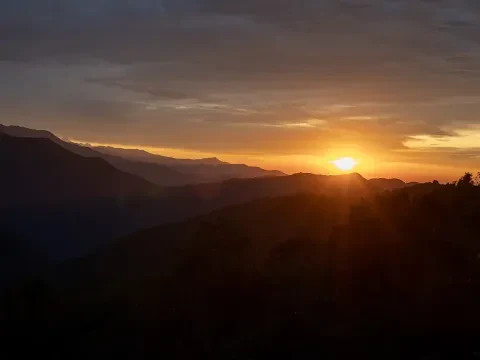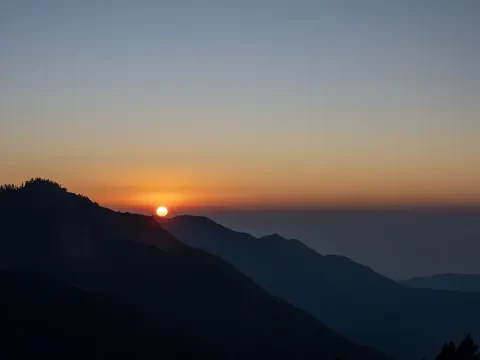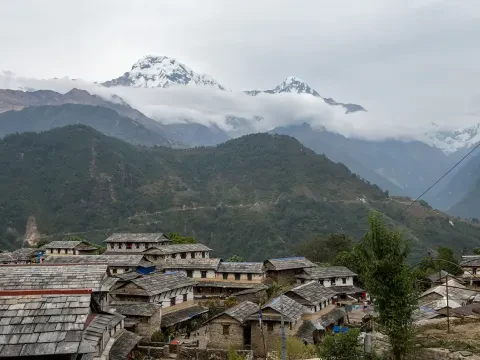
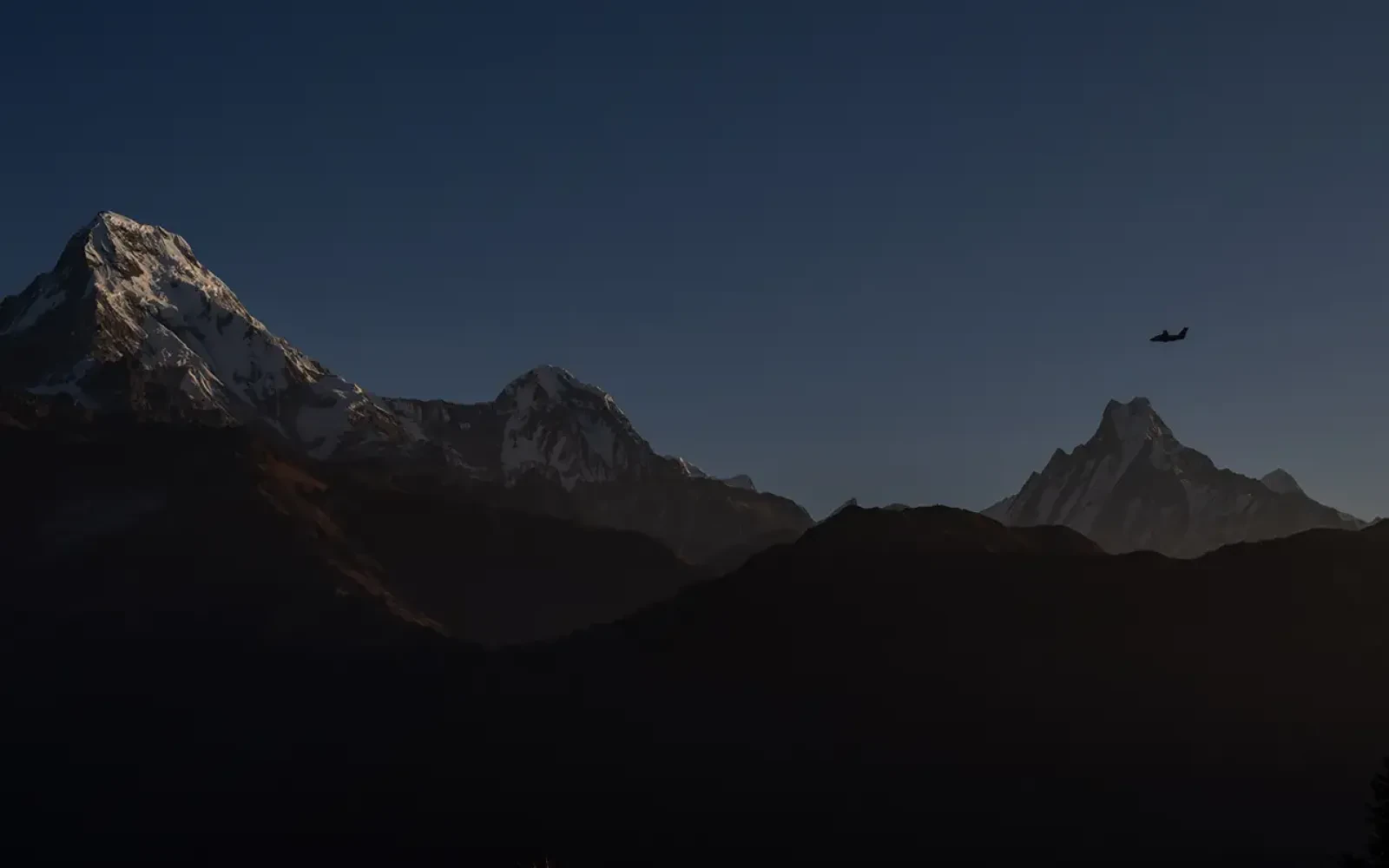
The 3 day Poon Hill trek itinerary from Pokhara offers epic Himalayan views in a short window, in just 3 days. Imagine seeing the sunrise over Dhaulagiri, Annapurna South, Machhapuchhre, and Nilgiri from Poon Hill at 3,210 m.
Meanwhile, this Ghorepani Poon Hill trek makes good use of road transport to shorten the journey, while letting you appreciate the lower trails and villages, forests, mountain vistas, and the famed-like Poon Hill sunrise.
| Detail | Information |
|---|---|
| Start | Pokhara -822 m |
| Duration | 3 days |
| Highest Point | Poon Hill -3,210 m |
| Overnight | Ghorepani & Tadapani |
| Difficulty | Easy to Moderate |
| Highlights | Poon Hill sunrise |
| Transportation | Jeep and trekking |
| Starting/Ending City | Pokhara |
While this short Poon Hill trek itinerary is quick, it still has its fair share of steep sections, so a bit of fitness is necessary.
Now, here is the detailed Poon Hill 3 day trekking package that shows you everything that needs to be done on a daily basis.
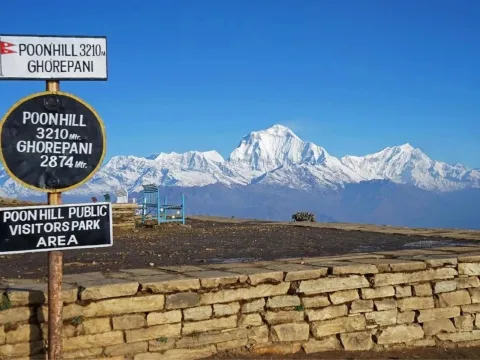
The short Poon Hill trek is a fantastic option for time-constrained trekkers. Not only do you get to experience one of the most famous Himalayan viewpoints, but you can also do it in just 3 days.
Compared to the more classical Ghorepani Poon Hill trek, it has more road sections to limit the amount of walking and help you get to the good stuff faster.
| Advantages | Why it's Great ? |
|---|---|
| Only 3 days | For time-constrained travelers |
| Jeeps on the route | Limit lower trail hiking |
| Poon Hill 3,210 m | For incredible Himalayan views |
| Short daily hikes | Good for families/first-time trekkers |
| Ghorepani village | Traditional mountain village |
| Tadapani village | Great views of Annapurna |
| Rhododendron forests | Lovely in springtime |
| Easy access from Pokhara | Perfect for short trips |
| Feature | 3-day short trek | Classic Poon Hill trek |
|---|---|---|
| Duration | 3-day vs 4-5 days | More days for slower hikers |
| Transportation | More jeeps used | More trail sections |
| Pacing | Fast and furious | More leisurely pace |
| Physical challenge | Moderate | Moderate |
| Cultural experiences | Good | More opportunities |
| Forests | Good | More opportunities |
| Highlights | Poon Hill sunrise | Poon Hill sunrise |
| Best for | Time-constrained | Not time-constrained |
While this short trek is a bit more challenging than the classic multi-day version, it is better suited for hikers with a limited time window in Nepal.
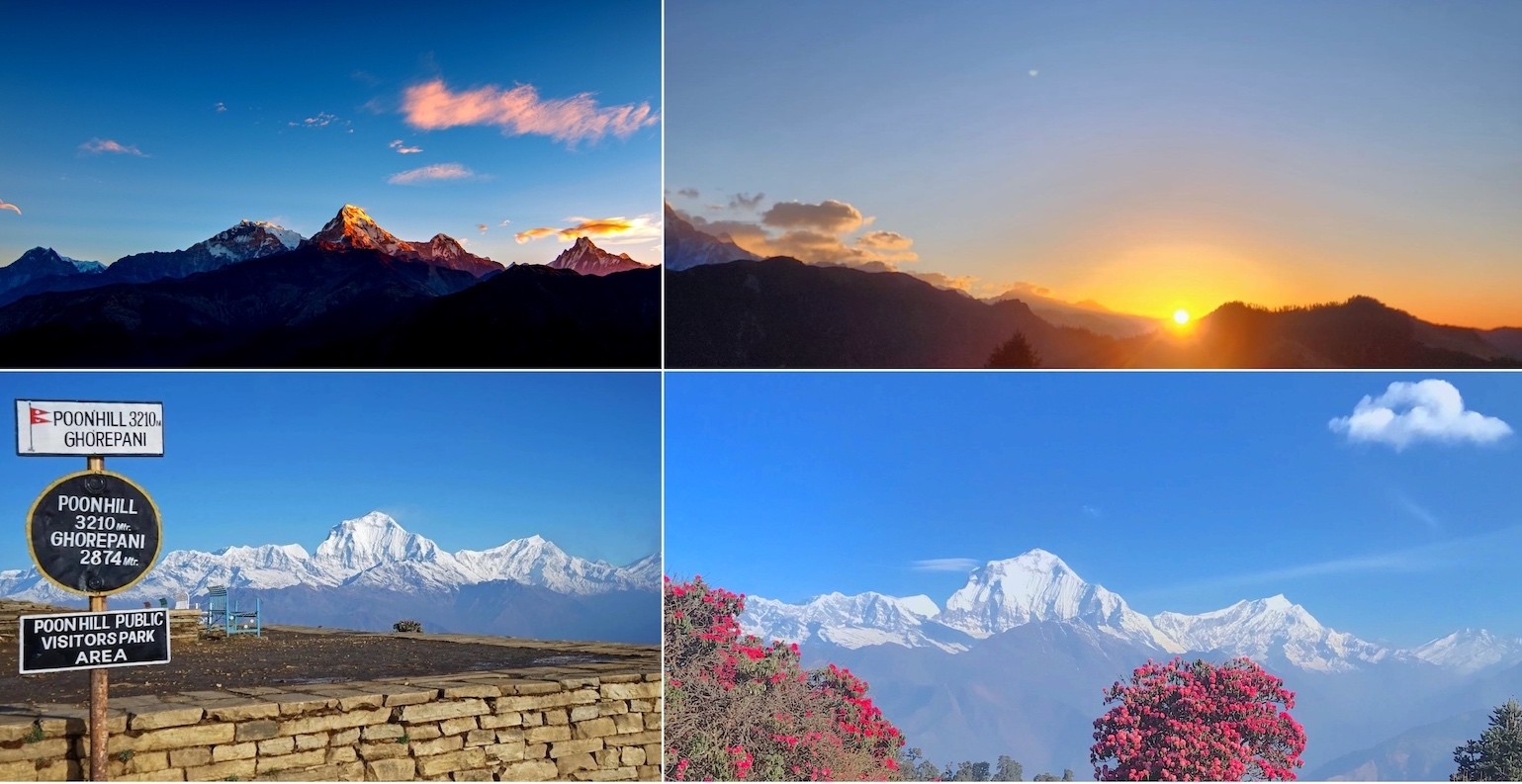
In fact, this short Poon Hill trek is a great option for various types of travelers. First-time hikers can get a taste of Himalayan trekking without spending too much time on the trails.
Likewise, those with a busy schedule can also do this shorter option if they want to see the Annapurna region.
Moreover, photographers will enjoy the spectacular sunrise views, while families with appropriate fitness levels can also consider this trek.
However, the family trekking option in Nepal should be considered for younger children, as this short Poon Hill trek involves some steep sections and can reach up to 3,210 m.
In 3 days, you can experience much more than one might expect. Listed below are some of the things you can see and do on this short Poon Hill trek :
See :
Here, the most popular viewpoint on this short Poon Hill trek is definitely the sunrise view from Poon Hill at 3,210 m.
While on the mountain summit, you might be able to see Dhaulagiri I at 8,167 m, Annapurna I at 8,091 m, Annapurna South at 7,219 m, and Machhapuchhre at 6,993 m, as well as Nilgiri peaks.
Similarly, one thing to keep in mind is that a 3-day trek leaves less room for flexibility, so a change in the itinerary due to weather conditions might be necessary.
More importantly, always keep your morning departures early, and be realistic about the time constraints of your short Poon Hill trekking adventure.
For the best Himalayan scenery with a minimum of effort, this short Poon Hill trek is the way to go.

The Poon Hill trek difficulty is generally easy/moderate with a faster pace on a three-day option, as it covers only major sights within a short time. Therefore, a reasonable level of fitness and preparation is enough for this Poon Hill trek difficulty.
Meanwhile, the highest altitude gained is Poon Hill at 3210 m, while other destinations include Ghorepani at around 2885 m, Tadapani at 2630 m, and Ghandruk at around 1940 m.
| Factor | Difficulty | Remarks |
|---|---|---|
| Overall | Easy-Moderate | Suitable for active travelers |
| Stone steps | Moderate | Some slippery parts from Ghorepani-Tadapani |
| Altitude | Moderate | Max 3210 m |
| Walking hours | Moderate | Around 4-7 h |
| Early start | Moderate | For sunrise |
| Descents | Moderate | Some slippery and big steps down |
| Fitness requirement | Good / Basic | Regular walking advised |
The Major Challenge: Stone Steps :
The Other Challenge: Early Start for Sunrise :
In fact, while at the 3210 m peak, you may see the sunrise over three to five main Himalayan ridges.
Specifically, you have a good chance to see the following mountain peaks :
In general, you do not need to be an experienced hiker to manage the Poon Hill trek difficulty. Still, it is a good idea to prepare beforehand.
At the same time, you should not overestimate this trail: as mentioned above, the Poon Hill trek difficulty is mostly easy/moderate, and even a novice-level traveler can manage it with minimal training.
As mentioned above, the Poon Hill trek difficulty is mostly easy/moderate. Having said that, some categories of travelers may find it slightly more challenging.

The most popular time for the 3-day Poon Hill trek is spring and autumn, as they offer the best combination of pleasant weather and stunning views of the Himalayas.
Especially, spring is great for seeing rhododendron blooms, while autumn is famed for clear mountain weather.
During the winter season, you may also enjoy great views, albeit fewer crowds. On the other hand, the monsoon season is generally cloudy and rainy, with unreliable sunrise conditions.
In terms of temperature, the coldest months are in winter, while summer months are generally warm but humid.
| Season | Months | Weather | Views | Advantages |
|---|---|---|
| Spring | Mar – May | Mild, comfortable | Excellent | Rhododendron blooms, greenery |
| Autumn | Sep – Nov | Warm, dry | Excellent | Clear mountain air |
| Winter | Dec – Feb | Cold | Occasionally cloudy | Fewer crowds |
| Monsoon | Jun – Aug | Wet and hot | Uncertain | Lush vegetation |
The most spectacular sight during spring is Rhododendron blooms. In particular, the lower forests host a variety of these perennial flowering plants from March to May. During these three months, the whole region becomes covered in beautiful pink and white flowers.
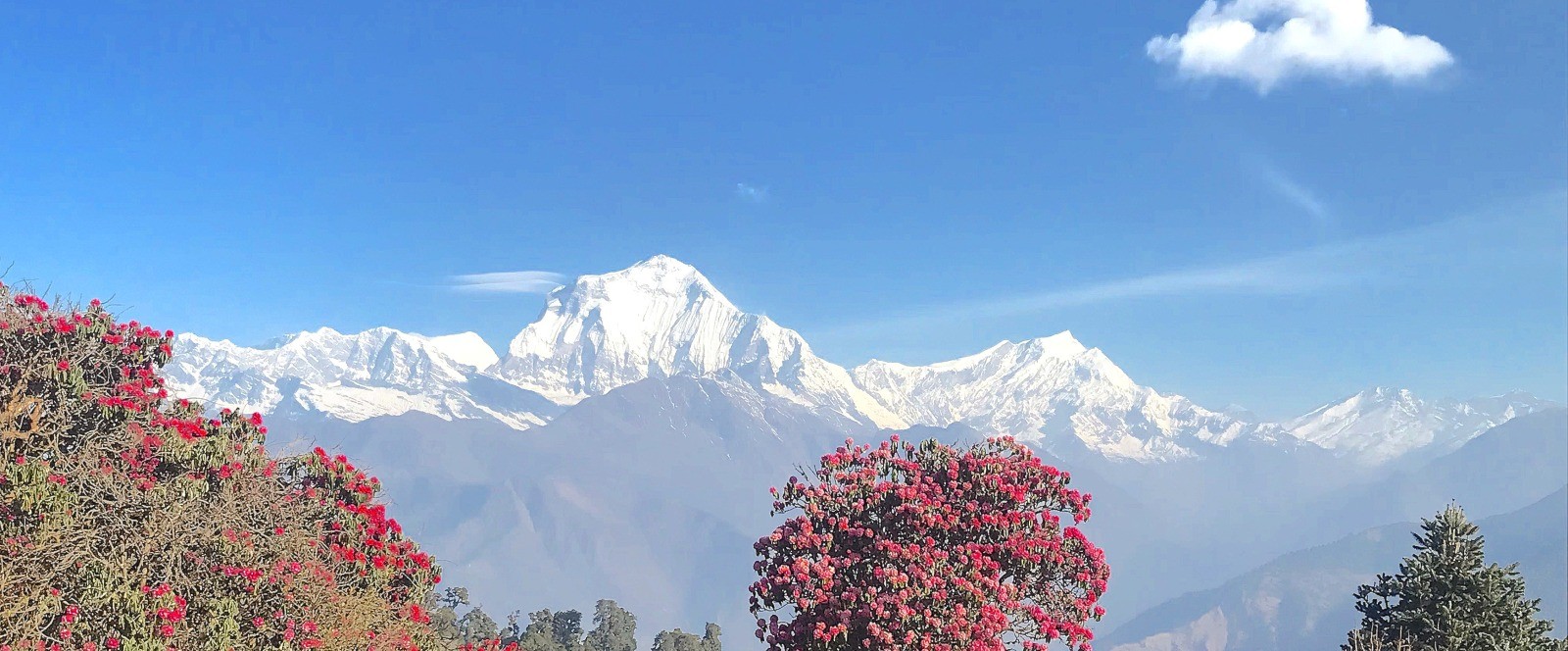
In terms of weather, daytime air is generally mild enough, while night still brings cold temperatures.
Therefore, it is a good idea to bring warm clothes to stay comfortable during your Poon Hill trek in spring. In terms of overall difficulty, it is nothing particularly challenging.
Still, remember that there is a risk of landslides after heavy rains.
The best season to witness spectacular mountain views on the Poon Hill trek is autumn. From September to November, the weather is generally clear, which allows great views of the Himalayas.
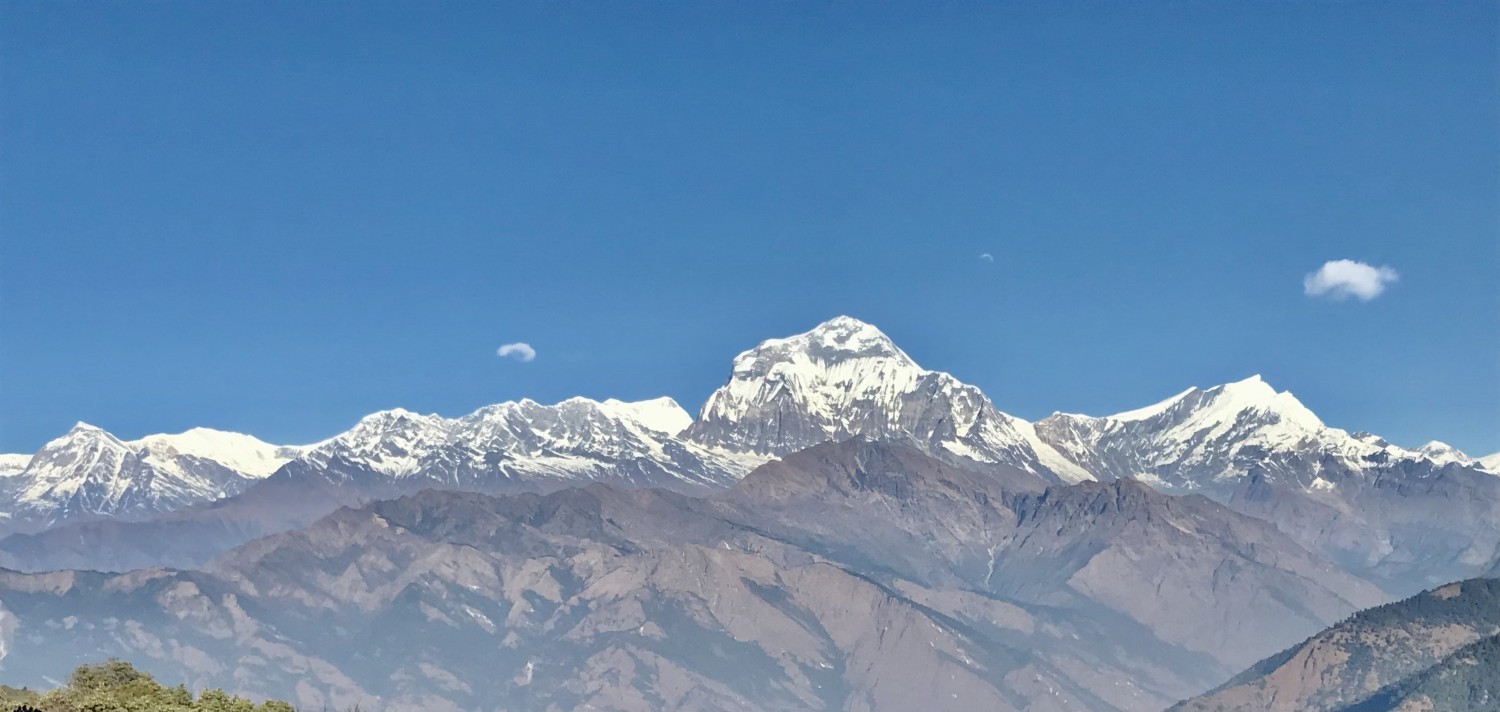
Major Benefits of Autumn:
The main advantage of the Poon Hill trek during winter is that it is the least crowded season. The skies are generally clear, allowing great mountain views. That said, temperatures are generally much colder at night, with the cold air persisting throughout the morning. Therefore, you will need to bring warm clothes in winter, as it gets freezing cold at Poon Hill (3210 m).
Moreover, there is also a chance for snow on some higher trails, so double-check the local weather before your trip. In general, the winter Poon Hill trek is suitable for more serious cold-weather enthusiasts.
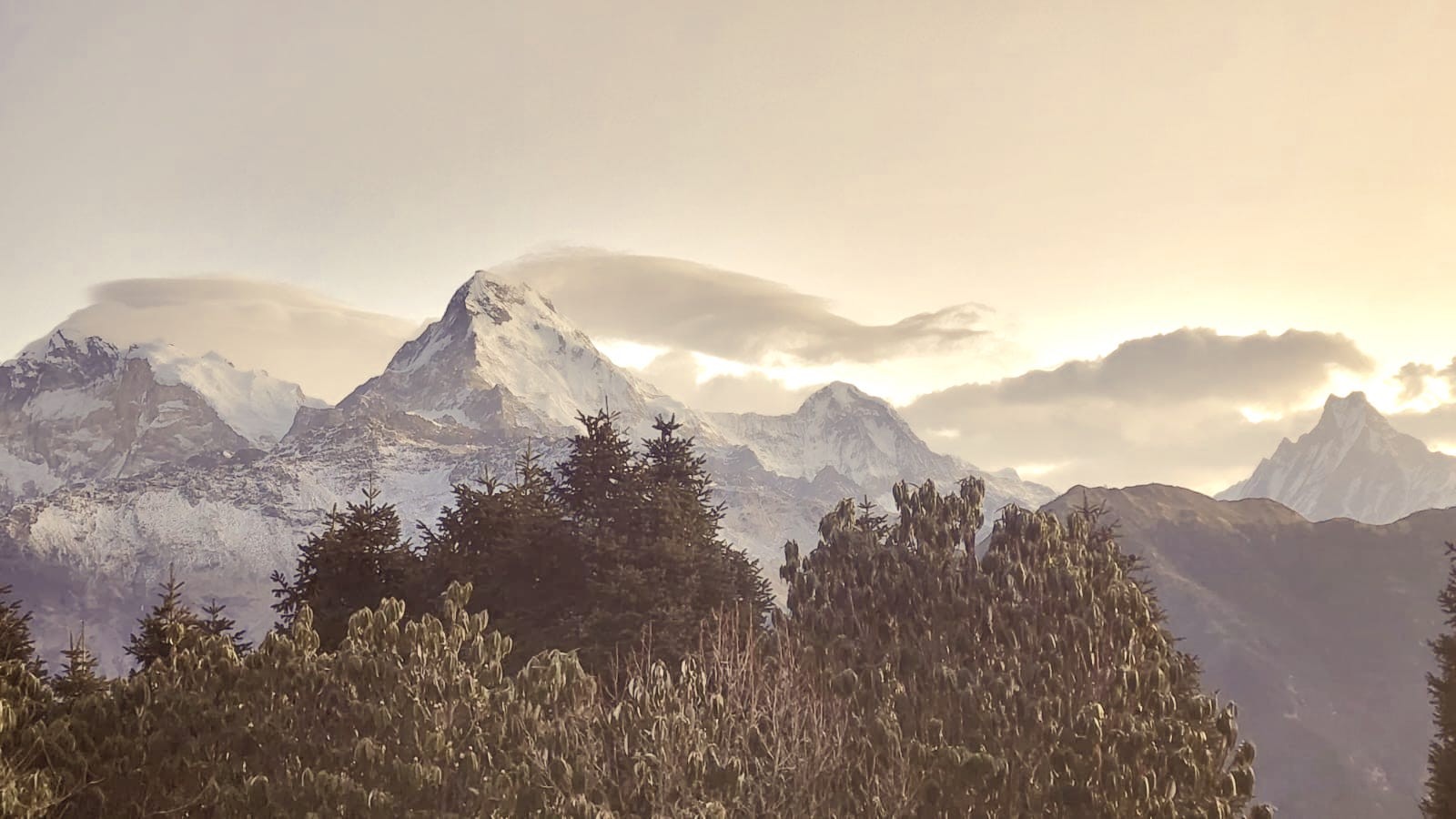
Monsoon: Plenty of Rain but Great Views
Major Characteristics of the Monsoon Season:
As mentioned above, the best seasons for the Poon Hill trek are generally spring and autumn. In particular, spring offers great rhododendron blooms, while autumn is the best time to see the Himalayas.
At the same time, the monsoon season is generally too rainy, while temperatures in winter can be too cold for some people.
| Season | Recommendation / Comments |
|---|---|
| Spring | A good choice for nature lovers and photograph artists. |
| Autumn | The best value for money as it offers great views and pleasant temperatures. |
| Winter | Consider only if you are a serious cold-weather enthusiast. Night temperatures can be extremely cold. |
| Monsoon | Not recommended due to cloudy and rainy weather. |
The 3 day Poon Hill trek cost involves considerations about transport, groups, guides, accommodation, meals and porter assistance, among other. The realistic range for most short-trek packages from Pokhara falls between US$200-350+ per person for many organized arrangements. Meanwhile, private tours would incur additional expenses.
Meanwhile, a jeep drive itinerary has an impact on the final figures. It is also crucial to understand what transport and permit options are included. Actually, there are sharing jeep transportation and private jeep from Pokhara to Ulleri.
| Expense | Budget Estimate | Description |
|---|---|---|
| Accommodation | US$8-20 / night | Simple room in a teahouse |
| Food | US$20-35 / day | Breakfast, lunch, and dinner |
| Jeep / transport | US$40-90+ | Shared or private |
| Guide | US$25-40 / day | Licensed guide |
| Porter | US$20-30 / day | Porter’s services, can be shared by two people |
| Permits | Variable (ACAP and TIMS) Rs.1000-3000 | Conservation area permit + TIMS |
| Drinks/snacks | US$5-15/day | Tea, coffee, and others |
| Miscellaneous | US$10-30 | Showers, tips, and extra |
| Typical package | US$200-350+ | Inclusive of the services above |
To sum up, these are tentative figures for planning purposes. Many operators have their own rates, which may differ from government guidelines.
Budget- Independent Trek
An independent Poon Hill trek has its advantages, including a lower 3-day Poon Hill trek cost. You will save on guides and certain transport costs since you drive yourself.
However, you will need to organize accommodation and meals on your own. In addition, you will bear expenses pertaining to permits directly. As a result, costs could fall towards the lower end of the spectrum.
Here, transport remains a significant expense, however, with private hires being much costlier than shared options. It is therefore wise to consider splitting transport costs with others if possible.
Guided 3-day Poon Hill Trek
Most guided arrangements come at a higher price range. They usually entail a comprehensive package, however, which could include the following:
Likewise, many trips include a porter while others charge extra for porter services. Always ensure that you receive a detailed breakdown of what is and is not included.
Several aspects can raise your 3-day trek cost. For instance, you will be charged more when hiring a private vehicle compared to shared jeeps. You will also spend more when opting for private room options in mountain lodges. Smaller groups usually mean higher costs per person.
Similarly, hiring a porter is another optional expense that adds to your overall spending. Higher demand during peak season also increases costs. Extra days incurred beyond the original schedule also add to the final amount. Always compare the full package when considering different tour options.
Recommended Budget
For more comfortable arrangements, it is recommended to budget between US$250-350+ for a 3-day Poon Hill trek. This gives you a bit of leeway in terms of extra meals and incidental expenses.
Likewise, it is also prudent to carry some local Nepalese Rupees alongside any digital payments. Some mountainous areas might have limited access to ATMs or other financial services.
Moreover, you may also need the cash to pay tips or satisfy any additional local requirements. A slightly higher budget range is always useful on a short trip, considering the possibility of incidental costs.
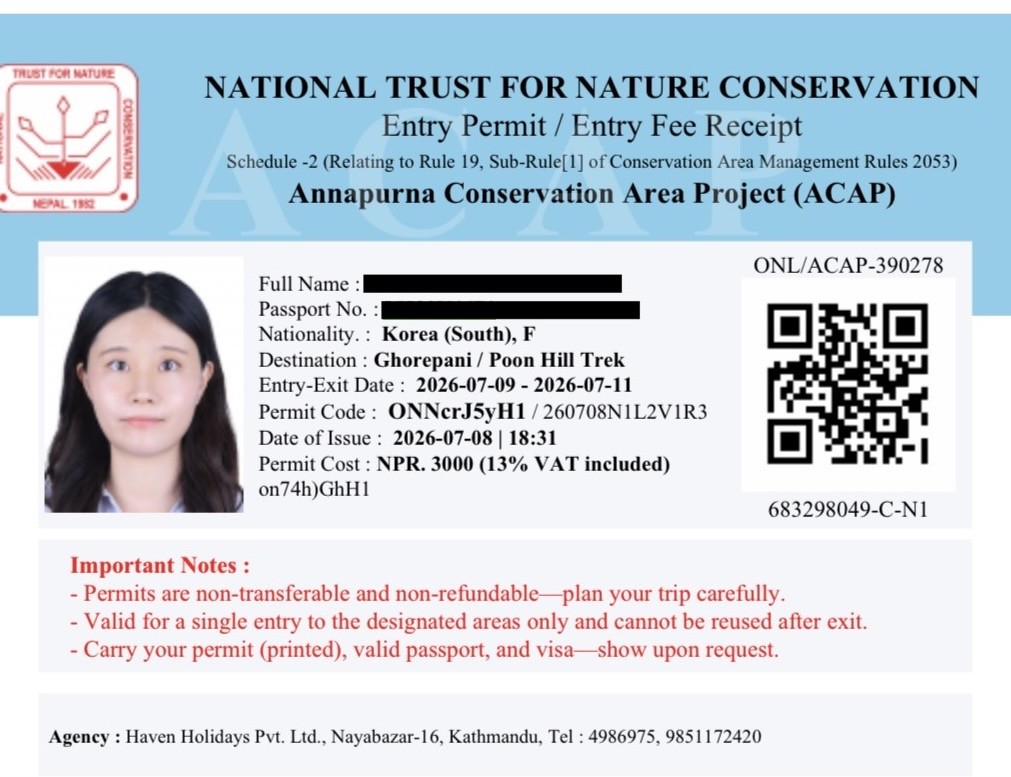
The permits needed for the Poon Hill trek mostly relate to the Annapurna Conservation Area and general trekking regulations. Always confirm the conditions and fees prior to departure since requirements and costs can fluctuate from time to time.
| Permit/requirement | Description | Where to get it |
|---|---|---|
| ACAP Permit | Permission to access the Annapurna Conservation Area | Pokhara/ authorized agencies |
| TIMS | Trekker information management system, for safety purposes | Authorized agencies |
| Poon Hill Sunrise entrance fee | Local charge, in some instances | Local checkpoint between Ghorepani-Poon Hill. |
| Passport | Identification, for obtaining permits | Government immigration office |
| Passport photos | As above, for filling documents | Agency |
1. Annapurna Conservation Area Permit (ACAP)
This permit is mandatory for trekking within the Annapurna Conservation Area. While hiking the Poon Hill trail, you are likely to cross through this region. The conservation fee helps to offset some of the costs associated with maintaining the area and supporting local conservation efforts.
In fact, the ACAP costs Rs. 3000 for foreigners and Rs. 1000 for SAARC Nationals.
Here, you should always carry your ACAP permit with you while in the region, as authorities may ask to see it. The fee varies depending on several factors, so it is best to always check the most recent costs before heading to Pokhara.
2. TIMS Card
TIMS (Trekkers’ Information Management System) is another critical requirement for hiking in Nepal. It aids in tracking hikers’ information while also ensuring their safety. You should always confirm the most recent regulation changes, considering whether you will be hiking independently or with a trekking agency.
The rule for TIMS keep changing. Thus, trekkers can check the new updates about TIMS card.
3. Where Can You Apply for the Permits?
You can apply for most trekking permits in Pokhara. Reputable trekking agencies can also assist with the application process. This can be more convenient, particularly for short treks like the 3-day Poon Hill one. Here, the agencies usually charge a processing fee for their services. You will be asked to fill out some forms and provide your passport details for permit processing. The information provided should always be accurate.
Information Needed,
Most of the time, you will be asked to present the following:
There is always a local entry or viewpoint fee at Poon Hill. These charges can also be subject to change by local authorities. This is collected by the check post located between Ghorepani-Poon Hill. It costs Rs. 150 per traveler who are visiting Poon Hill. Therefore, always carry some local currency with you in case of such fees or for any other expenses that may arise. This is always a good idea in general, as some remote mountainous areas might have limited access to electronic payment options.
Key Permit Insights,
Various permit requirements and fees can change, so it is advisable to conduct some research before embarking on your trek.
If you book 3 day Poon Hill Trek with Haven Holidays, the company can assist with confirming and securing the relevant documents before departure. Most importantly, do not make any assumptions about the validity of permit fees from previous years.
For a 3-day Poon Hil itinerary, you stand to benefit considerably from the convenience of a well-organized tour package. This way, you avoid the hassle of handling individual permit applications while still enjoying the comfort and security of a guided tour.
A good packing list for the 3-day Poon Hill trek would include light, functional clothes and gear.
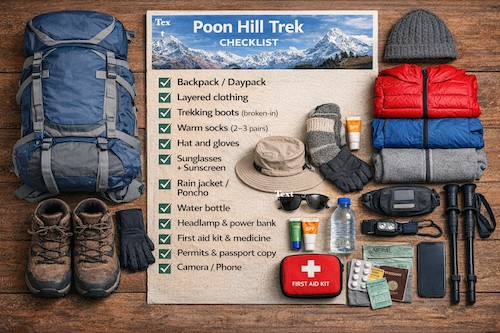
Despite the short duration, the hike can be challenging – some trails require walking up and down stone steps, and you might have to spend a night at a chilly 3,210 meters
Here’s a summary of the most useful items you could bring for the Poon Hill trek
| Item | Why do I need it? | Priority |
|---|---|---|
| Trekking shoes | Better grip on the steps | Essential |
| Warm fleece | Cold mornings and evenings | Essential |
| Insulated/down jacket | On Poon Hill before sunrise | Essential |
| Waterproof jacket | Protection from the rain and wind | Essential |
| Trekking trousers | Comfortable | Essential |
| Thermal wear | Extra warmth | Recommended |
| Warm hat | To keep ears and head warm | Essential |
| Gloves | Warmth and cold protection | Essential |
| Warm socks | Cold mountain mornings | Essential |
| Headlamp | Hiking to Poon Hill before dawn | Essential |
| Trekking poles | Assist while walking on the steps | Recommended |
| Daypack | To carry daily gear | Essential |
| Water bottles | Hydration | Essential |
| Sunglasses | Sun protection | Essential |
| Sunscreen | Protection from the UV radiation | Essential |
| Personal medications | As needed | Essential |
| First-aid | For minor incidents | Recommended |
| Power bank | To keep phones and cameras charged | Recommended |
| Rain cover | For the daypack | Recommended |
| Small towel | For personal hygiene | Optional |
Layering :
Prepare for the Poon Hill Sunrise :
Footwear :
Light Pack :
[trip:https://www.havenholidaysnepal.com/trips/annapurna-base-camp-trek-with-helicopter-return]
The first day of the Poon Hill trek involves a road trip to Ulleri and hiking to Ghorepani. Here, the drive from Pokhara to Ulleri takes you through mountainous landscapes. Your trek on day 1 is relatively short, giving you an opportunity to see rhododendron forests and get used to the local terrain.
Likewise, your day starts in the city of Pokhara, located at 822 meters above sea level. After a few hours-long drive, you will arrive at Ulleri, a village located at 2,050 meters. The trail from Ulleri to Ghorepani spans around 2,885 meters.
| Detail | Information |
|---|---|
| Start | Pokhara – 822 m |
| Drive | To Ulleri – about 2,050 m |
| Overnight | Ghorepani – about 2,885 m |
| Hike | To Ghorepani (from Ulleri) |
| Walking time | About 4-5 hours |
| Transportation | Jeep |
| Difficulty | Moderate |
| Terrain | Stone steps and forested trails |
| Highlights | Rhododendron forests and mountain views |
The road trip from Pokhara to Ulleri typically takes several hours. The more precise duration depends on the traffic and road conditions. Mountain roads can sometimes be slippery and uneven.

Caption: eplaced by forests, and the trail becomes steeper.
Now, let’s discuss the hiking part of day 1.
The trail from Ulleri to Ghorepani is a moderate climb. It spans a considerable distance and includes many stairs made of stone.
Therefore, it’s a good idea to take regular breaks on the first day of your trek. The path from Ulleri winds through the forest, crossing rhododendron and oak woodlands. These forests are especially beautiful during spring when the rhododendrons flower.
During autumn, the trail is mostly dry, which makes it relatively comfortable to walk. As you approach Ghorepani, the forest opens up, revealing distant mountains.
First View of Mountains,
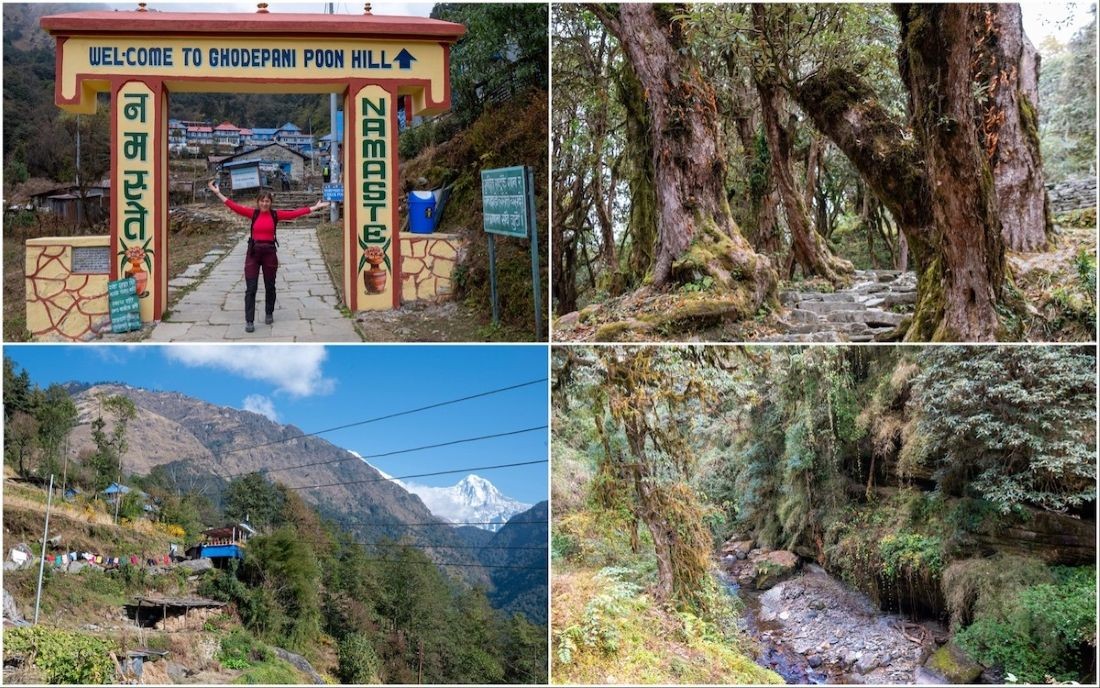
Although the trail from Ulleri to Ghorepani is not steep, it provides its share of rewarding views.
As you climb higher, you get an opportunity to see iconic peaks such as Annapurna South (7,219 m), Hiunchuli (6,441 m), and Machhapuchhre (6,993 m). These are spectacular sights, but the true highlight of the Poon Hill trek awaits in the morning.
You will eventually arrive at a village of Ghorepani, located at 2,885 meters.
Here, you will spend your first night. Ghorepani is famous for its numerous teahouses. They can be especially busy during the high season. You can relax at the teahouse, massaging your tired legs, and get ready for the next day.
Here, make sure that you bring a warm fleece or a jacket – it can be quite chilly at night. The teahouse provides food, so you can have a good dinner before going to bed. However, make sure to stay hydrated throughout the day.
The next morning, you will have to wake up early to see the sunrise from Poon Hill. Therefore, you might want to bring your headlamp with you to Ghorepani. On the upside, day 1 is a relatively short hike that only spans a few hours. Importantly, you got a chance to enjoy the mountain scenery, and the real adventure awaits in the morning.
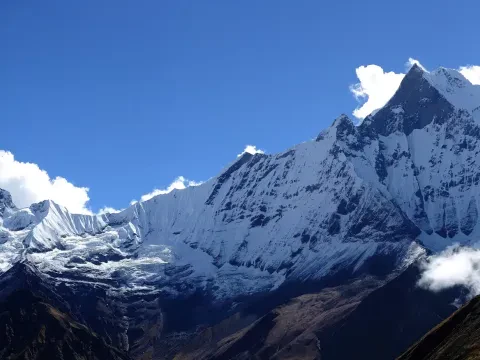
Day 2 is the most rewarding of a 3-day Poon Hill trekking itinerary. You wake up before sunrise and ascent Ghorepani (2,885 m) to Poon Hill (3,210 m).
Although the early morning hike can be chilly, it rewards you with one of the most memorable Himalayan sunrises in Nepal.
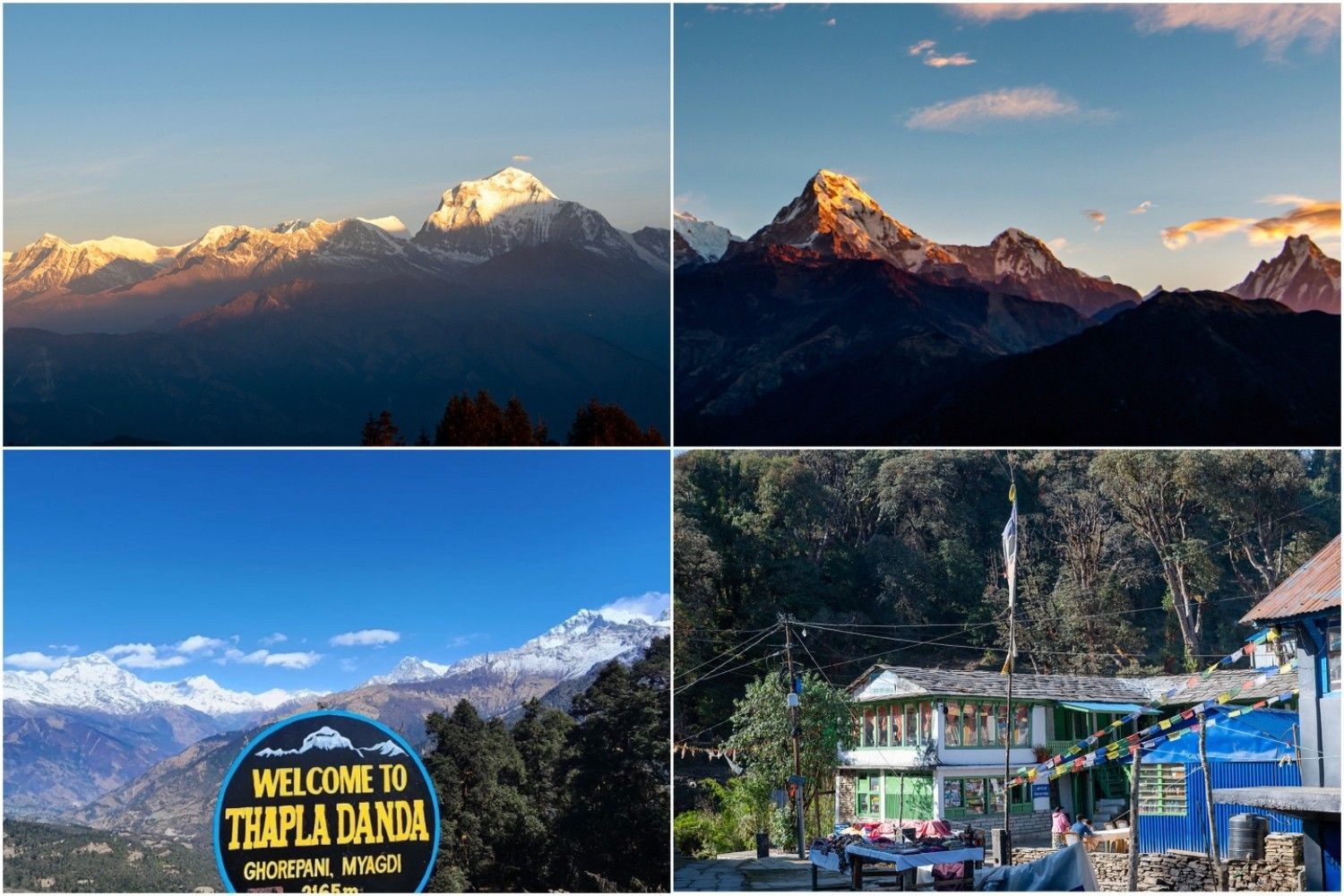
| Detail | Information |
|---|---|
| Starting point | Ghorepani – 2,885 m |
| Sunrise viewpoint | Poon Hill – 3,210 m |
| Overnight | Tadapani – around 2,630 m |
| Walking time | Approximately 6-7 hours |
| Best experience | Poon Hill sunrise |
| Difficulty | Moderate |
| Terrain for walking | Traversing through stone steps and forest trails |
| Recommended season | Spring and autumn |
| Pre-dawn | Hike to Poon Hill |
Most trekkers start their journey at around 4:30-5:00 am from Ghorepani. The time is calculated according to the sunrise. You will need a headlamp as the trail is dark during the early hours of the day.
Moreover, you should dress warmly as the temperature is relatively lower at higher altitudes. As you walk, the path inclines and your breath becomes heavier.
However, soon the sky will start to change color from blue-black to pale orange. Then the first rays of the sun will penetrate the horizon, illuminating the highest peaks. Suddenly the view opens up to reveal the Himalayas!
360 Panoramic View from Poon Hill :
Here are some sunrise photography tips :
When the sun rises above the horizon, you have an option to take a picture of yourself or your travel companions, if you are solo-trekking. Then descend from Poon Hill back to Ghorepani for breakfast.
Ghorepani to Tadapani Trail,
The trail continues through lovely forests. Rhododendron trees dot the side of the path. In addition, you will see oak and other forest vegetation. It is a mixture of uphill and downhill tracks but nothing very serious.
Nevertheless, since you are already tired from the previous day, make sure to pace yourself. Tadapani lies at around 2,630 m. This place is equally charming as it offers great mountain vistas.
In fact, you will see the Annapurna South at 7,219 m and Machhapuchhre at 6,993 m. After arriving there, you should check into your accommodation.
Moreover, it is a good time to eat your evening meal and prepare for the last day of the trek.
The next day, you will go sightseeing on the outskirts of Ghandruk before taking a vehicle back to Pokhara.
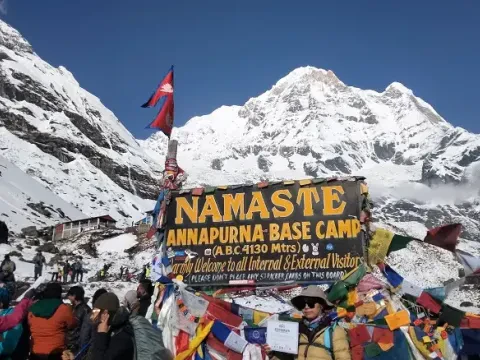
Unlike the first two days, today you will experience both the natural splendor as well as cultural heritage of the region.
Again, you will witness the sunrise from a great viewpoint. In addition, you will visit one of the local Gurung villages before taking a vehicle to Pokhara.
In fact, Tadapani (2,630 m) is the highest village in Pokhara region.
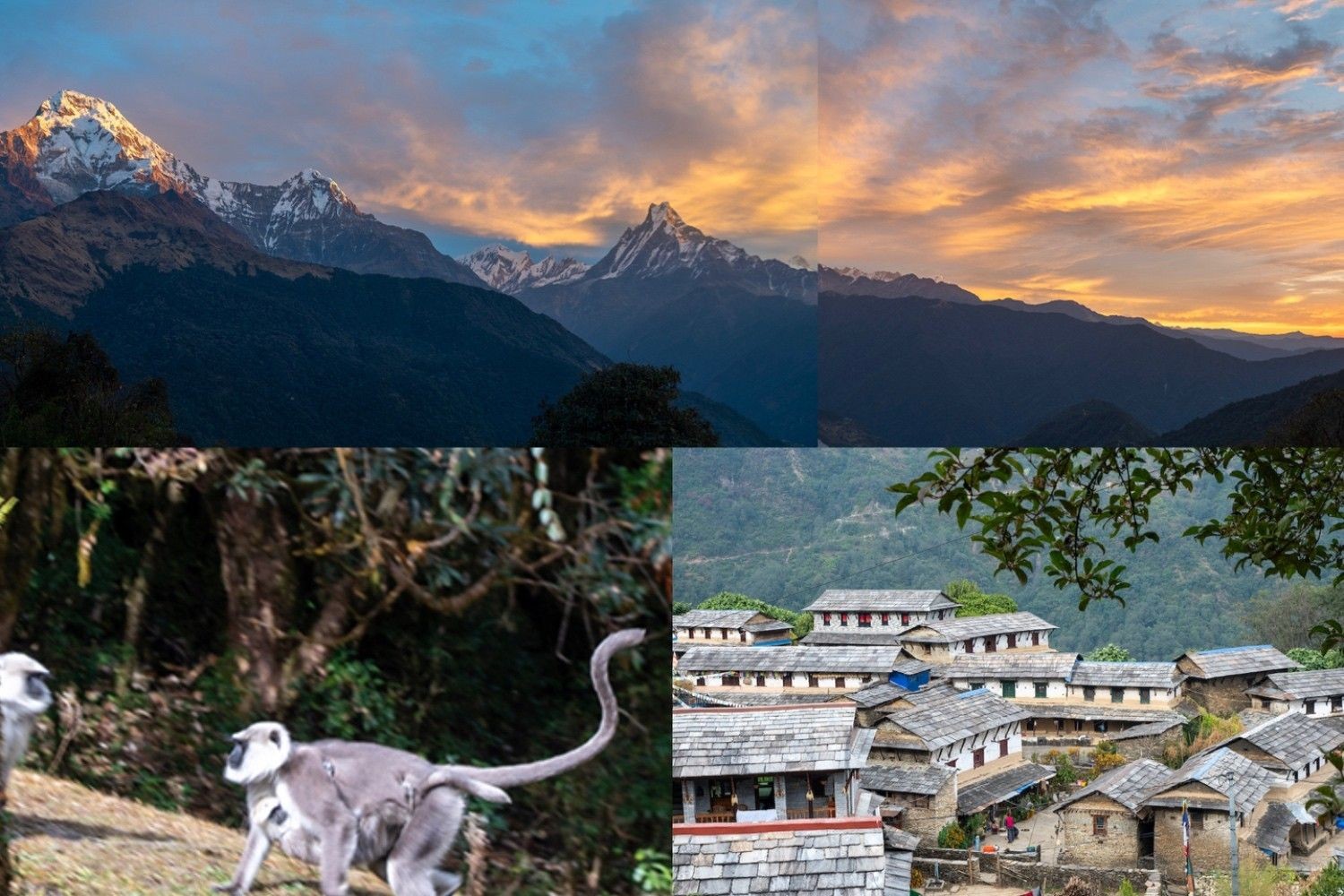
In addition to the spectacular sunrise, it offers great views of the Annapurna mountain range. So, here is what you expect on the third day:
Detail Information :
Sunrise from Tadapani
Here, tadapani provides an unparalleled sunrise experience. You do not have to make a strenuous trek to witness the sunrise as it is just outside your door, so to speak.
Trekking from Tadapani to Ghandruk :
Exploring Traditional Ghandruk Village,
Ghandruk village is one of the most popular destinations in the Annapurna region. The village comprises of traditional Gurung houses and narrow alleys. Roofs are sloped to match the local topography.
As such, it is a good idea to explore this place on foot. In addition, there are teahouses in Ghandruk which serve local dishes and beverages.
Here are some of the main highlights in Ghandruk:
Now enjoy your time in Ghandruk before heading to the final stretch of the trek.
Drive from Ghandruk to Pokhara,
Your return trip to Pokhara starts after exploring Ghandruk. This drive takes around a few hours as it winds its way through the mountains back to Pokhara. You will drive to Birethanti and then to Nayapool and pass through Lumle. Again, the road narrows as you descend down the mountainous terrain.
In addition, the vegetation becomes more abundant and diverse. Finally, you reach at Pokhara which is at 822 m.
Your 3-Day Short Poon Hill Trek Ends
It has been a memorable 3-day short Poon Hill trek. It all started in the capital city of Pokhara from where you hiked up to Poon Hill (3,210 m). You witnessed the sunrise over the Himalayas. Then you stayed overnight in a lovely mountain village of Ghorepani (2,885 m).
After that, you trekked through forest vegetation to another mountain village of Tadapani (around 2,630 m). You experienced the sunrise again from this village on the second day.
Then you went sightseeing near Ghandruk (around 1,940 m) and finally took a road trip back to Pokhara.
Overall, it was a wonderful expedition in the mountainous region of Annapurna. Thus, with these short treks near Pokhara, you can have an incredible experience for a limited number of days.
The Poon Hill sunrise views are the crowning glory of this three-day trek. At 3,210 m, Poon Hill offers one of the most extensive views of the Himalayas. The sunrise trek from Ghorepani, which starts at 2,885 m, takes around 45 min to 1 h to reach the summit.
Hence, most trekkers start their climb at around 4:30–5:00 AM, depending on the season and weather conditions. Here is what to expect and how to capture the sunrise views of the Poon Hill summit.
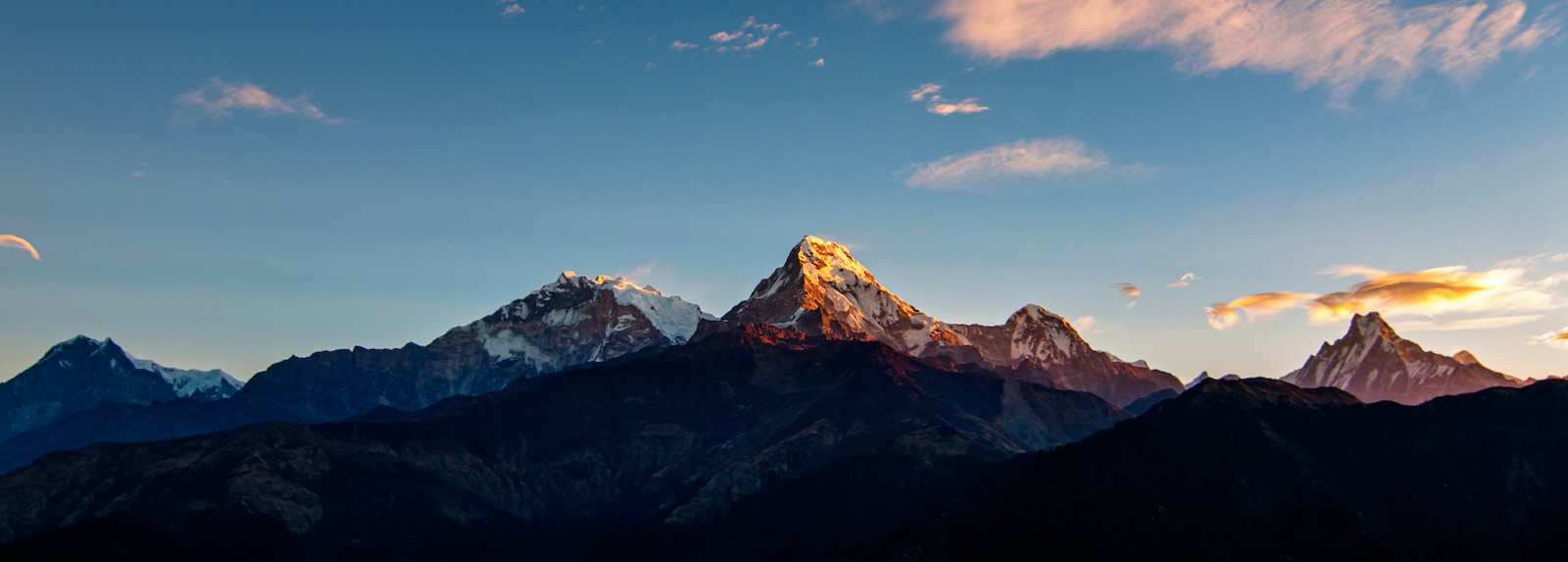
What the Sunrise Looks Like ?
More importantly, the entire panorama transforms before your eyes within minutes.
| Peak | Elevation (m) | Notes |
|---|---|
| Dhaulagiri I | 8,167 | Most distant mountain on the western horizon |
| Annapurna I | 8,091 | Highest point on the Poon Hill panorama |
| Annapurna South | 7,219 | Frequently seen on the skyline |
| Nilgiri | 7,061 | Prominent mountain on the northern horizon |
| Machhapuchhre | 6,993 | Famous for its fishtail shape |
| Hiunchuli | 6,441 | Notable peak close to Poon Hill village |
Meanwhile, the mountains on the Poon Hill sunrise view may be impressive, but they are never guaranteed. That is why the Poon Hill trek weather is essential to consider before heading to the summit.
Furthermore, if you are not an avid hiker or mountain climber, Poon Hill may be challenging but achievable on a three-day trek. Here are some essential Poon Hill sunrise photography tips.
If you plan to visit Poon Hill during the peak season (October or April), keep in mind that Poon Hill is quite popular with trekkers and photographers.
Therefore, it is crucial to reach the summit early to enjoy a less crowded view. Besides, the best vantage points are often taken by sunrise photographers. That is why you should arrive early enough, before the sunrise trek starts, to secure the best foreground for your pictures.
Finally, while capturing the sunrise views, be mindful of others and do not obstruct their view.
| Need | Photography Tip |
|---|---|
| Camera | DSLR, mirrorless, or modern phones |
| Lens | Wide-angle |
| Stabilization | Tripod (before sunrise) |
| Exposure | Protection against dazzling whites |
| Focus | Farther peaks |
| ISO | Low ISO (as the skies get brighter) |
| White balance | Auto or daylight |
| Composition | Include people in the foreground |
| Phones | HDR function |
| Battery | Extra battery/power bank |
Capture the Changing Light,
Instead of capturing one Poon Hill sunrise photo, try taking several pictures in the changing light.
That way, you will also utilize the soft blue morning glow and contrasting golden-hour colors while having the chance to capture the mountains’ details in the later stages of sunrise. Then, you can also include some of the objects in the foreground to add scale and depth to your composition.
For example, a person, fencing, or a distant mountain ridge can be a fantastic subject to frame the sunrise views of Poon Hill.
Getting Ready for Sunrise Photography,
Since you will have to be still for some time while capturing the sunrise from Poon Hill, wearing warm clothes is advisable. You can also bring a pair of gloves to keep your hands warm during the long hours of mountain photography.
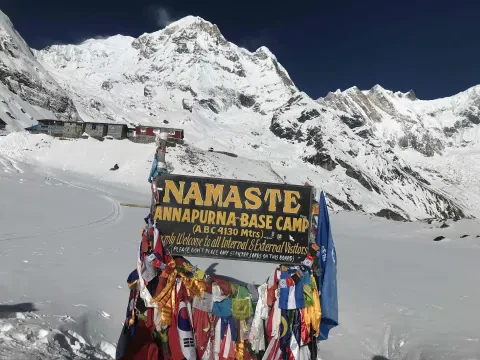
The Poon Hill trek features a wide variety of Himalayan views, forested landscapes, mountainous terrain, and local villages. The trek is short but powerful: a three-day itinerary covers an enormous territory and numerous cultural and natural attractions.
Here are the main highlights of this beautiful trek through the Annapurna region.
| Highlight | Elevation / Location Notes |
|---|---|
| Poon Hill | 3,210 m / Popular for sunrise views |
| Ghorepani | 2,885 m / Mountain village and overnight stop |
| Tadapani | 2,630 m / Great mountain views |
| Ghandruk | 1,940 m / Traditional Gurung village |
| Pokhara City | 822 m Starting and ending point of the trek |
| Rhododendron forests | Mid-elevation, Banthanti-Ghorepani-Tadapani | Beautiful views during the flowering season |
|---|---|---|
| Panoramic views | Various | Multiple vantage points across the trail- Tadapani, Duerali, Poon Hill, Ghandruk. |
The mountains are the main attraction of the Poon Hill trek. In particular, the sunrise views from the Poon Hill summit take hikers on a journey through the Himalayan range.
At 3,210 m, the Poon Hill summit is probably one of the most popular places to see the sunrise in Nepal. From the top of this rocky ridge, you may be able to see several 8,000-meter peaks in front of you!
As you make your way higher into the mountains, you will notice the change in vegetation. Lower parts are particularly beautiful during the spring season, when the rhododendron flowers bloom in white and pink colors. At higher elevations, the forest becomes sparser.
Similar to Ghorepani, Tadapani at 2,630 m is another lovely village with incredible views over the mountainous horizon. Nestled within a forest of pine trees, Tadapani is a great place to stop and relax.
Another major highlight of the Poon Hill trek is Ghandruk, a traditional Gurung village at 1,940 m. The local culture and hospitality will surely leave a deep impression on you.
As you walk through the stone-paved streets of Ghandruk, you will notice traditional houses and mountain views surrounding this charming village. This region is also popular for local handicrafts and souvenirs.
In particular, Ghandruk is famous for its unique musical instruments. Apart from exploring the village, make sure to try the local cuisine and tea! Furthermore, remember to be respectful when interacting with the locals.
During the Poon Hill trek, you will pass by several Magar and Gurung villages. In particular, local teahouses are welcoming places to spend time and learn about the mountain hospitality. The local cultural heritage is also worth noting.
For example, you may come across fascinating shrines and monasteries in the mountainous landscape. However, make sure to follow the local customs and rules.
In particular, you should ask for permission before taking photos of people. Besides, avoid visiting private property without being welcomed in. A simple greeting will always be well received in any of these villages.
Teahouse restaurants are an essential part of the Poon Hill trek. These warm and friendly places welcome hikers with good food and mountain views. After a long day of trekking, there is nothing better than sit down in a dining hall and enjoy a meal with other travelers.
Why It Is Worth Visiting Poon Hill ?
The altitude on the Poon Hill trek is nothing to worry about for a healthy traveler. The highest point is Poon Hill at 3,210 m, but the three-day Poon Hill trek covers a rapid ascent from Pokhara at 822 m, so it is important to pace yourself. Here is the altitude profile of Poon Hill trekking route:
| Place | Approx. Elevation | Safety consideration |
|---|---|---|
| Pokhara | 822 m | |
| Ulleri | 2050 m | Rapid ascent begins |
| Ghorepani | 2885 m | First high altitude overnight |
| Poon Hill | 3210 m | Highest point |
| Tadapani | 2630 m | Downward direction |
| Ghandruk | 1940 m | Lower, warmer elevation |
While altitude sickness is rare on the Poon Hill trek, since it is one of the low-altitude treks in Nepal, the AMS (Acute Mountain Sickness) risk increases for everyone who climbs beyond 3,000 m.
Hence, it is crucial not to dismiss the symptoms. You can read the section below to learn about the AMS symptoms.
Here are a few common altitude sickness symptoms that you may experience:
If you feel that your symptoms are getting severe, descend immediately and do not hesitate to seek medical help.
1. Set a comfortable pace
Do not rush on the trek from Ulleri to Ghorepani. Take short breaks whenever you feel tired. In particular, the long and steep steps on the trail can be quite exhausting for your legs. Try to keep a steady pace without overexerting yourself.
2. Hydration is key
It is important that you drink plenty of water throughout the day, and not wait until you feel thirsty. Make sure to carry at least one reusable water bottle with you.
Moreover, you should limit your alcohol consumption during the trek. In addition to water, you can also drink tea, soups, and other fluids. However, water must be your primary source of hydration.
3. Dress warm for an early morning
The early mornings at Poon Hill are freezing cold, so dress warmly to avoid severe exposure and hypothermia. In addition to that, bring a headlamp, as you will not be able to see anything before sunrise. Make sure to keep your phone and camera charged, as you would not be able to see the sunrise at Poon Hill without them.
Moreover, walk carefully since the path can be slippery in the morning.
4. Take care of your knees
It is important to take special care of your knees, as the Poon Hill trek involves numerous stairs and a steep descent to Ghandruk.
If you can afford them, it is advisable to use trekking poles for balance and reduce knee strain. It is best to take slow and steady steps while going downstairs, as fast steps can cause knee injuries and uncontrollable slips.
Moreover, it is crucial to invest in a good pair of trekking shoes to reduce knee pain.
5. Nourish your body
It is essential to eat well on the Poon Hill trek, so make sure to have breakfast on days that you are hiking. Remember that your body needs more carbohydrates and protein than usual when trekking.
Likewise, light snacks can be a great source of nutrition on the Poon Hill trek. Trail mix, energy bars, nuts, chocolate, and dried fruits are some of the foods that you can bring along.
6. Be mindful of the weather
The mountain weather can be unpredictable, so it is vital to keep an eye on the forecast. If it rains, the stone steps can be slippery, and the trail can be hazardous.
In addition to that, fog can occur on the trail and impair your vision, and cold weather can keep you from seeing the magnificent sunrise at Poon Hill.
7. Purchase travel insurance
It is always a good idea to buy travel insurance, especially for mountain adventures. Make sure the travel insurance covers you for trekking activities and any emergency evacuation that may be required.
Importantly, always double-check the insurance policies relating to altitude sickness. It is advisable to keep the travel insurance information on you at all times, so that you do not have to look for it when you need it the most.
8. Respect the trail and the locals
Always follow the local rules and regulations when on the trail. It is best to avoid using single-use plastic bottles, as some local areas are now completely plastic-free. Whenever possible, carry reusable water bottles instead. Moreover, it is important to be polite to the locals. You may ask for permission to your photographs of local people and avoid littering.
Deciding between a guided 3 day Poon Hill trek and an independent trip is not easy. Poon Hill trek is short but has transportation, permit, accommodation, and guide-related intricacies that should be taken care of before departure.
| Feature | Guided Trek | Independent Trek |
|---|---|---|
| Planning | Done by Agency | Done by You |
| Guide | Included | Self-managed or hired separately |
| Permits | Organized | Self-organized |
| Transportation | Organized | Self-organized |
| Accommodation | Organized | Self-organized |
| Route navigation | Easy | Self-guided |
| Emergency support | Easy | More responsibility |
| Flexibility | Moderate | High |
| Convenience | High | Moderate |
| Cost | Usually higher | Potentially lower |
Guide Required for Poon Hill Trek in 2023?
Guide regulations in Nepal are ever-changing; hence it is essential to double-check if guides are mandatory for the Poon Hill trek in 2023 but people are still ignoring it. The Annapurna Conservation Area has new regulations regarding trekking guides. In particular, the government has imposed stricter rules on independent trekkers.
Therefore, it is advisable to get in touch with an established trekking agency that can provide you with the latest information on guides and other related matters.
In particular, a professional agency can help you prepare for the Poon Hill trek independently, which is significantly easier for a short 3-day trip.
A professional trekking agency takes away all the responsibilities of route planning, organizing transportation, and securing necessary permits, among other things.
Moreover, having a reliable tour/trekking guide can help you navigate the trail and deal with teahouse arrangements, which is particularly helpful during the busy season. A trekking guide can also help you detect altitude sickness and other potential risks on the trail.
Thus, for first-time Himalayan trekkers, a guided Poon Hill trek can be an excellent opportunity to learn about the mountains with minimum stress.
On the other hand, an independent trek is a great option for those who prefer to trek at their own pace and have some extra budget.
Here, independent trekkers can enjoy greater flexibility in choosing the itinerary and can decide how many hours they want to spend walking per day. In addition, independent trekkers usually do not require a guide, which can save some money.
However, independent trekkers bear more responsibilities, as they have to manage everything on their own. In addition, independent trekkers must stay updated on the permit requirements for Poon Hill trekking.
Before booking a 3-day Poon Hill trek package, make sure to check what inclusions come with the chosen plan.
Meanwhile, a good 3-day trekking package to Poon Hill should include the following:
Likewise, some trekking agencies offer porter services, whereas others charge extra for them. Similarly, it is important to understand what other additional expenses, if any, apply to the selected package.
Before booking your Poon Hill trip, ask these questions to the trekking agency:
A reliable trekking company will answer all of the questions mentioned above. In particular, asking them can be helpful to all travelers who wish to book a 3-day Poon Hill trek with Haven Holidays.
Here are the must-follow recommendations for a short Poon Hill trek:
1. Start Early Every Morning
2. Prepare for the Steps in Ulleri
3. Dress in Layers
4. Wear Comfortable Trekking Shoes
5. Stay Hydrated
6. Bring a Headlamp
7. Book Your Accommodation in Advance
8. Light Pack Is Your Friend
9. Keep Your Electronics Safe and Charged
10. Be Respectful to Locals
Final Checklist Before Departure,
Before heading to Pokhara, make sure to double-check the following:
As you can see, the short Poon Hill trek from Pokhara is an excellent choice for many reasons. You will have breathtaking views and spend three incredible days exploring the Himalayas, all without committing to a long and strenuous trek.
Have you done a 3-day Poon Hill trek already? What was your favorite viewpoint ? Let’s hear from you in the comments below !
1. Poon Hill Short Trek 3 Day Itinerary
The Poon Hill short trek 3-day itinerary is an excellent local short trek near Pokhara. The short trek combines mountain vistas, Gurung villages, rhododendron forests, and sunrise views. A popular trekking route is Pokhara, Ulleri, Ghorepani, Poon Hill, Tadapani, Ghandruk, and Pokhara. Poon Hill reaches an elevation of 3,210 meters above sea level.
2. How much does a 3-day trek cost?
The 3-day trek price depends on transport, accommodation, meals, permits, and guide. The short trek package is usually costlier than the independent one. The current published price for Poon Hill varies between approximately US$165 to US$450.
3. What is the Best 3-day Poon Hill trek from Pokhara?
A popular 3-day Poon Hill trek from Pokhara starts with a drive towards Ulleri. The next day, you will trek towards Ghorepani. Furthermore, you will witness the Poon Hill sunrise on the second day on your way to Tadapani. The third day will involve Ghandruk and a drive back to Pokhara.
4. What is the Highest altitude on a 3-day trek to Poon Hill?
The maximum altitude reached on a 3-day trek to Poon Hill is 3,210 meters (10,531 ft). The Poon Hill viewpoint provides extensive views of the Annapurna range, Dhaulagiri, Machhapuchhre, and other surrounding peaks. Since the trek does not involve high altitude, it is appropriate for most novice trekkers.
5. What is the Difficulty of the 3-day Poon Hill Trek?
The 3-day Poon Hill Trek difficulty is easy to moderate. However, this short trek is not recommended for people with heart conditions. Although the trail is not very steep, the Poon Hill 3-day itinerary is shortened and, therefore, requires walking more in a day. Moreover, the Poon Hill steps at Ulleri can be very tiring.
6. Can a beginner do a Poon Hill 3-day trek?
A beginner can do the Poon Hill 3-day trek. However, it is not advisable to walk with a heavy backpack. Poon Hill trekking is not technically challenging, but the trail requires a good level of fitness. Since it is a short 3-day itinerary, you must walk moderately and keep enough energy for the trek ahead.
7. What is the Poon Hill 3-day trek route?
The Poon Hill 3-day trek route usually starts at Pokhara and ends at Pokhara, with an overnight halt at Ulleri, Ghorepani, Tadapani, and Ghandruk. On the first day, you will depart towards Ulleri. Furthermore, on the second morning, you will ascend Poon Hill to enjoy sunrise views. Moreover, you will head towards Ghandruk on the last day and return to Pokhara via a motorable road. The short trek routes can greatly differ due to road construction.
8.What Does the Poon Hill Trek price include?
The Poon Hill Trek price includes transport, permits, accommodation, meals, and a guide. Some agencies offer a porter and a government tax for the short trek. It is vital to highlight what a Poon Hill package deal covers. For instance, some teahouses charge extra for hot water, shower facilities, or electricity. Furthermore, you must also consider the tips for the guide and porter, insurance, extra meals, and personal needs.
9. Are permits needed for the 3-day Poon Hill Trek?
Yes, permits are required for the 3-day Poon Hill Trek. The trekking agencies will assist you in obtaining the Annapurna Conservation Area permit and TIMS card. At the same time, the Nepal Tourism Board lists Poon Hill-ABC as a route that requires a guide and a TIMS issued from an agency. The permit and other entry requirements might change, so it is essential to verify the details beforehand. .
10. Is a guide necessary for the Poon Hill 3-day trek?
The Poon Hill 3-day trek guide is mandatory. According to the Nepal Tourism Board, Poon Hill-ABC is one of the trails that require a licensed guide and a TIMS card from an agency. Thus, you should also check the latest guidelines for your travel season.
11. What is the he best time for the Poon Hill 3-day-short trek?
The best time for the Poon Hill 3-day-short trek is during the months of March to May and October to November. These are the two best trekking seasons in Nepal. While the rhododendron blooms last until mid-May, you will see the clearest mountain views in October and November. In addition, the weather during these periods is reasonably warm. During the winter season, temperatures become excessively cold, and the monsoon season involves intense rainfall, making the trail slippery. .
12. How many hours of walking does the 3-day Poon Hill Trek involve?
The 3-day Poon Hill Trek trail varies, depending on the road construction and your fitness level. However, you should generally walk five to eight hours on most days. Remember that one of the mornings will involve walking up the Poon Hill steps. As a result, the second day can be particularly challenging since you will combine Poon Hill with the following trail.
13. Where to stay in the 3-day trek to Poon Hill?
The 3-day trek to Poon Hill offers various accommodation options. You can usually stay at tea houses or local mountain lodges. In addition, most places provide meals, beds, and extra services such as hot water, wifi, shower, and charging. However, you will find that services and prices differ across places and seasons.
14. What to eat on the Poon Hill Short Trek?
The Poon Hill Short Trek offers a variety of foods. For instance, you can choose from local dishes like dal bhat, noodles, rice, pasta, soup, momo, eggs, bread, vegetables, fruits, and drinks. On higher altitudes, the options become limited, so it is vital to bring some snacks for your journey. Moreover, you should also carry your favorite dessert to beat the cold mountain nights.
15. Does the Poon Hill 3-day itinerary include the sunrise view?
Yes, the Poon Hill 3-day itinerary offers sunrise views, which are an excellent reason to start early. You will hike from Ghorepani to the 3,210-meter-high viewpoint and enjoy spectacular sunrise views, including the Dhaulagiri, Annapurna, Machhapuchhre, and other Himalayan peaks.
16. How much does a guide cost for the Poon Hill 3-day trek?
The Poon Hill 3-day trek guide cost varies depending on the individual’s experience, group size, and the services offered. For instance, a reliable estimate for 2026 costs around US$25-35 per person per day. On the other hand, agencies might quote differently, depending on the package deal selected. Thus, it is essential to clarify all guidelines before finalizing your booking.
17. Can I trek Poon Hill from Kathmandu in 3 days?
It would be impossible to trek Poon Hill from Kathmandu in 3 days. While a Kathmandu to Pokhara drive takes around eight hours, the Poon Hill trek itself requires three full trekking days. Hence, you will only have three days for the actual trekking, excluding extra travel or delays. However, a short 3-day Pokhara trek allows more time for the actual hiking, including extra exploration or delays. .
18. What to pack for the 3-day Poon Hill trek?
For a 3-day Poon Hill trek, you should carry a good pair of hiking shoes, layered clothing, rain gear, a backpack, a water bottle, sunscreen, sunglasses, a headlamp, a towel, and personal medications. In addition, you should also pack some snacks, energy bars, and water to stay energized. Remember that most accommodations and teahouses offer a range of goods at reasonable prices. Furthermore, you can also use trekking sticks to reduce the strain on your knees on the uneven trails.
19. Is the Poon Hill Short Trek appropriate for families?
The Poon Hill Short Trek can be appropriate for families. However, you should know that the trail has many rocky steps and long stretches. As a result, it is essential to choose a family-friendly itinerary and bring only the older kids who love hiking. In addition, you should also consider a moderate walking pace and carry an extra water supply.
20. Why book the 3-day Poon Hill Trek with Haven Holidays?
Haven Holidays can offer you a Poon Hill 3-day trek package, including transport, accommodation, meals, permits, and professional hiking support. Therefore, when you book the local trek with us, we will also ensure that the itinerary is appropriate for your fitness level and hiking experience. Furthermore, our local expert trekking team can also suggest modifications if needed while following all regulations. Consequently, an organized short trek will let you focus on enjoying the beautiful Himalayan vista without worrying about transport, permits, or other logistics.
Our travel experts are ready to assist you with any questions.
Send us a message.Have a question before you book? Send your enquiry below and our travel experts will get back with the required information.