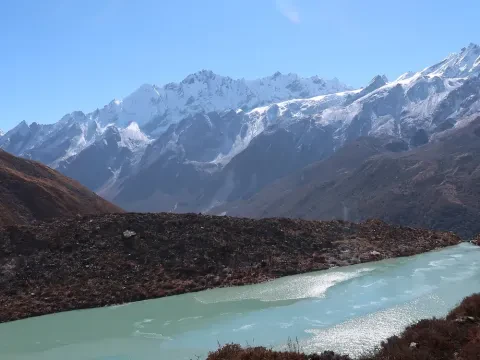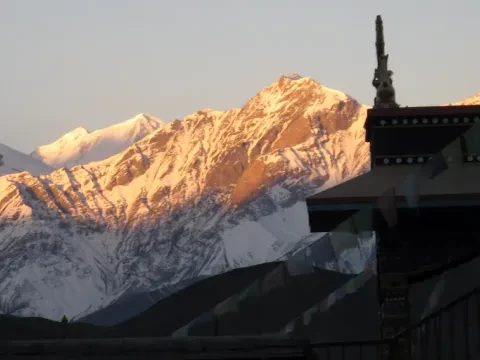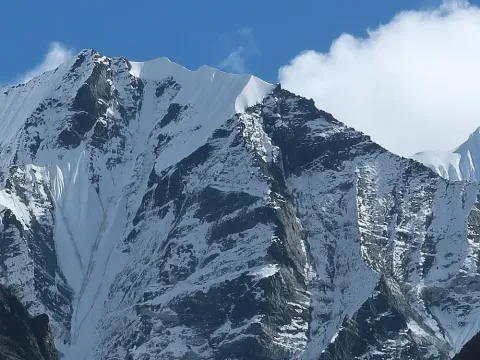
The Everest Base Camp Trek 2027 offers a remarkable combination of spectacular mountains, Sherpa culture, unique landscapes, Buddhist monasteries, adventure, nature and personal achievement.
From the starting point in Lukla (~2,860 m), the EBC trek goes through Phakding, Namche Bazaar (~3,440 m), Tengboche (~3,860 m), Dingboche (~4,410 m), Lobuche (~4,910 m), and Gorak Shep (~5,164 m) to the Everest Base Camp (~5,364 m).
However, one of the main highlights of the Everest Base Camp Trek is the Kala Patthar viewpoint (~5,545 m), offering breathtaking views of the Everest and surrounding peaks.
| Highlight | Elevation | Why It Matters ? |
|---|---|---|
| Lukla | 2,860 m | The starting point of the EBC Trek |
| Namche Bazaar | 3,440 m | The center of the Everest region and Sherpa community |
| Tengboche | 3,860 m | The famous Tengboche Monastery |
| Dingboche | 4,410 m | The acclimatization point |
| Lobuche | 4,910 m | The village near the Everest Base Camp |
| Gorak Shep | 5,164 m | The last village before the Everest Base Camp |
| Everest Base Camp | 5,364 m | The ultimate goal of the EBC Trek |
| Kala Patthar | 5,545 m | The best viewpoint of the Everest |
| Everest | 8,848.86 m | The highest mountain peak in the world |
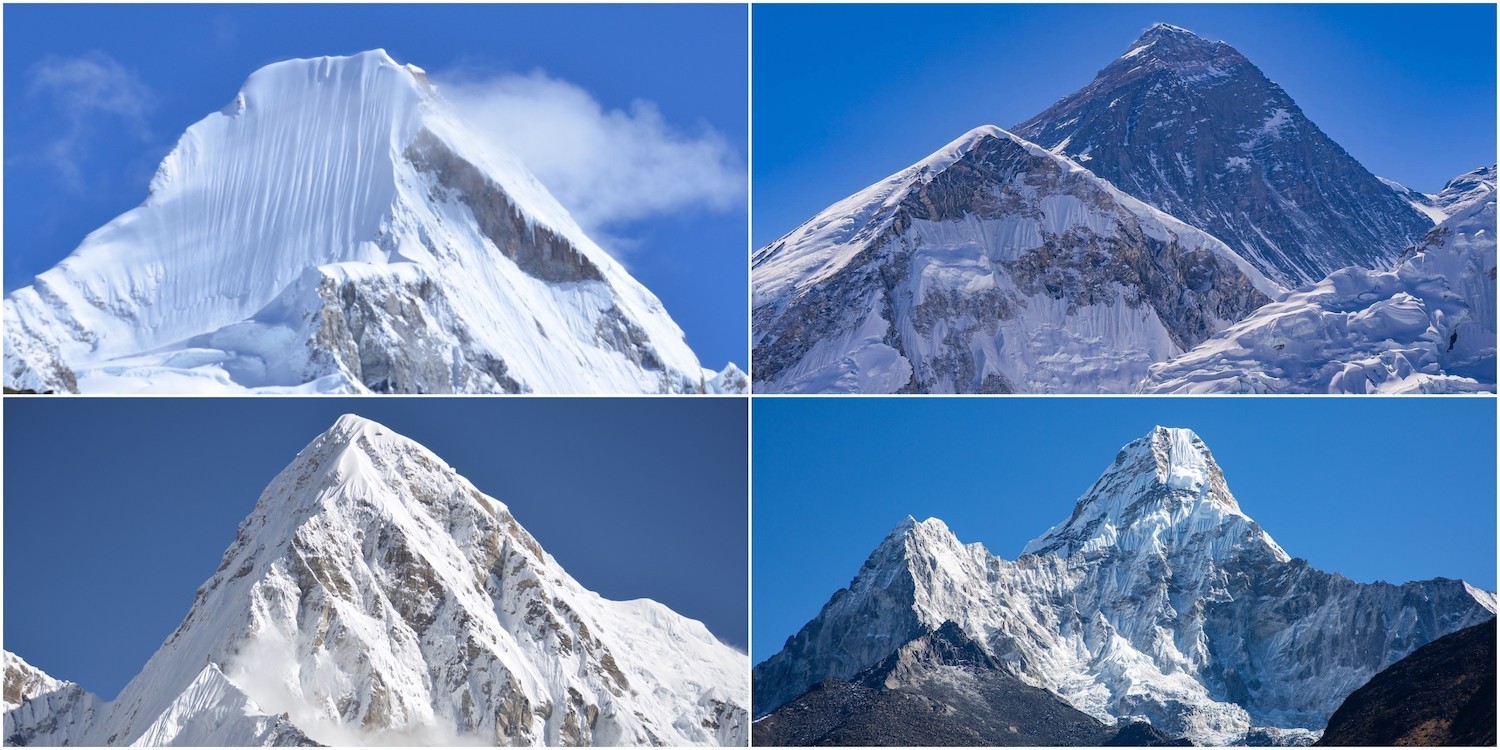
Similarly, some of the most astonishing peaks that can be seen during the Everest Base Camp Trek include Ama Dablam (6,812 m), Lhotse (8,516 m), Nuptse (7,861 m), and Pumori (7,161 m).
Likewise, another unique feature of the EBC Trek is encountering the rich Sherpa culture and visiting the monasteries in the Himalayas. The most famous of these is the Tengboche Monastery, offering spectacular views of the surrounding mountains from ~3,860 m.
Thus, the Everest Base Camp Trek is the ultimate mountain biking experience, providing the traveler with an opportunity to witness the legendary Mount Everest, admire the beauty of nature, observe the local culture and traditions, and challenge themselves in one of the highest peaks in the world.
Therefore, the EBC Trek is the most popular hiking trail among those who wish to discover and explore the Himalayan region. This trek is a must for those who want to have an adventurous experience and see the natural beauty of the mountains and high mountains peaks.
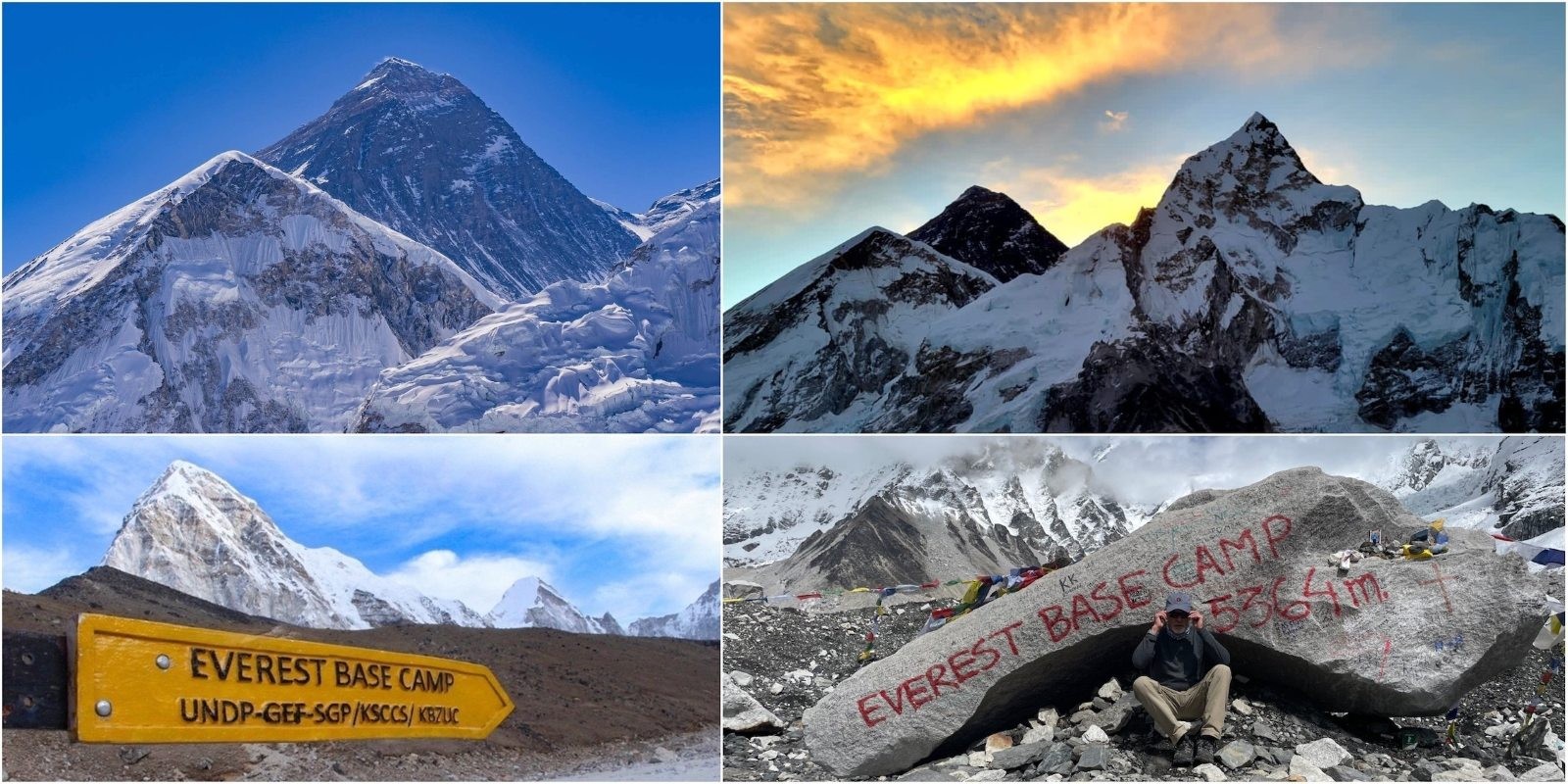
Nepal offers a wide variety of breathtaking hiking trails. However, the EBC Trek stands out due to crossing the legendary Mount Everest, experiencing the local Sherpa culture, visiting monasteries and glaciers, and exploring the unique landscapes of the Himalayas.
Similarly, Annapurna Base Camp is another popular trekking destination in Nepal. This route leads through valleys, hills, and forests to the Annapurna Sanctuary and the highest peak in the Annapurna Massif, Machhapuchhre.
While the highest altitude of the Annapurna Base Camp Trek is ~4,130 m, the EBC Trek is significantly higher, reaching ~5,364 m in the Everest Base Camp and ~5,545 m in the Kala Patthar viewpoint.
Other popular treks in Nepal include the Manaslu Circuit and the Langtang Valley Trek. The former explores the hidden corners of the Himalayas and involves crossing the highest pass in the Manaslu region, Larke Pass (~5,106 m). The latter offers fewer opportunities for exploring the local culture and only reaches ~3,870 m in Kyanjin Gompa.
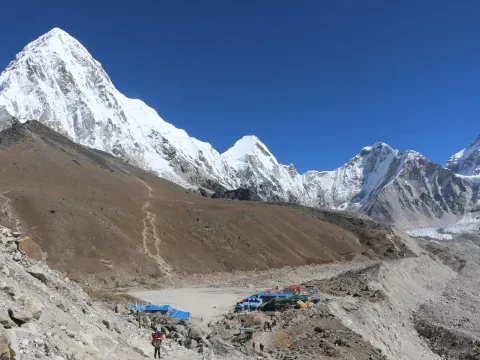
Thus, the EBC Trek has several advantages over similar routes in terms of altitude, visitor experience, and highlights.
| Trek | Key Elevation | Key Highlights | Best For |
|---|---|---|
| Everest Base Camp | EBC – ~5,364 m; Kala Patthar ~5,545 m | Everest, Sherpa culture, glaciers, monasteries Iconic | Himalayan adventure |
| Annapurna Base Camp | 4,130 m | Annapurna Sanctuary, Machhapuchhre | Mountain scenery and shorter treks |
| Manaslu Circuit | Larke Pass 5,106 m | Remote villages, Tibetan culture, high pass | Remote adventure |
| Langtang Valley | 3,870 m | Langtang peaks, Tamang culture, valleys | Shorter Himalayan experience |
The list of the key highlights of the Everest region is rather extensive. Apart from the overall majesty of the Everest region, the EBC Trek offers a unique experience of visiting the numerous local peaks and passes, including Namche Bazaar (~3,440 m), Tengboche (~3,860 m), Dingboche (~4,410 m), Lobuche (~4,910 m), and Gorak Shep (~5,164 m).
In addition, the EBC Trek allows travelers to experience the beauty of nature and see some of the highest peaks in the world, including Mount Everest (8,848.86 m), Lhotse (8,516 m), Nuptse (7,861 m), Ama Dablam (6,812 m), and Pumori (7,161 m).
Besides the scenic views and the unique cultural experience, the EBC Trek also offers the traveler an opportunity to witness the Khumbu Glacier. Another highlight of the trek is the Tengboche Monastery, one of the most famous landmarks in the region.
Finally, the Kala Patthar viewpoint offers an unrivaled experience of seeing the Everest and the Himalayan panorama.
Thus, the EBC Trek is different because it combines the views of the highest peak in the world, the cultural heritage of the local people, and the natural beauty of the Himalayas. The EBC Trek is the ultimate mountain biking experience, providing the traveler with an opportunity to challenge themselves and achieve their goals.
Depending on the traveler’s interests, he or she might choose between the EBC, Annapurna Base Camp (ABC), Manaslu Circuit, and Langtang Valley Trek. If getting a glimpse of the Everest and the Himalayas is the primary goal of the visit to Nepal, the EBC Trek is the most rewarding option.
However, if the altitude is a concern, the ABC Trek might be a better choice due to significantly lower peaks. Those who wish to explore the local culture and remote settlements might consider the Manaslu Circuit.
Finally, the Langtang Valley Trek is a good option for those who wish to enjoy the Himalayan views without spending a lot of time hiking.
Thus, although the EBC Trek is not necessarily the best option for everyone, it is one of the most unique travel experiences one can have in Nepal. It encapsulates the beauty of the mountains, the majesty of nature, and the culture of the local people.
Specifically, the EBC Trek offers an opportunity to see the Everest and other Himalayan peaks, experience the local culture and traditions, and have an adventure hiking through the challenging landscape.
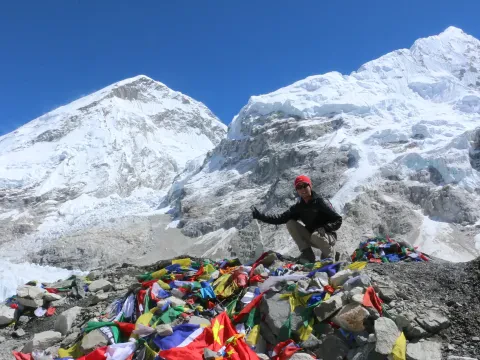
The Everest Base Camp Trek is a highlight-filled tour, where every day brings a new adventure. The thrill of the flight to Lukla, the majesty of sunrise over Everest, and the feeling of accomplishment when you finally reach the base camp of the world’s highest peak – these are some of the Everest Base Camp experiences that will stay with you long after you return home.
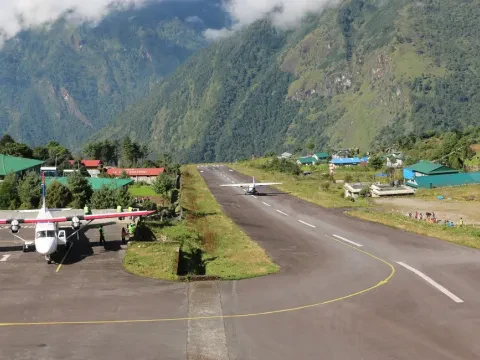
Meanwhile, you begin your Everest Base Camp tour on a thrilling scenic flight to Lukla (approx. 2,860 m). You’ll spend the next few days exploring the Khumbu region, encountering mountain villages, prayer flags and walls, rivers, and unique rock formations, and dwarfed by lofty Everest peaks.
Likewise, the path winds along the Dudh Koshi river, and you’ll encounter some high suspension bridges on the way. The farther you go, the more impressive the views of snow peaks become, while the sound of rushing water adds to the adventure.
Moreover, you’ll eventually reach Namche Bazaar (approx. 3,440 m), the largest trading center in the Khumbu region. Here, you’ll explore the wares of friendly locals, acclimatize, and enjoy the breathtaking view of the Himalayas.
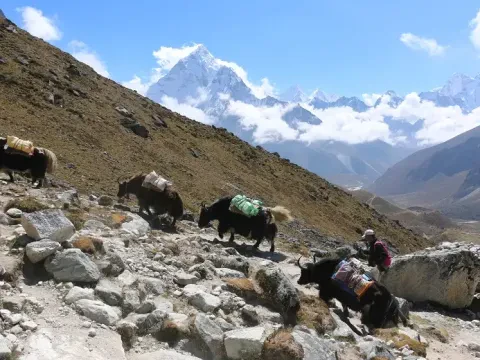
One of the main highlights of the Everest Base Camp trek is experiencing the local mountain village culture. As you make your way through the valley, you’ll see traditional villages, Buddhist prayer flags and wheels, chortens, monasteries, and friendly locals.
In Tengboche (approx. 3,860 m), you’ll visit Tengboche monastery, one of the largest and most important monasteries in the region. It is wonderfully situated in a valley surrounded by some of the region’s most gorgeous peaks, including Ama Dablam (6,812 m).
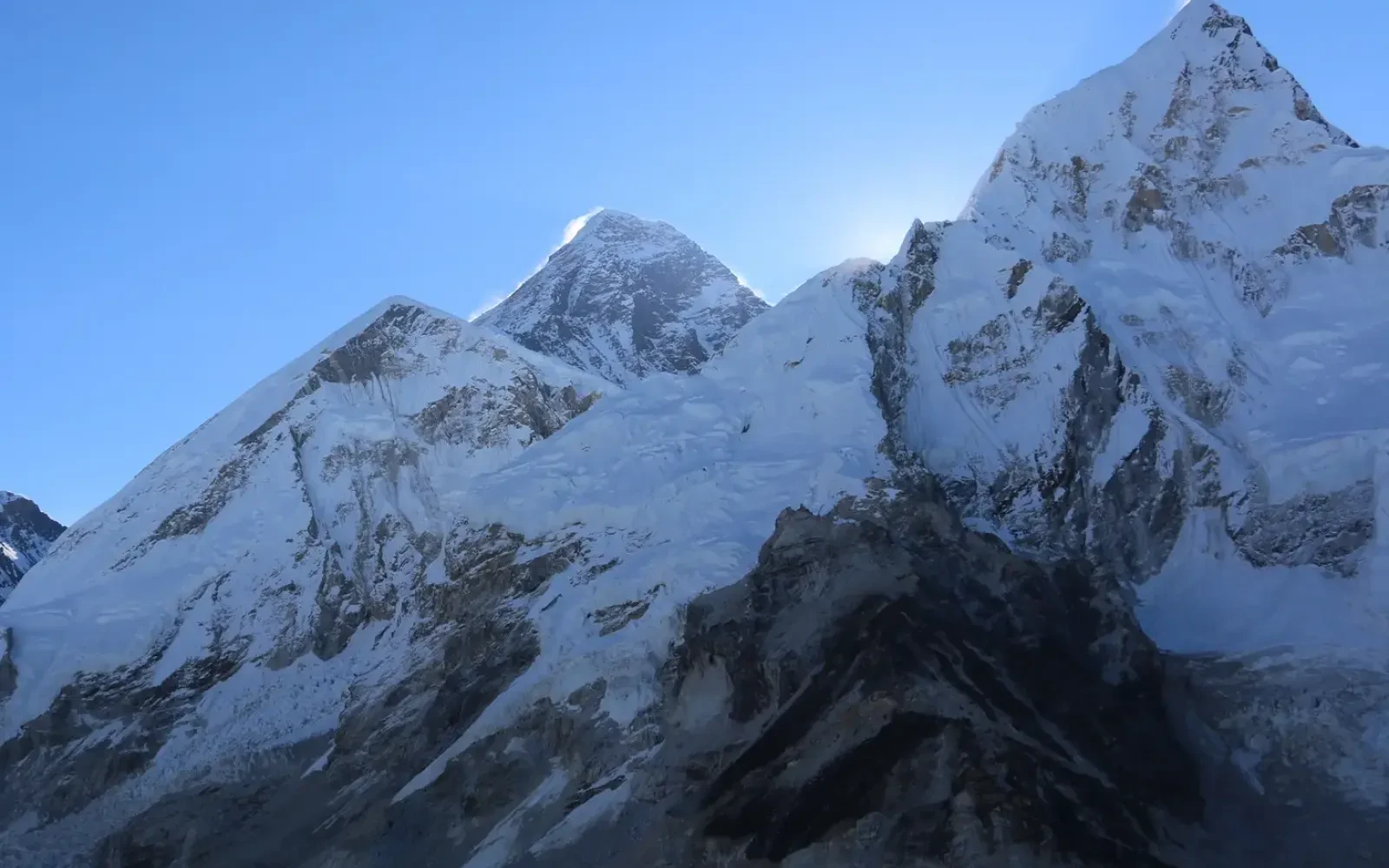
On the way to Everest Base Camp, the path goes through the most spectacular part of the Himalayas. Many of the towering peaks in the region are visible from the trail, including Ama Dablam (6,812 m), Lhotse (8,516 m), Nuptse (7,861 m), Pumori (7,161 m), and, of course, Mount Everest (8,848.86 m).
On your final day of trekking, you’ll overnight at Gorak Shep (approx. 5,164 m). Here, you can enjoy the view of the Khumbu glacier and the legendary Everest Base Camp Trek.
One of the most unforgettable EBC experiences is watching sunrise from Kala Patthar (approx. 5,545 m), short for ‘Black Rock’. Sunrise from this elevated viewpoint is truly breathtaking, as it reveals a panoramic view of Everest, Nuptse, Pumori, and other nearby peaks.
The cold, the night, and the altitude make it all the more unforgettable.
So, the EBC trek is not just a tour of the mountains – it is a journey of people, nature, culture, and history.
Unforgettable EBC Experiences :
So, the EBC tour is much more than just a trek – it is a Himalayan narrative of adventure, culture, nature, and achievement. Now, let us address the question if the EBC trek is a good choice for beginners.
It is possible to complete the Everest Base Camp trek as a novice hiker in 2027, although it is not an easy hike. The long days of trekking, the steep climbs and descents, the rugged mountain terrain, and the high altitude – these are some of the challenges that you should be prepared for on the EBC tour.
Likewise, you can be a first-time Himalayan trekker and still complete the Everest Base Camp trail, provided that you prepare yourself adequately for the experience ahead.
| Factor | What to Expect |
|---|---|
| Fitness | Training required |
| Walking | Long days of trekking |
| Altitude | Up to 5,164 m |
| Terrain | Rocky trails, suspension bridges |
| Weather | Variable |
| Acclimatization | Required |
| Experience | Not necessary |
| Guide and Porter | Support Helpful |
In summary, these are some of the key EBC trek challenges that you should consider before signing up for a beginners’ Everest Base Camp tour. Let us examine them in more detail.
You should be physically prepared for long days of walking on the EBC trail. Ideally, you should start training for the EBC tour 8-12 weeks in advance, doing regular cardio and strengthening exercises. Pay particular attention to strengthening your legs and core, as you’ll be walking constantly on the trail and climbing up and down rocky slopes.
In addition, you should go on long walks with a day pack to simulate the conditions of the EBC trek. While fitness plays a certain role in a successful EBC trek, the most important thing is to prepare your body for the prolonged exertion of continuous uphill and downhill walking.
Acclimatization is of utmost importance for the EBC tour, especially for first-time trekkers. One of the key dangers of the Everest Base Camp trek is the threat of altitude sickness. A well-designed EBC Trek itinerary for beginners will allow for gradual adjustment to the altitude, giving your body enough time to acclimatize. In particular, special attention should be paid to the acclimatization days in Namche Bazaar (approx. 3,440 m) and Dingboche (approx. 4,410 m).
Thus, a safe and comfortable EBC tour for novices will have a proper itinerary with enough days for adjustment to the altitude.
A professional guide can assist you throughout the EBC tour, helping you navigate the trails, monitoring your health in terms of altitude sickness, and looking after you in general. A guide is also helpful in establishing a good rhythm for the EBC trek – not walking too fast, so that you can maintain a steady pace throughout the tour.
Meanwhile, a porter can help you carry your main baggage, thus lightening your load considerably and allowing you to enjoy the EBC experience much more comfortably. Of course, hiring a professional guide and/or porter will add to the cost of the Everest Base Camp tour, but it will also add to your safety and comfort on the trail.
However, note that a guide and porter are not a substitute for a good physical and mental preparation for the EBC trek.
Beginner’s Guide to the Everest Base Camp Trek :
Thus, a novice hiker can complete the EBC tour comfortably, provided they receive the right training, equip themselves accordingly, and pick a good EBC tour operator.
Above all, a beginner should follow a well-designed acclimatization schedule and listen to their body on the trail.
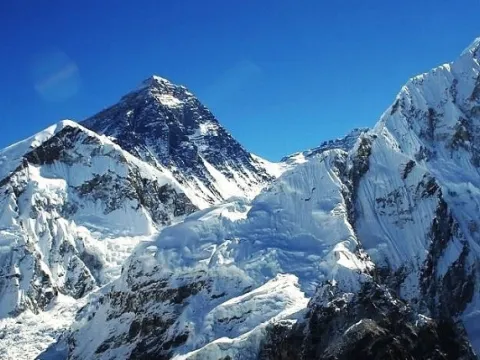
The ideal Everest Base Camp Trek itinerary in 2027 should balance walking, acclimatization, scenery, comfort, and safety. Although shorter itineraries are possible, allowing enough time for experiencing different altitudes makes the trek more enjoyable and responsible.
Meanwhile, a 14-day classic Everest Base Camp Trek offers most travelers the best combination of acclimatization periods, experience with Sherpa villages and monasteries, mountain views, and encounters with Everest Base Camp and Kala Patthar – without rushing through the journey.
| Itinerary | Best For | Main Consideration | Approximate Duration |
|---|---|---|
| 12-Day | EBC Experiencing trekkers with limited time | Faster pace, less flexibility | 12 days |
| 14-Day | Classic EBC, Most first-time trekkers | Best combination of safety and experience | 14 days |
| 15-16-Day | EBC Travelers seeking a slower journey | More comfortable pace | 15-16 days |
| EBC + Helicopter Return | Travelers seeking less descent time | Higher cost, but saves trekking time | 11-14 days |
| EBC without Lukla Flight | Travelers avoiding Lukla flights | Longer road and trekking journey | 15-18 days |
A 12-day Everest Base Camp itinerary is possible for travelers who are fit, experienced, and willing to accept a faster and less flexible schedule.
It is, therefore, more suitable for travelers who know what they are getting into. First-time trekkers should consider a longer option instead of the minimum.
The 14-day EBC itinerary offers a good balance between a responsible trek and sufficient time for enjoying the journey. Acclimatizing days in Namche Bazaar (3,440 m) and Dingboche (4,410 m) before Gorak Shep (5,164 m) and Everest Base Camp at approximately 5,364 m are included.
Moreover, the 14-day itinerary provides enough time for exploring Tengboche Monastery, the beauty of Sherpa villages, Khumbu Glacier, Ama Dablam, and Kala Patthar at approximately 5,545 m – including an awe-inspiring experience of sunrise over Everest.
A slower 15-16-day itinerary is a great option for those who want more leisured walking days. Moreover, extra days add flexibility in case of unfavorable weather and other challenges.
It is, therefore, a great choice for first-time Himalayan trekkers who want a more comfortable experience. Furthermore, it allows more options for alternative transportation means instead of flying into Lukla.
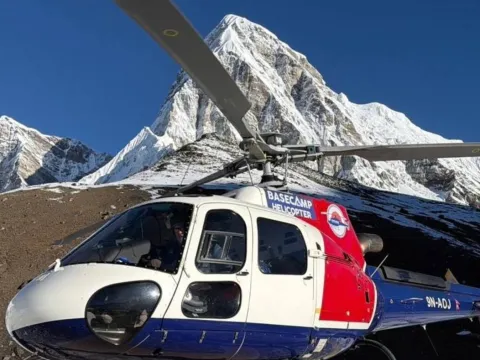
The helicopter return from EBC is a great option for those who seek to minimize the time spent on the descent. Travelers who want a shorter hiking experience or those who want to avoid several days of downward trekking would benefit from this option.
Helicopter flights are, however, subject to weather and other conditions, and travelers should have realistic expectations about the extra cost.
Yes, you can – but you will need to plan your Everest Base Camp experience differently and possibly allow more time for the journey.
Depending on the road conditions, an overland journey toward the Everest region can add several days to the itinerary. It is a viable option for those who want to avoid the risks of Lukla flight or prefer a slow, comfortable journey.
However, road conditions should be verified before departure.
Most travelers will find a 14-day classic Everest Base Camp trek the best option for combining acclimatization, safety, scenery, and cultural experience. Those with more time might want to consider a 15-16-day itinerary.
The best itinerary, therefore, depends not on its length but on the travel experience and priorities.
Most importantly, it should provide enough time for acclimatization and enjoyment of the EBC journey in 2027.
The best time to experience Everest Base Camp in 2027 is determined by your preferences. Generally, spring and autumn are the most popular seasons due to relatively stable weather and great visibility.
However, every season has its advantages and disadvantages, and the choice should be made based on personal travel priorities.
| Season | Months | Weather & Visibility | Crowds | Main Advantage |
|---|---|---|
| Spring | March-May | Generally stable; clear mountain views | Moderate-High | Flowers, warmer temperatures |
| Monsoon | June-August | Rain, clouds, limited visibility | Low | Quiet trails |
| Autumn | September-November | Dry and generally very clear | High | Best overall conditions |
| Winter | December-February | Cold, dry, possible snowfall | Low | Peaceful trails and crisp views |
Spring is a wonderful season for the Everest Base Camp trek – and one of the most popular ones. Although March is still relatively cold at higher altitudes, temperatures start to rise in April and May.
Rhododendrons are in full bloom at lower and middle elevations, and mornings tend to be clear, offering fantastic views of the mountains. The downside is that the season is very popular among trekkers, and the trails get busy as the climbing season approaches.
Autumn is generally the best season for an EBC experience. The monsoon season is over, and the sky is clear, offering fantastic views of the Everest region.
Days are warm, and nights are cool – but the most visited places get quite busy. This is the peak season for travelers, so be prepared for crowds on the trails, in teahouses, and during the flights to Lukla.
Winter in the Everest region is comparatively cold, and higher altitudes can get quite snowy and slippery. Nighttime temperatures near Gorak Shep (5,164 m) and other high-altitude places can be extremely low.
In fact, the advantage of the EBC trek in winter is that the trails are empty, and the view is sharp and clear on most days.
However, the cold weather, short days, snowy conditions, and disrupted flights are significant challenges, so it is better to leave for winter only if you have sufficient experience and preparation.
The monsoon season is not recommended for the EBC trek. Nevertheless, the weather tends to be relatively stable between the cloudbursts, and some travelers enjoy the lush green landscapes.
Lukla flights can be particularly risky during the monsoon, and both the journey and the accommodation in Kathmandu should be planned with sufficient flexibility in case of bad weather.
Which Season Should You Choose?
The best season for first-time trekkers should be either October or November, but April and May are also excellent options for those who want to enjoy the blossoming beauty of the Himalayan spring. No matter what season you choose, a few extra days will help you deal with the unpredictable mountain weather and the potential delays of the Lukla flights.
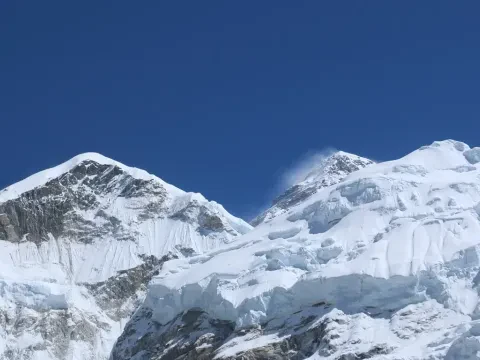
The Everest Base Camp Trek cost in 2027 is going to vary considerably depending on the itinerary, season, where you stay, how you get there, and what level of service you choose. A realistic planning range for a guided EBC trek would fall between USD 1,375–2,355 per person depending on the group size, itinerary and the services.
Here, this range represents a planning budget rather than a set price. Higher-end itineraries with premium hotels, helicopter travel, extended stays, or upgraded services could add substantially to this number.
| Expense Category | Current 2027 Planning | Budget Includes… |
|---|---|---|
| Trekking package | USD 1,375 – 2,355 (varies) | Main guided services |
| PLRM | NPR 3,000 (current baseline) | Trekker registration |
| Sagarmatha National Park | NPR 3,000 (current baseline) | National park entry |
| Domestic flights | Variable ( USD180 - 285) | Flights Kathmandu/Ramechhap–Lukla |
| Kathmandu hotels | USD 30–100+ per night | Accommodation before/after trek |
| Teahouse accommodation | USD 5–15+ per night | Basic mountain lodging |
| Meals | USD 15 – 30 per day | Breakfast, lunch, and dinner |
| Guide | Usually included in package ) USD 25 - 35 | Licensed trekking guide |
| Porter | Usually included in package (USD 20 - 30) | Primary luggage support |
| Equipment | USD 100 –500+ (varies) | Purchase or rental costs |
| Travel insurance | USD 50 – 200+ (varies) | Depends on coverage level |
| Tips | USD 100 – 250+ (varies) | Guide and porter gratuities |
| Personal expenses | USD 100 – 200+ (varies) | Snacks, drinks, etc. |
| Emergency reserve | USD 200+ (varies) | Delays, medical needs, etc. |
Please note that these are current planning ranges and not guaranteed final 2027 prices. The Nepal Tourism Board currently lists a NPR 2,000 TIMS charge for non-SAARC nationals on permitted routes, and a NPR 3,000 charge for foreign nationals entering Sagarmatha National Park.
Meanwhile, a standard EBC package will typically bundle together several of these expenses. These may include domestic flights, Kathmandu hotel stays, trekking permits, and other miscellaneous costs in a single price.
In summary, packages can be enormously variable, so it’s critical to review and confirm what is actually included in your particular package.
You should plan to have some cash on hand for smaller purchases, as cash becomes increasingly important the further you get along the trek. This may include snacks, drinks, hot showers, Wi-Fi, laundry, or other incidental expenses.
Meanwhile, you should also set aside some cash for an emergency fund. Having approximately USD 100–200 in Nepali currency can be helpful, though it may vary depending on the length and complexity of your itinerary.
Guides and porters can be a significant part of your overall costs. A guide can help with navigating the trails, monitoring altitude, and providing general assistance, while a porter can carry some of your heavier gear.
Likewise, current regulations issued by the Nepal Tourism Board require a licensed guide and a TIMS issued by an agency on the Everest Base Camp route. As a result, it’s important to realize that you cannot simply “trek EBC on your own” if you’re budgeting for a guide and porter.
Tips are standard and should be considered when budgeting for your EBC trek. The amount you tip should be based on the quality of service and difficulty of the trek, among other factors.
Moreover, you should also consider setting aside money for emergencies, as unpredictable weather or other issues may require you to extend your trek or incur additional expenses.
How to Keep Your 2027 EBC Budget Under Control :
As a result, USD 1,375–2,355 makes a good planning range for a standard guided EBC trek in 2027. The cheapest package is rarely the most responsible choice, so make sure to compare guides, transport, accommodations, meals, permits, and other considerations before making your final choice.
Transportation is one of the most important considerations for anyone planning an Everest Base Camp Trek in 2027. Travelers are accustomed to the idea of flying to Lukla, but the reality is that the airport can change depending on the time of year. Transportation options can also vary depending on the airline, congestion, and other factors.
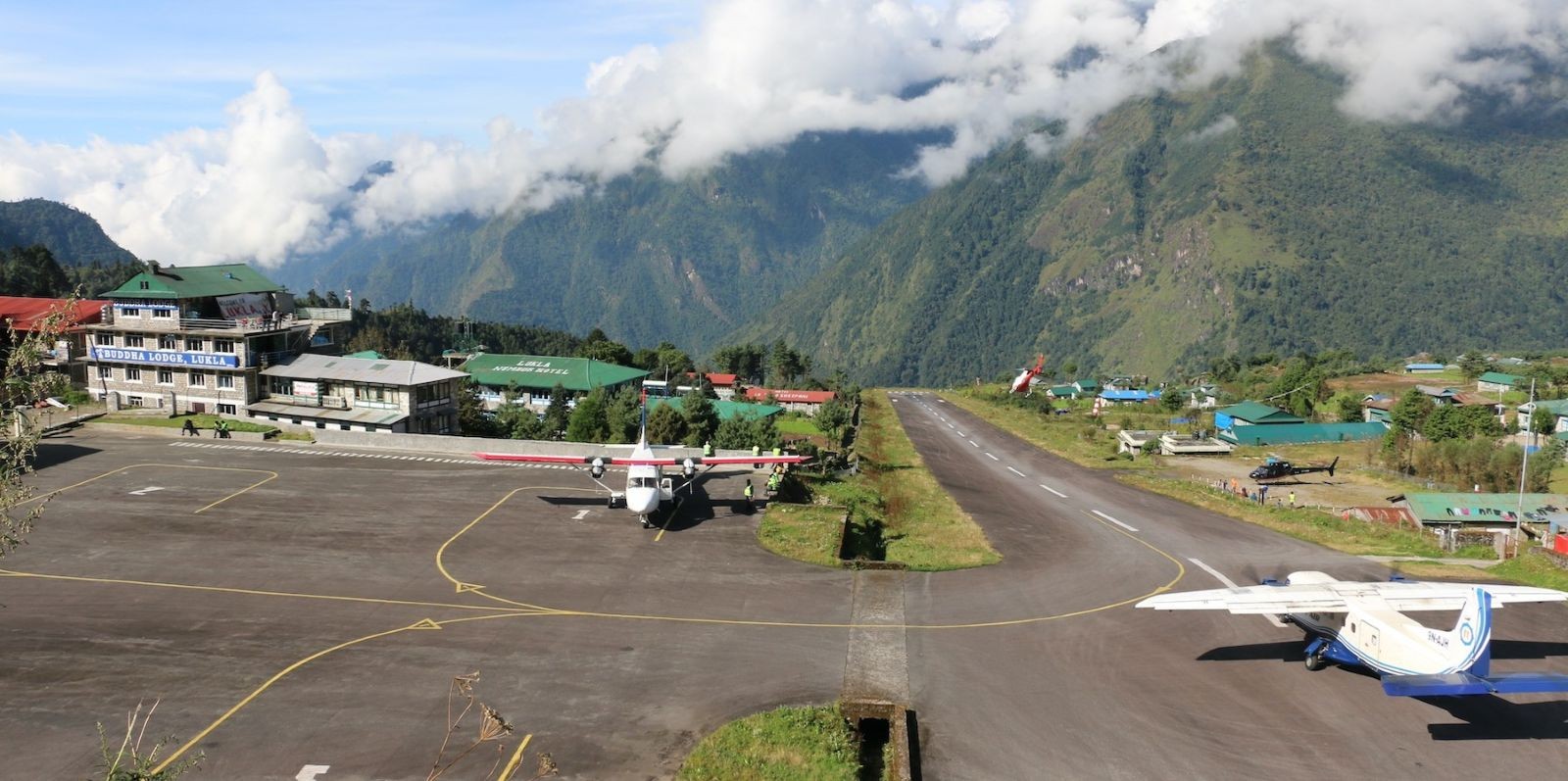
Here, the Nepal Tourism Board designates Lukla as the entry point for trekking in the Everest region, but also notes the Jiri alternative or Salleri and Surke alternative. Travelers should confirm their final departure point with their agency and airline when finalizing their travel plans for 2027.
| Option | Description | Travel Time | Best For |
|---|---|---|
| Kathmandu–Lukla | Direct mountain flight | 30–40 min | Off-peak seasons (Winter and Monsoon) |
| Kathmandu–Manthali | Road transfer | 4–5 hours | Peak-season ( Autumn and Spring) |
| Manthali–Lukla | Mountain flight | 15–20 min | Spring/autumn peak |
| Helicopter | Kathmandu-Lukla | Variable (35-45 mins) | Time-sensitive travel |
| Road + Trek | Road toward Solukhumbu( Surke/Lukla) | Several hours/days (2-3 days) | Alternative to Lukla flights |
In recent peak seasons, many flights to Lukla have been operating from Manthali Airport in Ramechhap rather than Kathmandu. The 2026 travel guide notes a 4–5 hour drive from Kathmandu to Manthali, followed by a 15–20 minute flight to Lukla.
The primary reason for the shift is to alleviate congestion at Kathmandu’s Tribhuvan International Airport.
For trekkers, this means an earlier departure from Kathmandu. Depending on your flight, you may need to leave your hotel around 12:30–2:00 AM to make the drive to Ramechhap.
Lukla is a mountain airport, which means that flights are subject to weather conditions and other restrictions. A variety of different factors can contribute to delays and cancellations, especially during periods of unsettled weather.
As a result, you should avoid scheduling an international departure right after returning from your Everest trek, simply because of the risk of weather delays.
If regular flights are too slow or risky, you might want to consider a helicopter. The problem is that helicopters are subject to many of the same risks and restrictions as regular aircraft.
However, helicopter travel has additional costs associated with it, so budget accordingly. This is an option worth considering, but understand that it is not a given.
Yes, there is an overland alternative. Travelers can reach Salleri, Phaplu, Thamdanda, Surke or other access points to the Solukhumbu region before continuing on their trek toward Everest.
In fact, this may take longer than flying to Lukla, but it is an option for people who want to avoid mountain airports altogether.
The single most important tip I can give about EBC transportation is related to buffer days. Delays are a constant concern at Lukla, and canceled flights are not unheard of.
As a result, you should leave at least one or two days between your expected return from the Everest region and your international departure. That way, you’ll have some flexibility if something goes wrong.
EBC Transportation Checklist :
Similarly, the most important takeaway for EBC Trek 2027 transportation is this: don’t assume that every flight to Lukla will originate in Kathmandu.
While this practice was standard in previous years, 2026 operations show that many flights now originate in Ramechhap instead. Your airline and agency should be able to advise you on the situation for 2027, as it gets closer to the departure date.
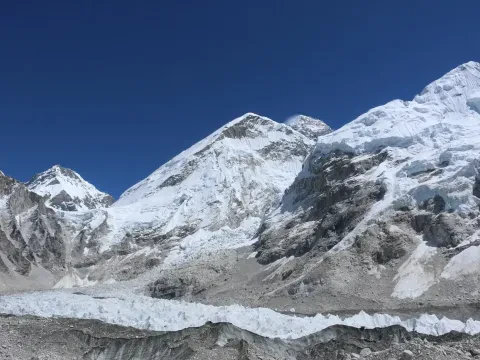
The Everest Base Camp Trekking is a safe adventure when well-planned and well-managed. It is true to say that it is never 100% safe, as altitude, weather, terrain, and transport are all unpredictable variables that contribute to trekking risks.
Here, the single most important factor influencing trekking safety is the threat of acute mountain sickness (AMS). With the trek starting in Lukla at roughly 2,860 m and finishing at about 5,364 m above sea level, as well as Kala Patthar at 5,545 m, acclimatization is paramount.
A well-designed itinerary should give your body time to adjust to the new environment. Usually, acclimatization days are built into the classic EBC tour in Namche Bazaar (3,440 m) and Dingboche (4,410 m).
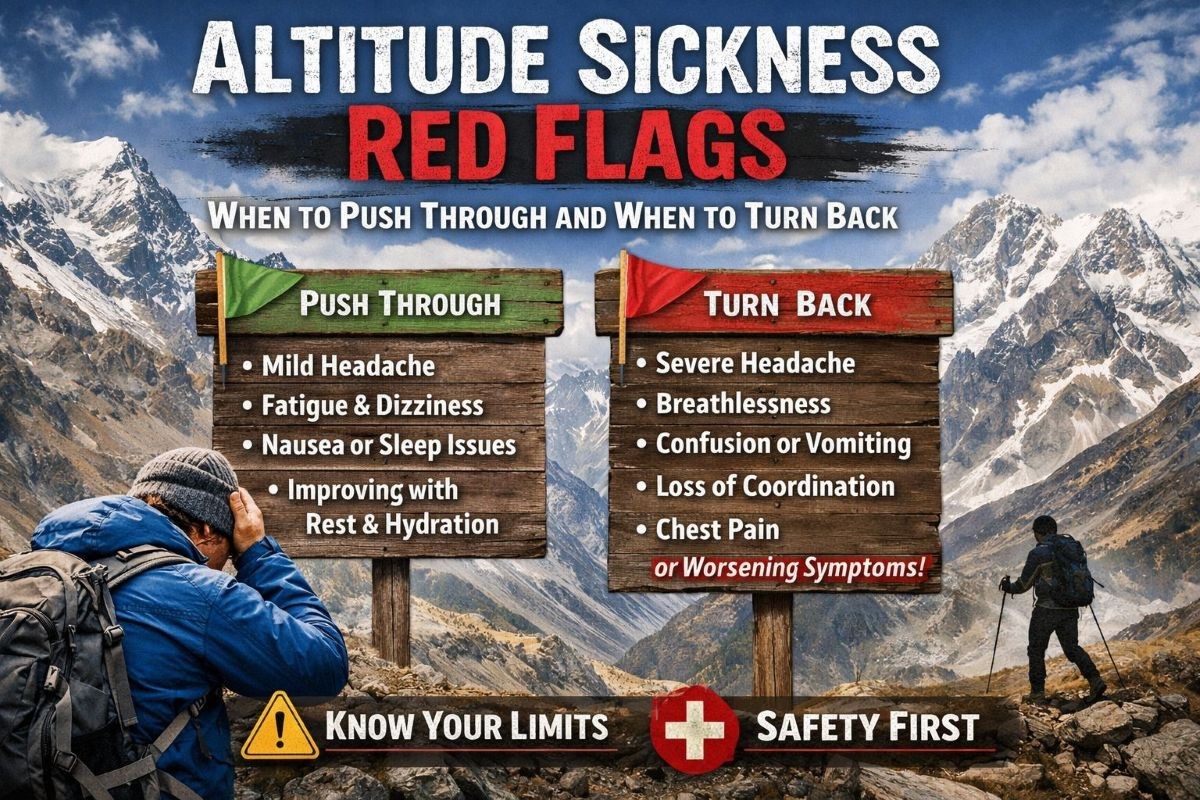
The basic principles to reduce altitude sickness risk are:
In conclusion, fitness is also an important consideration for the EBC trek. It is advisable to build your cardiorespiratory endurance and muscle strength through regular walks, hiking, stairs climbing, gym exercises, and specific training several weeks before departure.
Weather in the Everest region can be extremely unpredictable. Snow, rain, wind, overcast sky, and subzero temperatures are just some of the challenges that a trekker can face during an EBC trek.
Similarly, trail conditions can change dramatically during the course of the trek due to landslides, erosion, roadworks, snowfalls, or local weather patterns. That is why it is vital to obtain current information from your trekking company or guide before departure and during the trek.
Appropriate clothing and equipment will ensure a happy and healthy trek to EBC. Your clothing should be suitable for the local mountain weather. Layering is essential, so wear warm thermals and a waterproof and windproof shell.
Similarly, warm gloves, a hat or beanie, good quality hiking boots, sunglasses, and a headlamp are also vital. Do not forget your sleeping bag and power banks. A good sleeping bag is critical to a comfortable stay in the mountains.
Additionally, make sure that the temperature rating of your sleeping bag is appropriate for the season, itinerary, and accommodation.
Your travel insurance should cover high-altitude trekking and helicopter rescue if required. Before departure, double-check that your insurance covers the specific risks involved in an EBC trek.
Likewise, review the altitude limit, activities covered, medical benefits, evacuation procedure, exclusions, and claims process. Ensure that the policy provides sufficient compensation in case of an emergency.
A professional guide can assist you in keeping a steady pace, monitoring your health, and navigating the trail. In addition, a trekking guide can organize search and rescue assistance in case of an emergency. A porter can help you carry your gear, so you do not have to worry about the weight.
Importantly, guides and porters do not remove all risks, but they do help in a number of unpredictable circumstances. That is why it is essential to choose the right trekking agency and professional field staff for your EBC trek. This is one of the most important questions in a discussion about the safety of the EBC trek 2027.
It is a good idea to keep at least one or two buffer days in your travel schedule. Flights to and from Lukla can be canceled due to bad weather or other operational issues. In addition, illness or trail closure can also delay your EBC trek.
| Safety Category | Everest Trek Safety Tips |
|---|---|
| Altitude | Acclimatize gradually |
| Fitness | Train before departure |
| Hydration | Stay well-hydrated |
| Weather | Check the weather forecast |
| Gear | Pack appropriately for mountain conditions |
| Insurance | Get sufficient travel insurance |
| Guide | Hire a professional trekking guide |
| Emergency | Know emergency procedures |
| Transportation | Be prepared for flight cancellations |
| Schedule | Leave one or two buffer days |
Most importantly, the key takeaway is that risk cannot be eliminated in an EBC trek, but you can learn to predict and plan for known dangers.
Thus, an acclimatization schedule, fitness training, professional support, suitable equipment, insurance, and flexible planning will greatly contribute to the safety of your Everest trek in 2027.
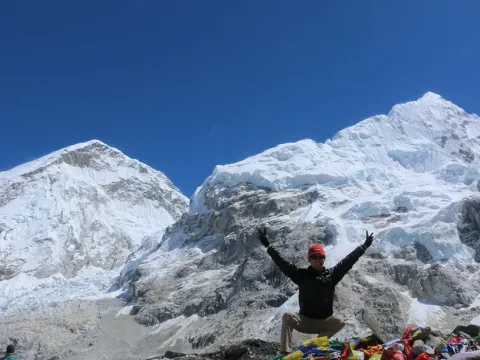
Reflecting on the scenery, culture, adventure, logistics, and safety precautions, it becomes clear that EBC offers a unique combination of qualities that set it apart from other treks in Nepal.
Meanwhile, the EBC trek takes you from Lukla (2,860 m) through the Khumbu Valley, where you visit Namche Bazaar (3,440 m), Tengboche (3,860 m), Dingboche (4,410 m), Lobuche (4,910 m), and Gorak Shep (5,164 m) before reaching Everest Base Camp at about 5,364 m.
Here are some reasons why the Everest Base Camp trek stands out :
The EBC trek 2027 is an excellent option for those who want to see Mount Everest and the other amazing peaks of the Khumbu region. It is also ideal for travelers who enjoy the unique Himalayan culture of the Sherpa people and want to complete an iconic trek in the Everest region of Nepal.
Here, EBC is a good option for those who are fit enough to walk for several hours per day and want to invest time and effort into a high-altitude trek.
Another advantage of the EBC route over other mountain trails is the acclimatization schedule. You gradually get used to the altitude, which reduces the risk of altitude sickness.
It is important to recognize that not all travelers are the same. Some people may prefer a shorter EBC trek or a different route. For example, Annapurna Base Camp (ABC) peak reaches around 4,130 m, making it a great option for those who want a high-altitude experience without the EBC challenge.
Meanwhile, Langtang Valley, which peaks at 3,870 m (Kyanjin Gompa), is a good alternative for those with less time. At the same time, Manaslu Circuit at 5,106 m (Larke pass) offers a similar high-altitude trekking experience that is also more remote than EBC.
If your dream is to walk up to Mount Everest and experience the magic of the Himalayas, EBC is hard to beat. EBC offers a unique combination of an iconic mountain, awesome landscape, unique culture, rich mountaineering history, proven trekking infrastructure, and a deep sense of achievement.
Thus, the Everest Base Camp trek 2027 is a great choice for those who want an iconic Himalayan experience that includes high-altitude challenges and cultural insights.
For those who want to make this dream a reality, Haven Holidays Nepal offers expert-guided trek, teahouse stays, mountain flights, and other bespoke travel experiences.
1. Why is Everest Base Camp Trek the best trek in Nepal for 2027?
The Everest Base Camp Trek is one of the most popular trekking experiences in Nepal for good reason. The EBC Trek offers spectacular views of Mount Everest, an insight into Sherpa culture, visits to ancient Buddhist monasteries, and the chance to see the Himalayas in all their glory. According to the Nepal Tourism Board, the Everest region is one of the most visited trekking destinations in the Himalaya.
2. Is Everest Base Camp Trek suitable for beginners in 2027?
The Everest Base Camp Trek can be a good option for inexperienced hikers in 2027, although previous high-altitude trekking experience will be beneficial. The EBC Trek is physically demanding, with long days of walking and a significant increase in altitude. A gradual approach to the trail and the acclimatization process is essential for inexperienced trekkers. In addition, beginners must consider the dangers posed by extremely high altitudes and ensure that they have the necessary gear, supplies, and support to complete the trek safely.
3. What is the best itinerary for Everest Base Camp Trek 2027?
The best itinerary for the EBC Trek 2027 is a 14-day Everest Base Camp Trek, which is long enough to allow for a gradual acclimatization to the altitude and sufficient time to enjoy the views from Namche Bazaar and Dingboche before returning to Lukla. The specific Everest Base Camp Trek itinerary may vary depending on the season, available transportation, and weather conditions.
4. What is the best time for Everest Base Camp Trek in 2027?
The best time for the Everest Base Camp Trek in 2027 will be in spring and autumn, especially March-May and October-November. These are generally the best seasons for trekking in Nepal. However, the autumn season has more reliably clear skies after the monsoon season. The weather in the Everest region can be unpredictable, so it is important to research the current conditions and plan the Everest Base Camp Trek accordingly.
5. How much does Everest Base Camp Trek cost in 2027?
The cost of the Everest Base Camp Trek in 2027 can vary significantly depending on a wide range of factors, including the length of the itinerary, the level of comfort, and the type of services needed. A rough estimate of EBC costs is between USD 595 and USD 2,150. It is important to note that these packages vary significantly in terms of what they include. For example, shorter, more budget-friendly itineraries will have a lower price, but trekkers will have to pay extra for EBC Trek permits, meals, accommodations, and other incidentals.
6. Is Everest Base Camp Trek safe in 2027?
The Everest Base Camp Trek will most likely be a safe trek in 2027, but it should not be considered an easy trek. In addition, altitude sickness, variable weather conditions, and slippery trails could still be a factor during the EBC Trek. According to the Nepal Tourism Board, trekkers should allow themselves ample time to acclimatize to the altitude and stay hydrated, and if altitude sickness occurs, they should descend immediately. Moreover, trekkers must have travel insurance that covers emergency helicopter rescue.
7. How will transportation affect Everest Base Camp Trek in 2027?
Transportation options will most likely provide more flexibility for trekkers on the EBC Trek in 2027. However, the primary method of transportation will remain flights to Lukla, which can be canceled in cases of poor weather conditions.
Therefore, whenever possible, trekkers should plan for an alternative. Moreover, a local trekking agency can manage the transportation logistics based on the expected weather and road conditions.
8. What permits do I need for Everest Base Camp Trek 2027?
The required permits for the Everest Base Camp Trek 2027 will depend on the specific trekking route, but the Nepal Tourism Board website indicates that a trekking guide and TIMS card are mandatory for trips to the Everest Base Camp. In addition, trekking in the Sagarmatha National Park requires a Sagarmatha National Park permit. I recommend double-checking the official guidelines closer to the departure date.
9. What makes Everest Base Camp different from other treks in Nepal?
The EBC Trek is different from other treks in Nepal because it is a unique combination of an outstanding cultural experience and the breathtaking beauty of nature, including mountain peaks, valleys, rivers, ancient monasteries, and fascinating villages.
Here, an EBC Trek allows travelers to witness the majesty of the Himalayas through the Sherpa eyes and enjoy the local culture. The journey takes travelers through remote mountain villages such as Namche Bazaar and Tengboche before arriving at the Everest Base Camp.
10. Is Everest Base Camp Trek worth it in 2027?
Undoubtedly, the Everest Base Camp Trek is worth it in 2027. Those who embark on the EBC Trek will see some of the most spectacular views of nature and experience the local Sherpa culture that has lasted for centuries.
In addition, the Everest Trek will take travelers through one of the most popular national parks in Nepal and even to the foot of the highest peak on earth. The EBC Trek 2027 is certainly worth it; however, careful planning and a realistic assessment of the challenges are required before embarking on this adventure.
Our travel experts are ready to assist you with any questions.
Send us a message.Have a question before you book? Send your enquiry below and our travel experts will get back with the required information.