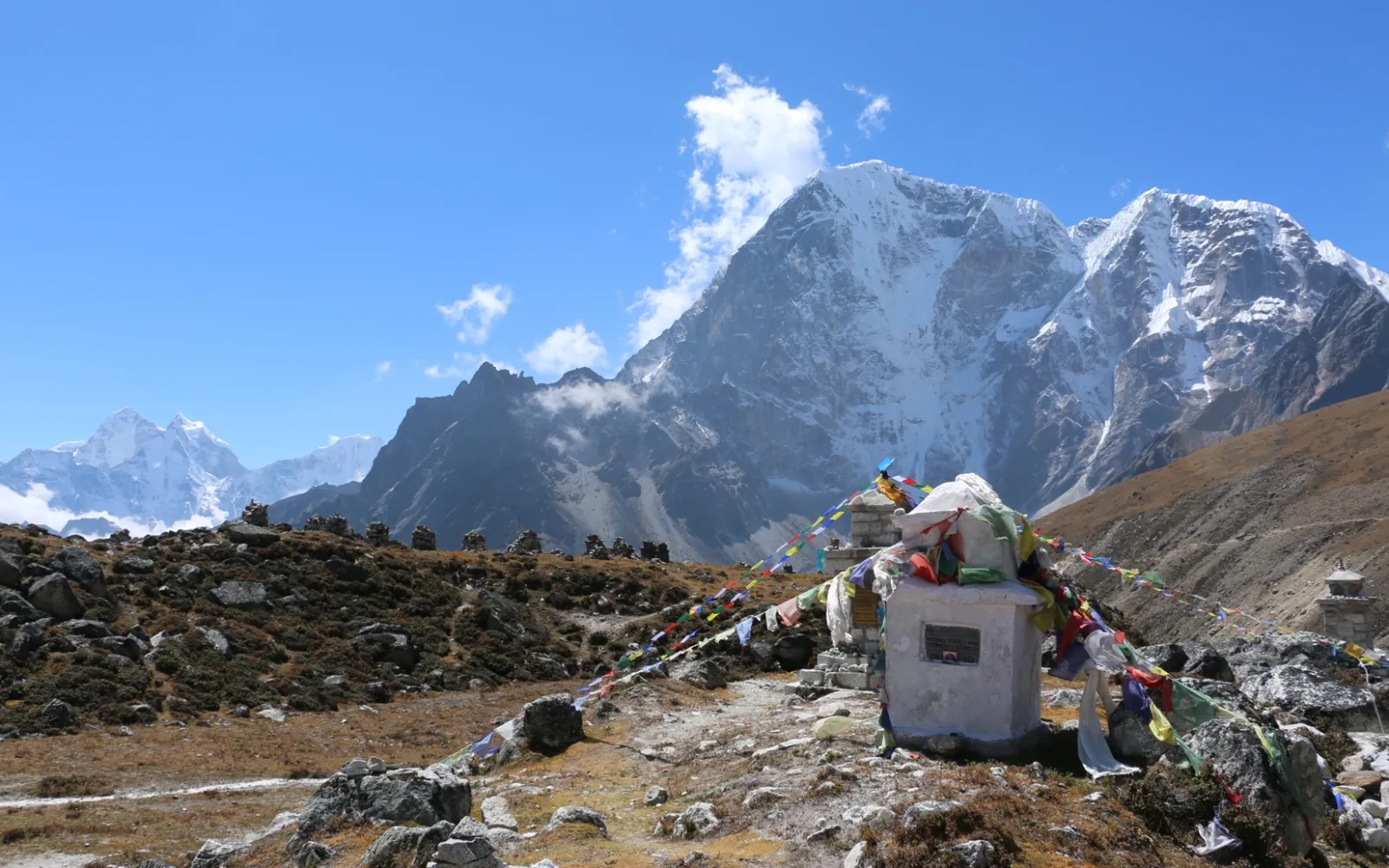
Everest Trek in Nepal 2027 is likely to be more popular among the trekkers than in 2026. This is because more people are fascinated by Everest Treks like Everest Base Camp than in other treks in Nepal like Annapurna Base Camp and Annapurna Circuit.
In fact, Everest Trek in Nepal 2027 will definitely give you greater achievement of adventure to seeing Mt. Everest (8848.86m), the top of the world.
Unlike other trekking trips in Nepal like Manaslu and Annapurna, the Everest Trekking route is liked and preferred by above 90% trekkers who come in Nepal for Trekking.
Now, let’s see Everest Trek in Nepal 2027 routes, best time of the year, costing details, permits required for the trek and other aspects in detail one by one.
Everest Trek in Nepal 2027 refers to trekking trips in the Everest region of northeastern Nepal, also called the Khumbu Valley and surrounding villages within Sagarmatha National Park. While the Everest Base Camp Trek is the most popular option, an Everest Trek can also include shorter Everest View itineraries, Gokyo Valley, Cho La, Renjo La and the challenging Everest Three Passes Trek.
Meanwhile, the Everest region is famous for Mount Everest (8,849m / 29,032ft) but the trek is much more than reaching its base camp. Following trails through Sherpa villages, Buddhist monasteries, suspension bridges, forests, glacial valleys and high mountain settlements with views of Everest, Lhotse, Nuptse, Ama Dablam and other Himalayan peaks.
Everest Trek Route| Difficulty| Duration |Suitable for
Everest View Trek |Easy to Moderate| 6-9 days| Short and Easy-trip trekkers
Everest Base Camp Trek |Moderate to Challenging| 12-16 days| Most prepared trekkers/Beginners
Gokyo Valley Trek| Moderate to Challenging| 12-16 days| Trekkers wanting lakes & quieter trails
Everest Base Camp with Gokyo| Challenging| 16-20 days |Experienced trekkers
Cho La Pass Trek| Challenging| 16-19 days| Experienced trekkers
Everest Three Passes Trek| Very Challenging| 18-22+ days |High-altitude expert trekkers
However, the actual duration depends on the specific route, acclimatization days, transportation options, weather conditions and whether you use the traditional Lukla approach or road-based options through the lower Solukhumbu.
As any local operator will advise, finding your preferred itinerary is more important than simply finding the shortest number of days for your Everest Trek in Nepal 2027.
What Makes the Everest Region Different?
Everest region trekking combines high mountain scenery with the culture of the Sherpa people. Namche Bazaar, Tengboche, Dingboche, Lobuche, Gorakshep and other settlements are not only places to stay overnight but also offer insight into high-altitude living.
Likewise, buddhist monasteries, prayer wheels, mani walls, prayer flags, chortens and traditional stone houses are seen along the way, as the trek passes through Sagarmatha National Park with its forests at lower elevations giving way to alpine landscape, rocky valleys, glaciers and high mountain scenery.
Is Everest Trekking Suitable for Everyone?
There is an Everest trek for every level of commitment, time and experience, but high altitude remains an important consideration on every route.
In fact, a short Everest View Trek might be more appropriate for travelers with limited time, while Everest Base Camp and high-pass routes require greater preparation and proper acclimatization.
Likewise, trekking to Everest should therefore be chosen according to your fitness level rather than selecting an attractive-sounding route on a map. Proper pace, hydration, acclimatization, clothing and awareness of altitude-related ailments are important considerations when trekking to Everest.
For trekkers considering Everest Trek in Nepal 2027, the region has many options for experiencing the Himalayas without making Everest Base Camp your sole objective.
In summary, the best route depends on your available time, level of trekking experience, desired scenery and comfort with spending days at high altitude.
Choosing an Everest Trek 2027 means discovering one of Nepal's most unique mountain regions with its landscapes, villages, Buddhist traditions and the local Sherpa culture.
Actually, it is not just about Mount Everest, but also the gradual transition from lower valleys up to high Himalayan valleys.
What Makes an Everest Trek Different?
One of the main differences is the combination of dramatic mountain scenery and high-altitude lifestyle. Meanwhile, the trail passes through Sherpa villages, monasteries, suspension bridges, forests, glacial valleys and viewpoints with mountain peaks such as Everest, Ama Dablam, Lhotse, Nuptse and Thamserku dominating the skyline.
Also, the Yeti skull can be seen in Khumjung Village just above Namche Bazaar and can go to Everest View Hotel as well.
Moreover, the area has a rich history of Himalayan exploration and Buddhist traditions. Namche Bazaar serves as an important trade center for trekkers, while Tengboche is a major monastery surrounded by mountain views.
If you like extra exploration, you can go to Thame Monastery, the oldest monastery of Everest region.
What Can You Experience on an Everest Trek?
Experience | What You Can See / Do
Mountain scenery | Everest, Lhotse, Nuptse, Ama Dablam and other peaks
Sherpa culture | Villages, homes and local traditions
Buddhist heritage | Monasteries, chortens, prayer wheels and mani walls
Sagarmatha National Park | Forests, alpine landscapes and Himalayan ecosystems
Namche Bazaar | Market town, acclimatization and mountain views
Tengboche | Monastery and panoramic mountain surroundings
High-altitude valleys | Dingboche, Lobuche and surrounding landscapes
Glacial scenery | Khumbu Glacier and surrounding moraine landscapes
Suspension bridges | Traditional trekking infrastructure over mountain rivers
Local life | Agriculture, tourism and daily life in mountain communities
Highest Luxury Hotel| Hotel Everest View
Ancient and Historical Collection | Sherpa Culture Museum, Yeti Skull at Khumjung monstery
Why Choose Everest Instead of Only Visiting the Mountains by Road?
An Everest region trek gives you the chance to experience the gradual change in landscape and altitude at your own pace. Walking from one village to the next lets you see local life, meet people along the way, visit monasteries and appreciate the difficulties of high-altitude living.
Moreover, the physical challenge is also part of the experience since the scenery changes as you gain altitude.
In addition to, lower forested areas gradually give way to open alpine landscapes, rocky valleys, glacial scenery and some of the highest trekking settlements in the world.
Who Should Choose an Everest Trek?
Everest trekking is ideal for travelers who enjoy walking for several hours a day and are comfortable spending time at high altitude. You do not necessarily need prior Himalayan trekking experience for the standard Everest Base Camp route, but you should prepare physically and know the risks associated with altitude.
However, more demanding routes such as Cho La or the Everest Three Passes Trek require better fitness, experience and tolerance for harsh high-altitude conditions.
Here, travelers with limited time can instead consider an Everest View Trek which reaches a lower altitude and provides mountain views without going as far into the high Khumbu.
Is 2027 a Good Year for an Everest Trek?
For Everest Trek in Nepal 2027, your main considerations should be the route, season, transportation, accommodation, permits, acclimatization schedule and physical preparedness. Conditions and transportation options can change, so travelers should consult current regulations for flights, roads, permits and trekking arrangements during their intended travel period.
From a local trekking perspective, a successful Everest journey is not about racing toward the highest point possible.
Moreover, it is about finding the right itinerary that gives your body enough time to adjust while letting you appreciate the mountains, Sherpa culture, monasteries, villages and unique landscape changes along the way.
Therefore, why trek Everest is best answered by looking beyond the mountain itself. The combination of high Himalayan scenery, Sherpa culture, Buddhist heritage, national-park landscapes and different trekking routes make the Everest region appropriate for a wide range of prepared travelers.
The best Everest Trek routes will depend on your time, fitness, altitude experience and what kind of mountain experience you are looking for.
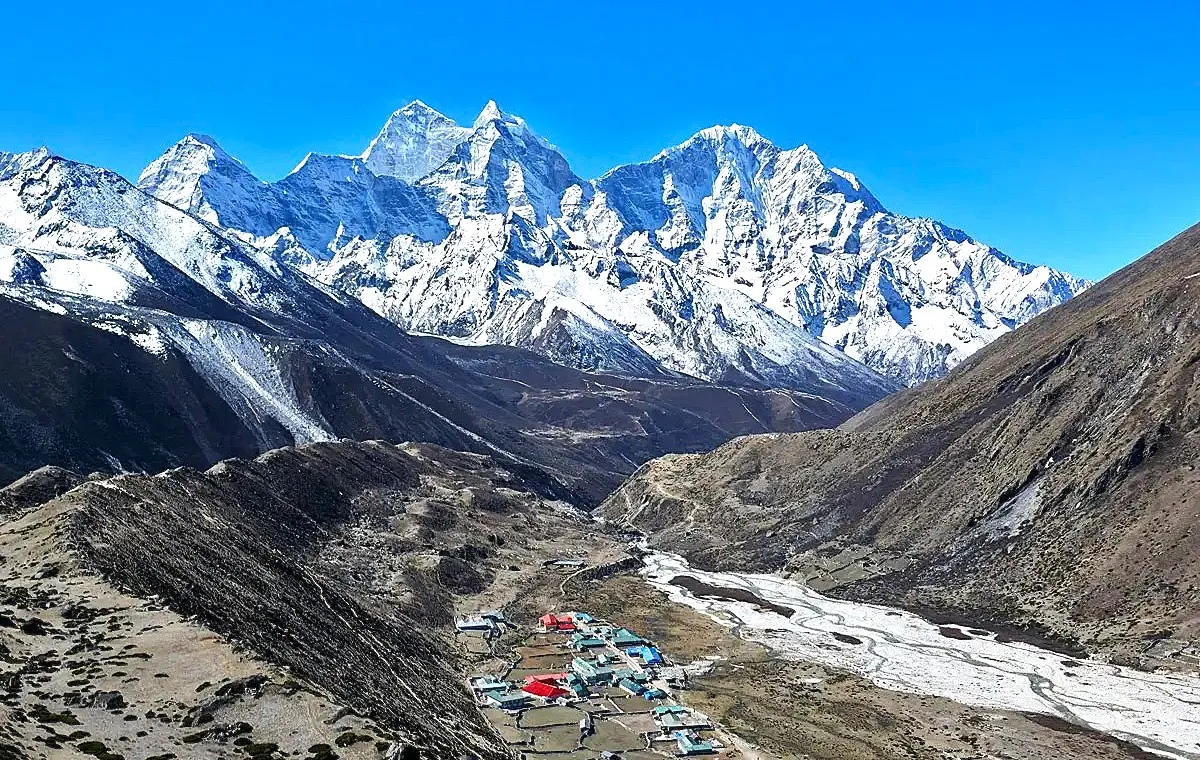
Nevertheless, the main Everest trekking routes are the Everest Base Camp (EBC), Gokyo Valley, Everest View, Everest Three Passes and combined EBC with Gokyo options.
Here, each route offers different views of the mountains and includes various cultural highlights, but also differing levels of walking difficulty and time spent at high altitude. It is therefore worth considering your own level of preparation when choosing the best Everest trek route.
Which Everest Trek Route Is Best for You?
Everest Trek Route| Approx. Duration| Highest Point| Difficulty| Ideal For
Everest View Trek 6–9 days 3,880m / 12,730ft Easy to moderate Beginners and short trips
Everest Base Camp Trek| 12–16 days| 5,644m / 18,519ft| Moderate to challenging| First-time high-altitude trekkers with preparation
Gokyo Valley Trek| 12–16 days 5,357m / 17,575ft| Challenging| Trekkers wanting lakes and views away from the main EBC route
EBC with Gokyo| 16–20 days 5,644m / 18,519ft |Challenging| Experienced trekkers wanting to cover both areas
Everest Three Passes| Trek 18–22+ days 5,545m / 18,192ft |Very challenging| High-altitude, experienced trekkers
Now, let’s see each and every Everest Trek in detail:
1. Everest Base Camp Trek
The EBC Trek is by far the most renowned trekking route in the Khumbu climbing through Namche Bazaar, Tengboche, Dingboche, Lobuche, and Gorakshep before arriving at Everest Base Camp.
Meanwhile, it is a challenging high-altitude trek, but a properly acclimatized and physically prepared traveler should not find any showstoppers on the route even if they do not have Himalayan trekking experience.
Meanwhile, the route includes visiting Sherpa villages and monasteries, crossing suspension bridges, exploring glaciers and valleys and seeing the Everest, Lhotse, Nuptse and Ama Dablam peaks up close. If reaching Everest Base Camp is your main goal, then this should be the route of choice.
2. Gokyo Valley Trek
The Gokyo Trek explores a different part of the Khumbu towards the turquoise Gokyo Lakes and Gokyo Ri. Not only does the route offer spectacular views of Everest, Cho Oyu, Makalu, Lhotse and other peaks, but it also provides a change of scenery and a somewhat more secluded area than what you will find on the main EBC trail.
In fact, challenging due to altitude and long walking days, it is however a popular choice for those that want the Gokyo side of the Khumbu. It is more tranquil than the EBC trek, although it does cut both ways depending on the season – and the EBC route is generally more heavily travelled.
3. Everest View Trek
The Everest View Trek is a shorter alternative that typically ends in the Namche and Khumjung area rather than following the EBC route. The route provides views of the Everest and other peaks without spending several days acclimatizing at altitudes above 4,000m / 13,123ft.
In summary, it is therefore a good option for those without much time or for a lighter introduction to Everest trekking. At the same time, “easy” is not the same as "effortless", as this route still features some quite steep parts of both uphill and downhill walking.
4. Everest Base Camp with Gokyo
The EBC with Gokyo route covers both parts of the Khumbu in one itinerary, with options to either travel via Gokyo Valley and Cho La before heading towards Everest Base Camp or the other way around.
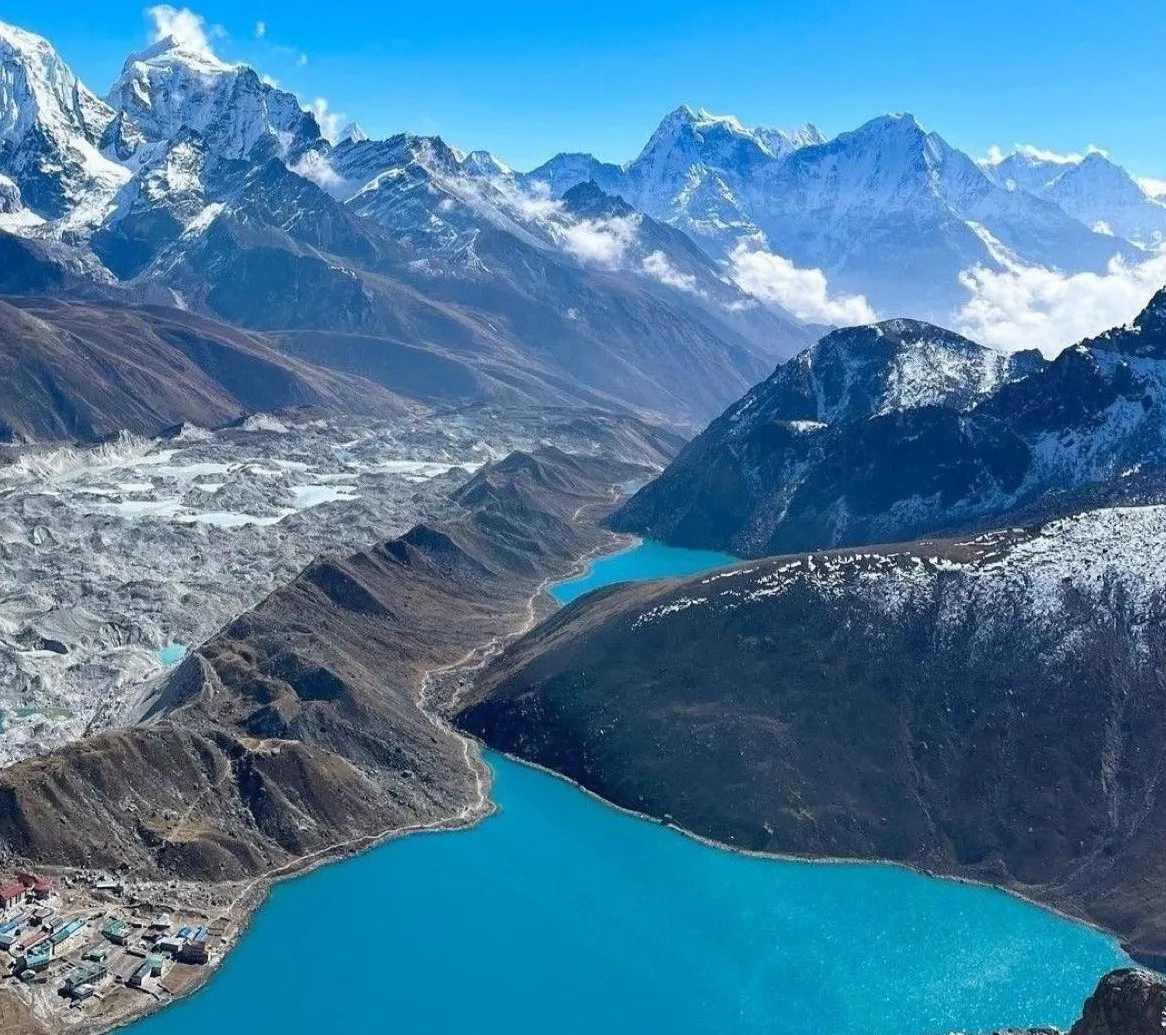
Here, the EBC with Gokyo route offers more variety than the EBC-only trek, but it also requires more days and the higher altitude means proper conditioning is a must. It is best suited for experienced trekkers or those that are well-prepared when it comes to the physical side of hiking.
5. Everest Three Passes Trek
The Everest Three Passes Trek is among the most demanding climbing routes due to its crossing of Renjo La, Cho La and Kongma La. It combines remote valleys and villages, high passes, glaciers, Gokyo and the EBC area into one long trekking adventure.
Here, it is a route that requires good fitness and prior hiking experience as well as careful altitude planning before setting out on the trail. It is not the kind of route I would recommend to a first-time high-altitude trekker simply because there are other options that do not involve crossing several high passes.
Which Everest Route Should You Choose?
Choose Everest View if you are short on time or want a gentler introduction to the Khumbu. Choose EBC if reaching the base camp is your primary goal, or Gokyo if you want the Gokyo Lake views as well as a change of scenery and altitude.
Likewise, choose EBC with Gokyo or Three Passes if you have more time and are prepared for more demanding trekking. A good local operator should first ask about your own level of experience, fitness, expectations and days on hand before suggesting a specific Everest trek route.
The best Everest trek for beginners will depend on your own fitness, time and how accustomed you are to high altitude climbing. The Everest View Trek is generally the gentler introduction while a physically prepared beginner can also complete the Everest Base Camp Trek with an appropriate itinerary.
Which Everest Trek Is Easiest for Beginners?
The Everest View Trek is normally the most suitable choice for a beginner trekker due to the route only reaching a lower maximum altitude and not requiring several days of high-altitude walking. It still features some quite steep parts of walking, although these can be reasonably managed within the short duration of this route.
Here, the most common version of the Everest View Trek itinerary includes Lukla, Phakding, Namche Bazaar and Everest View or Khumjung area.
As a shorter alternative to the Everest Base Camp trek, it offers a good introduction with some of the highlights without requiring additional time or being quite as physically demanding.
Can a Beginner Do the Everest Base Camp Trek?
Yes, a beginner can complete the beginner Everest Base Camp Trek if they are physically prepared and follow a sensible acclimatization itinerary. Previous high-altitude trekking experience is a bonus but not a requirement, although it should be noted that many first-time Himalayan trekkers manage to complete this route with proper preparation and support.
Here, the main challenge for a beginner on the EBC trek is not the climbing aspect but the walking endurance at an increased altitude. The daily walking can include several hours on uneven trails with a mixture of uphill and downhill parts, while the lower oxygen levels will become more apparent above 3,000m / 9,843ft.
Everest Trek Options for Beginners
Route | Beginner Suitability | Why
Everest View Trek | Best option | Shorter and lower maximum altitude
Everest Base Camp Trek | Suitable with preparation
|Longer and higher but achievable with acclimatization
Gokyo Trek | Moderate | Higher and more demanding
EBC with Gokyo | Not ideal for first trek | Longer and more high-altitude walking
Three Passes Trek | Not recommended for beginners | High passes and demanding terrain
What Preparation Does a Beginner Need?
A beginner should prepare several weeks before the trek by engaging in regular walking, stair climbing, hiking and cardiovascular activities. Strengthening the leg muscles and building general endurance will help with the long days of walking – uphill and downhill – involved in most Everest trek routes.
Moreover, it can be beneficial to get some local hiking experience before heading off to Nepal, but physical fitness cannot totally prevent altitude sickness and acclimatization is still an important part of any Everest trek difficulty management plan.
Why Is Acclimatization Important?
Altitude is a major component of an Everest trek due to the decreasing levels of oxygen available the higher you go. It is therefore important to allow your body to adjust to the increased altitude, which is why most itineraries feature acclimatization days, particularly around Namche Bazaar and Dingboche on the standard EBC route.
On the acclimatization days, it is normal to go on relatively short hikes to higher altitudes before heading back down to sleep at a lower altitude. The point is not to rest but allow the body to adjust to the decreased oxygen levels while still being active.
How Many Hours Do Beginners Walk?
How many hours a beginner walks will depend on the specific route and itinerary, but many EBC trek days feature around 5–8 hours of walking.
Here, both shorter and longer walking days are normal on the different Everest trek routes, with the demanding days sometimes having to be adjusted depending on the weather, trail conditions, personal fitness and altitude.
Meanwhile, beginners should not compare themselves to other trekkers when it comes to walking speed as going too fast will cause more tiredness at high altitude. A reasonable pace with regular breaks will be more helpful than attempting to reach the next destination as quickly as possible.
What About the Everest Three Passes Trek?
The Three Passes Trek should not be the first choice for anyone without high-altitude trekking experience due to the increased difficulty of crossing Kongma La, Cho La and Renjo La. The higher altitude, terrain and weather conditions will add to the challenge of long hiking days on this Everest trek route.
Likewise, the same goes for the EBC with Gokyo option as it adds extra days as well as high-altitude walking compared to the standard EBC trek. A beginner should consider their own experience and if there is enough time before embarking on these more demanding routes.
What Is the Best Advice for a Beginner?
If this is your first Himalayan trek, then start with a route that suits your actual fitness rather than what you feel you should be able to manage. Everest View Trek is a good way to start while the EBC Trek is achievable for a properly prepared beginner that follows a gradual itinerary and pays attention to altitude.
Meanwhile, preparation rather than previous Everest trek experience is what matters most for a beginner, and there are plenty of ways to get a safe and rewarding experience in the Everest region.
With the right kind of training, acclimatization, altitude considerations, hiking pace, professional trekking support and equipment, a beginner can have a great time on an Everest trek.
The standard Everest Trek Cost 2027 can range from about USD 1375 and USD 2,355 per person depending on the route, number of days, group size, transportation, accommodation and level of service.
Here, a standard Everest Base Camp Trek will normally cost more than a short Everest View Trek and a private trek, longer Gokyo route and Three Passes itinerary will require a larger budget.
What Is the Everest Trek Cost in 2027?
Everest Trek Style | Approx. Cost Per Person | Typical Service
Budget Everest Trek | USD 595–900 Basic services and shared logistics
Standard Group Trek | USD 1375–1,555| Guide, transportation, accommodation, meals and permits
Standard EBC Trek | USD 1,375–1,795 Professional guide, porter and organized logistics
Private Everest Trek | USD 1,750-2,355 Private guide and more flexible arrangements
Longer/Full-Service Trek USD 1,700–2,355 Extended route, additional staff and better logistics
What Expenses Make Up the Everest Trek Cost?
The total Everest Trek in Nepal cost normally comprises a range of different expenses rather than a single trekking fee. The major cost areas are permits, transportation, accommodation, food, guides, porters, equipment, insurance and personal spending.
Cost Area | What It Covers
Permits | Sagarmatha National Park and required local permits
Transportation | Flights or road/jeep transportation to the trekking area
Accommodation | Teahouses and Kathmandu hotel nights
Meals | Breakfast, lunch and dinner during the trek
Guide | Licensed or experienced trekking guide
Porter | Baggage carrying and trekking support
Equipment | Sleeping bag, duffel bag and other rental items where applicable
Insurance | Traveler's personal travel and high-altitude coverage
Personal expenses | Drinks, snacks, charging, Wi-Fi, showers and tips
Emergency costs | Medical treatment, evacuation or itinerary changes if required
How Much Do Transportation Costs Affect the Price?
Transportation can make a significant difference to the final Everest trekking price, especially when comparing the traditional Lukla flight option and road-based options through the lower Solukhumbu.
Actually, the flight schedules, seasonal operations, airport arrangements and weather can also affect the overall transportation budget.
Meanwhile, a traveler who uses a road approach may spend more time traveling but has reduced dependence on a Lukla flight. However, road conditions and travel time should be taken into consideration when comparing the cheapest transportation options.
Why Do Private and Group Everest Treks Cost Differently?
Group trekking is normally less expensive for each participant because guide, transportation and some other costs can be shared between several trekkers.
In fact, private trekking normally has higher costs because the guide, transportation, itinerary and staff arrangements are dedicated to one person or a private group.
However, a larger group does not always mean a significantly lower price because additional guides, porters, accommodation and support staff may be necessary depending on the itinerary. The most appropriate comparison is therefore based on the services included rather than the advertised starting price.
What Is Included in a Haven Holidays Everest Trek Package?
Depending on the selected package, Haven Holidays can organize the main services to undertake an Everest trek, including:
Airport arrival and departure transfers
Kathmandu accommodation according to the package
Domestic flight or road transportation according to the selected itinerary
Licensed English-speaking trekking guide
Porter service according to the agreed porter-to-client ratio
Trekking accommodation ( normally twin sharing basis)
Meals during the trekking period according to the package
Required trekking permits
Sleeping bag and duffel bag on a refundable basis where applicable
Office luggage storage
Trekking orientation and equipment assistance
Guide and porter wages, meals, accommodation and insurance
First-aid and basic medical support
Government taxes and applicable service charges
However, the exact inclusions should be checked according to the specific Everest itinerary and international airfare, Nepal visa, personal travel insurance, personal equipment, alcoholic drinks, personal snacks, laundry, charging, Wi-Fi, tips, medical expenses and emergency helicopter evacuation are normally not included unless stated.
How Can You Reduce the Everest Trek Cost?
The simplest way to reduce the Everest trek package cost is normally to travel in a suitable group and select a practical itinerary rather than unnecessary luxury services.
By sharing transportation and staff costs and renting selected equipment in Kathmandu, it is often possible to avoid buying expensive equipment for a single trek.
However, saving money should not mean reducing acclimatization days, experienced guides, suitable equipment and emergency preparations. On a high-altitude trek, these services are part of responsible planning rather than unnecessary extras.
What Should You Budget Beyond the Package Price?
In addition to the quoted price for the trek, budget a personal reserve for snacks, drinks, hot showers, charging, Wi-Fi, tips, extra nights, unexpected transportation and other personal expenses. Make sure that travel insurance covers high-altitude trekking and emergency evacuation.
For Everest Trek cost 2027, the key question is therefore not only 'What is the cheapest package?' but also "What services are included at that price?" A clear quote should identify transportation, permits, accommodation, meals, guide, porter, staff costs, equipment support, taxes, exclusions and possible additional expenses.
There is no single answer for how many days for Everest Trek, because the Everest region has short viewpoints, standard base camp routes and demanding multi-pass itineraries.
In fact, a realistic itinerary should give enough time for walking, rest, flexibility and especially acclimatization rather than trying to reach the highest point as quickly as possible.
How Many Days Are Needed for Different Everest Treks?
Everest Trek | Approx. Duration | Highest Point | Best For
Everest View Trek | 6–9 days | 3,880m / 12,730ft | Short trips and beginners
Everest Base Camp Trek | 12–16 days |5,644m / 18,519ft at Kala Patthar | First-time EBC trekkers with preparation
Gokyo Valley Trek | 12–16 days | 5,357m / 17,575ft at Gokyo Ri | Lakes and mountain scenery
EBC with Gokyo | 16–20 days | 5,644m / 18,519ft at Kala Patthar | Longer and more varied trek
Everest Three Passes | 18–22+ days | Up to about 5,545m / 18,192ft | Experienced trekkers
Therefore, the exact number of days can vary according to the starting point, transportation, acclimatization plan, weather and personal walking pace. The extreme shortness of itineraries should therefore be considered with particular caution, as it can limit important acclimatization time.
What Is a Realistic Everest Base Camp Itinerary?
A practical EBC itinerary normally takes around 12–16 days from Kathmandu to Kathmandu depending on the transportation and the flexibility built into the program.
Here, a typical Everest Trek route follows Kathmandu → Lukla → Phakding → Namche → Tengboche → Dingboche → Lobuche → Gorakshep → Everest Base Camp and Kala Patthar with the return journey.
Likewise, the elevation changes gradually but the highest sections require slower walking and careful acclimatization. A typical elevation progression is:
Place| Approx. Elevation
Kathmandu| 1,320m / 4,330ft
Lukla| 2,860m / 9,383ft
Phakding| 2,610m / 8,563ft
Namche Bazaar| 3,440m / 11,286ft
Tengboche| 3,860m / 12,664ft
Dingboche| 4,410m / 14,469ft
Lobuche| 4,910m / 16,109ft
Gorakshep| 5,164m / 16,942ft
Everest Base Camp| 5,364m / 17,598ft
Kala Patthar| 5,545m / 18,192ft
In conclusion, the elevations of Everest Base Camp and Kala Patthar are particularly important because trekkers normally sleep at Gorakshep before visiting these high points. The elevations reached can vary slightly according to the exact trail point and measurement source.
Why Are Acclimatization Days Important?
Acclimatization days are not wasted days on an Everest Trek itinerary because they give your body time to adjust to reduced oxygen at higher elevations.
On a standard EBC route, Namche Bazaar and Dingboche are commonly used for acclimatization because they offer suitable opportunities to make short hikes to higher elevations before returning to sleep lower.
At Namche, trekkers can hike toward the Everest View Hotel area at approximately 3,880m / 12,730ft and nearby Khumjung.
Likewise, an acclimatization hike from Dingboche can reach elevations around 4,700m / 15,420ft or nearby viewpoints before returning to Dingboche for the night.
How Long Do You Walk Each Day?
Most standard Everest trekking days involve approximately 5–8 hours walking, although the actual time can depend on altitude, trail conditions, distance, weather and personal pace.
Here, shorter days are possible and the journey from Gorakshep to Everest Base Camp and Kala Patthar can also be a long and tiring day.
Likewise, the trail is not always continuously steep but there are frequent ascents and descents over rocky paths, suspension bridges, moraine and uneven mountain terrain.
At higher elevations, even a short distance can take longer to cover because of the reduced oxygen available to the body.
How Long Is the Everest View Trek?
The Everest View Trek normally takes around 6–9 days, which is one of the shortest ways to experience the Khumbu. The route normally reaches Namche Bazaar at 3,440m / 11,286ft and continues toward the Everest View Hotel at approximately 3,880m / 12,730ft.
Here, this itinerary can be suitable for a traveler with limited time or those who want mountain views but not the much higher elevations of the EBC route. It does require reasonable fitness because of the steep sections of trail between Lukla, Phakding and Namche.
How Long Does the Gokyo Trek Take?
The Gokyo Trek normally requires around 12–16 days depending on the itinerary and transportation. The route leads through Namche toward Dole, Machhermo and Gokyo with the village at approximately 4,790m / 15,715ft and Gokyo Ri reaching about 5,357m / 17,575ft.
Likewise, Gokyo is particularly interesting for travelers who want high-altitude lakes and a different perspective of the Everest region. The route still requires a reasonable amount of fitness because much of the trek takes place above 4,000m / 13,123ft.
How Long Does EBC With Gokyo Take?
Combining Gokyo and Everest Base Camp normally requires around 16–20 days because the itinerary covers two major areas of the Khumbu. If the route crosses Cho La, the trek becomes more demanding because the pass reaches approximately 5,420m / 17,782ft.
Meanwhile, the reward is a more varied journey through Gokyo Valley, high mountain terrain, Cho La, Lobuche, Gorakshep, Everest Base Camp and Kala Patthar. This itinerary is better suited to trekkers who have enough time and are comfortable with prolonged high-altitude walking.
How Long Does the Everest Three Passes Trek Take?
The Everest Three Passes Trek normally requires around 18–22 days or more depending on the route and acclimatization plan. The three major passes are Renjo La at approximately 5,360m / 17,585ft, Cho La at approximately 5,420m / 17,782ft and Kongma La at approximately 5,535m / 18,159ft, although reported elevations can vary slightly between sources.
In fact, this is not simply a longer version of the EBC Trek because the terrain and altitude make the route substantially more demanding. Trekkers need thorough preparation, sufficient acclimatization, appropriate equipment and the ability to manage difficult conditions at high elevation.
Can You Complete Everest Trek Faster?
Some experienced trekkers complete Everest routes faster than the standard itinerary but speed should not be the main objective for most travelers. Rapid ascent can increase the risk of altitude-related problems, while bad weather and transportation delays can also interfere with a rapid schedule.
For a first Everest trek, adding an acclimatization day and allowing some flexibility is normally more sensible than reducing the itinerary to remove days. The right Everest trekking itinerary gives your body enough time to adapt while keeping the daily walking distance manageable.
What Is the Best Number of Days for an Everest Trek?
For most travelers, 12–16 days is a practical range for the standard Everest Base Camp Trek, while 6–9 days works for a shorter Everest View experience. Gokyo normally requires 12–16 days, EBC with Gokyo around 16–20 days and Three Passes around 18–22 or more days.
In fact, the distribution of days between walking, acclimatization and contingency time is normally more important than the number shown on the itinerary. On the Everest Trek, a well-paced itinerary is usually more valuable than a fast itinerary because the mountain does not reward rushing.
The best season for Everest Trekking in 2027 is normally spring from March to May and autumn from September to November because of the generally better weather and mountain views.
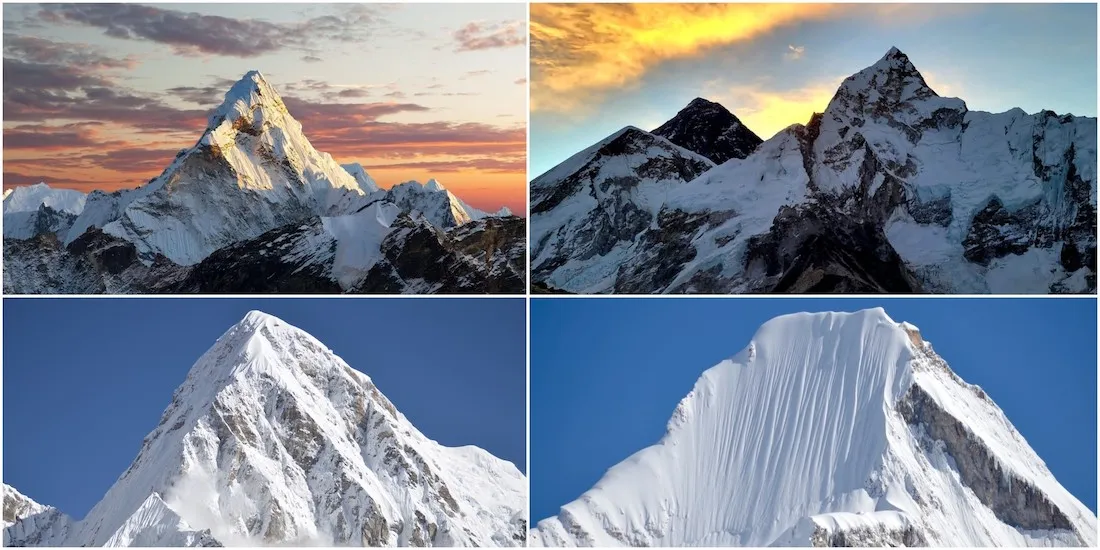
However, October and early November are by far the most popular because the trails are normally dry, the mountain views tend to be good and the trekking conditions are suitable for most trekkers.
Everest Trek Seasons Summary
Season | Months |Weather & Visibility | Crowds |Flight & Trail Conditions
Spring | March to May | Clear morning, warm days, cold nights | Moderate to high | Generally good
Autumn | September to November | Clearer skies, dry trails, good visibility | High |Generally good
Winter | December to February | Very cold, clear on some days | Low | Possible but weather can affect flights
Monsoon | June to August | Rain, clouds and limited visibility | Low | Delays and wet trails more likely
Everest Trek in Spring: March to May
Spring is definitely one of the best times for the Everest Trek because the temperatures gradually become milder and the weather becomes more favorable for extensive walking.
Likewise, March can still be quite cold at higher altitude while April and May typically offer good warm weather and mountain views.
Moreover, the Khumbu valley floors turn green in spring and the rhododendron flowers the trail becomes colorful while the high passes and ground remain white with snow, glaciers and rock.
In the same way, afternoons can become increasingly cloudy as the season moves on, so it is important to get up early for any mountain walks to enjoy the improved visibility.
In summary, accommodation is available along most of the main Everest Trek routes, but popular lodges in Namche Bazaar [3,440m / 11,286ft], Tengboche [3,860m / 12,664ft] and higher villages can get crowded in peak periods.
Likewise, flights to Lukla can become disrupted by mountain weather, so it is worth considering adding an extra day or two to your itinerary just in case.
Everest Trek in Autumn: September to November
Autumn is widely regarded as the best season for Everest Trek in Nepal because the monsoon normally clears up and the trails stay dry. September can still be affected by residual monsoon weather while October and November tend to bring consistently better weather and mountain visibility.
In fact, Everest Trek in October tends to be very popular because the temperatures are relatively good for walking and the skies are normally clear, although the main trails can get very busy. There can also be increased demand for accommodation, flights and teahouse prices in October, so it is worth booking the various transport and accommodation options in advance.
Likewise, November can bring colder mornings and evenings, particularly above the Namche Bazaar level, but the skies tend to be clear on a lot of mornings. Towards the end of the month temperatures fall considerably in places such as Dingboche [4,410m / 14,469ft], Lobuche [4,910m / 16,109ft] and Gorakshep [5,164m / 16,942ft], so it is even more important to pack warm clothes and make sensible arrangements for higher-altitude areas.
Is Winter Suitable for Everest Trekking?
Winter trekking is definitely possible, especially if you are an experienced trekker with an interest in cold weather and the mountain environment, but the trails can tend to be emptier in this season and there can be good mountain visibility on clear days.
However, the temperatures can be surprisingly cold and the higher ground can get covered in snow, so it is worth making extra arrangements for accommodation and transport on some of the main Everest routes.
Meanwhile, the temperatures around Everest Base Camp [5,364m / 17,598ft]and Kala Patthar [5,545m / 18,192ft], in particular, can be dangerously cold in winter, so it is worth preparing for the cold with suitable sleeping arrangements and equipment.
Also, some lodges in this region tend to offer reduced services in winter and be more seasonal, particularly outside the main trekking areas.
Can You Do the Everest Trek During the Monsoon?
Monsoon trekking is possible from June to August, but it is generally not the preferred option for trekking in the Everest region because of reduced visibility due to clouds and rain.
Meanwhile, the main Everest trail tends to get less of the direct monsoon rain than the surrounding lower areas, but the journey into the trekking region can be affected by weather conditions and flight cancellations.
In fact, the trails can become wet and muddy at the lower altitude levels while the higher ground can be covered in cloud and reduce the chances of seeing the mountain.
Therefore, trekkers should factor in extra travel days for monsoon trekking and make sure that they have appropriate rain gear as well as suitable expectations about the mountain visibility.
What Is the Best Month for Everest Trek in 2027?
October is normally the best month for an Everest Trek for most trekkers because of the combination of generally good weather conditions, dry trails, relatively comfortable temperatures and good visibility of the mountains.
However, October is also one of the busiest months, so trekkers who prefer fewer crowds might want to consider late November, early December, March or early May with the understanding that they may have to deal with colder or more unpredictable weather.
Thus, it is worth remembering that there is no single best month for all trekkers because of variations in the different factors, so the best time to go on an Everest Trek should be based on the particular route, the level of experience and the individual requirements and preferences.
The difficulty of the Everest Trek tends to depend on a number of factors including the altitude gained, the distance walked, the number of hours walked per day, the terrain type, the weather and the individual’s level of acclimatization.
Actually, the Everest Base Camp Trek is challenging but manageable for a well-prepared trekker while Gokyo and Three Passes increase in difficulty because of the higher altitude, the increased distance and the more difficult terrain.
Everest Trek Route | Difficulty | Highest Point | Typical Challenge
Everest View Trek | Easy to moderate | 3,880m / 12,730ft |Shorter walking and lower altitude
Everest Base Camp Trek | Moderate to challenging| 5,545m / 18,192ft at Kala Patthar| High altitude and long walking days
Gokyo Valley Trek| Moderate- Challenging| 5,357m / 17,575ft at Gokyo Ri| High altitude and steep climbs
EBC with Gokyo| Challenging| 5,545m / 18,192ft| Long duration and Cho La section
Everest Three Passes| Very challenging |Around 5,535m / 18,159ft| High passes, steep terrain and long days
Why Is Altitude the Biggest Challenge?
Altitude tends to be the most important consideration regarding the difficulty of an Everest Trek because the amount of oxygen in the air reduces the higher you go. It is also worth remembering that not all fit people find it easy to adjust to the altitude levels, so individual fitness should not necessarily be assumed to be an indicator of altitude tolerance.
From Lukla [2,860m / 9,383ft] the trail climbs gradually to Namche Bazaar [3,440m / 11,286ft], Tengboche [3,860m / 12,664ft], Dingboche [4,410m / 14,469ft] and Lobuche [4,910m / 16,109ft], before reaching Gorakshep [5,164m / 16,942ft] and, optionally, Everest Base Camp [5,364m / 17,598ft] and Kala Patthar [5,545m / 18,192ft].
How Difficult Is the Everest Base Camp Trek?
The Everest Base Camp Trek is generally considered to be a moderate to challenging trek because of the combination of high altitude and the relatively long walking days.
Here, the trekking days tend to last around five to eight hours each, but the timings can vary depending on the route, speed, weather conditions and acclimatization schedule.
Meanwhile, the trail involves a combination of stone stairs, rocky ground, bridges, steep climbs and long downhill stretches and the reduced oxygen levels at higher altitude simply add to the overall difficulty of the trail.
In fact, the most challenging parts of the trek normally start after Dingboche because of the increased altitude and the need to balance the daily progress.
How Difficult Is the Gokyo Trek?
The Gokyo Trek is generally a challenging trek because of the high altitude and the need to climb Gokyo Ri [5,357m / 17,575ft]. The trail goes through mountain valleys and across glaciers and the higher altitude levels can prove to be more challenging than the lower altitude of the Everest Base Camp route.
Here, Gokyo can be a good option for a trekker with the appropriate level of fitness and previous experience of hiking, but acclimatization remains a crucial factor in a successful trek.
In summary, a higher altitude and some sections of steep ground are not necessarily more difficult than long walking days, but they still contribute to the overall level of challenge.
How Difficult Is the Everest Three Passes Trek?
The Everest Three Passes Trek is widely considered to be one of the most challenging treks in the Everest region because of the need to cross Renjo La [about 5,360m / 17,585ft], Cho La [about 5,420m / 17,782ft] and Kongma La [about 5,535m / 18,159ft].
Here, the combination of snow, steep slopes, loose rocks and long walking days can make the Three Passes significantly more challenging than the standard Everest Base Camp trek.
In summary, this trek is more suited to high-altitude trekkers who are used to dealing with a variety of conditions rather than people new to high-altitude trekking.
Moreover, the Three Passes itinerary requires more preparation than the standard EBC trek because of the combination of high altitude and demanding terrain in several sections of the trail.
Is Everest Trek Suitable for First-Time Trekkers?
A first-time trekker can definitely complete the Everest Base Camp Trek with the right kind of preparation and a realistic approach to the journey and the conditions.
It is worth remembering, however, that the preparation should be carefully designed and not mistake fitness for altitude tolerance and experience.
Meanwhile, preparation for an Everest Trek should include regular walking, uphill walking, stair climbing and cardiovascular exercises before the trek as well as leg strengthening exercises to help deal with the increased effort required at altitude.
Likewise, it is also important to pack appropriate clothes for the cold conditions, good quality walking boots, water protection and personal medication in addition to following the advisor’s recommendations for altitude sickness.
How Can You Make the Everest Trek Easier?
The best way to deal with difficulties on the Everest Trek is to walk at a slow pace and make sure that you take full advantage of the acclimatization days. A well-designed itinerary will normally include time for acclimatization around Namche Bazaar and Dingboche and will give your body time to adjust to the increased altitude.
Similarly, it is also a good idea to keep your walking pace steady and not try to walk as far or as fast as some of the other people in your group.
In short, a carefully designed itinerary, adequate hydration, good nutrition, the right equipment and sufficient rest are more important than trying to build up your fitness to an extraordinary level before the trek is due to start.
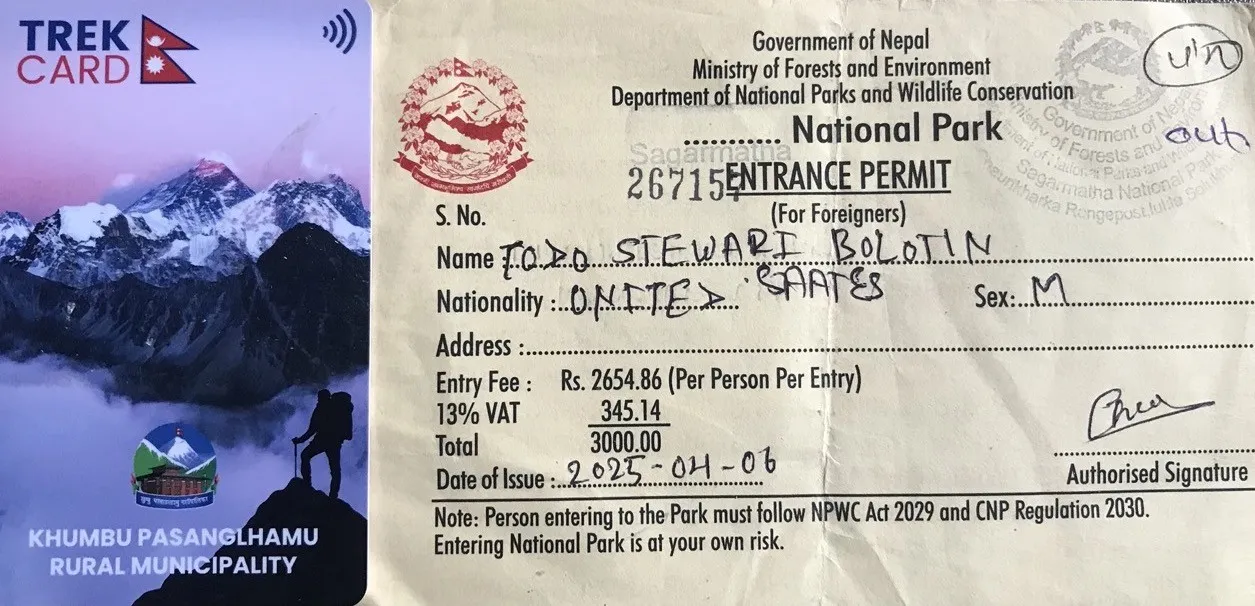
For those planning an Everest Trek in 2027 there are normally two main permits required for trekking in the area - the Sagarmatha National Park entry permit and the Khumbu Pasang Lhamu Rural Municipality's fee/Trek-Card. There is not normally a specific “Everest Base Camp permit” for the EBC route.
What Permits Are Required for Everest Trekking?
Permit / Fee| Required For | Where It Is Arranged
Sagarmatha National Park Entry Permit NPR. 3000| Everest area within national park | Authorized entry system/point/ Trekking agency or trekker
Khumbu Pasang Lhamu Rural Municipality Fee/Trek-Card | Accessing the Khumbu local area | Lukla tourist information center or other designated system/ Trekking agency or trekker
In fact, the Sagarmatha National Park entry permit is required for access to the protected area that includes Everest trekking routes while the Khumbu local area fee is a separate charge. Detailed cost and administrative information should be confirmed ahead of an Everest Trek 2027 as these can vary.
What Is the Sagarmatha National Park Permit?
The Sagarmatha National Park entry permit is required for trekkers visiting the protected area, covering the conservation zone that includes the popular trekking areas of Namche Bazaar [3,440m / 11,286ft], Tengboche [3,860m / 12,664ft] and the Everest Base Camp trail.
Here, foreign national visitors are currently charged NPR 3,000 while SAARC nationals are charged NPR 1,500 for the national park entry fee, although this amount should always be confirmed ahead of departure for an Everest Trek 2027.
What Is the Khumbu Permit?
The Khumbu Pasang Lhamu Rural Municipality's local area fee is currently referred to by trekkers as the Khumbu permit, local permit or Khumbu Trek-Card.
Here, the local authority currently arranges Trek-Card services through its Tourist Information Center in Lukla while the published fee for non-SAARC and non-China nationality visitors is NPR 3,000. The local area permit is a separate charge to the Sagarmatha National Park permit and should be included in Everest Trek costs.
Is a Separate Everest Base Camp Permit Required?
There is not normally a specific “Everest Base Camp permit” for the standard EBC route, instead requiring the necessary national park access permission and the local area permit for the Khumbu region.
Here, other permits may be necessary for itineraries that involve visiting a restricted area or combining an Everest Trek with travel in another controlled region. The exact permit requirements should be confirmed for any individual Everest Trek 2027 itinerary.
Where Can You Get Everest Trek Permits?
Individual trekkers can normally make their own arrangements for permits and local area registration, following the current administrative procedures.
Mostly, trekking agencies will normally make these arrangements on behalf of clients, which can be more efficient and less stressful Everest Trekking.
Prior to departure for an Everest Trek trekkers should ensure they have:
Original passport.
Passport copy or digital passport copy.
Trekking itinerary.
Emergency contact information.
Travel insurance details.
Required permit or registration documents.
Passport size photographs if requested by the relevant authority.
What Does a Trekking Agency Handle?
A trekking agency will normally make the necessary arrangements for permits and local area registration as part of the Everest Trek 2027 service, with the traveler providing passport details and other required documents.
Meanwhile, permit arrangements should be clearly included in a Haven Holidays Everest Trek package, with travelers always confirming if government, local or other fees are included prior to final booking.
Everest Trek Permit Checklist
Prior to departure for an Everest Trek make sure:
Passport information is correct.
Required permits for the Everest region are arranged.
Itinerary matches the permits.
Guide has access to the necessary documents.
Copies of relevant documents are retained.
Appropriate travel insurance is in place.
Emergency contact details are available.
2027 permit costs are confirmed prior to departure.
In summary, permit preparation is straightforward if the itinerary is planned correctly but should not be left until the last minute. A registered trekking agency will normally make the required arrangements prior to departing for the Everest region.
The traditional method of reaching the starting point for an Everest Trek involves a flight from Kathmandu to Tenzing-Hillary Airport in Lukla [2,860m / 9,383ft].
However, trekkers may also access the Everest region by road from Kathmandu through Salleri before continuing toward Surke, making the alternative road access a useful option for those wishing to avoid taking the Lukla flight.
What Are the Main Ways to Reach the Everest Trek Starting Point?
Transportation Option| Starting Point| Main Gateway| Suitable For
Flight| Kathmandu or Manthali/Ramechhap| Lukla [2,860m / 9,383ft] |Fast traditional approach
Road + Jeep| Kathmandu| Salleri → Surke| Travelers avoiding Lukla flights
Road + Jeep + Trek| Kathmandu| Salleri → lower Solukhumbu → Everest trail| Longer and more gradual approach
Private transportation| Kathmandu| Salleri/Surke or other accessible points| Flexible private itineraries
Thus, the most practical choice will depend on the time of year, time available, road conditions, flight schedules and overall trekking itinerary for an Everest Trek 2027, meaning it is best to confirm transportation shortly prior to departure rather than relying on a published schedule.
How Do You Get From Kathmandu to Lukla?
The Kathmandu-Lukla flight is the fastest traditional method of reaching the Everest trekking trail, normally taking around 30-40 minutes if operating normally.
Following a flight to Lukla [2,860m / 9,383ft] the trek normally continues onward toward Phakding [2,610m / 8,563ft] and then Namche Bazaar [3,440m / 11,286ft].
In fact, the flight provides a significant time saving over the road journey while allowing immediate commencement of the popular Everest trail, although trekkers should never rely on Lukla flight schedules being completely reliable.
Do Lukla Flights Operate From Kathmandu?
Lukla flights can operate from Kathmandu ( winter and monsoon) but is scheduled from Ramechhap Airport in Manthali during busy trekking periods ( Autumn and Spring) depending on seasonal airport management, airline operations and other aviation considerations.
Meanwhile, travelers should always confirm the departure airport for a Lukla flight with their airline or trekking agency ahead of an Everest Trek 2027, particularly given the additional road transfer required from Manthali.
How Do You Travel From Kathmandu to Manthali?
If a Lukla flight is departing from Manthali travelers will need to make the road journey from Kathmandu to Ramechhap Airport, which normally takes several hours. Travelers with a Lukla flight departing at an early hour will need to leave Kathmandu the preceding night or very early in the morning.
Here, the actual travel time will depend on road conditions and transport arrangements, so the exact departure time should be confirmed with your trekking agency for the Everest Trek 2027.
Can You Travel to Everest by Road Through Salleri?
Yes, the road from Kathmandu to Salleri is a popular alternative to the Lukla flight with trekkers taking the road toward Salleri [approximately 2,390m / 7,841ft] before continuing on shared or private jeep toward Surke depending on current road access.
But, the road journey will take longer than the flight but can help avoid delays at Lukla while also providing an alternative means of gaining access to the Everest trail through the lower Solukhumbu region.
What Is the Salleri to Surke Route?
The road route from Salleri to Surke is generally traveled by jeep although the exact destination point can be variable due to ongoing road construction and other factors. From the lower Solukhumbu area the road network allows connection with the Everest trekking trail around Surke and the Lukla region.
A typical road access itinerary might be as follows:
Section| Transport| Approx. Elevation
Kathmandu| Tourist/Private vehicle| 1,320m / 4,330ft
Kathmandu → Salleri| Jeep/Bus/Private vehicle Salleri |about 2,390m / 7,841ft
Salleri → Surke| Shared/Private Jeep Surke| about 2,290m / 7,513ft
However, journey time on the road can be quite variable and the above distances and durations should be regarded as approximate, with your operator confirming the actual vehicle route ahead of an Everest Trek 2027.
Why Do Travelers Choose the Salleri–Surke Route?
The road access to the Everest trekking trail can be advantageous for those who want to avoid relying entirely on the Lukla flight or who find themselves waiting for a flight to Lukla during the busy trekking season.
Among the main advantages are:
Alternative option to the Lukla flight
Useful during busy flight periods
Longer route but through the Solukhumbu region
Flexible itinerary option
Avoids reliance on short mountain flights
Provides greater flexibility
However, the road journey from Kathmandu to Surke via Salleri is significantly longer and potentially tiring given the different road conditions, with weather affecting both journey time and the ability to drive safely.
What Happens If the Lukla Flight Is Delayed?
Lukla flights can be delayed or cancelled due to reduced visibility, strong winds, cloud, rain or other factors and therefore it is important to have at least one or two contingency days when planning an Everest Trek 2027.
Importantly, a contingency day is particularly important prior to an international departure from Nepal as a delay on the return flight from Lukla could cause a local travel issue to become an international flight problem.
Which Transportation Option Is Best for Everest Trek 2027?
Option | Main Advantage | Main Disadvantage
Kathmandu → Lukla flight | Fastest access | Weather related delays possible
Manthali → Lukla flight | Useful during busy periods (Spring and Autumn) Requires road transfer from Kathmandu to Manthali ( 4-5 hrs)
Kathmandu → Salleri → Surke| Avoids direct Lukla flight| Longer and Tiring Road journey
Private road transportation ( Kathmandu-Surke) | More flexible | Higher cost
Shared jeep (Kathmandu-Surke) | More economical | Less flexibility and comfort
However, the Lukla flight remains the most convenient option for most Everest Trek travelers with limited time but those with more flexibility might consider the Salleri-Surke road access while all trekkers should allow for contingency days as both flights and mountain roads can be subject to weather interference.
The Everest Trek elevation profile varies significantly from the lower Khumbu Valley up through the high glacial region around Everest Base Camp, with good reason as your body adjusts to the extreme altitude changes from Lukla at 2,860m up to over 5,500m at Kala Patthar.
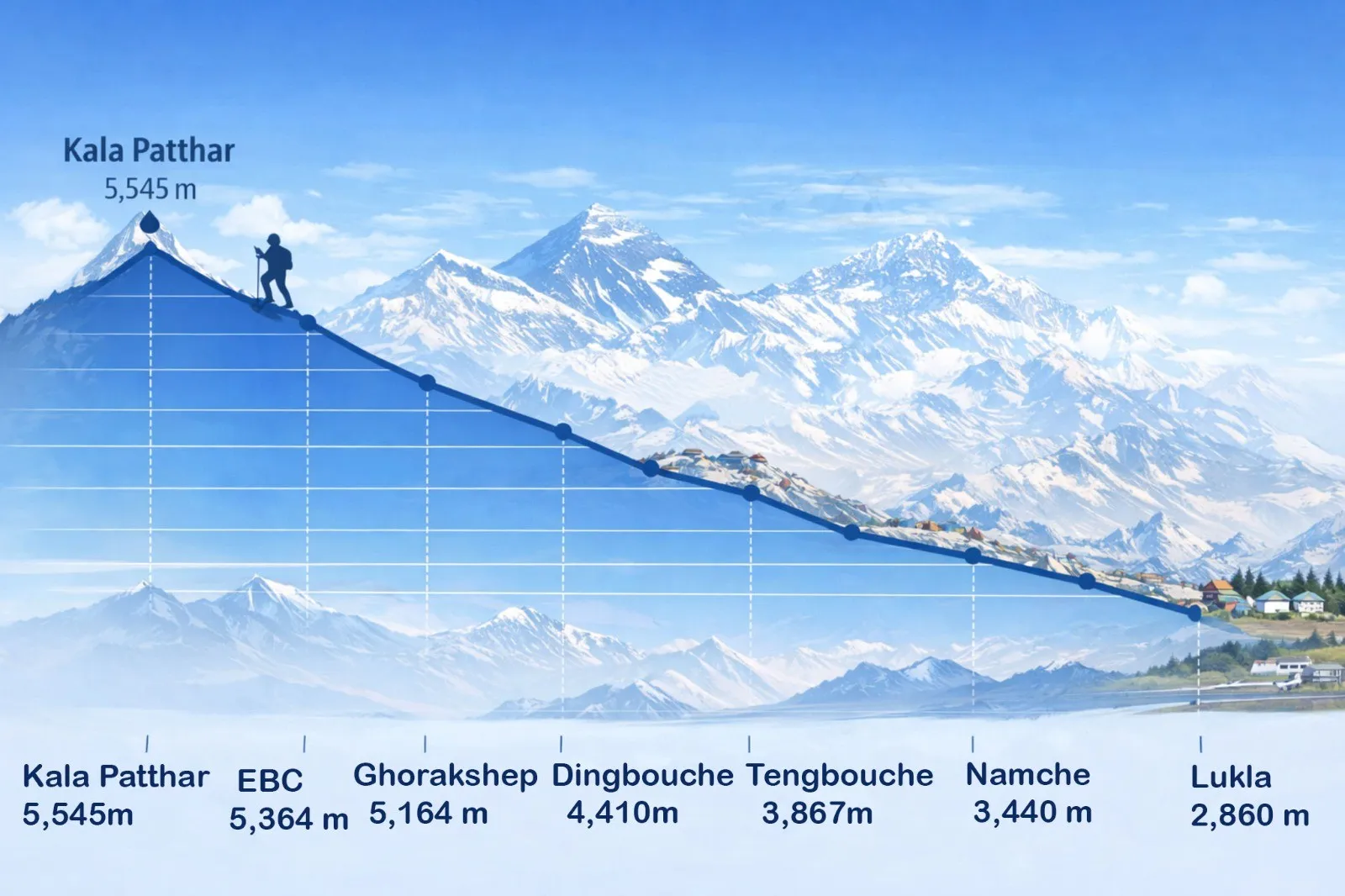
What Are the Main Everest Trek Elevations?
| Place | Elevation (m) | Elevation (ft) | Importance |
| Kathmandu | 1,320m | 4,330ft | Arrival and preparation |
| Lukla | 2,860m | 9,383ft | Traditional trekking gateway |
| Phakding | 2,610m | 8,563ft | First common overnight stop |
| Namche Bazaar | 3,440m | 11,286ft | Major trading and acclimatization point |
| Tengboche | 3,860m | 12,664ft | Famous monastery and mountain viewpoint |
| Dingboche | 4,410m | 14,469ft | Important acclimatization village |
| Lobuche | 4,910m | 16,109ft | High-altitude overnight stop |
| Gorakshep | 5,164m | 16,942ft | Last settlement before EBC |
| Everest Base Camp | 5,364m | 17,598ft | Main trekking destination |
| Kala Patthar | 5,545m | 18,192ft | Highest major viewpoint on the standard EBC route |
Here, the elevations shown above are useful planning figures for trekkers, although exact measurements can vary slightly between maps, GPS devices and local references. Kala Patthar reaches about 5,545m, making it higher than Everest Base Camp and one of the highest points reached on the standard Everest Base Camp Trek.
Why Does Elevation Matter on Everest Trek?
Altitude is one of the main challenges of the Everest Trek due to the reduced oxygen content of the air at higher elevations. A distance that seems short on a map can actually take longer to walk at high altitude.
Meanwhile, a sensible and practical itinerary Everest Trek Itinerary should include acclimatization rather than continuous climbing. Namche Bazaar is widely used for an acclimatization day, while another day of acclimatization is normally included around Dingboche or Pheriche before heading to Lobuche and Gorakshep.
What Is the Altitude Gain on the Everest Trek?
The trek isn't a continuous climb due to the mix of ascents and descents along the trail, but the overall elevation still rises from 2,860m at Lukla to 5,364m at Everest Base Camp with Kala Patthar at approximately 5,545m.
The key altitude changes include:
Lukla (2,860m) → Phakding (2,610m)
Phakding (2,610m) → Namche Bazaar (3,440m)
Namche (3,440m) → Tengboche (3,860m)
Tengboche (3,860m) → Dingboche (4,410m)
Dingboche (4,410m) → Lobuche (4,910m)
Lobuche (4,910m) → Gorakshep (5,164m)
Gorakshep (5,164m) → Everest Base Camp (5,364m)
Gorakshep (5,164m) → Kala Patthar (5,545m)
Meanwhile, the first day from Lukla to Phakding can actually lose elevation overall, although the trail includes several short ascents and descents. This helps explain why elevation should be considered in combination with walking distance, terrain and daily altitude gain.
What Is the Everest Base Camp Elevation?
The commonly used EBC elevation on the Nepal side is approximately 5,364m (17,598ft), although the exact figures can vary slightly as the EBC location changes slightly on the moving glacial terrain.
Here, the approach from Gorakshep involves navigating high-altitude terrain and a slow pace is recommended. Note that Nepal Tourism Board describes the final approach toward Base Camp as glacial terrain where careful walking is needed.
What Is the Kala Patthar Elevation?
Kala Patthar is at approximately 5,545m (18,192ft) and is higher than Everest Base Camp on the standard trekking route. It's one of the most popular viewpoints as it offers broad views toward Mount Everest and surrounding Himalayan peaks.
In fact, the climb to Kala Patthar is normally made early in the morning from Gorakshep as sunrise can provide excellent mountain visibility. However, the climb is physically demanding due to the extreme thinness of the air at this elevation.
Which Places Are Important for Acclimatization?
Namche Bazaar and Dingboche are particularly important stops for acclimatization on a typical EBC itinerary. Instead of simply resting on these days, trekkers normally make short hikes to higher elevations and return to sleep at the lower village.
Useful activities include:
Namche → Everest View Hotel [3,880m / 12,730ft].
Namche → Khumjung or Khunde.
Dingboche → Nagarjun viewpoint or surrounding hills.
Dingboche → higher viewpoints around the Imja Valley.
In summary, acclimatization should be combined with a slow walking pace, adequate hydration, regular meals and attention to altitude-related symptoms. If serious symptoms develop, it's more important to descend to a lower elevation than to follow the planned itinerary.
Why Does Elevation Make the Everest Trek Harder?
The higher you go, the slower your body will generally work and recover. This means that a five-hour walk at 4,500m can feel significantly harder than the same distance at a lower elevation.
Meanwhile, the Everest Trek should not be measured only in kilometers as altitude, steep sections, cold temperatures, wind and rocky terrain all impact walking ability. A sensible itinerary allows for adequate acclimatization rather than rushing toward Everest Base Camp.
Everest Trek accommodation is based primarily on locally run teahouses and mountain lodges, with more developed facilities seen in places like Lukla and Namche Bazaar.
As you head higher, accommodation becomes simpler, services are more limited, and prices increase due to the need to transport goods into remote mountain villages.
What Is a Typical Everest Trek Teahouse Like?
A typical teahouse provides a simple private or twin-sharing room, a bed, mattress and blanket with toilets available inside or shared, depending on the lodge.
Here, most trekkers spend their evenings in a communal dining room as it tends to be the warmest and most social area of the lodge.
| Facility | Lower Villages | Higher Villages |
| Twin-sharing room | Common | Common but more basic |
| Private room | More available | Limited and more expensive |
| Attached bathroom | Sometimes available | Rare |
| Shared bathroom | Common | Very common |
| Hot shower | Usually available | Available at some lodges for a fee |
| Charging | Usually available | Available but may cost extra |
| Wi-Fi | Available in major villages | Available at many lodges but less reliable |
| Dining room | Yes | Yes |
| Heating | More comfortable | Usually focused on dining room |
In summary, facilities vary between lodges and seasons, so you shouldn't expect city-hotel standards in the upper Khumbu. Nepal Tourism Board confirms that major trekking areas have lodges and teahouses with accommodation and food, with charging and communication facilities also available in popular trekking regions.
What Are the Rooms Like on the Everest Trek?
Twin-sharing rooms are the norm for organized trekking groups, especially if you have booked an EBC trekking package.
Primarily, rooms will normally contain two beds with mattresses, pillows and blankets, although you should bring a good sleeping bag as it can get quite cold at night on these treks.
However, private rooms are available in larger villages like in Lukla, Phakding, Namche and Dingboche but they become increasingly limited during busy trekking seasons.
As a result, you should try booking accommodation in advance if traveling in October, November, April or May.
Are Bathrooms and Hot Showers Available?
Bathrooms are available at most Everest Trek lodges, but facilities become more basic at higher elevations. Toilets tend to be shared rather than attached to the bedroom in many higher villages.
On the other hand, hot showers are available at many teahouses for an extra charge, but this can depend on fuel, electricity, water supply and the lodge itself.
At very high altitudes, many trekkers prefer to wash less frequently as hot showers can be uncomfortable and increase the risk of cold exposure.
Inc conclusion, make sure that you can have hot shower in Lukla, Namche and Dingboche with some extra cost like NPR. 400-600 per shower.
Is Wi-Fi Available During the Everest Trek?
Wi-Fi is available in many established villages, especially around Namche Bazaar, Lukla and Dingboche and larger settlements.
However, connection speeds can vary greatly, particularly as you head toward Lobuche and Gorakshep.
Likewise, mobile coverage is also available in parts of the Everest region, but it shouldn't be assumed to be available throughout the trek.
Please, note that Namche Bazaar has developed as a major tourist hub with hotels, restaurants, equipment stores and communication facilities.
Can You Charge Your Phone and Camera?
Charging facilities are available at most teahouses, but there's usually an extra cost at many lodges and availability can become more limited at higher altitudes. Some trekkers bring portable power banks or solar chargers to reduce reliance on lodge electricity.
Here, you should charge devices whenever possible rather than waiting until the battery is nearly empty. A power bank is particularly useful for phones, cameras, GPS devices and emergency communication.
What Food Do You Get on the Everest Trek?
Food on the Everest Trek is surprisingly varied, especially in the lower and middle sections of the trail. Dal bhat is one of the most convenient choices as it provides rice, lentils, vegetables and usually a curry or pickle, but menus also tend to include noodles, soups, momos, pasta, eggs, potatoes, and Tibetan-style dishes.
Typical meals include:
Dal bhat with rice, lentils and vegetables.
Vegetable or chicken noodles.
Sherpa or vegetable stew.
Momos and Tibetan-style dumplings.
Pasta with tomato or vegetable sauce.
Fried rice.
Potato dishes.
Eggs and omelets.
Tibetan bread.
Garlic soup.
Pancakes and porridge.
Toast with eggs or jam.
Tea, coffee and hot chocolate.
In fact, menus can be surprisingly extensive in villages like Namche Bazaar, Lukla and Dingboche but options become more limited as you head toward Lobuche and Gorakshep.
As a result, simple foods that are warm, familiar and easy to digest tend to be most popular at high altitude.
Does Food Become More Expensive at Higher Elevations?
Yes, food prices increase with elevation as ingredients, fuel and other supplies have to be transported into remote mountain settlements. The difference between Namche and the much higher villages near Everest Base Camp can become noticeable.
Actually, Dal bhat is a particularly good value as it's filling and available throughout much of the trekking route.
However, you should budget for additional drinks, snacks, charging, hot showers and other services that may not be included in your trekking package.
What Should You Eat During the Everest Trek?
A well-balanced diet that includes enough carbohydrates, protein and fluids is vital during long days of high-altitude walking. Many trekkers prefer warm meals and should drink plenty of fluids as dehydration affects both fatigue and altitude discomfort.
A good food routine might include:
Breakfast before starting the day's walk.
Plenty of water or other suitable fluids.
Dal bhat or another substantial lunch.
Soup or noodles on colder days.
Snacks like nuts, chocolate or energy bars.
A warm evening meal after reaching the lodge.
Garlic soup or other light foods if preferred.
Importantly, avoid drinking alcohol at high altitude where dehydration is a concern and acclimatization is needed. Your guide may also help you select meals based on your appetite, altitude and walking conditions.
What Should You Expect at Everest Base Camp Teahouses?
Accommodation becomes particularly basic around Gorakshep [5,164m / 16,942ft] as this is the last settlement before Everest Base Camp. The few available teahouses provide essential shelter, meals and sleeping facilities, but you shouldn't expect the same level of comfort as in Namche Bazaar.
More importantly, warmth and rest are more important than luxury at this altitude. Note that Nepal Tourism Board mentions the teahouses at Gorakshep provide shelter before trekkers make the final journey toward Everest Base Camp.
What Makes Teahouse Trekking Different From a Hotel Trek?
Teahouse trekking involves staying in local mountain lodges rather than camping out with a full set of equipment. This makes the Everest Trek much more practical, but you also need to accept basic rooms, shared facilities and widely varying comfort levels.
Meanwhile, the benefit is that you can experience local hospitality, dine on freshly prepared meals, and meet fellow travelers along the way.
As a result, the Everest Trek accommodation experience should be seen as part of the journey rather than as a traditional hotel stay.
An Everest Trek packing list 2027 should be centered around warm, lightweight and practical equipment as opposed to heavy load items. Here, it is important to prepare for the change from Lukla [2,860m / 9,383ft] to Everest Base Camp [5,364m / 17,598ft] and Kala Patthar [5,545m / 18,192ft], so your gear needs must support cold climate, bright sunlight, fluctuating weather conditions and long walking hours.
What Should You Pack for the Everest Trek?
| Category | Recommended Items | Why You Need Them |
| Clothing | Base layers, fleece, down jacket, waterproof jacket, trekking trousers | Managing the temperature variations on the trail |
| Footwear | Trekking boots, sandals or camp shoes, warm socks | Comfort and protection for feet |
| Sleeping gear | Sleeping bag, sleeping bag liner | Useful for cold mountain lodges |
| Backpack | Daypack, rain cover, duffel bag | Storage for your day's equipment and personal belongings |
| Sun protection | Sunglasses, sunscreen, lip balm, sun hat | Protection from strong UV radiation at altitude |
| Hand protection | Inner gloves, warm gloves, waterproof gloves | Warming solutions for the hand extremities |
| Water | Water bottles or hydration bladder, purification tablets/filter | Daily fluid needs and purification on the go |
| Trekking gear | Trekking poles, headlamp, gaiters | Stability and convenience on the trail and for unpredictable weather conditions |
| Personal items | Toiletries, quick-dry towel, tissues, sanitizer | Personal hygiene and comfort |
| Documents | Passport, copies, insurance documents, permits | Essential papers for your journey |
| Electronics | Phone, camera, power bank, charging cables | Communication and capturing special moments |
| Medical/safety | Personal medicines, basic first-aid supplies, blister care | Management of frequently occurring trekking issues |
What Clothing Should You Pack?
Layering your clothing offers significantly more flexibility and warmth than carrying multiple heavy jackets, and is best practice for the Everest Trek.
Meanwhile, a layering system offers the ability to add or remove items of clothing while walking, resting or as temperatures change through the day.
A good clothing system for the Everest Trek could comprise:
2-3 moisture-wicking base-layer tops.
1-2 thermal tops and bottoms.
2 pairs of trekking trousers.
1 fleece or warm mid-layer.
1 insulated down or synthetic jacket.
1 waterproof/windproof outer shell.
3-5 pairs of trekking socks.
Warm hat or beanie.
Sun hat or cap.
Lightweight gloves.
Warm insulated gloves.
Waterproof shell trousers.
Comfortable camp clothes.
In summary, there is no need to pack your entire wardrobe as laundry and washing facilities are available in lower mountain villages.
However, it is important to have enough dry clothing for multiple days as it can take a long time to dry in the mountains.
What Footwear Is Best for Everest Trekking?
Comfortable, well-broken in trekking boots with a good grip are the best general-purpose footwear for the main trail of the Everest Trek. Your footwear needs to support rocky paths, stone steps, uneven ground and long downhill sections.
You should also pack:
3-5 pairs of good-quality trekking socks.
Lightweight sandals or camp shoes.
Blister protection.
Optional gaiters for snow, mud and wet conditions.
Waterproofing treatment if your boots require it.
Importantly, never wear new boots on a high-altitude trek, as blisters and foot pain can severely impact your journey. Blisters and foot pain should not be ignored on a high-altitude trek.
Do You Need a Sleeping Bag for Everest Base Camp?
Yes, a good-quality sleeping bag is strongly recommended as it becomes extremely cold in mountain lodges, especially above Dingboche [4,410m / 14,469ft]. A sleeping bag liner adds an extra level of warmth and is also good for hygiene purposes.
Here, trekkers can bring their own sleeping bag or rent one in Kathmandu, especially in the Thamel area. A sleeping bag liner can also be useful for extra warmth and hygiene.
Should You Carry a Duffel Bag and Daypack?
Organized Everest treks normally use a duffel bag for the equipment carried by your porter and a daypack for your personal needs on the day's walk. This is more comfortable than carrying your entire luggage from one place to another.
Your daypack should normally contain:
Water.
Rain jacket.
Warm layer.
Snacks.
Sunscreen.
Sunglasses.
Camera or phone.
Personal medicines.
Documents.
Headlamp.
Gloves or hat.
Small first-aid items.
In conclusion, it is best to keep your personal items and valuables in your daypack instead of the duffel bag carried by your porter.
Do You Need Trekking Poles?
Trekking poles are not compulsory but they are highly recommended on the Everest Trek. Poles provide an extra level of stability on rocky and uneven ground, stone steps and long downhill sections.
Likewise, trekking poles also offer a good solution for tired legs after a day's trekking and can reduce the strain of walking uphill and downhill.
How Much Water Should You Carry?
You should have enough reusable water bottles or a hydration system to carry the amount of water recommended by your guide and itinerary. You will find water sources and bottled water on the trail, but it is always a good idea to be prepared with purification tablets, a portable water filter or UV purification device.
Useful options for water purification and storage include:
Water purification tablets.
Portable water filters.
UV purification devices.
Reusable water bottles.
Insulated bottle for cold conditions.
Importantly, keeping yourself sufficiently hydrated on the Everest Trek is essential, but you should not overdo it. Drink water according to your needs and how much you sweat during the trek.
What Sun Protection Should You Pack?
The UV index is stronger at altitude and light-colored surfaces such as snow reflect sunlight, so good sunglasses, sunscreen and lip protection are essential items on the Everest Trek.
Packing should include:
UV protection sunglasses.
High SPF sunscreen.
SPF lip balm.
Sun hat.
Lightweight neck covering or neck buff.
Face covering for wind and dust.
What Electronics Should You Bring?
Limit electronics to the devices you actually need as charging can be less convenient at higher altitudes. A smartphone, camera, power bank and the required charging cables are normally enough for most trekkers.
A useful electronics list includes:
Smartphone.
Camera if required.
Power bank.
Charging cables.
Universal adapter.
Spare camera batteries.
Headlamp with spare batteries.
What Documents Should You Carry?
Keep your important documents protected from the weather and easily accessible. Make digital copies and keep them in your phone or in the Cloud as well.
Carry:
Passport.
Passport copies.
Travel insurance certificate.
Emergency contact details.
Trekking permits.
Flight information.
Hotel details.
Important medical information.
Payment cards and some Nepalese cash.
What Medical and Safety Items Should You Pack?
A personal medicine kit should cover basic trekking problems, but it should not be a replacement for professional medical care.
If you regularly take medication, bring enough for the duration of your trip and always consult a medical professional for high-altitude illness or other concerns.
A personal kit can include:
Personal prescription medicines.
Blister treatment.
Basic bandages.
Antiseptic supplies.
Oral rehydration solution.
Basic pain relief medicine if medically appropriate.
Personal hygiene items.
Hand sanitizer.
Small first-aid supplies.
Any doctor-recommended altitude medicines.
What Can You Rent in Kathmandu or Thamel?
You do not need to buy everything before coming to Nepal as there are many trekking shops in Kathmandu and Thamel that offer rentals or sales of most equipment.
In fact, renting can greatly reduce the weight of your luggage and is useful for larger items that you may not use often.
Equipment Rental in Kathmandu
| Equipment | Commonly Available for Rental |
| Sleeping bag | Yes |
| Duffel bag | Yes |
| Down jacket | Yes |
| Trekking poles | Yes |
| Trekking boots | Available, personal boots are preferable |
| Backpack | Yes |
| Gaiters | Often available |
| Warm gloves | Available |
| Fleece layers | Available |
| Headlamp | Often available |
When it comes to footwear, your personal well-fitting boots are always preferable to rented boots.
Before leaving Kathmandu, test all rented equipment and make sure that zippers, straps, poles and sleeping bags function correctly.
What Should You Not Overpack?
Avoid bringing unnecessary clothing, large bottles of toiletries, excessive amounts of electronics and infrequently used items. You will notice every extra kilogram during your uphill trekking sections.
Importantly, a good packing tip is to pack light and versatile clothing that can be layered or worn in different ways. Your trekking agency can also help you with weight restrictions for your porter and luggage storage in Kathmandu before the trek begins.
Everest Trek safety involves gradual ascent, proper acclimatization, sensible pacing and recognizing signs of problems.
Meanwhile, the Everest region is known to exceed 4,000m regularly and reach 5,364m at Everest Base Camp, so altitude sickness must be taken seriously even for physically fit trekkers.
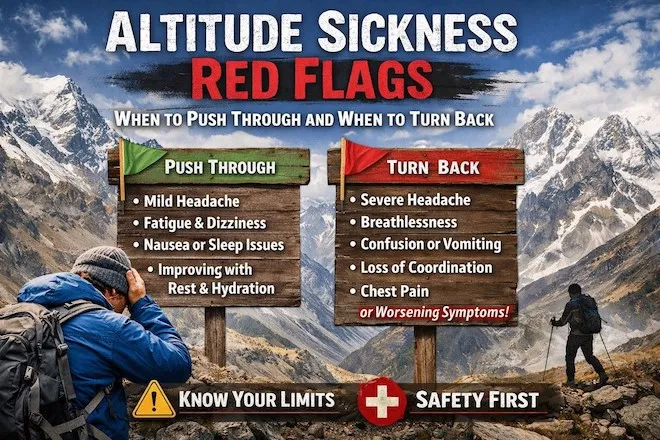
Why Is Altitude Sickness a Concern on the Everest Trek?
Altitude sickness can develop when the body does not adjust to the reduced oxygen at higher altitudes and it can occur irrespective of physical fitness. Anyone who has completed a high-altitude trek in the past is also at risk of altitude illness on another trek.
Here, altitude sickness risk increases at increasing altitude, so the itinerary should be built around acclimatization, not speed, especially as the Everest Trek exceeds 3,000m.
How Can You Reduce the Risk of Altitude Sickness?
The key preventative measure is to ensure a gradual ascent with appropriate acclimatization days. Nepal Tourism Board recommends limiting sleeping altitude gains and using rest days at increasing altitudes, and CDC guidance also emphasizes a gradual climb above 3,000m.
Important practices to reduce altitude sickness risk include:
Ascend gradually.
Follow a good acclimatization itinerary.
Avoid rushing to higher sleeping altitudes.
Walk slowly and maintain a good pace.
Stay well-hydrated.
Eat regular meals.
Get sufficient rest.
Better avoid meat at high alitudes
Avoid alcohol during initial acclimatization.
Inform your guide if you feel unwell.
Most importantly, do not continue ascending to a higher sleeping altitude when you are experiencing altitude illness symptoms and worsening symptoms.
What Is Normal Adjustment at High Altitude?
Some tiredness, more difficult breathing when exercising and adjustment in sleep patterns are all normal reactions to altitude. These symptoms still need to be taken seriously as altitude adjustment and altitude illness often have similar symptoms.
Likewise, a headache, nausea, tiredness or reduced appetite can all be symptoms of acute mountain sickness, particularly after increasing altitude. CDC guidelines state that a trekkers should not ascend to a higher sleeping altitude while experiencing altitude illness symptoms.
What are Common Symptoms of AMS?
Acute Mountain Sickness, or AMS, is the most common form of altitude illness and its symptoms can include:
Headache.
Nausea.
Dizziness.
Tiredness.
Poor appetite.
Vomiting.
Poor sleep.
Here, symptoms of AMS often appear after trekking to a higher altitude and should not be ignored just because you are otherwise healthy and fit.
If your symptoms are worsening, the priority is to stop ascending and get adequate medical attention or descend if necessary.
Note: Most of the trekkers doing Everest Trek can have Khumbu Cough. The Khumbu Cough has the symptoms like that of Acute Mountain Sickness. You will have this cough while you are ascending above Dingboche. So, better ask your guide if it is Khumbu Cough or High Altitude Sickness.
When Should You Stop Ascending?
You should not continue to a higher sleeping altitude if you are experiencing altitude sickness symptoms or if your symptoms are worsening. Rest at the same altitude and inform your guide rather than trying to disguise symptoms to continue as planned.
If your symptoms continue to worsen despite resting at the same altitude, descent is the appropriate response. CDC guidelines specifically recommend descending when altitude illness symptoms worsen at the same altitude.
What Are the Warning Signs of Severe Altitude Illness?
Severe altitude illness can take various forms but high-altitude cerebral edema (HACE) and high-altitude pulmonary edema (HAPE) are two life-threatening conditions that require emergency response.
In fact, these are serious altitude-related illnesses and should never be mistaken for ordinary trekking fatigue.
| Warning Sign | Possible Concern | Appropriate Response |
| Severe or worsening headache | Significant altitude illness | Stop ascending and seek help |
| Confusion or unusual behavior | Possible HACE | Emergency descent and medical care |
| Loss of coordination | Possible HACE | Emergency descent and medical care |
| Extreme drowsiness | Possible severe illness | Emergency response |
| Breathlessness at rest | Possible HAPE | Urgent descent and medical care |
| Persistent cough with breathing difficulty | Possible HAPE | Urgent descent and medical care |
| Rapid deterioration | Serious altitude illness | Emergency evacuation/medical assistance |
Here, a trekker displaying severe altitude illness symptoms should not be left alone or expected to "rest it out." Appropriate communication with the guide and emergency response are essential when dealing with serious altitude illness, according to our experienced team.
How Important Is Acclimatization on the Everest Trek?
Acclimatization is one of the most important aspects of a safe Everest Trek as the body needs to adjust to the reduced oxygen at altitude.
Meanwhile, the normal itinerary for the Everest Trek includes acclimatization days around Namche Bazaar [3,440m / 11,286ft] and another acclimatization period around Dingboche [4,410m / 14,469ft] or similar locations.
During acclimatization days, trekkers spend the day at a higher altitude and return to a lower sleeping altitude at the end of the day. This provides a good level of altitude exposure without requiring the trekker to sleep at the highest point reached during the day.
Does Physical Fitness Prevent Altitude Sickness?
No, being physically fit does not protect against altitude sickness and a fit runner or hiker can still experience AMS if the ascent is too rapid or their body does not adjust to the altitude.
However, physical fitness is still useful for the Everest Trek as you need to be able to walk long distances, tackle steep inclines and deal with the effects of fatigue.
How Does a Guide Help With Everest Trek Safety?
An experienced local guide can observe the group's pace, the road or trail conditions, weather patterns and individual trekker condition changes.
Basically, a guide can also respond to any concerning developments, communicate with local medical facilities and make changes to the itinerary as necessary.
Importantly, local knowledge becomes increasingly valuable at higher altitudes as conditions can change rapidly and appropriate response options are not always available.
In fact, Nepal's Himalayan Rescue Association has an aid post at Pheriche [4,250m / 13,944ft] and Everest ER provides medical facilities in the Everest Base Camp area during the trekking and climbing seasons.
What First-Aid and Safety Preparation Should You Have?
Your trekking agency should have an appropriate first aid kit, but you should bring your personal medicines as well.
Meanwhile, first aid equipment is useful for minor problems, but serious altitude illness requires professional assessment, not a basic trekking first aid kit.
Before departure, confirm that your travel plans include:
Experienced trekking guide with first aid training
First aid kit.
Emergency communication plan.
Appropriate trekking insurance.
Emergency evacuation arrangements.
Access to medical assistance.
Acclimatization days.
Monitoring for weather and route conditions.
Flexible itinerary for changing conditions.
Do You Need Travel Insurance for Everest Trekking?
Yes, comprehensive travel insurance is strongly recommended for the Everest Trek and the policy should specifically cover high-altitude trekking at the highest altitude on your itinerary. The policy should also provide for emergency medical treatment and helicopter evacuation where appropriate.
Importantly, do not assume that an ordinary travel insurance policy covers trekking at 5,000m or above; make sure to read the small print and understand your altitude limitations, conditions, exclusions and emergency response options before departure.
What Is the Most Important Everest Trek Safety Rule?
The most important Everest Trek safety rule is simply to never sacrifice your health for the sake of continuing the journey. Reaching Everest Base Camp is optional, but a responsible response to worsening altitude sickness can be life-saving.
Meanwhile, a good Everest Trek itinerary should always give the guide the flexibility to slow down, stop or change the route if conditions require. In this way, good Everest Trek safety is not about ignoring discomfort, but responding appropriately to potentially dangerous symptoms.
Before you book Everest Trek Nepal 2027 package, look beyond the headline price and consider what services, permits, transportation and support are included in the quote.
In fact, a good trekking company should offer a realistic itinerary, proper acclimatization, expert staff and solutions for emergencies.
What Should You Check Before Booking an Everest Trek?
Booking Factor| What You Should Confirm
Trek itinerary| Number of days, route, acclimatization and highest elevation
Guide| Licensed guide, experience and language
Porter| Porter arrangement and maximum luggage weight
Group size| Maximum number of trekkers
Accommodation| Kathmandu hotel and mountain teahouse standard
Meals| Included meals and drinking-water arrangements
Permits| Sagarmatha National Park and Khumbu fees
Transportation| Lukla flight or Salleri/Surke road option
Insurance| High-altitude trekking and emergency evacuation
Emergency support| Guide communication and evacuation procedure
Equipment| Sleeping bag, duffel bag and rental options
Payment| Deposit, balance and accepted payment methods
Cancellation| Refund, postponement and cancellation conditions
Extra costs| Wi-Fi, charging, showers, tips and personal expenses
Does Your Everest Trek Include a Guide and Porter?
A guide is particularly important on the Everest Trek since the route reaches high elevations and weather conditions can be unpredictable. The guide should know the trail, monitor the group’s pace, recognize risky altitude symptoms and facilitate changes to the plan, if needed.
Likewise, the porter arrangement should also be discussed before booking an Everest Trek since luggage weight restrictions and the ratio between porters and clients varies between trekking companies.
Importantly, ask about weight limits and whether the porter carries your main duffel bag. Also, find out if the porter’s wages, accommodation, meals and insurance are included in the trek cost.
Should You Choose a Group or Private Everest Trek?
A group Everest Trek is usually more affordable since transportation, guide and other operating costs are distributed between several trekkers. A group trekking is also a good option for solo travelers who want to share experiences with like-minded people and stick to a set itinerary.
Unlike that, a private trek normally offers more flexibility in terms of walking pace, accommodation preferences, departure dates and itinerary changes.
However, private treks are usually more expensive since the cost of the guide, transportation and other services is not distributed between climbers.
Trek Type| Main Advantage| Best For
Group Trek | Lower cost and social experience | Solo travelers and budget-conscious trekkers
Small Group | Balance between cost and flexibility |Couples, friends and small families
Private | Trek Flexible itinerary and pace | Travelers wanting personalized service
Custom Trek | Route designed around personal requirements | Experienced or special-interest trekkers
What Should You Know About Everest Trek Insurance?
Travel insurance should explicitly cover high-altitude trekking at the highest elevation included in the itinerary. If your Everest Trek itinerary includes a climb to Kala Patthar [5,545m / 18,192ft], ensure that the policy covers trekking at that elevation rather than general travel insurance.
Likewise, your Everest Trek insurance should also cover emergency medical treatment, helicopter rescue, trip interruption and cancellation costs – make sure you know your policy details and emergency assistance number.
Are Everest Trek Permits Included in the Package?
Before booking your Everest Trek package, find out if it includes all the required permits and local charges. The standard route to Everest normally involves the Sagarmatha National Park entry permit and Khumbu Pasang Lhamu Rural Municipality fee or Trek-Card.
Importantly, avoid comparing trekking companies on the basis of the headline price since a cheaper package might not include permits, transportation, accommodation or other services.
More importantly, a trustworthy trekking company will itemize the quote to show what services are included and what costs should be added to the quoted price.
What Transportation Should You Confirm?
Ask if your Everest Trek package includes a Kathmandu – Lukla flight, a Manthali/Ramechhap – Lukla flight (during applicable periods) or a road transfer via Salleri and Surke.
Actually, flights to Lukla can be canceled or postponed due to weather conditions and your trekking company should discuss the expected airport and transfer logistics before the start of the trek.
Also, find out what the contingency plans are, if your Everest Trek flight is postponed or canceled. It is worth leaving a couple of days as a contingency since mountain weather conditions can prevent flights to and from Lukla.
How Important Is the Acclimatization Schedule?
A cheap or short Everest Trek itinerary is not necessarily a good itinerary since a rapid increase in altitude can make the trek more challenging and potentially dangerous.
Here, pay attention to the acclimatization schedule and make sure that it includes rest days in Namche Bazaar [3,440m / 11,286ft] and the Dingboche or Pheriche area.
Likewise, your Everest Trek itinerary should give you enough time to adjust to the altitude before you reach Lobuche [4,910m / 16,109ft], Gorakshep [5,164m / 16,942ft] and Everest Base Camp [5,364m / 17,598ft].
Importantly, a responsible trekking company should be prepared to modify the itinerary, if the weather forecast, health conditions or trail accessibility make the original plan unsafe.
What Cancellation Terms Should You Check?
Before you pay any deposit for your Everest Trek, read the cancellation and postponement policy since trekking conditions, flights and health issues can change.
Here, a trustworthy trekking company will have a clear cancellation policy with specific terms for deposits, balance payment deadlines, cancellation charges, postponement options and reimbursement for unused services.
Most importantly, ask about the company’s procedure in exceptional circumstances, such as an injury, natural disaster, airline cancellation or company-initiated cancellation of your trek. Always make sure any verbal statements are confirmed in writing, especially if they involve financial liabilities.
What Emergency Support Should a Trekking Company Provide?
An established Everest trekking company should have a clearly defined procedure for emergency situations rather than asking you to sort it out yourself. The guide should be able to contact the company, organize appropriate assistance and recommend a safe descent or evacuation, if needed.
Before you book an Everest Trek, ask about:
• Guide communication and emergency contacts
• First-aid equipment
• Medical support along the route
• Emergency evacuation procedures
• Helicopter evacuation coordination
• Insurance documentation
• Alternative arrangements after serious delays
• Company support during flight cancellations
• Emergency contact available in Kathmandu
What Should You Confirm Before Booking?
Use this Everest Trek booking checklist before you make your final decision:
Is the itinerary realistic for the altitude?
Are acclimatization days included?
Is the guide licensed and experienced?
Is the porter arrangement clearly explained?
What is the maximum group size?
Are accommodation and meals included?
Are both major Everest region permits included?
Is transportation by flight or road clearly stated?
Could flights depart from Manthali/Ramechhap?
Are contingency days recommended?
Does your insurance cover the maximum trekking elevation?
Is emergency evacuation covered?
Is a sleeping bag and duffel bag provided or available for rental?
What expenses are excluded?
What are the cancellation and postponement terms?
Is the final price clearly itemized?
How Can You Book an Everest Trek with Haven Holidays?
At Haven Holidays, we specialize in creating realistic Everest Trek itineraries with appropriate acclimatization, transportation and the level of support you require.
Here, we can arrange group, private and custom Everest Trek packages with local guides, required permits, mountain accommodation and practical support throughout your journey.
If you are considering booking an Everest Trek in 2027, let us know your preferred travel month, number of travelers, availability in terms of days and whether you would prefer a group or private trek.
Also, we can recommend a suitable route and prepare an Everest Trek package 2027 according to your time, budget and trekking experience.
Everest Trek in Nepal 2027: FAQs
2. What is the best Everest Trek in Nepal in 2027?
The Everest Base Camp Trek is the top choice for 2027 for those hoping to see Everest's base camp and experience the heart of the Khumbu region, although the Everest View Trek offers shorter and easier itineraries while Gokyo and Three Passes are better options for those seeking less-crowded trails, glacial lakes and high passes.
3. What is the best time for Everest Trek in Nepal?
The best time for Everest Trekking in Nepal is typically during spring (March-May) and autumn (September-November) when the weather is generally more predictable and the mountain views are clearer. October and November are particularly popular, though these months also involve higher competition for limited teahouse accommodations and flights. Nepal Tourism Board also recommends Sagarmatha National Park visits during March-May and October-November.
4. How much does Everest Trek cost in 2027?
The Everest Trek cost in Nepal in 2027 is projected to range from roughly USD 1,375-2,355 per person depending on the chosen route, size of the trekking group, transport and accommodation options, including guides and porters.
In fact, a standard EBC package would typically include more expenses than a shorter Everest View Trek while private arrangements and upscale accommodations will add to the final price.
5. Can beginners do Everest Trek in Nepal?
Beginners can do the Everest Trek in Nepal if they are properly prepared for the challenges of a high-altitude trek, since the EBC route involves gradual ascents rather than significant technical climbing.
Meanwhile, a good training regimen and pacing during the trek itself will be critical for inexperienced hikers who should also consider adding acclimatization days at major stops like Namche and Dingboche.
6. How to prepare for Everest Trek in Nepal?
The key to preparing for the Everest Trek in Nepal includes building a solid cardiovascular foundation through regular biking, hiking, stair climbing and other forms of exercise several months in advance, as well as acquiring suitable gear such as hiking boots, layered clothing, a good sleeping bag and water bottles.
Likewise, it is also important to pack essential medications, sun protection and travel insurance while leaving enough time for acclimatization as altitude sickness affects everyone regardless of fitness levels
7. What are the permits required for Everest Trek and how much do they cost?
The standard Everest Base Camp Trek requires two primary permits: Sagarmatha National Park entry permit and Khumbu Pasang Lhamu Rural Municipality tourism fee. The current listed rates for foreign trekkers are NPR 3,000 + NPR 3,000 = NPR 6,000 total, though the 2027 fees should be reconfirmed closer to the departure date.
8. How much does Lukla Flight cost?
The cost of a Lukla flight for an Everest Trek is usually around USD 510-580 for a return ticket, though the 2027 airfare can fluctuate depending on the airline, fuel prices, seasonal demand and other factors.
During peak trekking season, the flights might be diverted to Manthali Airport in Ramechhap requiring an additional road transfer from Kathmandu.
9. Can I go to Everest Base Camp by road from Kathmandu?
It is possible to reach the Everest trekking region from Kathmandu without taking the Lukla flight, although the road options only extend to a certain point.
Here, a viable alternative is the route Kathmandu → Salleri → Surke which connects to the Phakding leg of the Everest Base Camp trail; current road conditions determine how far a passenger jeep can travel.
The Everest Trek in Nepal in 2027 promises to be one of the most rewarding high-altitude treks, including experiences of trekking through Sherpa villages, Buddhist monasteries, suspension bridges, glaciers - and the view of Everest itself. The classic EBC route will still require gradual acclimatization while evolving road access towards Surke and Lukla could provide alternative travel options.
Our travel experts are ready to assist you with any questions.
Send us a message.Have a question before you book? Send your enquiry below and our travel experts will get back with the required information.