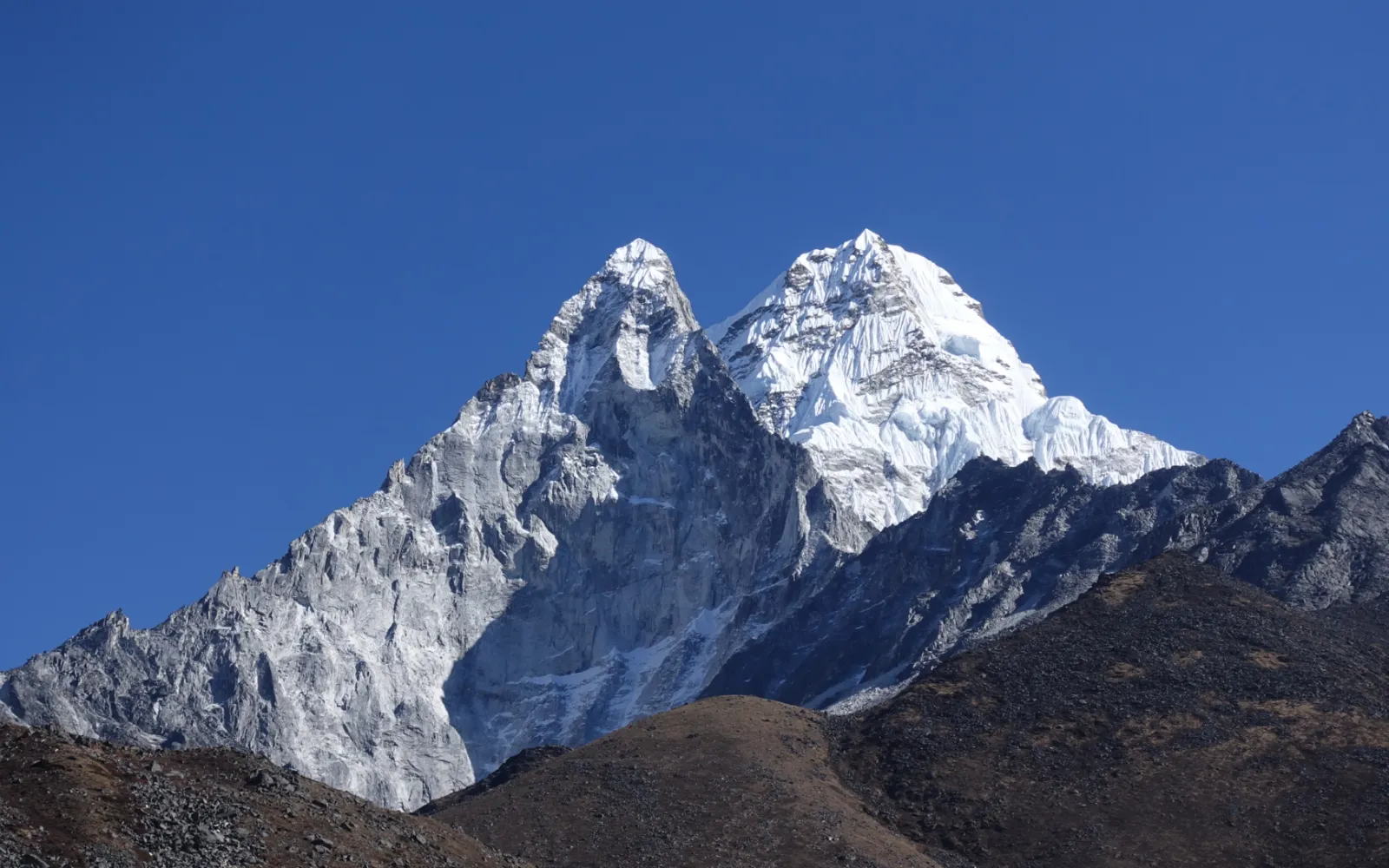
Generally, Nepal Trekking is well known for its mountain views, serene trails, deep woods, rare wildlife, sunsets and sunrises, water falls, lakes, local hospitality and foods.
Moreover, Nepal trekking offers you the authentic history, spirituality and culture of the local people transferred from generations.
Here, before planning Nepal trekking, one should know about the weather conditions, trekking routes, accommodation, budget, permits and guides.
Thus, lets’ see all these factors in detail in order to set a better trekking itinerary for Nepal.
Nepal trekking covers a wide variety of walking holidays that range from easy lowland walks to high-altitude Himalayan expeditions. Additionally, the trekking routes run through forests, valleys, terraced hillsides, traditional villages and monasteries, glaciers, and high mountain passes.
Meanwhile, the major trekking regions in Nepal include Everest, Annapurna, Langtang, Manaslu, Mustang, and Kanchenjunga. All have different landscapes, cultures, altitudes, and trekking difficulties.
For instance, you could walk to Everest Base Camp, or explore high Himalayan passes, walk through Tibetan-style villages, and do short walks around Kathmandu and Pokhara.
Thus, Nepal trekking can be organized based on your time, fitness, and the kind of landscape that interests you most.
Beginners as well as experienced trekkers can find suitable hiking and trekking options in Nepal as long as they make the preparations.
However, high-altitude trekking requires special provisions, acclimatization, appropriate gear, and good local support.
Importantly, At Haven Holidays we operate walking holidays in Nepal with licensed guides and porters, transport, accommodation, permits, and tailored itineraries. Thus, we focus on matching the trekking options with your time, fitness, and Himalayan experience.
What Can You Experience While Trekking in Nepal?
Himalayan mountain views
Traditional mountain villages
Buddhist monasteries and prayer walls
Rhododendron and alpine forests
Rivers, waterfalls, glaciers, and high valleys
Local food and village hospitality
High mountain passes
Sunrise and panoramic viewpoints
Cultural experiences in different Himalayan communities
Short hiking and trekking options as well as longer expeditions
Moreover, Nepal Himalayas trekking, short hiking experiences, and general trekking holidays all need to be planned with regard to your fitness level, travel objectives, and time.
In addition to, current road conditions, trek accessibility, permits, and weather should also be considered when selecting a route and departure date.
Nepal has several major trekking regions, and each provides a different kind of experience in terms of altitude, landscape, accommodation, trekking difficulties, and duration.
Therefore, the selection of major Nepal trekking routes depends on your time, fitness level, trekking experience, and the Himalayan environment of your choice.
Major Nepal Trekking Routes at a Glance
Trekking Route | Approx. Highest Point | Typical Duration |Main Highlights | Difficulty
Everest Base Camp | 5,364–5,545 m | 12–16 days | Everest, Khumbu villages, Tengboche, Kala Patthar | Challenging
Annapurna Circuit | 5,416 m | 12–18 days | Manang, Thorong La, Mustang landscapes | Challenging
Annapurna Base Camp | 4,130 m | 7–12 days | Annapurna Sanctuary, Machhapuchhre, villages | Moderate
Manaslu Circuit | 5,106 m | 14–18 days | Manaslu, Larkya La, remote villages | Challenging
Langtang Valley | 4,984 m | 7–10 days | Langtang Valley, Kyanjin, glaciers | Moderate–Challenging
Upper Mustang |4,000 m+| 12–18 days | Lo Manthang, dry valleys, Tibetan culture | Moderate–Challenging
Nar Phu Valley | 5,320 m | 12–18 days | Nar, Phu, Kang La, remote villages | Challenging
Kanchenjunga | 5,143 m+ | 18–25+ days | Kanchenjunga, remote valleys, high passes | Very Challenging
In fact, the Everest Base Camp itself is around 5,364–5,367 m, while Kala Patthar is about 5,545 m depending on the reference point.
Everest Base Camp Trek
The Everest Base Camp Trek runs along the Khumbu Valley towards the Everest Base Camp. The route goes through Lukla, Namche Bazaar, Tengboche, Dingboche, Lobuche, and Gorakshep experiencing Tibetan and Sherpa culture and the high Himalayan landscape.
Likewise, the trek reaches the Everest Base Camp at around 5,364–5,367 m, and Kala Patthar provides a great viewpoint at about 5,545 m. A typical Everest Base Camp trek takes around 12–16 days including the acclimatization stop in the Khumbu region.
Annapurna Circuit Trek
The Annapurna Circuit Trek runs through the Marsyangdi Valley towards the Thorong La Pass. The trail offers a variety of landscapes from the green valley and forests to the Alpine and trans-Himalayan regions around Manang and Mustang.
However, the road connection has made the trekking distance variable depending on the itinerary. The Annapurna Circuit also passes through cultural regions of Gurung, Manang, and Thakali people.
Annapurna Base Camp Trek
The Annapurna Base Camp Trek leads to the Annapurna Sanctuary and reaches around 4,130 m.
Here, the route runs through villages, forests, and mountain passes towards the Annapurna and Machhapuchhre peaks passing by stone stairways and mountain valleys.
In fact, the Annapurna Base Camp trek typically takes around 7–12 days depending on the access point and itinerary. Hence, it can be organized both as a short Himalayan trekking holiday and a longer adventure.
Manaslu Circuit Trek
The Manaslu Circuit Trek follows the Budhi Gandaki River through remote Tibetan villages towards the Manaslu Peak. The trail passes the Larkya La Pass around 5,106 m and includes places like Namrung, Lho, Sama Gaun, Samdo, Larkya Phedi, and Bimthang.
Likewise, the Manaslu Circuit trek normally lasts around 14–18 days depending on the travel arrangements. As Manaslu region is a restricted area, the current procedure also involves a licensed guide, TIMS issued by trekking agencies, and restricted area permits.
Langtang Valley Trek
The Langtang Valley Trek starts around Syabrubesi and runs towards the Langtang Valley and the Langtang village. The trek involves walking through forests, Tamang villages, and alpine landscapes with glaciers and viewpoints.
Meanwhile, the typical Langtang Valley trek lasts around 7–10 days depending on the starting point and side excursions. The Kyanjin Ri and other viewpoints add an option for a longer high-altitude walk.
Upper Mustang Trek
The Upper Mustang Trek explores the dry landscape of the Himalayas north of Annapurna towards Lo Manthang. The area has dramatic landscapes with caves, monasteries, and villages with Tibetan culture and traditions.
As the Upper Mustang region is a restricted area, the trek requires restricted area permits and a licensed guide from a trekking agency. The trek is most suitable for those interested in the cultural aspect rather than forested Himalayan trekking.
Nar Phu Valley Trek
The Nar Phu Valley Trek combines trekking through remote villages and high mountain passes in the northern Annapurna region. The trail goes through Koto, Meta, Phu, Nar, and the Kang La Pass (around 5,300 m).
Actually, the Nar Phu Valley trek normally takes around 12–18 days depending on acclimatization and whether it is combined with the Annapurna Circuit.
In addition, as the Nar Phu Valley is a restricted area, the necessary permit and guide arrangements need to be made in advance.
Kanchenjunga Trek
The Kanchenjunga Trek visits the remote and less explored eastern Himalayas around the third-highest mountain peak. The route runs through forests, valleys, villages, and high-altitude passes with glaciers and viewpoints.
Meanwhile, the Kanchenjunga Trek is substantially longer and more demanding than many other Nepal treks. Thus, it requires more extensive preparation, longer walking days, and additional support.
Major Features of Nepal's Trekking Regions
Everest: Sherpa culture, Everest views, high-altitude villages, Sagarmatha National Park, Lukla Flights and Kala Patthar.
Annapurna: Diverse landscapes, varied cultures, road access, Annapurna Conservation Area and Thorong La.
Langtang: Forests, Tamang villages, alpine valleys, Langtang National Park and shorter trekking itineraries.
Manaslu: Remote villages, Tibetan-influenced culture, Manaslu views, Manaslu conservation Area, and Larkya La.
Mustang: Dry landscapes, caves, monasteries, and Tibetan-influenced traditions.
Nar Phu: Remote valleys, traditional villages, and Kang La Pass.
Kanchenjunga: Remote eastern Himalayas, glaciers, high valleys, and long trekking routes.
Here, the major Nepal trekking routes, therefore, provide a substantially different experience in terms of altitude, cultures, landscapes, accommodation, road access, and trekking difficulties.
Thus, the options need to be compared in terms of duration, highest altitude, permit requirements, trail conditions, and available support before finalizing a Nepal trekking package.
Nepal trekking weather varies considerably across the seasons and at different elevations. Consequently, conditions can be very different in Kathmandu, Pokhara or a trekking valley to those around Everest Base Camp, Annapurna Base Camp or a high mountain pass.
Meanwhile, there are four main trekking seasons in Nepal – spring, monsoon, autumn and winter – although the effects of these can be very different at low elevations, mid-hill locations and high in the Himalayas.
Nepal Trekking Weather by Season
Season | Months| Lower Elevations | High Himalayan Areas | Trail Conditions
Spring | March–May | Warm and generally pleasant| Cold mornings, increasingly clear mountain views |Generally good – snow possible at high elevations
Monsoon | June–August | Warm, humid, frequent rain | Cloud, rain or snow depending on elevation |Wet, muddy, slippery – landslides possible
Autumn | September–November | Mild, generally dry | Cold mornings, clear mountain views |Generally stable and suitable
Winter | December–February | Cool to cold, usually dry | Very cold, possible snow, icy trails | Snow and ice possible at high elevations
Nepal Trekking Routes in Spring
Nepal trekking in spring generally offers relatively warm temperatures, good visibility and rhododendron blooms in many mid-hill areas.
Although it can still be cold at high elevations in March, it tends to become increasingly warm at lower and mid-range elevations in April and May.
Meanwhile, mornings and evenings are cool or cold at higher mountain elevations even when lower valleys are warm.
As a result, trekkers visiting Everest Base Camp, Annapurna Base Camp or high mountain passes will need warm clothing even in spring.
Nepal Trekking Routes in Monsoon
The Nepal trekking monsoon season generally produces frequent rainfall, particularly across many lower-elevation trekking areas. This can make trails muddy and slippery, and may also lead to landslips on some routes.
Likewise, clouds often reduce visibility of mountain peaks, although this varies across different regions. Upper Mustang and other rain-shadow areas tend to be considerably drier than many southern Himalayan areas.
Nepal Trekking Routes in Autumn
Autumn is generally one of the most popular seasons for trekking in Nepal, and particularly for those visiting October and November.
Meanwhile, days are typically comfortable at lower and mid-range elevations while higher mountain areas become cold, especially in the mornings and evenings.
Likewise, the mountain visibility tends to be good during stable autumn weather although September can still see some monsoon rainfall in certain years.
Nepal Trekking Routes in Winter
Nepal trekking in winter can produce clear mountain conditions and dry weather in many lower regions. However, temperatures can drop considerably at night and there can be snow and ice on higher passes and trails.
Importantly, Everest Base Camp, Manaslu, Annapurna Circuit and other high-altitude routes will need appropriate winter clothing during this period, although lower routes such as Dhampus, Australian Camp, Poon Hill and some lower Annapurna walks can be accessible.
How Does Elevation Affect Temperature during Trekking?
There is no simple Nepal trekking temperature for any route as conditions vary considerably. Lower valleys can be warm at certain times of day, while temperatures around high mountain passes and at mountain lodges can be well below freezing.
For example, Namche Bazaar (Everest route) has a very different climate to Gorakshep and Kala Patthar, and Pokhara is considerably warmer than Annapurna Base Camp at around 4,130 m.
Weather Differences by Trekking Region
Everest- Cold conditions at high elevations – snow, strong winds.
Annapurna- Wide range of conditions from subtropical valleys to alpine and trans-Himalayan areas.
Langtang- Warm lower valleys, increasingly cold towards Kyanjin.
Manaslu- Wet lower valleys can change to cold alpine conditions around Larkya La.
Upper Mustang- Generally drier conditions due to rain-shadow location.
High passes- Rapid changes in wind, cloud, snow and visibility in all seasons.
As a result, the best season for a trek depends on the specific route rather than the country as a whole.
More specifically, it is worth checking the specific conditions for a route before departure, including weather, trail access, road conditions and high-pass status.
4. What Are Popular Short and Easy Nepal Trekking Routes?
Nepal offers several short trekking routes which are suitable for families and first-time trekkers, although ‘short’ does not always mean ‘easy’ due to stairs, steep sections and overall elevation gain.
For first-time trekkers, moderate-altitude routes tend to be more suitable than high-elevation ones. As a result, it is worth considering daily walking duration, maximum elevation, transport access and current trail conditions when selecting short, easy trekking routes.
Popular Short and Easy Trekking Routes in Nepal
Trek / Route | Duration | App. Highest Point | Walking |General Level | Main Access
Ghorepani Poon Hill | 3–5 days | 3,210 m | 4–7 hours | Moderate | Pokhara → Ulleri/Banthanti
Mardi Himal |4–5 days |4,500 m | 4–8 hours | Moderate–Challenging |Pokhara → Kande
Dhampus Trek | 2–3 days |1,650–1,900 m | 3–5 hours | Easy | Pokhara → Dhampus
Australian Camp | 1–2 days | ~2,060 m | 2–5 hours| Easy |Pokhara → Kande/Phedi
Lower Annapurna | 3–6 days | Varies by route | 4–7 hours | Easy–Moderate | Pokhara
Short Langtang | 4–7 days | Varies by itinerary | 4–7 hours | Moderate | Kathmandu → Syabrubesi
Ghorepani Poon Hill Trek
The Ghorepani Poon Hill trek is a convenient short Himalayan trek from Pokhara. Poon Hill is around 3,210 m and provides excellent sunrise views over the Annapurna and Dhaulagiri ranges.
Meanwhile, this is a relatively short trek – around 3–5 days depending on the starting location and transportation – although the stone stairs around Ulleri and the climb up to Poon Hill requires reasonable fitness.
Mardi Himal Trek
The Mardi Himal trek provides a short route into alpine areas from Pokhara, with the route passing through Kande, Forest Camp, Low Camp, High Camp and either the Mardi viewpoint or its Base Camp.
Here, the highest elevation can be around 4,500 m depending on the itinerary. As a result, short as the trek may be, it is not necessarily an easy one for those without any Himalayan trekking experience.
Dhampus Trek
The Dhampus trek is a short lower-altitude trek close to Pokhara. The route passes through villages, forests, fields and viewpoints overlooking the Annapurna and Machhapuchhre ranges.
With the maximum elevation being considerably lower than many popular higher-altitude treks, this can be an option for a short introduction to Nepal hiking and trekking, with walking duration also being somewhat flexible.
Australian Camp Trek
The Australian Camp route is another short trek from Pokhara which can usually be completed in one or two days. It passes through forests and hill villages before viewpoints close to Australian Camp at around 2,060 m.
Meanwhile, this can be a good option for families, beginners and those with little time, but it is worth remembering that the route still involves uphill and downhill walking and so appropriate shoes and fitness levels are needed.
Lower Annapurna Routes
There are various lower Annapurna trekking routes which do not reach the higher elevations of the Annapurna Circuit or Annapurna Base Camp, with many passing through villages around Ghandruk, Landruk, Dhampus, Australian Camp and other lower Himalayan areas.
Here, the duration and maximum elevation can vary depending on the specific itinerary, and so these can be selected to match family requirements, experience levels and interest in the mountainous and village scenery.
Short Langtang Trek Options
The Langtang region also has some short options for those with limited time, although the full Langtang Valley trek involves spending several days walking around this area. It is worth checking the current road and trail conditions rather than automatically cutting days from a standard itinerary.
Actually, Langtang reaches considerably higher elevations than Dhampus, Poon Hill or Australian Camp and so trekkers should plan accordingly if the itinerary includes Kyanjin and other viewpoints.
Which Short Trek Is Suitable for Beginners?
For a first-time trekker, Dhampus, Australian Camp and selected lower Annapurna routes provide lower-altitude exposure to Nepal trekking.
Meanwhile, Ghorepani Poon Hill can also be an option for those without previous trekking experience but who are prepared for longer daily walks and for walking up and down stone stairs.
In addition to, Mardi Himal and short Langtang itineraries will require more consideration of altitude and fitness, and so beginners should not automatically select a short route.
What Should Beginners Consider?
Maximum altitude
Daily walking hours
Total elevation gain
Number of uphill and downhill sections
Trail surface, stairs
Transport access
Accommodation availability
Current weather and trail conditions
Previous walking experience
Fitness levels and altitude response
In short, shorter trekking routes in Nepal can offer an authentic Himalaya experience without the need for a long trip.
However, what is easy for one trekker may not be easy for another, and so a short, easy Nepal trekking route should be matched to personal requirements and experience.
5. What are popular high-altitude Nepal trekking routes?
High-altitude trekking can be defined as trekking at elevations where low oxygen levels, cold temperatures, snow, and changing weather conditions become major factors to consider. As you gain altitude, the importance of acclimatizing increases.
Actually, there are a number of these high-altitude trekking routes in Nepal, including Everest, Annapurna, Manaslu, Nar Phu, Upper Mustang, and other Himalayan trails.
However, reaching a high pass for a few hours differs considerably from spending the night at that altitude, as overnight altitude plays a crucial role in acclimatization.
Major high-altitude Nepal trekking routes
| Trekking Route | Highest Overnight Area | Highest Point Reached | High-altitude feature | Duration |
| Everest Base Camp | Gorak Shep ~5,164 | Kala Patthar ~5,545 | Everest Base Camp & Kala Patthar | 12–16 |
| Annapurna Circuit | Thorong Phedi ~4,450 | Thorong La 5,416 | Thorong La Pass | 12–18 |
| Manaslu Circuit | Larkya Phedi ~4,460 | Larkya La ~5,106 | Larkya La Pass | 14–18 |
| Nar Phu Valley | Nar ~4,110 | Kang La ~5,300 | Kang La Pass | 12–18 |
| Upper Mustang | Lo Manthang ~3,840 | ~3,800–4,000 (varies) | High desert valleys & passes | 12–18 |
| Langtang Valley | Kyanjin ~3,870 | Tserko Ri ~4,984 | Tserko Ri viewpoint | 7–10 |
| Annapurna Base Camp | ABC ~4,130 | ABC ~4,130 | Annapurna Sanctuary | 7–12 |
Everest Base Camp trek
The Everest Base Camp reaches the namesake Everest Base Camp at approximately 5,364–5,367 m, and the peak of Kala Patthar at around 5,545 m. However, it is more usual to sleep at lower altitudes, with Gorak Shep at around 5,164 m.
Here, Namche Bazaar at approximately 3,440 m, and Dingboche at approximately 4,410 m are common stops or overnight camps used for acclimatization. Then the trail goes on to Lobuche at around 4,910 m and Gorak Shep/EBC.
Annapurna Circuit trek
Annapurna Circuit crosses Thorong La at around 5,416 m, one of the major passes in Nepal. Trekkers will spend the night around Manang at approximately 3,540 m before continuing to higher ground.
Then, the trail goes on to Yak Kharka (~4,050), Thorong Phedi (also ~4,450), but those are variable overnight areas depending on the itinerary. After crossing Thorong La, it goes down to Muktinath (~3,749).
Manaslu Circuit trek
The Manaslu Circuit trek reaches Larkya La Pass at around 5,106 m. Major overnight stops include Samagaun (~3,530), Samdo (~3,860), and Larkya Phedi (~4,460). The difference between overnight altitude and the highest point is relevant here as well.
In fact, those sleeping below the pass will cross Larkya La during the day and then head down to Bimthang (~3,600–3,700).
Nar Phu Valley trek
The Nar Phu Valley trek involves remote settlements such as Phu (~4,080) and Nar (~4,110). The highest point is Kang La Pass generally around 5,300 or a bit higher depending on the route and reference.
As the trail combines remote valleys with a high mountain pass, the acclimatization is important and a slow walking pace should be maintained.
Notably, the Kang La traverse should not be regarded as just another walking day, as there can be significant weather and trail variations.
Upper Mustang trek
The Upper Mustang is a high-altitude cultural trail in the dry landscape north of Annapurna range. Lo Manthang is at around 3,840 m, with some parts of the route and passes reaching around 3,800–4,000 m.
In fact, Upper Mustang differs from many other high-altitude routes in that it is in the Himalayan rain shadow. Here, Nepal Tourism Board specifically mentions the area as one of the monsoon suitable regions, but it can get cold and windy in the winter.
Langtang Valley trek
The Langtang Valley trek is another one, where the altitude plays an increasingly important role towards Kyanjin. The valley village of Langtang is around 3,430 m, with Kyanjin at approximately 3,870 m, and Tserko Ri peak at around 4,984 m.
Meanwhile, the overnight altitude is lower than in the case of Everest or Manaslu, but side-trips such as Tserko Ri involve a significant elevation gain.
Nevertheless, slow walking pace and sufficient acclimatization should still be prioritized.
How should you prepare for high-altitude trekking?
Acclimatization should be an integrated part of the itinerary rather than an after-thought. Slower walking pace, sufficient hydration, regular meals, and good rest will support the body in adjusting to the reduced oxygen levels at altitude.
Importantly, Nepal Tourism Board has a useful note on the temperature differences, stating that the temperature decreases by approximately 6°C for every 1,000 m of elevation gained.
Therefore, it is important to pack warm clothes and be prepared for significantly colder temperatures at higher altitudes.
High-altitude trekking preparation checklist
Walk at a steady and comfortable pace.
Plan days off for acclimatizing on big high-altitude routes.
Avoid unnecessary rapid elevation gain.
Drink enough safe water during the day/evening.
Eat regular and warm meals.
Pack warm and waterproof clothes.
Use trekking poles on steep trails.
Watch out for yourself and others for altitude symptoms.
Do not continue ascending in case of severe altitude reactions.
Follow your licensed guide’s instructions on weather and trails.
Keep emergency and insurance info easily accessible.
Therefore, high altitude Nepal trekking is not defined by one single altitude figure. The combination of overnight altitude, daily elevation gain and acclimatization, weather, and length of walking days, and high passes defines how demanding the trek can be.
6. What is the best time for Nepal trekking?
The best time for Nepal trekking depends on the region and altitude of the trail and what kind of route you are thinking of doing.
Generally, spring and autumn are good times for many Himalayan trails, while monsoon and winter involve greater regional variability.
Actually, Nepal has distinct seasonal differences between lower hills and high mountains, and therefore a month that can be good for one area might not be suitable for another.
Trekking seasons at a glance
| Season | Months | General Conditions | Suitable trekking areas |
| Spring | March–May | Generally mild lower elevations, occasional clear periods, rhododendron blooms, potential high-altitude snow | Everest, Annapurna, Manaslu, Langtang, Kanchenjunga |
| Monsoon | June–August | Rain in many areas, cloud cover, slippery paths, landslide potential | Upper Mustang, Manang, Dolpo (rain-shadow areas) |
| Autumn | September–November | Generally stable conditions, clear mountain views, cold nights | Everest, Annapurna, Manaslu, Langtang, Kanchenjunga |
| Winter | December–February | Cold temperatures, shorter days, snow and ice at high elevations | Lower Annapurna/lower-hill treks; few high routes with good preparation |
Importantly, Nepal Tourism Board highlights spring and autumn as prime trekking seasons, while also mentioning that mountainous areas such as Mustang and Manang can be trekked during the monsoon season.
Trekking in September
September is a transitioning month after the monsoon season. While there can still be rain in the lower valleys at the beginning of the month, generally things start to dry up.
Here, high-altitude routes such as Everest, Manaslu, and Annapurna can be getting more suitable as the month proceeds, but it is always good to check the current weather and trail conditions.
Trekking in October
Nepal trekking in October is a popular time for many people, as the post-monsoon conditions generally provide good mountain views. The temperatures are generally comfortable at lower and middle elevations, while it can already get quite cold at higher altitudes.
Meanwhile, Everest Base Camp, Annapurna Circuit, Annapurna Base Camp, Manaslu Circuit, and Langtang are all commonly done during this period.
However, high passes such as Thorong La, Larkya La, and Kang La still require appropriate clothing and weather vigilance.
Trekking in Nepal in November
Generally, trekking in Nepal November provides good dry weather and clear mountain views, especially towards the beginning of the month. The temperatures start to drop, especially after sunset and above 3,000–4,000 m elevation.
Therefore, it can be a good month for many high-altitude routes depending on the trail and its current condition. It is important to pack some extra warm clothes compared to lower-elevation autumn months.
Trekking in Nepal in December
Nepal trekking in December can have clear mountain views and generally good trail conditions on lower-altitude routes.
However, the temperatures start to drop significantly at higher altitudes, and snow or ice can form on high passes.
For example, Larkya La (~5,106 m), Thorong La (5,416 m), and Kang La (around 5,300 m+) might require extra winter preparations on some routes.
But, lower-altitude trails around Dhampus, Australian Camp, and certain areas around lower Annapurna can be more accessible than higher ones.
Trekking in Nepal in January and February
January and February are some of the coldest months in the higher-altitude regions, and it can snow on many passes. Accommodations and trail conditions can be more limited on some routes as well.
However, lower-altitude trekking like Sundarijal-Nagarkot, Poon Hill Trek and Mardi Himal Trek are possible in most areas, and certain high routes can be accessible for well-prepared trekkers.
Therefore, winter trekking in Nepal should be planned more closely to the intended route than thinking of general countrywide conditions.
Trekking in March
Nepal trekking in March marks the beginning of the major spring trekking season. Lower and middle elevation trails are becoming more pleasant, and rhododendrons are starting to bloom in many areas.
On high-altitude routes, there can still be snow around passes and above 4,000 m elevation.
Therefore, trekking in March is not necessarily suitable for higher regions such as Everest Base Camp, Manaslu, and Annapurna Circuit.
Trekking in April
April is generally a good month for many trekking routes in Nepal. Lower elevation trails are already warm, but the higher-altitude areas can still have snow and ice on them.
Mainly, rhododendron forests can be in full bloom as well, providing great views. Everest Base Camp, Annapurna Base Camp, Annapurna Circuit, Manaslu, Langtang, and Kanchenjunga are all viable options during this month, but it is always good to keep an eye on the trail and weather conditions.
Trekking in May
May is the last month of the major spring trekking season before the monsoon season sets in. Lower-altitude trails are becoming warm, and high-altitude snow starts to melt as well.
Here, towards the end of the month, there can be more cloud cover and rain as well, depending on the weather patterns.
Nevertheless, many trekking routes still provide good conditions during May, especially at the beginning of the month.
Monsoon season in Nepal
Monsoon season officially spans from June to August, but there can be rainy periods before and after those months as well. The southern face of the mountains receives the greatest amount of rainfall, which can make trails muddy, increase the risk of landslides, and provide leeches and cloudy conditions.
However, Upper Mustang, Manang, and other rain-shadow areas receive significantly less rainfall due to the blocking effect of the mountains. Nepal Tourism Board specifically mentions Mustang as a monsoon-season suitable area for trekking, but it can still be quite windy and cloudy in that region as well.
Best trekking seasons for major routes
| Trek | Common period | Highest point / Elevation |
| Everest Base Camp | March–May, October–November | Kala Patthar ~5,545 |
| Annapurna Circuit | March–May, October–November | Thorong La 5,416 |
| Annapurna Base Camp | March–May, October–November | ABC ~4,130 |
| Manaslu Circuit | March–May, September–November | Larkya La ~5,106 |
| Langtang Valley | March–May, October–November | Tserko Ri ~4,984 |
| Nar Phu Valley | Spring and autumn | Kang La ~5,300+ |
| Upper Mustang | Spring, autumn, monsoon | Lo Manthang ~3,840 |
| Lower Annapurna | Much of the year (weather-dependent) | Varies by route |
Here, the table above shows the differences between the various routes and why there is not a single best season for all treks.
Importantly, elevation plays a major role in temperature and trail condition, and the higher you go the more sensitive the trek is to snow and weather changes.
How does elevation change the weather?
Nepal has significant temperature differences between lower and higher altitudes, and Nepal Tourism Board gives an approximate figure of 6°C temperature change per 1,000 m vertical. That means that a warm afternoon in Pokhara (around 822 m) can turn into a cold morning at Annapurna Base Camp (around 4,130 m).
Similarly, Kathmandu (around 1,400 m), Namche Bazaar (around 3,440), and Gorak Shep (around 5,164) have dramatically different temperatures, and therefore it is important to pack warm clothes according to the highest overnight altitude of your route, and not the weather in Kathmandu or Pokhara.
Seasonal planning checklist
Check the weather for your intended trekking area.
Think about the highest overnight altitude.
Watch out for high-pass snow and trail conditions.
Leave extra days open when going over high passes.
Pack waterproof clothes for spring and monsoon transition periods.
Pack warm layers for autumn and winter months.
Be prepared for cold temperatures above 3,000–4,000 m elevations.
Check the road and flight conditions for your itinerary.
Use a rain-shadow area during monsoon when applicable.
Always check the most recent conditions for your route.
All in all, the best trekking time in Nepal depends on where you are going and how high you are going.
Most importantly, Spring and autumn generally work well for most major routes, but monsoon and winter can also be viable depending on the trail, elevation, weather, and preparation.
7. How Can I Prepare for Nepal Trekking?
Preparations specific to the route, altitudes, walking hours, season, and difficulty of the chosen trek affect how to prepare for Nepal trekking.
Nevertheless, fitness training, gear practice, and mental preparation should be in line with the specific needs of the route undertaken.
How to Train for Trekking in Nepal
Fitness training is one of the most crucial preparations for trekking in Nepal, although most trekking routes in Nepal do not require an athlete’s physique.
Here, it is advisable to start preparing several weeks before the start of the trek, exercising regularly, and combining cardiovascular and walking activities with fitness training.
At the same time, the training course should be selected in accordance with the peculiarities of the route, allowing for the loads per day and weeks and preparing the muscles for the stresses during the passage of steep slopes.
In fact, this is especially important for walking downhill, which creates the greatest load on the lower leg muscles.
Importantly, a training plan focusing on walking, stairs, strength, and cardio workouts can help maintain fitness without overloading the muscles and joints.
Here, the table below shows the most common activities for training and their benefits.
Training Area | Recommended Practice | Benefits of Practice
Walking | Walking 4-5 days per week | Walking endurance
Uphill | Stairs, hillwalking, treadmill incline | Leg muscle strengthening
Downhill | Hillwalking and controlled stair sessions | Lower leg muscle preparation
Cardio | Jogging, cycling, swimming | Cardiovascular endurance
Strength | Squats, lunges, step-ups, core workouts |Leg and body muscle strengthening
Long hikes | Weekend hikes or sport hiking | Walking fitness and preparation
In fact, it is vital to remember that preparation for trekking in Nepal should be differentiated depending on the route and altitude.
While an easy lowland trek does not require extensive fitness training, preparing for the Everest Base Camp, Mardi Himal, Annapurna Circuit, or Nar Phu Valley trek should focus on endurance and muscle strengthening.
How to Prepare Yourself Physically for Trekking
In addition, walking practice should be done with the gear that will be used during the real trek to help the muscles memorize the load. Preparing for a trek in Nepal also includes getting accustomed to carrying the load that will be maintained during the trek.
While fitness training helps to maintain a good level of physical preparation for the trek, physical conditioning also includes the individual characteristics of the mountain pass.
In fact, acute mountain sickness (AMS) is unpredictable and is not fully prevented by a good level of physical preparation, therefore, it is necessary to prepare for gradual adaptation to altitudes, adequate rest, hydration, and individual response to AMS.
For example, the Everest Base Camp, Annapurna Circuit, Manaslu Circuit, or Nar Phu Valley treks are located at more than 4000 meters above sea level and require special preparation to avoid health risks.
How to Prepare Yourself for Altitude Sickness
Drinking plenty of fluids during trekking days, especially at high altitudes and in warm weather, helps prevent altitude sickness.
At the same time, nutrition should include calorie-rich foods and be balanced and complete to meet the caloric and nutritional needs of the body. Trekking routes in Nepal usually last several days, which makes it hard to eat enough on the trail.
Thus, avoiding eating only on the go and having a balanced diet in the mornings and evenings is essential.
Nevertheless, energy bars and calorie-rich chocolate are excellent energy sources during trekking days.
Finally, the mental preparation before the trek is no less critical than physical and material. Here, the mountain environment is unpredictable, and the plan needs to be adjusted depending on the weather, trail conditions, or other participants.
Therefore, while it is necessary to set realistic expectations for the walking pace, individual participants’ fatigue, and additional days of delays, preparations should provide a good margin for error and avoid extra stress.
In addition to that, communicating with the trek guide and other participants on the route is also essential for mental readiness and building an adequate workable pace on the trail.
How to Prepare for Trekking in Nepal: Checklist
Individual preparations for trekking in Nepal can be summarized in a detailed list, covering material preparations and research about the route, altitude, and weather conditions.
As in many hiking activities, trekking in Nepal is associated with moderate difficulties and requires a certain set of gear and equipment.
However, the highlands and mountain trails are relatively inaccessible, and most of the gear is available in teahouse guesthouses throughout the trail.
Thus, it is usually not necessary to equip an extensive set of outdoor gear and clothes and base on the altitude, season, and type of accommodation.
When preparing gear for the trek, it is essential to consider individual activities and peculiarities.
For example, the Everest Base Camp or Annapurna Circuit trek requires special provisions and equipment for altitude sickness prevention.
On the other hand, a mountain trail around Kathmandu does not require special equipment. Nevertheless, some general guidelines help to prepare for trekking in Nepal, considering the altitude, season, and type of route.
Here, the table below provides a few suggestions about the gear and clothes for different trekking routes in Nepal.
Importantly, it should be noted that individual requirements depend on the altitude and the accommodations provided during the trek.
Trek Type | Preparation Level | Main Focus of Training
Easy low altitude Trek Light to moderate| Regular walking and cardio
Poon Hill trek | Short- Moderate | Uphill and stair climbing
ABC or Mardi Himal | Moderate | Uphill, stairs, and cardio
Everest Base Camp | Moderate to high| Long walks and uphill
Annapurna Circuit | Moderate to high | Extended walks and hill climbing
Manaslu Circuit | High |Endurance, hill walking, and stairs
Nar Phu Valley | High | Long walks, steep sections, and altitude
By following these guidelines and preparing fitness, health, and mental readiness, anyone can make realistic preparations for trekking in Nepal.
More specifically, the main objective of these preparations is to be strong and healthy enough for the specific demands of the route.
In fact, it is essential for the participant to make a realistic evaluation of their own capabilities and limitations and base the preparation plan on them.
8. What Should I Pack for Nepal Trekking?
The list of gear and clothes suitable for trekking in Nepal largely depends on the altitude, season, type of route, and accommodation.
Meanwhile, preparations for trekking in Nepal should be individualized and based on specific characteristics of the chosen route.
By contrast, most teahouse trekking routes provide basic necessities, including warm clothes, blankets, beds, and bathrooms.
While individual preferences and comfort needs should be taken into account when preparing personal gear, it is necessary to remember possible difficulties when carrying a large amount of equipment on the mountain trail.
Here, the table below provides a list of gear and clothes useful for most of the trekking routes in Nepal.
While the altitude, season, and type of route should be taken into account when packing for the trek, this list includes the most common and useful items.
Packing List for Nepal Trekking Summary
Category | Description
Clothing | Base layers, trekking t-shirts, trekkings pants, fleeces, down jacket, waterproof jacket and trousers
Footwear |Broken-in boots, trekking socks, camp shoes or sandals
Head and hands | Warm hat, sun hat, gloves, buff or gaiter
Sleeping equipment | Sleeping bag, liner if required
Daypack | 20-30 litre pack with water bottles, rain cover
Trekking equipment | Trekking poles, headlamps, sunglasses, sunscreen
Personal items |Toiletries, towel, tissues, hand sanitizer
Documents | Passport, permits, insurance details, emergency contacts
Medicines | Personal medicines, first-aid supplies, blister treatment
Electronics | Phone with charger, power bank, camera if required
Other essentials | Water purification, reusable bottles, snacks, small repair kit
As the altitude can vary between different sections of the route, special attention should be paid to the insulation value of the clothes.
While a summer hike at a low altitude does not require much warm clothing, a trek along the Everest Base Camp trail or through the Annapurna Circuit requires a good set of insulating clothes.
Importantly, clothing should also be packed in layers to equalize the temperature and be ready for sudden weather changes on the mountain trail.
By contrast, not enough attention is often paid to the choice of footwear, which is one of the most critical elements of the mountain trek.
Likewise, comfortable boots with good adherence and sufficient volume for the toes is the best option for trekking in Nepal.
In addition to, it is vital to break in the boots before the trek to avoid blisters on the feet caused by friction.
Moreover, the choice of trekking clothes and accessories also depends on the altitude and season, while the main criterion for selecting these items is the balance between functionality and comfort.
Another important detail in preparing for trekking in Nepal is the necessity of warm clothes and a sleeping bag for cold seasons and high altitudes.
Although teahouse accommodations include warm clothes and bedding, a good sleeping bag can keep the body warm enough during the night, especially at altitudes above 5000 meters.
Here, the comfort level of the sleeping bag also depends on the individual needs and preferences of the trekker, as well as the altitude and season of the year.
Additionally, packing for trekking in Nepal also includes individual gear and equipment required for the specific route and season.
Mainly, most treks take place in regions with a continental climate characterized by cold winters and hot summers with variable temperatures.
In addition, mountainous areas are subject to sudden weather changes during the monsoon season, making it difficult to predict the trek conditions several days in advance.
Therefore, the list of gear and clothes should include items that provide protection from the elements, such as the sun, rain, wind, and cold. A waterproof jacket, waterproof trousers, and a rain cover for the backpack are essential items for rainy seasons and high altitudes, while sunglasses, sunscreen, and lip balm are necessary to protect the skin from the harmful effects of the sun’s UV radiation.
More importantly, the first aid kit also includes blister treatments, individual medications, and basic first aid supplies.
Finally, the pack list for trekking in Nepal also includes the packing strategy that depends on the altitude, route type, and seasonal weather conditions.
Although teahouse routes provide most of the equipment, individual preferences, comfort, and safety needs should be taken into account when packing for the trek.
Thus, the selection of gear and clothes should also be based on the altitude and the time of year.
Here, the table below provides a few suggestions about the gear and clothes for different trekking routes in Nepal. It should be noted that individual requirements depend on the altitude and the accommodations provided during the trek.
Packing for Nepal Trekking in different Seasons and routes
Trek Condition | Additional Packing Suggestions
Low altitude | Light clothes, comfortable shoes, rain protection
Spring | Layers, rain and sun protection
Monsoon | Rain jacket, rain cover, quick-drying clothes
Autumn |Warm layers, rain and sun protection
Winter | Warm clothing, gloves, and thermal wear
High altitude | Down jacket, warm hat, gloves, sunglasses, sleeping bag
Snowy or high-pass route | Warmer clothes, suitable footwear, poles, technical gear
Importantly, not all treks require the same set of equipment, making it necessary to prepare a list of gear and clothes suitable for the specific route.
While a trek near Kathmandu or a short hike near Pokhara like Dhampus or Australian Camp area does not require much gear, altitude sickness prevention, warm clothes, and a good sleeping bag are mandatory for highland treks.
Meanwhile, the list of gear and clothes also depends on the season, with hot weather requiring light clothes and cold seasons calling for warm clothes and special gear.
At the same time, most gear is available in teahouse accommodations and local shops; thus, it is not necessary to equip a wide range of outdoor gear and clothes weighing several kilograms.
Depending on the altitude, seasonal weather conditions, and type of accommodation, individual preferences, and comfort needs, the list of gear and clothes should provide the necessary protection and convenience without overloading the shoulder straps of a daypack.
In fact, the most common items in the daypack for trekking in Nepal include water, snacks, first-aid supplies, rain gear, extra layers, and other individual necessities.
Likewise, water purification and storage are two essential elements of the packing list for trekking in Nepal. Bottles or hydration systems are convenient ways to store and transport water, and it is advisable to bring a 2-3 L water bag for a one-day trek or a 6-8 L water bag for multi-day treks.
Here, drinking water should be purified with water purification tablets or a special filter, and it is advisable to carry an extra bottle of water purified the day before the trek.
In the same way, sun protection, body protection, and thermal protection are three main factors influencing the list of clothes for trekking in Nepal.
When choosing clothes, it is essential to pack them in layers that can be removed or put on depending on the temperature changes on the trail.
A three-layer system is the best option for trekking in Nepal, providing the necessary protection and convenience in varying temperatures. This method includes a base layer that transfers moisture from the skin, an intermediate layer that provides insulation, and an outer shell that protects against the wind and rain.
As the altitude increases, the temperature decreases, making it necessary to use a warm down vest or a thick fleece sweater.
At the same time, it is advisable to pack fewer clothes and use lighter and warmer layers instead of heavy winter clothes. The selection of footwear also depends on the altitude and terrain conditions, while a good pair of trekking boots is essential for any trek in Nepal.
Likewise, a durable and convenient duffel bag is another optional piece of gear for the teahouse trek, especially when the porter carries the main equipment.
Actually, clothing and other items that will not be needed during the night can be stored in the duffel bag, while water, food, gear, documents, and other items can be placed in a daypack.
If the trekking company offers a duffel bag, its volume and weight capacity should be known in advance to pack the gear according to the recommended weight and size.
At the same time, it is advisable to keep personal belongings and documents in the daypack instead of the duffel bag, carried by the porter.
9. Is Altitude Sickness a Problem During Nepal Trekking?
Altitude sickness is a real risk on many high altitude routes, and especially when gaining height more quickly than the body can manage.
Actually, altitude sickness in Nepal affects climbers and trekkers differently depending on the rate of ascent and the altitude involved, and is not necessarily restricted to the less fit.
What Is Altitude Sickness?
Altitude sickness, also known as acute mountain sickness, consists of a group of illnesses related to the rapid lowering of oxygen pressure at higher altitudes and can range from mild to life-threatening.
Meanwhile, common altitude sickness symptoms in Nepal treks include but are not limited to headache, nausea, dizziness, unexplained tiredness or lack of appetite. Altitude sickness should not be ignored as worsening symptoms can occur if you continue to ascend.
At What Altitude Can AMS Occur?
Altitude illnesses like acute mountain sickness (AMS) can occur above approximately 2,450 - 2,750 m and occasionally lower altitudes in unacclimatized climbers.
In Nepal, AMS risk is relevant on routes involving progressive acclimatization sleeping altitudes, for instance on the Everest Base Camp, Annapurna Circuit, Manaslu Circuit and Nar Phu treks.
For example, trekkers on the Everest route sleep at roughly 3,440 meters (Namche Bazaar) before ascending much further in elevation.
Actually, the Everest Base Camp altitude is around 5,400 meters and acclimatization in Nepal becomes an important consideration in this itinerary.
Why Is Acclimatization Important?
Your body requires time to adjust to the lower oxygen levels of higher altitude locations and a gradual increase in day-hiking and sleeping altitude with acclimatization days will allow you to adapt to the reduced oxygen environment.
Here, a common rule of thumb is to not increase sleeping altitude by greater than approximately 500 m per day once above 3,000 m, with extra days added when the rate of increase exceeds this guideline or for personal reasons.
Importantly, every trekker will react differently to altitude exposure and your personal acclimatization rate should be included in the considerations for your itinerary.
What Are the Common Symptoms of AMS?
Look out for these altitude sickness symptoms that may arise at higher altitudes and are usually experienced alongside one another:
Headache
Nausea
Dizziness
Loss of Appetite
Unusual Tiredness
Reduced ability to perform normal physical activity
Difficulty sleeping
If exhibiting altitude sickness symptoms, make sure to inform your guide immediately rather than continuing to ascend or hide the fact as the Nepal Tourism Board suggests all trekkers above 2,500 m who are feeling unwell should assume they may have AMS until another medical condition is confirmed.
What Should You Do If You Have Mild AMS?
When you experience mild altitude sickness symptoms, do not ascend to a higher sleeping altitude and rest at the same altitude.
Here, make sure you stay hydrated and inform your guide, who can assess your condition to determine whether your itinerary can continue following the acclimatization schedule.
If symptoms improve, the itinerary can resume according to the guide's assessment and planned acclimatization schedule.
If your altitude sickness symptoms are becoming worse, descent to a lower altitude is the primary treatment for severe altitude sickness.
What Are the Warning Signs of Serious Altitude Illness?
Extreme headache, relentless vomiting, confusion, loss of coordination, unusual behavior, extreme fatigue or shortness of breath at rest can all be indicators of more severe altitude illnesses such as high altitude cerebral edema (HACE) or high altitude pulmonary edema (HAPE).
Mainly, these conditions represent life-threatening emergencies and should not be managed by reducing activity or simply descending the following morning.
If serious altitude sickness symptoms develop, descend to a lower altitude immediately with the appropriate assistance and seek medical attention.
Likewise, avoid staying overnight at the same altitude or attempting to reach the next village along the route if it is at a higher altitude.
Can Fit Trekkers Get Altitude Sickness?
Physically fit trekkers are no less likely to be affected by altitude sickness in Nepal than those who are not.
Here, the CDC recommends that both experienced trekkers and those new to the mountains follow the same acclimatization guidelines as anyone else as the risk cannot be predicted on appearance or level of physical fitness.
In addition to, a good level of fitness should not be relied upon for altitude sickness prevention.
Even, fit trekkers considering altitude sickness should plan for a gradual increase in altitude, sleeping elevation and acclimatization in line with everyone else, communicate any symptoms honestly and follow the guidance of the trek leader.
Can Medication Prevent AMS?
There are medications available to prevent and treat altitude illness, but these should not be used as the sole altitude sickness prevention method as they can mask symptoms and result in further altitude exposure.
Here, acetazolamide is a type of medication that may be used in some cases but should not be taken without prior medical advice due to potential interactions with other drugs and preexisting medical conditions.
Importantly, do not take altitude sickness medication simply because another trekker has done so.
In addition to, based on your own medical history, the itinerary, rate of ascent and prior response to altitude, consult with a medical professional to determine whether altitude illness medication may be appropriate for your trek.
How Can You Help Prevent Altitude Sickness in Nepal?
Altitude sickness prevention guidelines are generally simple to follow and will not guarantee that you will not experience any AMS, but will significantly reduce any potential impact.
Here, a gradual increase in altitude with acclimatization days, no further ascent while symptomatic and a consistent hydration schedule will support better altitude sickness prevention.
Importantly, one approach to altitude sickness prevention in Nepal could include the following:
Ascend gradually.
Follow acclimatization guidelines.
Do not sleep higher if exhibiting altitude sickness symptoms.
Maintain an average pace.
Stay hydrated.
Best to avoid meat at high altitudes
Avoid alcohol at altitude.
Eat adequately for energy.
Inform your trek leader about your health status.
Descend to a lower altitude if serious symptoms arise.
Seek medical assistance when appropriate.
Here, altitude awareness should clearly be a priority when considering health and safety on treks in Nepal above 3,000 meters.
Importantly, a certified trek leader can help manage and monitor altitude sickness throughout the journey, adjusting the schedule and seeking assistance if required to ensure your symptoms are never left unattended.
10. What Nepal Trekking Should I Choose as a Beginner?
There is no single trek suitable for all trekkers with limited experience. It is because everyone's level of fitness, time available, ability to adjust to altitude and prior experience will influence what is considered a reasonable itinerary.
When choosing a Nepal trek for beginners, consider the maximum altitude, walking hours, terrain, accommodation, transport and scenery that you are comfortable with.
What Should Beginners Consider Before Choosing a Trek?
Generally, consider how regularly you walk or exercise and how this might relate to walking several hours per day during multi-day treks before examining other details such as the maximum altitude, steepness of the route, trail conditions, accommodation and transportation to and from the trail.
Here, a short trek is not necessarily an easy trek due to the potential for rapid altitude gains and should be examined based on the altitude, hours of walking, terrain and acclimatization requirements rather than the number of days.
Beginner-Friendly Nepal Trek Options
There are several itineraries available for first-time Himalayan trekkers depending on the time available and personal preferences.
Thus, the following comparison can help identify some of the differences between popular beginner-friendly treks in Nepal.
Beginner-friendly Treks in Nepal Comparison
Trek| Approx. Highest Point| Typical Duration| Main Challenge| Suitable For
Ghorepani Poon Hill| 3,210 m| 3-5 days| Stone steps and daily climbs| First-time trekkers with basic fitness
Mardi Himal |4,500 m| 4-6 days |Higher altitude and steep sections| Fit beginners with preparation
Lower Annapurna| Variable 3-7 days| Hills and changing trail conditions| Beginners wanting flexibility
Langtang Valley| Kyanjin ~3,870 m| 7-10 days| Longer days and altitude| Prepared beginners with good fitness
Everest Base Camp| Kala Patthar ~5,545 m| 12-16 days| High altitude and long duration| Well-prepared beginners
Is Poon Hill Good for a First Trek?
The Ghorepani Poon Hill Trek makes a good introduction to trekking in Nepal due to its combination of mountain scenery and manageable itinerary. Poon Hill is around 3,210 meters high and should not be underestimated as a short walk since it still involves a significant altitude gain.
Meanwhile, the trek involves multiple stone steps and an uneven route around Ulleri, Ghorepani and Tadapani, making this a good opportunity for beginners to practice walking uphill and downhill before starting a longer trek in Nepal.
Can Beginners Do Mardi Himal?
Mardi Himal for Beginners is possible for those with a good level of general fitness who prepare for the higher altitude. The trek reaches approximately 4,500 meters at its highest commonly visited viewpoint or base-camp area on most itineraries.
Compared with lower Annapurna walks, Mardi Himal trekking involves higher altitude and steeper sections and should not be considered an easy or low-effort trek for those new to the mountains.
Are Lower Annapurna Treks Suitable for Beginners?
Lower Annapurna walks provide a range of options for first-time trekkers, with route distances and altitudes that vary depending on time available or personal preferences.
Here, walking around the villages of Dhampus, Australian Camp, Landruk, Ghandruk and other settlements further down the Annapurna range can provide mountain views without the most extreme altitude gains.
Likewise, some lower Annapurna itineraries also include road travel options making them more flexible compared with other regions. Road travel will alter the nature of the trek, so make sure to confirm the current trail and transport conditions before setting out.
Can Beginners Trek in Langtang?
An appropriately scheduled Langtang itinerary can be considered for a trekker with reasonable fitness who has sufficient time for the gradual walking schedule. The valley reaches around 3,870 meters at Kyanjin and higher altitudes for optional viewpoints such as Tserko Ri.
Here, Langtang trekking for beginners should only be considered following proper altitude acclimatization and preparation for the multi-day walking schedule. Rushing a short Langtang itinerary will be more demanding than a longer schedule designed for a beginner trekker.
Can a Beginner Do Everest Base Camp?
A trekker with adequate physical preparation, understanding of altitude risks and an itinerary including sufficient acclimatization days can manage the Everest Base Camp experience.
Here, EBC is not considered an easy trek in general terms due to the high altitude, prolonged walking hours and maximum altitude around 5,545 meters at Kala Patthar on most itineraries.
Meanwhile, the Everest region involves sleeping above 4,000 meters on a regular basis and altitude sickness prevention becomes a particular concern. A beginner should plan to allow sufficient days for the Everest Base Camp trek, follow the guide's instructions and be prepared to descend if altitude sickness symptoms arise.
How Does Accommodation Affect Your Choice?
Lodging-based trekking is usually easier for first-time trekkers as there is no equipment to carry and set up, but standards vary across different regions.
Generally, expectations should align with the facilities available in the area as wilderness treks tend to become more rustic as altitude increases.
If comfort is a consideration, make sure to choose a route and itinerary where these factors can realistically be accommodated.
Likewise, accommodation expectations should be included in the considerations for your Nepal trek choice rather than being overlooked until after booking.
How Does Transportation Affect a Beginner Trek?
Transportation can be a factor in reducing the number of walking days on some routes in the Annapurna region. Following road access with a private or shared jeep can shorten the approach to certain trekking areas, though conditions may include rough and uneven tracks.
For a first-time trekker, make sure to understand exactly how far the vehicle can travel before the walking begins in order to assess the true distance of the trek rather than the advertised number of days.
Beginner Trek Self-Assessment Checklist
In addition to the altitude, terrain, hours of walking and other considerations covered previously, use this self-assessment to find an appropriate trek for your own situation:
Can I comfortably walk for 4-6 hours?
Can I walk uphill for several hours?
Am I comfortable with long downhill sections?
Have I done multi-day hiking before?
How many days can I spend trekking?
Am I comfortable sleeping in mountain lodges?
What is the highest altitude I have previously reached?
Am I prepared for cold mornings and changing weather?
Do I prefer lower-altitude villages or high Himalayan landscapes?
Am I prepared to follow a gradual acclimatization schedule?
Do I need private transportation or am I comfortable with shared transport?
Do I prefer a shorter trek or a longer route with more acclimatization time?
Yin conclusion, our self-assessment can help you narrow down easy trekking in Nepal and longer Himalayan routes based on your personal circumstances.
Instead of choosing a trek simply because it is labeled as beginner-friendly, think carefully about the altitude, terrain, walking hours, accommodation, transportation and preparation requirements for each option before you book your trek in Nepal.
11. How Much Does Nepal Trekking Cost?
The cost of trekking in Nepal varies according to the route, duration, altitude, transportation, accommodation, permits, guide, porter, meals, group size and other considerations.
There, is therefore, no typical Nepal trekking price, and it is more informative to compare the services included rather than the headline package price.
What Determines the Nepal Trekking Cost?
The most significant difference in Nepal trekking package cost usually comes from the length and location of the trek.
Here, a three-day Poon Hill trek involves fewer walking days and nights than a 14-day Manaslu Circuit or a 16-day Everest Base Camp itinerary.
Other important factors include:
Trek duration
Trekking region and route
Guide and porter services
Group size
Transportation
Accommodation standard
Meals included in the package
National park or conservation-area permits
TIMS requirements
Restricted-area permits
Domestic flights where required
Private versus shared transportation
Season and availability
In conclusion, Nepal Tourism Board states that trekkers require the applicable TIMS and protected-area permits, with restricted regions needing additional trekking permits.
How Much Do Popular Nepal Treks Cost?
The following examples illustrate the possible price variations between trekking routes and package styles. Prices are indicative and should be reconfirmed for the specific departure date, group size, transportation, accommodation and services selected.
Popular Nepal Treks Costs
| Trek | Typical Duration | Example Package | Cost Factors |
|------|------------------|-----------------|--------------|
| Ghorepani Poon Hill | 3-5 days | USD 95-355 | Group size, transport and accommodation |
| Mardi Himal | 4-6 days | Varies by itinerary ( USD 255-345) | Guide, transport, accommodation and permits |
| Annapurna Base Camp | 7-12 days (USD 255-567) | Varies by itinerary | Duration, transport, guide and accommodation |
| Everest Base Camp | 12-16 days ( USD 895-1575) | Varies by itinerary | Flights or road access, guide, accommodation and duration |
| Manaslu Circuit | 14-18 days (USD 895-1185) | Varies by itinerary | Restricted permit, guide, transport and duration |
| Upper Mustang | 12-18 days ( USD 1195-1355) | Higher cost | Restricted permit, guide, transport and accommodation |
For example, Haven Holidays currently publish 2027 Poon Hill package ranges of around USD 95-195 for a three-day itinerary, USD 145-235 for four days and USD 195-355 for five days, depending on the services chosen.
What Is the Cost of a Budget Nepal Trek?
A budget trek normally involves the essential rather than upgraded services and arrangements. Therefore, shared jeeps, standard teahouses, group services and lodge accommodation can reduce the cost of Nepal trekking.
For example, Haven Holidays publish budget Poon Hill options around USD 95-165, depending on the itinerary and group size.
In addition to, budget trekking does not have to mean lack of organization - it means selecting simpler accommodation, shared transportation, standard meals and fewer additional comfort services.
What Is a Standard Nepal Trekking Package?
A standard package normally involves a combination of guided services, required permits, transportation, accommodation and selected meals.
Likewise, it may also include a porter, airport transfers, luggage storage, and other trekking support depending on the route.
What Is a Luxury Trek in Nepal?
Luxury trekking usually involves an increased level of comfort rather than changes to the Himalayan trail itself. Private transportation, upgraded accommodation, private guides, better rooms and other additions can increase the trekking price in Nepal.
Here, Haven Holidays Pvt. Ltd. luxury Poon Hill options around USD 335-555, with services such as private transportation and upgraded accommodation depending on the package chosen.
Meanwhile, luxury options are normally more practical on routes with greater established lodge accommodation and road access. On remote high-altitude routes, standards of accommodation remain limited by the mountain environment.
What Does a Trekking Guide Cost in Nepal?
The guide cost depends on the route, duration, language, group size and level of service needed.
Generally, the guide for trekking in Nepal costs USD 30-40 per day. High-altitude and restricted-area treks can involve additional logistical and permit considerations compared to short lower-altitude walks.
Meanwhile, a guide also does more than lead the walking trail because they can arrange and coordinate accommodation, permits, transportation, pacing and communication with local lodges and teahouses.
On routes requiring a licensed guide, the guide is therefore an essential part of the trek rather than an optional service.
What Does a Porter Cost in Nepal?
A porter is generally an additional practical service unless included in a package.
The cost of hiring porter for trekking in Nepal ranges USD 25-30 per day. The cost depends on the trekking company, route, duration, porter workload, and whether meals, accommodation, insurance and other staff expenses are included.
For organized treks, check the porter-to-trekker ratio and maximum luggage weight before booking. This is particularly important on long routes because excessive luggage can create unnecessary physical strain.
How Much Do Nepal Trekking Permits Cost?
Permit costs depend on the trekking region and nationality. Protected areas may involve conservation-area or national-park entry fees, while restricted areas have specific trekking permits.
For example, the current Nepal Tourism Board restricted-area schedule lists the Manaslu restricted permit at USD 100 per person per week during September-November and USD 75 per person per week from December-August. Tsum Valley has separate restricted-area fees, while Nar Phu is also subject to restricted-area permit requirements.
What About TIMS Cost?
TIMS is another cost that needs to be included in your Nepal trekking permits cost calculation. The current Nepal Tourism Board guidance lists NPR 2,000 for non-SAARC trekkers and NPR 1,000 for SAARC trekkers on the applicable routes.
However, requirements differ according to the route so do not assume that every short walking route has the same TIMS arrangement. Check the current requirement for your particular itinerary before departure.
Why Are Restricted-Area Treks More Expensive?
Restricted-area treks generally require additional permits and organized arrangements through authorized trekking agencies. The Nepal Tourism Board currently lists areas such as Manaslu, Tsum Valley, Nar Phu, Upper Mustang, Upper Dolpo, and parts of Kanchenjunga as restricted-area regulations.
Here, these routes can therefore have higher trekking package costs because the additional permit fees, guide requirements, transportation, duration, and remote accommodation influence the price.
Upper Mustang, for example, has a separate restricted-area permit in addition to other applicable entry requirements.
What Is Normally Included in a Nepal Trekking Package?
A well-organized trekking package should clearly state its inclusions before you make payment. Depending on the company and route, common inclusions can be:
Normal Inclusions in Trekking Package:
Airport or hotel pickup and drop-off
Licensed trekking guide
Porter service
Trekking permits
TIMS where applicable
National park or conservation-area entry fees
Accommodation during the trek
Breakfast or other meals according to the package
Ground transportation
Domestic flights where specifically included
Guide and porter wages
Guide and porter accommodation and meals
Staff insurance where provided
First-aid support
Sleeping bag and duffel bag where provided
Luggage storage in Kathmandu
Government taxes and VAT where applicable
Note: Always check the exact package inclusions because these can vary between trekking companies and routes.
What Is Usually Excluded?
Common exclusions can include:
International airfare
Nepal visa fees
Travel insurance
Emergency helicopter evacuation
Personal medical expenses
Personal trekking equipment
Drinks and alcoholic beverages
Extra snacks
Hot showers where charged separately
Wi-Fi and charging fees
Laundry
Tips
Personal expenses
Extra accommodation caused by delays
Additional transportation outside the itinerary
Services not specifically mentioned in the package
Here, travel insurance is particularly important for high-altitude trekking because evacuation and medical costs can be substantial if an emergency occurs.
How Can Group Size Change the Trekking Price?
Group size can greatly influence the per-person price because of shared transportation, guides and other items. A solo private trek can therefore cost more per person than the same itinerary run across a larger group.
For this reason, ask the trekking company for the price based on your actual number of travelers. Note also if the quoted price changes when you add a private jeep, private guide, porter, upgraded accommodation, additional trekking days or other items.
How Should You Compare Nepal Trekking Packages?
Do not compare packages on the lowest advertised price because two packages with the same number of days may have very different services included. Instead, compare the following points:
Cost Factors for Nepal Trekking
| Cost Factor | What to Check |
|-------------|----------------|
| Guide | Licensed, experienced, language and staff costs |
| Porter | Weight limit, ratio and included expenses |
| Accommodation | Room type, meals and number of nights |
| Transport | Shared or private, road transfers and flights |
| Permits | Conservation, national park, TIMS and restricted permits |
| Meals | Breakfast only or full-board arrangement |
| Insurance | Staff insurance and your own travel insurance |
| Equipment | Sleeping bag, duffel and other provided items |
| Emergency | Evacuation and rescue arrangements |
| Taxes | VAT and government charges |
| Group size | Private or shared services |
In conclusion, the actual cost of trekking in Nepal becomes much clearer when every service is included separately. This approach also makes it easier to update your trekking prices annually without rewriting the entire article.
How Can You Keep Nepal Trekking Costs Under Control?
Choose an itinerary that fits your available time and avoid adding unnecessary transportation or accommodation upgrades. Shared transportation, standard teahouses, group trekking and essential equipment can reduce the overall cost of Nepal trekking.
At the same time, avoid choosing a package solely because it is cheap and confirm the guide, permits, accommodation, transportation, staff arrangements, insurance and other essential services before booking your trekking packages in Nepal.
12. Final Words
Nepal trekking offers routes that range from short lower-hill walks to demanding high-altitude journeys across the Himalayas. Your choice should therefore consider the route, season, difficulty, altitude, available time, fitness, previous hiking experience, packing needs, permits, transportation, accommodation and overall Nepal trekking cost.
Before booking, check the complete Nepal trekking itinerary and clarify what is included in the package.
For popular seasons, arrange transportation, accommodation, permits and guide services in advance, particularly for routes with restricted-area requirements.
Here, a registered local Nepal trekking company can coordinate permits, licensed guides, porters, accommodation, transportation and other practical arrangements.
Meanwhile, Haven Holidays Pvt. Ltd. provide organized Nepal trekking packages according to different routes, durations, budgets and trekking requirements, so travelers can plan their trekking holidays in Nepal with clear information before departure.
Whether you choose a short Annapurna walk or a longer Himalayan trekking route, the right preparation makes the experience more manageable.
Plan realistically, pack according to the altitude and season, and choose support that matches your itinerary and personal requirements.
Is Nepal Trekking Safe?
Nepal trekking is generally well-managed when the route, season, altitude, transport, and trekking support are well-planned.
However, mountain trekking does carry some inherent risk factors such as altitude sickness, fluctuating weather, trail hazards, and limited emergency facilities.
What Are the Main Risks During Nepal Trekking?
The main risks during Nepal trekking relate directly to the region and altitude of the trekking route.
Lower-altitude trekking routes tend to involve fewer altitude-related concerns, while higher altitude routes require more care with acclimatization and weather.
Some of the main risk factors include:
Acute Mountain Sickness
Fluctuating weather
Ice and snow on mountain passes
Slippery trails
Steep ascents and descents
Dehydration and exhaustion
Delays and disruptions to road and transport links
Limited emergency medical facilities in remote areas
The Nepal Tourism Board recommends that trekkers obtain current safety information before entering restricted and mountain areas above 2,500 meters, and provides detailed guidance on identifying and managing altitude sickness.
Is Altitude Sickness a Safety Concern?
Altitude sickness is a common concern for trekkers on high-altitude routes
Symptoms such as headache, nausea, dizziness, loss of appetite, and unusual tiredness can be early warning signs of altitude sickness.
If you begin to feel unwell on a high-altitude trek, do not continue climbing and tell your guide.
Here, the Nepal Tourism Board specifically recommends that trekkers with worsening altitude sickness symptoms should descend, and that severe cases should be treated as a medical emergency.
Is It Safe to Trek Alone in Nepal?
This depends on the route and the current rules, but many popular trekking routes in Nepal now require a licensed guide and TIMS card
Mainly, the Nepal Tourism Board lists the following routes as requiring a licensed guide and TIMS: Everest Base Camp, Langtang, Manaslu, Annapurna Circuit, Mardi Himal, and several other popular trekking regions.
While some routes may be possible for independent walkers under current rules, trekking with local support can help with finding routes, accommodation, communications, emergencies, and adjusting to conditions.
How Can I Make Nepal Trekking Safer?
Start by choosing an itinerary and level of fitness that suits your abilities and previous walking experience. You will also find it helpful to allow plenty of time for acclimatization and to research seasonal and trail conditions.
Other general safety tips include:
Dressing appropriately for the weather and activity
Carrying enough water and staying hydrated
Taking regular breaks and eating well
Listening carefully to your guide and any safety advice
Using appropriate gear and equipment for the route
In addition to, the Nepal Tourism Board also recommends that trekkers stick to the recommended walking routes and carry items such as a torch, rain gear, and a first aid kit. They also advise against trekking alone in high altitude areas.
Is Trekking With a Registered Company Safer?
A registered trekking company can organize practical details such as guides, permits, transport, and accommodation, and they often have local knowledge, which is especially important on restricted and high altitude routes.
When looking for a Nepal trekking company, therefore, make sure that they are registered, and that your guide has the correct license.
Also, clarify what level of emergency support, insurance, and permits are included in your package.
Does Nepal Trekking Need a Guide?
For many of the popular trekking routes in Nepal, a licensed guide is currently required together with an agency-issued TIMS card
Meanwhile, the current Nepal Tourism Board TIMS guidance includes Everest Base Camp, Langtang, Manaslu, Annapurna Circuit, Mardi Himal, Upper Mustang, Nar Phu, Kanchenjunga, and many other routes.
Which Nepal Treks Require a Guide?
The current Nepal Tourism Board list of regions and trekking routes that require a guide and issued TIMS includes the following:
Nepal Treks needing Guide:
| Region | Examples of Treks |
| Everest | Everest Base Camp, Gokyo, Three Passes, Everest View |
| Annapurna | Annapurna Circuit, Nar Phu, Poon Hill-ABC, Mardi Himal, Khopra |
| Langtang | Langtang Valley, Gosaikund, Tamang Heritage |
| Manaslu | Manaslu Circuit, Manaslu-Tsum Valley, Tsum Valley |
| Mustang | Upper Mustang |
| Kanchenjunga | Kanchenjunga Base Camp, Lumba Sumba |
| Makalu | Makalu Base Camp |
| Dolpo | Upper Dolpo, Lower Dolpo |
| Rolwaling | Rolwaling, Tashi Labtsa Pass |
In fact, this is the latest Nepal Tourism Board TIMS provision and should be double-checked before your trek, as rules can change.
Why Is a Guide Useful During Trekking?
A guide is useful during trekking for navigation, finding accommodation, communication, maintaining pace, and general logistics.
On higher altitude routes a guide can also watch for changes in the trekker's physical condition and make necessary adjustments to the route.
Moreover, a local guide can also provide information on villages, monasteries, local culture, and landscape, as well as general trail conditions. So a guide is not just for walking route-finding.
Is a Guide Required for Everest Base Camp?
Yes, the current Nepal Tourism Board TIMS guidance includes Everest Base Camp Trek as requiring a licensed guide and TIMS card.
However, people are doing Everest Base Camp Trek independently.
Here, this means that trekkers should organize the necessary guide and TIMS through a government-registered trekking agency, rather than walking the route as an independent trekker.
Is a Guide Required for Annapurna?
The current list includes Annapurna Circuit, Nar Phu Annapurna Circuit, Poon Hill-ABC, Khopra, and Mardi Himal, among other Annapurna routes.
Thus, this means that the requirements should be double-checked against your intended itinerary before departure.
Is a Guide Required for Short Treks?
This will depend on the route rather than the length of trek in days. Some short routes and day hikes may not be covered by listed trekking routes, but there are also short Himalayan treks which involve guides and TIMS.
Actually, Ghorepani Poon Hill, Dhamus Trek, Mardi Himal Trek, Even Short Annapurna Base Camp Tres do not need guide. But, for the safety, one should do these treks with guide.
For this reason, double-check the rules for your intended route, starting point, and region before making any assumptions about a short trek.
What Permits Do I Need for Nepal Trekking?
The permits required for Nepal trekking depend on the region and route selected.
In general, trekkers may need a TIMS card, protected area entry, and, for restricted areas, a special trekking permit from the Department of Immigration.
What Are the Main Nepal Trekking Permits?
| Permit or Document | When It Is Required | Example |
| TIMS Card | Applicable trekking routes | Everest, Annapurna, Manaslu, Langtang and others |
| National Park Entry | When entering a national park | Sagarmatha National Park |
| Conservation Area Entry | When entering a conservation area | Annapurna, Manaslu, Kanchenjunga |
| Restricted-Area Trekking Permit | Restricted areas | Upper Mustang, Manaslu, Nar Phu, Tsum Valley |
| Local-area fee | Some destinations | Depends on the local authority and route |
Here, the Nepal Tourism Board states that trekkers require the relevant TIMS and protected area entry permits, with a separate restricted area permit for restricted regions.
What Is a TIMS Card?
TIMS is short for Trekkers' Information Management System, and it is used to collect information for trekking safety and management.
Meanwhile, the current Nepal Tourism Board provision is that a TIMS card, issued by a trekking agency, is required on the listed trekking routes, together with a licensed guide
Likewise, the current Nepal Tourism Board charge for TIMS is NPR 1,000 for SAARC citizens, and NPR 2,000 for other foreign nationals.
What National Park or Conservation Permit Do I Need?
If your trekking route enters a protected area, you normally require the relevant entry permit.
For example, the current Nepal Tourism Board fee information lists Sagarmatha National Park at NPR 3,000 for foreign visitors and NPR 1,500 for SAARC visitors, subject to the current official fee schedule.
Other regions have different protected area fees, so the permit cost should be checked according to your intended route and region.
What Is a Restricted-Area Trekking Permit?
A restricted-area permit is an additional permit required for certain restricted areas where trekking is subject to special government restrictions. The Nepal Tourism Board states that these are obtained through the Department of Immigration in Kathmandu.
Examples of restricted-area trekking permits in Nepal include Manaslu, Tsum Valley, Nar Phu, Upper Mustang, Upper Dolpo, and part of Kanchenjunga. The fee and validity vary according to the restricted area and season.
What Permits Are Required for Manaslu Circuit?
For the Manaslu Circuit, trekkers normally require the relevant Manaslu Restricted Area Permit, Manaslu Conservation Area entry permit, and TIMS card.
Here, the current restricted area permit is USD 100 per person per week from September to November, and USD 75 per person per week from December to August, with additional daily charges for the first week.
Due to the potential for changes in permit rules and charges, however, it is always best to confirm the requirements for your travel year before departure. A registered trekking company will normally handle the restricted permit and related documentation.
What Permits Are Required for Everest Base Camp?
Everest Base Camp trekkers require the relevant TIMS and Sagarmatha National Park entry requirements, and also the Khumbu local requirements. The specific package for these fees can vary, however, so check with your trekking company to see if the quoted price includes all permits.
Does the Trekking Company Arrange the Permits?
For routes which require a licensed guide and TIMS, the permits and documentation are normally arranged through a government-registered trekking agency. The Nepal Tourism Board specifically recommends that trekkers contact a government-registered agency if their intended route requires a guide and TIMS.
Before making an agreement, ask the company to provide a full list of permits covered in your Nepal trekking package cost. This way you will know what you are paying for, and can avoid unexpected additional charges during the trek.
Frequently Asked Questions(FAQs)
1. What should I know before trekking in Nepal?
Before trekking in Nepal, it is important to understand the general considerations according to the chosen route, including difficulty level, altitude, estimated walking hours per day, permits, transportation, accommodation, weather and guide requirements.
While easy village walks are available, more challenging itineraries involving high altitudes (over 5,000m) also exist and should be carefully considered in terms of personal fitness and experience.
2. Do I need a guide for trekking in Nepal?
Guide requirements vary according to route and current government regulations. As per information from Nepal Tourism Board, guide and TIMs card requirements currently apply to many of the popular routes such as Everest Base Camp, Annapurna Circuit, Mardi Himal, Manaslu and Langtang. In addition, organized travel and permits are required for restricted area treks.
3. What permits do I need for trekking in Nepal?
Permits required for trekking in Nepal will vary according to region. They may include TIMs card, national park or conservation area permit and restricted area permit depending on the route. A registered trekking agency can advise on the necessary permits and documents for the chosen route and arrange these prior to the trek.
4. What is the best time for trekking in Nepal?
The best times for trekking in Nepal are generally during spring (March-May) and autumn (September-November), when temperatures are warmest and the views are clearest after the monsoon season. However, it is possible to trek in other seasons depending on the region, with Mustang and some areas of Manang often being good options during the rain shadow periods.
5. How difficult is trekking in Nepal?
The difficulty of trekking in Nepal varies considerably depending on the route chosen. While easy walks such as Poon Hill are available, longer and higher-altitude treks such as Everest Base Camp, Annapurna Circuit, Manaslu and passes over 5,000m require a higher level of fitness.
In general, the average daily walking distance, overall altitude, trail conditions, weather and the highest overnight altitude should be considered when determining the suitability of a particular trek.
6. How should I prepare for a Nepal trek?
Preparation should include building up fitness with regular exercise such as walking and climbing stairs, and strengthening the leg muscles. It is also necessary to buy or hire suitable trekking boots and clothing including layers, a waterproof jacket and sleeping bag (if applicable). Medicines, sun cream and a first-aid kit should also be prepared in advance. For high-altitude treks, it is important to allow sufficient time for acclimatization.
7. Is trekking in Nepal safe?
Trekking in Nepal can be a safe activity if appropriate precautions are taken, such as choosing an easy route, following the advice of a local guide and preparing for altitude and weather changes. Other safety considerations include checking the trail conditions, bringing essential equipment, staying hydrated and knowing how to deal with altitude sickness. Special caution and preparation are needed for high-altitude and restricted area treks, and having a guide can be an important factor in ensuring personal safety.
8. How much does trekking in Nepal cost?
The cost of trekking in Nepal varies considerably depending on the length of the trek, group size, whether private transportation is used, level of accommodation, meals, permits, guides and other expenses.
Shorter treks such as Poon Hill tend to be less expensive than longer itineraries or treks involving high altitudes and restricted areas. The overall package cost can also be affected by the choice of group or private trek, porter salary, food and accommodation preferences.
9. How do I choose a reliable trekking company in Nepal?
It is important to choose a government-registered trekking company that provides detailed information on the proposed itinerary, transportation, accommodation, porter and guide provisions, inclusions and exclusions prior to making a deposit.
Other considerations include whether the company employs licensed guides, insurance coverage for staff and transparency in terms of costs and services provided. For regulated routes, a registered trekking company can also provide the required permits and documentation.
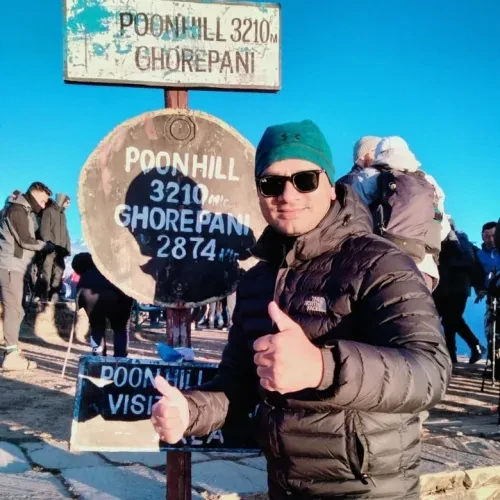
Our travel experts are ready to assist you with any questions.
Send us a message.Have a question before you book? Send your enquiry below and our travel experts will get back with the required information.