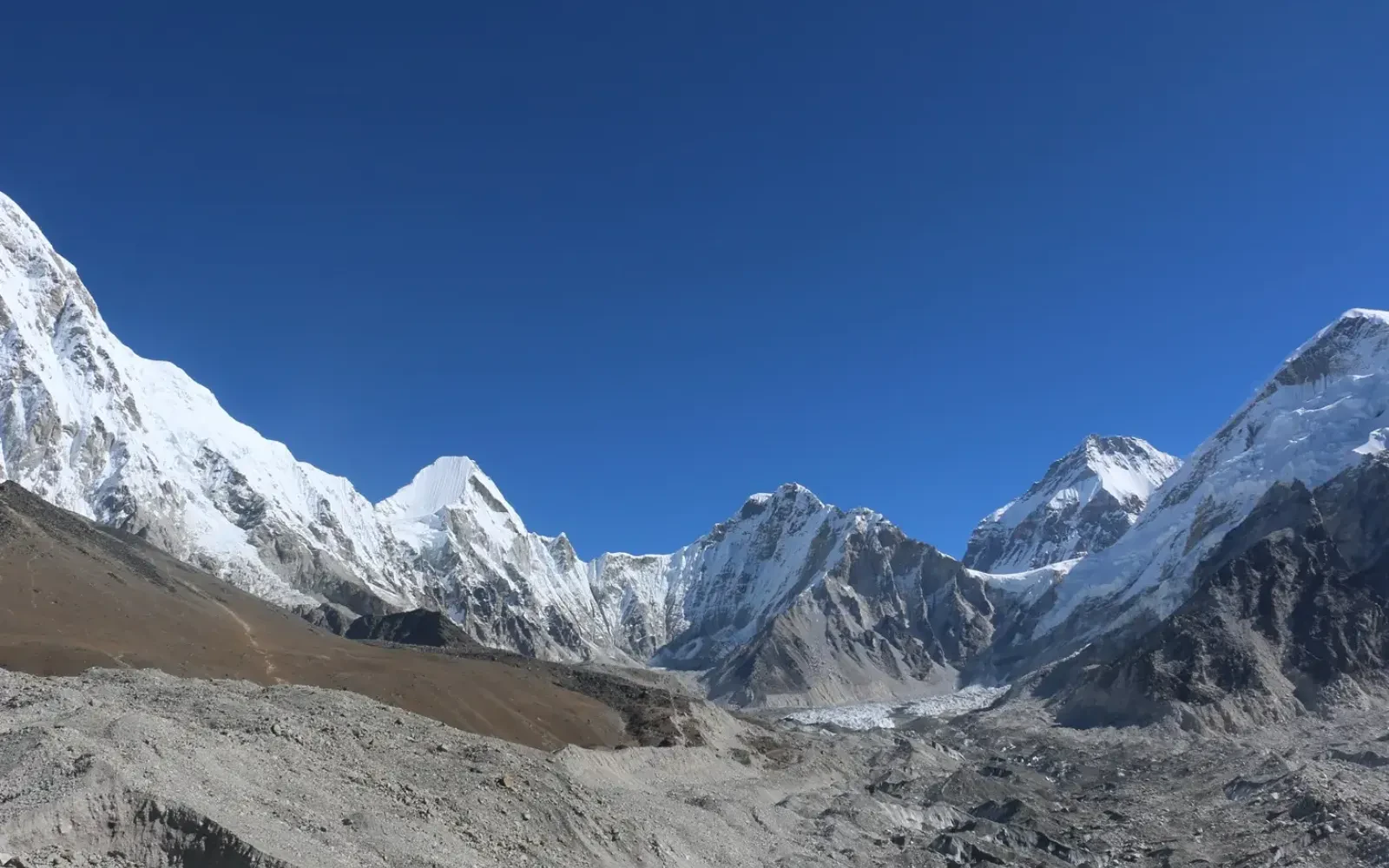
September is one of the best months for hiking and trekking, and the best treks in Nepal in September should not be missed. Fewer crowds and near-perfect mountain conditions during mid-to-late September make it a great choice for experienced trekkers.
According to experts at the renowned Haven Holidays Pvt. Ltd trekking company, the best time to go trekking in Nepal is mid to late September, as it marks the beginning of the spectacular autumn trekking season in the mountainous country. September is a transition period between the hot summer monsoon season and the clear skies of autumn, so expect a mix of both weather patterns. Some rain is still possible in the first two weeks of the month, particularly in lower altitudes.
Nevertheless, September is a fantastic time to see the mountains because of the vibrant greenery and powerful rivers and waterfalls. Additionally, mid-September is a fantastic time to trek because the skies are generally clear, revealing magnificent views of many of Nepal's highest peaks. Mountains such as Everest (8,849 m), Annapurna I (8,091 m), Dhaulagiri (8,167 m), Manaslu (8,163 m), Machhapuchhre (6,993 m), and Langtang Lirung (7,227 m) are frequently visible on popular trekking routes in September.
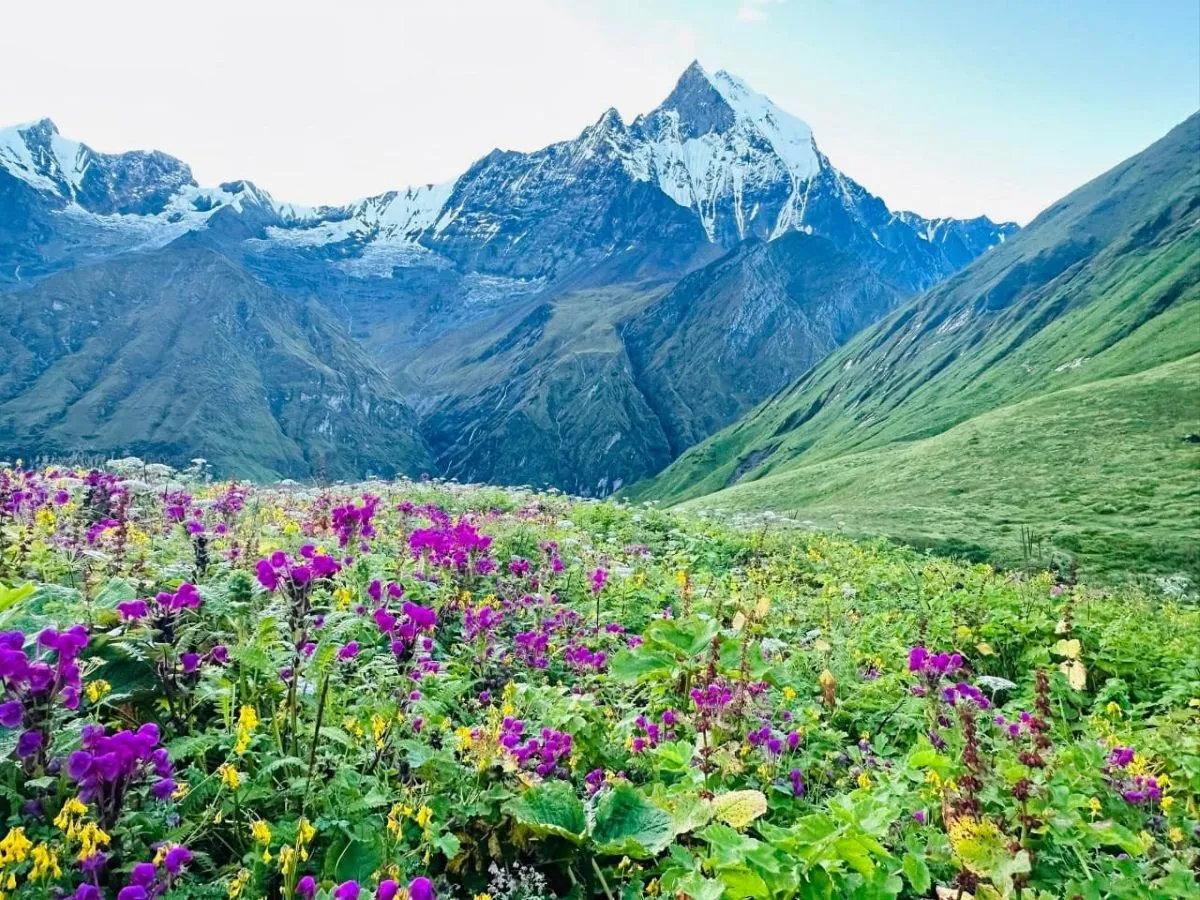
Finally, traveling in September has the additional benefit of being less crowded than the typical October trekking season. Because of the decreased demand, teahouses are less busy, and trails are less congested, providing a more leisurely pace for hikers. September is an excellent month to explore lesser-known treasures in the lower hills and experience the vibrant local culture. Rhododendron woods, agricultural terraces, alpine meadows, and bamboo forests are particularly lovely after the summer rains.
Additionally, wildlife spotters have a fantastic chance to see a variety of animals in protected national parks and conservation areas throughout the region. These include Sagarmatha National Park, Annapurna Conservation Area, Langtang National Park, and Manaslu Conservation Area. So why should you go trekking in September?
Let's examine the key advantages:
In fact, September's most popular trekking routes offer breathtaking views of the high mountains and unique cultural experiences.
| Trek Name | Highest Altitude Reached |
|---|---|
| Everest Base Camp Trek | 5,364 m |
| Kala Patthar | 5,545 m |
| Annapurna Circuit Trek (Thorong La) | 5,416 m |
| Annapurna Base Camp Trek | 4,130 m |
| Mardi Himal Base Camp trek | 4,500 m |
| Langtang Valley Trek (Kyanjin Ri) | 4,773 m |
| Manaslu Circuit Trek (Larkya La) | 5,106 m |
| Ghorepani Poon Hill Trek | 3,210 m |
So, with all of that in mind, let's look at some of the best treks in Nepal during the month of September. Despite the possibility of rain in early September, many people like trekking in Nepal in September due to the favorable weather and other conditions. We'll go over what to expect while trekking in Nepal in September and provide pointers.
Now, let's look at the weather in Nepal in September for trekking and hiking. Understanding the weather is crucial to getting ready for your Himalayan adventure.
[tip:annapurna-base-camp-trek-from-pokhara]
You must understand the weather in Nepal in September for trekking and hiking in order to prepare for your Himalayan adventure. September is a transition period between the hot summer monsoon and autumn, and the weather in Nepal during this time tends to be a blend of both. Thus, the weather in September is generally excellent for trekking in Nepal. For instance, according to professional local trekking guides, the second half of September is one of the best times for trekking in Nepal since the amount of rain decreases considerably throughout the month, and the mountain vistas become substantially clearer every day.
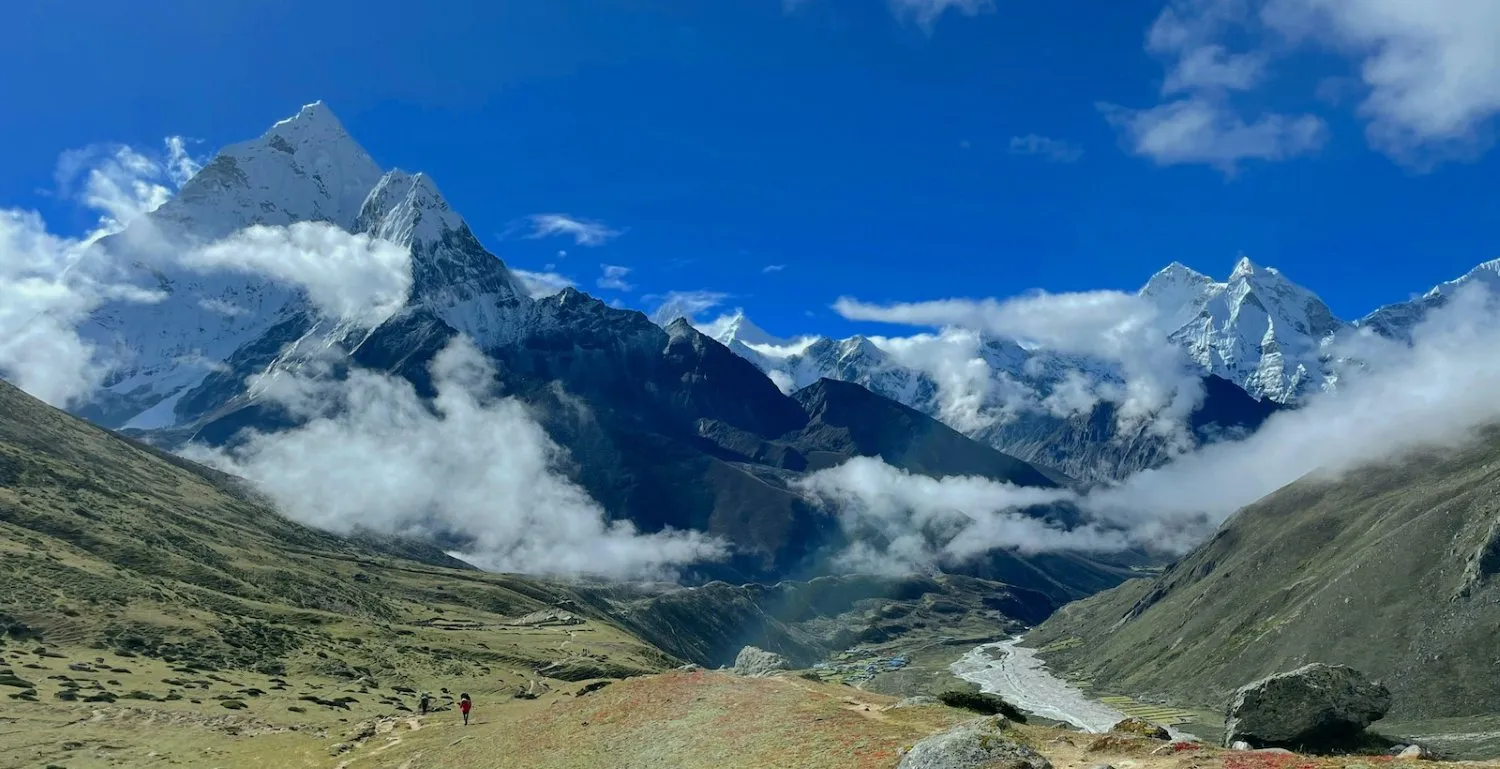
Here, September is divided into two halves:
The first two weeks of September are primarily characterized by warm temperatures and intermittent rain, which is typical for the transition period between the summer monsoon and autumn. Thus, it's a good time for trekking, although you should be prepared for some rain. The mornings are typically clear, with clouds forming later in the day, so it's advisable to start your hikes early. The leeches, which thrive in warm and humid conditions, are also common on trails during this period. The trail can get slippery in rainy weather, so you should be cautious.
Fortunately, the rain lessens later in the month, so the following conditions are predicted:
On the positive side, the trails are less crowded, so you can enjoy more solitude on your trek. Additionally, because of the rainy season, nature is at its most dazzling. For example, waterfalls and rivers are in full flow, while forests and farms are covered in rich greenery. Finally, there are numerous excellent opportunities for wildlife photography in the lower altitudes.
Late September (16–30 September)
The second half of September is generally dry with plenty of sunshine, so it has excellent trekking weather in Nepal. There is little rain, and the clouds rarely obscure the view of the mountains. Thus, it is an excellent time to go trekking in Nepal and witness the spectacular mountain views.
In particular, there are excellent opportunities for viewing Everest, Lhotse, Annapurna I, Dhaulagiri, Manaslu, Makalu, and Machhapuchhre. Also, because the trails in September are generally drier, hiking them is more accessible and less dangerous.
In addition, the warm summer temperatures have dropped, so it's more pleasant to spend long hours outdoors.
The following weather conditions are predicted:
Overall, September is an excellent month for trekking in Nepal. The trails are less crowded than they would be in October. In addition, the mountain views are spectacular, and the forests, farms, rivers, and waterfalls are at their most splendid. With this in mind, let's look at the most suitable time to go trekking in September.
| Elevation Range | Day Temperature | Night Temperature |
|---|---|
| 800–2,000 m | 20°C–28°C | 15°C–18°C |
| 2,000–3,500 m | 15°C–22°C | 8°C–12°C |
| 3,500–4,500 m | 8°C–15°C | 0°C–5°C |
| Above 4,500 m | 5°C–10°C | -5°C to 0°C |
| Weather Conditions | Early September | Late September |
|---|---|---|
| Amount of Rain | Moderate | Low |
| Trail Conditions | Wet/damp | Mainly dry |
| Mountain Visibility | Fair | Excellent |
| Humidity | High | Moderate |
| Waterfalls | Very active | Active |
| Crowds | Very few | Moderate |
| Photography | Good | Outstanding |
Some additional tips for September trekking in Nepal include the following:
So, with all of that in mind, September is undoubtedly a fantastic month for trekking in Nepal. While early September can be humid and damp, late September offers spectacular mountain vistas and less rain.
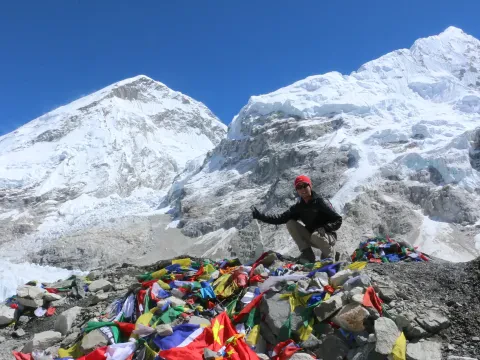
September is the tail-end of Nepal’s monsoon season, with many trekking regions still seeing the occasional afternoon shower in early September. Luckily for trekkers, rain-shadow regions in Nepal are largely dry, as the towering peaks of the Himalaya intercept clouds from the monsoon.
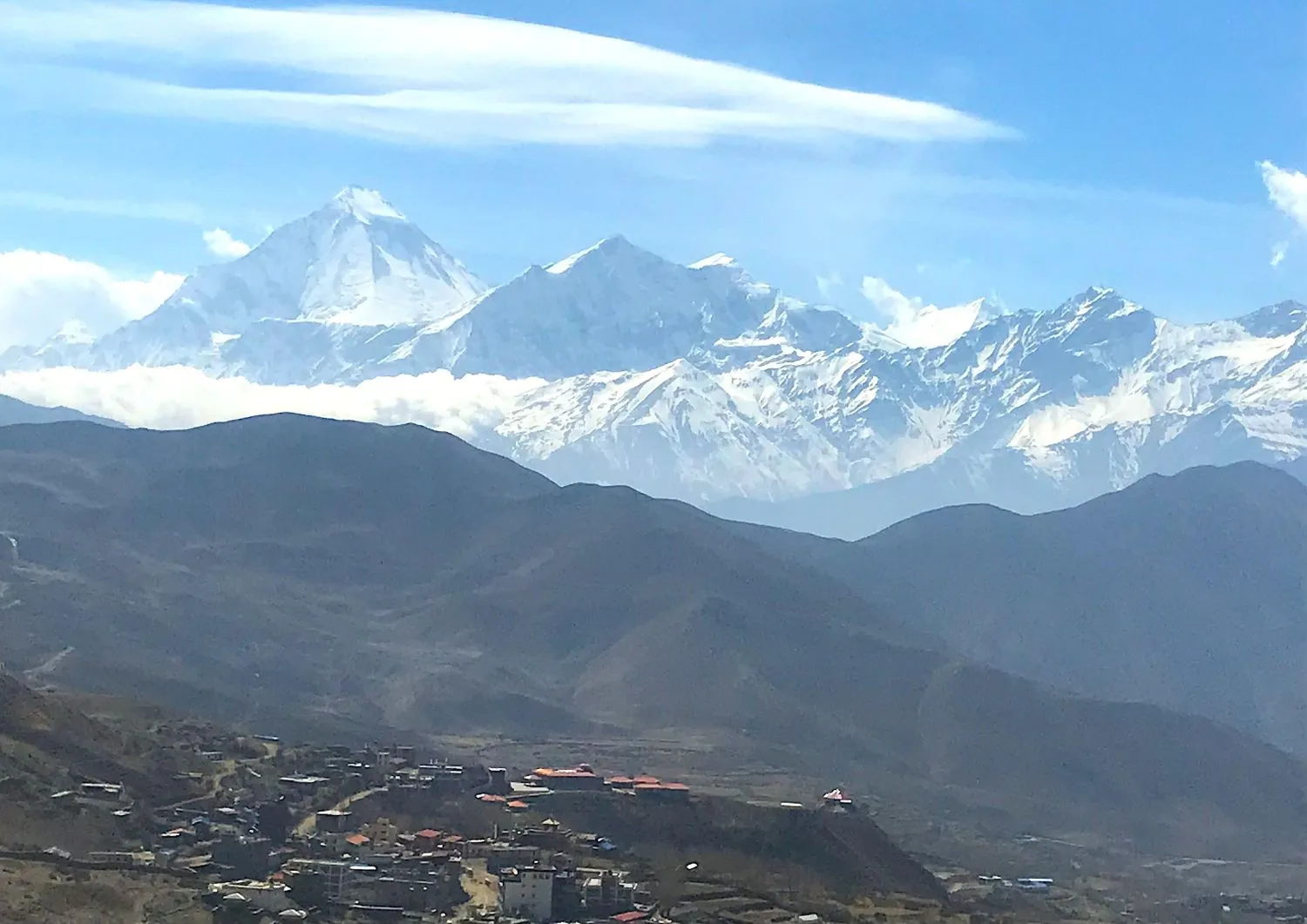
Here, this makes the high mountain desert of Nepal’s rain-shadow region a great area to trek in early September.
In fact, the best rain shadow hikes are all located north of the Annapurna and Dhaulagiri ranges, which are both formidable barriers to monsoon moisture.
Therefore, they see little or no rainfall even during Nepal’s annual monsoon season. Additionally, trails are generally dry, sunny days are frequent, and the views of the Himalaya are simply spectacular.
These are also much less crowded times to trek in Nepal.
| Feature | Upper Mustang Trek | Upper Dolpo Trek | Nar Phu Valley Trek | Damodar Kunda Trek | Lower Mustang Trek |
|---|---|---|
| Highest Elevation | Lo Manthang (3,840 m) | Kang La Pass (5,360 m) | Kang La Pass (5,322 m) | Damodar Kunda (4,890 m) | Muktinath (3,760 m) |
| Duration | 10 – 14 Days | 18 – 25 Days | 10 – 14 Days | 16 – 20 Days | 5 – 8 Days |
Why to Trek Early September :
Why Hike Rain-Shadow Regions in September?
The Rain-Shadow Regions of Nepal Highlights
Upper Mustang is famous for the walled city of Lo Manthang (3,840 m), while the Nar Phu Valley trek highlights the authentic Himalayan village and extraordinary mountain scenery.
Similarly, the Upper Dolpo trek is one of the most remote trails in Nepal, offering a unique insight into the local Tibetan Buddhist culture. For a short but rewarding trekking experience, the Lower Mustang provides a great opportunity to discover the Tibetan-style villages while visiting the impressive Muktinath Temple (3,760 m).
In fact, the mountain views are equally impressive in the rain-shadow regions. With snow-capped peaks such as Dhaulagiri (8,167 m), Annapurna I (8,091 m), Nilgiri (7,061 m), Tilicho Peak (7,134 m), and Damodar Himal (6,012 m), as well as unique desert ridges and canyons.
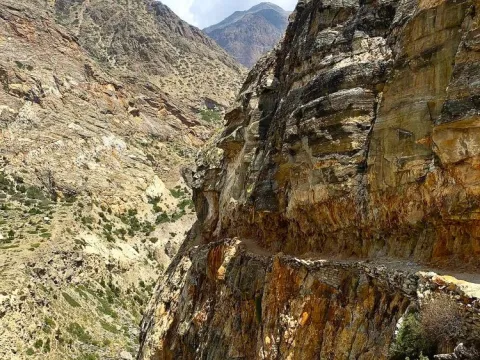
If you’re wondering where to go hiking in Nepal this early September, the trails in the rain-shadow region are the best choice. While the classic trekking routes in Nepal are still rainy in early September, the Upper Mustang, Nar Phu Valley, and Upper Dolpo regions have mostly dry weather and offer unparalleled cultural and Himalayan vistas. As such, they are some of the best places to trek in Nepal before the peak season.
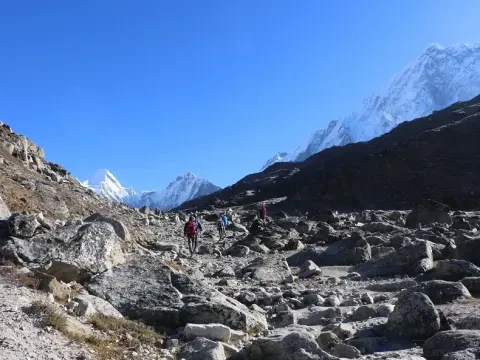
The Everest Base Camp Trek in September is a great option for hikers seeking classic Himalayan vistas with a side of relative emptiness of the trails. While the early September trails are still damp from the monsoon, the conditions improve dramatically by mid-September.
As such, hikers can expect reasonably good weather for mountain trekking with white-water streams, green valleys, and the best views of the Everest massif.
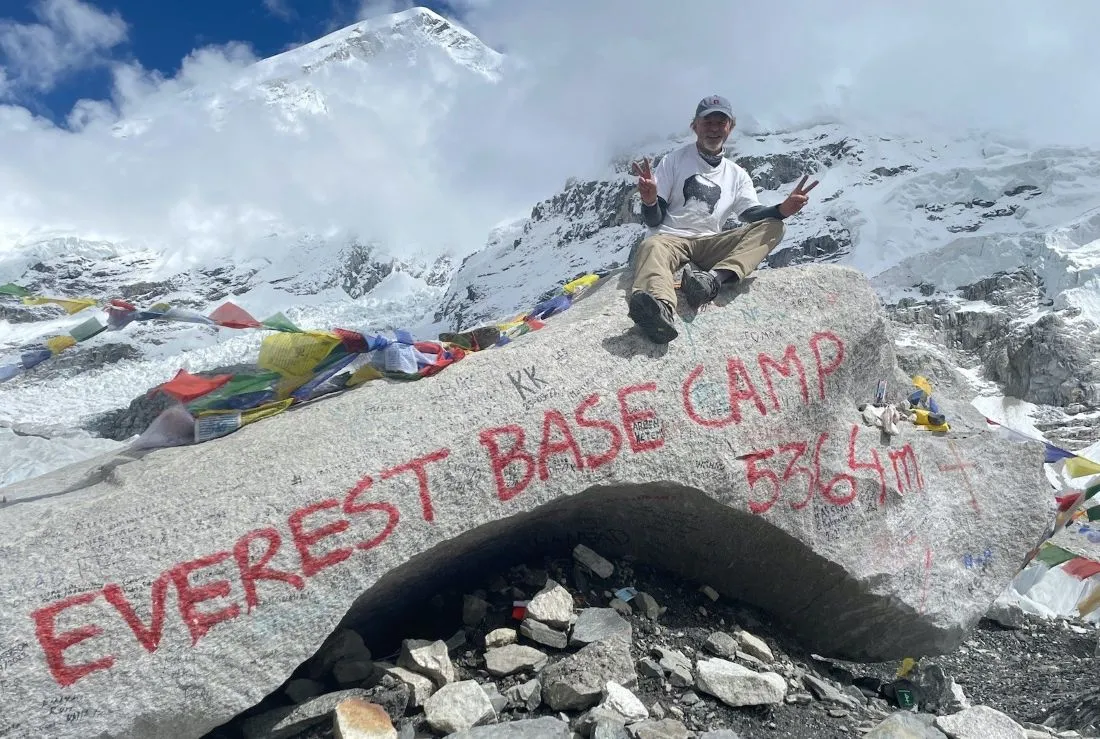
Meanwhile, the trail to Everest Base Camp starts with a scenic flight to Lukla (2,860 m) or a road trip to Surke (2,290 m) via Salleri. After the initial leg of the trek, hikers follow the classic trail through Phakding (2,610 m), Namche Bazaar (3,440 m), Tengboche (3,860 m), Dingboche (4,410 m), Lobuche (4,910 m), Gorak Shep (5,164 m), and Everest Base Camp (5,364 m). Most trekkers also like to summit Kala Patthar (5,545 m) for the best sunrise view of Mount Everest.
Everest Base Camp Trek September Highlights :
September Highlights of Everest Base Camp Trek :
Mountain Views along Everest Base Camp Trek Trail,
During the course of the trek, hikers have unparalleled views of:
In fact, the greatest advantage of the EBC trek weather September is that the Lukla flight becomes more reliable. Indeed, while the clouds may still prevent some of the daily Lukla flights at the beginning of September, air travel becomes regular through mid-September. As such, it is always worth checking how to get to Lukla during early September, as the weather tends to clear up in mid-month.
When wondering How busy is Everest Base Camp in September, it is important to consider that early September is still relatively quiet for the EBC trek. This is because most hikers prefer to begin their Everest adventure in October. Accordingly, the trails see a steady increase in visitors throughout September, peaking in October.
With fewer people on the trails in early September, the EBC trek in early September is a great way to enjoy the scenery without having to contend with the busy trekking season. As such, a September EBC trek offers a great combination of post-monsoon vistas and relative emptiness of the trails, making it ideal for a less-crowded Everest Base Camp experience.
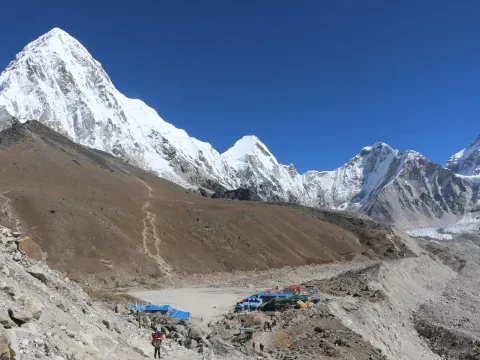
The Annapurna Base Camp trek in September is one of the most scenic post-monsoon treks in Nepal. September is a special period in Annapurna. For instance, the mountainous region witnesses the coolness of a fresh mountain. In addition, the forest is entirely green, and most waterfalls are in full flow. Hence, it is an ideal Himalayan adventure to enjoy a trail of lush green valleys before the busy October trekking season begins.
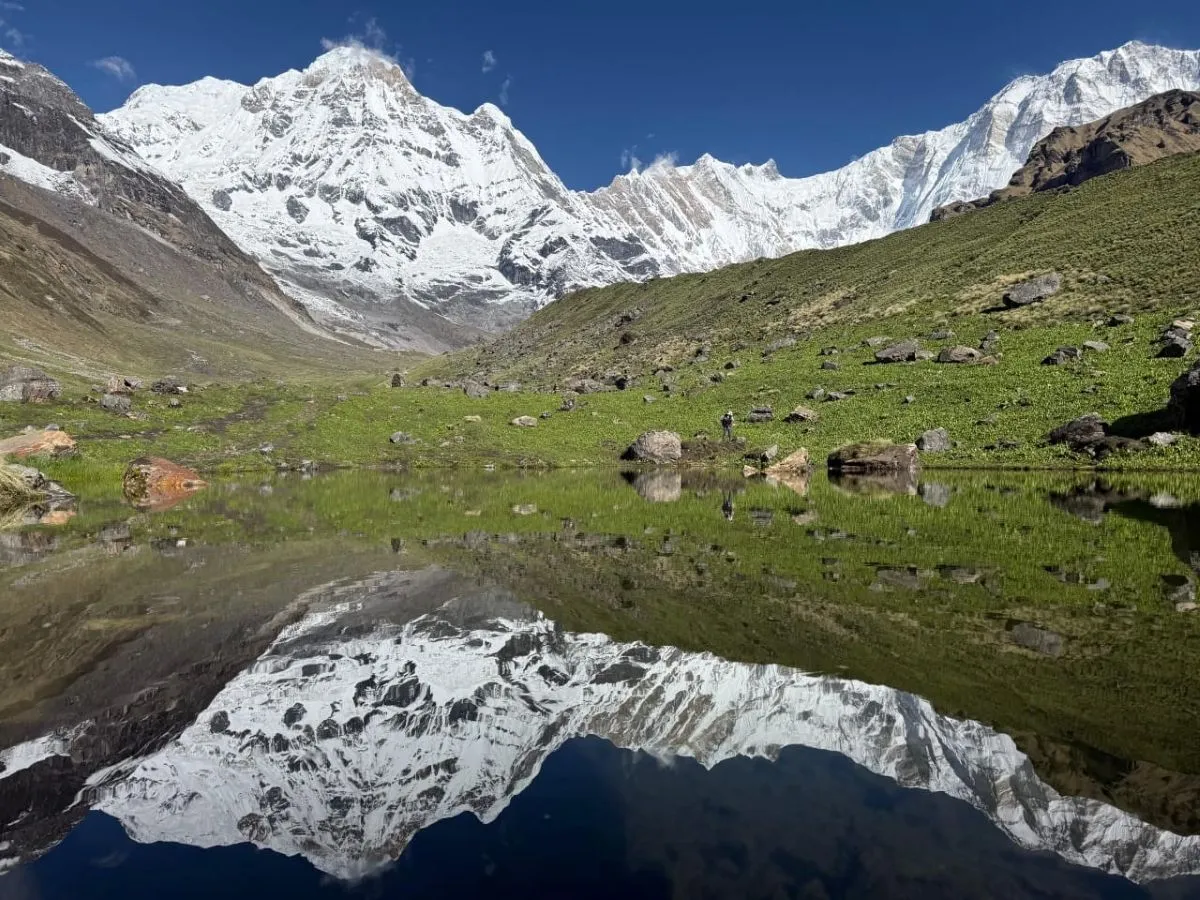
Meanwhile, the Annapurna base camp trek usually starts from Pokhara (822 m). However, you might consider using Nayapul (1,070 m) or Jhinu Danda (1,780 m) as an alternative trailhead depending on which route you choose. The trail gently winds its way through charming Gurung and Magar villages, rhododendron forests, and bamboo groves before reaching the mountainous region at Annapurna base camp (4,130 m). Additionally, the daily hikes offer excellent opportunities for exploring and capturing photographs of the local culture.
On the contrary, the valley is drenched in waterfalls, streams, and green terraced fields in September. Thus, September is a fantastic month for nature lovers who enjoy beautiful waterfalls and photographing.
Reasons to Trek to Annapurna Base Camp in September :
| Location | Elevation (in meters) |
|---|---|
| Pokhara | 822 |
| Nayapul | 1,070 |
| Jhinu Danda | 1,780 |
| Chhomrong | 2,170 |
| Bamboo | 2,310 |
| Deurali | 3,230 |
| Machhapuchhre base camp | 3,700 |
| Annapurna base camp | 4,130 |
Moreover, one will see magnificent views of the Himalayas during this trekking season. Since the mid to late September, the mountain is gradually cleared from clouds.
Hence, you will witness the breathtaking view of:
Furthermore, if you are a nature lover, September offers great opportunities to enjoy a wide range of Himalayan landscapes.
Some of them include:
In addition, the month of September offers moderate temperatures for day hikes and night camping. Although the region is cold at night, there is no snowfall for day hikes. The trails are also well accessible with good teahouse accommodations.
| Feature | Early September | Mid to late September |
|---|---|---|
| Rainfall | Afternoon thundershowers | Mostly dry |
| Trail Condition | Some muddy patches | Wet and slippery spots |
| Mountainous Views | Himalayan vistas peeking out from the clouds | Excellent |
| Waterfalls | Powerful waterfalls in full flow | Strong waterfalls |
| Vegetation | Very fresh | Fresh and green |
| Crowds | Very few | Fewer than October |
Nevertheless, it is advisable to equip yourself with waterproof clothing and trekking sticks especially in early September. Similarly, forested trails can also be slippery after a night’s rain. However, the muddy patches gradually disappear as September progresses.
Importantly, the expert trekking team at Haven Holidays Pvt Ltd recommends starting your day hike early in the morning. It will give you a chance to enjoy clear mountain views before the afternoon thundershowers. The experienced team at Haven Holidays Pvt Ltd recommends September as the best month to trek Annapurna base camp due to its pleasant weather and spectacular scenic views.
In summary, Annapurna Base Camp trek in September offers emerald valleys and exciting mountainous adventures. Thus, it is the best trekking option for nature lovers who crave for Himalayan beauty and fewer crowds during the post-monsoon season.
Annapurna Circuit trek in September is one of the best trekking options in Nepal. It meanders through lush green valleys and high mountain passes to give you an opportunity to marvel at the beauty of the Himalayas. The Annapurna circuit trail covers a vast region offering breath-taking views of the mountainous ridges, ancient cultural heritage sites, and high-altitude deserts. September is the transition period from the monsoon to the dry season in Nepal. Hence, it offers a unique opportunity to witness spectacular views of snow-capped mountains while experiencing the coolness of the mountainous region.
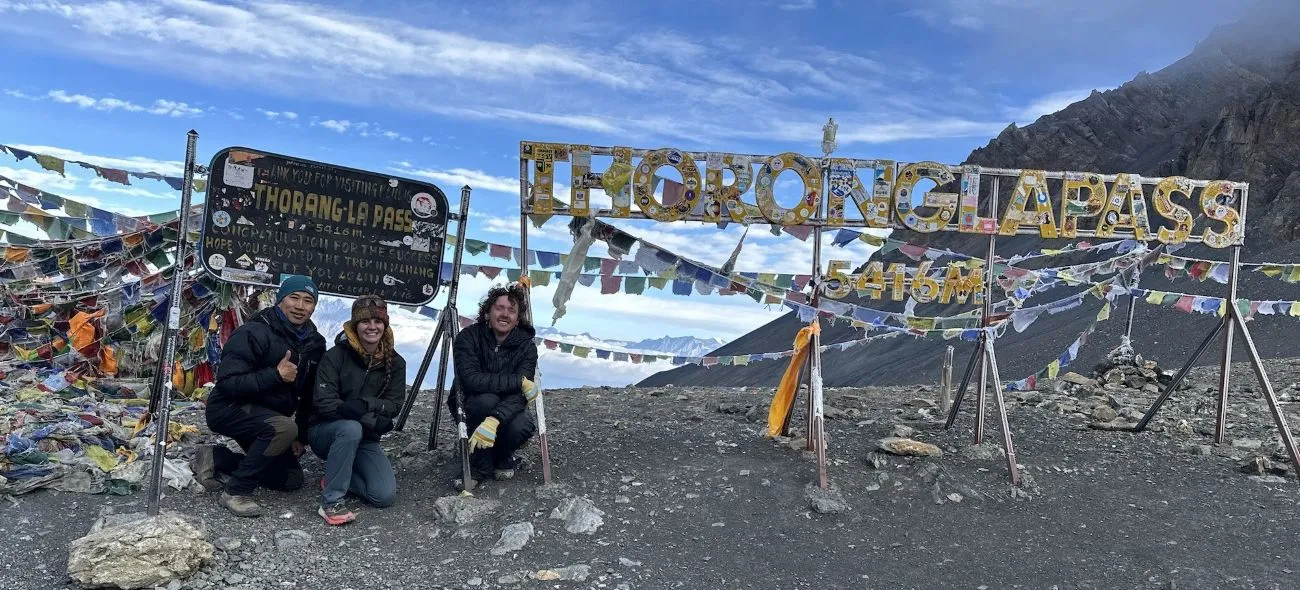
Meanwhile, the Annapurna circuit trek usually starts from Besisahar (760 m) or Dharapani (1,860 m). This is after you take a road trip from Pokhara or Kathmandu. The trail winds along the banks of the Marshyangdi River through charming villages and dense forests before reaching the dry highlands of Manang (3,519 m). From there, the trail gradually drops to the arid Tibetan plateau through rocky trails before climbing up to the Thorong La pass.
Reasons to Trek Annapurna Circuit Trek in September :
| Destination | Elevation (in meters) |
|---|---|
| Besisahar | 760 |
| Dharapani | 1,860 |
| Chame | 2,670 |
| Pisang | 3,300 |
| Manang | 3,519 |
| Yak Kharka | 4,050 |
| Thorong Phedi | 4,540 |
| Thorong La pass | 5,416 |
| Muktinath | 3,760 |
| Jomsom | 2,720 |
One of the highlights of the Annapurna circuit trek is crossing the Thorong La pass (5,416 m). You might want to start your day at the pass at sunrise. This will allow you to enjoy a spectacular view of the Himalayas while evading the strong afternoon gusts of wind.
As you trek along the Annapurna circuit trail in September, you have an opportunity to witness the beauty of several snow-capped mountains such as:
Furthermore, if you are a fan of the rugged mountainous terrain and high-altitude deserts, then the Annapurna circuit trek is perfect for you. You will also enjoy a fantastic cultural experience among the local people who inhabit the Tibetan plateau.
| Feature | Early September | Late September |
|---|---|---|
| Trail Condition | Occasionally wet | Mostly dry |
| Visibility | Good | Excellent |
| Day Temperatures in Manang | 12°C – 18°C | 10°C – 16°C |
| Night Temperatures in Manang | 2°C – 6°C | -2°C – 4°C |
| Morning Temperatures at Thorong La | Around -2°C to 4°C | Around -5°C to 2°C |
| Crowds | Light | Fewer than October |
On the other hand, it is always advisable to carry waterproof clothing, especially on rainy days. September can also be quite cold at night, particularly in Manang and Thorong La. However, the higher regions are relatively drier compared to the lower valleys.
Importantly, the mountain guide experts at Haven Holidays Pvt Ltd recommend a gradual climb to the higher altitudes to avoid acute mountain sickness.
Overall, Annapurna circuit trek in September offers the best of both worlds: a chance to witness lush green valleys, high-altitude deserts, and snow-capped mountains. It is also an excellent time to experience the local culture of the Tibetan plateau. Therefore, September is the best month to trek Annapurna circuit with fewer crowds while enjoying the cool weather.
The Manaslu Circuit Trek in September is one of the best adventures for those interested in exploring remote Himalayan trails, experiencing local culture, and getting up-close views of towering peaks. This region remains less crowded than Everest or Annapurna ranges.
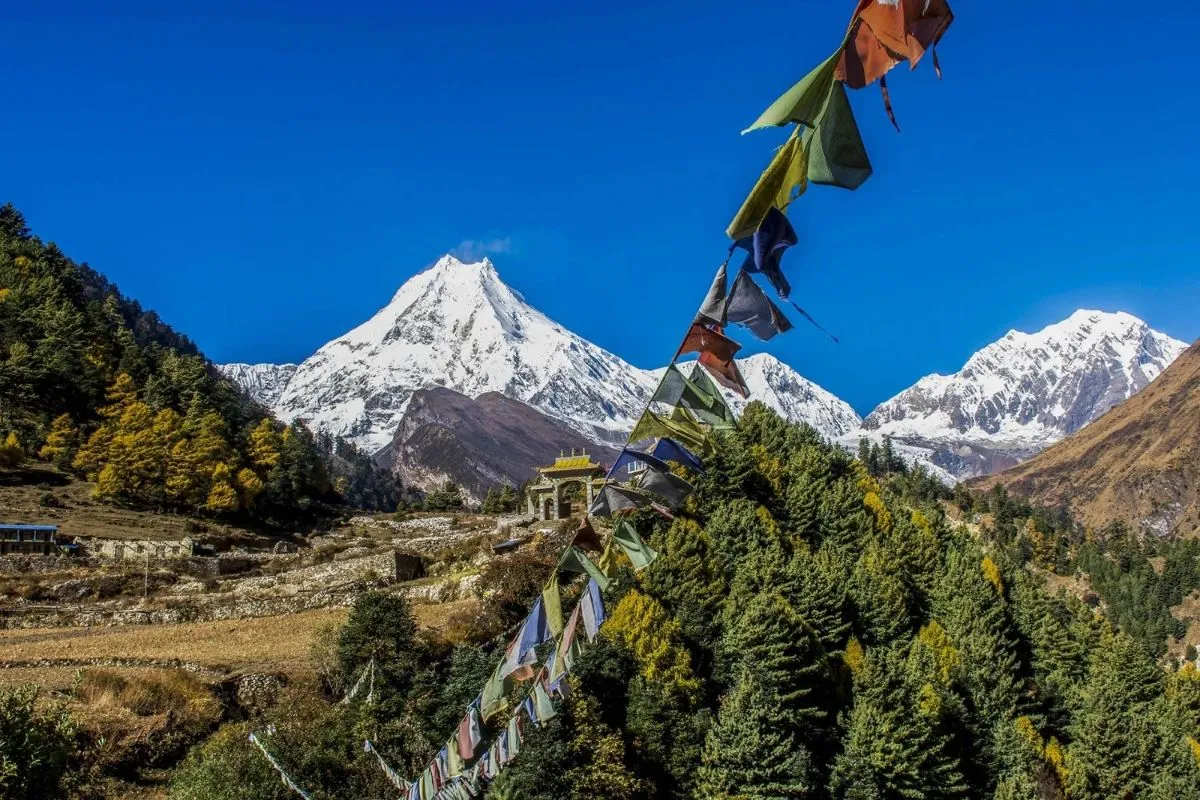
Plus, the trails stay drier as the month progresses with the clouds lifting to reveal stunning views of green valleys after the monsoon season. The circuit trek encircles Mt. Manaslu (8,163 m), the world’s 8th highest mountain peak. In addition, hikers can explore remote mountainous valleys, discover ancient monasteries, and take in panoramic views of the glaciers and valleys. Lastly, the challenging pass of Larkya La (5,106 m) is another highlight of this trek.
Due to restricted status, Manaslu Circuit trek is one of the lesser-known trails despite being one of the most beautiful treks in Nepal. There are fewer crowds even in September, the prime month for trekking in Nepal. Also, the mountain trails are less dusty and the rivers are full of water at the beginning of the month.
According to Haven Holidays Pvt. Ltd. expert trekking guides, the trail conditions in September are great, especially after the middle of the month. The waterfalls are beautiful, the mountain views are better each day, and the trail is clear.
Why Trek Manaslu Circuit in September?
| Destination | Elevation |
|---|---|
| Kathmandu | 1,400 m |
| Machha Khola | 930 m |
| Jagat | 1,340 m |
| Deng | 1,860 m |
| Namrung | 2,660 m |
| Lho | 3,180 m |
| Sama Gaun | 3,530 m |
| Samdo | 3,875 m |
| Dharamsala | 4,460 m |
| Larkya La Pass | 5,106 m |
| Bimthang | 3,590 m |
| Dharapani | 1,960 m |
| Mountain | Elevation |
|---|---|
| Manaslu | 8,163 m |
| Himalchuli | 7,893 m |
| Ngadi Chuli | 7,871 m |
| Ganesh Himal | 7,422 m |
| Cheo Himal | 6,820 m |
| Himlung Himal | 7,126 m |
| Kang Guru | 6,981 m |
| Period | Weather | Trail Condition | Mountain Views |
|---|---|---|
| Early September | Showers | Wet in the lower regions | Moderate |
| Mid September | Improving | Mostly dry trails | Excellent |
| Late September | Clear skies | Dry and comfortable | Outstanding |
Reasons Why This Trek is Perfect in September :
The forested trails below 2,500 m look particularly beautiful in September following the rainy season. Additionally, the rivers and waterfalls along the way are still swollen and powerful. Higher up, it is also cooler and clearer in the second half of the month. Hence, the trail condition improves every week in September.
Here, a couple of acclimatization days at Sama Gaun (3,530 m) and Samdo (3,875 m) offer a safe and reliable opportunity to adjust to the altitude before crossing Larkya La (5,106 m). Similarly, the gradual ascent to higher altitudes decreases the risk of altitude sickness.
Importantly, the expert guides at Haven Holidays Pvt. Ltd. recommend that trekkers should start their daily hikes as early as possible to witness the mountain views before the afternoon clouds roll in. Moreover, extra layers of clothing are necessary at night as it can be chilly at higher altitudes. In contrast, waterproof clothing is advisable in early September due to unpredictable rainfall, but they can be stored away once the weather clears up.
If you are looking for a unique Himalayan adventure that takes you through pristine wilderness with spectacular mountainous landscapes and vibrant Tibetan culture, the Manaslu Circuit trek in September is hard to beat. This beautiful trail allows you to explore untouched valleys, remote monasteries, and some of the best views of Mt. Manaslu before the busy October crowds arrive. Not to mention, Larkya La pass provides one of the best high-altitude trekking experiences in Nepal.
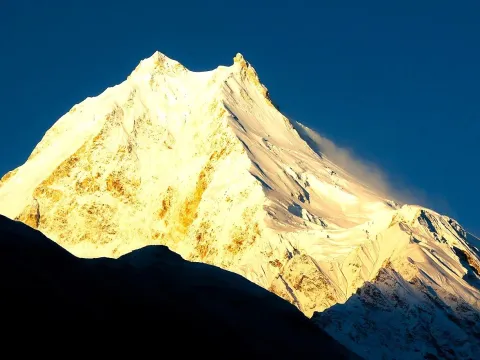
The Langtang Valley trek in September is one of the best short Himalayan treks for an authentic mountain experience near Kathmandu. The trek is embedded in Langtang National Park and offers spectacular views of snow-capped mountains, glaciers, and traditional villages inhabited by Tamang people. Moreover, you can complete this trek in 7 to 10 days, making it perfect for hikers with less time who want to explore the Himalayas.
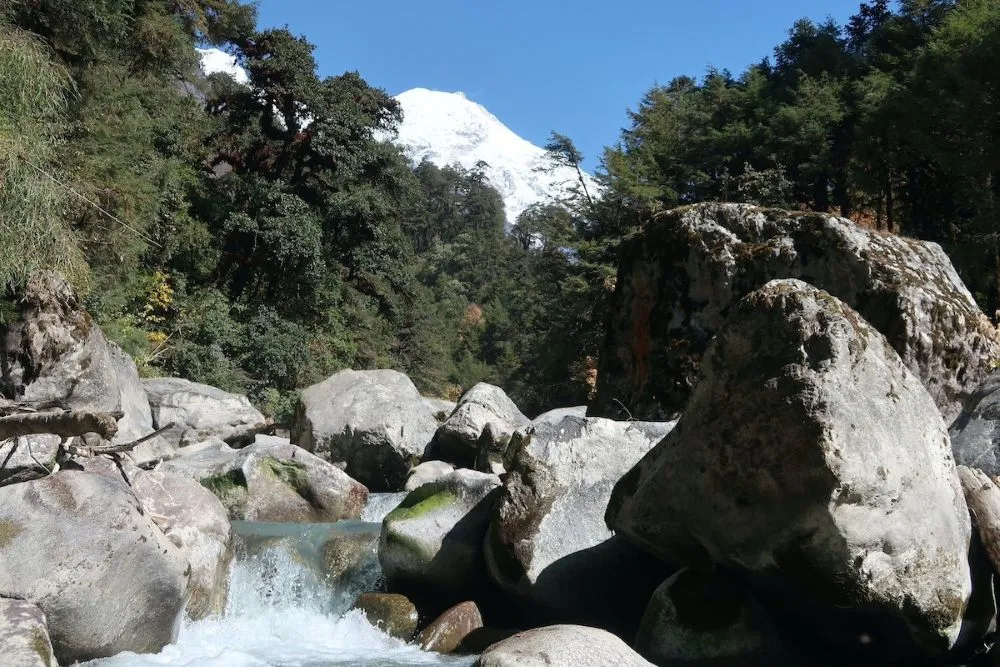
To begin with, the Langtang valleys remain damp from the monsoon rains at the beginning of the month with occasional afternoon showers. Still, the second half of September ushers in clear skies, pleasant temperatures, and fantastic views of the green hillsides. Additionally, several local guides and expert trekking agencies like Haven Holidays Pvt. Ltd. recommend late September as one of the best months to trek Langtang Valley.
Here, the expert trekking team at Haven Holidays Pvt. Ltd. is fond of recommending the Langtang Valley trek to first-time hikers, nature enthusiasts, and those looking to have a fantastic cultural experience. It is also less crowded than the popular Annapurna Base Camp trek.
Lastly, you can witness the Himalayan panorama of towering peaks up close, including Langtang Lirung (7,227 m) from Kyanjin Gompa. In addition, Kyanjin Ri (4,773 m) and Tserko Ri (4,984 m) are other exciting hikes with splendid views of the region.
Why Hike Langtang Valley Trek in September?
| Destination | Elevation |
|---|---|
| Kathmandu | 1,400 m |
| Syabrubesi | 1,503 m |
| Lama Hotel | 2,470 m |
| Langtang Village | 3,430 m |
| Kyanjin Gompa | 3,870 m |
| Kyanjin Ri | 4,773 m |
| Tserko Ri | 4,984 m |
| Mountain | Elevation |
|---|---|
| Langtang Lirung | 7,227 m |
| Dorje Lakpa | 6,966 m |
| Gangchempo | 6,388 m |
| Yala Peak | 5,732 m |
| Naya Kanga | 5,844 m |
| Time | Weather | Trail | Views |
|---|---|---|
| Early September | Showers | Damp forests | Good |
| Mid September | Clearer skies | Draining trails | Excellent |
| Late September | Fewer clouds | Dry and clear | Outstanding |
Top Highlights of Langtang Valley Trek:
The Langtang Valley trek is a shorter option for hikers who want fantastic views of the Himalayas with less time. Also, there are no domestic flights in Nepal for this particular trek. As such, you can complete the drive from Kathmandu to Syabrubesi (1,503 m) in just 7 to 8 hours. Meanwhile, the local expert guides at Haven Holidays Pvt. Ltd. recommend late September for its superb trekking conditions.
Here, the forests look fresh and green following the monsoon season, while the mountain views are clear after the cloudiness. Still, you need to pack some waterproof clothes during early September as there is still a high chance of rain. On the other hand, extra layers of clothing are recommended at night, especially between 3,500 m and 5,500 m due to cold temperatures.
Likewise, the Langtang Valley trek is an incredible short Himalayan trekking option for anyone searching for spectacular views of the Langtang Himalayas with fantastic cultural interactions and excellent post-monsoon trail conditions in September.
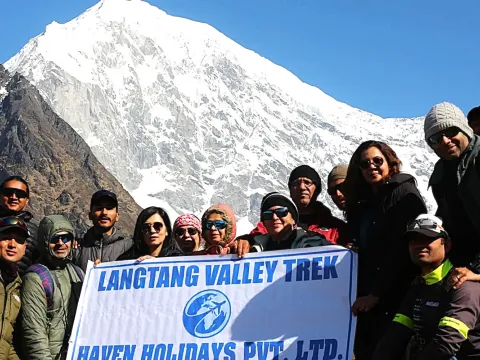
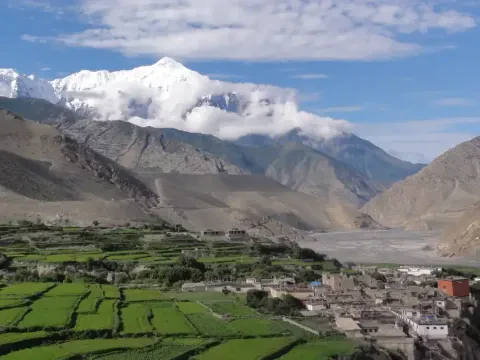
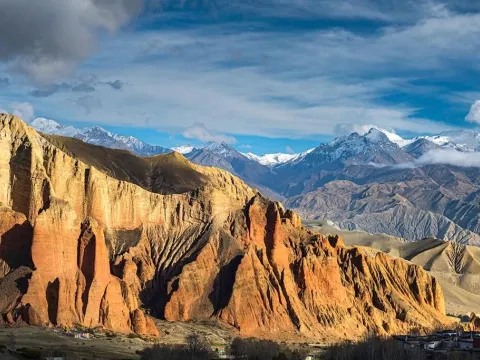
The Upper Mustang Trek in September is among the best trekking options in Nepal, especially during early September. Compared to the rest of Nepal, Upper Mustang rarely receives rainfall being in the rain shadow of the Annapurna Massif and Dhaulagiri ranges. Hence it is a preferred choice for many trekkers during the rainy season. This trek also offers pleasantly warm days, relatively empty trails, and beautiful mountainous landscapes.
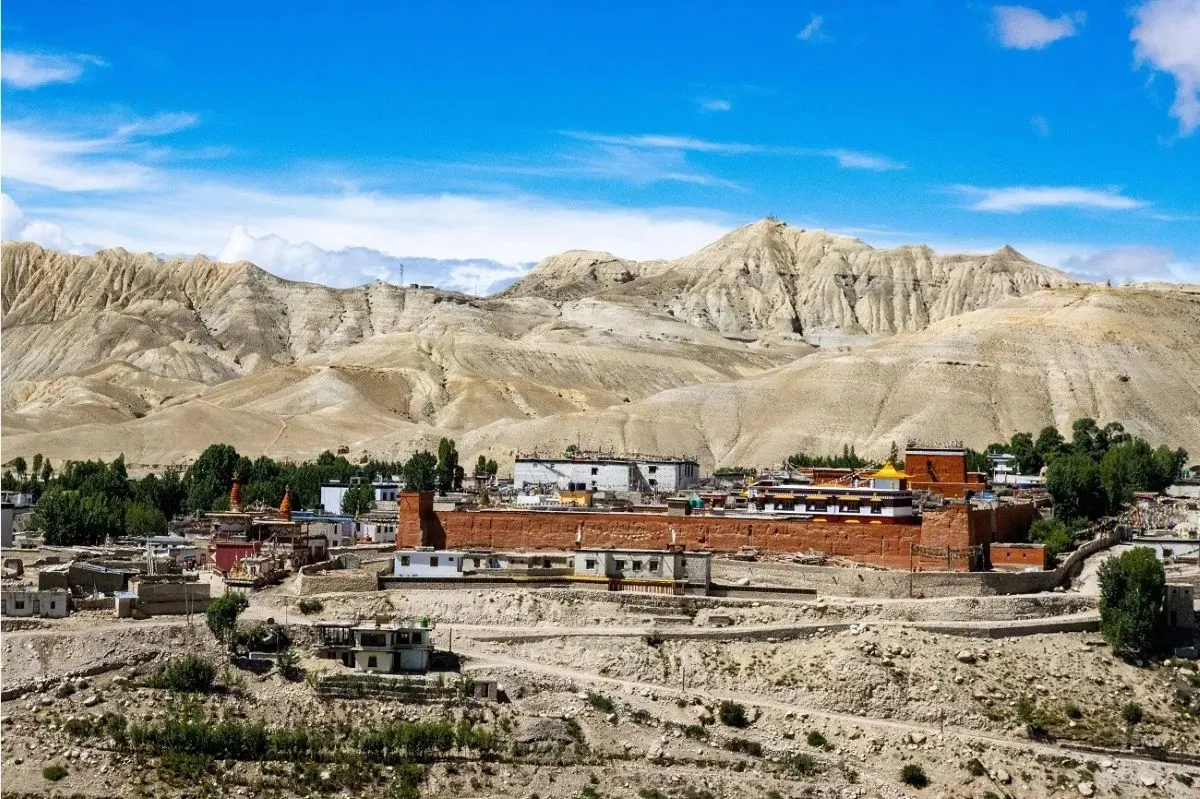
So, it is common to see many experienced trekkers doing the Upper Mustang Trek in September before the busy autumn season begins. The Upper Mustang Trek generally begins with a short but thrilling flight or a drive to Jomsom (2743 m). The trail leads to Kagbeni (2804 m) through the narrow gorge of Kali Gandaki before entering the ancient Kingdom of Mustang. It progresses through Chele (3050 m), Syangboche (3800 m), Ghami (3520 m), Tsarang (3560 m), and ends at the walled city of Lo Manthang (3840 m).
Along the trail, you get to witness spectacular landscapes comprising beautiful cliffs, caves, and ancient monasteries. The landscape and climate are more similar to the Tibetan Plateau than the other trekking trails in Nepal. Nilgiri (7061 m), Dhaulagiri I (8167 m), Annapurna I (8091 m), Tilicho peak (7134 m), Tukuche peak (6920 m), Damodar Himal (6004 m), and many more towers over the region. September weather allows for beautiful mountain views for photography. The clear skies after the afternoon showers in the second half of the month enhance the visibility of the mountains beautifully.
Here are the reasons why you should consider Upper Mustang Trek in September. The famous Upper Mustang Trek has a number of highlights that attract many trekkers from around the world
The Upper Mustang Trek in September highlights :
| Location | Elevation | Day/Night Temperatures (C). |
|---|---|---|
| Jomsom | 2743 m | 18–22C/8-10C |
| Kagbeni | 2804 m | 17–21C/7-9C |
| Ghami | 3520 m | 14–18C/4-7C |
| Lo Manthang | 3840 m | 12–17C/2-5C |
Compared to many other trekking trails in Nepal, Upper Mustang has generally dry weather throughout September. Windy weather is not uncommon, especially on mountain passes on cold mornings. Hence it is advised to carry a good windproof jacket. Warm weather in day and night is pleasant for long hikes.
According to Haven Holidays Pvt. Ltd. expert trekking guides, Upper Mustang Trek in September offers the best combination of good weather and empty trails. The local guides recommend spending two nights in Lo Manthang (3840 m) to explore the numerous monasteries, royal palace, and ancient caves.
Altogether, the Upper Mustang Trek in September provides an amazing Himalayan trekking experience with spectacular desert landscapes and unique Tibetan culture beyond the reach of the monsoon.
The Mardi Himal Trek in September is among the best short Himalayan treks in Nepal. This wonderful trail offers fabulous mountainous vistas while only taking 4–7 days to complete. The Mardi Himal Trek is perfect for those who want a Himalayan trekking experience without spending a lot of time off work. Moreover, September is a fantastic time to undertake this trek. The trail offers breathtaking post-monsoon scenery, with fresh forests and rushing waterfalls. The mountainous vistas are also more prominent due to the partly cloudy weather during mid-to-late September. The Mardi Himal Trek is generally a fantastic short trekking option for those who want to experience the Himalayas while having limited time off.
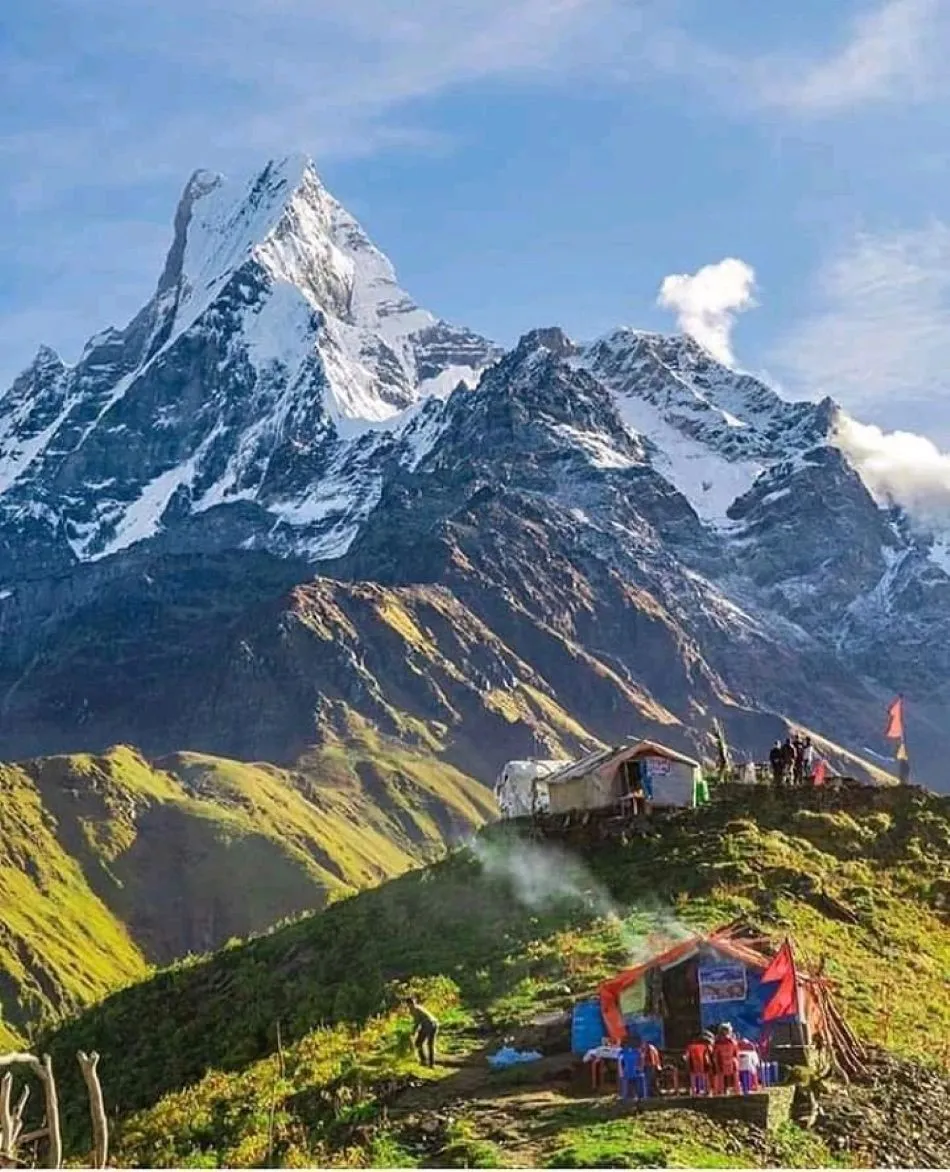
Here, the Mardi trail usually begins from either Kande (1770 m) or Phedi (1130 m) and ascends through beautiful rhododendron, oak, and bamboo forests to Forest Camp (2550 m), Low Camp (2970 m), Badal Danda (3210 m), and High Camp (3580 m). The trail then ends at Mardi Himal Viewpoint (4200 m) or Mardi Himal Base Camp (4500 m) depending on the trekking itinerary. Dramatic ridgelines offer panoramic views throughout the trek, which is not the case for most valley-bound hikes.
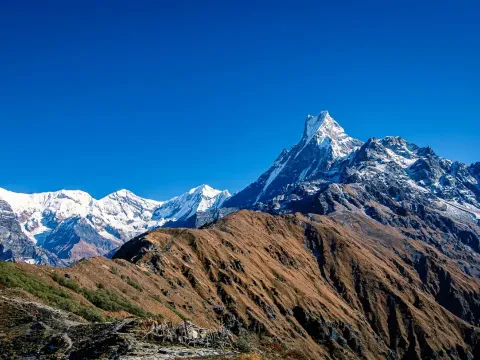
Furthermore, compared to most of the other trekking trails in Nepal, Mardi Himal offers a unique opportunity to see the Machhapuchhre mountain range up-close. This trek also provides spectacular views of Annapurna South (7219 m), Hiunchuli (6441 m), Annapurna I (8091 m), Gangapurna (7455 m), Tent Peak (5695 m), and many more. Especially on clear mornings in late September, you can enjoy the Himalayan sunrise views.
Mardi Himal Trek highlights :
| Location | Elevation | Day/Night Temperatures (C) |
|---|---|
| Kande | 1770 m | 20–24C/14-16C |
| Forest Camp | 2550 m | 16–20C/8-10C |
| High Camp | 3580 m | 8–15C/0-5C |
| Base Camp/Viewpoint | 4500 m | 5–10C/-2-0C |
While some afternoon rains are likely in September in the lower forested areas, waterproof clothing and trekking poles are generally sufficient. However, there are fewer rainy days in mid-to-late September. Hence the trails are mostly dry and the mountain vistas are more accessible.
According to Haven Holidays Pvt. Ltd. professional mountain guides, it is always best to wake up before 6:30 AM to enjoy the mountainous vistas as the clouds begin to form later in the afternoon. The guides also recommend staying overnight in High Camp (3580 m) before attempting to walk to Mardi Himal Viewpoint (4200 m) early the next morning. Altogether, the Mardi Himal Trek in September offers a fabulous short Himalayan trekking experience with gorgeous views, comfortable teahouses, and unique cultural encounters.
The Upper Dolpo trek in September is an amazing experience that offers the remote and elusive wilderness of the far-western Himalaya. Sheltered by the shadow of the 8,167 m high Dhaulagiri and 6,883 m high Kanjiroba Himal, the region has a rain shadow, making it significantly drier than the central part of Nepal. The Upper Dolpo trek in September has comparatively dry weather, offering incredible mountain views and a fantastic opportunity to explore the wilderness away from the busy trails of the Himalayas.
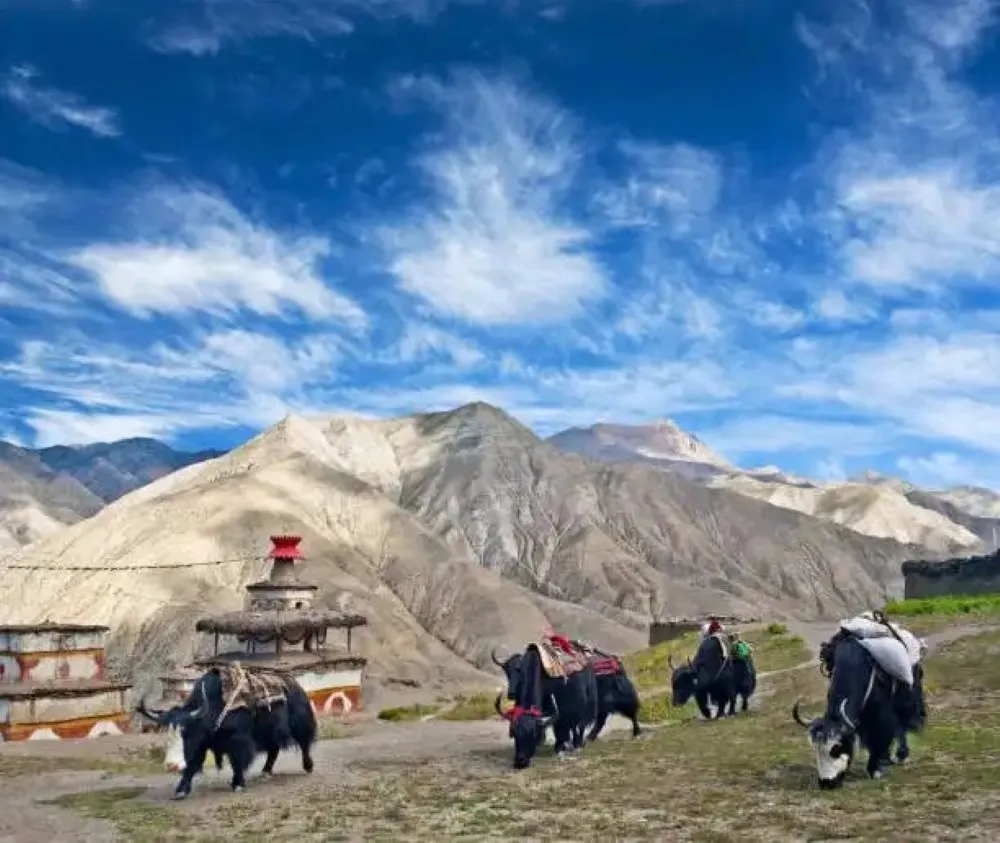
Meanwhile, the narrow valleys of the Upper Dolpo region, the coniferous forests, and the Tibetan villages set the tone for this amazing trekking trail. This trek usually begins with a short domestic flight from Kathmandu to Nepalgunj (150 m) and then to Juphal (2,475 m). From there, you walk along the alpine valley towards the enchanting Shey Phoksundo Lake (3,611 m).
In the way, you pass through Ringmo (3,640 m) and Saldang (3,770 m) on your way to the holy Shey Gompa (4,343 m). Some of the high-altitude passes you need to cross while trekking Upper Dolpo include Kang La Pass (5,360 m), Sela La Pass (5,094 m), and Jeng La Pass (5,110 m). In addition, Upper Dolpo is a restricted area that is ideally suited for more experienced trekking and high-altitude hiking enthusiasts.
Importantly, the landscape is fundamentally different compared to the other trekking regions in Nepal. The wide valley, barren cliff, hidden Buddhist monasteries, turquoise lake, and extensive yak pasture are some of the unique attributes of this ancient region. Similarly, the traditional Tibetan Buddhist culture is also unique to the region. The Upper Dolpo trek in September is also an excellent opportunity to see rare wildlife species such as blue sheep, Himalayan griffon, and snow leopard.
Why trek Upper Dolpo in September?
Upper Dolpo Trek Highlights :
The weather in the Upper Dolpo region is normally dry and sunny in September. However, it can still get cold at night, especially at elevations over 4,500 m.
| Location | Altitude | Day / Night temperature |
|---|---|
| Juphal | 2,475 m | 18–22°C / 8–10°C |
| Phoksundo Lake | 3,611 m | 14–18°C / 3–6°C |
| Shey Gompa | 4,343 m | 10–15°C / –2–2°C |
| Kang La Pass | 5,360 m | 2–8°C / –8–-3°C |
Even though the weather is generally dry in September, it can get chilly during the evenings. Hence, it’s important to pack warm clothing to stay protected from the cold. Similarly, a good sleeping bag and liner are necessary to keep you warm during the night.
According to the expert guides and trekking staff at Haven Holidays Pvt. Ltd., September is an excellent month for exploring Upper Dolpo. They recommend allocating extra days for acclimatization and experiencing the local culture around Shey Gompa (4,343 m) and Shey Phoksundo Lake (3,611 m). In general, the Upper Dolpo trek in September offers an incredible glimpse into the remote Himalayan wilderness of Nepal:
The Ghorepani Poon Hill trek in September is one of the most popular short-trekking adventures in Nepal. Offering spectacular Himalayan views, cultural village visits, and teahouse stays, the Ghorepani Poon Hill trek is the ultimate teahouse trekking experience.
Notably, the region turns into a green paradise after the monsoon season, offering excellent hiking opportunities through rolling forests and waterfalls. Furthermore, the sky clears up in September, unveiling spectacular sunrise views of the Himalayas. The Ghorepani Poon Hill trek is a fantastic family-friendly trekking option for nature lovers, young adventurers, and photography enthusiasts.
Meanwhile, the Ghorepani Poon Hill trek usually begins at Nayapul (1,070 m) after a short drive from Pokhara (822 m). From there, the trail takes you through traditional Gurung and Magar villages to Tikhedhunga (1,540 m), Ulleri (2,050 m), Ghorepani (2,874 m), and Poon Hill (3,210 m). From Poon Hill, you can capture panoramic sunrise views of the Everest region before descending through beautiful rhododendron forests to Tadapani (2,630 m) and Ghandruk (2,012 m).
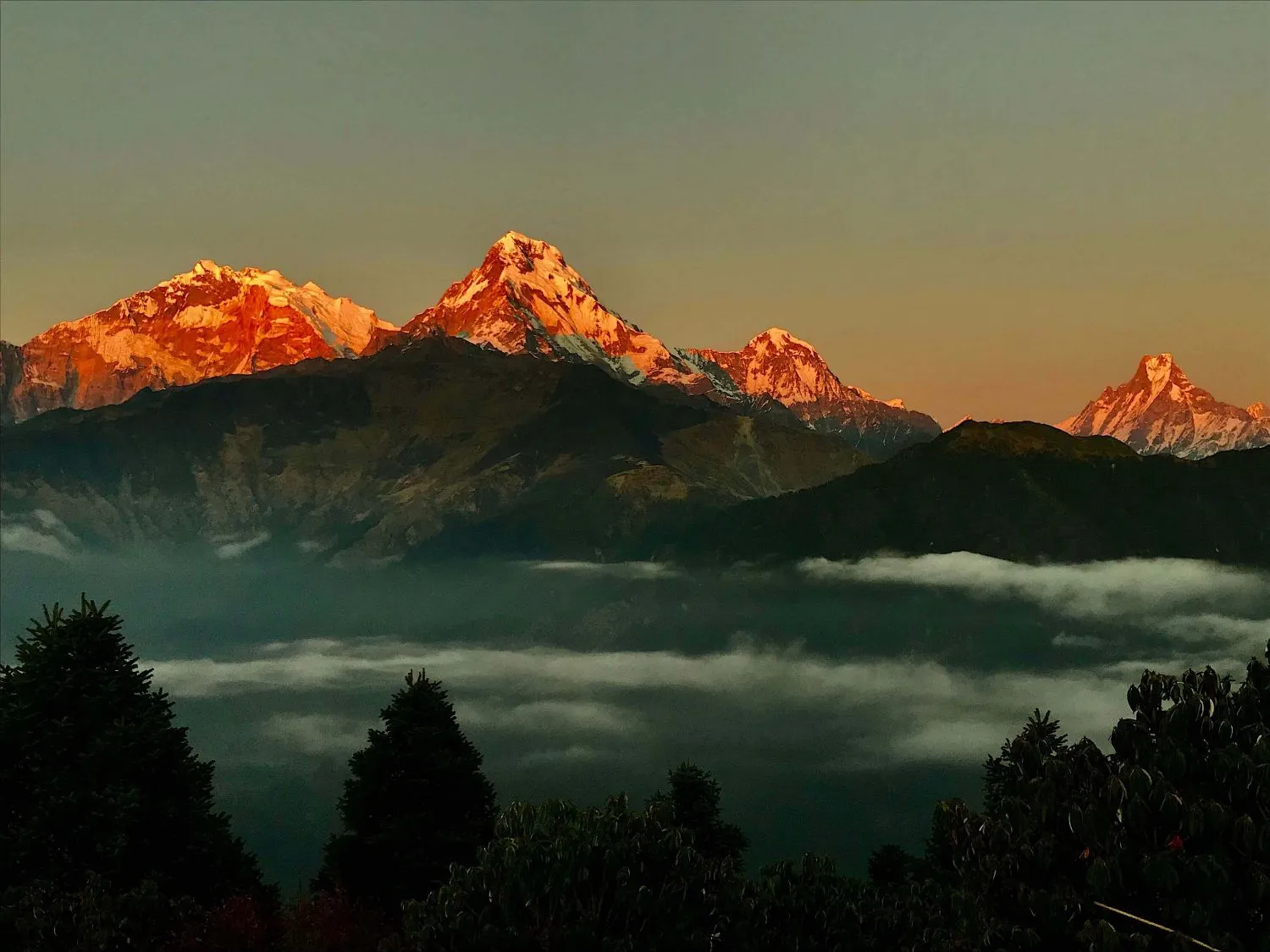
Importantly, the main attraction of the Ghorepani Poon Hill trek is the sunrise view from Poon Hill (3,210 m). On a clear day, you can see the golden sunrise bath the high peaks of the Himalayas in orange hues.
Specifically, the sunrise views from Poon Hill in September offer spectacular Himalayan panorama, including the 8,167 m high Dhaulagiri I, 8,091 m high Annapurna I, 7,219 m high Annapurna South, 6,993 m high Machhapuchhre, 6,441 m high Hiunchuli, 7,061 m high Nilgiri, and 6,983 m high Lamjung Himal. Additionally, the forests around Ghorepani are also beautiful to explore throughout your trek.
In fact, Ghorepani Poon Hill trek in September is one of the best trekking options in Nepal for photography, nature, and adventure enthusiasts.
Why trek Ghorepani Poon Hill in September?
Ghorepani Poon Hill Trek Highlights :
The weather is generally warm during the day and cool at night in the Ghorepani Poon Hill region during September. You can expect daytime temperatures to range from 10°C to 28°C depending on the altitude. Similarly, nighttime temperatures range from 4°C to 20°C. The trail is generally drier in late September than early September.
| Location | Altitude | Day / Night temperature |
|---|---|---|
| Pokhara | 822 m | 24–28°C / 18–20°C |
| Ulleri | 2,050 m | 18–22°C / 10–13°C |
| Ghorepani | 2,874 m | 14–18°C / 6–9°C |
| Poon Hill | 3,210 m | 10–15°C / 4–7°C |
In fact, there is still a chance of encountering rain in early September while trekking in the lower elevations. Thus, it might be a good idea to bring a light waterproof jacket. However, the weather in late September is generally dry and clear with spectacular mountain views.
According to the expert guides and trekking staff at Haven Holidays Pvt. Ltd., it’s best to arrive at Poon Hill (3,210 m) around one hour before sunrise to capture the best sunrise photographs. They also recommend spending some extra time in Ghandruk (2,012 m), a traditional Gurung village, exploring local culture and traditions. Overall, the Ghorepani Poon Hill trek in September is an excellent short Himalayan trekking option for nature lovers, photography enthusiasts, and cultural travelers.
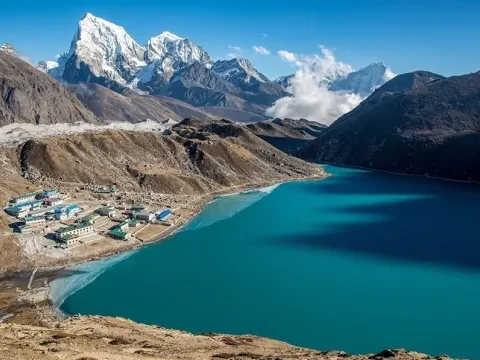
The Gokyo Lakes Trek in September is one of the best alternatives to the Everest Base Camp Trek. Unlike the EBC trail, the Gokyo Lakes Trek passes through less crowded routes, including traditional Sherpa villages and glacial valleys with stunning turquoise lakes.
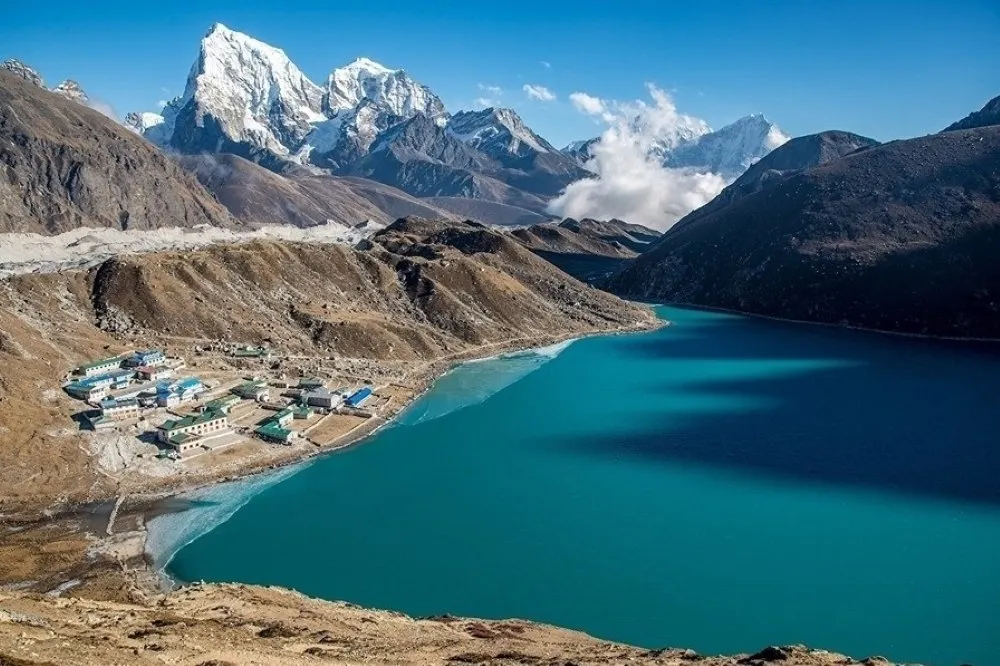
Moreover, the Everest region is at its best in September, offering a colorful view of green landscapes, clear skies, and snow-capped mountain peaks. In particular, the weather in late September is generally clear, enabling hikers to have an unobstructed view of the Everest massif. This article explores the Gokyo Lakes Trek in September, including why it is worth pursuing and what to pack.
Likewise, the Gokyo Lakes Trek in September is a popular trekking route among adventure seekers who want to avoid the crowds of the Everest Base Camp Trek. This trail usually begins with a scenic flight to Lukla (2,860 m) and follows the classic Everest trail to Phakding (2,610 m), Namche Bazaar (3,440 m), Dole (4,038 m), and Machhermo (4,470 m).
Then, the trail continues to Gokyo Village (4,790 m) and the Gokyo Ri peak (5,357 m), which offers one of the best views of Everest. From the summit, trekkers can see Mount Everest (8,848.86 m), Cho Oyu (8,188 m), Lhotse (8,516 m), Makalu (8,485 m), Cholatse (6,440 m), and Taboche (6,495 m). In addition, the Ngozumpa Glacier, the longest glacier in Nepal, is also visible from Gokyo Ri.
Compared to the EBC trail, the Gokyo Lakes Trek is relatively less crowded, especially in September. As a result, hikers can enjoy the beauty of six stunning glacial lakes in the Gokyo Valley, which provide the most picturesque views in Nepal. Thus, this trek is perfect for photography enthusiasts who want to capture the beauty of the Himalayas.
Why Gokyo Lakes Trek in September?
Gokyo Lakes Trek Highlights :
| Location | Elevation | Day Temperature | Night Temperature |
|---|---|---|
| Lukla | 2,860 m | 16–20°C | 8–10°C |
| Namche Bazaar | 3,440 m | 14–18°C | 5–7°C |
| Machhermo | 4,470 m | 8–13°C | -1–3°C |
| Gokyo Village | 4,790 m | 5–10°C | -3–0°C |
| Gokyo Ri | 5,357 m | 0–6°C | -8–-4°C |
Here, September can be a cloudy month, particularly at the beginning of the month. However, the weather generally clears up in mid-September, offering spectacular views of the Himalayas. Thus, it is a great time to witness the sunrise from Gokyo Ri (5,357 m).
According to the experienced Everest trekking guides at Haven Holidays Pvt. Ltd., the Gokyo Lakes Trek in September is an excellent choice for trekkers who want to avoid the crowds of the EBC trek while enjoying the spectacular views of Everest. Their local guides recommend spending an extra day acclimatizing in Gokyo Village (4,790 m) before attempting to summit Gokyo Ri (5,357 m). This unforgettable trek offers a unique opportunity to explore the high-altitude alpine lakes, glaciers, and Sherpa culture while enjoying the stunning views of the Himalayas.
Packing is one of the most crucial aspects of trekking in Nepal, particularly in September, which is a transitional month characterized by unpredictable weather. In particular, early September can be quite cloudy, with occasional afternoon rains, leech infestations in lower forests, and cold evenings and mornings above 4,000 m. Therefore, it is critical to pack wisely and carry a few lightweight clothes that allow you to layer up or down depending on the weather.
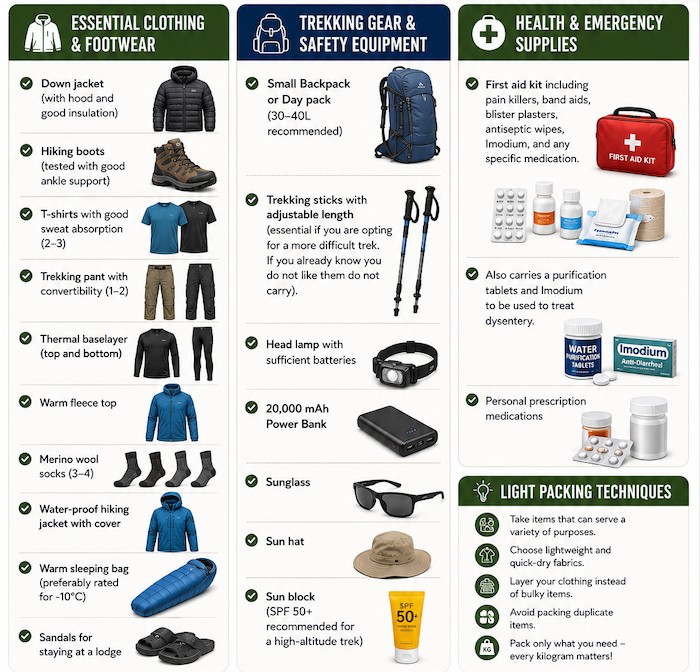
In addition, hikers should carry waterproof gear to protect themselves from unexpected rain showers and cold temperatures at night. Most importantly, it is essential to keep your electronics and clothes dry throughout the trek.
Clothing and Layering Essentials :
Footwear Essentials :
Trekking Equipment :
Electronics :
Health and Hygiene :
| Elevation | Weather | Essentials Gear |
|---|---|---|
| Below 2,500 m | Warm and humid | Rain jacket, gaiters, leech socks. |
| 2,500–4,000 m | Mild days, cool nights | Fleece, trekking poles, waterproof boots. |
| Above 4,000 m | Cold nights and mornings | Down jacket, thermals, warm gloves, sleeping bag. |
Must-Not-Forget Essentials :
| Category | Rating |
|---|---|
| Waterproof clothing | ★★★★★ |
| Warm layers | ★★★★★ |
| Trekking boots | ★★★★★ |
| Trekking poles | ★★★★★ |
| Dry bags | ★★★★★ |
| Power bank | ★★★★☆ |
| Leech protection | ★★★★☆ |
| Water purification | ★★★★★ |
According to the seasoned trekking guides at Haven Holidays Pvt. Ltd., the most crucial trekking advice for hiking in September is to pack light but carry enough warm clothing to withstand the cold evenings and mornings in the Himalayas. Their guides also recommend putting on multiple layers of clothing when hiking because the weather can change dramatically throughout the day. In particular, it is advisable to wear a rain jacket every day, even on cloudy mornings, as it can get wet later in the day. Overall, a well-packed trekking gear list is vital for a comfortable and enjoyable trek in September.
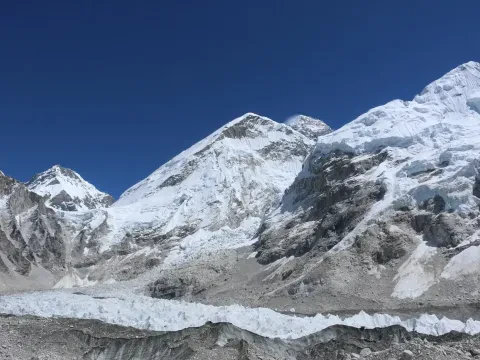
Planning the best trekking in Nepal in September is not an easy task. At the same time, the effort is well worth it. September is a special period in Nepal as it is a transitional season between the rainy season and the autumn. Thus, while in early September, there is still a possibility of experiencing afternoon rainfall, the late season generally remains dry with excellent visibility.
Accordingly, it is vital to make smart decisions about your trekking options and prepare adequately for your adventure.
Whether you dream of visiting Everest Base Camp (5,364 m), conquering Thorong La Pass (5,416 m), and exploring Annapurna Base Camp (4,130 m) or hiking Poon Hill (3,210 m), climbing Gokyo Ri (5,357 m), discovering Mardi Himal Base Camp (4,500 m), checking out Kyanjin Gompa (3,870 m), and Langtang Lirung (7,227 m), and crossing Larkya La Pass (5,106 m) on the Manaslu Circuit, September is a fantastic time to be in Nepal. What is more, September is a great month to explore the rain-shadow regions of Upper Mustang, Lo Manthang (3,840 m), and Upper Dolpo.
In fact, it is important to note that late September tends to be one of the busiest trekking months in Nepal. Hence, it is a good idea to book domestic flights, trekking permits, guides, and teahouses in advance. Additionally, it may be a good idea to hire local guides, as they will help you stay safe on the trail, assist you with the local culture, and support the local mountain communities.
Step-by-Step Preparation Checklist :
| Planning Item | Recommendation |
|---|---|
| Best booking time | 1-2 months in advance |
| Best trekking period | Mid to late September |
| Obtain Trekking permits | in advance |
| Domestic flights | Early bookings, especially for the Everest region |
| Guide | Local licensed guide |
| Porter | Optional, but highly recommended |
| Travel insurance | Comprehensive coverage for high altitude evacuations |
| Extra days | 1-2 extra days is a good buffer |
Recommended action before the trek :
Collaborating with an established local trekking company can significantly help with your preparations. According to the professional trekking company Haven Holidays Pvt. Ltd., September is a busy month for trekking in Nepal as the mountain weather is gradually improving. Accordingly, their professional guides can offer expert advice and help you find the best trekking options based on your preferences and the current trail conditions. In addition, our guide will assist you with permits, transportation, teahouse bookings, and other important matters. They will also ensure that you acclimatize properly and stay safe throughout your journey. Their local expertise will also help you have a richer cultural experience while supporting the local mountain village communities.
Why Choose Us?
| Category | Recommendation |
|---|---|
| Best time | Mid to late September |
| Crowds | Fewer in early September, busier in late September |
| Weather | Generally fine throughout September, gradually improving |
| Visibility | Generally excellent after mid-September |
| Difficulty | Varies depending on the trek and altitude |
| Recommended for | All fitness levels |
Ultimately, in September, Nepal offers a unique combination of beautiful landscapes, gradually improving mountain weather, and superb trekking conditions. With the help of this ultimate planning guide and the expert support of Haven Holidays Pvt. Ltd., you will be able to prepare adequately for your adventure. Whether you want to experience the highlights of Everest, Annapurna, Langtang, Manaslu, and Upper Mustang regions or seek more offbeat trekking options in Upper Dolpo or Mardi Himal, Gokyo, or Poon Hill, September is a great time to visit Nepal.
1. Which are the 10 best treks in Nepal for September?
The 10 best treks in Nepal for September are:
September is an excellent time to go trekking in Nepal as the weather improves, the landscape becomes greener, and the trail less crowded before the main trekking season begins.
2. Why is September a good month for trekking in Nepal
The month of September in Nepal is the perfect time for trekking. Following the rainy season, the trails are greener, the rivers are full, and the mountain vistas clearer. What’s more, September is generally chilly. With clear skies dominating the landscape, particularly during the latter half of the month, September often turns out to be one of the finest months for trekking in Nepal.
3. Is Everest Base Camp Trek a good for trekking in Nepal during September
Yes, the Everest Base Camp Trek is an excellent choice for trekking in Nepal during September. It is a fantastic opportunity to witness the mountains’ beauty while enjoying comparatively milder temperatures. In addition, trekking in Nepal during this month tends to see far fewer crowds than in October.
4. Is Annapurna Base Camp Trek a good option for trekking in Nepal during September
The Annapurna Base Camp Trek is an excellent trekking option in Nepal during September. With its verdant forests and spectacular mountainous vistas, this trek is particularly popular among nature lovers. While there may be some rain at the beginning of the month, the weather is nice throughout September. Thus, there is no doubt that September is a superb time to go on an Annapurna Base Camp Trek.
5. Which are the best short treks in Nepal for September
The best short treks in Nepal for September include the Poon Hill Trek, Mardi Himal Trek, Langtang Valley Trek, and Ghorepani Trek. These are the perfect trekking options if you are looking to spend a few days exploring the Splendor of the Himalayas. September typically brings beautiful weather to Nepal, which makes short treks even more delightful.
6. Is Manaslu Circuit Trek a good option for trekking in Nepal during September
Yes, the Manaslu Circuit Trek is a fantastic option for trekking during September in Nepal. As the month of September begins, the trails in Nepal become progressively greener and more beautiful. Moreover, the waterfalls in Nepal during this time of the year are particularly stunning. Thus, trekking in Nepal during September provides amazing opportunities to witness the natural beauty of the Himalayas.
7. What are the weather conditions like for trekking in Nepal during September
The weather conditions for trekking in Nepal during September can be summarized as follows:
September is also a relatively dry month with a clear sky prevailing, mostly towards the end of the month. Thus, trekking in Nepal during September can be quite pleasant.
8. Does it rain much during treks in Nepal in September
Yes, it does rain during treks in Nepal in September, especially at the beginning of the month. However, September is a fantastic month for trekking in Nepal as, after the end of the rainy season, there is little rain, and the weather is generally clear. Additionally, the trails are less crowded during this time of year. As such, you should be prepared to trek in Nepal during September with rainy weather being a possibility, particularly in the first half of the month.
9. Which trek in Nepal offers the best mountain views in September
The Everest Base Camp Trek, Gokyo Lakes Trek, Annapurna Circuit Trek, and Mardi Himal Trek are some of the best treks in Nepal for September mountain views. With the improvement of weather conditions as September progresses, trekking in Nepal during this month offers wonderful opportunities to marvel at the beauty of Mount Everest, Annapurna, Machhapuchhre, Dhaulagiri, and other stunning mountain ranges.
10. Is trekking in Nepal less crowded in September compared to October
Yes, trekking in Nepal is comparatively less crowded in September than in October. Additionally, early September is comparatively less busy than late September. Thus, you may want to consider early September trekking in Nepal to ensure that you have a less crowded trekking experience.
11. What should I pack for trekking in Nepal in September
The following are some of the most important items to pack for trekking in Nepal in September:
During September, weather conditions while trekking in Nepal can range from warm to cold. Thus, clothing worn should be suitable for both warm and cold weather. Moreover, you should also consider bringing some warm clothing as night-time temperatures in September can be fairly chilly.
12. Are permits required for the treks in Nepal in September
Yes, most permits are generally required for the best treks in Nepal even in September. As such, it is critical that you apply for the relevant permits for trekking in Nepal during September. Some of the permits you may need to consider include trekking permits, conservation permits, and special permits.
13. Are there beginner-friendly treks in Nepal in September
Yes, there are various beginner-friendly treks in Nepal for September. For instance, some of the best easy treks in Nepal for September include the Poon Hill Trek, Mardi Himal Trek, Langtang Valley Trek, and lower Annapurna trek. These treks in Nepal for September offer fantastic views of the Himalayas with minimal challenge.
14. Can you get altitude sickness while trekking in Nepal in September
Yes, you can get altitude sickness while trekking in Nepal even during September. As such, you must take proper medication to avoid altitude sickness while trekking in Nepal during September. Moreover, you must take your time to acclimatize as you climb higher altitudes while trekking in Nepal during September. This will significantly minimize the chances of getting altitude sickness while trekking in Nepal.
15. Which trekking region is the most beautiful to visit in Nepal in September
The Annapurna region, Everest region, Langtang region, and Manaslu region are some of the most beautiful trekking regions in Nepal to visit during September. September is exceptionally scenic in Nepal as it brings much-needed rains to the forested areas and mountain slopes, leaving the trails beautifully green on your trekking adventure in Nepal. As such, the landscape becomes incredibly beautiful during the September trekking season in Nepal.
16. Are teahouses open in Nepal in September?
Yes, teahouses are generally open in Nepal during September. Particularly, as September is the beginning of the autumn trekking season in Nepal, most teahouses are open and ready to host you on your trekking adventure in Nepal. It is, however, worth noting that you may need to reserve a room in advance, especially if you plan to trek in Nepal in late September as there will be more visitors at that time.
17. Is Upper Mustang Trek a good option for trekking in Nepal during September
Yes, the Upper Mustang Trek is a fantastic option for trekking in Nepal during September. With minimal rainfall throughout the month, Upper Mustang Trek in September offers picture-perfect views of this unique region in Nepal. Additionally, Upper Mustang is a fantastic trekking destination in Nepal as it is comparatively drier throughout the year unlike the rest of Nepal which receives heavy rainfall during the monsoon season.
18. How challenging are the treks in Nepal in September?
The best treks in Nepal for September can be comparatively easy to extremely challenging. For example, although the Poon Hill Trek and the Mardi Himal Trek are generally considered to be easy treks, the Everest Base Camp Trek, Annapurna Circuit Trek, and Manaslu Circuit Trek, on the other hand, require a good level of fitness. Thus, it is important that you choose a trek based on your level of fitness and how much free time you have.
19. Should I hire a guide for trekking in Nepal in September?
Yes, it is always a good idea to hire a licensed guide for trekking in Nepal, particularly in September. Not only do licensed guides ensure your safety, but they also provide you with a more insightful and enjoyable trekking experience in Nepal. Additionally, some of the trekking regions in Nepal now require licensed guides for trekking in Nepal.
20. How can I choose the best trek in Nepal for September?
The best trek in Nepal for September ultimately depends on your level of fitness and experience, budget, available time, and personal preferences. For example, if you want to see the Himalayas, then the Everest Base Camp Trek is a good option for you. On the other hand, if you prefer a mix of culture and nature, then the Annapurna Circuit Trek would be more suitable for you. The Langtang Valley Trek is an excellent choice if you are interested in experiencing the Tibetan Buddhist culture of the Tamang people and enjoying wonderful mountainous vistas. Alternatively, if you are looking for something less crowded and more adventurous, then you can consider the Manaslu Circuit Trek.
Our travel experts are ready to assist you with any questions.
Send us a message.Have a question before you book? Send your enquiry below and our travel experts will get back with the required information.